
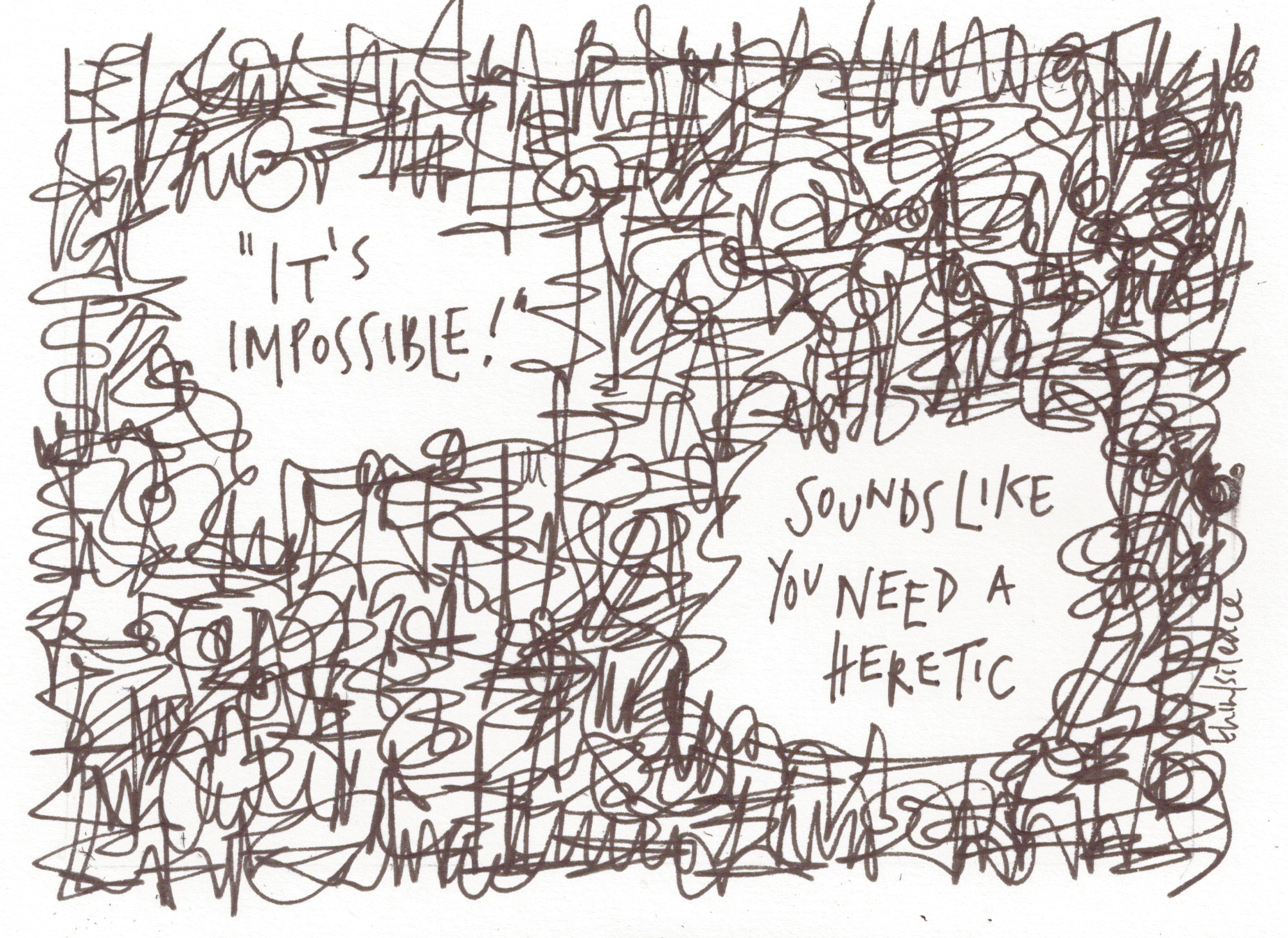
Google the word heretic and you come up with definitions like, “a person holding an opinion at odds with what is generally accepted.”
It doesn’t say a heretic is wrong to do this. Heretics see something others don’t. They’re willing to take the risk of being proven wrong. They act on faith, the faith that says something – which others don’t see – is possible; it just hasn’t been accomplished yet.
Check out this video of climber Chris Sharma attempting to climb a previously impossible rock face. He shouldn’t be able to do the things he does. One movement he perfected, and which has overcome climbing challenges, is the dyno – a leaping movement which wasn’t considered to be proper climbing, but on acceptance, has opened up severe rock-climbing problems.
This is the thing about the heretic. They’re willing to get really focused around an idea and put their life on the line to see what is possible – in the video, Sharma talks about working for seven weeks on climbing this particular rock face, he’s fallen many times, but he finally completes a climb others could only get halfway up. (It’s just over sixteen minutes long and totally captivating.)
There’re many, diverse impossible challenges in the world. Sharma how to be a heretic: he exemplifies patience – he knows the rock face won’t succumb on the first, second, or even, thirtieth attempt, but it will succumb; he embraces failure – those many falls; and he’s able to focus great energy into particular moments of impossibility.
Heretics follow their dreams, seeking to bring them into being: ‘North and south. Nothing more. Look for the north; look for the south. Don’t stop travelling between them.*
(*From Albert Espinosa’s The Yellow World.)
 THIN|SILENCE