
Human memory is an amazing thing. We might talk of computers having memory, but the two things are completely different. When you purchase a computer, you’re keen to check out how much memory the different models have to make sure it will do what you want it to. Every computer, though, will open your files in the way you saved them. You’d be sorely frustrated if the computer decided to lose bits and change things around.
Humans store things differently. Somebody who remembers a list of facts will tell you there’s a way to do this in order to recall everything correctly – but look how long they take to do it. It’s a nice trick but we haven’t got enough time to do that with everything. Whilst we’re asleep the brain stores our memories in ways we can recall and use – rarely are they complete but we don’t tend to think of this meaning they’re corrupted.*
A crazy thing about the way my brain stores memories is the interconnected way it does this. I can be walking along think about one thing when I catch a smell attached to a memory and I’m flooded with memories of places and times and experiences I didn’t ask for.
Sometimes I experience the same thing forwards. Some possible future a friend imagined for me a couple of years ago offers itself as a memory of a future I would very much enjoy being a part of. This is not about forecasting or predicting the future; it is more about a faint future possibility which I’m attracted to and decide whether or not to incorporate into my life – a future memory.
Memories of a future are important because they ask, What do you want to be, to do, despite your past? They offer the possibility of living now what I hope for the future: I see how much I will have to use and can anticipate this now; I can see how far I have travelled and take a step now.
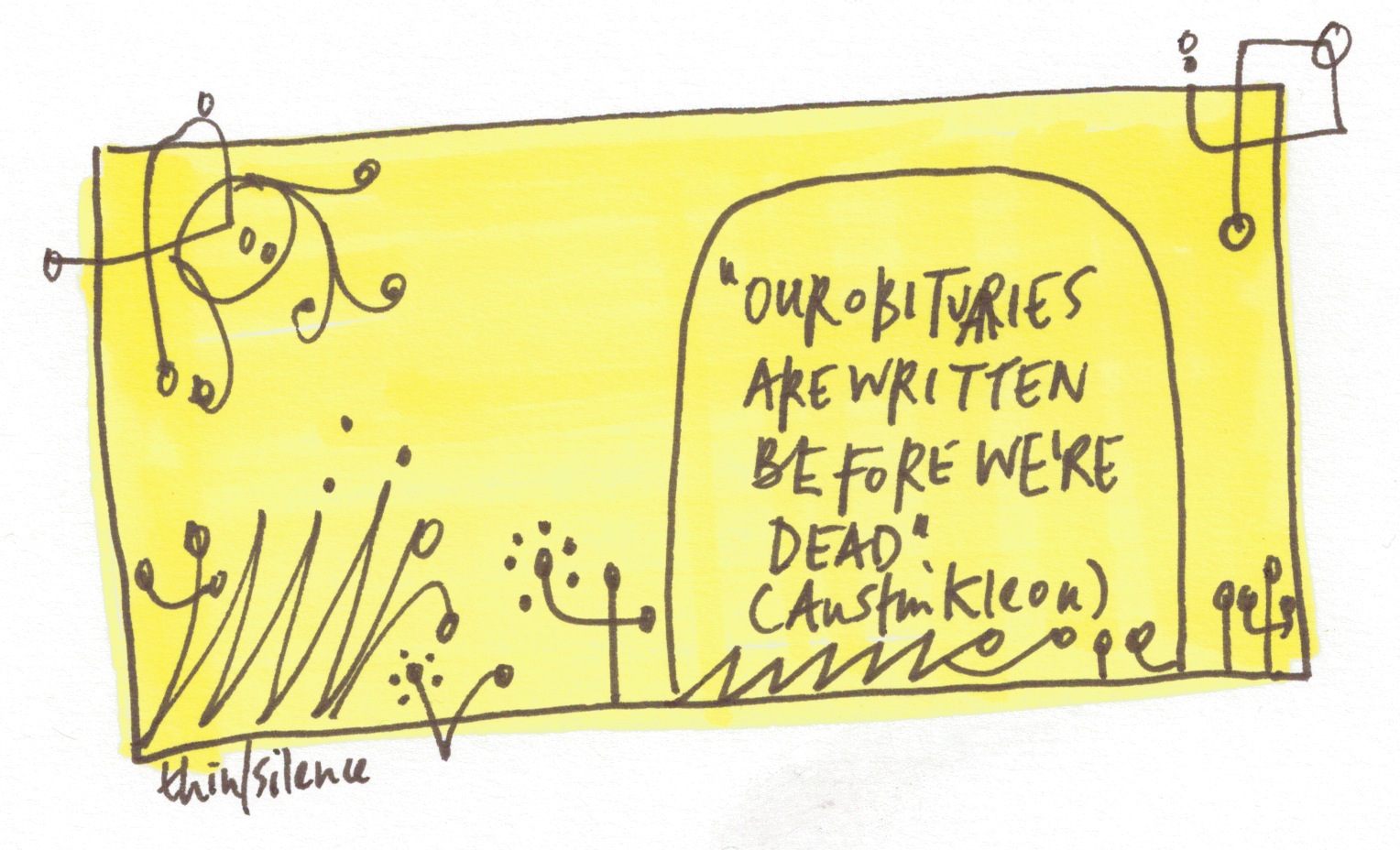
‘Our obituaries are written before we’re dead.’**
(*It is possible to have totally corrupted memories, remembering things which never happened,)
(** Austin Kleon in Show Your Work.)
 THIN|SILENCE
Pingback: we are our memories | THIN|SILENCE