
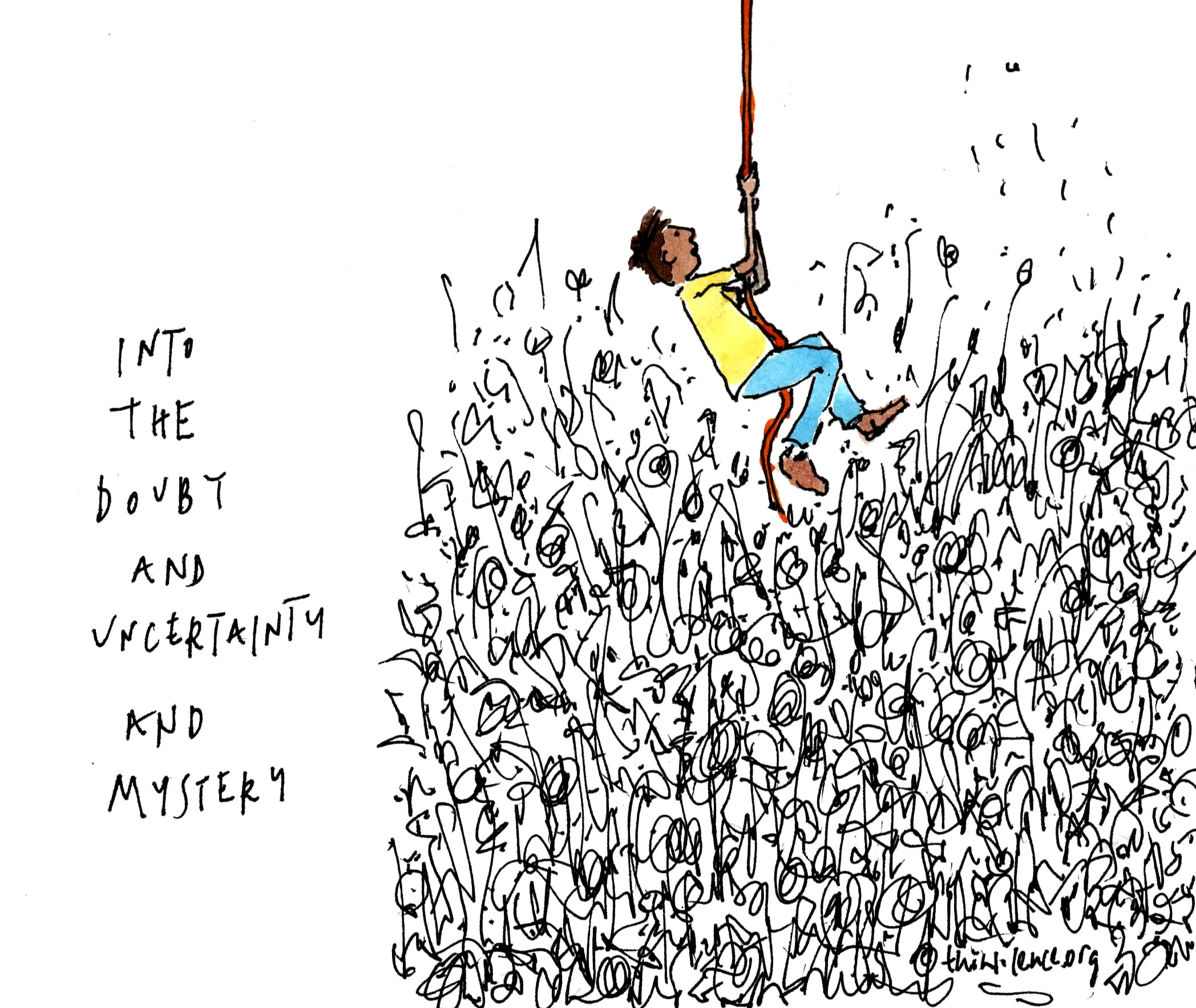
I devote a significant amount of my time thinking about and agonising about something that may well not exist. So, in a way, it may actually be the doubt, the uncertainty and the mystery that animates the whole thing … there is a kind of gentle scepticism that makes belief stronger rather than weaker. In fact, it can be the forge on which more robust belief can be hammered out.*
Nick Cave
Dan Ariely explores the decline of trust and the rise of misbelief
in his latest book,
Whereas the philosophical principles of Occam’s Razor states that
when it comes to there being a number of explanations for something,
The one with the fewest elements or assumptions is
usually correct.
However, now it seems that the opposite of this informs us –
Just search “Kate’s photo” and see what happens,
Never mind 9/11, JFK, Princess Diana, Covid, the 2020 U.S. presidential election, or
your favourite conspiracy theory.
I value doubt and scepticism as they can lead to
important questions that, ultimately, can bring us to a
better understanding and place, but Ariely highlights four groups or elements
that it’s helpful to know are at play when it comes to doubting, there’s:
An emotional response – emotions precede beliefs, but emotions can mislead us,
A cognitive response – but we can be irrational if confirmation bias kicks in,
Our personality’s disposition – meaning we can be more or less prone to misbelief, and,
The social forces – the dangers of surrounding ourselves with people who think the same.**
All this said,
Please have doubts and raise questions.
*Nick Cave and Séan O’Hagan’s Faith, Hope and Carnage;
**Dan Ariely’s Misbelief, written partly as his response to discovering he’d been implicated in a conspiracy theory.
 THIN|SILENCE