
Last night I listened to four people speak on how they were taking risks in being creative in their work. Each used story in order to do this. The audience were fully tuned and engaged throughout the evening.
My guess is we all learnt a lot, also inspired and encouraged. I certainly made loads of notes, ending up adding some “colour” to a couple of meetings I’ve been planning.
The four didn’t share everything about how they risked – the details were often sketchy as they offered less than historical, step-by-step accounts of their work, leaving plenty of things out and rearranging their material so it worked better as story. At the same time, I took what they shared to be a real and true account.
Story is fascinating, and I never ceased to be amazed at how it works – because it clearly does.
Our lives are immersed in stories.
There’re stories happening to us right under our noses ‘because we lack the ability to recognise them and the language to talk about them.* The stories others appear to allow us the opportunity of looking our lives in different ways to how we normally do. Martin Seligman writes about how some adversity (A) does not lead directly to some consequence (C). In between A and C there are our beliefs (B) about the adversity: as it were, the stories we tell ourselves but possibly don’t recognise.**
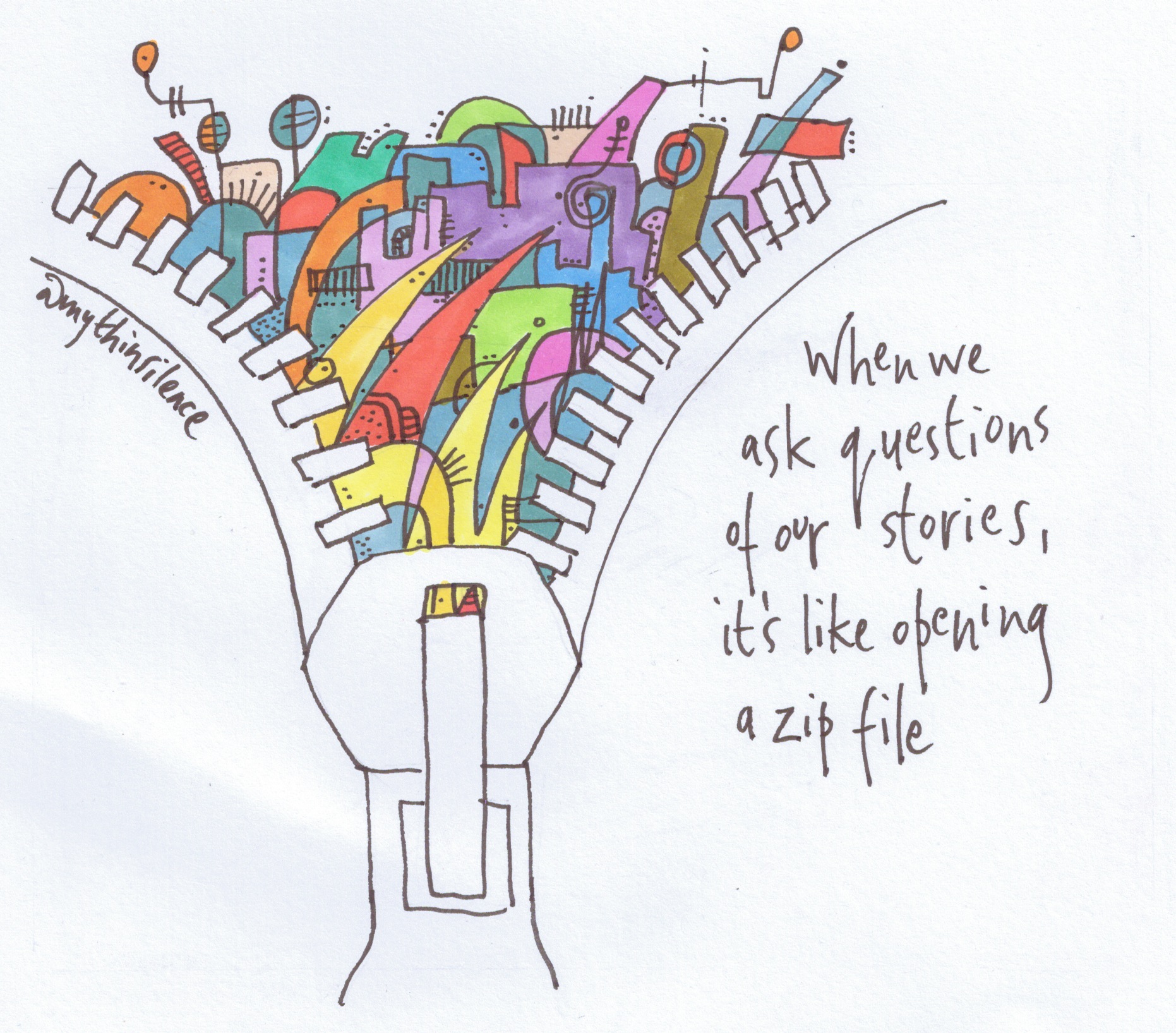
Questions help us to dig down into these beliefs, these stories, whilst not asking questions leaves something as it is: the most dangerous and most risky place to be.
Here are two questions I’ve adapted from Keith Yamashita for you to identify elements of your story with:^
What is your purpose on this earth?
What have you historically been when at your best?
(*From Peter Senge’s The Necessary Revolution. I’m using Senge’s words about invisible issues here as they work well when it comes to the stories which are invisible to us.)
(**From Martin Seligman’s Flourish.)
(^Quoted in Warren Berger’s A More Beautiful Question.)
 THIN|SILENCE
Pingback: messy is real, messy is human | THIN|SILENCE