
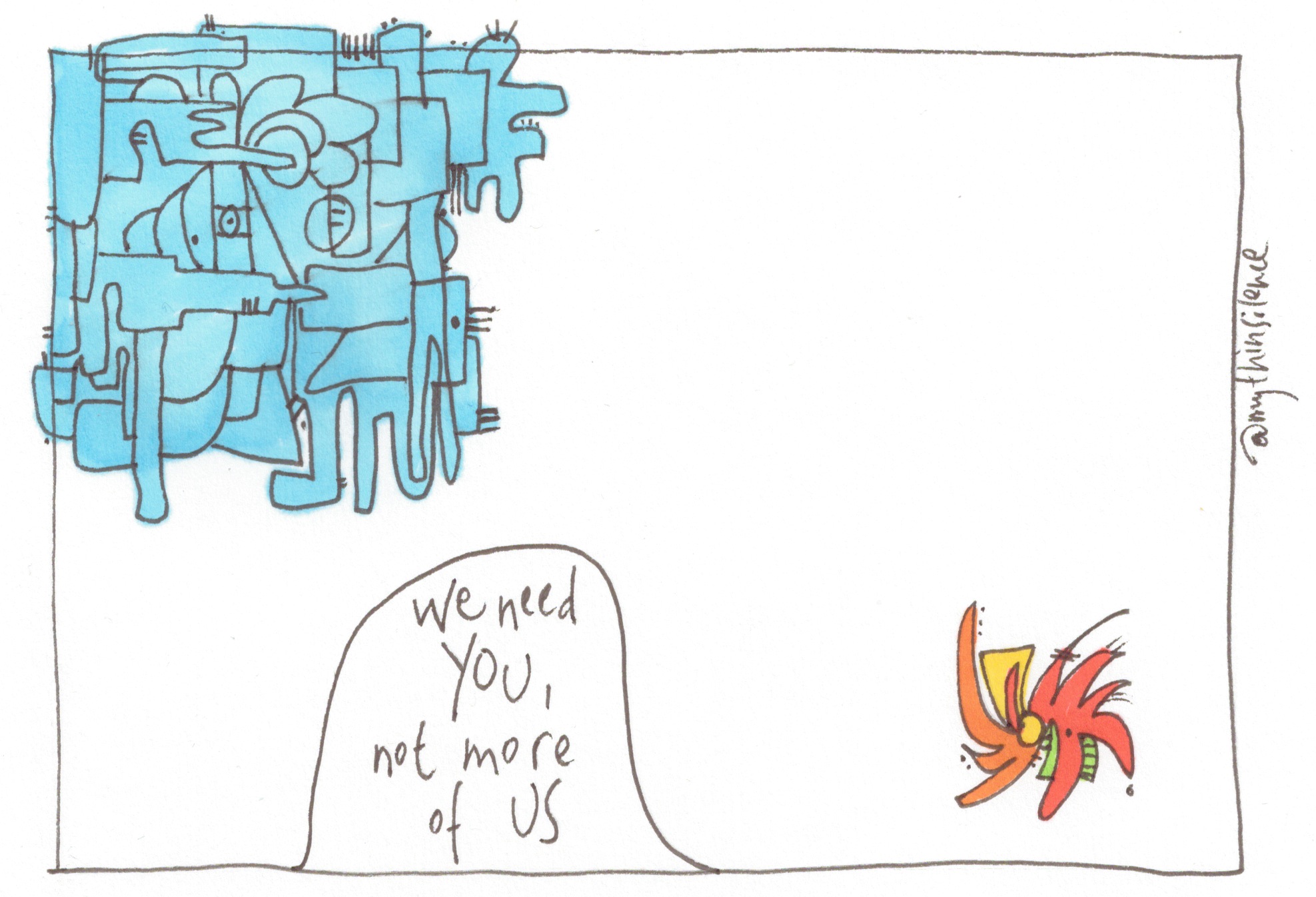
Is not the same as belonging.
Sometimes we can be so grateful for being allowed in and to be accepted we’re prepared to fit in. But it comes at a cost. We never really belong, if belonging is ‘the innate human desire to be part of something larger than us.’*
“We need you to be like us.”
Sometimes it’s been said to me outright, more often it’s been a subliminal message: We need you to fit in, otherwise we have nowhere for someone like you.
Belonging is being welcomed and accepted for being who you are.
We need to have different perspectives on our world and work, not only the one: some companies bring in new employs because they’re different and not to fill a role. This is the genius of each bringing their unique perspective to the whole:
”Merciless criticism often makes us dig in our heels in defiance, or worse, makes us helpless. We don’t change. We do change, however, when we discover what is best about ourselves and when we have specific ways to use our strengths more.”**
Tina Seelig suggests art ‘is about how to observe the world with great attention to detail, to internalise those observations, and then to give expression to them in the chosen medium.’^
Each of us is capable of creating worlds of belonging rather than those others are expected to fit into: worlds were people can be more who they are and not less.
It won’t be easy to change the fitting-in culture, though Ryan Holiday offers a helpful move from the world of martial arts. When asked to belong, our impulse is to give in or push back, but if we’re to create belonging we must pull instead: ‘We can’t push back, we have to pull until our opponents lose their balance. Then we make our move.’^^
Except we’re not trying to over-balance our opponent, but enable everyone to find their true balance – more of a dance, really.
(*From Brené Brown’s Daring Greatly.)
(**Appreciate Inquiry’s founder David Cooperrider, quoted in Martin Seligman’s Flourish.)
(^From Tina Seelig’s Ingenius. Seelig is identifying the same moves as Theory U: observing, presencing, identifying, creating.)
(^^From Ryan Holiday’s The Obstacle is the Way.)

