
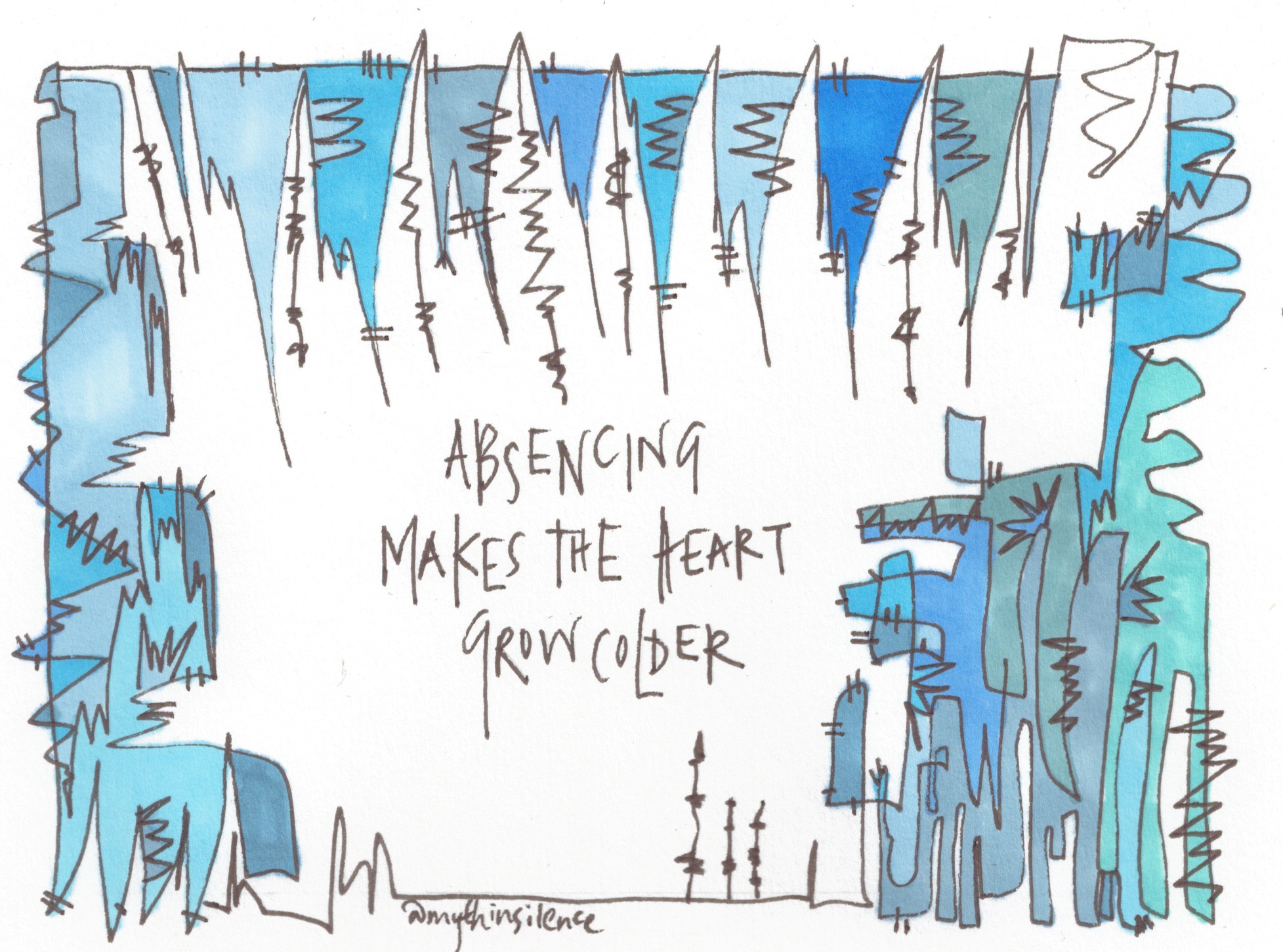
Our choosings lead us into darkness: the unfamiliar, unknown, even chaotic.
The primordial Human longing to explore means we cannot stay where we are. We must choose and follow our paths, or make new paths.
To aid us, we have our imaginations. Imaginations which can be developed and grown.
To put this in terms of fire: we bring our heat to the fuel and oxygen we find around us when we explore.
When our imaginations are underdeveloped, sensing what may be lost is more powerful than anticipating the new to be found.
There is also darkness within us, a blindness to what may be.
This can lead to disengagement as Brené Brown names it, or what Otto Scharmer labels absencing. Brown warns, resistance to eagerness and enthusiasm expressed by others can lead to cynicism, criticism, coolness, and even cruelty.
When I read this, I realised how this has been my experience, pushbacks in various forms from people who did not want to move from the known to the unknown (and would not have recognised what they were doing). As I continued to reflect on this, I asked myself how I kept going. I realised it was with imagination and dreaming possibilities, especially pushing the boundaries of my imagination whilst prototyping the dreams with the help of others – as it were, making some fire in the darkness.
Here’s something to try.
Sunni Brown describes doodling as a way of imagining what presently lies in darkness, suggesting doodling enables cognitive power, organisational performance, and personal pleasure. She offers options: some doodle with a pen on paper, others while walking in conversation (Steve Jobs), others whilst playing a musical instrument (Albert Einstein), and others can imagine something in detail in their head (Nikolas Tesla).
It’s not about having imagination or not; it’s all about developing our imagination.
 THIN|SILENCE