
Mr Fermin was seventy six years old and was dying of cancer.
He shared a room in the hospital with two young cancer patients and he was going to share the seven secrets to happiness with them over seven nights, and then he died.
Mr Fermin told his two young room-mates they were not to tell anyone these secrets until they were going to die.
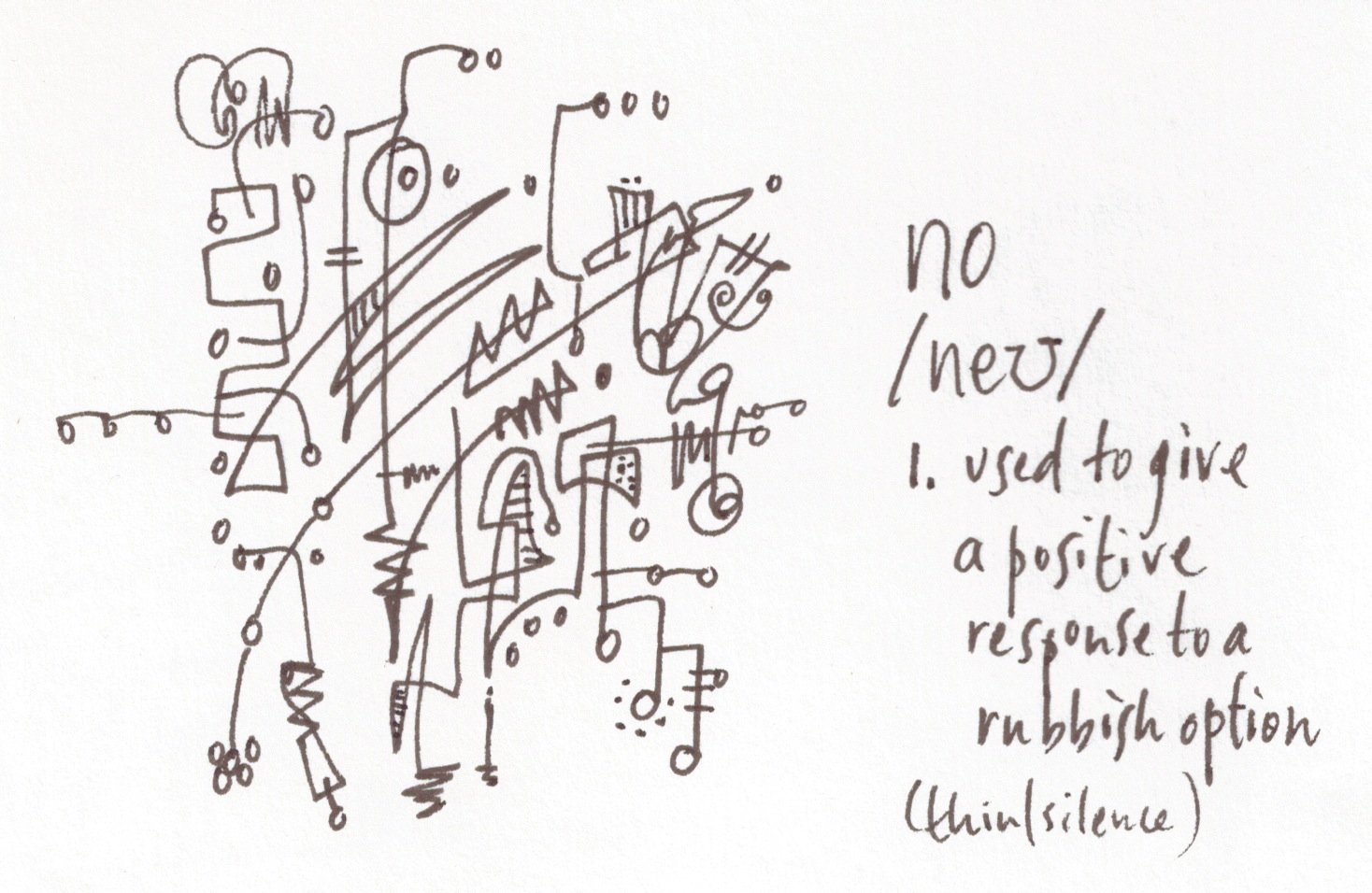
Albert Espinosa was one of those young cancer patients and shares one of the secrets: “In this life,” Mr Fermin told them, “you’ve got to learn how to say no.”*
Mr Fermin was right. We have to learn to say no to the wrong things so we can say yes to the right ones in life.
When it comes to the Human future, there are many things which will hold us back from what we can become if we are not able to say no. Closed minds (which will not allow a bigger world in), closed hearts (which will not allow one another in), and closed wills (which will not allow new actions and behaviours in) cover many of the things which hold us back.
Nassim Taleb offers quite a list of things offered as expressions of volatility, which I borrow as a list of what we must overcome if we are to move towards our emerging Human future; these are: uncertainty, variability, imperfect, incomplete knowledge, chance, chaos, volatility, disorder, entropy, time (because more time allows for more of everything on the list), the unknown, randomness, turmoil, stressors, errors, dispersion of outcomes, and, unknowledge.
My friend Alex McManus identifies three journeys Humans appear to be making in the early 21st Century: from outsider to insider (in Human relationships), from above to within (into the natural world), and from against to with (how we’re exploring working with each other rather than against).
The world is seeking those who are learning to say no to what prevents the emerging, brighter future to appear.
(*The other young cancer patient shared the seven secrets with three other people before he died.)
 THIN|SILENCE
Pingback: don’t blow it, blow it | THIN|SILENCE