
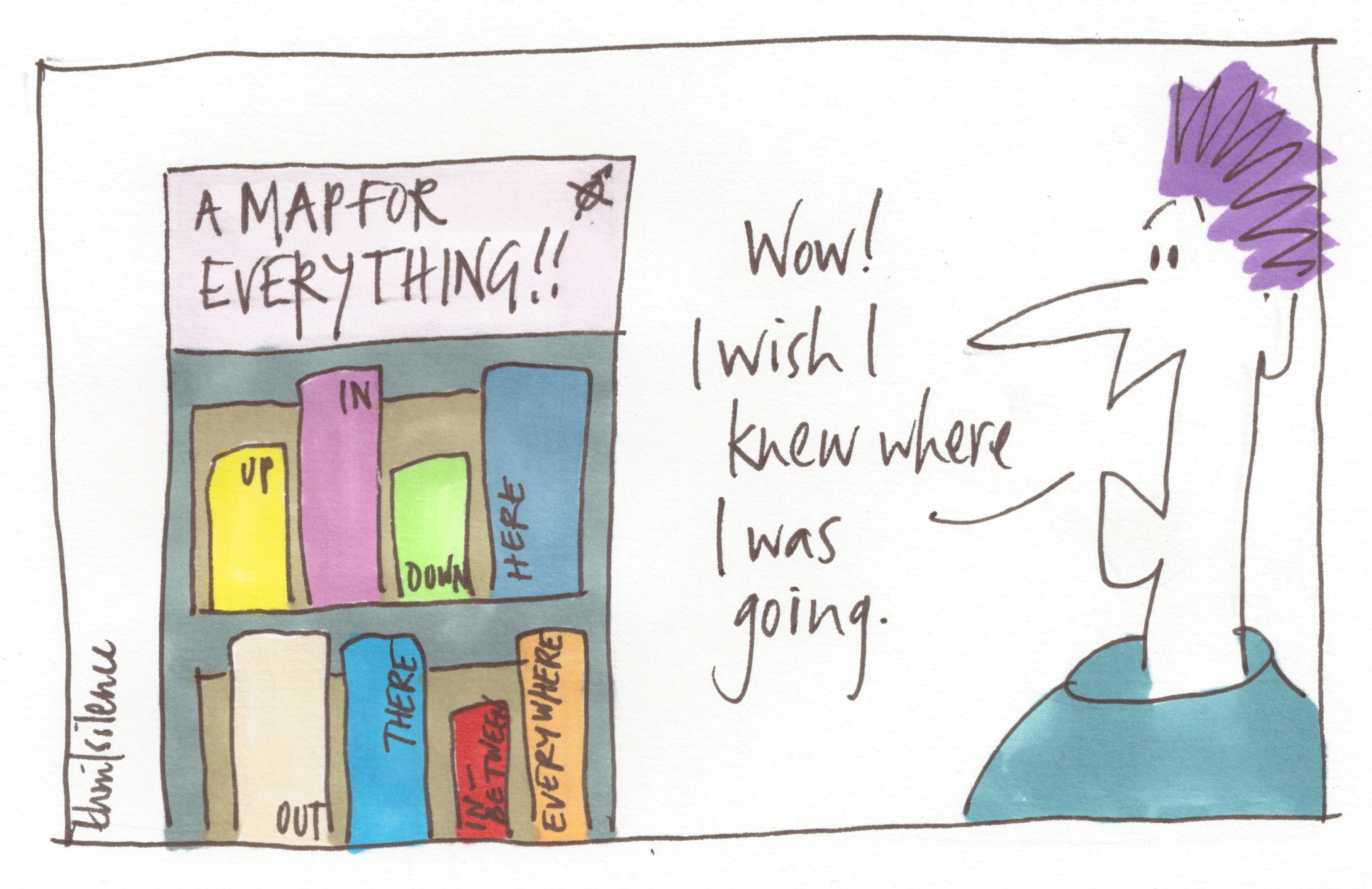
An Australian once told me of a trip he made to the UK. He picked up his hire car at the airport and set out on his journey, only to find himself 200 miles past his destination before checking the map. He hadn’t calculated in scales used for Australian and British maps were a just a little different.
Whilst maps deal in reality, they struggle with our expectations and imaginations: ‘Ultimately, the map represents us with the reality we know as differentiated from the reality we see and hear and feel.’
On the eve of a journey, I am trying to imagine what lies before me, piecing together memories and online maps with arrangements to be with people. It’s going to be something of a pilgrimage, which I think of as an external journey which represents an inner journey. In my case, I’m exploring ideas and thoughts about my future work, my art. My imagination is already reaching out to feel for something of what this journey might include, creating an imaginary map of the different places and people I will encounter.* There’ll be many surprises too, things not found on any map – ‘maps are fixed in time and include only features considered relatively permanent.’
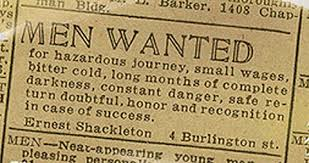
It was the possibilities not marked on an map of the Antarctic that beckoned the interest of more than five thousand men to apply for entrance to the expedition:
Maps have used all kinds of materials, from lines in the sand washed away in quick time, or etched into bone to be more permanent. Maps are also etched into Human lives. Some of these account for journeys already completed. Others are maps of the imagination, sketching out continents of adjacent possibility for our lives to explore.
I only want to encourage you to create some new maps.
(*Any experience or journey can be framed in such a way.)
 THIN|SILENCE