
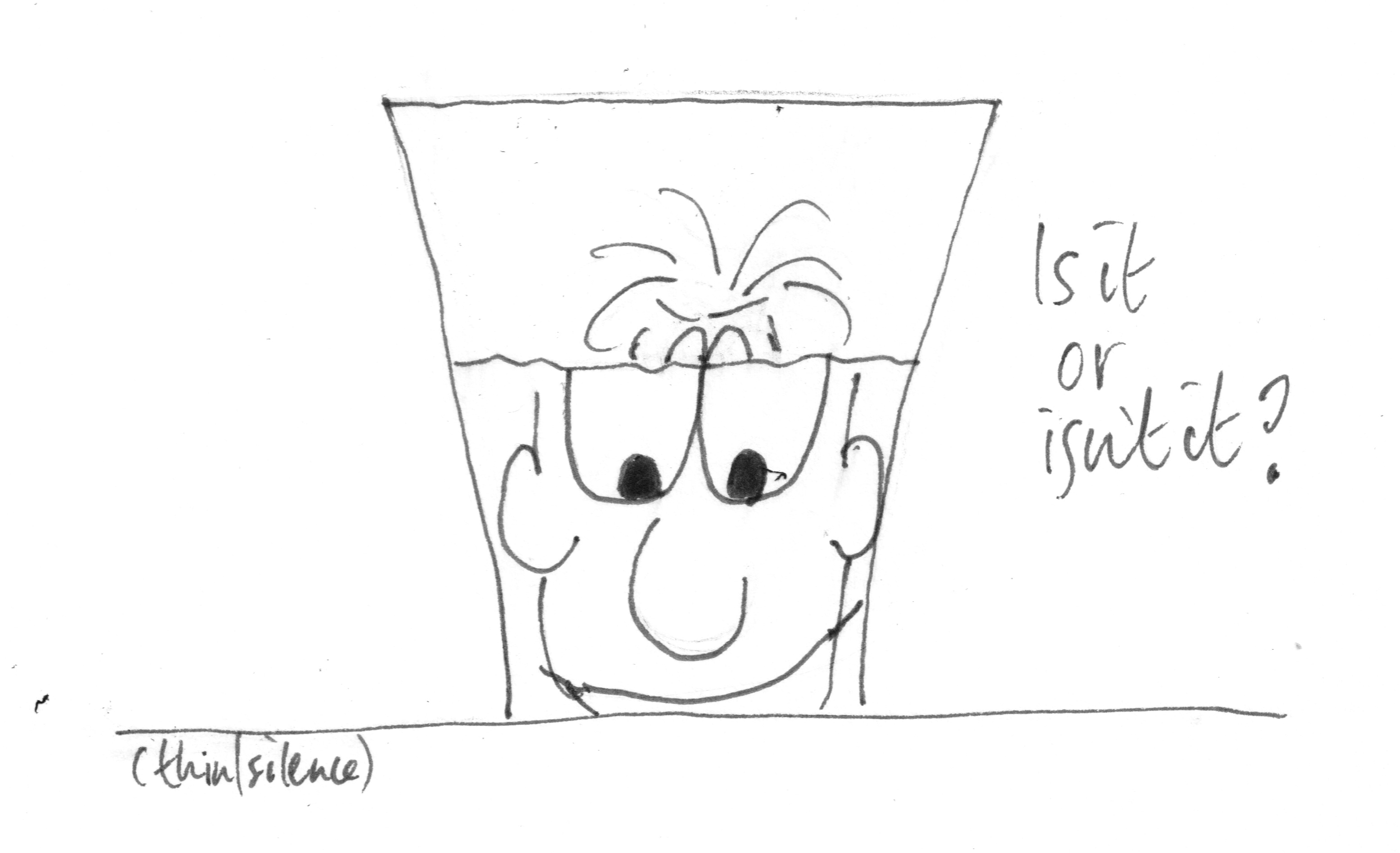
Full?
Empty?
How would you finish the sentence?
Suzanne Segerstrom suggests seeing the glass as full or empty has more implications than we perceive on the surface.
Half-full and you’re more likely to push ahead.
Half-empty and you’re more likely to quit.
One opens up possibilities, the other blocks possibilities.
In Yes Man, Jim Carrey plays ace-blocker Carl, coerced by a number of personal circumstances and relationships into saying Yes to every proposition which comes his way (though he later finds out he had more choice than that). Although a funny look at optimism and pessimism, there’s perhaps a serious point in this dynamic of saying Yes leading to more good things happening for Carl, and having fun along the way.
I’ve been exploring how concepts of humility and gratitude might lead to the things Humans most seek: autonomy, mastery, and a greater purpose than themselves. So is Carl’s experience replicable in real life? Can all of us become more positive?
In the conversations which make up my work, I meet wonderful people able to do amazing things. I’m not just saying this, nor do I see them being someone they are not – only more who they are. It seems, sometimes, people are using something positive in a negative way, or trying to be someone else, when life is only asking that they be creative, enjoying, and generous with who they are.
Half full?
Half empty?
What now?
The third question is the most important one.
 THIN|SILENCE