
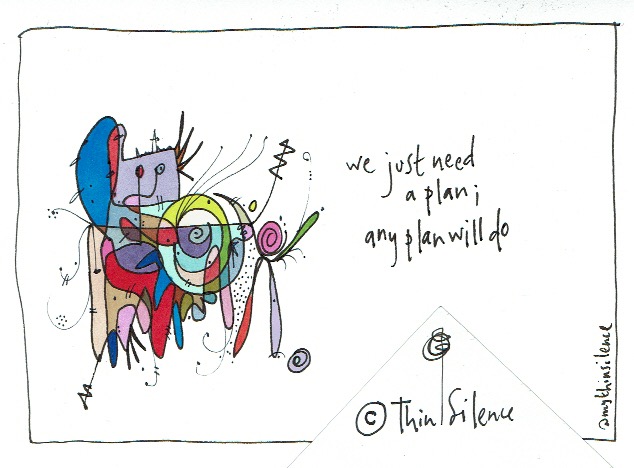
‘The purpose of strategy … is not to find the right answer, because you will be wrong anyway. The purpose of strategy is to move us to act. … You have to think you know what you’re doing while still opening yourself up to serendipity.’*
We want to identify the right path before we do anything.
Just to move is more important; we find we build a path when we do.
Moving means we show up to possibility. In a random universe, we never know when or where opportunities or possibilities will show up.
For Edwin Land, the inventor of the Polaroid camera, it came in the form of a question from his three year old daughter Jennifer, on a trip to the beach. Jennifer asked why they couldn’t see the picture Land had just taken and not have to wait. Land could have ignored the question, but instead he took a step back, suspended the way he saw and understood, and allowed the question of a three year old to begin a quest – a path he hadn’t been looking for.** Which brings us to a strategy for moving forward.
‘Humble inquiry maximises my curiosity and interest in the other person and minimises bias and preconceptions about the other person.’**
Whether it be a person or some weak signal of future possibility, asking open questions makes it possible to move, to be open to the randomness.
What’s your question?
(*From Frans Johansson’s The Click Moment.)
(**This story is told in Warren Berger’s A More Beautiful Question.)
(^From Edgar Schein’s Humble Inquiry.)
 THIN|SILENCE