
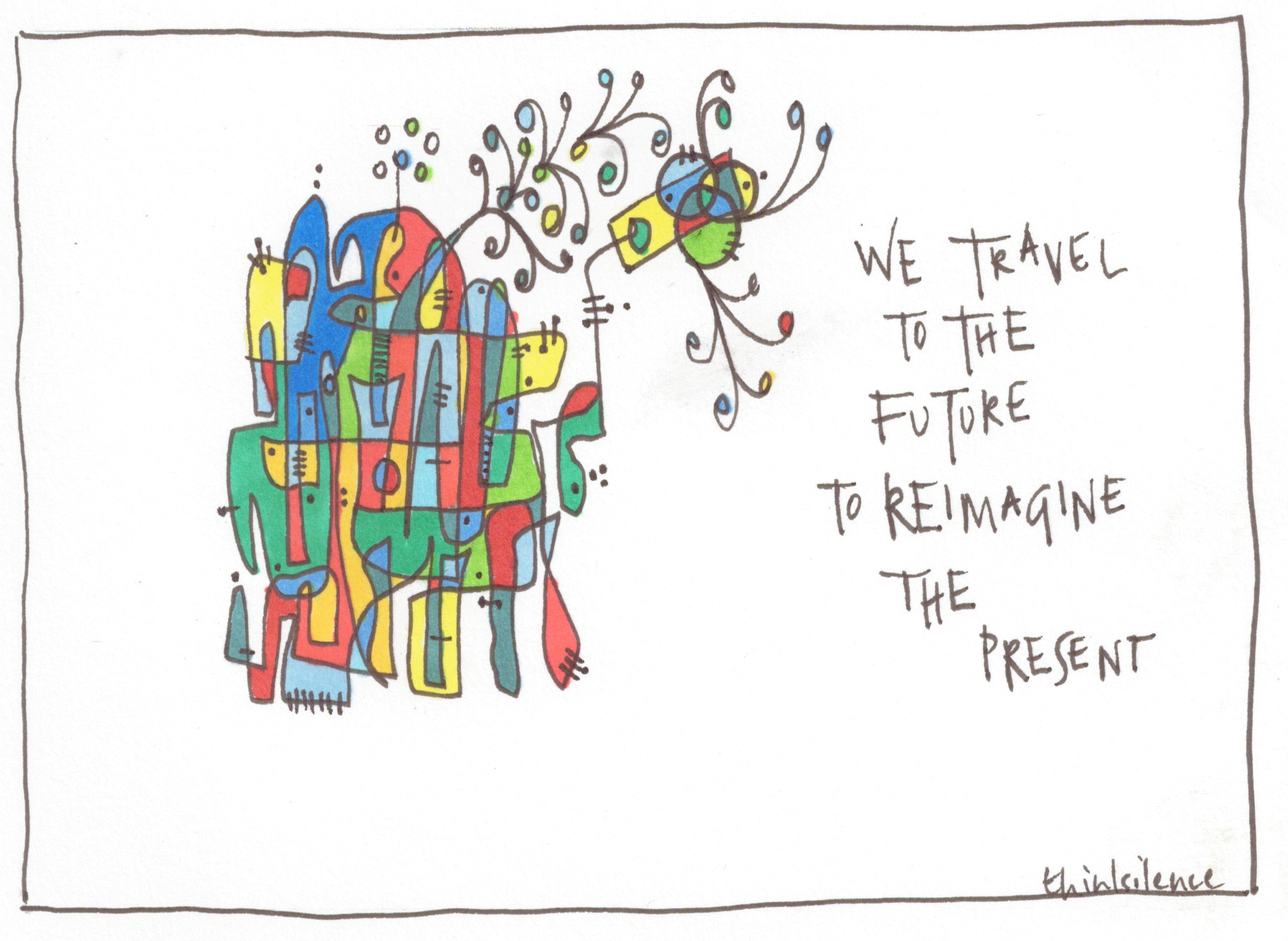
U people come to live in the present from both their past and their future:
‘My journey began with the recognition
that I am not just one self but two selves.
One self is connected to the past, and the
second self connects to who I would
become in the future.’*
What if I don’t have to be the person I am in this moment because of who I have been, what I have done, or what has happened to me in the past alone? What if I can live in this moment but because of who I choose to be and what I choose to do in the future?
U people understand this, giving themselves permission, and others encouragement, to connect with their futures. They go as far as to posit, we cannot be whole and integrated people unless we also connect to our future. This understanding opens boundaryless** possibilities.
There will always be people who call us back to, or reminds us of, our pasts; some because want to control, others want to compete, others don’t want anyone else to have what they don’t believe they can have, and, still others because they do not believe in the future, saying, “This is all you are and all you can be.”
They’re wrong.
In this very moment, you can be both your past self and your future self, so you can be more^ creative and generous.^^
(*This come’s from Otto Scharmer’s excellent Theory U; U people isn’t a term Scharmer uses but I hope it works as we think about being people formed by our past and our future.)
(**Boundaryless is a word I borrow from Jack Welch’s book Winning where its used to describe open thinking, though here I use it in relation to a remark David Shenk makes in The Genius in All of Us about how we don’t what we’re capable of.)
(^A group of people used the word more – magis – to describe how they would give everything they could for others, and then they would give more.
(^^Otto Scharmer offers three important actions to help us be U people: suspension of our seeing and understanding – in this case, how we only see ourselves as the product of our past, redirection – we reorientate towards the new we see our future can be. and, to let go – of the old ways of seeing and understanding which are no longer helpful or useful to our pursuing of the new. Some might be cynical about all of this; I suggest what they are really reacting to is how difficult this is, and how the easier thing is to stay where they are.)
 THIN|SILENCE