
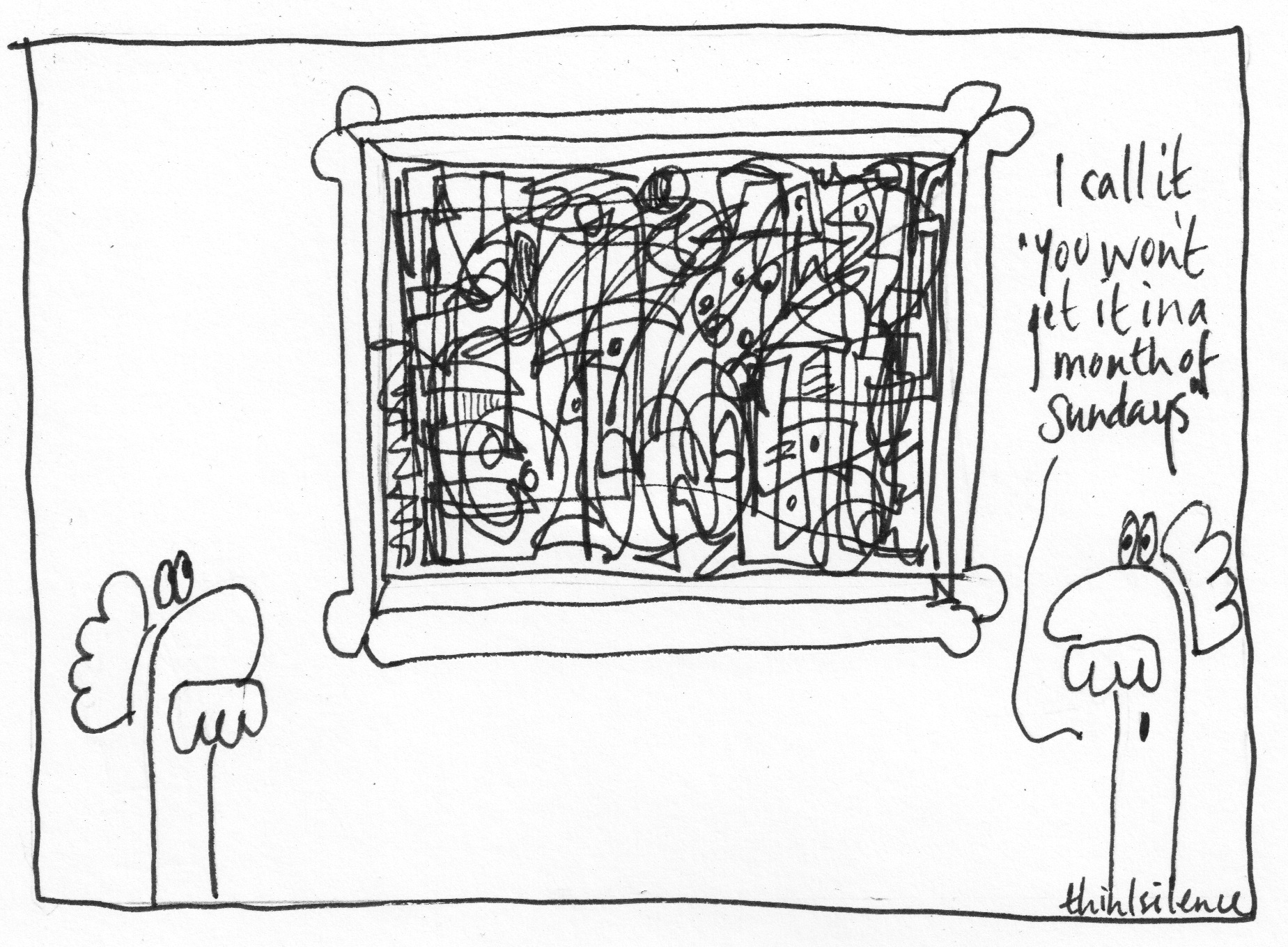
Malcolm Gladwell recounts the story of Paris’s Ecole nationale superieure de Beaux-Arts which annually exhibited what it believed to be the best art.
Impressionist art was not to be found on its walls.
Eventually, the Impressionist artists would exhibit their own work, bypassing this gatekeeper of fine art which found itself unable to hear the signals from these new artists, continuing to be curators of noise.
Those who played by the School’s rules ‘risked being lost in the clutter of other artists’ work’*
Surprisingly, sophistication and expertise can prove fragile at worst, adding more noise – reacting to the new art (whatever the new art might be) – and resilient at best – responding to the art, when what we need to see more of is antifragility – initiating because of the signals we’re hearing.**
Today, everyone can be their own gatekeeper – which is really about creating gatekeeping communities – as the Impressionists did when they exhibited their own work: explorations in antifragility.
Of course, we have to try and ensure our art is signal rather than noise: contributing, not spamming or cold-calling, in turn demanding we listen to what is signal (whispers) in our lives and not to the noise.
‘Until you remove the noise, you’re
going to miss a lot of signal.’^
(*From Malcolm Gladwell’s David and Goliath.)
(**This is the triad of fragile-robust-antifragile from Nassim Taleb, helpful for exploring the effects of stressors upon people and institutions in a universe with way more randomness and accident then we allow. Taleb suggests we’re not great at innovating, unless we take the impact of the accidental into our thinking and behaving; he suggests it took us 6,000 years to realise the wheel could be attached to suitcases! He does have a point.)
(^From Seth Godin’s Whatcha Gonna Do With That Duck?)
 THIN|SILENCE