
Because there always is one.
You have identified what it is you must do, have experimented, and have come to deliver this in a repeatable way, so what’s next?
It’s time to ask some questions, but we like answers.
Answers become fixed, immovable, with a “permanent address.”
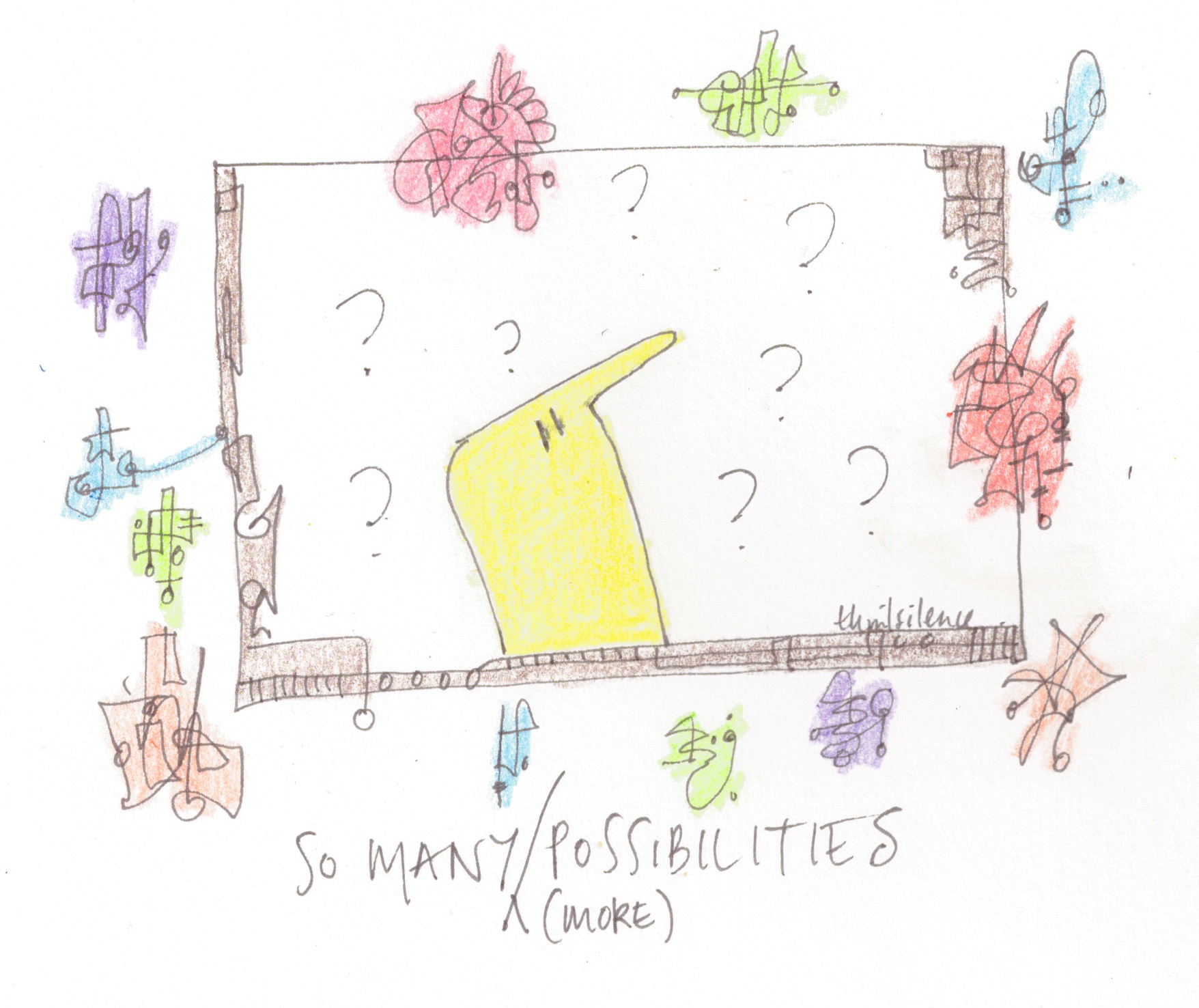
A question recognises you’ve only reached another position on a course, but it’s not a destination. Questions help us identify the adjacent possible,* which requires us to be open to input from many domains and fields and cultures, to live at the intersection of many things.**
The adjacent possible is different to incremental improvements – Should I use mid-grey or light-grey? Nor is it trapped in blue-sky thinking – Should I apply for an astronaut programme? The adjacent possible allows for a leap – How would someone taste this, or wear it?^
What are you going to read? Who are you going to meet? Where are you going to visit? What are you going to do? What will you watch?
Next question?
(*Originally a scientific term from Stuart Kauffman, “The adjacent possible is a kind of shadow future, hovering on the edges of the present state of things, a map of all the ways in which the present can reinvent itself.” – Steven Johnson)
(**Our lives also have adjacent possibilities; we can reconfigure all we are to live a different future.)
(^See TOMs story which has moved them from shoes to opthalmics to coffee.)
 THIN|SILENCE