
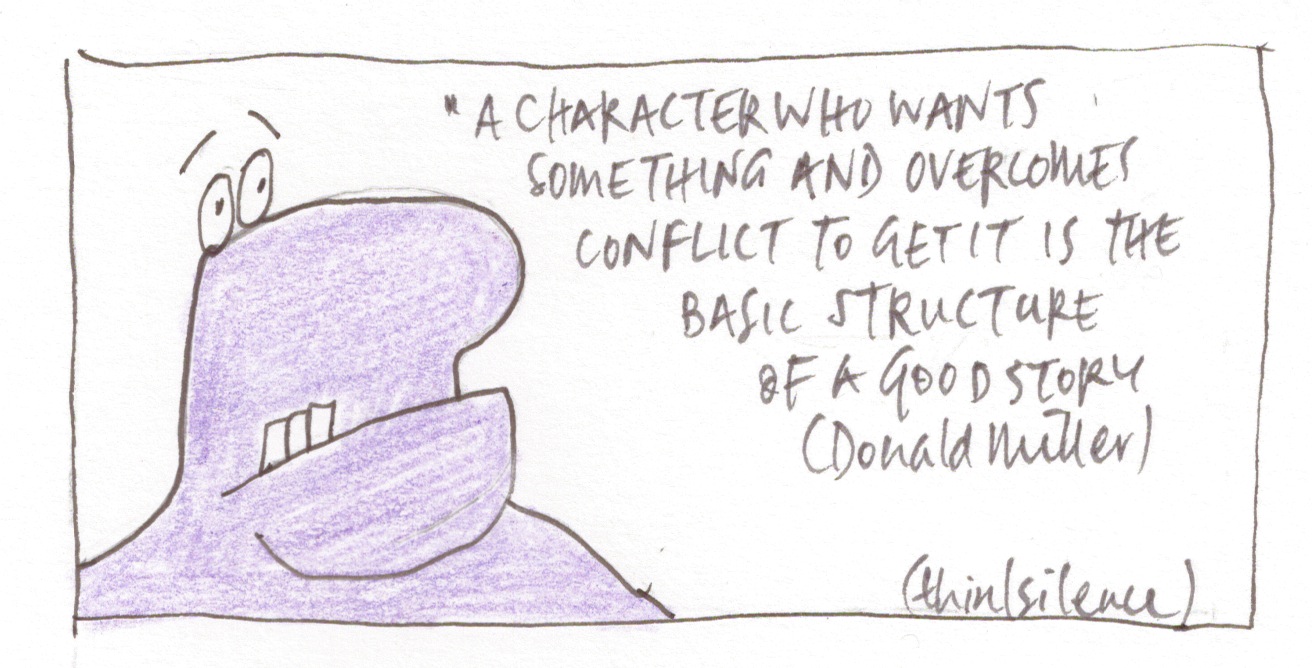
Our art will take us to the most liminal of places in our lives (the disorientating spaces between the familiar places) where we can fail or worse, or fulfil or better.
These will probably not be the most welcomed and enjoyed of experiences, yet, as Daniel Kahneman reminds us, it is not experiences but our memories (how we remember our experiences) which is most important to our sense of eudaimonia and joy.
Our Story turns our experiences into memories; the stories we choose from enables us to remember our experiences in many different ways.
I can’t remember what it was now, but something prompted me to see the rejection I was experiencing in a workplace as something I could use to develop myself. When another difficult situation arose, I called on this memory to again see things positively, and, when this happened a third time, I had a number of memories to call upon. These three years of my life contained some of the most painful and challenging experiences I’ve had to face so far, but I wouldn’t give them up because they have helped me forge what I’m doing today.
I read these words from Keith Johnstone while remembering these things, and whilst he’s thinking of helping students to create fictional stories, the truth of what he says relates to our non-fictional lives:
“It must be obvious that when someone insists that they
‘can’t think up a story’, they really mean that the ‘won’t
think up a story’ – which is OK by me, so long as they
understand it’s a refusal rather than a ‘lack of talent’.”
This isn’t about fooling ourselves into writing a fictional story for our lives, but about taking the same experiences and writing a better story. As I’ve been writing in different posts, humility, gratitude, and faithfulness are behaviours which allow us to unlock our future lives and set them free. It’s a raw and naked experience, which is why the best art happens in the liminal spaces.
I’ve mentioned quirks of ownership, and even “partial ownership” changes things – it’s what marketers and advertisers are trying to get us to do – imagining ourselves in this house or driving this car or wearing these shoes. But, there’s also a positive way to use this.
When we can imagine the our experiences of life leading to different consequences we’re beginning to take ownership of a different story, and when we get to like the story so much we begin to live it, then something extraordinary happens.
 THIN|SILENCE