when art is a long time coming

okay, so it's not basketball ...

It can feel as if it takes a lifetime to identify and produce your art.  I sometimes say, only half-jokingly, I’m still getting there, but one day I’ll declare, “This is what I must do,” and promptly expire.

Some identify their art at an early age; I’ve already admitted I didn’t know what it was at forty five years of age.

And just listen out for how many times you’ll hear phrases like “natural talent” or “they were born to do this or that”.  And we feel we don’t have it and we weren’t.

Two things about talent, and it’s probably one thing, really.

1) Whilst some people may be born with an advantage over others (sprinters with more fast muscle – there are two types of muscle – or basketball players who are 6’8″, nature doesn’t think in terms of athletics or basketball or banking or music or politics or art).  What matters is putting in the thousands of hours of shaping something extraordinary around our particular curiosity and fascination – which may begin with our early exposure to something: Mozart to music, chess for the Polgar sisters, or golf for Tiger Woods – but nothing happens without thousands of hours of practice.*  First thing, deep or deliberate practice.

2) Turn up every day.  At the end of the day, as it at the beginning (and everything in-between), it’s about hard work, in the kind of practice which is stretching, failing, and frustrating and, yes, monotonous (which is why you really have to love something; which is why you can’t turn a Weakness into a Strength).**  The joy of your art is what brings you to the hard place of producing what has captured your heart.  Which probably means, the second thing is deep practice too.

If you’re waiting for inspiration, you’ve already had it.  If you turn up and play with the things which matter to you through practice, you might just be surprised at what emerges.

Boom.

(*I wonder whether my isolation from other children when not at school meant I had to develop my imagination – I love ideas and thinking about the future.)

(**I love the detail in Annie Dillard’s writing about nature and life, and imagine her writing in some pleasant space with sunshine coming in through a large picture window through which she observes the world.  I was staggered to read her description of how she’d lock herself away in a cinder-block room, painted mustard yellow, pull down the blind, and pin a picture of the outside world on it.)

the war of art

oh, she's just having one of her ...

The title of Steven Pressfield’s great book on why it’s hard to produce and contribute the art you really want to.

If you only had time to read one short, insightful book  to help see the resistance then this might be it.

As I’m twenty percent through this book on my kindle, I’m really recommending the book-so-far.*  I left Pressfield this morning listing the many traits of Resistance which sidetrack from what we really want to do, including: procrastination, getting into trouble, sex, self-dramatisation, self-medication, and victimhood – because they’re easier than producing our art.

I see integrity and wholeness (which lead to perseverance) as the powerhouse or engine-room of living creative, enjoyable, and generous lives.  Resistance will do all it can to stop us getting there.  The steps towards this powerful centre involve humility (knowing who we really are – good and bad) and gratitude (the ability to see what we really have) lived out in daily habits and practices of our making (faithfulness).  All of these require some time to reflect before acting – a scarcity in today’s world, but not impossible.

(*I also ought to say, I always read several books together – which tends to have a multiplying or magnifying effect; away from home for a couple of night’s, I’m reading this in parallel with Erwin McManus’s The Artisan Soul and Paulo Coelho’s The Alchemist.)

galaxies and rolls royces and life that is good

everyday, overcoming the resistance

I heard physicist Brian Cox recently, pondering the possibility of Earth being the only planet in our galaxy capable of producing and sustaining life.  His conclusion was, if this is so, how humbling.  I feel this.

Yesterday, I ended the day watching a documentary on the car maker Rolls Royce, offering a behind-the-scenes look at this prestige carmaker’s attention to detail and unrivalled craftsmanship, including the bespoke Celestial model – containing  dash and door panels encrusted with hundreds of diamonds and a roof panel  containing hundreds of optical fibres which represent an actual constellation of stars.

One universe is for all, the other for a few.  (Apologies if you own a Rolls Royce but I struggle to get it.)

Erwin McManus suggests Human creativity – our art – produces life when it is good.

If our planet is unique within our galaxy for producing life, so our lives also appear uniquely positioned for this purpose.  Plants produce more of their kind, so to animals, as the dinosaurs before them, but Humans are different.  We look out into space, dreaming one day of travelling to distant stars, and towards this, and life on Earth, we end up create and produce all kinds of things – even Rolls Royces with picnic hampers costing £20,000.

Of the two stories, the one which excites and fascinates me most is the one Brian Cox and Erwin McManus are exploring.   The better story understands how every Human is capable of living their art towards impacting others for the good, is an amazing one the Universe has gifted us.

You may not believe this.  Yet.  Perhaps it’s too fanciful or the kind of thing that happens to people who get to drive Rolls Royces or life is too busy just getting by.

Steven Pressfield confesses: ‘Most of us have two lives.  The life we live, and the unlived life within us.  Between the two stands Resistance.’

Yet, here we are on this dot in the universe, the adventure invites us to identify our art which is good, which creates life.

why we can’t do it all

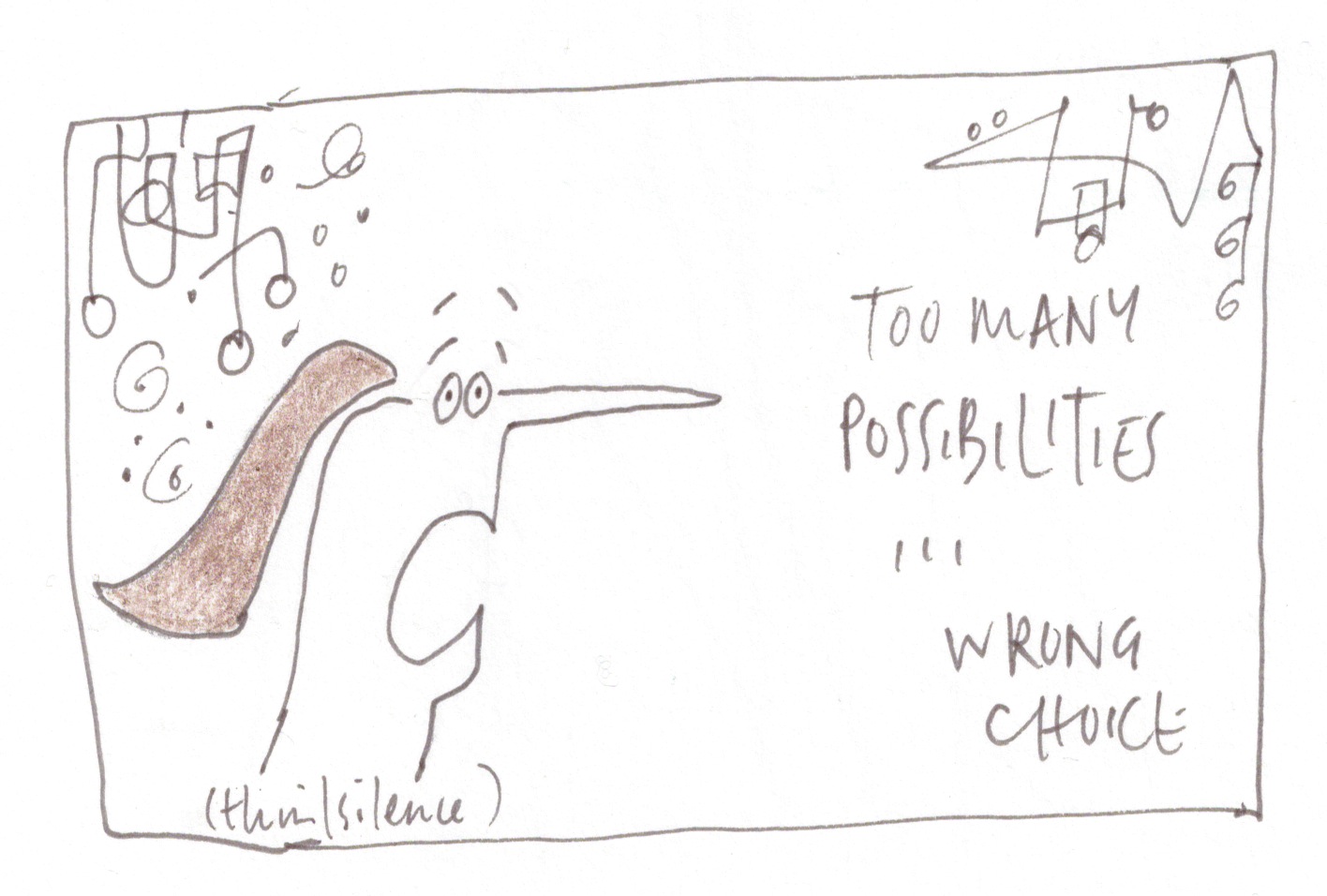
too many possibilities ...

Once you’ve identified your art – that thing you do – you have to let go of, or reduce the time you invest in the rest.*  Unless your art is bringing intensity to many projects.

Herein lies a problem.  Humans like to keep their options open – maybe old lizard brain is keeping an escape route clear – but the result can be we never really commit to what we really want to, and ought to, focus on.

Whether we simply like to do lots of things, or we feel pressured into doing many things well, it’s often leaves us living an unfocused life, wasting energy, diverting it from what we must do.

I had to smile when I found myself doing this earlier.  I’m usually reading seven or eight books at the same time – each offering a different perspective on what I’m thinking about or working with people on.  Today I found myself wondering whether I’d miss some important insight if I didn’t read this book or that, so I dithered.

Dan Ariely suggests, to get unstuck: ‘take into account the consequences of not deciding,’ so I stuck with reading his book describe this very thing.

The catches my attention because I find myself wondering a lot about how people can overcome obstacles to do what their lives are saying they should do.  So, when it comes to our art, it’s important to identify the things which sap our energy and stop doing them, (when this isn’t an option, it’s important to use our art to manage these things creatively – turning them into a small project for what we do best, but we mustn’tt try and turn these things into our art).  One of the guys behind StrengthsFinder, Marcus Buckingham, wrote a whole book 285 pages long to help us get this.

(*This isn’t the same thing as feeding your art through a wide range of resources, interests, and curiosities.)

stories of ownership

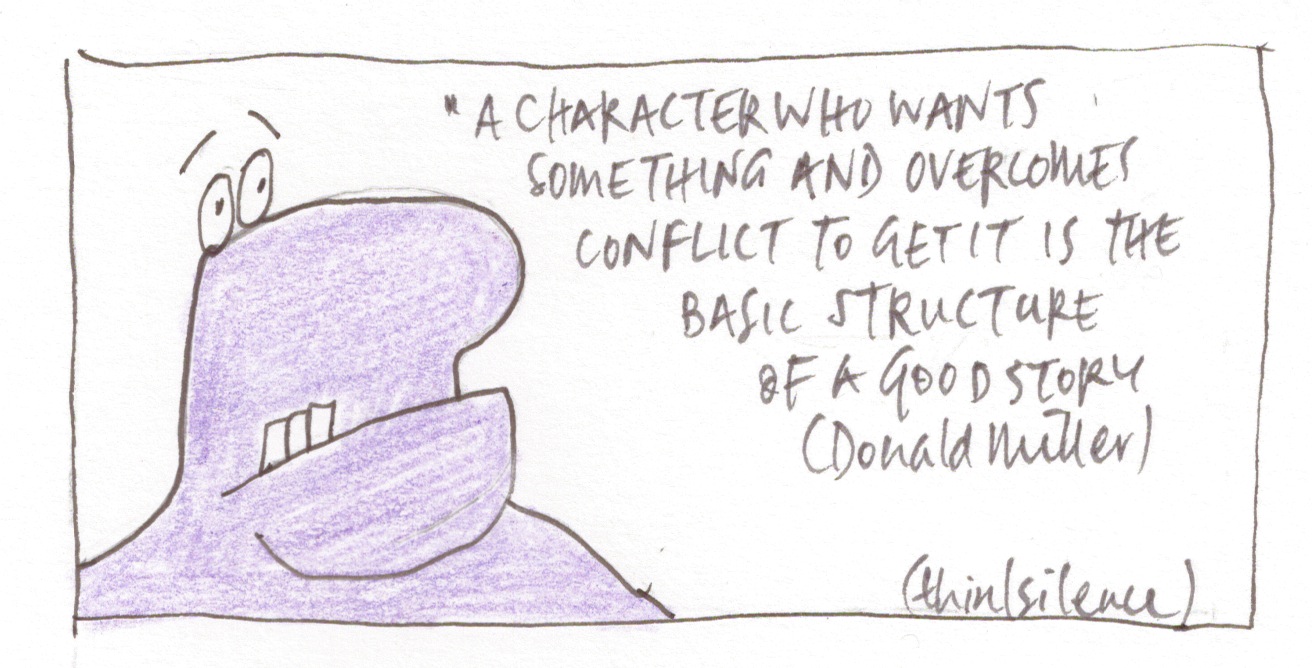
a character who wants something ...

Our art will take us to the most liminal of places in our lives (the disorientating spaces between the familiar places) where we can fail or worse, or fulfil or better.

These will probably not be the most welcomed and enjoyed of experiences, yet, as Daniel Kahneman reminds us, it is not experiences but our memories (how we remember our experiences) which is most important to our sense of eudaimonia and joy.

Our Story turns our experiences into memories; the stories we choose from enables us to remember our experiences in many different ways.

I can’t remember what it was now, but something prompted me to see the rejection I was experiencing in a workplace as something I could use to develop myself.  When another difficult situation arose, I called on this memory to again see things positively, and, when this happened a third time, I had a number of memories to call upon.  These three years of my life contained some of the most painful and challenging experiences I’ve had to face so far, but I wouldn’t give them up because they have helped me forge what I’m doing today.

I read these words from Keith Johnstone while remembering these things, and whilst he’s thinking of helping students to create fictional stories, the truth of what he says relates to our non-fictional lives:

“It must be obvious that when someone insists that they
‘can’t think up a story’, they really mean that the ‘won’t
think up a story’ – which is OK by me, so long as they
understand it’s a refusal rather than a ‘lack of talent’.”

This isn’t about fooling ourselves into writing a fictional story for our lives, but about taking the same experiences and writing a better story.  As I’ve been writing in different posts, humility, gratitude, and faithfulness are behaviours which allow us to unlock our future lives and set them free.  It’s a raw and naked experience, which is why the best art happens in the liminal spaces.

I’ve mentioned quirks of ownership, and even “partial ownership” changes things – it’s what marketers and advertisers are trying to get us to do – imagining ourselves in this house or driving this car or wearing these shoes.  But, there’s also a positive way to use this.

When we can imagine the our experiences of life leading to different consequences we’re beginning to take ownership of a different story, and when we get to like the story so much we begin to live it, then something extraordinary happens.

when it’s hard to (make) change

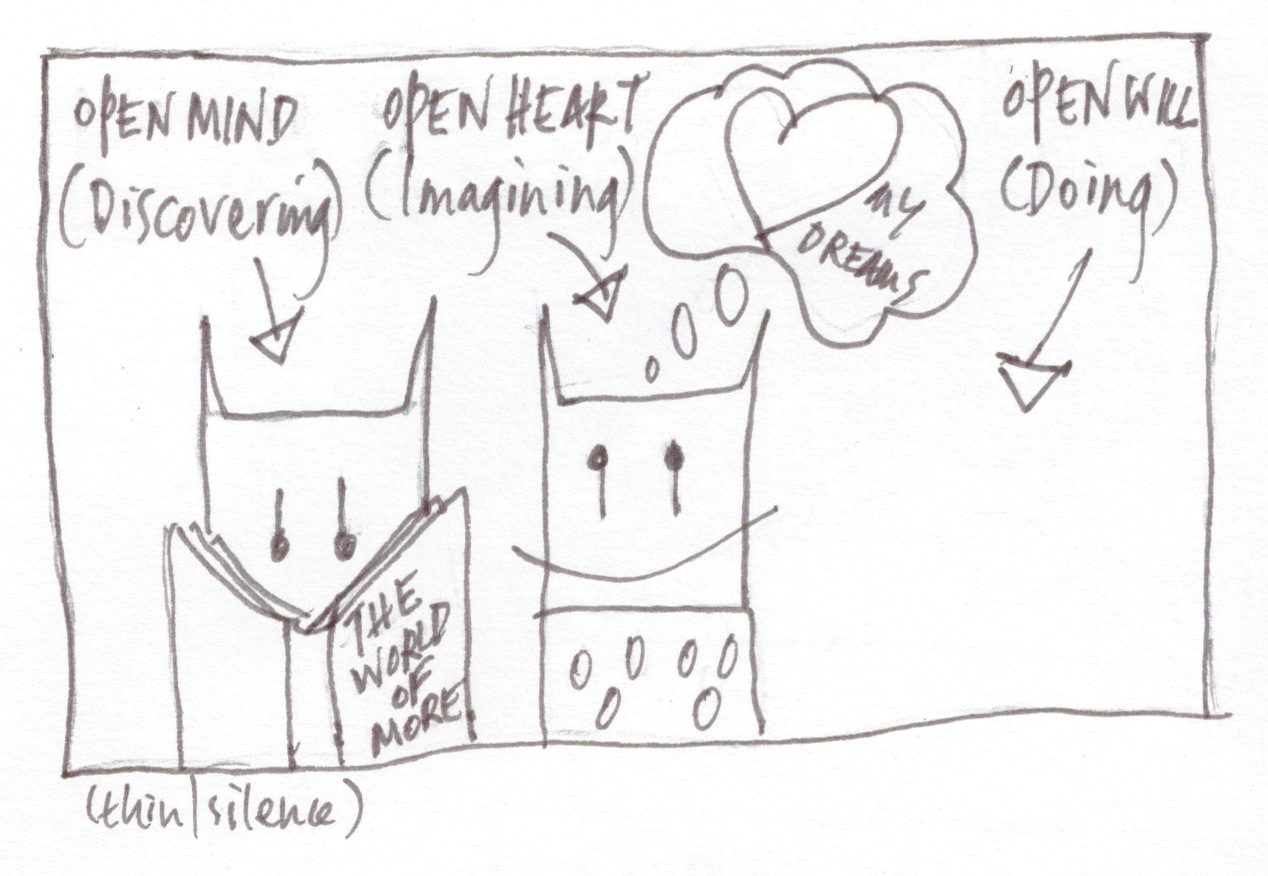
open mind, open heart, open will

Why is it so hard to do the things we want to do?  Or at least to stop doing the things we don’t want to do?

I know this in my own experience.  It doesn’t matter how true something is, it’s only really true when we give expression to it – only then do we truly value it.  And here is the problem.  We measure all things by what we already know and experience.

Let’s add Dan Ariely’s helpful Human quirks of ownership to this:

We come to love what we already have.

We focus on what we’ll lose rather than what we can gain.

We think others will value what we have as much as we do.

This is why the first step towards something new – in regard to ourselves, others, and our world – is to suspend or interrupt how we see and understand.

This has been my own experience.  I had to discover more than I knew, but that wasn’t enough.  I needed to resonate deeply with something in what I was discovering and begin to imagine what I could do, but that wasn’t enough.  I had to try out some of those imaginings, to experiment – and then things began to change.

It’s not easy.

It’s not impossible.

But it is worth it.

tell me your story

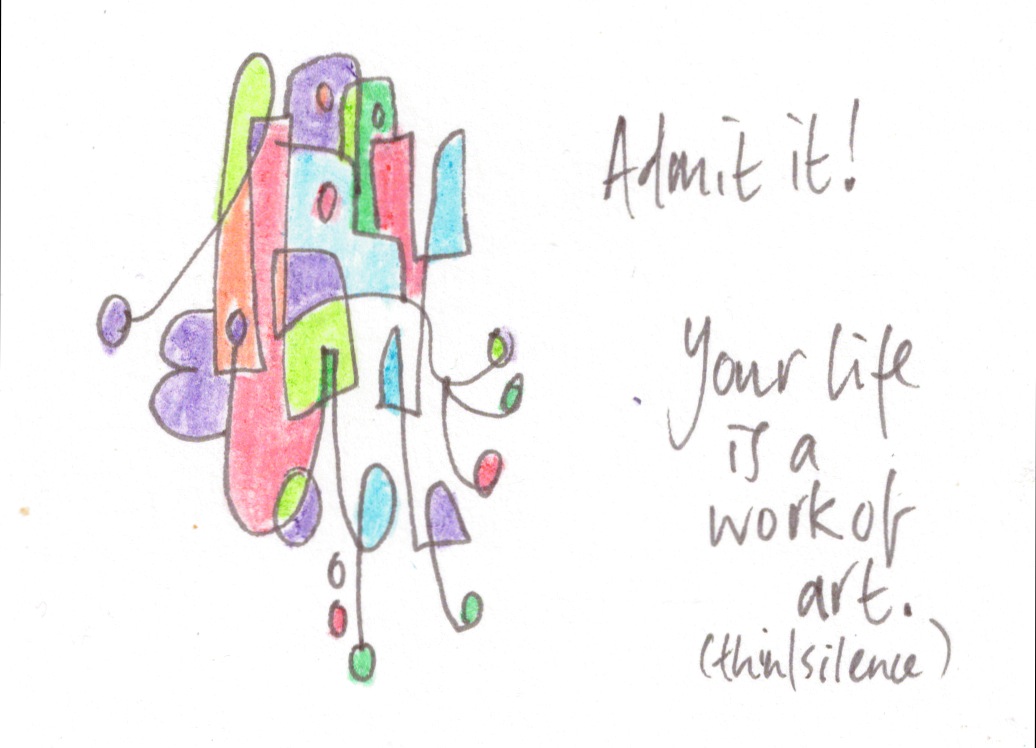
admit it.  your life is a work of art.

You already have an amazing story to tell.

Many will go through life thinking they have to be someone else to have a story worth telling, to succeed, to be exceptional in something, like Picasso:

“My mother said to me ‘If you are a soldier, you will
become a general.  If you are a monk, you will become
the Pope.’  Instead I was a painter and became Picasso.”

In his new book, Erwin McManus writes this of Picasso: ‘Pablo had nowhere else to go, no one else he could become but Picasso’.

This is true for each of us.  We have nowhere else to go but to become more of who we are. and herein lies our story.

Sometimes our stories are realised by identifying our dreams and turning them into reality; sometimes our stories are defined by some need which calls to us – Harriet Tubman’s story caught my attention in this way.  Harriet was born into slavery in the United States but escaped to the north, only to realise this is what she had to help others to do, and so she returned, was a founder member of the Underground Railroad.   Then something else came to mind – Kintsugi, the Japanese art of restoring (restorying?) broken pottery.  The repairs incorporate gold, resulting in objects which appear more beautiful and poignant than their unbroken counterparts.

To know and live your story is to be successful.  This isn’t about telling a series of incidents from our lives as if they are a story.  Oftentimes we tell these little stories without knowing or realising how they fit together.  Our story appears when we’re able to reincorporate these smaller stories into a larger story – a narrative arc – understanding how all everything comes together, restorying into something of beauty.  (My mind pictures a story equivalent of kintsugi gold in this.)

We can’t always control where a story will go but we can come to embrace every part of it.  It strikes me that to do this is a courageous thing to do.  To share it with others is a generous thing.  And to live courageously and generously, well, that’s to live wisely.

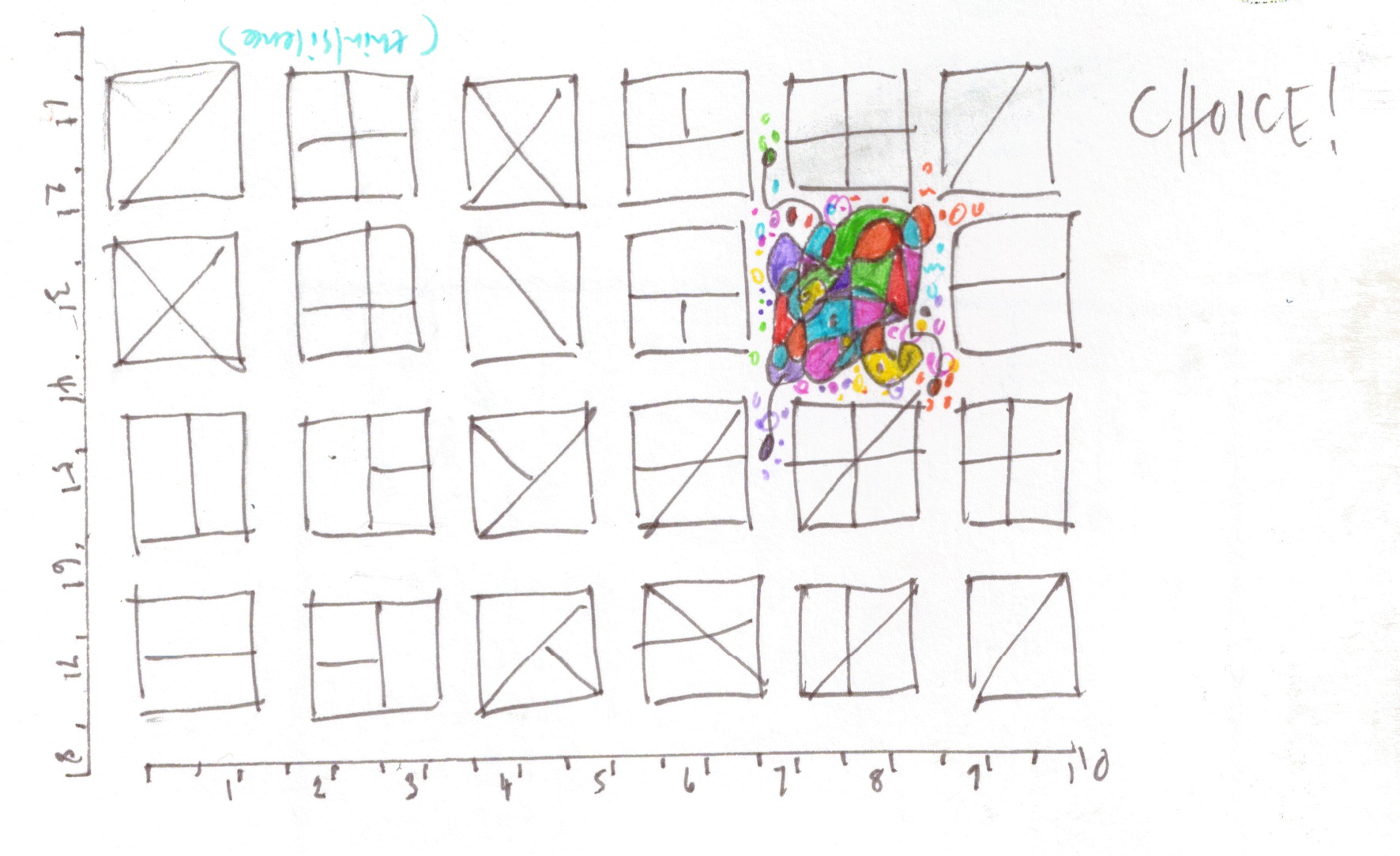
c is for choice

choice 1

Because we’re living in a world of increasing choice.

(C is for other things too, like creativity and courage and confidence – all of which tell us more about how important choice is.)

Seth Godin wrote about small being the new big.  There are things which small businesses and groups can do which larger ones cannot – such as keeping their eyes on a different bottom line or changing direction quickly.

The smallest small is one, is you.

You decide what it is you want to master and deliver in that unique way.   You decide and implement how much of your time is going to be spent on the right kind of training (deep practice*) which will allow you to excel and keep on excelling.  Companies have to work harder to keep upping the training for all their people (though there are big businesses and organisations which act like small ones).

Just look at what’s available on youtube, TED, online courses, Meetup, Ragged University, never mind the books available to read.

The result, when we see that we are the ones responsible for the development of our unique outlooks and skills, is to unleash something both powerful and beautiful – even if within a larger company if you’re part of one.

The thing is, it’s your choice.

If you’re the only person on earth who could have done
what you just did, then you’re a proud amateur.

(*Deep, or deliberate, practice, is that which keeps you reaching for and mastering more skills and knowledge – practice which merely repeats the same old same old is actually counterproductive.)

the voice

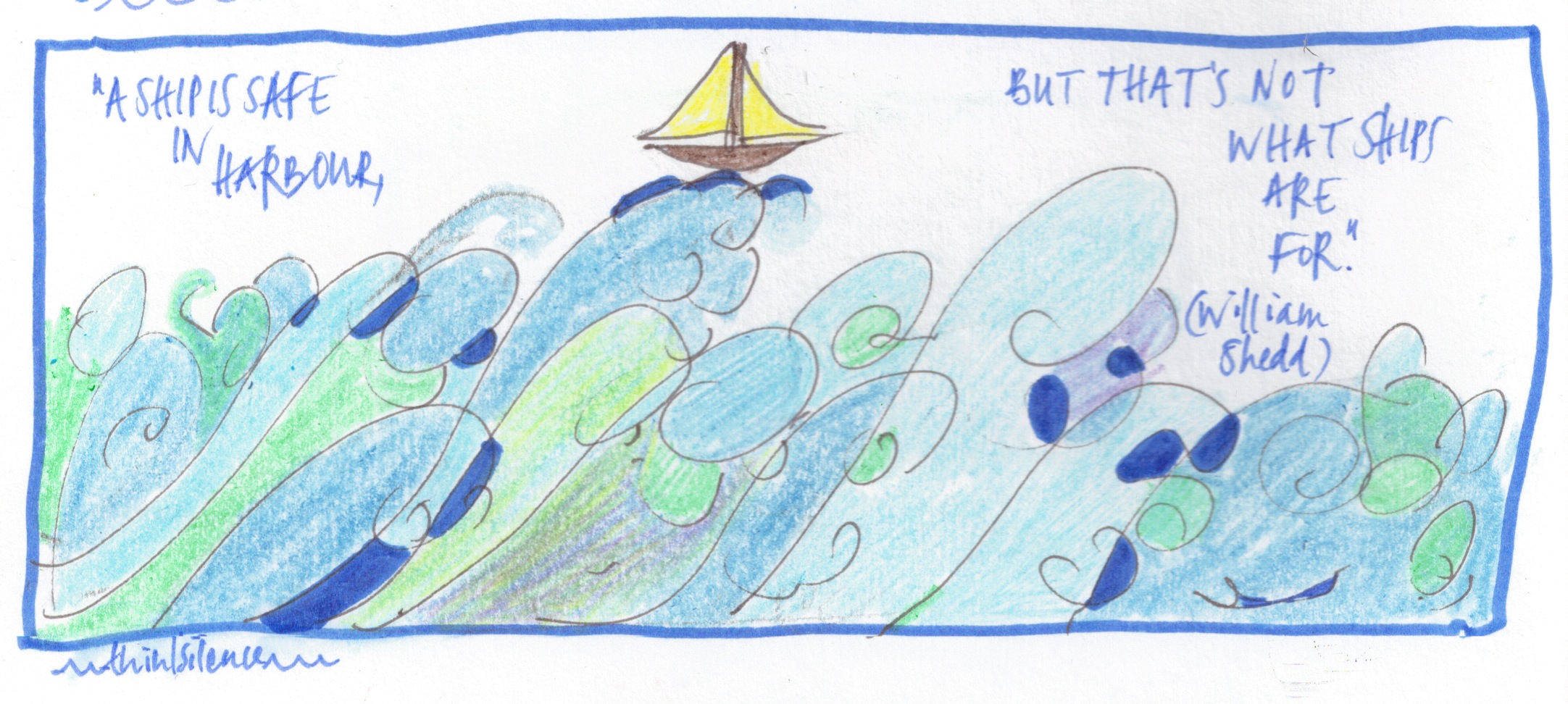
a ship is safe in harbour ...

A very popular TV singing competition on both sides of the Atlantic.  The four coaches choose their the voices for their team blind.

They are listening for the right voices.

The Voice is also you listening for the authentic voice – calling, vocation, purpose, element, future Self – to shape your life in ways which are creative, enjoyable, and generous.

Yes, part of finding our own voice will involve listening to the voices of others (friends, colleagues, family members, experts – in person, in writing, in films, in social-media) – I’ve shared how finding my own voice involved someone whispering into my life at an important moment, maybe not even realising how significant his help has been.

So many voices.  There are voices which come to us from without, and voices within.

How do you know which ones to listen to?

The person on the other end of the phone was very angry with me; I can no longer remember the details.  All I remember was imagining my colleague turning purple on the other end of the line as he told me that he didn’t know what job I ought to be doing but it wasn’t the one I was in.  (As it happens, he was right, but for all the wrong reasons.)

But his was not a voice calling me to my future.

Then there are the voices within.  Otto Scharmer warns that we face three negative voices amongst all the others: the voice of judgement – seeks to keep our minds closed to more; the voice of cynicism – seeks to prevent us from identifying something we will open our hearts to; and, the voice of fear – seeks to prevent is from taking action on what we know we must do.

The best voices to listen to, without, and especially within?

The ones which call you to the future, to more, towards other people, and to making a contribution of goodness in the world.

who was it?

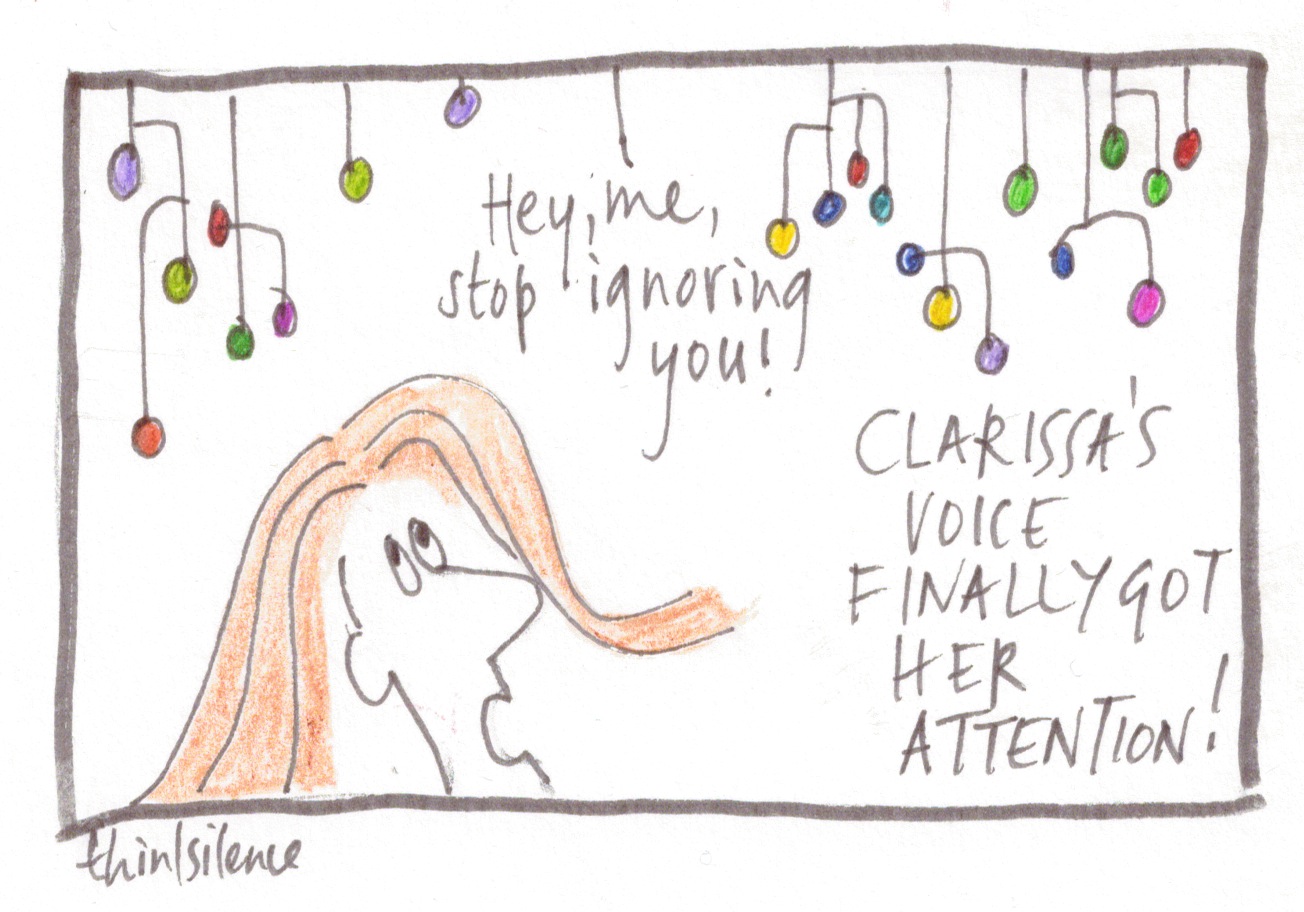
clarissa's voice finall got her attention

The phone call?

It wasn’t anyone I knew.

The caller may have called me “mate” a couple of times but he was from my printer supplier wanting to know if I needed more ink.

Before he mentioned his company or ink, though, I knew it wasn’t anyone I knew.

It’s intriguing how we know who’s calling within a few words (unless they’re pretending to be someone else)  – we recognise so many people’s authentic voice.  As I picked up the phone, I’d been thinking about authentic voices as a metaphor the art we produce from our lives.

There’s an interesting line dividing plagiarism and imitation from innovation and uniqueness.  Those who charge people with plagiarism most likely overlook where they themselves got an idea from.  Whether it be a thought, movement, composition, musical riff, way of delivery, they all began with things other people have created, the artefacts they’ve left behind.

It’s what we go on to make and produce from these that often becomes exciting – and the more we mix things up, the more amazing the creation.  I’ve still got my vinyl copy of Mike Oldfield’s Tubular Bells from the beginning of the 1970s.  Oldfield’s ability to combine contemporary and classical music was nothing short of brilliant, and took the musical world and markets by storm (mind you, not so many people have heard of Hergest Ridge his follow up album, which I also have – here’s the first google suggestion, but this is the one you want).  But Oldfield  began by learning his music from others like everyone else.

Steven Covey held that to find our voices and to help others find theirs is the most important life-habit we can develop.  We learn from others but then we have to develop our own voice.  None of us can share a voice with others, but we can harmonise.

There are lots of things we have to wrestle with if we are to hear our own voice and develop it – pressure to: fit in, to pass an exam, to get a job, to keep a job, to avoid conflict, to avoid hard work, the belief that the chance has been missed, that now is not the right time, others do it the right way, there’s only one way to do it, it would never work, you have to be born talented, fear of failure … .

But finding our authentic voice is not only possible, it’s essential.  Your take on things, the way you combine ideas from many different places in a way no one else has thought of maybe just what the world needs – at least someone’s world, but possibly more more than one person’s world.

And who knows, someone may be waiting for someone like you to to do that thing you do, so they can take this and make something from this and other places you’d not even thought of.