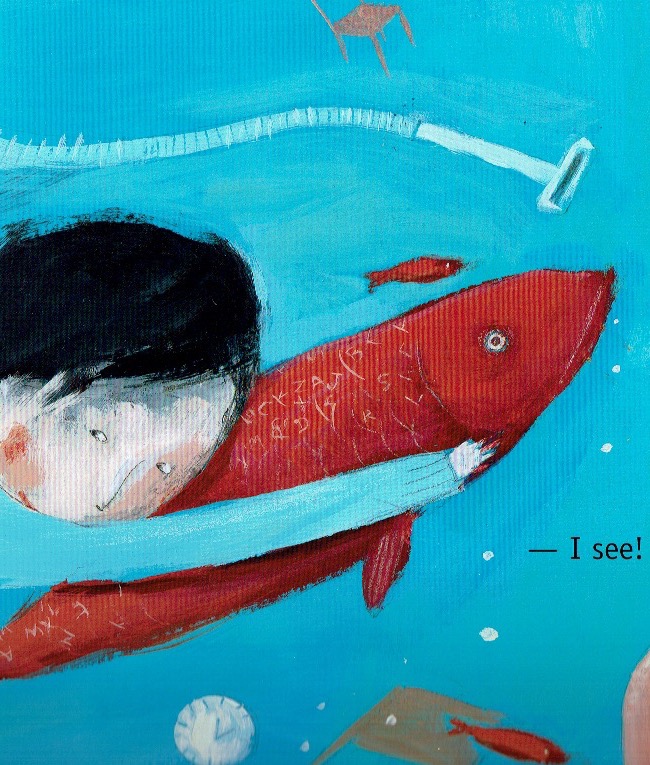
steadfast is changing

Firm, determined, resolute, steady, staunch, stalwart, stout, relentless, implacable, single-minded, unchanging, unwavering, unhesitating, unfaltering, unswerving, unyielding, unflinching, inflexible, uncompromising.

What in you is steadfast, continuing, headed in the same direction, the one good thing you have chosen?

We live in a world of change.  We always have but the speed of changing is growing ever faster:

‘Whatever the reasons change comes when it does, there seem to be at least three Events that ignite change: contact with Outsiders, significant events, and Epiphanies.’*

It’s hard to imagine a world in which these three Events are going to reduce in number.  We have as a species and as people continually changed – human becomings rather than human beings:

‘Each of us is becoming, becoming something better or something worse.  And we become what we teach or what we learn.’**

Against this, steadfast has never meant unchanging. It’s always been about knowing what we must do and living in its direction so that all change increases and grows our steadfastness.  It’s just more necessary than ever to be reflective people, interacting with our growing and developing selves as well as the outside Events.

‘The starting place for change is accepting oneself and taking an interest in one’s inner world.’^

(*From Alex McManus’ Makers of Fire.)
(**From Seth Godin’s blog Groucho runs deep.)
(^From Edward Deci’s Why We Do What We Do.)

not so fallow ground

Fallow can be growing nothing on purpose, though it could also be by neglect or uncertainty.

Sometimes fields are ploughed and harrowed; others are left to their own devices.

Fallowness works as a great metaphor for  thinking about our lives.

We’re waiting to do something.  We don’t know what to do.  There’s nothing that we can do.  Others will tell us what to do.   Something might happen of its own accord.  We’re resting and it’s hard to get going again.

Seth Godin’s recent blog is pretty pertinent.

‘If the railroad didn’t make it to your town, or if the highway didn’t have and exit, or if you were somehow off the beaten path, we wrote you off.

Now of course, if wireless signal can reach you, you’re in the middle of everywhere, aren’t you?’*

Also, the culture and education is changing.

When the ground is finally broken open and sown, the seed comes from a past harvest and its easier than ever for it to find its way to us.  Richard Rohr reminds me that the word person once meant the opposite of how we use it.  Per sonare originally meant to “sound through.”  We are what others have shared with us – seed from a past harvest.

Others argue that we’ve always had the seed – we’ve just never sown it.

And, as with so many things, a problem can be our godsend, bringing everything into focus:

‘Identify the key issue.  What problems keeps you up at night? […] Work to identify the market failures that led to this impasse.  Peel back the layers and determine what’s at the core.’**

Impasses and layers sound very similar to fallowness.  When it gets personal, the problem wakes us up to do something.

If we break open the ground of our lives, the harvest we bear will be shared by us with others: per sonare: a flowing in and a flowing out.  We welcome the seed and rain and sunshine to do their work:

‘And, remember, if it’s not flowing out of you, it’s probably because you’re not allowing it to flow toward you.’^

One more image: this breaking open, this being open to the flow, is also a first step in a quest:

‘The pace of words is the pace of walking, and the pace of walking is also the pace of thinking.’^^

A quest is only a series of steps in the direction of a challenge or need.*^

(*From Seth Godin’s blog: The middle of everywhere.)
(**From Peter Diamandis and Steven Kotler’s Bold.)
(^From Richard Rohr and Mike Morrell’s The Divine Dance.)
(^^From Geoff Nicholson’s The Lost Art of Walking.)
(*^In answer to Peter Diamandis and Steven Kotler’s question about what is my challenge, I found myself saying it is the Alchemy Quest, to offer a journey of transformation.)

in the long run

Time always catches up.

Before we know it we have run out of timethe time is upthe time has gone and, there’s no more time.

The opportunity has passed.  one day, it will be life itself that has drained away.

Bertolt is 500 years old.

Bertolt is also a tree, named by a young boy who befriends him in Jacques Goldstyn’s book that is ultimately about death.  The boy watches the scenes of the nearby town from Bertolt’s branches, makes friends with the other creatures making their home in the tree, learns about the seasons, and, then, one Spring, Bertolt doesn’t come into leaf as the other trees do.  Even Bertolt’s long life comes to an end.  But he must stand there for all to see, so the boy comes up with a plan from his own life.

He had once lost his mittens but from lost and found brings away two mismatched mittens – – for which he is derided by other children.  Now, the boy comes up with the plan to redeem the many odd mittens and. filling Bertolt’s branches with clothes lines, in the words of Maria Popova who has introduced this story to me:

‘we see Bertolt half-abloom with mittens.  Like Christmas ornaments, like Tibetan prayer-flags, they stand as an imaginative replacement for the leaves and blossoms that Bertolt’s fatal final spring failed to bring — not artificial, but realer than anything, for they are made of love.’*

As I read this, I understand I am not without some time, to understand the lives of others, to be friends with the world, to learn about living through the seasons, and to know myself in all of this.  I have wasted plenty of time but I also have time left.

(*From Maria Popova’s BrainPickings: Bertolt: An Uncommonly Tender Illustrated Story of Love, Loss, and Savoring Solitude Without Suffering Loneliness.   I have now bought the book Bertolt and imagine the story of the boy and this tree will reappear.)

find me here and find me there

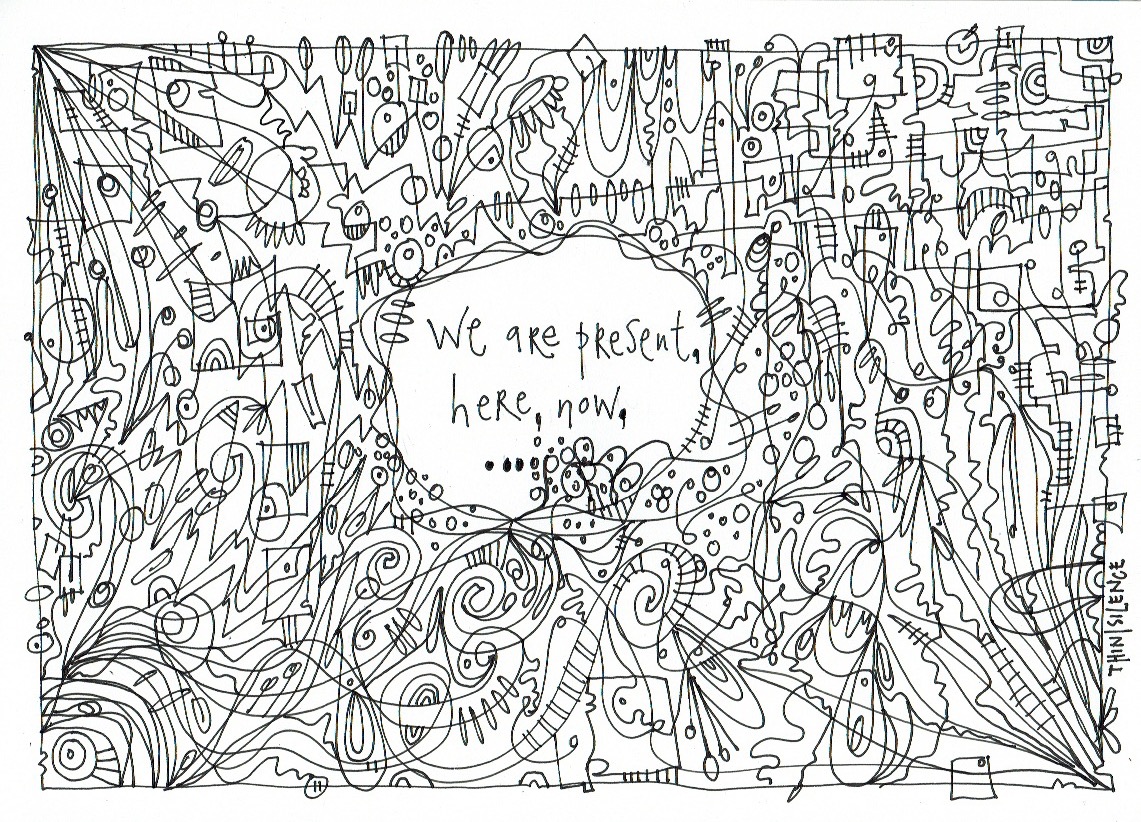
Here is an important word.  It’s about being present, now.

Life becomes even richer when there s also a there, usually followed by a there to there to … .

Here is now.  There is about journeying into the unfamiliar, the new, the future.

Because we can.

Because we can dream in the daytime as well as at night.  Some feel this to be a curse: please leave them be, forget the becoming.

Hugh Macleod captures the urgency inhabiting our ability to dream.

‘Thought leadership should be about taking what you know and using it to help people around you.  To innovate.  To make your world a more meaningful place.’*

This thought or dream or hope is where it all begins:

‘Creating the future does not begin with a plan.  It begins with a dream.  And when someone acts on a dream, it creates a spark.’**

Cometh the spark, cometh the fire.

No-one dreams or hopes for what they already have.  It’s about the future, the journey from there to there.

I’m hopeless for remembering nighttime dreams.  And those I remember, I don’t pay much attention to.  I don’t know why.  Perhaps because they’re about my brain thinking about and sifting the past, but my daytime dreams are about the future.

To be human is to find me here and to find me there.

(*From gapingvoid’s blog: Teaching for the sake of what?)
(**From Alex McManus’ Makers of Fire.)

opportunity

In his novel about creation physicist and writer Alan Lightman names this universe of ours Aalam-104729 – one of an incalculable number of universes formed in the Void:

‘No matter what one was doing in the Void, no matter where one was in the Void, once could feel the crowd of new developments in Aalam-104729.  One could feel the rushing headlong into the future, even thought that future was faint and fraught with uncertainties.’*

This is our home.

Before reality there is probability and before probability there is possibility – with no certainty of success.**

This can be a long journey so what makes us go after it?

Obedience may take us some of the way but love helps us complete:

‘I work very hard for something I love to make sure I don’t have to work very hard doing something I hate.’^

To do what we love and love what we do but which comes first?

This is a mysterious thing.  The important element is to notice what we love, what we feel the rushing headlong into the future within.

In his wonderful book of words and pictures It’s Your Turn, Seth Godin points us what we must then do:

‘To be an artist is to be on the hook, total your turn, to do the things that might not work, to see connection, to embrace generosity first, to take responsibility, to change someone, to be human.’^^

Before there is certainty there is only uncertainty.

I came across Alan Lightman when I read his excellent Einstein’s Dreams in which he tells short stories about time.  This treasure of a boo interweaves time stories with Albert Einstein

finalising his Theory of Relativity.

In a world where people live forever the population is made up of Laters and Nows:

‘The Laters sit in cafés sipping coffee and discussing the possibilities of life.  The Nows note that with infinite lives, they can do all they can imagine.’*^

Ever wonder what your imagination is trying to tell you?

Passion is about being a Now, not a Later:

‘I walked away remembering that passion was a rare commodity.’^*

It needn’t be, it’s only a willingness to notice more away.

We begin with possibility and love carries us forward.

And before possibility there is opportunity.

Welcome to today.

(*From Alan Lightman’s Mr g.)
(**See Seth Godin’s short blog Possibility.)
(^From gapingvoid’s blog Making the Best of it.)
(^^From Seth Godin’s What To Do When It’s Your Turn.)
(*^From Alan Lightman’s Einstein’s Dreams.)

the beautiful mystery

“The most beautiful expression we can have is the mysterious.  It is the fundamental emotion which stands at the cradle of true art and true science.”*

Sherry Turkle offers this insight from her research into how we are expecting more from our technology.

‘But for Tara, as for many, the telephone call is for family.  For friends, even dear friends, it is close to being off the menu.’**

She continues with her own confession:

‘I have been complicit with technology in removing many voices from my life.’**

I realise I have too.

There’s a question running in background of may mind and it goes something like this: If life is all about relationships – how we relate to others, our world, and ourselves, and how everything exists does so in relationship to everything else  – is love the greatest expression of relationship?

I read Richard Rohr who argues that absolute love is ‘the very name and shape of Being itself.’^

There follows the question of whether technology is reducing our experience of this.  Increasingly there’s a misalignment of time between myself and those I am communicating with.  This has always been our experience.  A letter meant I could write to you and you would receive my message several days later.  Telegrams shortened this to hours.  The telephone meant we could hear each other’s voices.  Now texts and messages and emails are turning things in the other direction.

‘We did not set out to avoid the voice but end up denying ourselves its pleasures.  For the voice can only be experienced in real time, and both of us are so busy that we don’t feel we have it to spare.’**

Turkle is imagining a mutuality of speaking and listening.  Only then do I know my voice is being heard – I may leave you a voicemail but you don’t have to listen to it.  A voice disconnected in this way is uncanny or acousmatic: ‘a voice whose source cannot be seen, i.e. an off-camera (or off-screen) voice.’^^

Voice “speaks” of more than this for me.

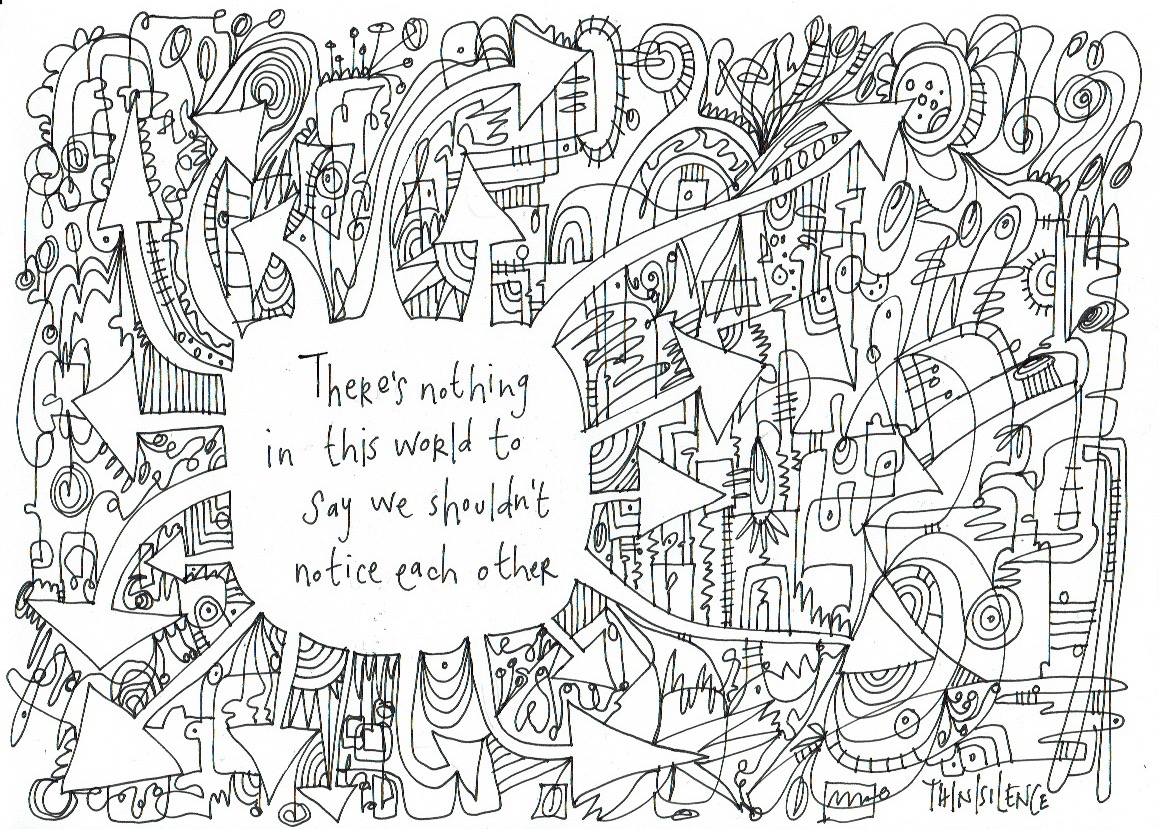
It also means the “art” someone brings out from their connected life: their talents, passions, and gift.  We offer our art as a means of connection; we might say, the product of realigning time with ourselves and a way of realigning time with others, and even with the world.  This is to touch the beautiful mystery.

Alan Lightman shares the elation of a scientific breakthrough:

‘Then, I felt a sense of mystery.  I had shed light on a small corner of nature. […] Just as Einstein suggested, I have experienced that beautiful mystery both as a physicist and as a novelist.  As a physicist, in the infinite mystery of physical nature.  As a novelist, in the infinite mystery of human nature and the power of words to portray some of that mystery.”*^

In these words we hear Lightman’s voice – expressed in his science and writing of the mystery of human nature.  It’s the realignment of our times that makes it possible to explore this beautiful mystery together.

(*Albert Einstein, quoted in Alan Lightman’s A Sense of the Mysterious.)
(**From Sherry Turkle’s Alone Together.)

(^From Richard Rohr’s The Divine Dance.)
(^^From Charlotte Bosseaux’s Dubbing: Film and Performance.)
(*^From Alan Lightman’s A Sense of the Mysterious.)


ithaca, or, slow possibilities in the same direction

“Always keep Ithaca on your mind.
To arrive there is your ultimate goal.
But do not hurry the voyage at all.
It is better to let it last for many years;
and to anchor at the island when you are old,
rich with all you have gained on the way,
not expecting that Ithaca will offer you riches.”

‘”Day by day, stone by stone
Build your secret slowly […]
If you want to live life free
Take your time go slowly.
If you want your dream to be
Take your time, go slowly.”**

Life invites us to make a journey for some eighty years or so.

We each have different ideas and/or hopes for where we might be at the end it.  I imagine most of us hope that we will have lived a worthwhile life and that it will have been filled with love.

Constantine Cavafy’s words encourage us to explore the riches of the journey.  These may occur by happy accident but are more likely to come about by learning how to experience more.  The following words come from Donovan Leitch – those of us who are older will remember when he was simply Donovan – highlighting how slowness is an important part of discovering more about life.

Seth Godin has just been blogging on sailing and it feels like a poem:

‘A sailboat without a sail might float.
For a long time, in fact.
But without a sail, it can’t go anywhere, can’t fulfil its function.
Floating is insufficient.’^

This sail is the purpose we want to pursue.  We may have tried different sails only to find they don’t “sail our boat” the way we want.  Coincidently Hugh Macleod remarks on how, when it comes to what we want to do with our lives, ‘there’s a lot more freedom to roam, we’re lacking in guidance.’^^  We need “navigators” to help us identify just the right sail we want to move our boat – we can be such navigators for one another.

When you have your sail then you require some rules, to keep us on course, and a floating-only life.  Speaking in 2004 aerospace engineer Burt Rutan remarks on how the rules for guiding times towards creating a reusable passenger space craft helped the participating teams reach the target:

“It’s amazing that the rules for the XPRIZE are still valid today, nearly eight years after they were announced in 1996.”*^

Rules are about how we’ll engage in life.  There are general rules we figure out with each other and there are the specific ones only we can identify for the journeys we make, helping us to do what we must do every day until our days run out.

(*From Constantine Cavafy‘s Ithaca, quoted by Chris Guillebeau’s The Happiness of Pursuit.)
(** From Donovan Leitch’s Little Church, quoted in the Northumbria Community‘s Morning Prayer.)
(^From Seth Godin’s blog Without a Sail.)
(^^From gapingvoid’s Navigation systems ready.)
(*^Burt Rutan, quoted in Peter Diamandis and Steven Kotler’s Bold.)

let there be light

‘First there was time.  Then space and energy.  Then matter.  And now the possibility of life, of other minds.  What would these new minds think?  What would they grasp? […] I could feel the weight of the future, heavy, bristling with possibilities.  But I could not see the future.’*

In ‘a novel about the creation,’ we are the future Alan Lightman’s character Nephew cannot see when creating this universes out of the Void.

“Bristling with possibilities” resonates with Richard Rohr’s hope for ‘infinite openness and capacity to love.’**

We do not have to wait for these kinds of light.  We are capable of producing light in darkness,  capable of making change.  As Andy Raine expresses through his faith so we can all sing out as children of this universe of incredible possibilities:

“Let light spill out of heaven through my life dispelling mediocrity and silent blame.”^

Which sounds like love being shared, removing blame and meaninglessness that ought to have no place in our short lives.

I am grateful for those who have shared their light with me over the years.

(*From Alan Lightman’s Mr g.)
(**From Richard Rohr’s The Divine Dance.)
(^Andy Raine,quoted in the Northumbria Community‘s Morning Prayer.)

acceptance

This wasn’t how I planned it.

‘By the time we get this far, we’ve got bangs and bruises, things that don’t work quite right, experiences that have shaped us, sometimes for the worse. […] And all we can do is wrestle with them the best we’re able.  And realise that everyone else has them too, and give them the support they deserve.’**

Sometimes planning works and sometimes it’s overtaken by all the other things that happen.  Often there’s no getting back to where we once were.

We’ve also been changed in the process.

The hero’s journey outlined by Joseph Campbell is one in which an interrupted life crosses thresholds,  overcomes adversaries and obtains the boon to take back to their community and loved ones.  Such myths were ways explore and understand life.  There would be no going back to where they were and life would be changed.

Such change is heart stuff, as Otto Scharmer and Alex McManus remind us

‘The most important change in any transformation journey is the change of heart.’^

‘By “heart” I mean the place where the emotions meet reason, mobilise the will, and shape identity.’^^

It’s at the heart level of our lives that acceptance happens, essentially being fully who we are and making this available to one another.

As Seth Godin shares, above, we are what we are, and we can choose to support each other, or, as Ed Catmull writes: ‘working with change is what creativity is about’.*^

(*From Seth Godin’s blog Pre-existing Conditions.)
(^From Otto Scharmer’s Leading from the Emerging Future.)
(From Alex McManus’s Makers of Fire.)
(*^From Ed Catmull’s Creativity, Inc..)

a picture book of wonder

The person who notices something profound and wonderful may not have the understanding or words to explain it but they can tell a story or maybe draw a picture.  If it’s for real, science will catch up.*

First there’s the description, then there’s the explanation.  Then everything joins up, one thing is connected to everything in our quantum universe of holons and fractals.

Busyness pollutes, noise pollutes but we can all be “noticers.”  :

‘There’s so much noise around us all the time […] .  The solution isn’t to add to the noise, though; it’s to save energy.  It’s to speak at the right time, instead of all the time.’**

Silence is powerful.

Silence and solitude more so.

Silence and solitude and slowness are the most powerful of all.

Allowing us to gaze upon the unknown, we’re able to identify and ask our questions, as Warren Berger encourages when he speaks to all the inquisitives among us:

‘Questioners learn to love that great unknown – it’s the land of opportunity, in terms of creativity and innovation.’^

The questions that most itch and urge us move us into our quest or journey.  My friend and mentor Alex McManus writes in Makers of Fire about how we are a mystery wrapped in a question.  This is our DNA.

When we wish to explore, we find that a little silence added to our days goes a long, long way.

(*See Jonah Lehrer’s Proust was a Neuroscientist to see how we can anticipate truths and realities.)
(**From gapingvoid’s blog A Welcome Moment of Quiet.)
(^From Warren Berger’s A More Beautiful Question.)