bring it all

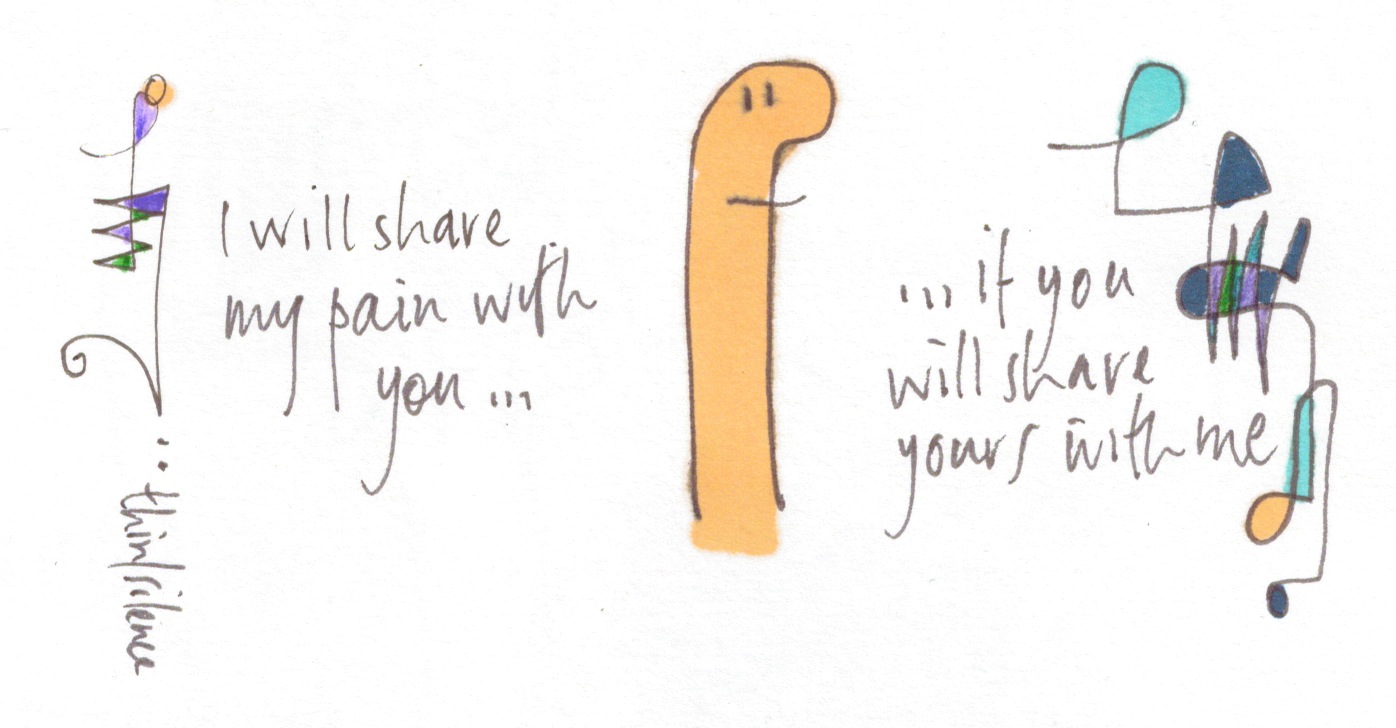
i will share my pain with you ...

This is about the stuff more difficult to bring to our art.

In the fifth Star trek movie The Final Frontier,* James T Kirk refuses the offer from the Vulcan Sybok to have his pain taken away, declaring how it to his pain which makes him Human.

Scott Doorley and Scott Witthoft offer an illuminating thought on this from an unusual source – that of shaping creative spaces – stating how we ought to:

‘Treat storage as a living entity that occupies at least
30 percent of your space.  You’ll need at least that much.’

Value the things you store from your past, is my gain from this.

Which bring up the question for each of us: how do we deal with the pain of memory and the memory of pain?  Either the prideful and greedy and foolish things we have been done, or, those done to us?

If we have a merciful and graceful place to store these, meaning we are prepared not to hide from, or bury the painful things, they become powerful resources for our art, which if lost leave us impoverished and inhibited.

What if they can help us to our key practices for art of humility, gratitude, and faithfulness, our ways for exploring a creative, generous, and enjoyable life.**

I’ve mentioned Daniel Kahneman‘s belief that we substitute an easy question for a difficult one whenever we can; he goes on to cite his law of least effort, which ‘asserts that if there are several ways of achieving the same goal, people will eventually gravitate to the least demanding course of action.’

Here is our enemy, though it promises to take away the pain of memory and the memory of pain, but better still to the use the pain redemptively to produce our art.  I stretch another thought I came upon which I see as covering the pain of our past and helps us to be young again:

‘YOUTH is not a number, it’s an attitude.  So many disruptive
artists have been youngsters, even the old ones.  Arts isn’t
genetic or chronological destiny, it’s a choice, open to anyone
willing to exchange pain for magic.’

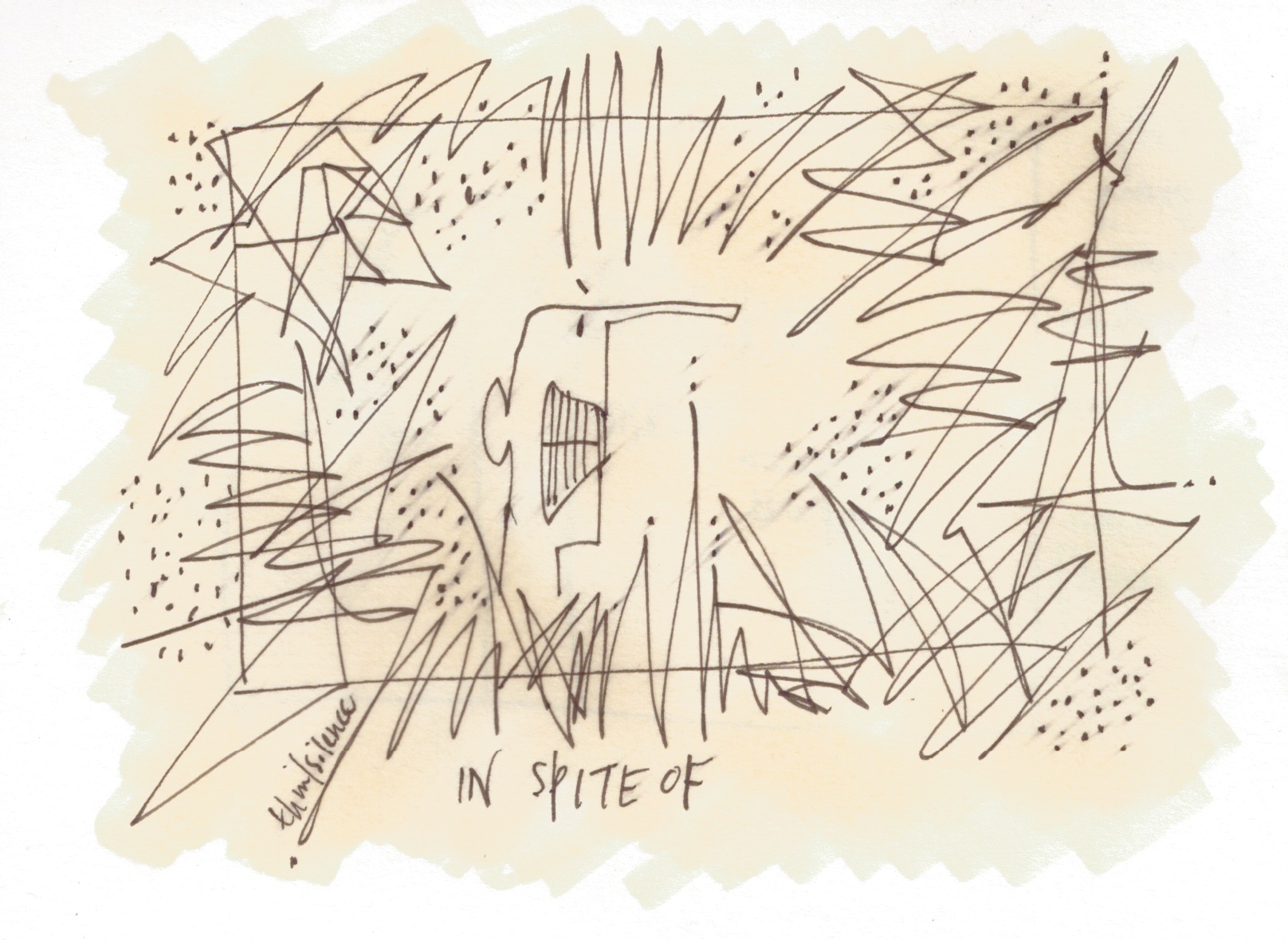
We can be courageous in spite of …; we can be generous in spite of …; and, we can live wisely in spite of … .

(*You’ve probably figured out my taste in movies by now.)
(**I share about this in more detail in other blogs – I’ll aim to find these and add a link.)
 

p is for participate

5the mission is to complete the mission

But it can also be for procrastination – the enemy of participation.

The world is changing,* and what we’re realising is, it’s a place of abundance rather than a place of scarcity.  We are invited to move from a world of observing to world of participating and contributing.

Yes, it will mean we’re vulnerable, but as Chris Anderson reminds us, we’re all born Makers – his word for artist and artisan.  As soon as we are able to imagine and play, we make things.  Somewhere between childhood and adulthood, we lose this, but we’re living in a time when imagining and making can be rediscovered.

I used to think you could get lost for days in Ikea, but sites like Pinterest are bigger still – pages and pages of online content displaying what people have made, often without big factories and workshops – evidence that many people are taking the opportunity to move from observing to contributing.

When you value the right things about yourself, and you understand that at your fingertips is everything you require to produce something right now, you have no idea of where it will go.

There is a growing realisation this is a world of abundance, beginning with the infinite resource of Human imagination, and they are beginning to play.  They are realising the truth, we are all born participants.

Time to join in.

(*We have been producing the ways and means for connecting more powerfully with Human creativity – says Chris Anderson: ‘Computers amplify human potential: they not only give people the power to create but can also spread their ideas quickly, creating communities, markets, even movements.’)


mind your language

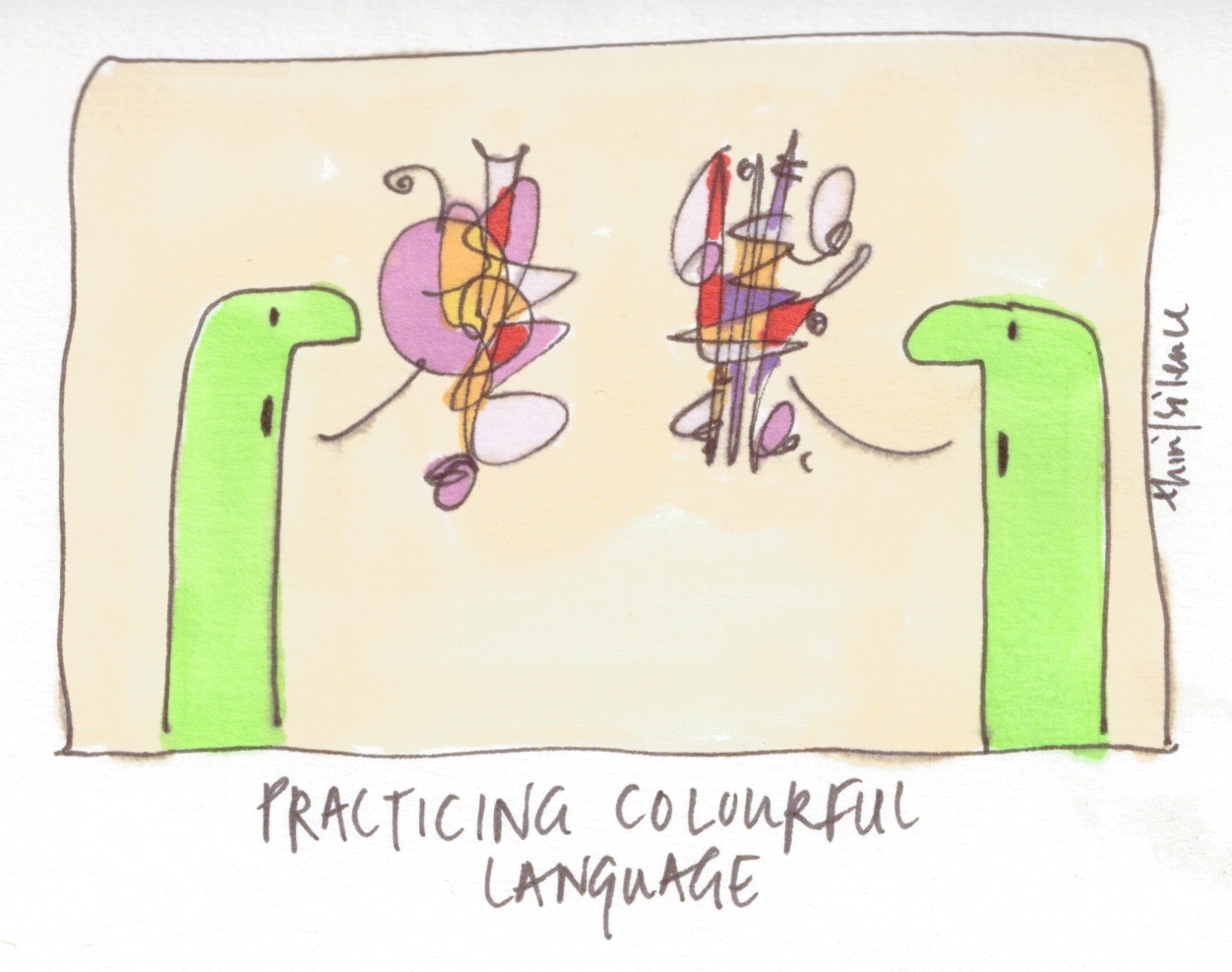
4practicing colourful language

It’s very important for what you do with your life.

When we use general words and terms, we ought not be surprised we struggle to move forward or action anything.  They might sound great but there’s little to get hold of or to push against.

If we speak in general ways, perhaps because of modesty or laziness or cluelessness or fear or a desire to impress the powers that be, I don’t think we help anyone, least of all ourselves.

Seth Godin offers the word plussing,* like his word zooming, it means taking your work farther:

Taking your work a little farther.  Going closer to an edge, whichever
edge.  Is there anything you can’t plus?  Anything you can’t make
simpler, more luxurious, cheaper, more extreme?  Anything you can’t
make more remarkable?

I love these words; they stop me and make me think.  The reason I mention them is because you can’t plus or zoom where there are no details to scale or grow – you just produce more general, and what good is that?

But you can plus specifically – that thing you’ve identified as your art with specific skills and actions and behaviours and practices – all of which can be developed into something more amazing.

(*A word used by Disney.)

repeat

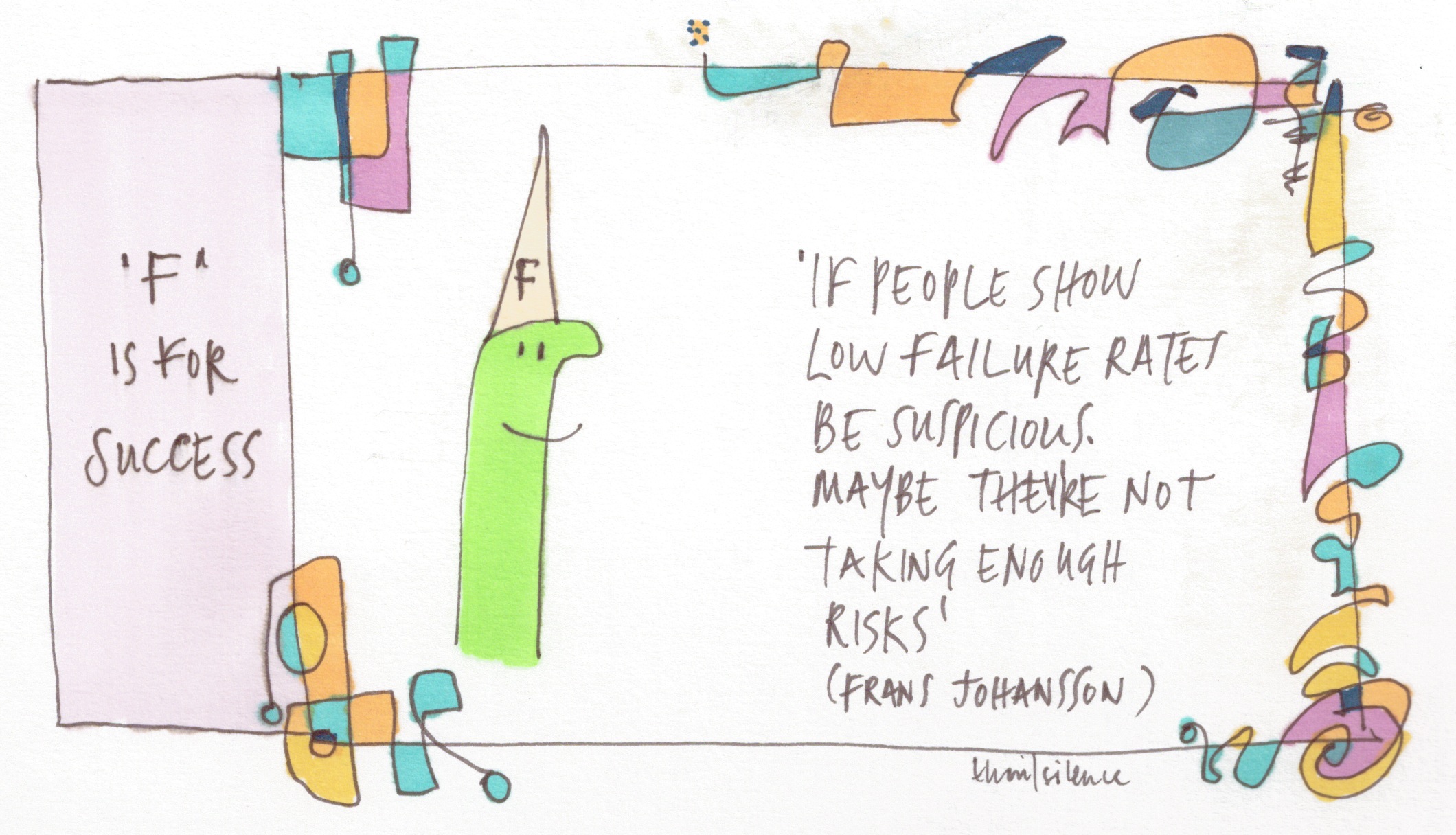
f is for success

Do people really want today to be a repeat of yesterday?

Do they get up saying “Same again, please”?

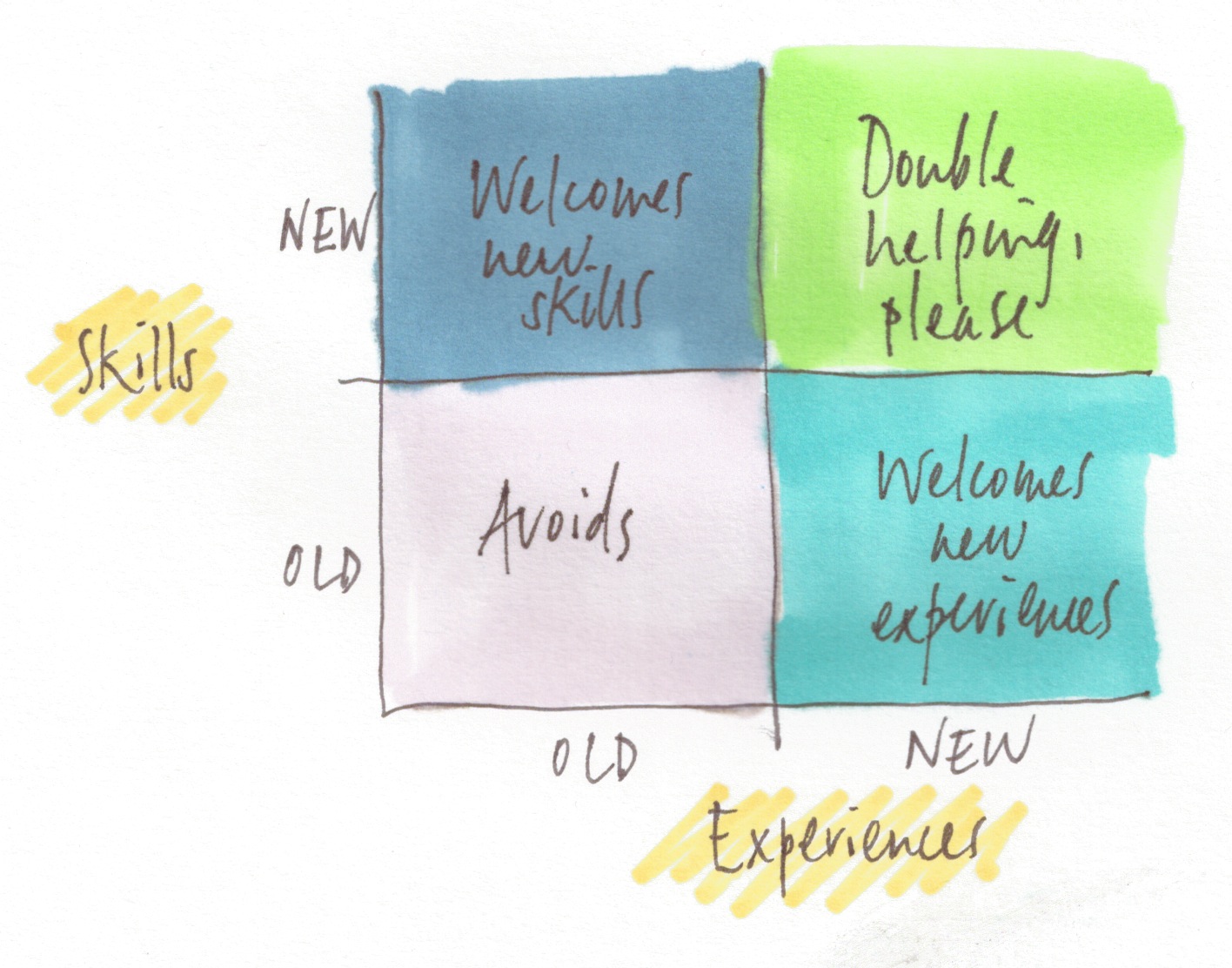
There are basically four kinds of repeat.

One repeat avoids anything different or new: skills or experiences.

The second repeat loves applying old skills to new experiences.

The third, loves developing new skills for existing experiences.

The fourth repeat wants to use every moment life gifts to explore new skills within new experiences.

4 repeats

I frame it in this simple way for now: what if the end of the day found us grateful for having met someone new, and/or encouraged someone, and/or served someone through our art.

They key lies in our art – that is, our story or purpose – and having to give expression to this every day which comes our way.

What kind of repeat will today be?

Three repeats are worthy, of which one is extremely so; one gives permission to entropy.

Your choice.  None are fixed or given.

You’ll fail often but that’s part of exploring the landscape of life.  As Frans Johansson says, ‘If people show low failure rates, be suspicious.  Maybe they’re not taking enough risks’.

(The cartoon quote is from Fran Johansson’s excellent The Medici Effect.)

in spite of

in spite of

An important footnote to the art you do.

Your art is the result of struggle, and you cannot do without the struggle.  It has brought you to an important place.  Pearls are produced from irritations which will not go away – and when they are taken away, that’s the end of the game..  Your art would not be so beautiful if it were not for the struggles.

It could well be, no-one seems to notice or be interested in what you do.  It is important to remember, you are not looking for the many, but for the focused few; your art being your ‘chance to convert the focused few,’ of which you are the most focused of all.

You need one person and you have begun – then there are two willing to do what others fear.

We follow a dream and work out our art in loneliness, seeking to connect in something which matters.

We must do all we can to connect.  We know the time is not tomorrow, the time is now.

initiate

initiative is the privilege ...

Pick yourself.

Now is the right time.

If you waiting for someone else to ask you to do what it is you do, you may be waiting a very long time.

A conversation with someone within my organisation underlined this for me only yesterday.  Their most important comment was that I was smiling when I described the work I’m developing.  Others have said this too; it’s not inconsequential and I’ll say more in a moment.

Annie Dillard offers this crucial insight:

‘Why do you not find anything written about the idiosyncratic
thoughts you advert to, about your fascination with something
no one else understands?  Because it is up to you.’

What is it you do which makes you smile?  You wonder what’s going on with your face and you realise you’ve just been contributing your art and it’s made a difference.

When people tell me about what they love to do, they light up with energy.

There are two kinds of time: chronos – days, hours, minutes – and kairos – the time to begin, the time in which we find ourselves.  When these connect – we do the thing we do in the hours and minutes and seconds of our days – then we are doing the thing we must do.

There are lots of different things we need to be about to make this happen – we need reflective time, intimate time, workshop time, collaborative time, perch time (moments ‘to pause and lean for a brief encounter’ – i.e., reconnecting).

But don’t wait for the moment when someone will see what you do and fall over with amazement.  Now is the time to pick yourself.

(Seth Godin’s quote in today’s cartoon comes from V is for Vulnerable.)


time to give up

gifts are the essence of art

Not yet.

Not if what you are pursuing is the thing you know you must do.

I don’t mean having some vague hope of being able to one day do the things you hope to get good at; I mean  that thing you do when your skills are creatively engaged by your passions.*

It’s hard, I know.  It will feel like your over-investing time and money and energy and you can’t give any more, but if it matters to you, this is what it takes.

What you need, you’ve already got in abundance.

You find it in the integrity of your knowing who you are and what you can do (and, equally, knowing who you are not and what you can’t do), and knowing you are whole enough, having all the resources you need to be creative right now.  What this adds up to is, you are able to keep going further than others who don’t have the skills or the passion or always think they need something more.

What you do doesn’t have to matter to me.  It most definitely must matter to you.  This is what matters to me.

Having this awareness and this attitude helps is to wrestle with a Human weakness we are not aware of.  Daniel Kahneman tells us, ‘when faced with a difficult question, we often answer an easier one instead, usually without noticing the substitution.’

You can always find an easier question, and then an easier answer might well be to give up.   because you’re answering a question which isn’t the important one for you: “Who will employ me?” when the question might be, “How can I make what I do even more amazing?”

If you give up your art won’t be available to disrupt the world with goodness and rightness.

(*If skills and passion aren’t present then maybe it is time to give up and find the thing you must do.)

transparent concrete

there's more to you ...

In the fourth Star Trek movie The Voyage Home, Scotty promises the 20th century perspex manufacturer the makeup of transparent aluminum (that’s aluminium).

I’m not sure we’ll ever compound such a material but transparent concrete is already here.

When we are prepared to go beneath the surface of What You See Is All There Is (WYSIATI) in relation to people, the world, and our selves, life becomes concrete.

If I see more, there’s a greater chance I’ll be open to more, and then I may try things which I have never tried before and, then, the future becomes more visible, more transparent.

When we stop and see someone for who they are in their uniqueness, the world for what it is beyond our consumption, and ourselves for who we are becoming, then a breathtaking future comes into view.

The more concreteness, the more transparency.


air, sun, rain, and beauty

disruptive idea number one

I must cut the grass – my study looks onto the front garden.

“Mowing the lawn” sounds too grand an expression for the rough patches of green we have around our home – mixed with some shrubs and a mongrel hedge (conifer, berberis, lilac, holly, and a couple of things, I don’t recognise).  But this is part of our little contribution to interacting with nature … and it’s important.

The future is connected: connecting with people, with our future Self,* and with the world.

Otto Scharmer is one of many who see our connection with the world as being an essential element in moving towards our emerging future.  We are not apart from it but part of the ecosystems which make up our world – and each day gifts us air and sun and rain, and, yes, beauty.

As we look out across our galaxy, we catch something of the incredible privilege which is ours as Humans.

‘Only when we make a deep vow to the rivers, oceans,
hills, and mountains that offer us a home – only then can
they become transparent and reveal to us their real meaning.’

Then what may seem a strange juxtapose: James McQuivey suggests the business future will contain disposable companies – companies which thrive for a necessary time and then close or are sold for the benefit of the employees.  This may sound very environmentally wasteful, but I wonder.  I wonder whether short-term endeavours which are totally recyclable for the benefit of all concerned – rather than growing bigger and bigger and producing more and more faster and faster – will be feasible – a triple bottom line of how does this benefit people, our planet, and personal needs?

McQuivey caught my eye with his hope for such companies to be connected through openness and sharing – some of the most disruptive values and behaviours on the planet.

(*Which always includes our values and beliefs.)


aiming at a pass

until we are free to think ...

Is risky because you may not make it.

But aim for more than a pass and even if things go badly you’ll probably make it.

I’m thinking about life, of course, and the stakes are high.

Nature doesn’t aim at a pass.  Or, to put this another way, nature is prepared to fail in innumerable ways to succeed in many.

As Humans, we get to live disruptive lives, challenging what is with what is not yet – the adjacent possibility.  Tina Seelig tells her classes, she’ll be giving her very best every time she turns up to teach, and expects the same from them.  Daniel Coyle reminds us, our brains grow when they are challenged.

To be aware of something is better than not being aware.  You might get the right answers in a test and get a pass.

To understand something takes us into a different world.  When we understand something we see the elements or parts of something, and can take them apart and put them together in different ways, maybe with things from other places.  This is innovation, the adjacent possible.

The things you are curious about are your starting places.  Dig deep.  How does it work, how do others work with this, what happens if you mix this with that?

Many thoughts, many ideas, many possibilities sown in fertile soil are better than aiming at a pass.