strong

16 to know yourself is strong ...

Strong is not the same as powerful.

A lot of my work (that is, my art) is helping people to identify and develop their Strengths* – patterns of skills and passions in their lives through which they experience energy.

Power wants to control these things in others for its own benefit; strength wants to make these things available to others so they can soar.  There’s a big difference between wanting to control the world and wanting to change the world.

Power plays within the limits of the game; to do otherwise is to risk diminishing or losing power – in this we can proffer power is about repeating the past.  Strength plays with the limits of the game because its focus is not on what has been but on what might be – the future.

Power has a fixed mindset, often struggling to adapt, a blunt instrument seeking to repeat past success with increasing force.  Strength has a growth mindset, not only knowing it must adapt, but through hard work, together with others, it can.  This is why strength often wows us but power does not.

You may not be powerful but you are already strong.

I cannot force you to play  this infinite game – it instantly ceases to be play for you – but I can invite and encourage you to bring your art.

‘If you needed permission, think about the mentor or coach
or friend who gave this to you.  Someone is giving you
permission: … hired you, funded you, trained you, encouraged
you – all so you could see something that needed to be done and do it.’

(*I call this dreamwhispering (mentoring, coaching, directing, positive listening and more), and since being helped by someone to identify my own Strengths, I’ve really enjoyed working with more than 300 people.  Just get in touch if you want to find out more.)
powerful

15 the generation game

Who?

The people who want to get what you’ve got, or the people who want to give what they’ve got?

The infinite player plays for others to be able to play, the infinite artist gives so others will also give their art; they know they themselves will only be able to play if others also play.  Being able to be creative and generous towards others, enabling their participate, is intrinsically enjoyable.  Strange, because there is something deeply sacrificial in beginning what we cannot finish:

‘Our futures enter into each other.  What is your future,
and mine, becomes ours.  We prepare each other for surprise.’

These words from James Carse beautifully express the presencing journey Otto Scharmer describes, from the worldview of I-in-me, through I-in-it, through I-in-you, to I-in-us.

We each play by daily bringing our best.  A title or role conveying power means less, and perhaps even nothing, in the infinite game – we are not our titles.  In finite games, to gain a title of power can be the endgame for some players; to win usually means others have lost and don’t gain the title of honour.  In an infinite game power is what is given away against a common enemy: a disease or attitude or Human need.

We don’t have to get power, we already have power; the game is about releasing this for others.  Knowing who we are and what we can do, and, knowing who we are not and what we cannot do, is power., enabling us to contribute our art without trying to grasp power from others.

Some of the biggest games in the world are finite games and no one really wins in a finite game.  The United States took over the control of the seas from the British, but terrorists attacked the United States by air, flying planes into the Pentagon and World Trade Centre towers.

The ultimate power we can wield is power to yield by bringing others into the game.

the art of deep inquiry

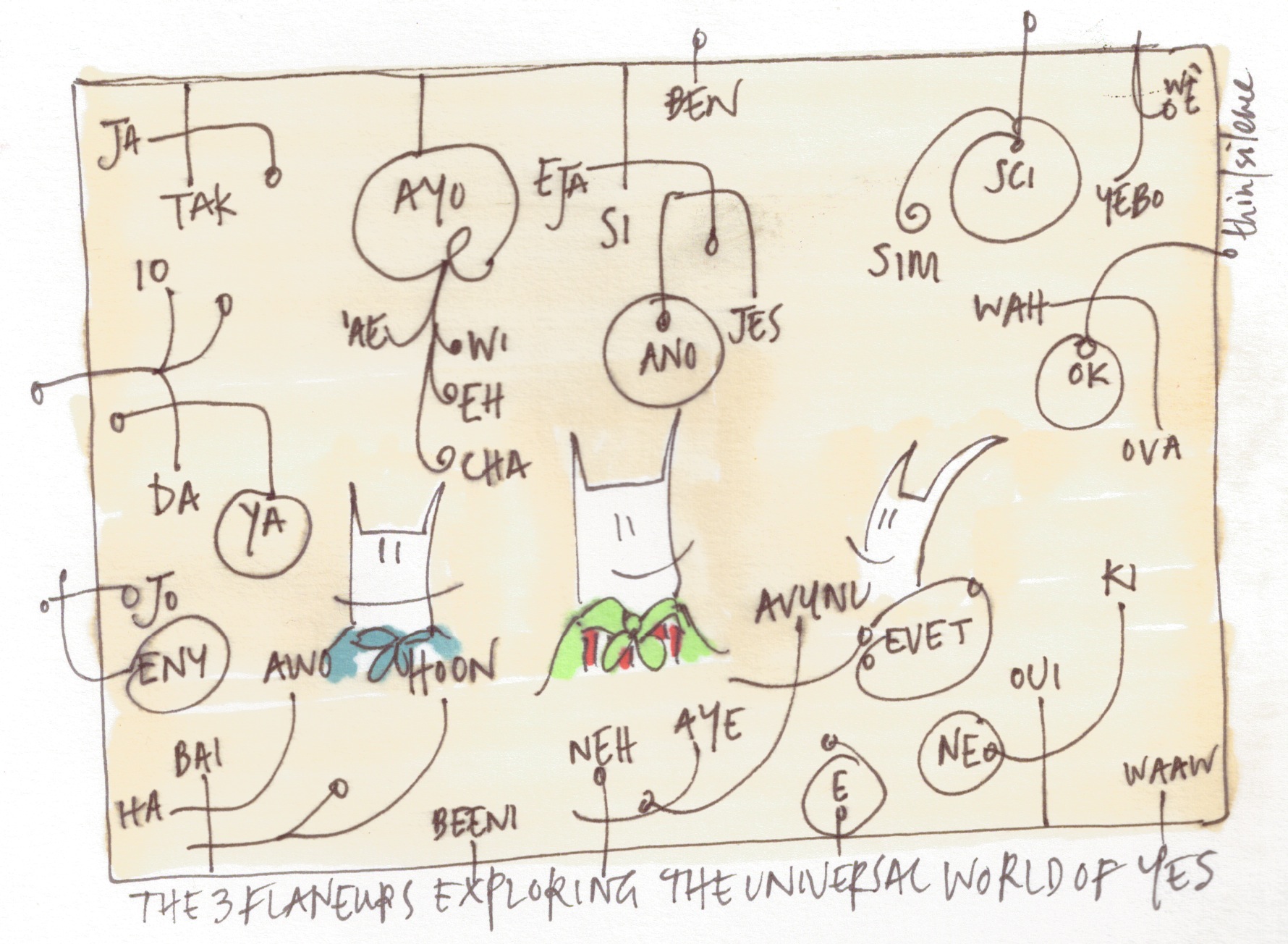
14 the 3 flaneurs exploring ...

It’s an art and it’s a choice.

Someone is sharing with me something important to them.

Do I disagree or question them negatively?

Or, do I choose to say, “Tell me more,” and ask questions positively?

We all know people who immediately close possibilities down.  The infinite player seeks to keep the conversation open for as long as possible, wants to say Yes to a person so they too can be in the game if it’s at all possible.

There are  many lives which would look quite different today if they’d met someone who opened up a conversation of possibilities rather than closed it down in the moment they made themselves and their dreams vulnerable.

The good news is, everyone get’s to have another go: dreams can be rediscovered and we can all learn to positively inquire of others.

Many conversations develop as if we’re in a finite game – “Let’s sort this nonsense out and focus on the goal” – when, really, life in its truest sense is an infinite game.  How often do we find ourselves with people, in all kinds of situations, and really know what the goal is?  The infinite player or artist orientates ‘toward the open, toward the horizon, toward surprise, where nothing can be scripted.’

‘It’s more like, the better the idea, the more “out there” it
will initially seem to other people, even people you like
and respect.  So there’ll be a time in the beginning when
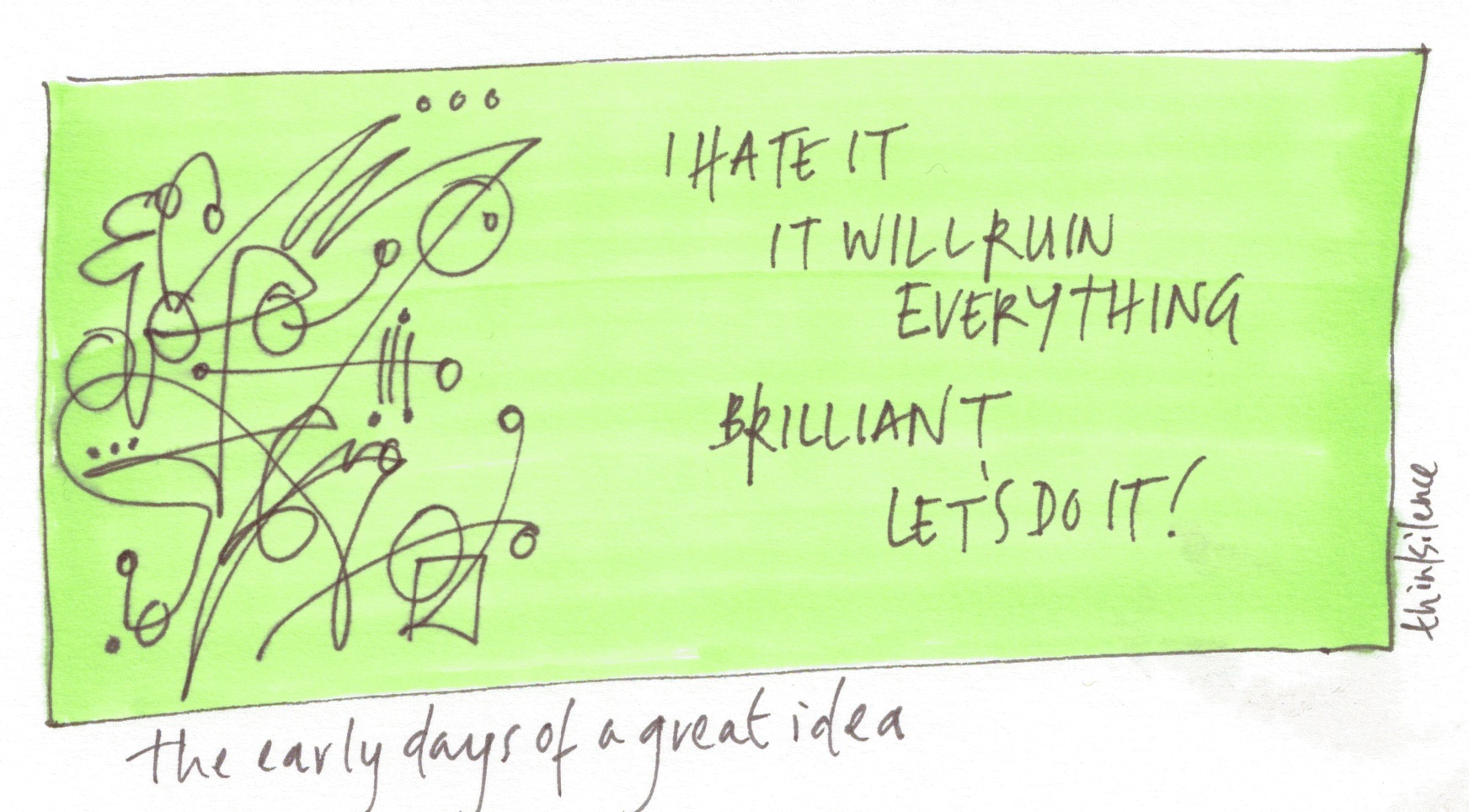
you have to press on, alone, without one tenth of the
support you probably need.’

what do you want?

13 don't do what i do ...

Apart from my email address and my website, these are the only words on my business card.

Many believe they are looking for something “off the peg” – What can you give me?

It’s the wrong place to look.  The answer is already inside you; the question simply offers an opportunity to speak it out.

Coming from within an infinite game,* the  question invites you to be more who you are and do more of what you must do.  You are embraced as a player, no longer an observer, your greater curiosity leading you deeper into the game – the aim of which is not to win but to play, and to play for as long as possible.

When you play, you give others permission to play, to identify their art, because it’s about being free to do what they want, rather than repeating what you do.**  Hugh Macleod offers:

‘The sovereignty you have over your work will inspire far
more people than the actual content ever will.  How your
own sovereignty inspires other people to find their own
sovereignty, their own sense of freedom and possibility,
will give the work far more power than the work’s objective
merits ever will.”

The infinite game is an attitude, as much as anything else.  It’s baffling by how two people can exist in the same environment, and one can grow and develop their art whilst the other continues in the same old same old, until we understand it’s a way of seeing and playing life, answering the question: What do you want?

Then asking it of others.

(*James Carse’s book Infinite and Finite Games identifies the game as another way to framing the exploration of being Human – others are infinite stories and infinite businesses.)
(**It has been noted, when Humans have autonomy, develop skills, and live for a purpose greater than themselves, they flourish.)

surprise!

12 the early days of a great idea

 The infinite player welcomes surprises – surprises keep the game alive.

I wonder whether we’re only using a small amount of our listening capacity.  Perhaps the “listening” devices, embedded in a website’s software, or the loyalty card, or in car tyres (monitoring correct tyre pressure) – a few of the many listening devices in our everyday lives – are enabling us to listen with more than our ears, listening to more than voices and data

The infinite artist listens for the unexpected, attuning her whole life, using what she hears to craft and produce more good and right things for the world through her art.  This “deep listening” makes it possible for her to create and innovate at the edges of her field and perhaps even within someone else’s.  Who knows where this might lead?

Surprise is the game.  Openness to surprise nurtures openness with others, sharing discoveries so more are able to participate – the infinite game, we recall, is keeping as many in the game and to keep the game alive for as long as possible.  Infinite players are not afraid of sharing goodies because they know there’ll be more along.

Not so for the finite player – not only are surprises the reason deadlines are missed, the unexpected jeopardises the deal; if there have to be surprises, then they must be ones the finite player aims to use as control – experience over inexperience, gaining advantage and winning the game.  Ultimately, surprises are about a different future to the one the finite game desires, and finite players want more of the past.

It’s always important to be open to surprises, the infinite game trumps the finite.  The infinite player or artist understands this.  Theirs is a world of abundance.  They will play finite games at times, but they understand there is a bigger picture.  Those who can only see the finite game, believe the world to be one of scarcity.

I’ve previously mentioned three attitudes or practices helpful for producing our art.  They’re useful when it come to listening for surprises too: humility opens us to listen to others, to see the small, the hear what different species and our planet are saying to us; gratitude allows us to value as much as possible so we incorporate as much as possible, and, faithfulness reminds us that daily turning up  and practicing humility and gratitude is transformational.  How each of us we do this will be an extension or expression of our art.


openendedness

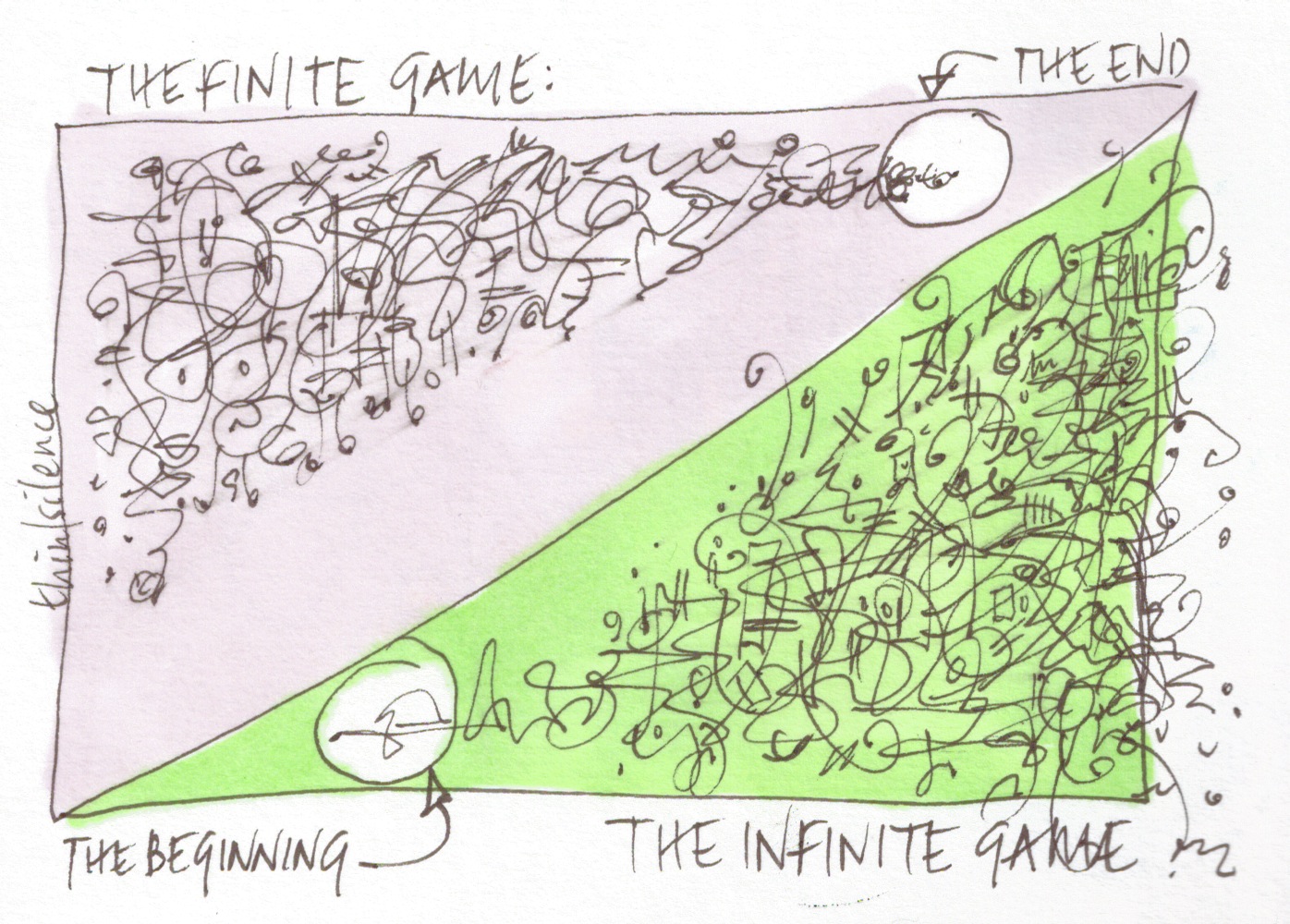
11 finite and infinite games

The result of producing and offering your art within an infinite game.

The finite game intends a predictable outcome;* the infinite game is full of inopportune surprises leading to we don’t know where and producing and crafting we don’t know what – not yet.

Openendedness not only produces more possibilities but transforms the player and the artist.

I am realising I’ve no idea where my conversations will go – they are infinite games.  There can be finite games within these – those I work with will know they’ll arrive at a better understanding of who they are and what they can do, and they’ll have many different ways and means to explore, but, really, I know our conversations could continue for the rest of our lives.

How are you developing openendedness in your art?

(*It is possible to play finite games within the infinite game, but the infinite artist knows they are not the bigger picture while the finite artist believes they are.)

remaining curious

10 elemental truth 3

Why is seeking, inquiring, and knocking on doors so crucial?

Why don’t possibilities appear more readily, answers offer themselves more speedily, and ways to move forward just neon-sign themselves for us?

Perhaps we’d be less than we really can be.

Perhaps there’s something in being curious which is about becoming Human.  It’s as though the journey is far more important for us than the destination.

We are born with the propensity for great curiosity.  Ken Robinson refers to this in his TED talk Changing Education Paradigms – viewed more than 1.3 million times.  Robinson refers to a longitudinal study on divergent thinking with a group of people.  They are almost all geniuses – 98% – and they are all kindergarten age.  Over the years of being retested, they lose their ability to think divergently.  (Robinson believes this to be result of our industrialised education.)

Curiosity leads us deeper, beyond knowing about something, to knowing something – and then to doing something about it.  It grows our thinking, our feeling, and our actions;  if everything came easier I’d wonder whether we could become deeper peoples: Human Becomings as my friend Alex McManus names our species.

Daniel Kahneman offers us something helpful to this when he refers to the illusion of familiarity: what we are first exposed to becomes most familiar and can lead to the shaping of our beliefs, impulses, choices, and actions.

Curiosity asks, What if there’s more?  What we think, what we feel, what we choose, and what we do could be wrong, or shallow?

The journey is everything, when we get to play real games which grow and develop our curiosity, making it possible for us to change, to become, even to become the difference we want to be for others.


the illusion of control and the importance of passion

9elemental rule 4

Control is an illusion because, mostly, we’re acted upon by life rather than the other way around.

This may sound somewhat at odds when it comes to what you’re exploring, including picking yourself to do the art you want to do.

Yet, the reality is we have little control – sometimes none at all – over so many things which surround us every day – the way others drive in our proximity, the way financiers and bankers will savings, how pilots felt today when they got up.  (You get the idea; the list goes on and on.)

It doesn’t matter who we are – even the dictator depends on the citizens of their country being willing to be dictated to.

Here  are five elemental truths identified in rites of passage from childhood to adulthood and which I bring to mind from time to time; they help me to see life in a much more real way:

Life is hard
You are not as important as you think
Life is not about you
You are not in control
You are going to die.

The idea behind these was for a child to be able die upfront and then live more fully, making their contribution to the community.

There are times when we don’t appear to have any control of all, and this is where the recognition of our passions is so critical.  It was in the most uncontrollable environment of the Nazi death camps that Viktor Frankl identified the one thing we can be sure of controlling; he wrote:

‘We who lived in concentration camps can remember
the men who walked through the huts comforting others,
giving away their last piece of bread.  They may have been
few in number, but they offer sufficient proof that everything
can be taken from a man but one thing: the last of the human
freedoms – to choose one’s attitude in any given set of
circumstances, to choose one’s own way.’

Passion is what we have when everything else is taken from us, the things we believe and feel and how we will act.  Perhaps you and I see who we are most essentially when all other illusions of control are taken from us.  If so, it makes sense to participate in infinite games because, it seems to me, we see how we need to connect with others.  We also begin to see how many of our finite games are illusions of control, games we play to make us feel better about our lives.

I dare to suggest that Nassim Taleb’s sceptical empiricist and flaneur would most likely value and enjoy infinite games, and offer us an insight into the usefulness of them.*

Beyond the illusion of control there is the importance of passion, which, when invested in the right ways and places and people, promises to produce a life of creativity, generosity, and enjoyment.

(*A sceptical empiricist is someone who values arriving at a judgement but does not rush to it, exploring and inquiring for as long as possible; it is a tiring occupation because it take so much energy.  A flaneur is strictly an idler, a loafer, but Taleb sees this character appreciating something about the randomness and unpredictability of life that many experts and forecasters do not.  I use flaneur to describe someone who journeys with purpose.)

the long trail*

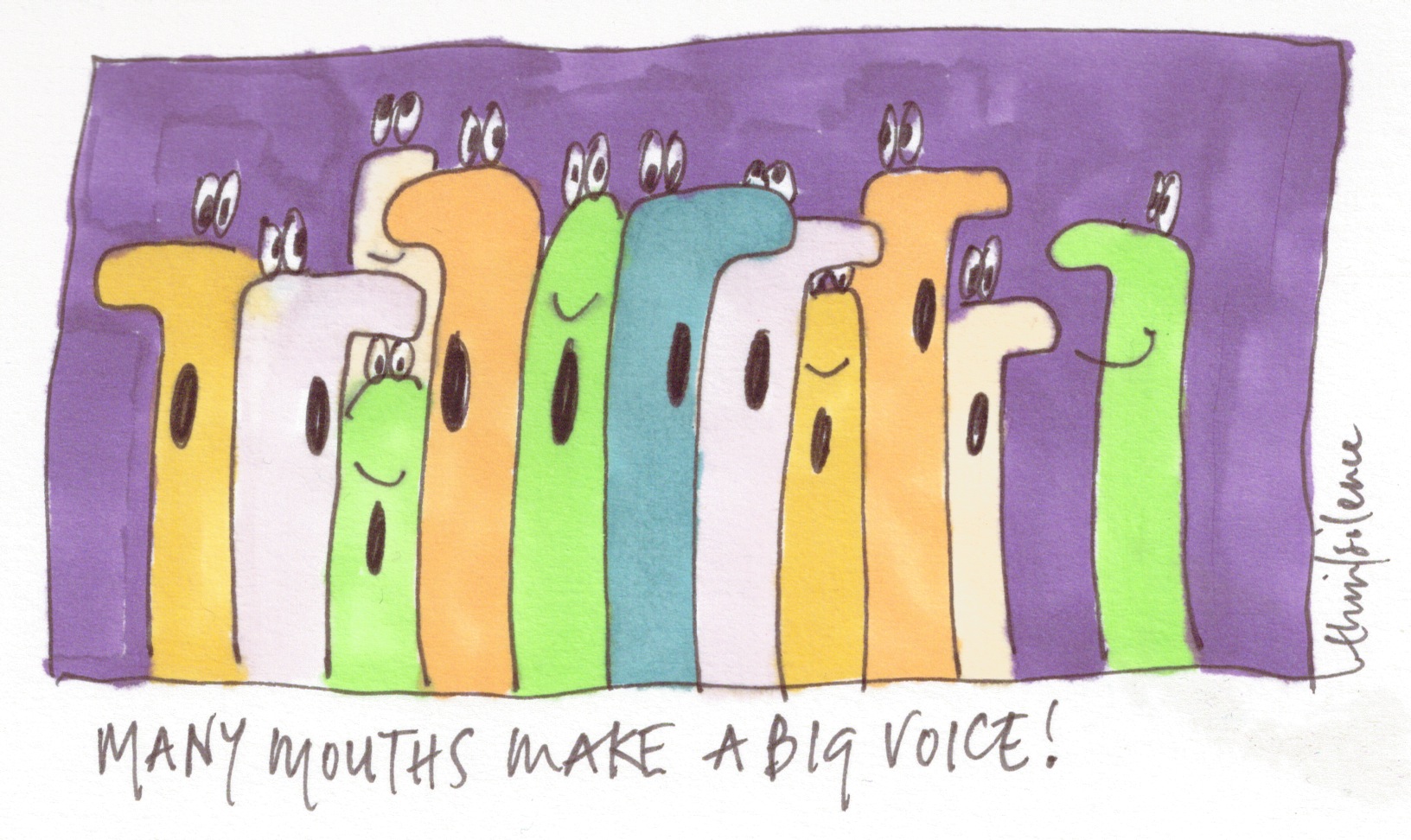
8many mouths make a big voice

It’s going to take some time.

Or, to put it another way …

You and your art are going to be around awhile.

We’re playing an infinite game, which is more concerned with how you’ll play the game than how you did before; rather than a finite game in which only some – those often perceived to be the best – get to play.  It strikes me that this is the genius of the infinite game.  You to bring everything you are, not just the best bits; you can bring the pain and the failures and figure out how to deal with them as the game plays out.  This means,of course, you pick yourself and you can begin now.

The rules of the infinite game, unlike those of the finite game, change in play, ensuring no one is rejected or ejected and the game doesn’t end.**

Who knows who you’ll become and what you’ll achieve if you just keep playing?

This game is real.  Daniel Kahneman tells me, ‘cognitive scientists have emphasised in recent years, cognition is embodied; you think with your body, not only with your brain.’  Kahneman also tells me an activated idea doesn’t evoke just one idea. but many – most of which will never rise into my consciousness, so masses of associative thinking happening in my unconsciousness.

All of this makes me wonder whether playing infinite games not only making it possible to evoke an idea, not only proffers ways for ideas to be embodied, but sets in motion loads of unconscious thinking which, if we  remain in the game, will burst out “from nowhere” further down the trail?

I’m just crashing together ideas from different places at the moment, but it seems to me, if we only allow ourselves to play finite games, little of this will have value.

Not only are you more ready than you know, not only does an infinite game provide the best place for dealing with your junk as well as with your art, but we’re also rooting for one another to keep playing the game.

(*The title of a Seth Godin blog playing on Chris Anderson’s term “the long tail” for how everything produced is accessible to purchase because of the internet.)
(**Think of the people, businesses, and parties which have self-destructed because they couldn’t change the rules of play.)

story business game

come and play

The story of your art

The business of your art.

The game of your art.

Three ways for being imaginative and craftful with your art: develop an open story, see your whole life as a business, or play an endless game.

I think they’ll all help us contribute more.

The last of these comes from James Carse’s (almost thirty year old) book Finite and Infinite Games, which has been on my wishlist for a while.

It’s not about playing any game, but participating in infinite games, which means it isn’t about winning the game, it’s about keeping everyone in the game and keeping the game going: ‘the purpose of continuing to play.’

It increasingly feels as though infinite games are the future – a future which invites everyone, is connected, and is graceful.

There are many who will struggle with this.  From whichever side of the finite game line, they believe only some get to play, and fewer still win – a world of scarcity.

An infinite game,an open story, and a sustainable business are about a world of abundance.

We begin with the value that everyone matters, not because of what they produce, but because of their intrinsic worth – when a person realises they matter, then they are moved to produce.  By playing this game, we get to involve as many as possible.*

A beautiful and genius element to infinite games is the inclusion of finite games.  The infinite-games player values and maximises the possibilities for bringing certain people together, for a particular amount of time, towards an agreed purpose – Chris Anderson identifies these as makerspaces.**

This new language is awakening me to the reality that I’m already playing infinite and finite games in a number of ways – I can think of at least five – and they are helping me and others to take our art further.

Time to play?

(*Intrinsicness is an important feature of the finite game, offering enjoyment and engagement throughout; the finite game makes little sense unless you win – something which only happens at the end.)
(**It is unlikely a finite games player will see the value in infinite games.)