seasons with yellow

13 in a complex world ...

Of the seasons, I prefer Spring and Summer, but I know I am a part of all the seasons and the seasons are part of me: my life has Spring, Summer, Autumn, and Winter experiences.

Brian McLaren suggests four seasons of experience: simplicity (where most things begin); complexity (when we realise this is harder than we thought); perplexity (when things are really tough, unjust, not right); and, harmony (when all things come together in spite of).

There are Yellows for each of these times in our lives.

Yellows are those people identified by Albert Espinosa who make a deep difference in the lives of others – more than friends. more than lovers, they may be around for a little or a  long while.

There are Yellows who help others begin things; Yellows who help us work through the bemusing complexity of life; Yellows who are their for the worst of times; Yellows who help us to bring and keep everything together in a way which flourishes and thrives.

In these ways Yellows are Makers of Fire.

Makers of Fire are people who bring heat (passion and skill and innovation and commitment) to the fuel and oxygen of individuals, institutions, cultures, tribes, and societies.*

Where there’s fire, things change, something new emerges from the flames.

We can all be Yellows, Makers of Fire, for someone.

Which Yellow are you?

(*Fuel comprises the artifacts we have inherited made up of things and ideas and people – we’re surrounded by them; the oxygen is the cultural thinking, beliefs, and worldviews.)
a world which works for everyone

12 work at its smartest ...

What would this world look like?

We know we haven’t arrived yet, for all our development and advancement as a species.  When these have been less than holistic we have made a dysfunctional world; here’s one example offered by Ori and Rom Brafman:

‘In country after country, where a society becomes
industrialised, depression and suicide rates shoot
up.  Something about the process of industrialisation
is making people very unhappy.’

If Bruce Hood is correct then our environments affect our biology.  The environments we create need to work for everyone not just a few.

Something happens in us when we identify the Why? question for our lives, the purpose we want to pursue.  This isn’t something others can work our for us, so a world which works for everyone needs to provide choice: then we can develop particular skills and live towards a purpose greater than ourselves – these three things are important for Human happiness.

When the why is found, the how will appear.

Our minds may run, and rightly, to the billions of poor in the world who must overcome poverty, illiteracy, disease, conflict, and hunger in order to have more choice, but there is an “ailment” closer to home which prevents us from identifying the Why? (and may be key to opening up choice for more).  Daniel Kahneman highlights how, in a loss-averse world (environment), even a gain can be seen as a loss, so we stay where we are.  Alex McManus claims, ‘We must awaken the human spirit to a future worth surviving for, worth living in, and worth working towards.’*

What if the world were a “Yes and …” world?

The improv game doesn’t allow you to say “No way” or “It’ll never work” or “Yes, maybe …”.  You have to say “Yes and …” to the imagining of people, adding to what we can be about together.  Not in a “Yes Man” kind of way, but in a way which allows the world we hope for, which works for everyone, to begin to appear.

We each have the opportunity to shape our lives into holistic environments for others, even if it’s one other, to make it possible for others to pursue what it is they choose to be and do, so they touch the lives of others.

(*From Alex McManus’s Makers of Fire.)
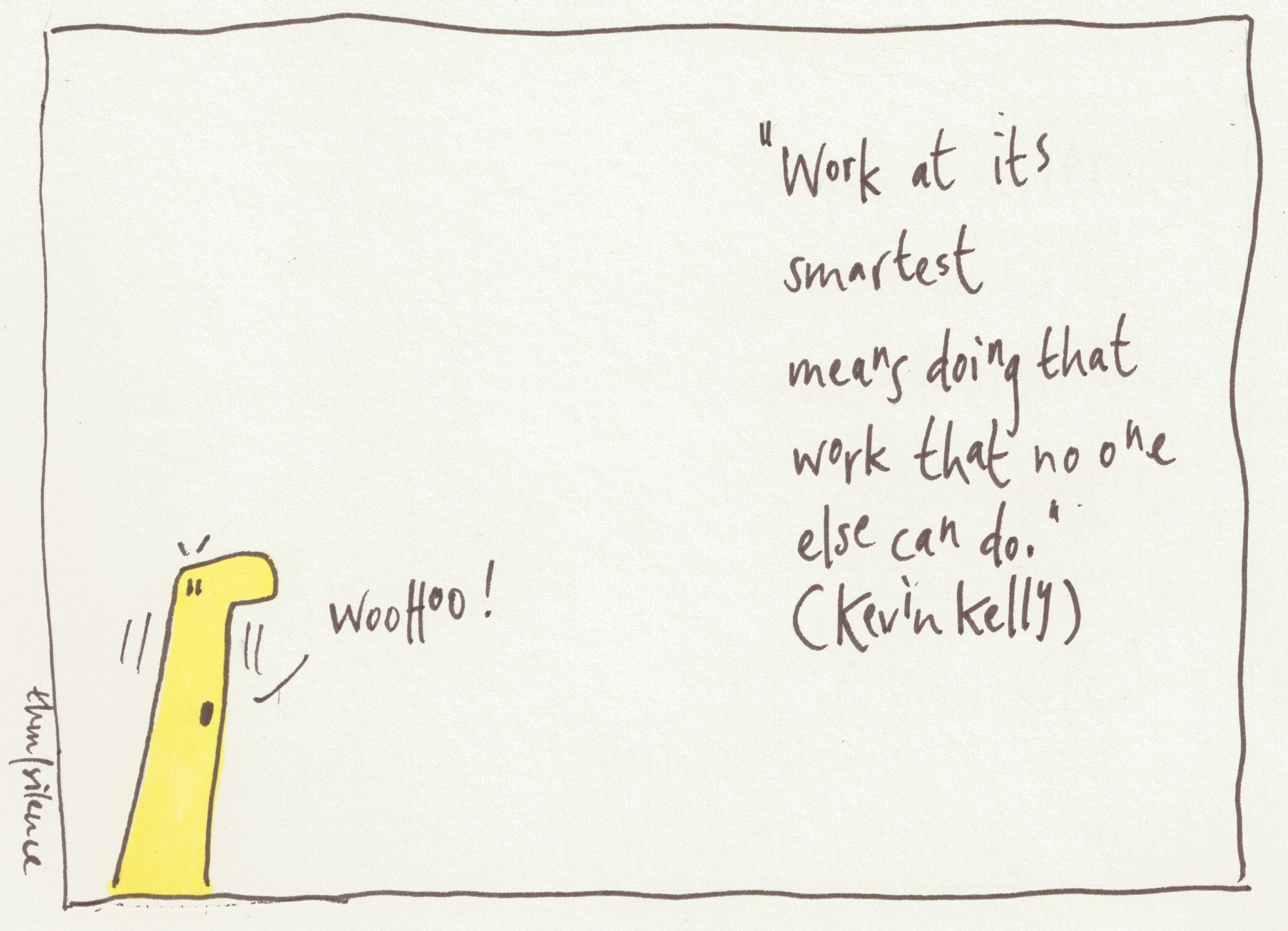
(Today’s cartoon: The quote from Kevin Kelly, founder of Wired magazine, comes from End Malaria, which has the awesome subtitle of “Bold Innovation, Limitless Generosity, and the Opportunity to Save a Life.”)

changemakers

11 funny world

What do leaders have in common?

This question from Seth Godin.

His first response?  Nothing.

His second response?

‘Actually they do have one thing in
common … the decision to lead.’*

Without undoing Godin’s important point of  there not being a stereotypical leader with a core set of skills, here are some things behind the decision being the common factor.

Leaders know the status quo is a dangerous place to live.

It breeds complacency, quashes imagination, outcasts people who are different, suggests safety when safety no longer resides there, is in direct conflict with how the universe is energy and movement.  It’s also where our dissatisfactions prey on us, eating away at us whilst we stay where we are.

Daniel Kahneman refers to a study of some two-and-a-half million golf putts which confirm how golfers, including Tiger Woods, are more intent on obtaining par and avoiding a bogey, than they are on obtaining an eagle.  This plays out in study after study referred to by Kahneman.  Humans can choose the loss-averse option even when they think they’re not.**

At the same time, there is what Alex McManus calls an ember in the mind, longing to begin a fire, to make a difference, to identify a purpose: not so much “where are we going?” but “why am I making this journey?.”

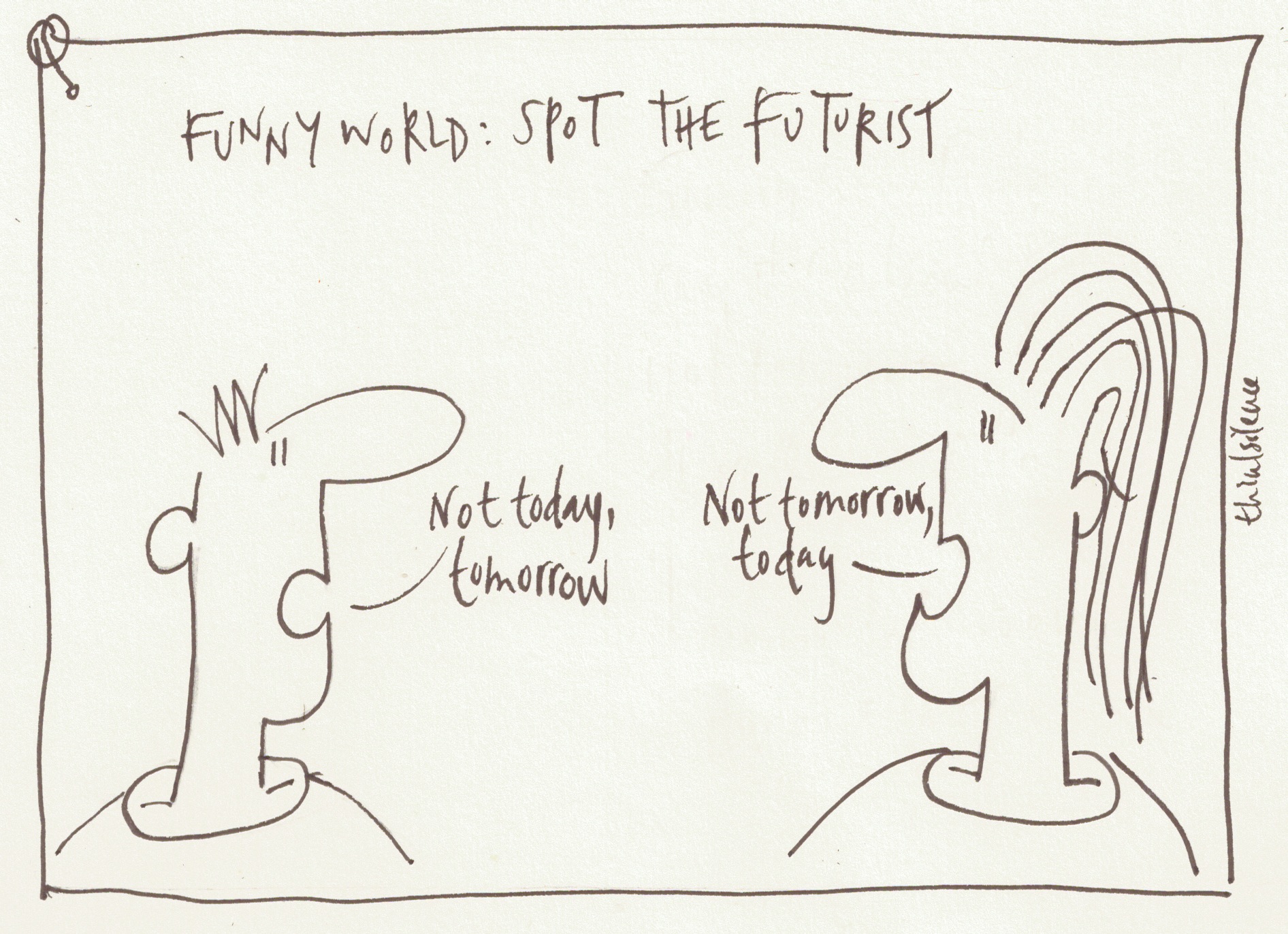
This is a question that scrutinises characters and personalities.  Changemakers (another name for leader) are made from the inside out.  This cultivation of character and personality in connection with others and the world and the future Self we long to be,  allows for improvisation and spontaneity when opportunities arise, to act now and not wait for tomorrow.

So we can say changemakers care for all kinds of things; they are made up of different skills and talents; they go about things in a plethora of ways.  They have nothing in common.

And we can say, changemakers care deeply for people and the world they live in, they want to make their contribution in the Human journey while they can; they know they must develop who they are at the deepest levels to be able to do more than react, but to respond and initiate too.  To move from the status quo into action is what they have in common with all leaders.

And everyone can make the decision

(*From Seth’s book Tribes.)
(**And I’m with them more times than I want to count.)


our help comes from beyond

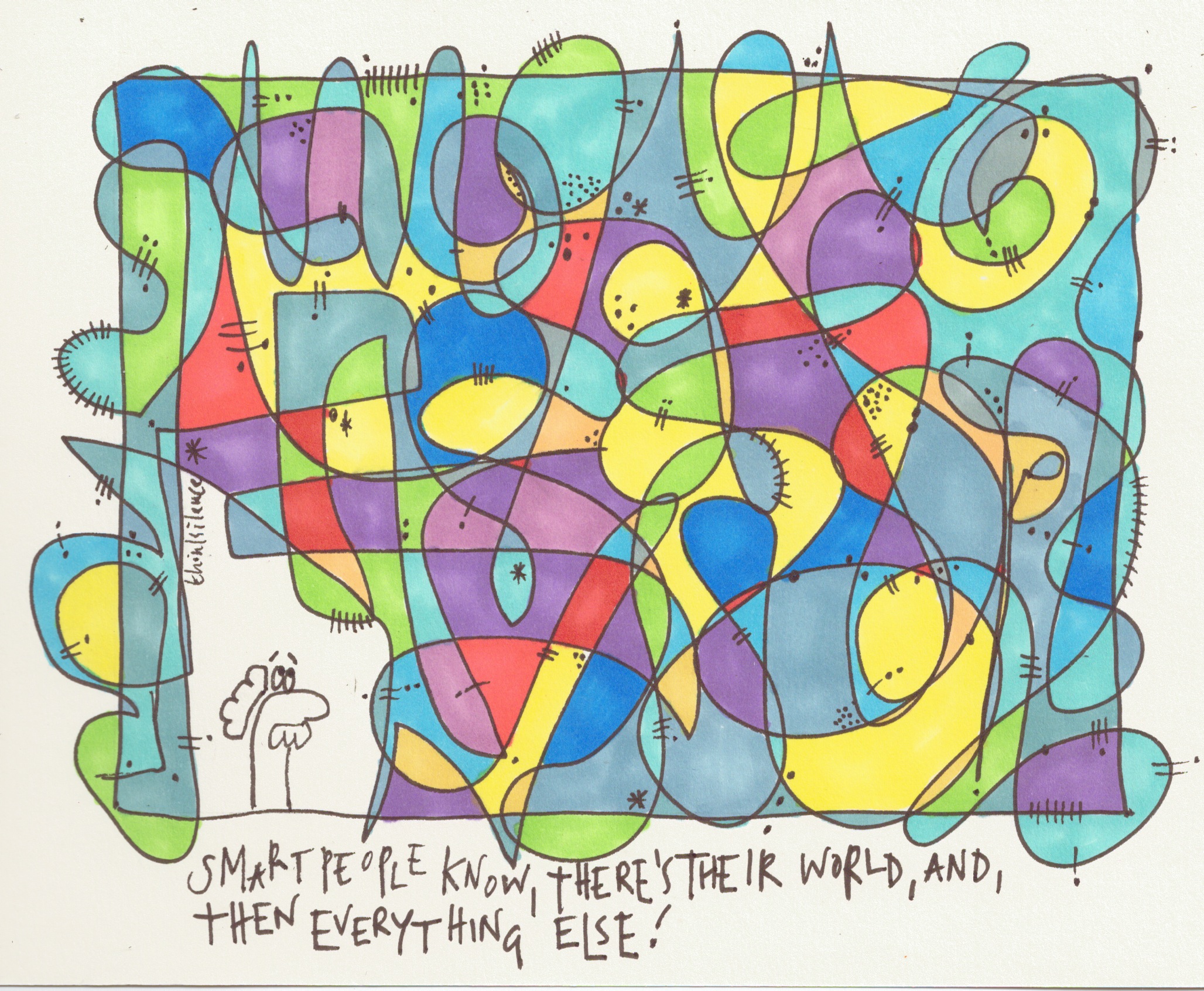
10 smart people know ...

Helping us to identify what is already present or within.

Parker Palmer imagined his life as a friend who’d tried to get his attention throughout his life, finally pinning him down and asking, What do you want?

Sometimes, we need interrupting like this.

We may think this help from beyond brings to us something we are lacking, yet oftentimes the only thing lacking is the question (which can be many, many questions, digging deep, mining down into who we are and what we have, and what we long for.)

This, then, is an infinite game, an invitation from beyond to bring our talents, dreams, art to the game.

Jerry Sternin was a changemaker for starving Vietnamese families, but he says, “You can’t bring permanent solutions in from outside.”  He was a changemaker by spotting the Vietnamese mums whose families weren’t starving and promoting them as leaders to others.  Seth Godin tells this story and makes the point: ‘find leaders (the heretics who are doing things differently and making change) and then amplify their work, give them a platform, and help them find followers.’

We all need help from beyond, but it’s often not in the form we imagine  And, today, there’s more of this kind of help from beyond available to us, more connection and networking making it possible for you to do what you long to do but maybe didn’t know how you were ready or more than capable of.

Maybe this is why you’ve hung around so long, waiting to be a changemaker.

Changemakers help us see what we already have, buried beneath poorer stories or narratives we’ve been following or adhering to.  Changemakers help us change the story, then we become changemakers for others.

I asked the three other guys in a group I’m a member of: Do we meet with the expectation that we will be open to be changed by one another through our conversation?

“Yes.”

hardship

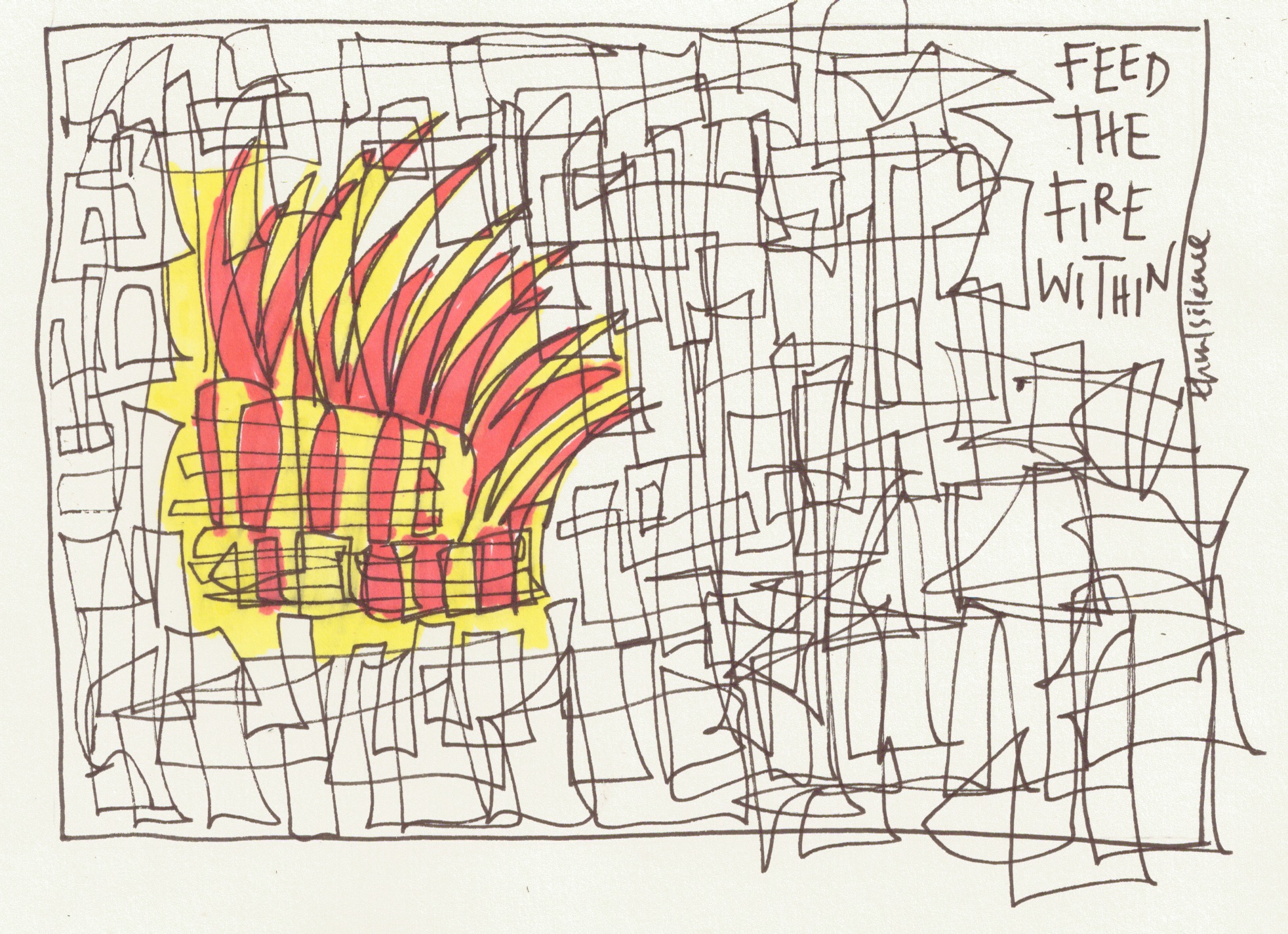
9 feed the fire within

What is the cause you believe so deeply in, you’ll keep going no matter what?

‘Remarkable visions and genuine
insight are always met with resistance.’^

But there is a fire burning in you which you must feed.

Hardship, leadership, entrepreneurship – these words are connected for you.

Hardship, because you expect resistance to what you are bringing.  First, you overcome the resistance within* and then take on the resistance without.**  Yet, you also know, the resistance sharpens your vision, increases your fire, and identifies the path.

Leadership, because you know, when you understand your own fire and fan the flames of others, rather than quenching, you’re leading.

Entrepreneurship, when it means to undertake, and you will be responsible for your dream, which you know will not come quickly but with slow, hard work.  It’s akin to an ongoing steeplechase, the brutally demanding mix of fast running, hurdles, and energy-sapping water-jumps.

What burns within you may not be glamourous, as some imagine, but it is everything.  Keep going.

(^From Seth Godin’s Tribes.)
(*Otto Scharmer points to three voices we must overcome in order to open our minds, hearts, and wills: judgement, cynicism, and fear.)
(**Lately, I have realised how I have grossly under-communicated to others what I am about – I had thought they would see the value of what I’m doing, but value has to be communicated.)


we are never the same

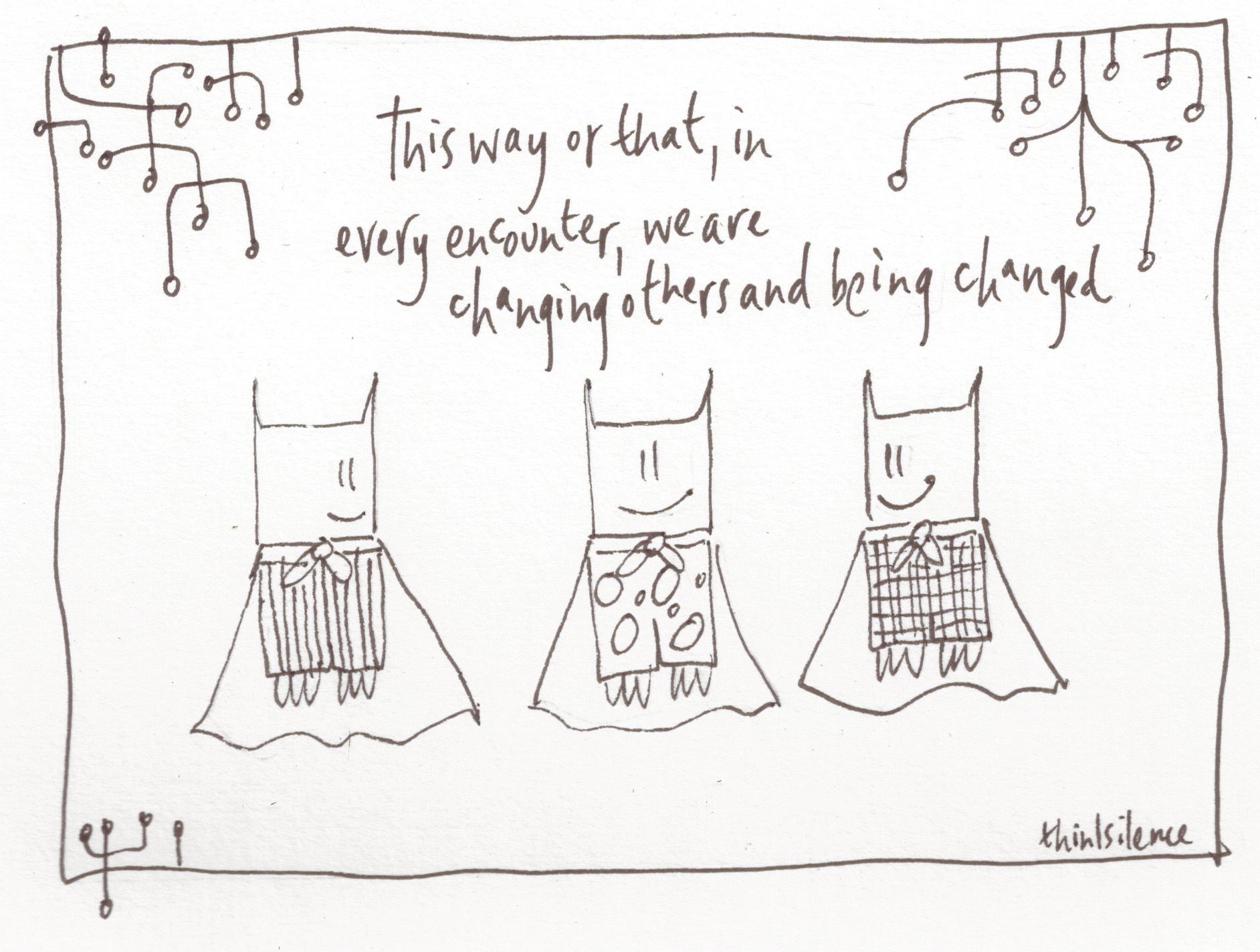
8 this way or that ...

We are changing and we are changemakers.

Recent research has begun to show a short-term effect in our brains following reading an engaging novel: “We want to understand how stories get into your brain, and what they do to it,” shares neuroscientist George Berns.

Our brains have incredible plasticity, an ability to continually adapt well into adulthood – though there are resistances we must overcome as we grow older which aren’t necessarily there when we’re younger – such as, preferring the status quo?

Arguably, the greatest way we can be forever-changing is in interactions with people.  Adaptability to one another is a key ability for developing as a species and continues to be the case, as we creatively and innovatively find ways around sticking points.  This is a yellow world.*

Not only do we each change others, but we are changed by others.  

This is what it means to be Human: there is always in-bound change as well as out-bound change.

Just as there are three forces (trends, events, and choices) which shape the future (predictably, possibly, and preferably), there are three ways we can meet yellows – from amongst those we know already (unlikely, if we haven’t already met), from accidental meetings (though, we’ll need to be out and about far more than we typically are), or, we go in search of them (books, videos, experiences, following leads).**

Whilst there is a person we may call the essential self, the Human paradox is, this is not the same person we once were, we are always and ever becoming more our future self – in a future more and more connected.

(*Using Albert Espinosa‘s metaphor for “yellows” being people who change us, and, also, connecting this with Walker Percy‘s yellow house story, wherein people who wouldn’t normally meet accidentally do, creating “crossing points” of lives and worlds.)
(**Yesterday, I met with a few others for a library of the future experience.  These libraries bring together books and people and experiences and videos and more, and they solve problems, allow for creativity in making things – such libraries are yellow, too.)


bless

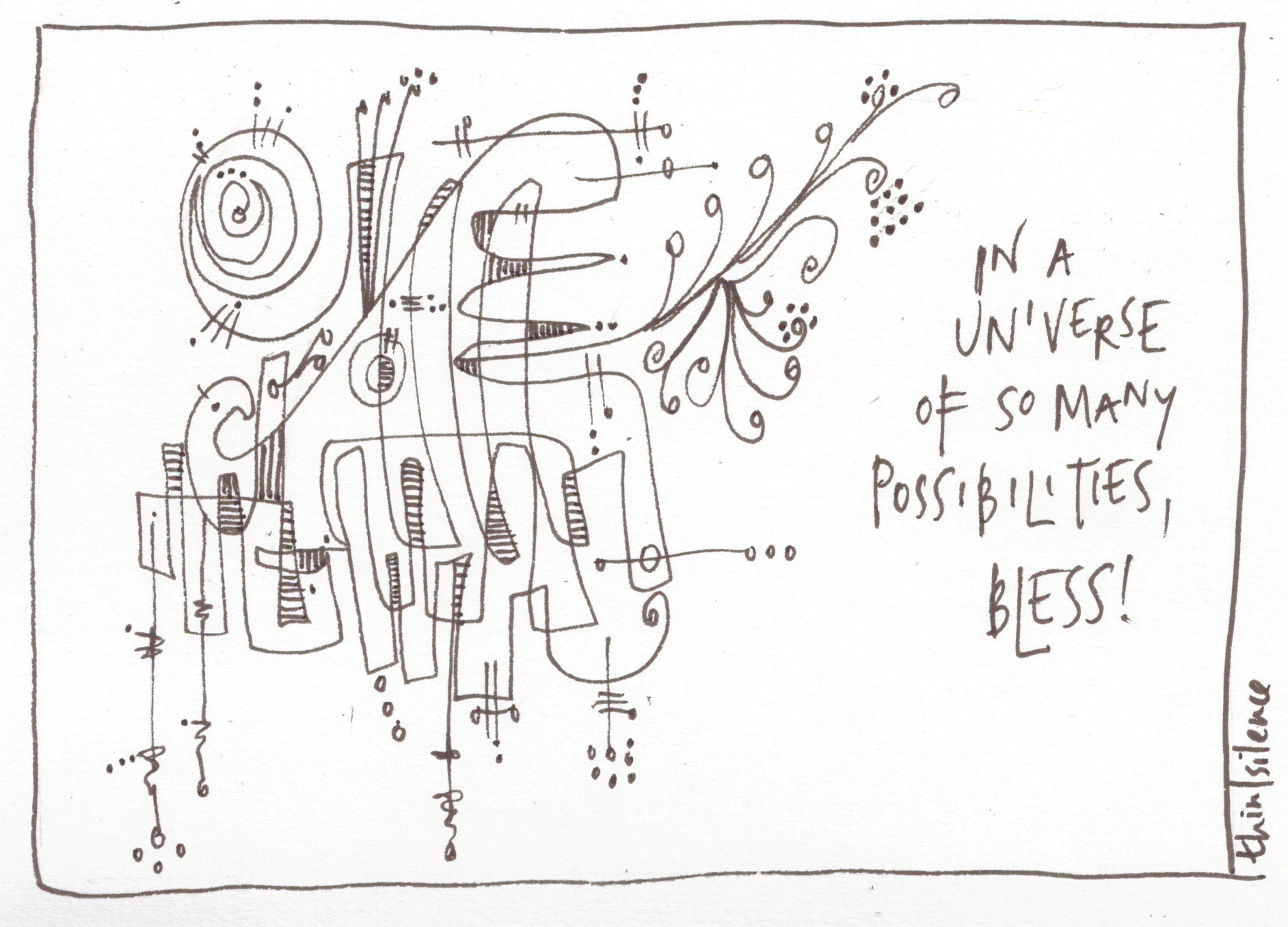
7 in a universe of so many possibilities, bless

What would it take for you to be liberated to bless, to be a blessing?

You may already be there?  How do you do it?

There are three forces to recognise when it comes to shaping the future: trends, events, and choice and creativity.

Trends make it possible for us to predict what the future may be; for Nassim Taleb, this is the world of Mediocristan, where things can be disruptive but tend not to be chaotic.

Events can be, though, and they are certainly disruptive; for Taleb, this is can be the world of Extremistan (2008 financial crash, 2011 Fukushima nuclear disaster).  Events can also be Mediocristan-type, as with medical breakthroughs, though genetics and technology promise to be more impacting.**

Personal choice and creativity opens up possibilities for innovative randomness to be introduced into situations and circumstances which present themselves as chaotic – Taleb sees this as being the kind of hope we seek: ‘when some systems are stuck in a dangerous impasse, randomness and only randomness can unlock them and set them free.  You can see here that absence of randomness equals guaranteed death.’

When we become people who introduce this kind of randomness, we find ourselves leading.

Are we, then, liberated to bless?

Otto Scharmer points out how leaders are often blind to what the sources for leading in in their lives.  Leadership does not have to come from a place of perfection and completeness, but does need to come from a place of integrity and wholeness, fed by humility and gratitude.**

We need to listen to who our lives say we each are – something we cannot be without connection to others, to our world, and to our deep values.  These others are like Albert Espinosa‘s “yellows,” our “company of knowing,” the people call us to more, to be blessed and to bless with the creativity only each of us can bring.

(*Whatever people might now say about seeing the 2008 property and financial implosion coming, in reality, no-one did.  The Fukushima nuclear plant was built to withstand the largest tsunami know, but not the one bigger than this.  See here for a helpful summary of Mediocristan and Extremistan)
(**Alex McManus imagines fire-makers who are people of trust, character, humility, and virtue.)

don’t give up, keep going

6 where the future is found

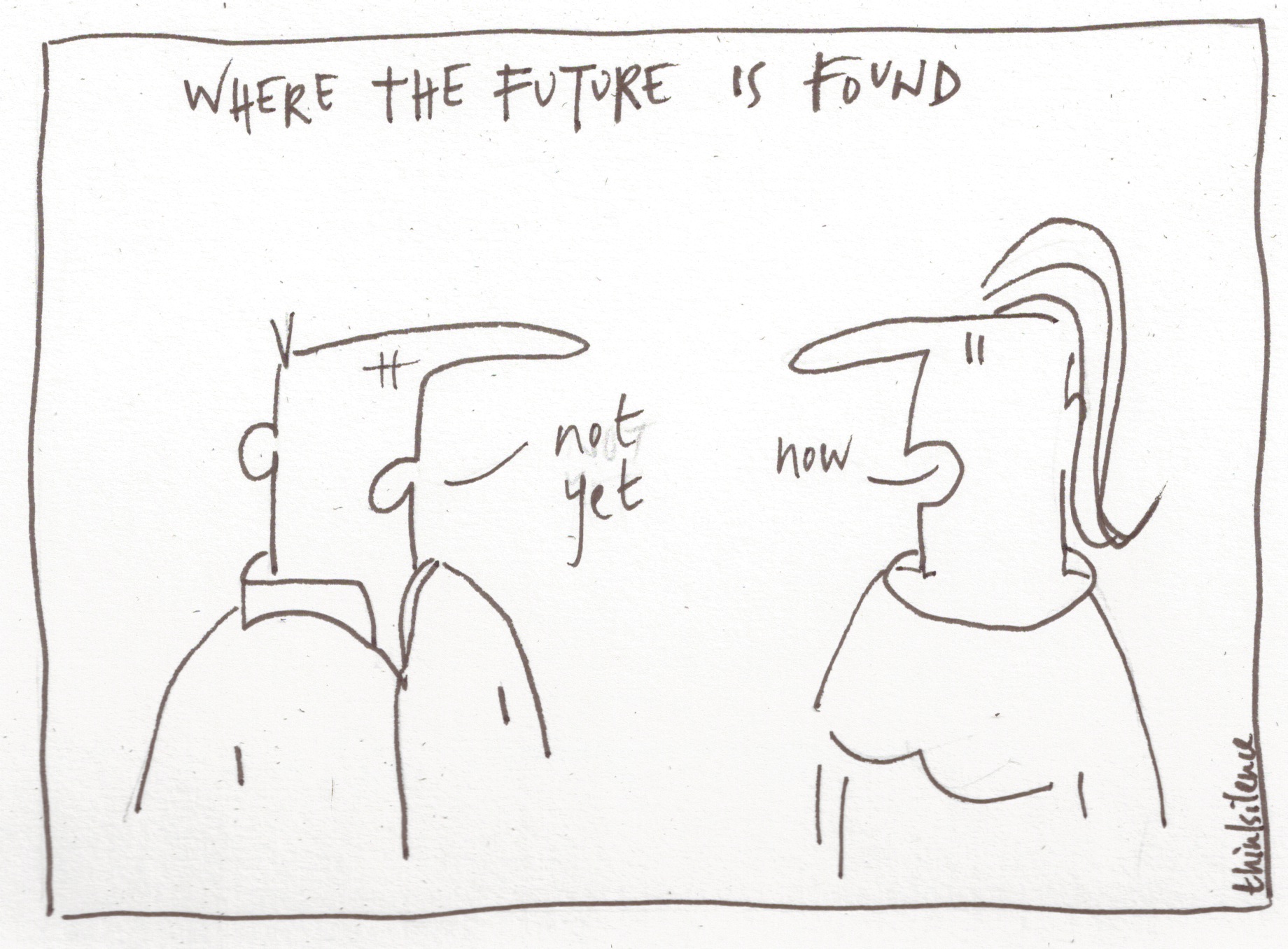
Simple encouragement to realise the dream, pursue the hunch, deal with the itch in your mind which will not go away.

There’s a lot of resistance around and it’s hard to keep going at times.  There may be no-one else who gets what you’re trying to change, to begin, to make, to explore, to be, but I just want you to know, I get it.

Someone has encouraged me today.  I don’t often cry but I did today because my friend had seen me, seen what I hope for, and encouraged me to keep going.

I pass this on to you.  Make sure you pass it on to someone else.

The resistance may not be “no” but “not yet.”  If you wait it will be too late.  I almost did.

‘I have known hundreds of women and men
who dedicate themselves … to concretely igniting
dreams within others.  They are often alone at
first.  They act as they do because the see themselves
engaged in an epic battle. … We are led astray by
the assumption that our moment is like every other
moment. … But Makers of Fire recognise that today
will indeed be just like yesterday, if we do
nothing differently.’*

(Alex McManus in Makers of Fire.)

the problem with maps and technology

5 fail and fail and fail again 1

Maps can tell us where we are or where we can go.

Technology can be another way of doing what we’ve always done, or enable us to change and do something different.

There’s no problem with maps and technology, just how we use them.

We are a paradoxical species, with our addiction to certainty and staticity at the same time as needing to connect, to become, to journey.

Something each day provides is the opportunity to explore.

Enjoy today.

‘But we so want to become human.  That
longing may be the most human thing
about us.  We are a paradox.  We are an
anomaly of nature: evolutionary instinct
coupled with revolutionary imagination
covered in technological capacity to see
the universe with life.  And all along we
long for any and every clue to the meaning
of us.’*

(From Alex McManus’s Makers of Fire.)
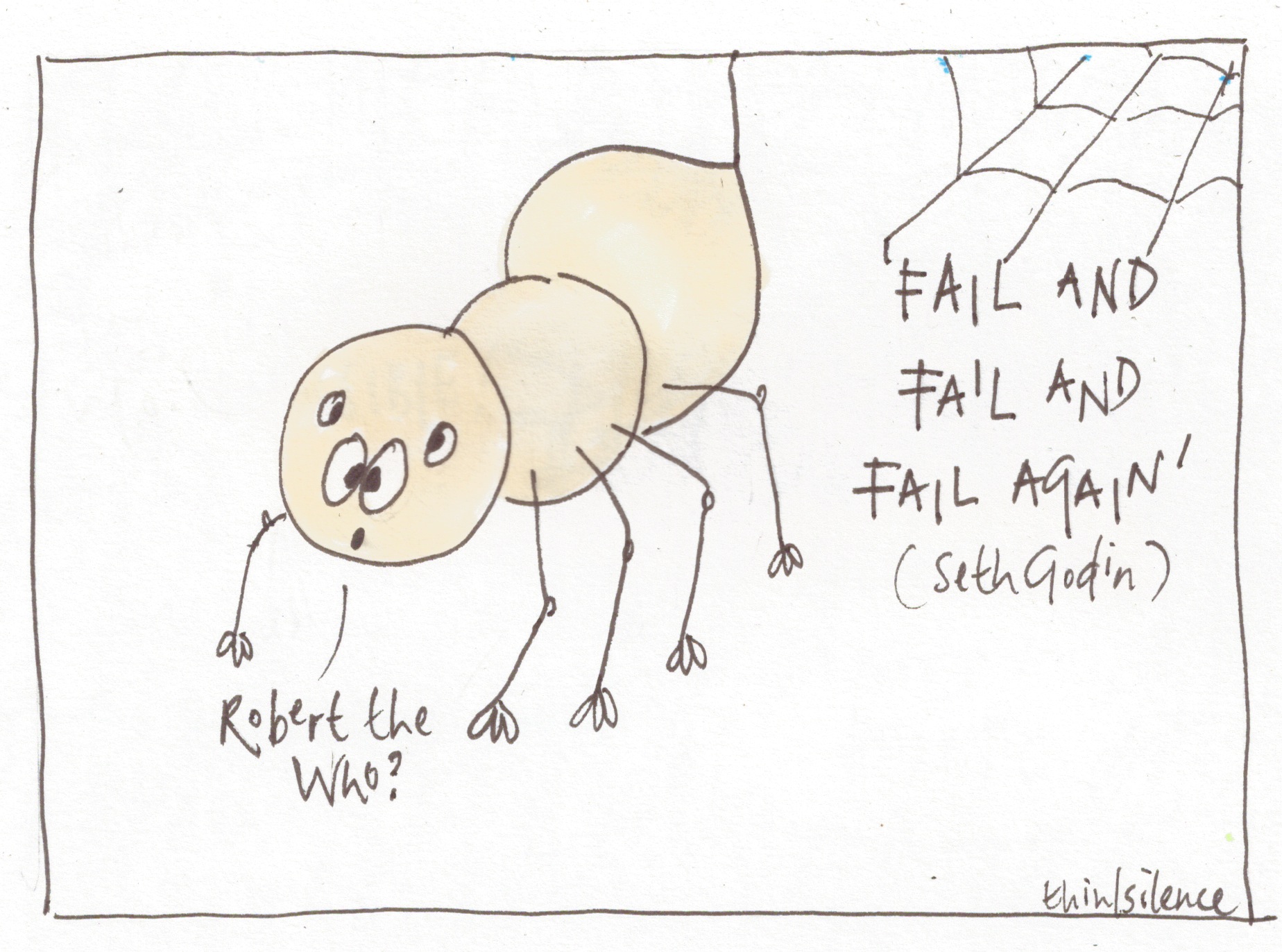
(Cartoon: Seth Godin’s quote comes from one of his books – I can’t remember which at the moment, but I always thought it was a great title for a book.  Robert the Who?)

becomings

4 the future of streaming

Streaming.

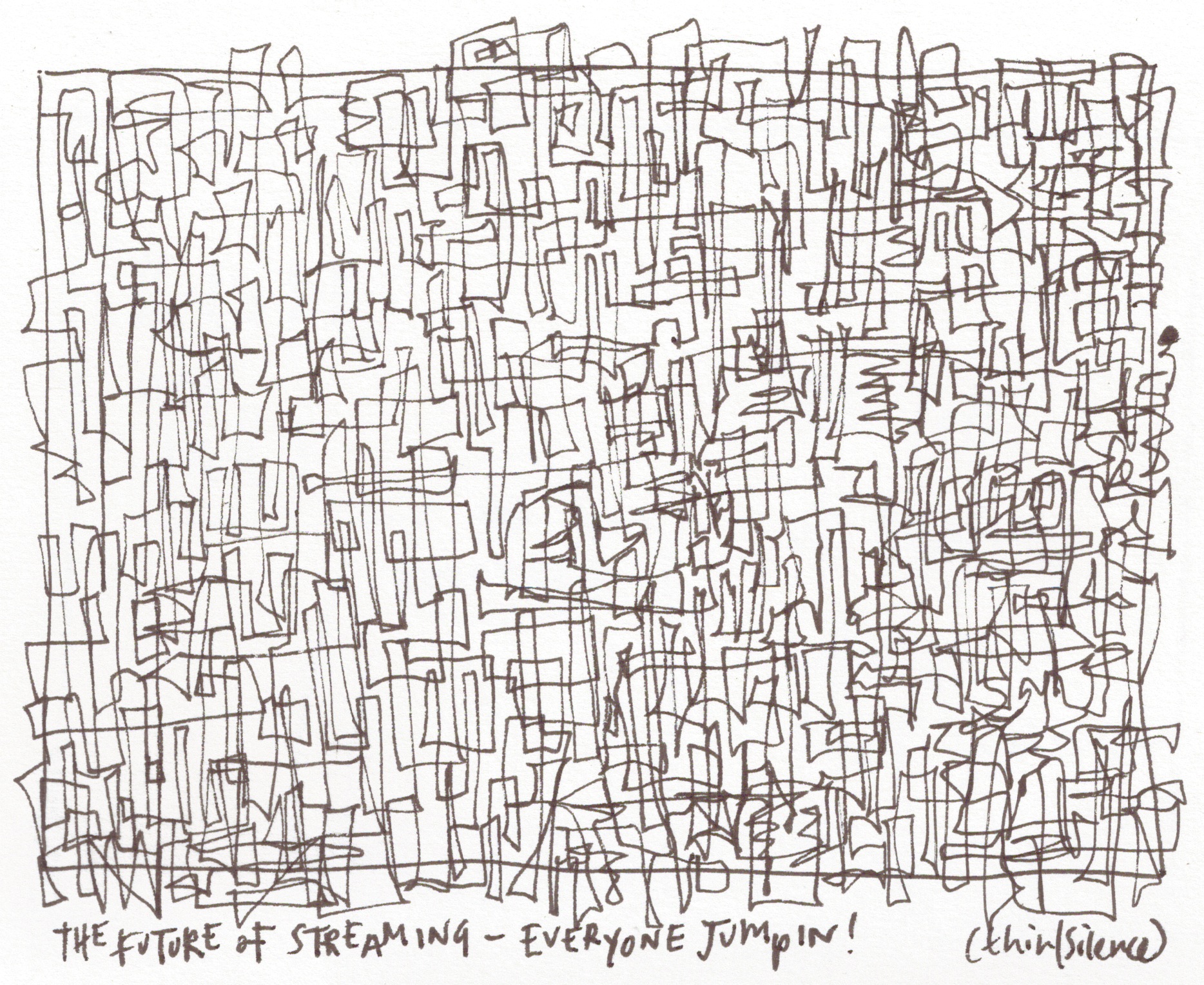
A very efficient way of fitting people into systems.

A very poor way of helping people to flourish as Humans and to contribute their best.

Many live through the entirety of their lives with an understanding of who they are and what they are able to achieve as the result of believing someone in a system: educational, religious, workplace, sporting, musical, artistic, political, etc. – every one streaming people.

What might a world look like where everyone is encouraged to explore their full capacity throughout their lives?  What would we have to lose, introduce, finance?

When you believe everyone has an incredible capacity to thrive you’ll begin to see just how all around you.

You will also see how systems can often be set up to thwart and frustrate the possibilities.

This is not what we are: Human Beings.  We are more, we are Human Becomings.*

(*Human Becomings is a term Alex McManus uses in Makers of Fire.)