We’re not done yet

‘A drab looking cage produces a drab looking brain.’*

‘We are anxiety-ridden animals.  Our minds are continually active, fabricating an anxious, usually self-preoccupied, often falsifying veil which partially conceals the world.’**

One of the things I have appreciated since having an operation to remove a cataract is how colours are way brighter and sharper than I thought they were.  I find myself closing one eye and then the other, playing between the foggy image of the world my left eye can make out and the brightness of the world in right.

I’d been told to expect this but thought my world wouldn’t have been affected this much.  There’s something revelatory about what lies beyond the veil.

Iris Murdoch writes about humans being ‘anxiety-ridden animals,’ continues to write about beauty:

‘The surprise is a product of the fact that, as Plato pointed out, beauty is the only spiritual thing which we love by instinct.’*

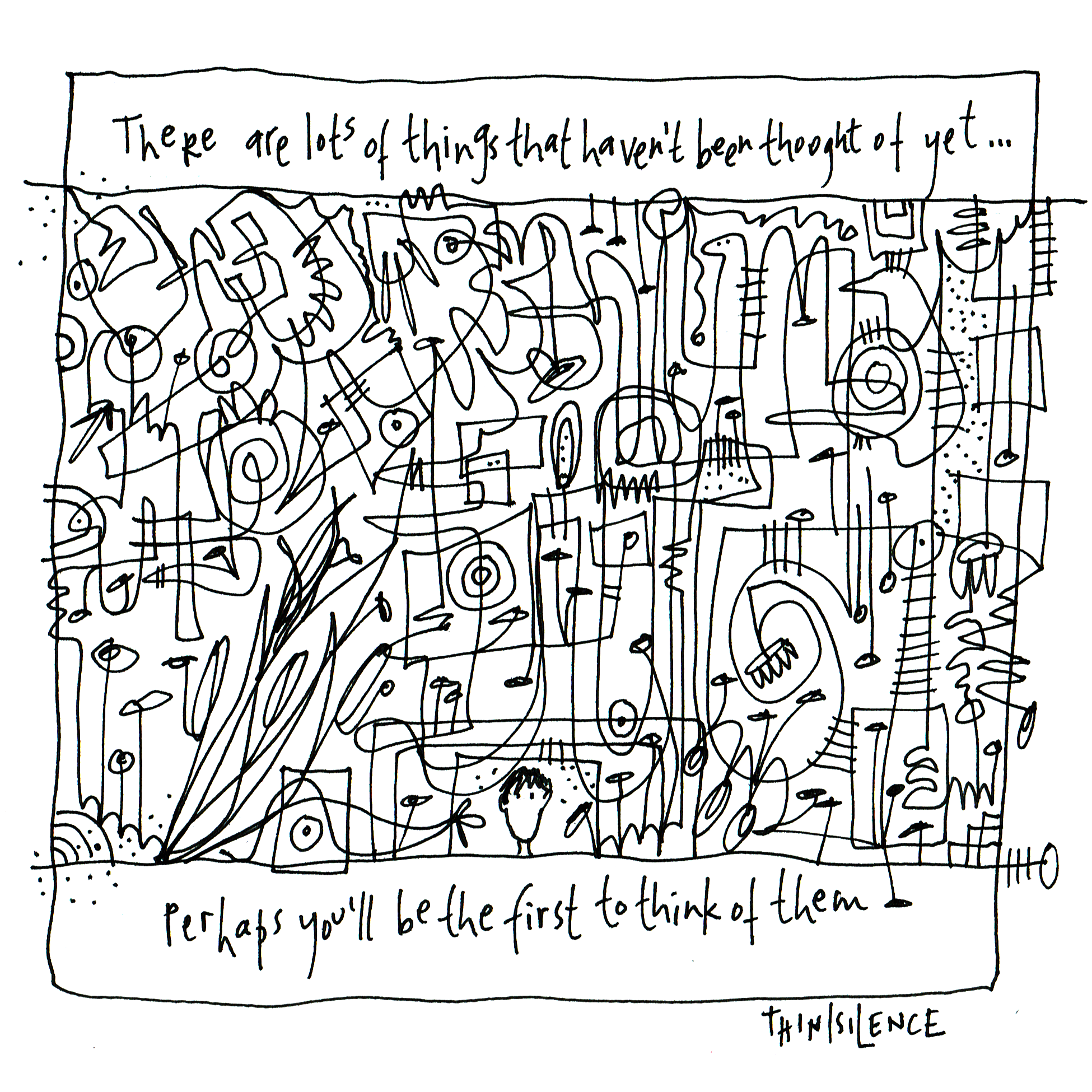
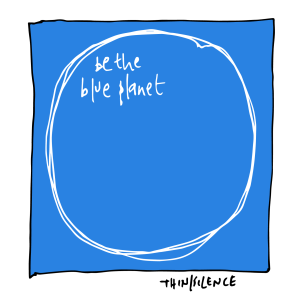
Do we know there is something more beyond our drab cages?   I don’t think we intend this drabness for one another.  We don’t design our education systems and life expectations and work environments in this way, but we underestimate the value of beauty for our brains.  As I suggest in my doodle, beauty is in the eye of the beholder – I’m not trying to tell someone what is beautiful and what is not.  The only condition I would hope for is that our kind of beauty improves the lives of those around us.

‘Unless there is an obvious reason to do otherwise, most of us passively accept decision problems as they are framed and therefore rarely have an opportunity to discover the extent to which our preferences are frame-bound rather than reality-bound.’^

We need to take a closer look, not only around us, but inside too.  Erwin McManus warns us that our sense of identity is critical when it comes to the future:

‘Sometimes, though, it’s not people who keep its in the past; it’s our own sense of identity.’^^

Just as Murdoch speaks of spiritual things, so does McManus at this point:

‘The most spiritual thing you will do today is to choose.’^^

Today, I choose beauty.  Let me see where that takes me.

(*From Jonah Lehrer’s Proust was a Neuroscientist.)
(**From Iris Murdoch’s The Sovereignty of Good.)
(^From Daniel Kahneman’s Thinking Fast and Slow.)
(^^From Erwin McManus’ The Last Arrow.)


yoking

‘We were living the process as we created it.”*

Joseph Jaworski is articulating the experience I’ve come to value deeply, namely to live in the process of creating together what is being anticipated as a goal:

‘At the very core of our union as partners is a shared passion for using our skills for positive change in our world, as well as having fun while doing excellent work.’**

Lisa Arora and Robert Mittman won’t be forming a company together anytime soon but they often bring together Arora’s graphic facilitation and Mittman’s strategising work with companies in collaborations.

What they’re exploring on a professional level is available on different levels.  I’m grateful to those who have helped me develop an idea through informal partnering, and sometimes formally in one-off or a series of actual ventures – some of these have had financial implications and others not.  They’re all marked by playfulness.

This is one of the qualities these partnerships are marked by.  Playfulness is respected by all concerned as a means of moving from stuckness to movement.  It means partnership-yokes are easy, making the burden of work lighter.   I’ve worked in partnerships where the opposite has been the case – the yoke is awkward and “rubbing,” and the load feels as if it’s doubled not reduced.  This kind of yokefulness means both or all are working as hard when apart as together.  It’s a generative thing, it’s like being born over and over together:

‘[George] Eliot was right: to be alive is to be ceaselessly beginning.’^

(*From Joseph Jaworski’s Source.)
(**Lisa Arora and Robert Mittman in Drawn Together Through Visual Practice.)
(^From Jonah Lehrer’s Proust was a Neuroscientist.)

Forgive your past

Perhaps the person who won’t allow you to move forward into the future is you.

You tried something : it didn’t work.

You related to someone badly: you won’t try that again.

You made things worse for those you love by taking a risk: nothing is worth messing up again.

You showed yourself to be a fraud when it came to your role: you’ll keep your head down and simply get on with things in the background now.

Forgiveness, though, has a remarkable way of opening life up.  Otherwise we pace back and forth within a decreasing space in life. Jonah Lehrer picked something up from George Eliot which is very helpful for us:

‘She believed that the most essential element of human nature was its malleability, the way each of us can “will ourselves to change.”‘*

Unforgiveness does not allow change to happen, forgiveness does.  And it comes to us fresh each day.  Okay, yesterday, we messed up.  Learn from it, imagine how you would or should have done it, start over.

(*From Jonah Lehrer’s Proust was a Neuroscientist.)


These are my most favourite words of all

This library, it
is a people portkey of
possibilities,
where imagination and
reality join and scheme.*

Who spoke to us our favourite words?  Words that changed something, still change something, hold us in this way of change?

Seth Godin introduces me to samizdat:

‘Samizdat (Russian: самизда́т; IPA: [səmɨzˈdat]) was a key form of dissident activity across the Soviet bloc in which individuals reproduced censored and underground publications by hand and passed the documents from reader to reader. This grassroots practice to evade official Soviet censorship was fraught with danger, as harsh punishments were meted out to people caught possessing or copying censored materials. Vladimir Bukovsky summarized it as follows: “Samizdat: I write it myself, edit it myself, censor it myself, publish it myself, distribute it myself, and spend jail time for it myself.”[1]‘**

I may pass forward subversively-good words but there’s a point at which I must begin to form my own:

‘But writing it–writing it is the true disruption. Because the act of saying it, saying it clearly, saying it aloud, this is what galvanizes people and leads to action.’^

Perhaps, from an unusual source, Tom Hodgkinson helps us to see there are at least two parts too this prooduction.  Hodgkinson, co-founder of The Idler Academy writes some practical things about spreadsheets for running a business:

‘There are two types of cost: the cost of actual materials […] and the cost incurred every month to run things […] called ‘overheads.’^^

Our words come from our changing lives.  We have to invest in the things which make change at the deepest levels of our lives – then we’ll have something worth saying.

It’s always more about ‘the direction of depth rather than distance.’*^  And if we look deep, we might find more than we expected already there.

(*Some tanka for a #libraryofawesome exploration – a library of the future in which the people bring the resources and together create something new.)
(**Samizdat article, from Wikipedia.)
(^From Seth Godin’s blog Samizdat is in the writing.)
(^^From Tom Hodgkinson’s Business for Bohemians.)
(*^From Kosuke Koyama’s Three Mile an Hour God.)

Today could change everything

“Drink in the silence. Seek solitude.

Listen to the silence.

It will teach you. It will build strength
Let others share it with you.
It is little to be found elsewhere.”*

Today is why the future and the past exist.

The past leads us to today – we are not meant to be trapped in the past.

Imagining the future makes for a better today the future is not a place to escape to or be lost in its endless possibilities.

Today is where we find our purpose in life.  Ken Mogi’s book on ikigai – the Japanese way to purpose, brings our attention to the small things in life and the here and now when he describes the life of Sei Shōnagon who was serving in the Japanese court around the year 1000 when she wrote The Pillow Book, a collection of essays:

‘Sei Shōnagon does not use grandiose words to describe life.  She just pays attention to the small things she encounters in life, understanding instinctively the importance of being in the here and now.  Sei Shōnagon also does not talk about herself.’**

In noticing the small things, Sei Shōnagon became present to them, one with them.  Paying attention to the small things is the first pillar of ikigai, leading to the second pillar of releasing oneself:

Releasing oneself  is very much related to being in the here and now.’**

There’s something in this finding our life-purpose that requires what Sherry Turkle names “sacred space.”  In describing how we are so wired to our technology, Turkle reflects on Henry David Thoreau’s consideration of “where I live and what I live for”:

‘A sacred space is not a space to hide out.  It is a place to recognise ourselves and our commitments.

When Thoreau considered “where I live and what I live for,” he tied together location and values. Where we live doesn’t change how we live; it informs who we become.  Most recently, technology promises us lives on the screen.  What values, Thoreau would ask, follow from this new location?  Immersed in simulation, where do we live, and what do we live for?^

Frances Roberts words, which open this post, encourage us to enter the silence.  This for me is not some empty place of emptiness, but a full place of what is fullness.

The question is stimulated, then, whether it is possible to become this silence?  (Many of these Thin|Silence posts are not about “This is how it is!” but “What if?”)

“I and this mystery, here I stand.”^^

Walt Whitman reminds me that me and my body – we are one.  I do not deaden my senses in silence but bring them to aliveness and to oneness.  In the moments of such wonder I too fleetingly have, I have noticed I am not thinking about myself in some separated way.  And I get it that this sense of having everything allows us to move from opening our hearts to opening our wills, the threshold we face that lies between fear and courage, or selfishness to selflessness – when I am one with what I must  do.  This is what I understand to be releasing oneself.

Perhaps another word for this, provided by Charalampos Mainemelis, is “engrossment,” being here, now:

“What we need is “engrossment,” which mobilises one’s entire attention, resources and physical energy toward only one stimulus which is the present-moment activity.”*^

It seems we are “built” for this.  Even an analogy from the film world acknowledges that we can’t be everywhere, taking everything in, but we can be somewhere:

‘When we watch a film, what is in the frame is only a selective view of a wider fictional world … the act of framing an action presents the film-maker with a whole range of choices, including what is revealed and what is withheld from the sudience.’^*

If we’re preoccupied with the past, our escaping to the future, then we cannot take hold of the fullness of the present.  Both can be held in the present, and we know, when we compress energy, there’ll be an explosion.

Creativity.

(*Frances Roberts, quoted in the Northumbria Community‘s Morning Prayer.)
(**From Ken Mogi’s The Little Book of Ikigai.)
(^From Sherry Turkle’s Alone Together.)
(^^Walt Whitman, quoted in Jonah Lehrer’s Proust was a Neuroscientist.)
(*^Charalampos Mainemelis, quote in Maggie Berg and Barbara Seeber’s The Slow Professor.)
(^*From Charlotte Bosseaux’s Dubbing: Film and Performance.)


Noticed and noticing

“Some people who came in just for a moment were all there, completely in that moment.”*

What an incredible thing it would be if it were possible for people to fully turn up in their lives.  There’s nothing in the world or universe that dictates otherwise, it’s only what we have created as orders and patterns and cultures and societies that prevent it.

And, if we want to, we can create better ones.

Waste is a part of our human stories.  It’s something only humans have managed to create.  It has a life all of its own:

‘Waste is the antiproperty that becomes the possession of losers.  It is the emblem of the untitled.’**

Waste and leftovers.  Who wants to be at the end of queue?  Unfortunately, there isn’t too much of a jump in human thinking between waste as material and waste as people.

In his book Helping, Edgar Schein identies three forms of helping: informal – when we just get on and help each other, semi-formal – when we go to people with skills, and, formal – when help is professionally provided with “appropriate” contracts in place.  It feels like we’ve been moving more towards the formal kind of helping, expecting government and organisations to take on the yoke, but this can feel more stifling than helping.

Maybe there’s a shift.  Perhaps we’re becoming more imaginative with the semi-formal in social enterprises of one kind or another, and people simply forming themselves into cooperatives that provide more choice when it comes to helping, even moving more towards the mutuality of the informal.

When more people are included rather than excluded as losers, creativity goes up.  Douglas McWilliams brings some fascinating insights from the resurgence of London’s economy.  Writing before the frothy headlines of Brexit, McWilliams records:

‘When these skilled and energetic young people from all around the world started to work together, another virtue of the migrant economy became apparent.  Not only did migrants provide skills but they also stimulated creativity.  People with different backgrounds and ways of thinking spurred each other on to produce ideas.’^

Dubbed the Flat White Economy because of the favoured beverage in the particular area of London where they lived and worked, these people brought sheer hard graft and imagination together:

The people at the heart of the Flat White Economy are very different from those who worked in the burgeoning city of London a few years earlier.  The Ferraris, champagne and mansions of Kensington and Notting Hill have been replaced by Oyster cards, bicycles and shared flats in Hackney.’^

Maybe they wouldn’t even be noticed by some who counted themselves as successful but they’re there for one another, helping in “informal” and “semi-formal” ways, and not asking each other to jump through bureaucratic hoops.

Erwin McManus tells the story of how his mum Alby, at the age of twenty with two small children, was helped to escape a dangerous marriage by a Swiss chef who worked in the kitchens of the hotel where she worked in El Salvador, to take up the offer  to work as an air stewardess with Pan Am; Erwin reflects on what this man had made possible, which was more than simply the $250 he had given her:

‘This man became for her the voice that gave her permission to leave her past behind and go create a better future.’^^

Erwin continues to reflect:

‘I have learned from her that if you live in the past you die to your future.’^^

My wife Christine and I have had the privilege of meeting the remarkable person Alby is.  We’ve very fond memories after sharing her home in Florida and learning something of the life she eventually found herself able to choose:

‘The important point not to miss here is that no one can tell you your future.  You have to decide what future you want, what future you will pursue, what future you must create.’^^

Tom Gunning works on problems of film style and interpretation, and here helps us to anticipate the uncanny – uncanny being those things which take us out of our comfort zone and threaten to change us.:

“The uncanny is always crouching, ready to spring.”*^

This is the universe we live in, full of uncanny possibilities for everyone, not just for the privileged.  We only need to begin noticing what is already in our lives and, often with the help of others, to do something different with what we find.  We have choice … options.

Seth Godin writes about how more of what we do is being set up for machines to read, but we are capable of coining up with what is unreadable by machines:

‘What happens if your work becomes machine unreadable?

So new we don’t have a slot for it.

So unpredictable that we can’t ignore it.

So important that we have to stop feeding the database and start paying attention instead…’.^*

Notice yourself.  Notice others.  It could change the world.

(*Anne Morrow Lindbergh, quoted in the Northumbria Community‘s Morning Prayer.)
(**From James Carse’s Finite and Infinite Games.)
(^From Douglas McWilliams The Flat White Economy.)
(^^From Erwin McManus’ The Last Arrow.)
(*^From Charlotte Bosseaux’s Dubbing: Film and Performance.)
(^*From Seth Godin’s blog Machine unreadable.)

Building regulations

There’s always something being built in Edinburgh.  As in so many cities, there’s a lot of digging down before there’s any building upwards.  Months can go by without any obvious “building” appearing.  All along the way, these new structures benefit from building regulations.  While the checks and balances can be the bane of the builder, no one would really want the alternative.

And once this early work of putting in foundations is complete, that’s basically it for the shape and size of what is built upon them.  It’s the same for our lives.

Whilst most of us have to live in buildings that have already been built, when it comes to our lives, we’re able to be the architects and builders and dwellers.

We all look different and pursue a plethora of interests and curiosities, but there are some “building regulations” that benefit all of us.  These are described in many ways but there’s a lot of overlap.  Just yesterday I was talking with someone about how we all want personal autonomy, mastery, and to live for a purpose greater than ourselves.  These three are zip files which, when opened, disclose many more important details and nuances for building our lives.  If we ignore or flout these, problems ensue.  At some point, no matter what our dreams and plans are for our lives, we must begin building, putting it all together:

‘Curation is the ultimate method of transforming noise into meaning.’*

Even the person who constantly tinkers with the foundations of their life is only like a noise without meaning.  Curation is building, it echoes what Erwin McManus describes as profound intent, which he describes in this way for someone:

‘They know which ground to give up.  They know where to settle.  This is not because they are postured for compromise; it’s because they have a clarity about what really matters to them.  They know what their lives are about.  They have a profound intention, nbd that intention informs ever arena of their lives.  Those who care about everything, actually care about nothing.’**

We have to build somewhere; we can’t build everywhere.  We have to do something, we can’t do everything.   We can all identify what is our profound intention.

The best thing of all about this kind of building is that we can’t start-over.  We might think that we are who we are, but when we look more closely, we find there’s a whole lot of foundations we’ve not even begun to use.   Everyone finds out more about themselves when they begin looking, and those things may be just the necessary tipping point into a life that looks quite different.

(*From Rohit Bhargava’s Non Obvious.)
(**From Erwin McManus’ The Last Arrow.)

From imposter to imposing

The thing you get to do everyday, do you think they’ll find you out, announce you for the fraud you are?

‘Everyone who is doing important work is working on something that might not work. […] Yes, you’re an imposter.  So am I and so is everyone else.  Superman still lives on Krypton and the rest of us are just doing our best.’*

This is interesting.  It moves us from focusing on the thing we’re doing to the person we are.  Anything worthwhile will always take us that little bit further, beyond our competencies and knowledge, but probably not beyond our passion:

‘I am convinced of this: you must not allow fear to steal your future, and every day that you walk this earth you must make sure you save nothing for the next life.

[…]

The most important things in life require that you bring your own urgency.  Passion is the fuel that brings urgency.’**

Of course, there’ll always be the should rather than our must – the motivation that comes from outside rather than inside of us.  And with should comes its partner average.  But with must, there’s every possibility that you’ll move from feeling like an imposter to doing something that’s imposing.

(*From Seth Godin’s blog: Imposter Syndrome.)
(**From Erwin McMans’ The Last Arrow.)

What is old and what is young?

I’m slowly reading my way into the way into the nineteenth century essayist, poet, abolitionist, and philosopher Henry David Thoreau’s way of thinking and writing.  Amongst many others, Thoreau was to influence Mohandas Gandhi, Martin Luther King Jr, Leo Tolstoy, Walt Whitman, and Marcel Proust.  I was intrigued to find the following two quotes within a few writing breaths of each other from a thirty-year old Thoreau:

‘One many may doubt if the wisest man has learned any thing of absolute value by living.  Practically, the old have no very important advice to give the young, their own experience has been so partial, and their lives have been such miserable failures, for private reasons, as they must believe; and it may be that they have some faith left which belies the experience, and they are only less young than they were.’*

‘Could a greater miracle take place than for us to look through each other’s eyes for an instant?  We should live in all the ages of the world in an hour; ay, in all the worlds of the ages.  History, Poetry, Mythology! – I know of no reading of another’s experience so startling and informing as this would be.’*

The more we understand that much of our knowledge will be superseded, as will our applications, the more we are useful both now and for those who follow us.  Oldness and youngness is not about age.  It is about our willingness to keep exploring the one life we have the chance to live with curiosity and adventure in their souls, knowing that we only have time to engage with a fraction of reality.  Many who are old on the outside, live young – living more from everyone’s future than their own past.  And there are too many who are young but are old, never journeying to the future themselves, so allowing others to shape their present.

Mythologist Joseph Campbell writes about how:

‘You’ve got to say yes to this miracle of life as it is, not on the condition that it follow your rules.  Otherwise, you’ll never get through to the metaphysical dimension.’**

Explorers define themselves by constantly opening their minds, their hearts, and their wills.   In these these things they find their youthfulness.  This is what those who are older in years have as their best to pass on: keep asking, keep seeking, keep knocking.

(*From Henry David Thoreau’s Where I Lived, and What I Lived There.)
(**From Joseph Campbell and Bill Moyers’ The Power of Myth.)


Where next?

Remarkable is better than nothing

‘You’re best work isn’t nothing, it’s the heart of what you have to offer.  Finding the long, difficult way is worth the journey, because it’s the best way to get what you deserve.’*

Just in the last week, in my dreamwhispering conversations, I’ve had three people remark on how it’s really difficult to dig deeper into what they love to do and how they to it.  Their talents and passions and experiences which make it possible to contribute  the remarkable thing they do.  They weren’t complaining, only observing.

It is difficult.   But not impossible.

Some of this difficulty is in having to notice the small things, which have greater significance than we often allow:  It’s easier to look at ourselves generally, but as Peter Altenberg has cause to be reported in a Paris Review article on flanering:

“Little things in life supplant the “great events.”**

These things, once noticed and developed, are the reasons we can reply to someone who asks, “What are you up to?” with “Something remarkable,” rather than “Nothing much.”

Interestingly, Henry David Thoreau would see this occurring in our lives as personal emancipation:

‘Public opinion is a weak tyrant compared with our own private opinion.  What a man thinks of himself, that it is which determines or rather indicates, his fate.  Self emancipation when on the West Indian provinces of the fancy and imagination – what Wilberforce is there to bring that about?’^

Here are three questions you may want to play with over the next few days.  They’re not easy and they’re not general:

What does it mean to me to be Human?
In the light of my answer, who am I?
Therefore, what is my work?

(*From Seth Godin’s blog Money for nothing.)
(**Peter Altenberg, quoted in the Paris Review article Radical Flaneuserie.)
(^From Henry David Thoreau’s Where I Lived, and What I Lived For.)