Letting go and letting come, keep moving

Classically, the understanding of life, the unfolding of identity and creativity, the notion of growth and discovery were articulated through the metaphor of the journey.*
(John O’Donohue)

What if you saw opportunities instead of tasks? Chances instead of risks.**
(Seth Godin)

I hope we have uncovered many possibilities for our lives as a result of walking through the five steps of Rohit Bhargava’s trends-spotting: gathering, aggregating, elevating, naming and proving.^

Nothing happens without us wanting it to and, so, yesterday, I reflected on how we can be the person who stands in the way of pursuing these new possibilities.

The temptation is to try and add new discoveries into our life as it is at the moment, to minimise the disruption. The five steps stand within a larger journey of transformation, though, requiring the following:

We need to see our lives as a story we can detach ourselves from. This helps us both to take a better look at the story we’ve been living and also to see how it can be replaced with another, better story.

Now we are able to see more of who we are and what we can do – the five steps making it possible to identify and take in new information from which a new and different story can be created.

This isn’t a head-only exercise and we’ll need to engage our feelings and emotions in order to identify with the things that matter and resonate with us most of all from what we’ve been discovering, to be able to embrace and accept these. There’ll also be difficult and even painful things to negotiate because denying these would be to deny ourselves.

There’s clearly a lot going on here and we’ll have to be very present if we are to see and understand and feel more clearly. We’ll be tempted to run to the comfort of the past or escape to dreams of the future, but our imaginations require us to be fully present and focused now.

We need to identify fully with our values and to join our discoveries with these – for not to do so would be akin to denying ourselves.

And we must commit to the expression of what we have discovered in playful, exploratory ways.

These steps allow us to take a journey from the centre of our old stories to the edge, and from the edge to step outside and look on these in a detached way. What is coming into being as we do this is a new story.

*From John O’Donohue’s Divine Beauty;
**From Seth Godin’s blog: Just getting through the day;
^See Rohit Bhargava’s Non Obvious 2019.

What’s holding us back?

Furthermore, we have no even to risk the adventure alone, for the heroes of all time have gone before us. The labyrinth is fully known. We have only to follow the thread of the hero path, and where we had thought to have found an abomination, we shall find a god. And where we had thought to slay another, we shall slay ourselves. Where we had thought to travel outward, we will come to the centre of our own existence. And where we had thought to be alone, we will be with all the world.*
(Joseph Campbell)

In his gentle but powerful tale of four companions brought together in life’s journey, Charlie Mackesy writes:

Isn’t it odd. We can only see your outsides, but nearly everything happens on the inside.**

Our inside world can be the most difficult of all to journey through; Edward Deci claims,

The starting place for change is accepting oneself and taking an interest in one’s inner world.^

I hope you’ve been identifying many amazing things about yourself over these days of exploring all that you have to gather, aggregate, elevate, name and prove.

Joseph Campbell helps adds a mythological level to what we’ve been doing. Using Rohit Bhargava’s five steps for identifying future trends has led us into what Campbell identifies as the hero’s journey. Including how overcoming the self who stands in the way, we are able to come to the centre of our existence and know who is our True Self and what is our contribution more clearly and strongly than ever.

I’ll share more in my next post, but here’s a little video about the hero’s journey to watch. If you’ve been gathering, aggregating, elevating, naming and proving over these last few days, see how you identify your journey with the hero’s journey.

*From Joseph Campbell and Bill Moyers’ The Power of Myth;
**From Charlie Mackesy’s The Boy, the Mole, the Fox and the Horse.
^From Edward Deci’s Why We Do What We Do;

Now to try things out

If you follow your bliss you put yourself on a kind of track that has been there all the while, waiting for you, and the life that you ought to be living is the one that you are living. When you see that you begin to meet people who are in your field of bliss, and they open doors to you.*
(Joseph Campbell)

We have gathered, aggregated, elevated and named towards replying to the questions, Who is my True Self? and What is my contribution?

It’s now time to prove – the fifth of Rohit Bhargava’s trend-spotting steps that we are using to see more possibilities contained within our lives.**

Proving involves evaluating and researching further what we’ve been uncovering. This translates into what Theory U terms prototyping, or experimenting and exploring. We figure out small ways of expressing the ideas that have come to us.

We learn and reconfigure our way towards a better understanding and expression.

We may ask the questions:

Am I successful when I do this?
Am I being intuitive?
Am I growing as a result?
Is there a need in me being met?

Hugh Macleod names three big things to practise as we’re exploring: to use our smarts (talents), to be kind (to ourselves and others because things will go wrong) and to have grit (to learn and keep going, no matter what).^

*From Joseph Campbell and Bill Moyers’ The Power of Myth;
**From Rohit Bhargava’s Non Obvious 2019;
^From gapingvoid’s blog: RBG & The Big Three.

Naming new worlds of possibility

The truth of the matter is, true differentiation – sustainable differentiation – is rarely a functioning well-roundedness; it is typically a function of lopsidedness. The same can be said of excellence.*
(Youngme Moon)

This is day four of five in which we’re considering how Rohit Bhargava’s five trend-spotting steps can help us reply to the two questions: Who is my True Self? and What is my contribution?

Naming follows gathering, aggregating and elevating.

We’re looking to give our enriching environments a name or title that is simple and memorable, allowing us to quickly connect with who we are when moments of doubt or direction or decision appear.**

Here are some of the names different people I’ve been working with have given to their enriching environment: seeing small, the art of discovery, witness cleverness, relationships with purpose. These are memorable and their simplicity is intentionally on the far-side of complexity so they’re rich in depth.

Try this with your own enriching environments, the places you most prosper and also make your greatest contribution to others, as it were, where your deepest joy meets the world’s greatest need.

They don’t have to be tidy and may even include paradox; these can be some of the richest.

Have fun. Bhargava suggests mashing words together to create the name or using alliteration or twisting a word to make a new memorable word. You are naming real personal worlds.

*From Youngme Moon’s Different;
**You can also follow this exercise for your list of de-energising moments – identified because you need to know these whether you’re going to be able to avoid them or will have to manage them.

Too many ideas and what they add up to

Welfare: from the Old English – to fare well, get along successfully, prosper.

If you’ve gone through gathering and aggregating ideas this is the point at which you’ll probably confront the same problem I do every year: there are too many possibilities.*
(Rohit Bhargava)

I’ve been sharring how to use Rohit Bhargava’s trend-spotting steps of gathering and aggregating in order to see more of who we truly are and what our contribution can be.

Bhargava’s third step is elevating and involves identifying the things all the gathered and aggregated elements (values, talents, significant experiences and energies) have in common, not in order to generalise, but to highlight their uniqueness.

For the purpose of replying to our two questions, this translates into identifying what are our most enriching environments in which we prosper and flourish.

When this happens, we’re in the best place to help others.

*From Rohit Bhargava’s Non Obvious 2019.

More things you could do if you wanted to

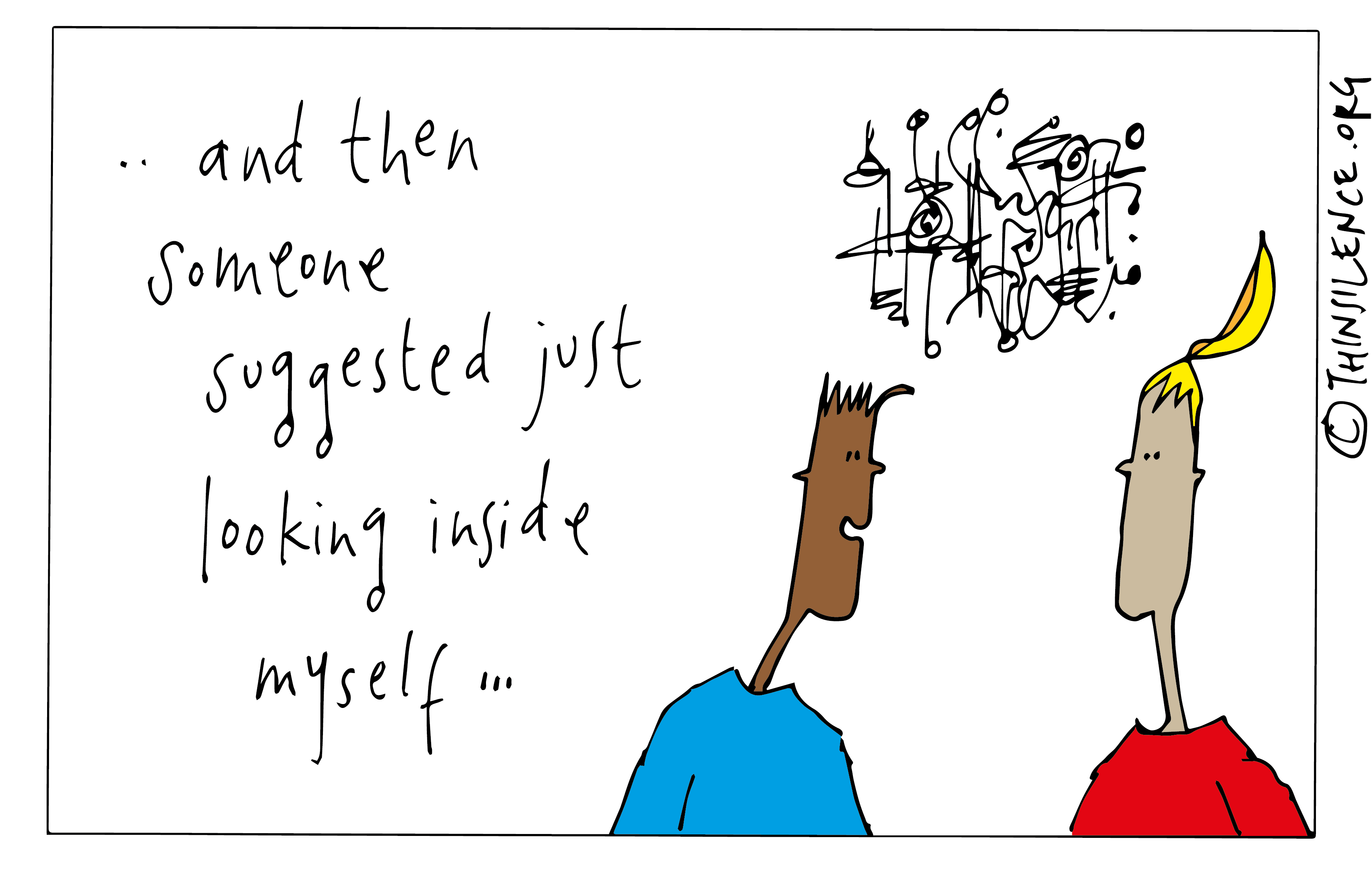
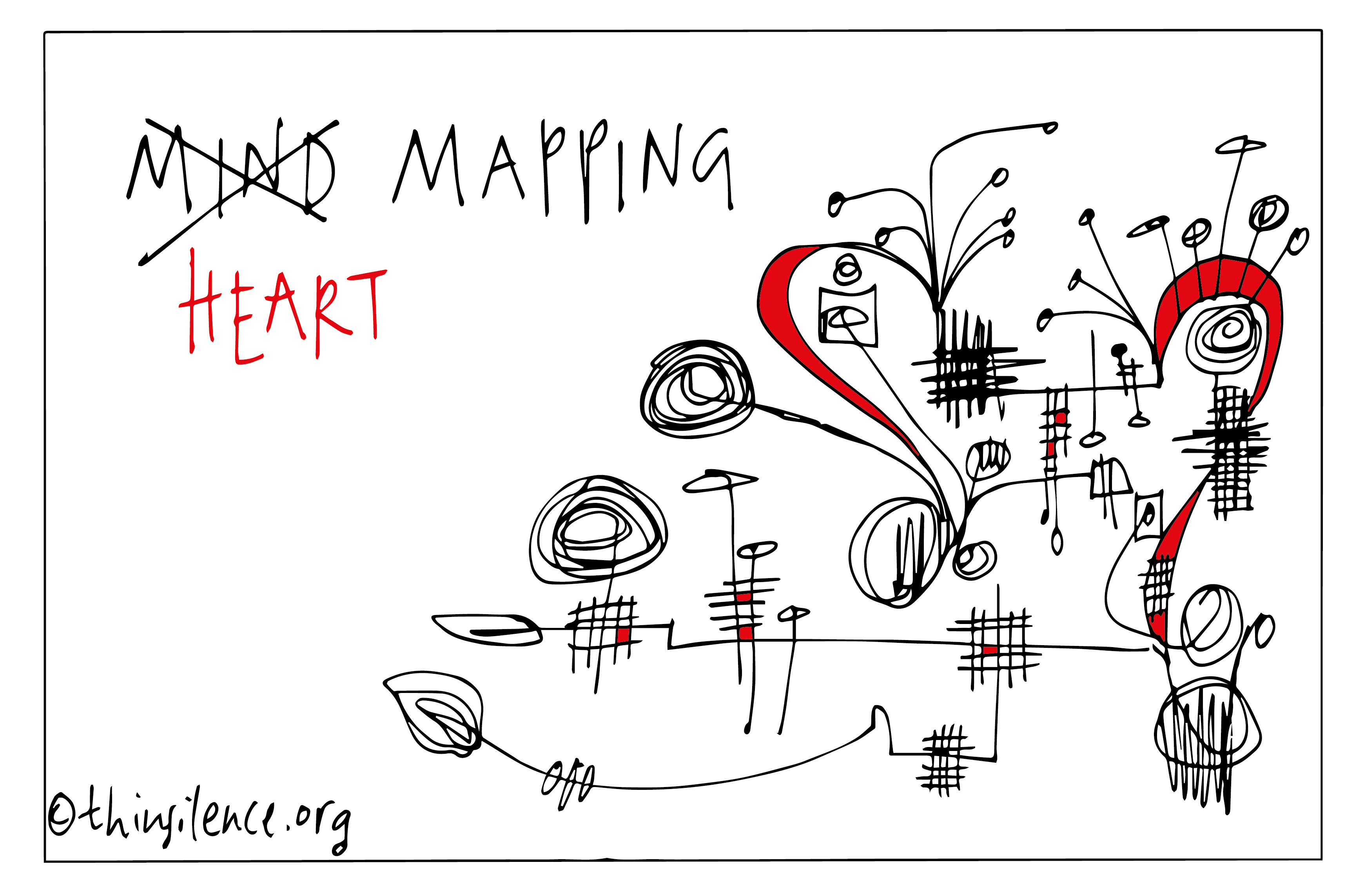
The mind can be a noisy and cluttered place that can drown out the heart.*
(Susan Friel)

Yesterday, I encouraged you to make the most of what you have, and you have a lot more than you think using the first of five tools Rohit Bhargava employs to identify the non obvious: gathering. Today we’re going to use the second tool: aggregating.

After yesterday, you’ll have a list of values, talents and abilities, significant experiences, and high energy moments.

Write these out on some strips of paper that you can fold up and put into four piles or bowls.

Pick out one piece of paper randomly from each of the first three (value, talent, significant experience) and reflect on how they these three things combined to create a memory that is important to you – it doesn’t have to be a success, it may matter more to you that you tried.

Now put aside the significant experience and randomly pick from the fourth – you should now have the value, talent and a moment when you felt yourself highly energised. Reflect on the possibilities that this combination throws up for you.

Don’t worry about how strange or ridiculous these might feel to you. It’s intended to be a playful exercise to help you imagine more possibilities you could make happen if you wanted to – adjacent possibilities.

More to follow.

*Susan Friel, from Corita Kent and Jan Snowden’s Learning by Heart.

Making the most of what you have, and you have a lot more than you think

Your big break. Some people get one. Most people don’t. But, if you’re reading this, it means that you’ve received more than one, perhaps a countless number of, little breaks.*
(Seth Godin)

What if, instead of using our jobs to pay for our lives, we use our work to express the highest part of our beings: joy, passion, hope, meaning, and love.**
(Hugh Macleod)

The first thing we need to do is gather everything we have – I’m thinking especially of values, talents, significant experiences and energies.^

And a really good way to gather is to journal as it encourages reflection as we write and the development of a story, although you may begin with a list.

We are seeking to reply to two critical questions: Who is my True Self? and What is my contribution?

More to come. (There’s always more than we think.)

*From Seth Godin’s blog: Your big break;
**From gapingvoid’s blog: Create love or die.

^Towards identifying your energies, seek to be more aware of when you feely really energised and really de-energised. Make a not of each of these extreme experiences: what you are doing, why you are doing this, who you are doing it with or for, and when you are doing it – e.g., the beginning or end of something, or the time of day.

A meaningful day

When in doubt, come back to the stories.*
(Chris Guillebeau)

Happy Saint Valentine’s Day.

If we want today to be meaningful we could do a lot worse than to bring to mind those who have been a part of our lives in helpful and supportive and caring ways through their kindness, ideas and example.

When I think of these people in my life, I find little scenarios playing out in my memory, stories I carry with me, stories to help me keep going.

For all of you, I am so very grateful.

*From Chris Guillebeau’s The Happiness of Pursuit.

Beauty and the gift

Much of the stress and emptiness that haunts us can be traced back to our lack of attention to beauty. Internally, the mind becomes coarse and dull if it remains unvisited by images and thoughts which hold the radiance of beauty.*
(John O’Donohue)

The only essential is this: the gift must always move.**
(Lewis Hyde)

When we slow down enough to notice, we can stagger at the beauty of nature.

Anyone who has every attempted to offer some commentary of nature knows how inadequate words are and how more fitting are silence and awe.

When we look closer, we see a great struggle, even pain involved in producing the sights that cause us to gasp.

I take away the lesson that there is no easy path to beauty, that we must keep moving in the direction of what we believe in and hope for, to show up, to do the hard work, to give.

Perhaps something beautiful will result.

*From John O’Donohue’s Divine Beauty.
**From Lewis Hyde’s The Gift.)

See everything

To hope is to be ready at every moment for that which is not yet born, and yet not become desperate if there is not birth in our lifetime.*
(Erich Fromm)

Erich Fromm contemplates the nature of hope following Eugene McCarthy’s presidential election loss to Richard Nixon in 1967. Fromm had hoped for a change in American policy through a man who was a professor, poet and philosopher. It wasn’t to be.

Though published in 1970, Fromm’s words are more than relevant for today, describing, as they do a spectre, unseen by many, walking among us:

It is a new spectre: a completely mechanised society, devoted to maximal material output and consumption, directed by computers: and in this social process, man himself is being transformed into a part of the total machine, well fed and entertained yet passive, unalive and with little feeling. With the victory of the new society, individualism and privacy will have disappeared; feelings toward others will be engineered by psychological conditioning and other devices, or drugs which also serve a new ind of introspective experience.*

So begins his argument for a revolution of hope that is

neither passive waiting nor is it unrealistic forcing of circumstances*.

Rather, persons of hope

see and cherish all signs of new life and are ready at every moment to help the birth of that which is ready to be born.*

Many more hope than are aware, Fromm describing in 1970’s-ese those who are unconsciously hoping:

Our social pattern is such that the successful man is not supposed to be afraid or bored or lonely. He must find this world the best of all worlds; in order to have the best chance for promotion he must repress fear as well as doubt, depression, boredom or hopelessness.*

I was reading Fromm alongside Rohit Bhargava’s curating habits – included in my blog of a couple of days ago – which offer skills for the hopeful person who wants to

see and cherish all signs of new life and are ready at every moment to help the birth of that which is ready to be born*.

Bhargava’s habits are curiosity, observation, fickleness, reflection and elegance.**

In this context, I read these as finding what you’re curious about and widening this out – everything is attached to everything else; take a longer look at what began with a curious glance – what it is, what it’s doing, where it’s heading; don’t get hung up on one or two things but stay curious and observant – everything is attached to everything else; build deep reflection in – journal, walk, talk with others, read; move with and give aid to what is wanting to be born, in collaboration wherever possible.

Perhaps then, to use Richard Rohr’s words, we might be ‘seers of alternatives’ who ‘move forward by influencing events and inspiring people’ who know that ‘wisdom is the art of the possible’.^

*From Erich Fromm’s The Revolution of Hope;
**From Rohit Bhargava’s Non Obvious 2019;
^From Richard Rohr’s Eager to Love.