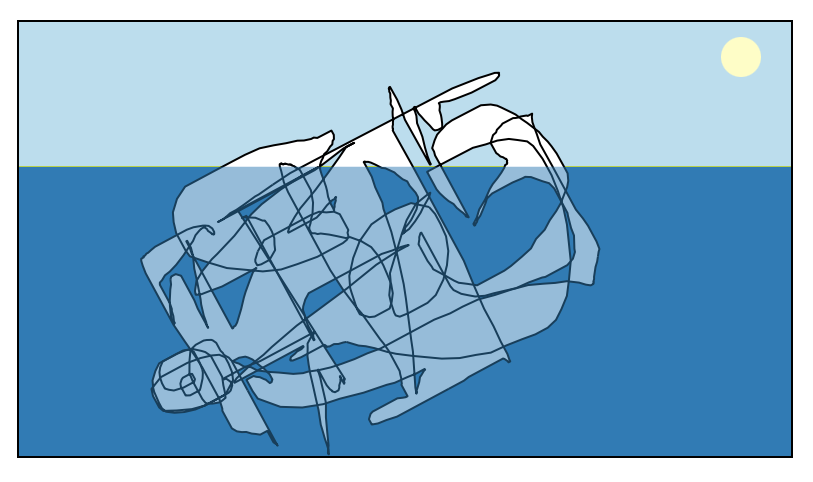
Here’s some fun to have with a doodle.
Check out Iceberger and doodle your iceberg, then watch it settle.
Here’s one of mine.

Here’s some fun to have with a doodle.
Check out Iceberger and doodle your iceberg, then watch it settle.
Here’s one of mine.

In life one cannot awaken often enough the sense of a beginning within oneself. There is so little external change needed for that since we actually transform the world from within our hearts. If the heart longs for nothing but to be new and unlimited, the world is instantly the same as on the day of its creation and infinite.*
Rainer Maria Rilke
When one is home in oneself, one is integrated and enjoys a sense of balance and poise. In a sense that is exactly what spirituality is: the art of homecoming.**
John O’Donohue
Trauma is anything that separates us from our true self.
In this way we may all understand ourselves to be working through trauma.
Rather than avoiding our trauma, facing it brings the possibility of reuniting with our heart, out of which come new beginnings.
Yes, we will need guides, but within each of us is the truest guide: ourselves. We only need to hear this true self beneath he others.
*From Rainer Maria Rilke’s Letters on Life;
**From John O’Donohue’s Benedictus.

Joseph Campbell … noticed that in legends from around the world, some kind of mentor arrives shortly after a hero has accepted a call to adventure.*
Martha Beck
those who produced and traded colours were known as colourmen, and procured rare pigments from across the globe**
Kassia St Clair
The problem is not finding a guide: there are many guides.
The problem is overcoming our resistance and walking with those who make themselves available.
Martha Beck’s description of a guide is somewhat mystical. Their appearance in our lives in the form of a book, song, piece of art or person may indeed be so. I prefer, though, a simpler description: a guide is someone who has been this way and is willing to walk with us.
I included the quote about colourpeople because I enjoyed the adjacent thought that the colour in a person’s life is exactly what a guide is searching for.
*From Martha Beck’s The Way of Integrity;
**From Kassia St Clair’s The Secret Lives of Colour.
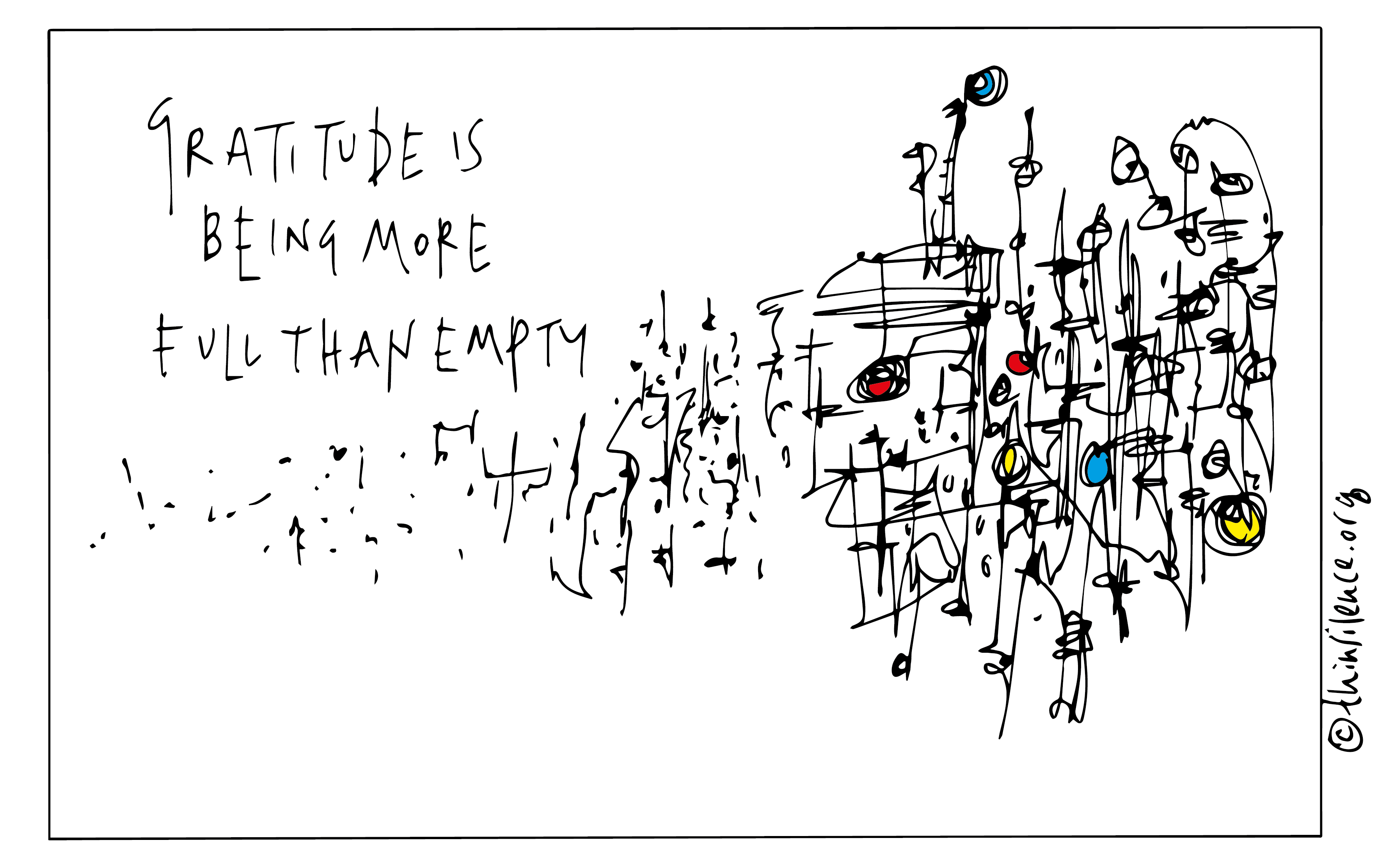
Every creative endeavour becomes a realisation of both how limited and unlimited we are.*
Erwin McManus
Apparently, the power to establish order, which ranks among the most inexorable strengths of artistic creation, is summoned most insistently by two interior states: by one’s awareness of abundance and by the utter collapse within a human being, which, after all, yields another abundance.**
Rainer Maria Rilke
David Brooks writes about two mountains.
The first mountain we climb because we believe we need something more: personal possession, position, charisma, respect and acknowledgement.
The second mountain is a place of discovering we are more than enough and also that when we are connected with this truth about ourselves more of what matters comes to us.
*From Erwin McManus’ The Artistan Soul;
**From Rainer Maria Rilke’s Letters on Life.
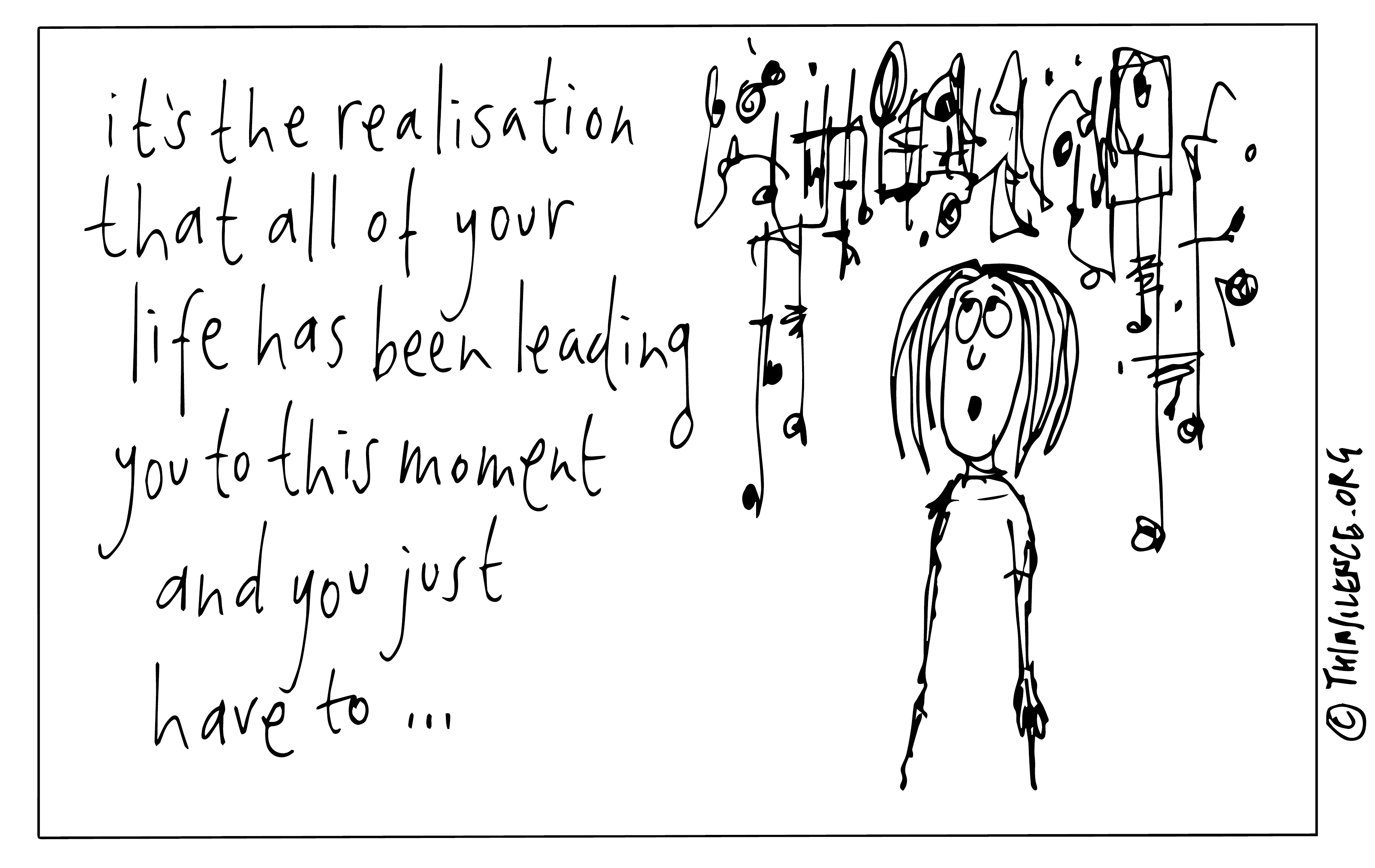
I intend to look at technology the way [C. B.] Macpherson looked at democracy, as ideas and dreams, as practices and procedures, as hopes and myths.*
Ursula Franklin
As I begin reading David Epstein’s Range I have been reacquainted with Laszlo Polgar and his life project to grow his children Susan, Judit and Sofia into geniuses, specifically chess champions.
I’d come across this story several years ago. Laszlo first of all had to find a partner to pursue his experiment with. Marrying Klara, the couple set out to see if it was possible to grow genius. The daughters’ achievements are quite remarkable but the thing I remember from my first encounter was how the girls came to see more important things in life than chess.
As I reread the story, I find myself with the thought that I am more concerned to discover with people who haven’t had such a focused upbringing just where their experiences have brought the to and the choices they now have.
These are probably to lying around on the surface, but are certainly to be found beneath the surface.
Ursula Franklin’s insights not only stretch from democracy to technology but also to the contents of our lives because we are more than the practices and procedures our working lives may pour or force us into, we are also ideas and dreams and stories
I hope you still believe this, but even if this is difficult, they are still there, possibly well-hidden beneath he layers of practices and procedures, roles and responsibilities. These are what I love to discover, and it’s for everyone.
*From Ursula Franklin’s The Real World of Technology.
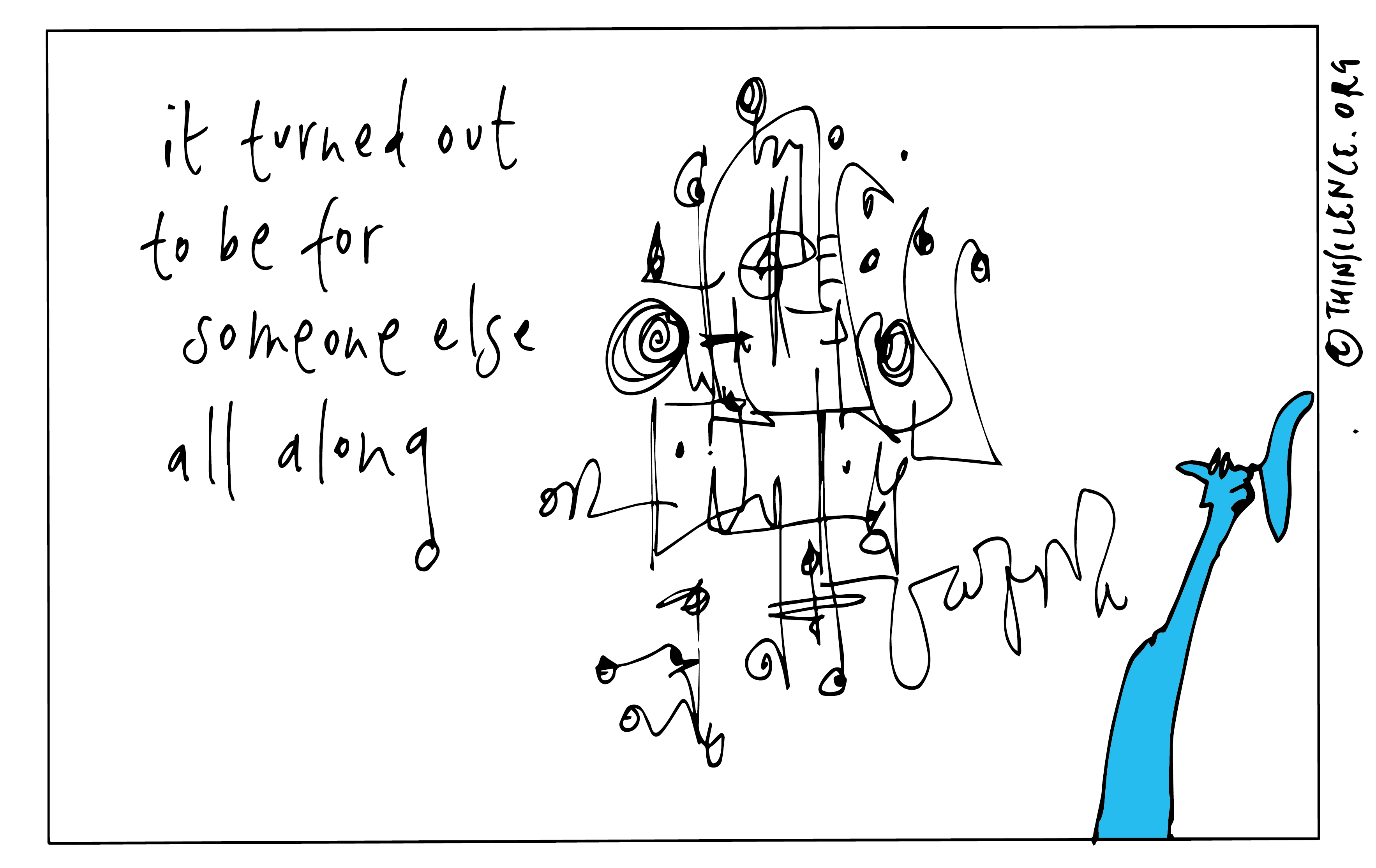
Don’t chase success. Instead, chase new and interesting ways of solving other people’s problems.*
Hugh Macleod
More effort creates beauty and magic and remarkability. Perfectionism is a false hope and a place to hide. Effort, on the other hand, is our best chance to do work that matters.**
Seth Godin
Seth Godin writes about a third effort option to insufficient and sufficient: more.
Throughout their book on humble leadership, Edgar and Peter Schein use the term personising: relating in a deeper relational way in the workplace: seeing people rather than roles.
Hugh Macleod warns us not to chase significance, but to do solve everyday problems for people, but better than anyone else does.
These three things – more effort, personising (including becoming one with the mission) and solving everyday problems better lead to something magical happening through our lives. I guess that’s all we can hope for.
*From gapingvoid’s blog: Take something ordinary and elevate it;
**From Seth Godin’s blog: Effort.
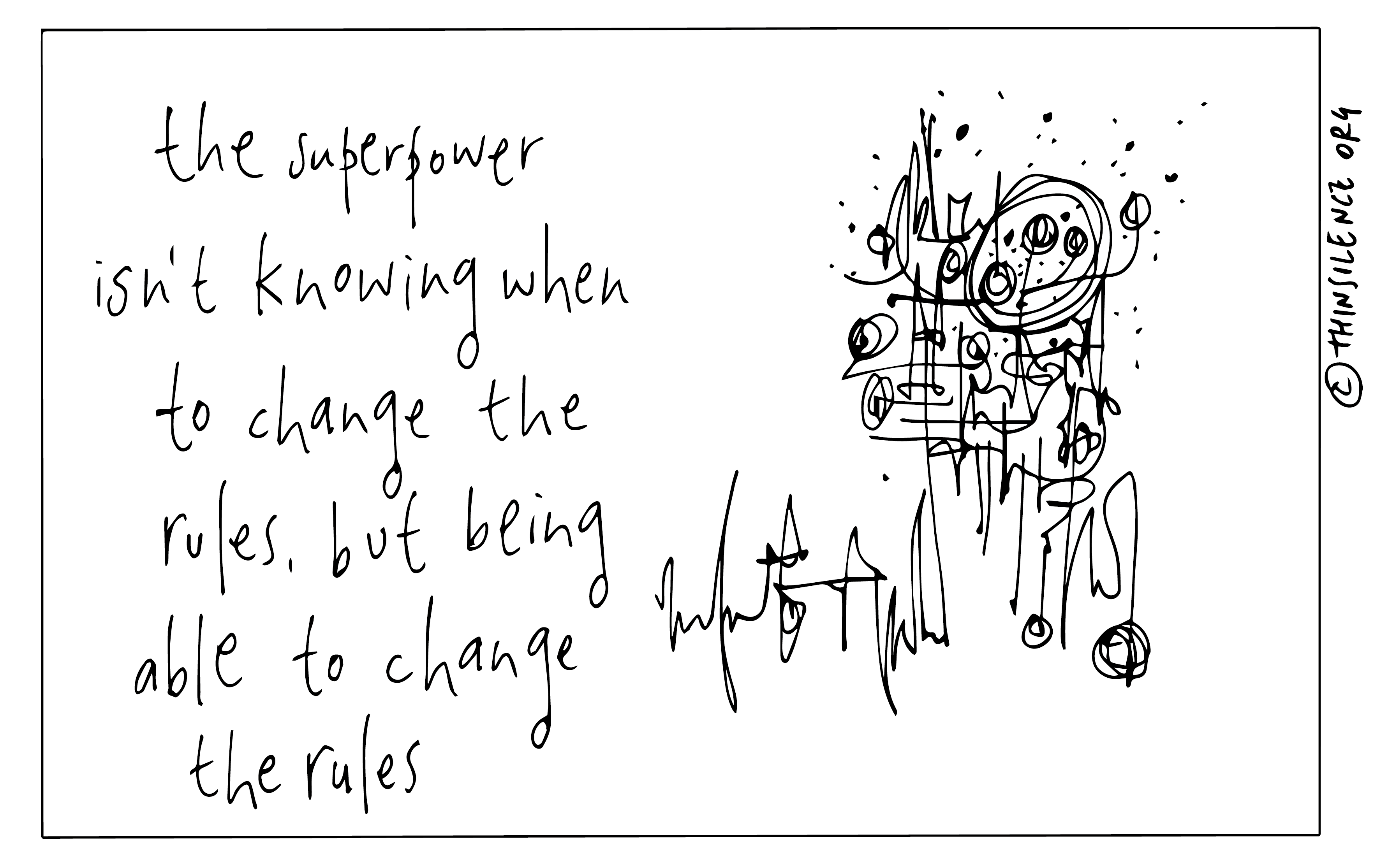
While finite games are externally defined, infinite games are internally defined. The time of an infinite game is not world-time, but the time created within within the play itself. Since each play of an infinite game eliminates boundaries it opens to players a new horizon of time.*
James Carse
In their book on Humble Leadership, Edgar and Peter Schein anticipate an increasingly VUCA world: volatile, uncertain, complex and ambiguous. Within such a world, we will have to become more flexible and less rigid in our thinking, emotions and activeness.
The list of abilities continues to grow: silence, centredness, humility, openness, listening, presence, integrity, inquiry, adaptability, lifelong learning are but some needing to be grown within us.
Which future-aware abilities would you like to add to the list?
*From James Carse’s Finite and Infinite Games.

We not only create stories for metaphors of life, we create them as metaphors for a meaningful life. To live meaningfully is to be at perpetual risk. […] If, should the protagonist fail, life would go back to normal, the story is not worth telling.*
Robert McKee
The meaningful life may come to us in an unusual guise.
Yesterday I was pondering holy discontent. When we notice something is wrong and are compelled to do something about.
Consecration follows: giving oneself to the need or cause we have perceived.
I use this word because it suggests we understand there to be something extraordinary about what we are about to do, like the Blues Brothers on their mission for God.
On the outside it will likely look ordinary, earthly and just hard work.
On the inside it is a holy thing that will bring beauty into the world, even if that is only one person’s world.
In keeping with all things that are worthwhile, it will require risk, the leaving of the familiar and safe, misunderstood by others, being a lifelong learner.
*From Robert McKee‘s newsletter: A Little Risk Goes a Long Way)

But the task of all tasks is to transform what is insignficant into greatness, what is inconspicuous into radiance; to present a speck of dust in a way that shows it to be a part of the whole so that one cannot see it without also instantly seeing all of the stars and the heavens’ deep coherence to which it ultimately belongs.*
Rainer Maria Rilke
Very few people have the leverage to change the world. But all of us have the chance to change the people around us, and those actions change what gets built, funded and launched.**
Seth Godin
They apologised to me for their rant.
I could only see the beauty of their concern, their desire for something better.
It felt to me like a holy discontent: something wrong we notice that defines us so that we have to do something to make it better.
We may think that finding purpose in life should a far more pleasurable experience, making us feel content, joyful, calm, inspired, rather than poked with a sharp stick.
We continue by questioning what one person can do and of course the answer is, everything:
all any man can do is to add his fragment to the whole^.
*From Rainer Maria Rilke’s Letters on Life;
**From Seth Godin’s blog: Contagious commerce;
^Robert Henri, quoted in Maria Popova’s Brain Pickings: Drawing on Walls: An Illustrated Homage to Keith Haring, His Irrepressible Art of Hope, and His Beautiful Bond with Children.
We are survivors of immeasurable events,
Flung upon some reach of land,
Small, wet miracles without instructions,
Only the imperative of change.*
Rebecca Elson
We are one world.
This is the truth and reality that came to us powerfully when the first photograph of our planet was taken from space.
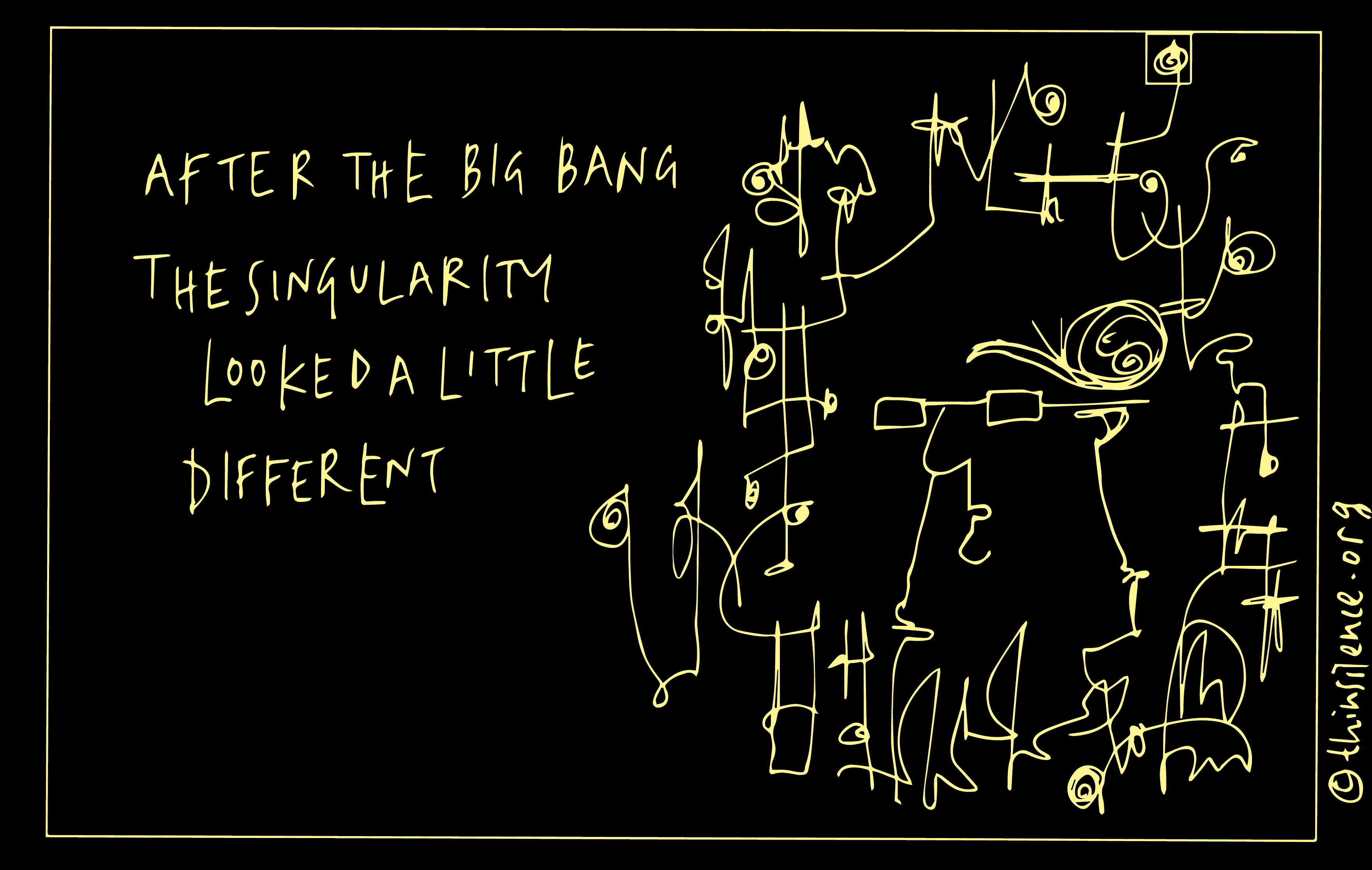
We are a singularity.
Billions of years before the picture was captured a big bang of change came upon an unimaginable density.
Our world exists within a singularity.
We are flesh and electricity expressions of singularity working our way from disconnection to connection with ourselves, with others, with our world, with our universe and with our god.
Such integrity begins with humility the discover of truth.
*Rebecca Elson’s Evolution, from her book A Responsibility to Awe.


You must be logged in to post a comment.