Preparing for surprise

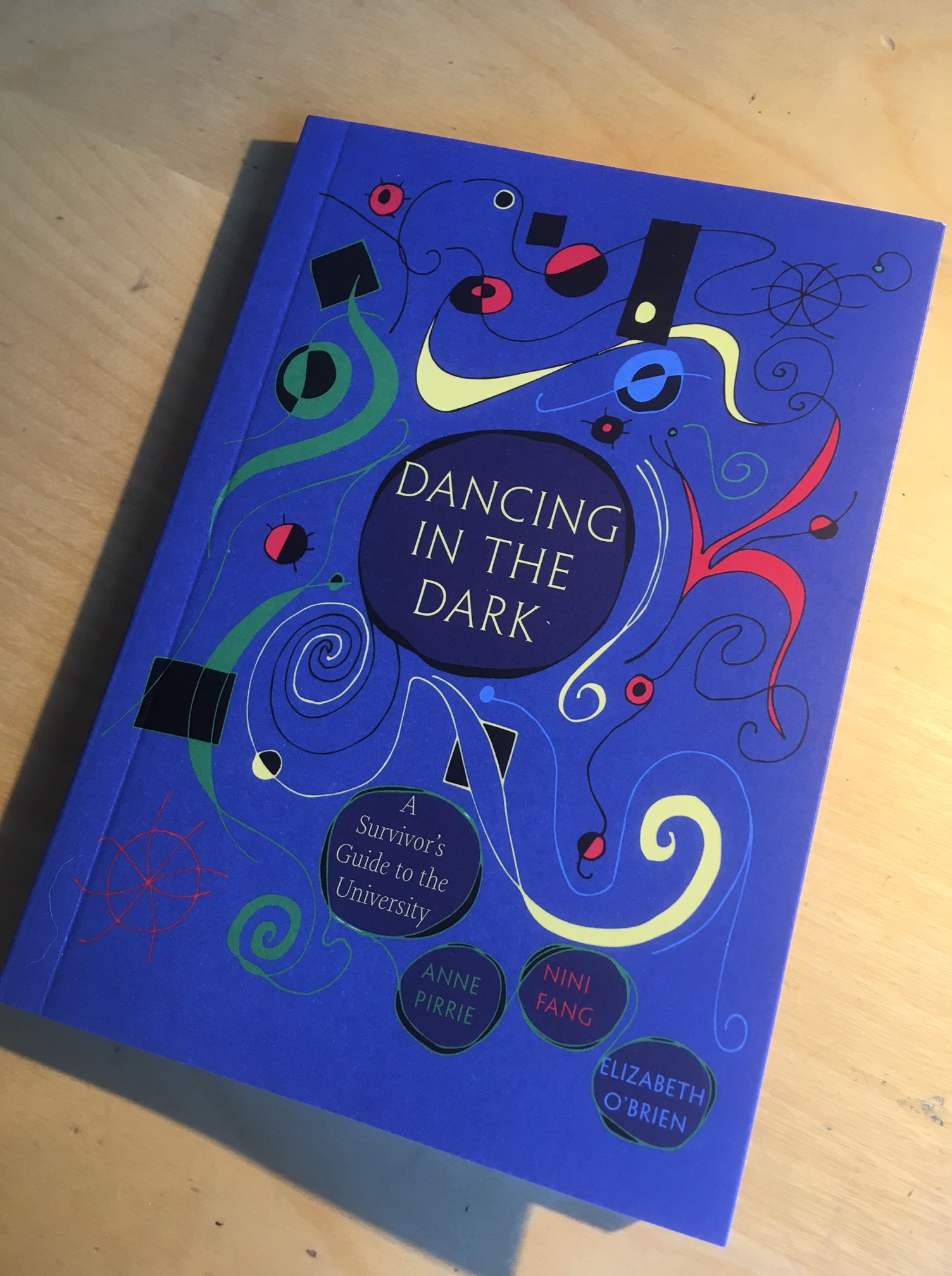
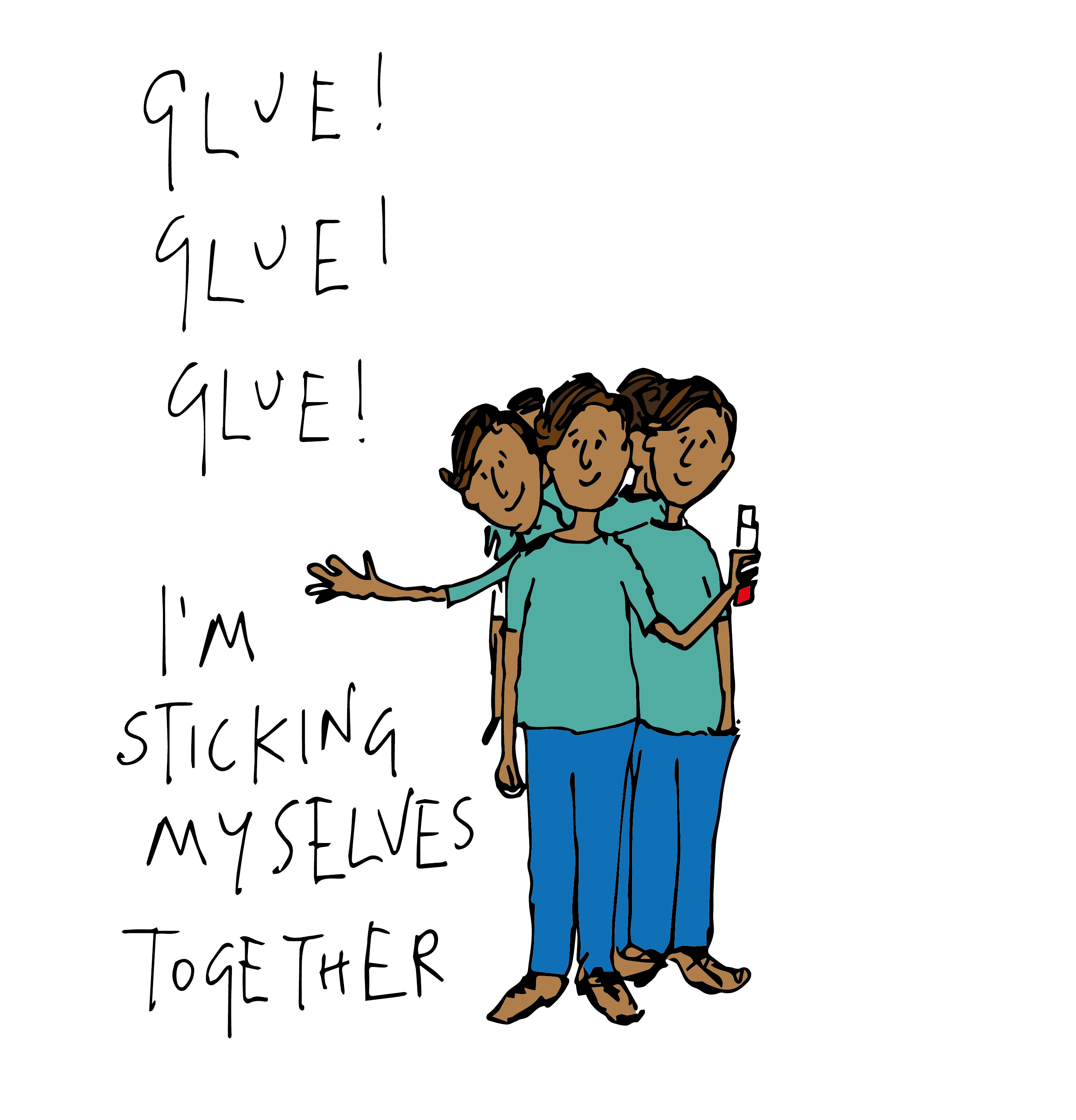
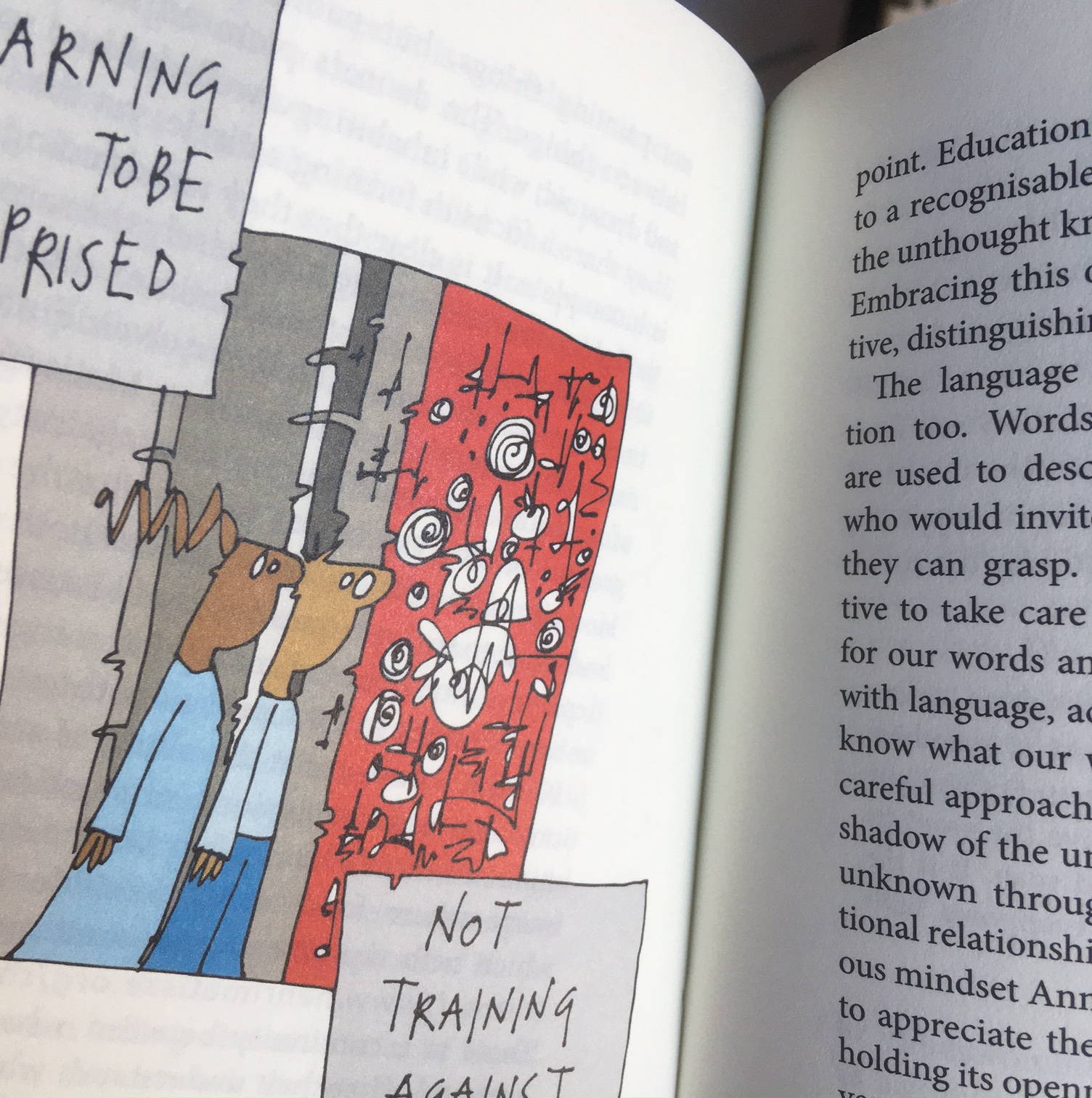
I promised to give a sneaky look at one of the illustrations in Dancing in the Dark, from Annie Pirrie, Nini Fang and Elizabeth O’Brien.

I love how this little book for academics has made space for illustrations: may there be many more to follow.

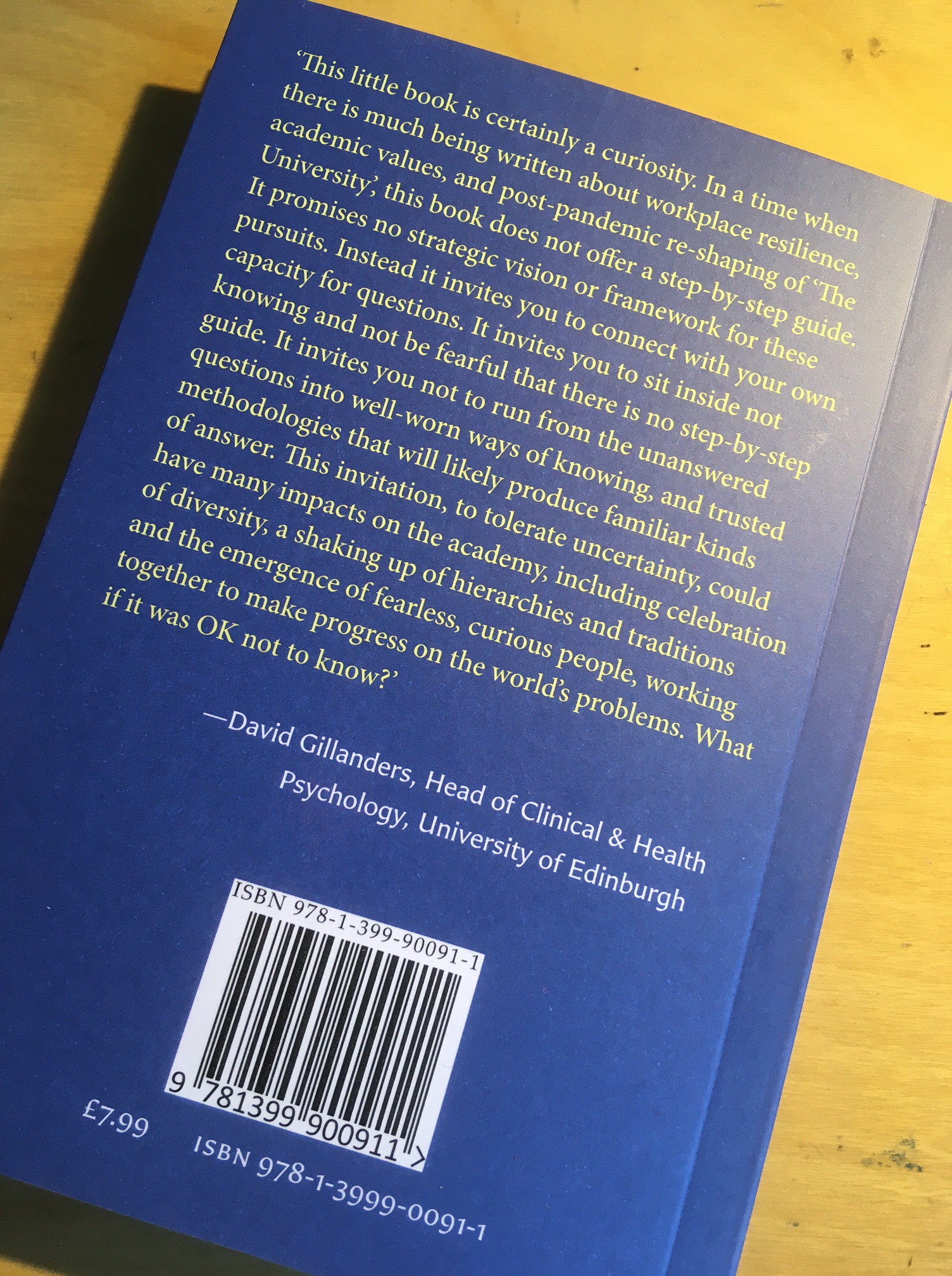
The book isn’t widely stocked but copies may be obtained from the Golden Hare Bookshop, a smashing little independent in Edinburgh.

Dancing in the dark

Here’s a little book I recently illustrated and put together the cover for, from Annie Pirrie, Nini Fang and Elizabeth O’Brien.

Dancing in the Dark is meant for slipping in a pocket or bag, exploring how questions are the means of surviving knowingness.

The book isn’t widely stocked but copies may be obtained from the Golden Hare Bookshop, a smashing little independent in Edinburgh.

I’ll offer a sneaky preview of one of my illustrations tomorrow.

Dawdling, doodling and dreamwhispering

These have turned out to be my three great joys.  

I didn’t know this ten years ago.  They’re the further unfurling of a journey I’ve been on for some time now.

Dawdling, as in wandering, is about observing and appreciating more deeply a place or a thing or a person.

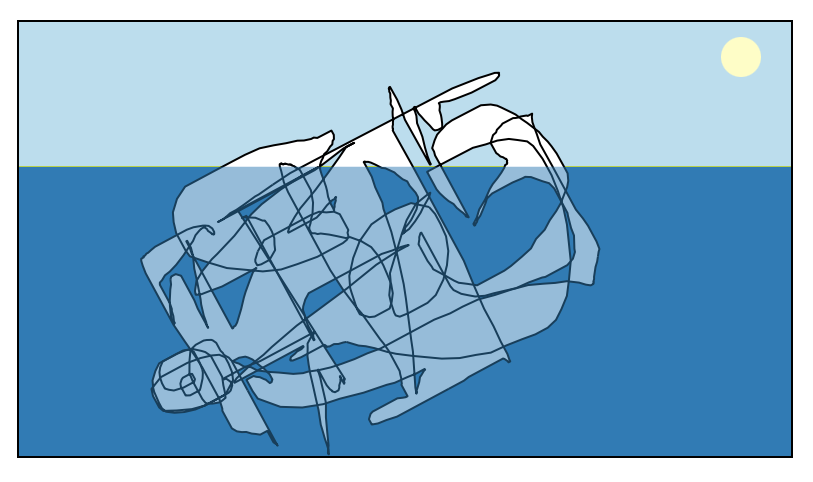
Doodling derives from dawdling, wandering with a line across a piece of paper is about listening, and when I add colour, is about relaxing.

Dreamwhispering is the name I give to listening to what our lives have to say about our values, talents and energies.

When we notice these, we’re able to imagine a different, deeper stories for our lives.

I’ve been bringing the three together in my Chaplaincy blog Slow Journeys in the Same Direction, which provides a thought, a doodle, and some exercises for a deeper journey into knowing ourselves and others.

Lately, I have found myself naming it a journey of mythological proportions as it takes to heart what mythologist Joseph Campbell spoke about how we need two myths for our lives in order to thrive: a personal myth and a social myth.  I wrap these as two questions:

Who is my true self?
What is my contribution?

Speaking in 1985, Campbell pointed to the problem of life changing so fast so that the old myths no longer served us, but neither were we able to find the time to create the new ones we need.  We are lost in ourselves and lost with others.

Campbell didn’t live to see the change that was about to be unleashed in the shape of the internet, a tool capable of accelerating change exponentially.

We’re now discovering or rediscovering numerous ways of bringing about a balance between our inner and outer worlds, finding a healthier rhythm for living, the way of integrity as Martha Beck names it:

To be in integrity is to be one thing, whole and undivided.*

I offer dawdling, doodling and dreamwhispering as an interruption to the speed and busyness.

We can take a familiar route on foot at half our normal pace and notice what we miss through speed.  The same effect will be had when we slow down and take a closer look at our lives.  Values begin to appear in greater detail; there’s more to our talents and abilities than we had thought, and we see how they connect with our energies – the ways our lives respond to the things we fill our days with.

Ursula Franklin may be borrowing words for democracy to describe technology, but they also work to describe the contents of our lives: 

I intend to look at technology the way [C. B.] Macpherson looked at democracy, as ideas and dreams, as practices and procedures, as hopes and myths.**

We are more than practices and procedures.  We not only express roles and responsibilities but also dreams and stories.

Here are some thing you can try: take a slow walk through a familiar place, noting through your senses what you normally miss; take a slow walk through your values with a journal, capturing the things that matter to you most; create a doodle to illustrate thisYou’re also welcome to visit Slow Journeys.

*From Martha Beck’s The Way of Integrity;
**From Ursula Franklin’s The Real World of Technology.

We awaken ourselves

In life one cannot awaken often enough the sense of a beginning within oneself. There is so little external change needed for that since we actually transform the world from within our hearts. If the heart longs for nothing but to be new and unlimited, the world is instantly the same as on the day of its creation and infinite.*
Rainer Maria Rilke

When one is home in oneself, one is integrated and enjoys a sense of balance and poise. In a sense that is exactly what spirituality is: the art of homecoming.**
John O’Donohue

Trauma is anything that separates us from our true self.

In this way we may all understand ourselves to be working through trauma.

Rather than avoiding our trauma, facing it brings the possibility of reuniting with our heart, out of which come new beginnings.

Yes, we will need guides, but within each of us is the truest guide: ourselves. We only need to hear this true self beneath he others.

*From Rainer Maria Rilke’s Letters on Life;
**From John O’Donohue’s Benedictus.

Guides and resistance

Joseph Campbell … noticed that in legends from around the world, some kind of mentor arrives shortly after a hero has accepted a call to adventure.*
Martha Beck

those who produced and traded colours were known as colourmen, and procured rare pigments from across the globe**
Kassia St Clair

The problem is not finding a guide: there are many guides.

The problem is overcoming our resistance and walking with those who make themselves available.

Martha Beck’s description of a guide is somewhat mystical. Their appearance in our lives in the form of a book, song, piece of art or person may indeed be so. I prefer, though, a simpler description: a guide is someone who has been this way and is willing to walk with us.

I included the quote about colourpeople because I enjoyed the adjacent thought that the colour in a person’s life is exactly what a guide is searching for.

*From Martha Beck’s The Way of Integrity;
**From Kassia St Clair’s The Secret Lives of Colour.

Seek pursue do

Every creative endeavour becomes a realisation of both how limited and unlimited we are.*
Erwin McManus

Apparently, the power to establish order, which ranks among the most inexorable strengths of artistic creation, is summoned most insistently by two interior states: by one’s awareness of abundance and by the utter collapse within a human being, which, after all, yields another abundance.**
Rainer Maria Rilke

David Brooks writes about two mountains.

The first mountain we climb because we believe we need something more: personal possession, position, charisma, respect and acknowledgement.

The second mountain is a place of discovering we are more than enough and also that when we are connected with this truth about ourselves more of what matters comes to us.

*From Erwin McManus’ The Artistan Soul;
**From Rainer Maria Rilke’s Letter
s on Life.

Whosoever will may come

I intend to look at technology the way [C. B.] Macpherson looked at democracy, as ideas and dreams, as practices and procedures, as hopes and myths.*
Ursula Franklin

As I begin reading David Epstein’s Range I have been reacquainted with Laszlo Polgar and his life project to grow his children Susan, Judit and Sofia into geniuses, specifically chess champions.

I’d come across this story several years ago. Laszlo first of all had to find a partner to pursue his experiment with. Marrying Klara, the couple set out to see if it was possible to grow genius. The daughters’ achievements are quite remarkable but the thing I remember from my first encounter was how the girls came to see more important things in life than chess.

As I reread the story, I find myself with the thought that I am more concerned to discover with people who haven’t had such a focused upbringing just where their experiences have brought the to and the choices they now have.

These are probably to lying around on the surface, but are certainly to be found beneath the surface.

Ursula Franklin’s insights not only stretch from democracy to technology but also to the contents of our lives because we are more than the practices and procedures our working lives may pour or force us into, we are also ideas and dreams and stories

I hope you still believe this, but even if this is difficult, they are still there, possibly well-hidden beneath he layers of practices and procedures, roles and responsibilities. These are what I love to discover, and it’s for everyone.

*From Ursula Franklin’s The Real World of Technology.
3 significant things to do

Don’t chase success. Instead, chase new and interesting ways of solving other people’s problems.*
Hugh Macleod

More effort creates beauty and magic and remarkability. Perfectionism is a false hope and a place to hide.  Effort, on the other hand, is our best chance to do work that matters.**
Seth Godin

Seth Godin writes about a third effort option to insufficient and sufficient: more.

Throughout their book on humble leadership, Edgar and Peter Schein use the term personising: relating in a deeper relational way in the workplace: seeing people rather than roles.

Hugh Macleod warns us not to chase significance, but to do solve everyday problems for people, but better than anyone else does.

These three things – more effort, personising (including becoming one with the mission) and solving everyday problems better lead to something magical happening through our lives. I guess that’s all we can hope for.

*From gapingvoid’s blog: Take something ordinary and elevate it;
**From Seth Godin’s blog: Effort.

VUCA skills

While finite games are externally defined, infinite games are internally defined. The time of an infinite game is not world-time, but the time created within within the play itself. Since each play of an infinite game eliminates boundaries it opens to players a new horizon of time.*
James Carse

In their book on Humble Leadership, Edgar and Peter Schein anticipate an increasingly VUCA world: volatile, uncertain, complex and ambiguous. Within such a world, we will have to become more flexible and less rigid in our thinking, emotions and activeness.

The list of abilities continues to grow: silence, centredness, humility, openness, listening, presence, integrity, inquiry, adaptability, lifelong learning are but some needing to be grown within us.

Which future-aware abilities would you like to add to the list?

*From James Carse’s Finite and Infinite Games.