three days of possibility

23-sophie-had-to

‘When the poet is in [her] gifted states, the world seems generous, exhaling odours and aura toward [her].’*

She assumes a basic position for mindful wandering.  Seated with both feet on the floor, connecting with the earth from which she comes.  Head raised, in the “heavens,” wondering where she might go.  Hands open, relaxed on her lap, prepared to receive what comes.  Breathing slowly and deeply.

‘What are the most important next steps?  Your action items for the next three days?’**

What will she do with three days of possibility, three days to follow her heart’s desire?

First of all, she clears her diary of all the things she’s got planned, enabling her to ponder the things her life is telling her she MUST do.

‘Massively up the amount of novelty in your life; the research suggests that new environments and experiences are often  the jumping off point for new ideas (more opportunities for pattern recognition).’^

These three days are about connecting to her story and her awareness of possibility.

Next, she returns all the things into her diary she’d taken out, knowing her story and its possibilities will still be there.

We don’t need anything more to be who we are: our head may say we do but our heart says “I have enough.”

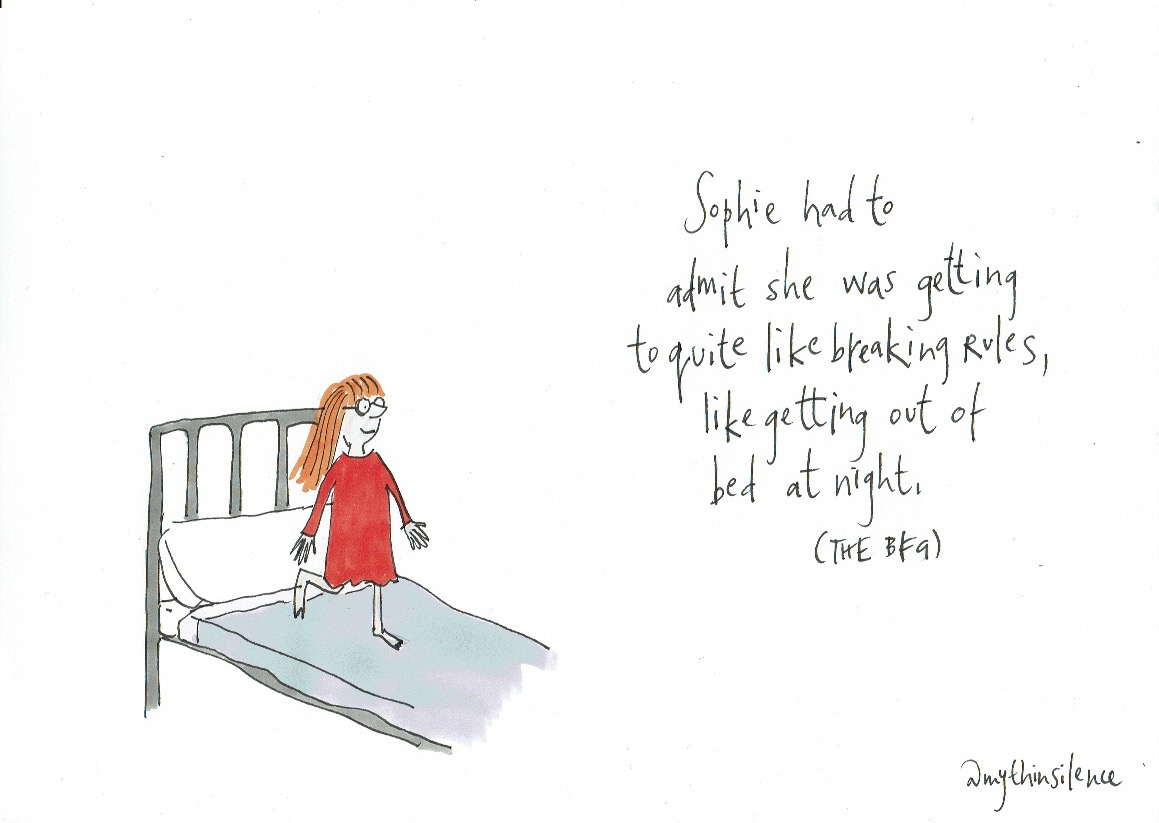
Sophie tells the Big Friendly Giant, there’re all kinds of rules the children in her orphanage have to obey “like getting out of bed at night, or not folding up your clothes,” or “you get punished.”^^

And there are many rules we’ve made up or have accepted from others: “People like me can never do what our heart’s desire” and “We have to wait to be picked.”   These three days help us to let go of them.  The universe is more generous, its primal laws more inviting:

“To me the converging objects of the universe flow.  All are written to me, and I must get what the writing means.”*^

(*From Lewis Hyde’s The Gift.)
(**From U.Lab Portobello.)
(^From Peter Diamandis and Steven Kotler’s Bold.)
(^^From Roald Dahl’s The BFG.)
(*^Walt Whitman, quoted in Lewis Hyde’s The Gift.)
beauty and truth

22-not-ours-by-birth

Can we have one without the other?

‘How do you balance beauty and truth in your work?’*

They are not mutually exclusive.

Truth offers beauty.  Beauty produces truth.

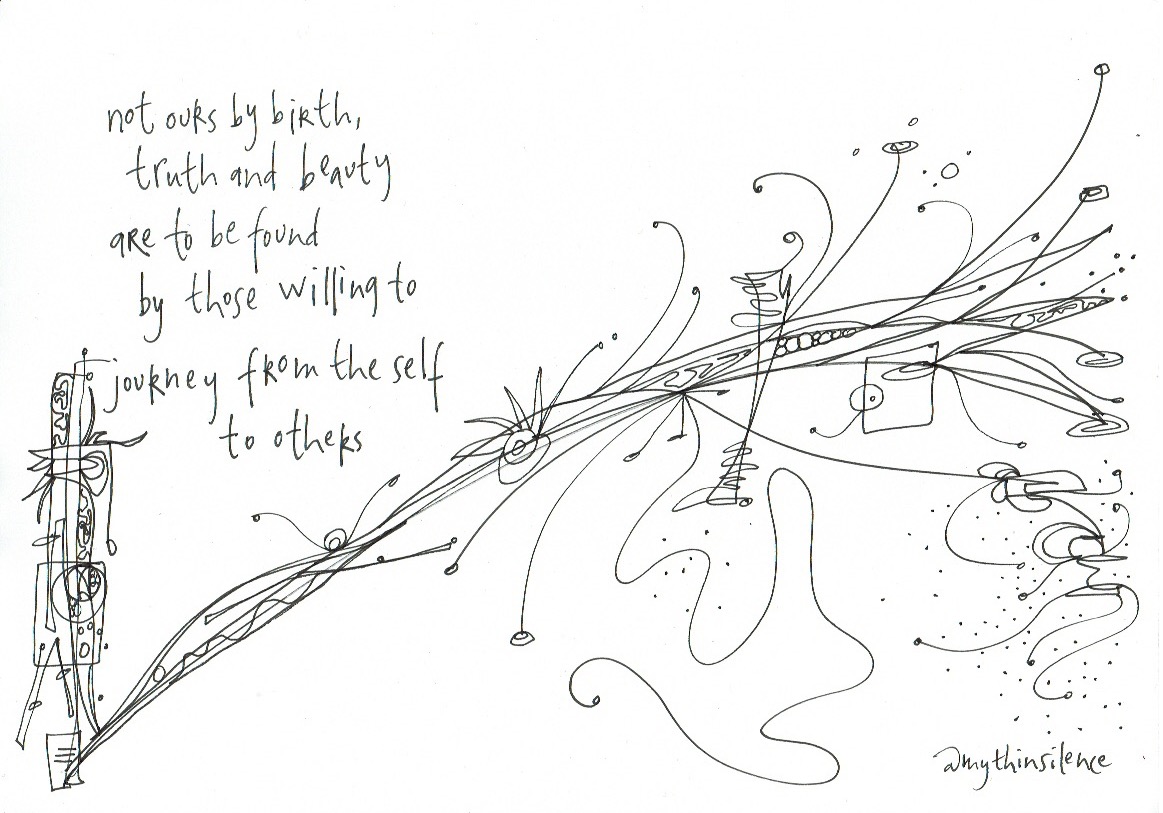
This kind of magic to occurs best in your life and mine.  Not that we’re born with it.  It comes rom our journeying out from ourselves, towards others, towards the universe.  We all have truth to bring.  We all have beauty to bring.

Jack Nicholson’s character Colonel Nathan Jessup shouts down Lieutenant Daniel Kaffee, played by Tom Cruise, “You can’t handle the truth.”  But truth is what we are uniquely shaped to seek and to handle in this universe.

Truth has set us free.  But truth without beauty has led us to some ugly places.

“Dazzling and tremendous how quick the sunrise would kill me, if I could not now and always send sunrise out of me.”**

(*From U.Lab Portobello.)
(**Walt Whitman, quoted in Lewis Hyde’s The Gift.)
on your mark

21-were-all-trailblazers

What are you going to do today?

It’s not Go yet.  It’s not even Set.

‘What practices (moments of stillness) do you use to connect to Source?’*

‘Listen to your life.  See it for the fathomless mystery it is.”**

Each of us trailblazes something.  It doesn’t have to be big – this is a lie we swallow from our culture.  It is unique, though, our fingerprint on the earth.  Don’t rush into the day without valuing it.

We must reconnect to our Source, our muse, our god at the beginning of the day.  Perhaps this time on our own is what we will find hardest of all, as Linda Rottenberg reflects on how ‘millenials need to be connected to others at all times’^

What makes us fully alive is where the really interesting stuff begins.

It’s how we’re successful in making a difference for others.  It flows through us intuitively.  We grow when we do this.  And it feeds a need in us.

‘A halfman is not someone who does not have an opinion, just someone who does not take risks for it.’^^

Now you’re Set …

Time to Go.

(*From U.Lab Portobello.)
(**Frederick Buechner, quoted in the Northumbria Community‘s Morning Prayer.)
(^From Linda Rottenberg’s Crazy is a Compliment.)
(^^From Nassim Taleb’s Antifragile.)

circles of knowing

20-when-individual-flames

‘If you must know, let it be flowing and growing.’*

‘Who is your coaching circle – your circles of five or six?’**

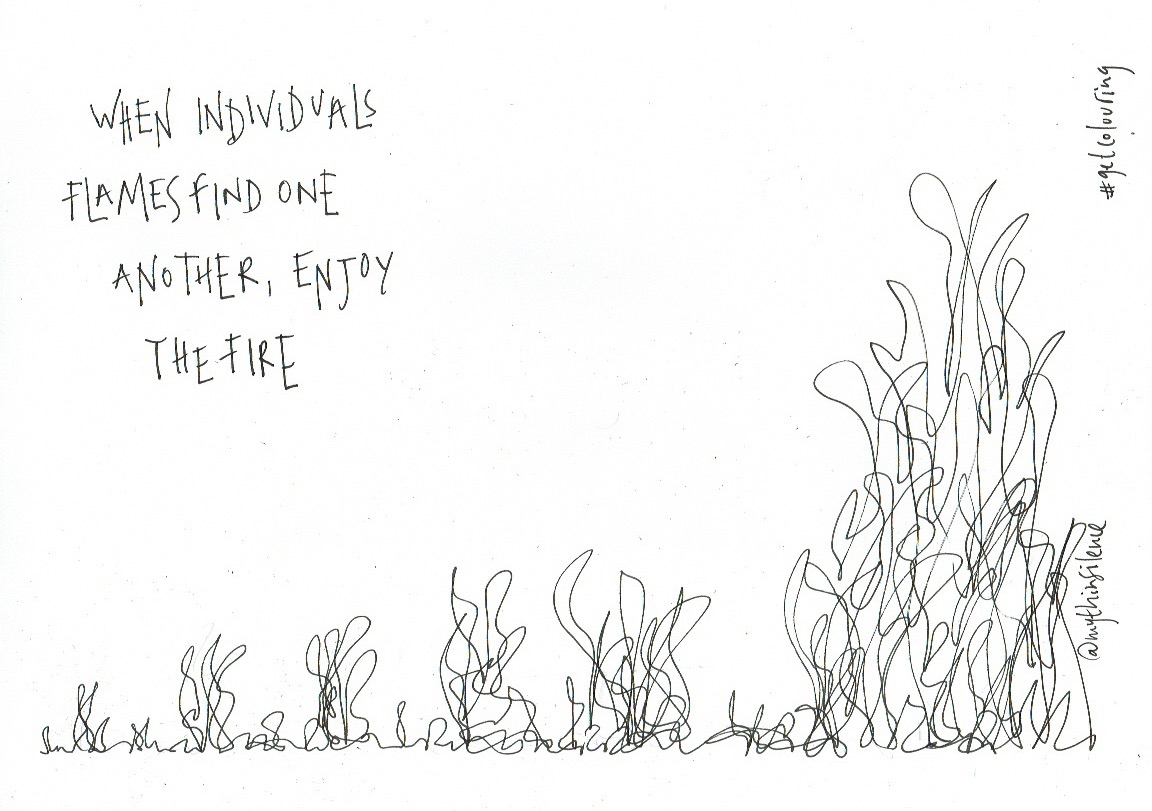
Who are those who make it possible for you to know and grow?  Not in some forced way but in the direction of who you are?  Perhaps they’re all in one place, or maybe they’re scattered.

Geography doesn’t define them as much as how they humbly and kindly and caringly challenge – they are not about answers but about questions and possibilities.

What you see on the surface is what lies beneath.

In Alone Together, Sherry Turkle describes how the simulated pressure of a robot hand can lead someone to think the robot cares – we argue that we gain comfort from other creatures with limitations so why not robots?  We even gain comfort from humans whose true motivation is unknown.

‘For [Aaron Edsinger], creating sociable roots is its own adventure.  The robots of the future will be cute, want to hug, and want to help.  They will work alongside people, aware of their presence and wishes.’^

There is nothing simulated about those who make up a circle of knowing, and there is nothing simulated about the awareness they bring to us.

(*Kerry Hillcoat, quoted in the Northumbria Community‘s Morning Prayer.)
(**From U.Lab Portobello.)
(^From Sherry Turkle’s Alone Together.)

the snatch

19-the-big-friendly

The idea won’t go away.

The possibility has snatched her heart and won’t let go, and she has embraced it – not tightly because even as she follows its lead she finds it  grows, morphs, and she allows herself to be abducted by it.

Now she imagines and practices, the first creation followed by the second.   She’s carried over old obstacles.  Her movement is becoming more relaxed, less tight.  More skilled, less by numbers.

She’s imagining the people she needs to connect with.  The universe delights as she relaxes into her story, and lets go of what held her back to to bring two hands around her future.

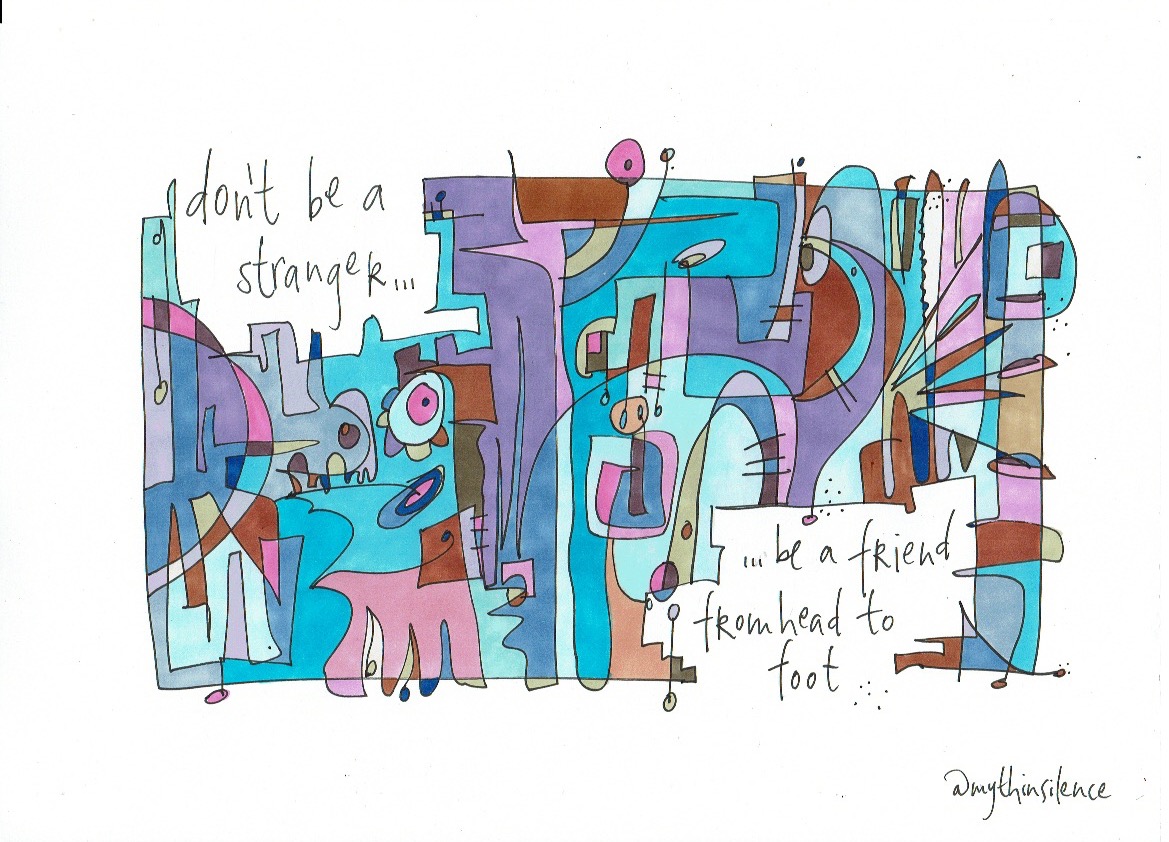
don’t be a stranger

18-dont-be-a

“I will not live an unlived life … I choose to inhabit my days, to allow my living to open me … to loosen my heart’*

‘Splitting is one way we have of getting rid of self-knowledge … ‘I’m not bad, you are.”**

I choose again not to be a stranger to my days, that is, to myself and to possibility.

I’ve sometimes been accused of things I’ve thought to be more about my accuser than me – projecting onto me something they can’t face in themselves.  This is negative splitting but I wonder whether there’s positive splitting, too, meaning we can be strangers to really good things in our lives.

These lie hidden within our lives, waiting to be discovered, turning this part of me and you from a stranger into a friend.

‘Mindfulness is widely understood and described as the state of being more conscious about yourself, your surroundings and those you interact with.’^

The way of life in all its fullness is a movement from being a stranger to being a friend.

(*Dawna Markova, quoted in the Northumbria Community‘s Morning Prayer.)
(**From Stephen Grosz’s The Examined Life.)
(^From Rohit Bhargava’s Non-Obvious.)


what comes next?

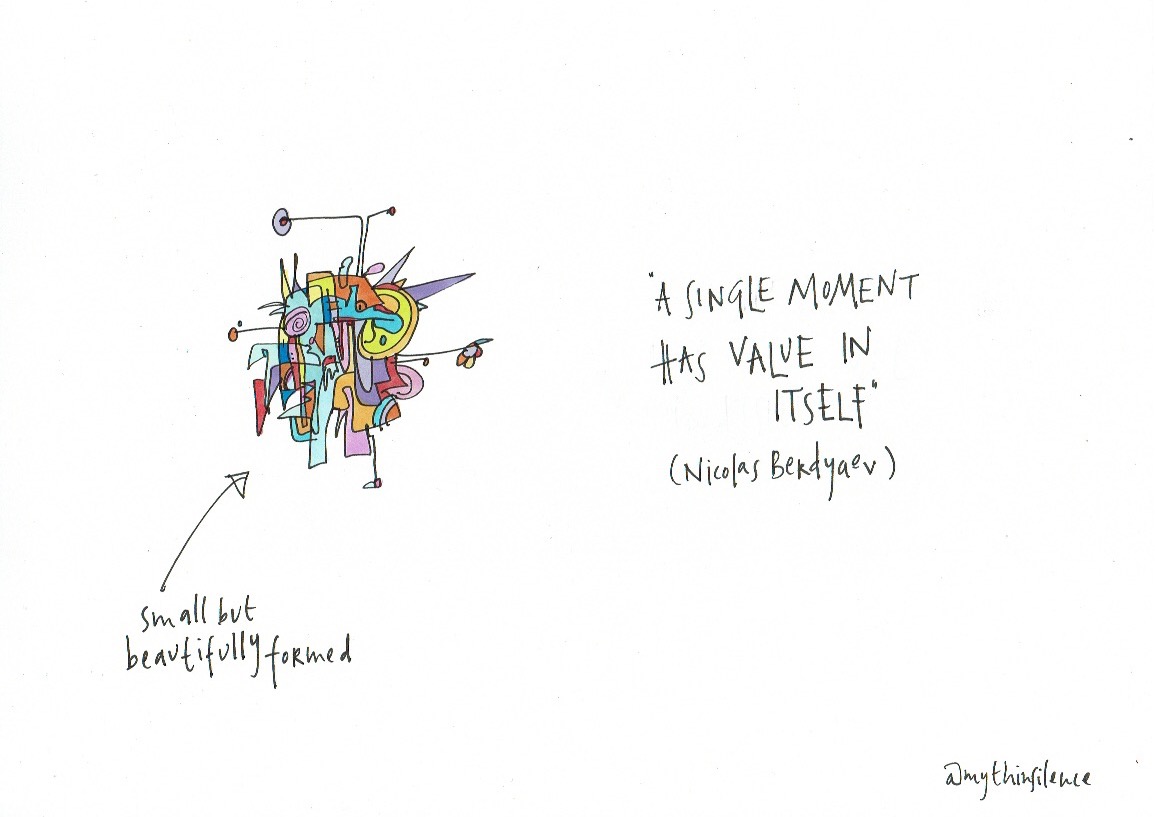
17-a-single-moment-1

‘How can you pull people together from across different systems in order to do something inspiring, fun, and meaningful?’*

‘The individual buyer of the transformation essentially says, “Change me.”‘**

‘How we treat others is the only proof of truth we have.’^

There is insurance – if something goes wrong (with your home, your health, your travelling, your equipment, your insurance even) you’ll be covered.

There is assurance – you can be confident the cover will come through no matter what.

There is ensurance – let’s try and make sure you don’t need the insurance.

When it comes to the future, we get to be in the ensurance business, hoping the future into existence with foresight, intention, and love.

The future will not be about covering up people’s differences but uncovering them, as Rohit Bhargava says, ‘Everyone wants to be noticed, recognised, and celebrated.’^  I know my celebration goes up as my gratitude increases and I can’t be grateful for someone vaguely – I can be grateful specifically.

The gifts or contributions emerging from our uncovered diversity will make a significant difference, moving beyond whether there’s some economic benefit or not for ‘through them society emerges were there was none before’.**

‘Creating a space colaboratively is the best recipe for creating a collaborative space.’*^

(*From U.Lab Portobello.   Check out this earlier post to find out a little more about U.Lab and Theory U.)
(**From Joseph Pine and James Gilmore’s The Experience Economy.)
(From Frank Schaeffer’s Why I am an Atheist Who Believes in God.)
(^Rohit Bhargava’s Non-Obvious.)
(^^From Lewis Hyde’s The Gift.)
(*^From Scott Doorley and Scott Witthoft’s Make Space.)


the familiar and the new

16-esemplstic-communities

‘Learning to predict the future has an even more predictable side effect: you will become more curious, observant, and understanding of the world around you.’*

‘Competence is the enemy of change.’**

The small group had come together to explore mindful doodling, the text for doodling to being: “We find ourselves in the familiar and the new.”

Humans are a future-orientated species.

Each day brings the familiar but we know this alone is not enough for us to grow and develop.  We also need the new or different.

The next U.Lab question to ponder is: ‘While participating in U.Lab, what seed of the future (intention) did you become aware of?’^

Four things come to mind about the future:

We’ll move from competence to incompetence insomuch as we’ll increasingly pursue our curiosities and passions out of the familiar and into the new and unknown.

We’ll become more engaged in what we do, not only with our minds but also with our hearts.

We’ll more accurately understand our flaws and weaknesses – not excusing ourselves but using our knowledge to grow – not an extension of human ability through technology but through honour and nobility and enlightenment:

‘Humankind has first to accept its own weakness and propensity to make a mess of things; if people really take to heart the fault lines in themselves, the perfect machine will seem less a commanding remedy; indeed, we will actively seek a remedy to it.’

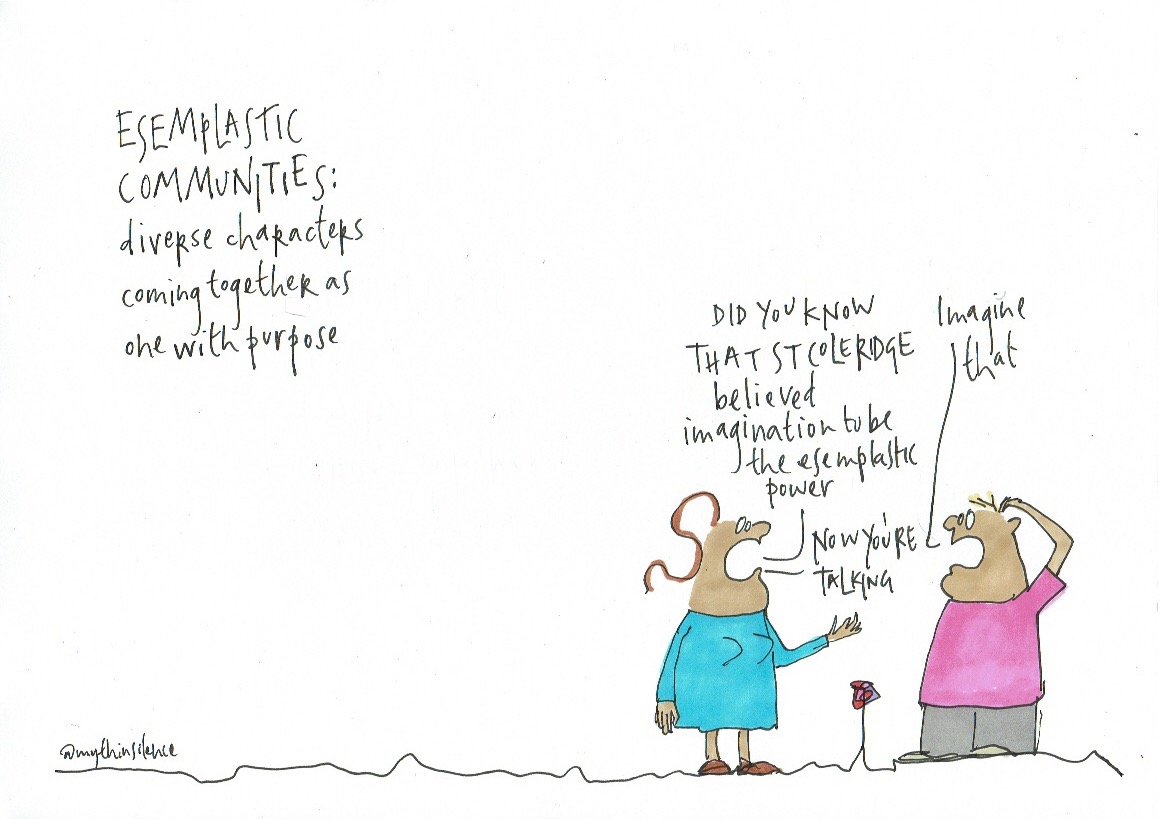
We’ll move from the ego to the eco: despite the disconnections we’ve witnessed in 2016, we will embrace connection and see the forming of esemplastic communities embodying imagination, collaboration, and invention.

If we like the look of this such a future will only exist if we make it.

(*From Rohit Bhargava’s Non-Obvious.)
(**From Seth Godin’s Whatcha Gonna Do With That Duck?)
(^From U.Lab Portobello. Check out this earlier post to find out a little more about U.Lab and Theory U.)

feelings, nothing more than feelings

15-when-air-travels

‘While participating in U.Lab, what has touched you and why?’*

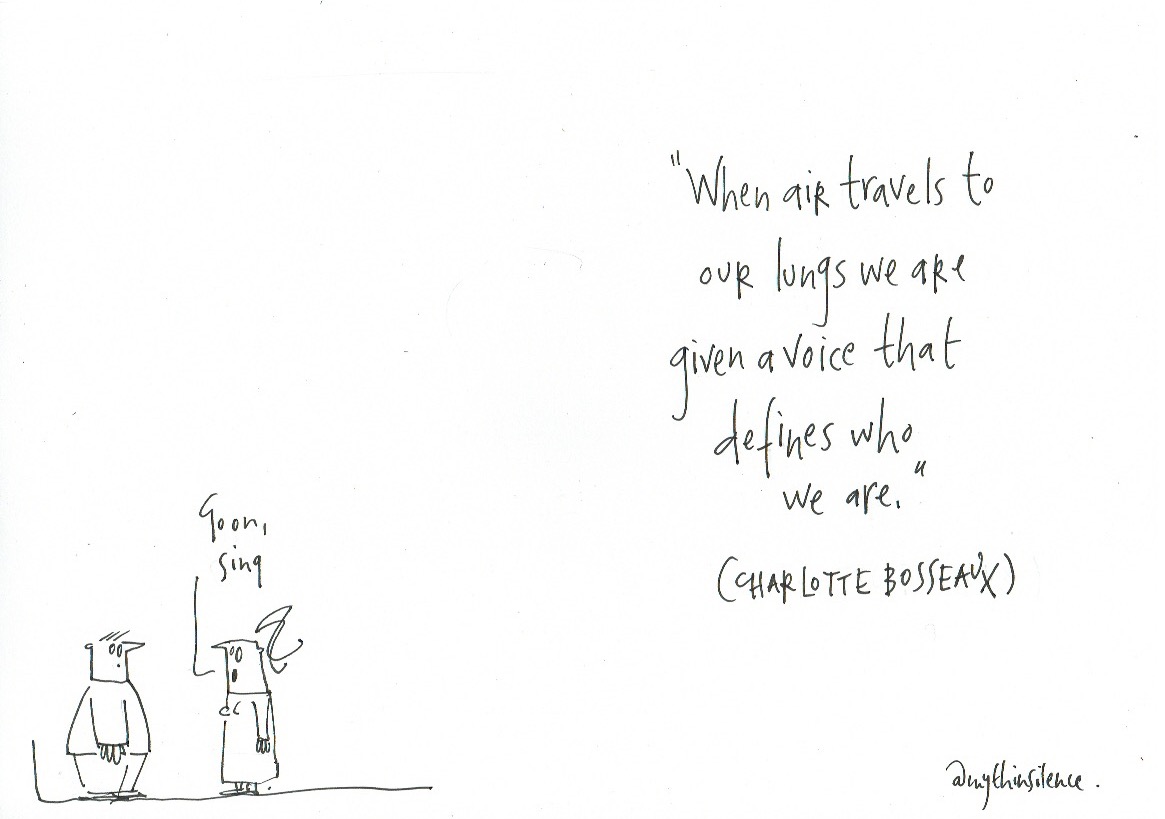
Feelings matter more to us than we know.  We say, “This is what we think,” when really it’s what we feel taking control, and when feelings go unnoticed they can mislead us.

‘It’s the norm for most of us to run on emotion throughout the day, and there is nothing wrong with this.’**

‘When we say that ‘the whole is greater than the sum of its parts,’ we are usually speaking of things that ‘come alive’; when their elements are integrated into one another.’^

When our thinking and our feeling come together something powerful happens.

I open my mind to there being far more than I understand and know but I don’t stop there.  I go further, noticing how I feel about these things.  What energises me?  What does the exact opposite? Which feelings grow when I notice them and which wain?

An elegant life emerges from bringing heart and mind, feeling and thinking, together.  They allow us to add more, develop more, become more, do more.

(*From U.Lab Portobello.  Check out this earlier post to find out a little more about U.Lab and Theory U.)
(**From Steve Peters’s The Chimp Paradox.)
(^From Lewis Hyde’s The Gift.)

more and less

14-be-the-pause

‘While participating in U.Lab, what has been your most important insight about yourself?*

Haven’t we done enough thinking about ourselves?  Isn’t the more hopeful thing to begin thinking about others?

It’s not about thinking about ourselves or others, it’s about how we think about ourselves.

A deeper reflection will not only take us to a truer understanding of ourselves – we are less than who we think we are and more than we know – but will also take us to others in their uniqueness and worth.

To move towards others, I need to give up the poorer ideas I have about myself – who I am, what I have, and what I can do.

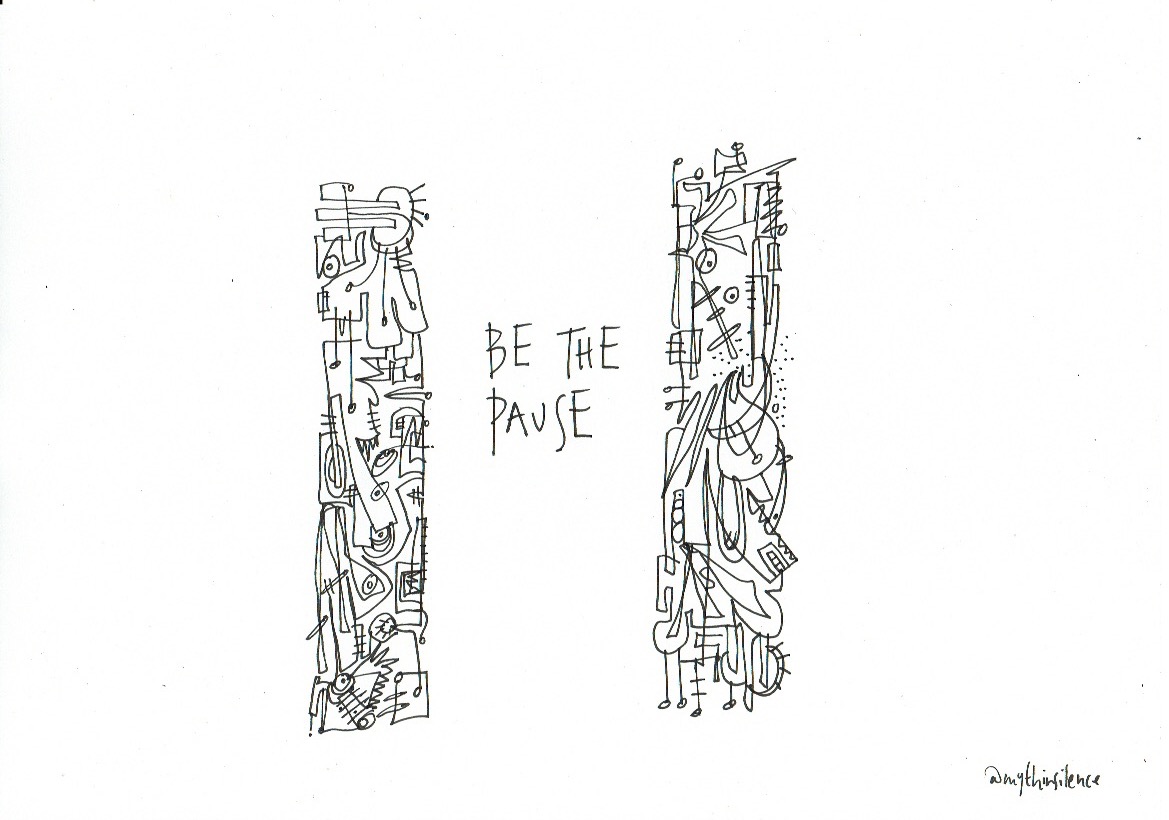
When we become people who not only act and experience but also reflect on these actions and experiences then we have created a pause.  But it is only a pause before we do what we must do.

‘After blending, the Scotch is returned to oak casks, where the flavour improves, becoming smoother and creamier with a longer, lingering finish.’**

This is the process of double-aging: blending whiskies then maturing for longer.  Whilst they’ve matured on their own, something very special happens when they are blended and aged again.

It’s a picture of what happens when we bring our best personal insights and share with others.

(*From U.Lab Portobello.  Check out yesterday’s post for more on U.Lab.)
(** Sally Rasmussen in 1001 Whiskies You Must Try Before You Die.)