the beautiful mystery

“The most beautiful expression we can have is the mysterious.  It is the fundamental emotion which stands at the cradle of true art and true science.”*

Sherry Turkle offers this insight from her research into how we are expecting more from our technology.

‘But for Tara, as for many, the telephone call is for family.  For friends, even dear friends, it is close to being off the menu.’**

She continues with her own confession:

‘I have been complicit with technology in removing many voices from my life.’**

I realise I have too.

There’s a question running in background of may mind and it goes something like this: If life is all about relationships – how we relate to others, our world, and ourselves, and how everything exists does so in relationship to everything else  – is love the greatest expression of relationship?

I read Richard Rohr who argues that absolute love is ‘the very name and shape of Being itself.’^

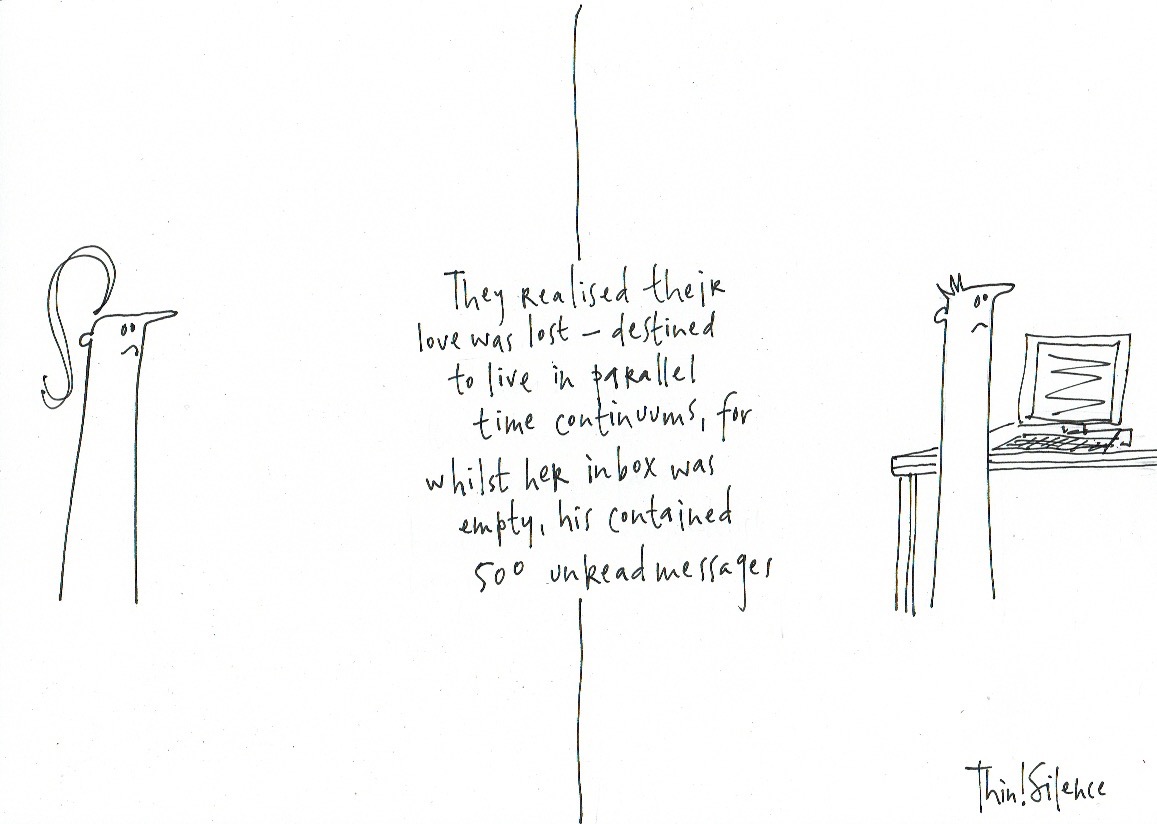
There follows the question of whether technology is reducing our experience of this.  Increasingly there’s a misalignment of time between myself and those I am communicating with.  This has always been our experience.  A letter meant I could write to you and you would receive my message several days later.  Telegrams shortened this to hours.  The telephone meant we could hear each other’s voices.  Now texts and messages and emails are turning things in the other direction.

‘We did not set out to avoid the voice but end up denying ourselves its pleasures.  For the voice can only be experienced in real time, and both of us are so busy that we don’t feel we have it to spare.’**

Turkle is imagining a mutuality of speaking and listening.  Only then do I know my voice is being heard – I may leave you a voicemail but you don’t have to listen to it.  A voice disconnected in this way is uncanny or acousmatic: ‘a voice whose source cannot be seen, i.e. an off-camera (or off-screen) voice.’^^

Voice “speaks” of more than this for me.

It also means the “art” someone brings out from their connected life: their talents, passions, and gift.  We offer our art as a means of connection; we might say, the product of realigning time with ourselves and a way of realigning time with others, and even with the world.  This is to touch the beautiful mystery.

Alan Lightman shares the elation of a scientific breakthrough:

‘Then, I felt a sense of mystery.  I had shed light on a small corner of nature. […] Just as Einstein suggested, I have experienced that beautiful mystery both as a physicist and as a novelist.  As a physicist, in the infinite mystery of physical nature.  As a novelist, in the infinite mystery of human nature and the power of words to portray some of that mystery.”*^

In these words we hear Lightman’s voice – expressed in his science and writing of the mystery of human nature.  It’s the realignment of our times that makes it possible to explore this beautiful mystery together.

(*Albert Einstein, quoted in Alan Lightman’s A Sense of the Mysterious.)
(**From Sherry Turkle’s Alone Together.)

(^From Richard Rohr’s The Divine Dance.)
(^^From Charlotte Bosseaux’s Dubbing: Film and Performance.)
(*^From Alan Lightman’s A Sense of the Mysterious.)
 

ithaca, or, slow possibilities in the same direction

“Always keep Ithaca on your mind.
To arrive there is your ultimate goal.
But do not hurry the voyage at all.
It is better to let it last for many years;
and to anchor at the island when you are old,
rich with all you have gained on the way,
not expecting that Ithaca will offer you riches.”

‘”Day by day, stone by stone
Build your secret slowly […]
If you want to live life free
Take your time go slowly.
If you want your dream to be
Take your time, go slowly.”**

Life invites us to make a journey for some eighty years or so.

We each have different ideas and/or hopes for where we might be at the end it.  I imagine most of us hope that we will have lived a worthwhile life and that it will have been filled with love.

Constantine Cavafy’s words encourage us to explore the riches of the journey.  These may occur by happy accident but are more likely to come about by learning how to experience more.  The following words come from Donovan Leitch – those of us who are older will remember when he was simply Donovan – highlighting how slowness is an important part of discovering more about life.

Seth Godin has just been blogging on sailing and it feels like a poem:

‘A sailboat without a sail might float.
For a long time, in fact.
But without a sail, it can’t go anywhere, can’t fulfil its function.
Floating is insufficient.’^

This sail is the purpose we want to pursue.  We may have tried different sails only to find they don’t “sail our boat” the way we want.  Coincidently Hugh Macleod remarks on how, when it comes to what we want to do with our lives, ‘there’s a lot more freedom to roam, we’re lacking in guidance.’^^  We need “navigators” to help us identify just the right sail we want to move our boat – we can be such navigators for one another.

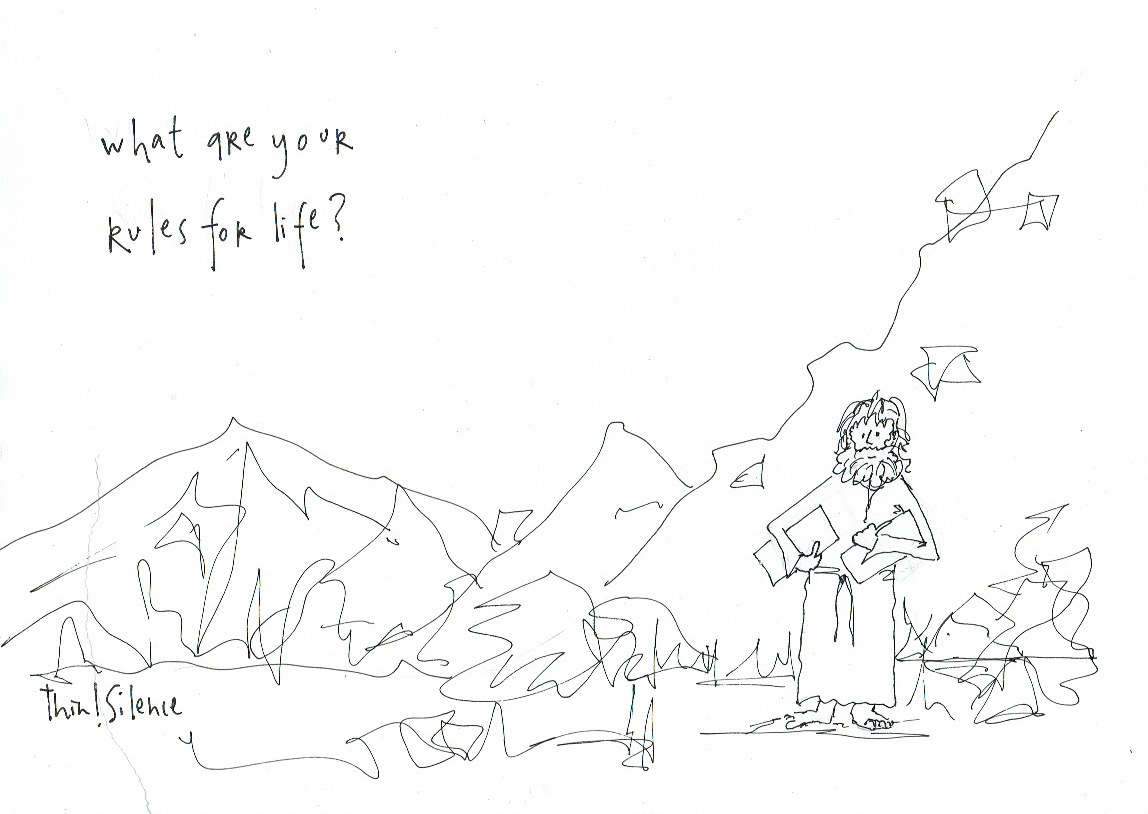
When you have your sail then you require some rules, to keep us on course, and a floating-only life.  Speaking in 2004 aerospace engineer Burt Rutan remarks on how the rules for guiding times towards creating a reusable passenger space craft helped the participating teams reach the target:

“It’s amazing that the rules for the XPRIZE are still valid today, nearly eight years after they were announced in 1996.”*^

Rules are about how we’ll engage in life.  There are general rules we figure out with each other and there are the specific ones only we can identify for the journeys we make, helping us to do what we must do every day until our days run out.

(*From Constantine Cavafy‘s Ithaca, quoted by Chris Guillebeau’s The Happiness of Pursuit.)
(** From Donovan Leitch’s Little Church, quoted in the Northumbria Community‘s Morning Prayer.)
(^From Seth Godin’s blog Without a Sail.)
(^^From gapingvoid’s Navigation systems ready.)
(*^Burt Rutan, quoted in Peter Diamandis and Steven Kotler’s Bold.)

let there be light

‘First there was time.  Then space and energy.  Then matter.  And now the possibility of life, of other minds.  What would these new minds think?  What would they grasp? […] I could feel the weight of the future, heavy, bristling with possibilities.  But I could not see the future.’*

In ‘a novel about the creation,’ we are the future Alan Lightman’s character Nephew cannot see when creating this universes out of the Void.

“Bristling with possibilities” resonates with Richard Rohr’s hope for ‘infinite openness and capacity to love.’**

We do not have to wait for these kinds of light.  We are capable of producing light in darkness,  capable of making change.  As Andy Raine expresses through his faith so we can all sing out as children of this universe of incredible possibilities:

“Let light spill out of heaven through my life dispelling mediocrity and silent blame.”^

Which sounds like love being shared, removing blame and meaninglessness that ought to have no place in our short lives.

I am grateful for those who have shared their light with me over the years.

(*From Alan Lightman’s Mr g.)
(**From Richard Rohr’s The Divine Dance.)
(^Andy Raine,quoted in the Northumbria Community‘s Morning Prayer.)

acceptance

This wasn’t how I planned it.

‘By the time we get this far, we’ve got bangs and bruises, things that don’t work quite right, experiences that have shaped us, sometimes for the worse. […] And all we can do is wrestle with them the best we’re able.  And realise that everyone else has them too, and give them the support they deserve.’**

Sometimes planning works and sometimes it’s overtaken by all the other things that happen.  Often there’s no getting back to where we once were.

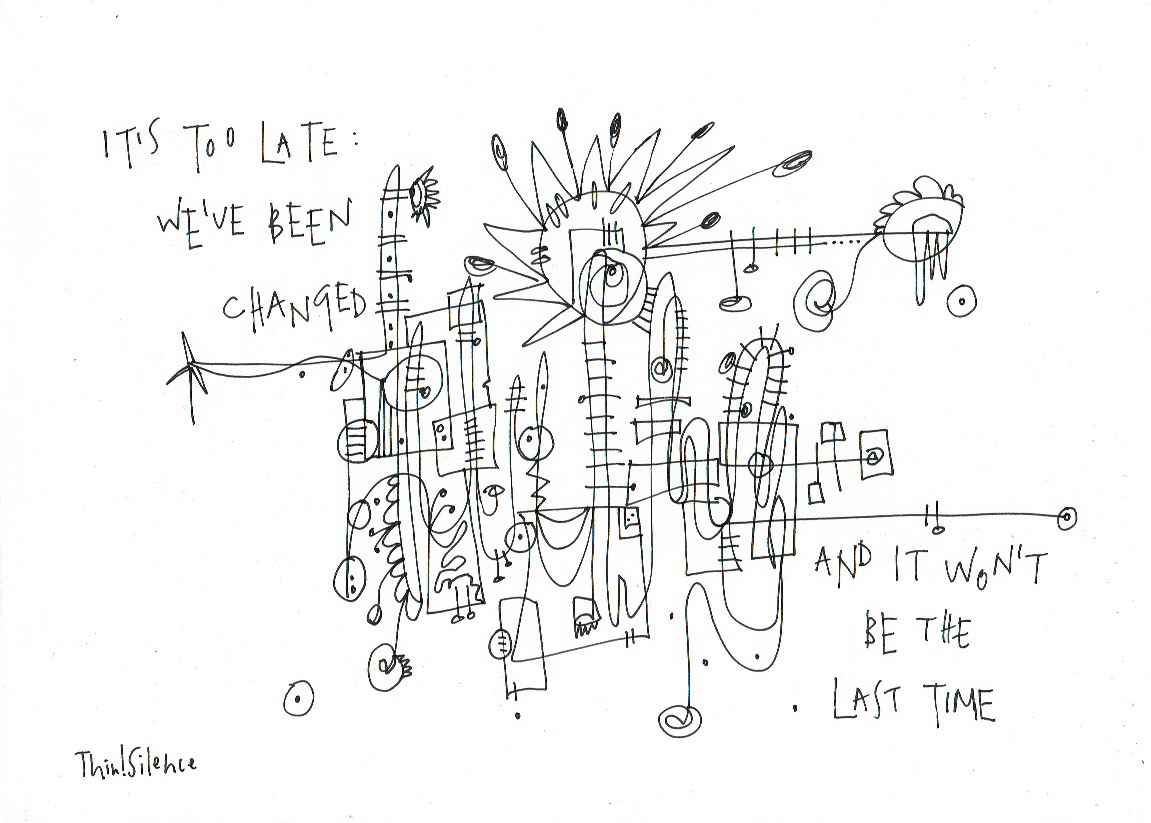
We’ve also been changed in the process.

The hero’s journey outlined by Joseph Campbell is one in which an interrupted life crosses thresholds,  overcomes adversaries and obtains the boon to take back to their community and loved ones.  Such myths were ways explore and understand life.  There would be no going back to where they were and life would be changed.

Such change is heart stuff, as Otto Scharmer and Alex McManus remind us

‘The most important change in any transformation journey is the change of heart.’^

‘By “heart” I mean the place where the emotions meet reason, mobilise the will, and shape identity.’^^

It’s at the heart level of our lives that acceptance happens, essentially being fully who we are and making this available to one another.

As Seth Godin shares, above, we are what we are, and we can choose to support each other, or, as Ed Catmull writes: ‘working with change is what creativity is about’.*^

(*From Seth Godin’s blog Pre-existing Conditions.)
(^From Otto Scharmer’s Leading from the Emerging Future.)
(From Alex McManus’s Makers of Fire.)
(*^From Ed Catmull’s Creativity, Inc..)

a picture book of wonder

The person who notices something profound and wonderful may not have the understanding or words to explain it but they can tell a story or maybe draw a picture.  If it’s for real, science will catch up.*

First there’s the description, then there’s the explanation.  Then everything joins up, one thing is connected to everything in our quantum universe of holons and fractals.

Busyness pollutes, noise pollutes but we can all be “noticers.”  :

‘There’s so much noise around us all the time […] .  The solution isn’t to add to the noise, though; it’s to save energy.  It’s to speak at the right time, instead of all the time.’**

Silence is powerful.

Silence and solitude more so.

Silence and solitude and slowness are the most powerful of all.

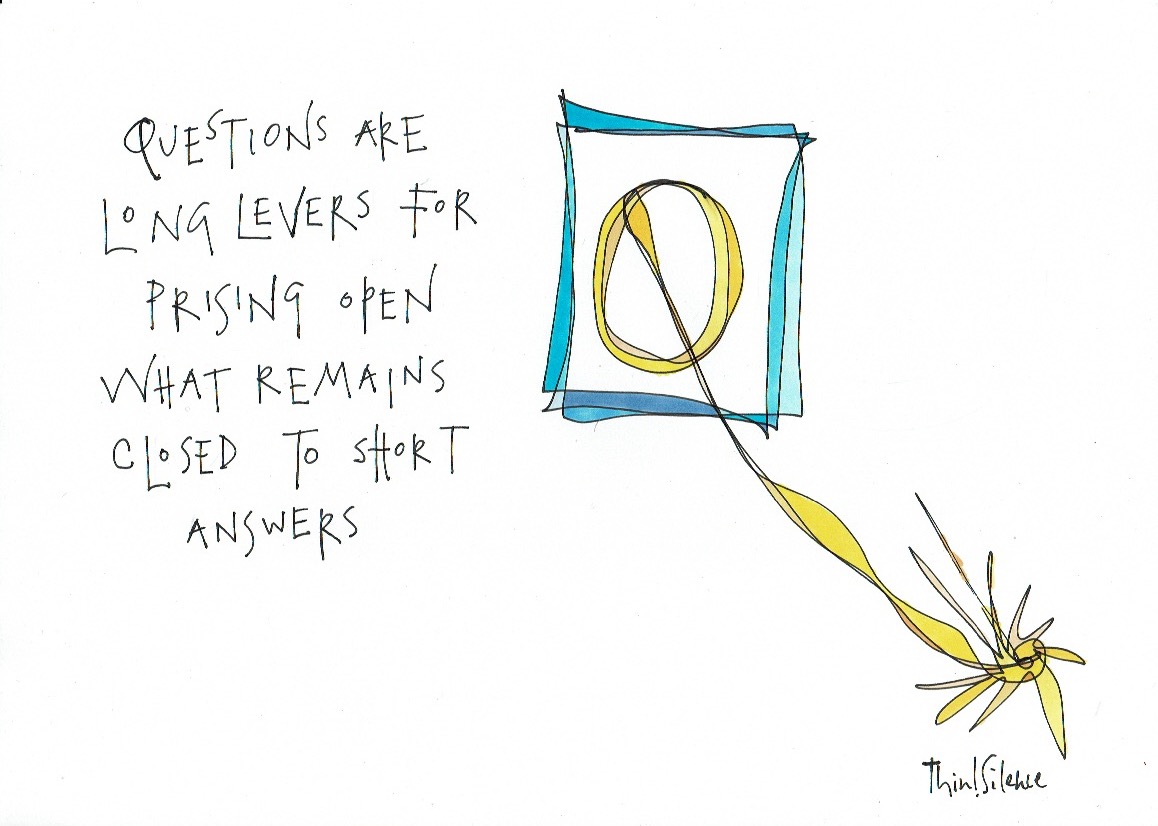
Allowing us to gaze upon the unknown, we’re able to identify and ask our questions, as Warren Berger encourages when he speaks to all the inquisitives among us:

‘Questioners learn to love that great unknown – it’s the land of opportunity, in terms of creativity and innovation.’^

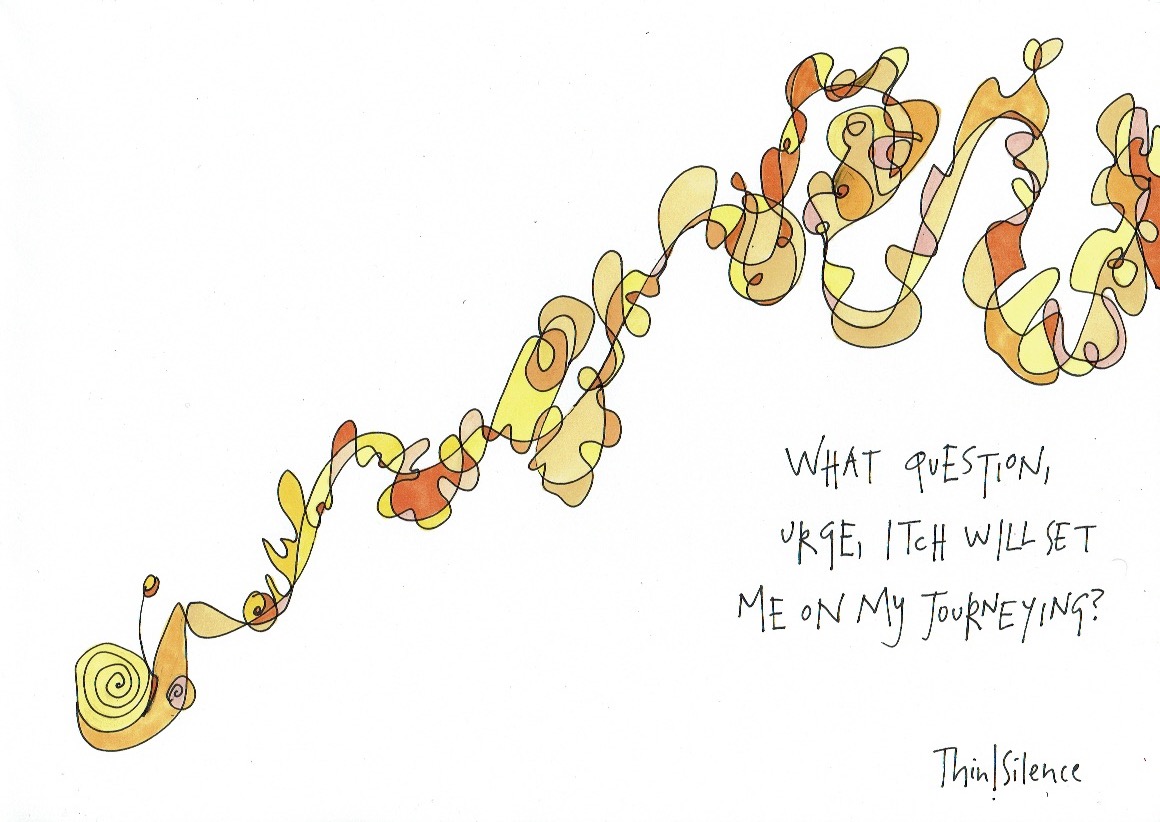
The questions that most itch and urge us move us into our quest or journey.  My friend and mentor Alex McManus writes in Makers of Fire about how we are a mystery wrapped in a question.  This is our DNA.

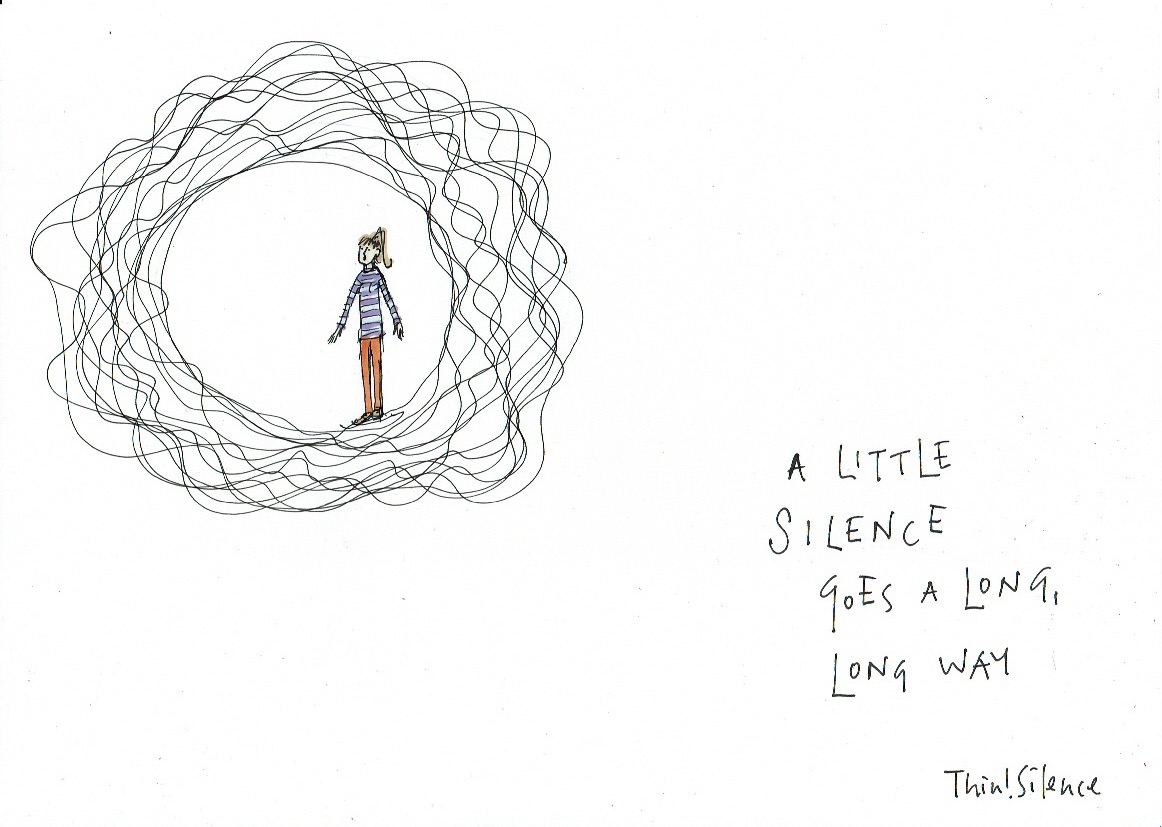
When we wish to explore, we find that a little silence added to our days goes a long, long way.

(*See Jonah Lehrer’s Proust was a Neuroscientist to see how we can anticipate truths and realities.)
(**From gapingvoid’s blog A Welcome Moment of Quiet.)
(^From Warren Berger’s A More Beautiful Question.)

ghosting

“Ghosting” is the appearance of being present when we’re not.  We ghost with each other, with our world, even with ourselves.

I’m slowly reading through Sherry Turkle’s Alone Together, a look at “why we expect more from technology and less from each other.”  I began reading it almost two years ago: it’s dense and alarming and challenging and, today, made me think about ghosting.

Here are two offerings from Turkle, the first about how we use technology to control contact with each other, and the second from a thirty six year old nurse too shattered to go out at the end of the day but finding some comfort in the ghosts she finds on Facebook:

‘We will fill our days with ongoing connection, denying ourselves time to think and dream.  Busy to the point of depletion, we make a new Faustian bargain.  It goes something like this: if we are left alone when we make contact, we can handle being together.’*

“Even when people are not there [on Facebook}, like, exactly when I’m there, it seems like they are there.  I have their new pictures, the last thing they were doing. I feel caught up.”*

We hope one day things will change, something will happen and we will have the time for people, for doing the things we want to do.  Perhaps we promise ourselves something will be big enough to change things, to make a difference, making it possible for us to be more present and less absent.  We can miss the something that is smaller and closer.

Polycom’s Jeff Rodman asks: “What’s the smallest changes we could make […] ?**

It is much easier, not to mention hopeful, to be present in the small.  Making small changes every day in the things within us and immediately around us.  Don’t say you’ll begin reading more tomorrow – borrow or buy the book today:

‘Life becomes a matter of showing up and saying yes.’^

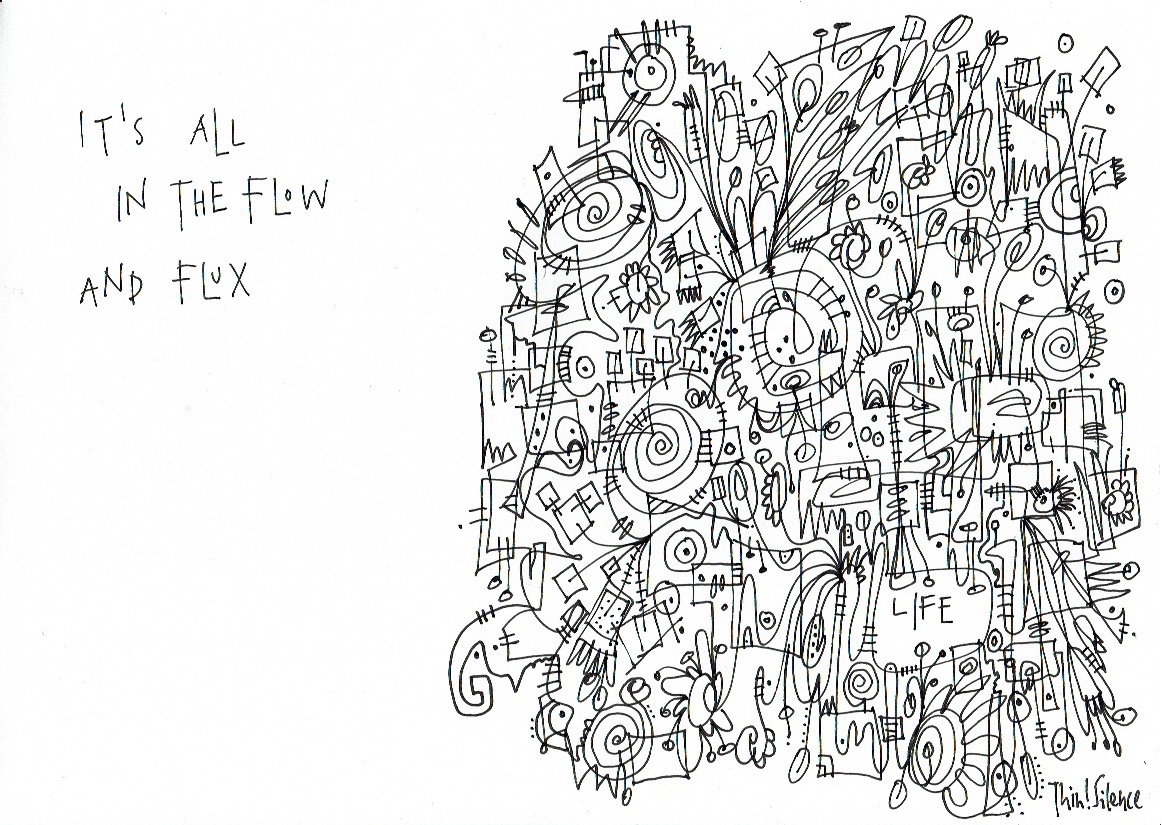
It means we’re not waiting for the next flow of life but we’re seeing the flow we’re in right now.  Filling our days with dozens, even hundreds, of small things is the surest way of dealing with ghosting.  Waiting for the next big thing or or the planets to align jus right is to put off what will probably never happen.

‘The reason it’s difficult to learn something new is that it will change you into someone who disagrees with the person you used to be.  And we’re not organised for that.  The alternative is to sign up for a lifetime of challenging what the self believes.  A challenge to find more effectiveness, not more stability.’^^

(*From Sherry Turkle’s Alone Together.)
(**Jeff Rodman, quoted in gapingvoid’s blog Deliberate Progression.)
(^From Richard Rohr and Mike Morrell’s The Divine Dance.)
(^^From Seth Godin’s blog Defending Myself.)

i exist

‘Goodness isn’t sameness.  Goodness, to be goodness, needs contrast and tension, not perfect uniformity.’*

In his book Heroic Leadership Chris Lowney writes about how the early Jesuits each thought they were doing the most important thing in the world: mathematicians, astronomers, scientists, teachers … .  This encourages me: the possibility of seeing what we do in this way in a world welcoming diversity over uniformity.

In The Craftsman Richard Sennett tells of the anonymous nature of the craftsman-builder’s work in the Roman world, how to ‘get the houses, roads, and sewers to function […] improvisation occurred on the ground’.**

It was an opportunity to make their mark, to say “I exist”:

‘A maker’s mark is a peculiar sign. […] Many of the adaptive irregularities in Roman brickwork modulated into expressive decoration, tiny flourishes like a figured tile mortared over an imperfect joint behind the surface.  These also can be considered a maker’s mark.’**

Even in such an oppressive system as this, a person’s individuality and need to make a mark in the world manages to express itself.

At some point in their lives, I hope we all feel what Alex McManus describes as the ‘burden of responsibility, mystery, and paradox that it is to be human?^

These words from Seth Godin urge us to practise our peculiar way of seeing things and working:

‘Do the emotional work of working on things that others fear.’^^

I hope there’s a knock-on effect to this.  When we turn our passion, through imagination and innovation, into the best thing in the world then it becomes the foundation for someone else to pursue theirs.

(*From Richard Rohr and Mike Morrell’s The Divine Dance.)
(**From Richard Sennett’s The Craftsman.)
(^From Alex McManus’s Makers of Fire.)
(^^From Seth Godin’s Whatcha Gonna Do With That Duck?)

from where you dream

Even with all the choices we have made to go this way or that way, whether consciously or unconsciously, we still find ourselves pondering many possibilities

Perhaps, though, there is something which stands out beyond anything else?  Something we must do?

Seth Godin counsels:

‘Obsessively specialise.  No niché is too small if it’s yours.’*

Sometimes the smaller something is, the more concentrated it becomes, the more powerful an impact it can make.

It’s unlikely we were helped to develop the skills for navigating all the possibilities life affords.  Schools, even universities, don’t help people to know how to go about being reflective so they will be able to identify and focus throughout their lives on the twisting path of what matters most of all for them.  There can be an assumption that this happens automatically as subjects and courses are selected and learnt.  For some it does, though, I suspect, not for the majority.  It’s not either/or education and life-skills but both/and.

We need to be able to go to the places our dreams come from.

From Where You Dream is a book on writing creative fiction by Robert Olen Butler.  K. M. Weiland mentions it in her writing blog.  I like the title very much and also the encouragement from Weiland, which I translate from the story a novelist is working on into our personal stories.  This is followed by a reflection from Richard Rohr, who knows something of the value in being able to see ourselves:

‘Sit in a dark room or go outside at night.  Light candles or a fire pit.  Turn on some powerful music.  Just sit there for an hour or two and let you mind wander over your story.  Don’t get too conscious in planning your plot or figuring out your characters.  Just let the images float through your mind, like the snippets of scenes in a movie trailer.’**

‘Eventually, you will discover s detached place of quiet self-observation.’

The things I take from this are making uninterrupted time to be alone so we can ask questions of our stories, to feel for where they have come from and where they are going.  The details are akin to answers, and they will come, but having time to see the big picture of our lives is more about asking questions and is more valuable than gold.

(*From Seth Godin’s Whatcha Gonna Do With That Duck?)
(**From K. M. Weiland’s blog 3 Ways to Make Your Writing More Visual.)
(^From Richard Rohr’s The Naked Now.)

flow and flux

Flow as in moving continuously and easily.  It comes from within.

Flux as in those things that aid free movement and change.  Often coming from without.

Flow and flux having an inestimable number of ways of weaving in and out of each other – right now it’s happening in seven billion lives.

Flow also means we’re in something and that something is in us.  It is able to expand and increase because of flux.  Flux in the shape of things that happen in and around us, from others, the world we live in, events, ideas, and more.

There’s an ongoing debate – it’s thousands of years old – as to whether personhood is substantial or relational.  Here is an attempt by me to ponder these things a couple of days ago.  Flow and flux is another attempt on my part to get my head around this, though not as some intellectual exercise but as a means to help people know their intrinsic worth (substance and flow) and their relational worth (nature and nurture, David Shenk’s control board’s knobs and witches inside every human cell,* presence and absence), making it more possible to remain in a state of flow (continuity) and flux (alteration).

To be continuous, that is, to know who we are, flow requires some way of being held together.  As Erwin McManus points out:

‘When we lack integrity, we find ourselves several people depending on the circumstances.’**

Story is how we do this.  When you tell me your life history, what you’ve done when and where, and how you moved from there to here, you are telling me a story.  Story is powerful.  It helps us know who we are (substance, continuity) but it makes it possible to open to others, our world (relationships, change) – we can keep writing more into our stories.

Here is the author Neil Gaiman speaking of his experience in the Moth Community – who “promotes connection and visibility through the practice of personal storytelling”:

“The Moth connects us, as humans.  Because we all have stories.  Or perhaps, because we are, as humans, already an assemblage of stories.  And the gulf that exists between us as people is that when we look at each other we might see faces, skin colour, gender, race, or attitudes, but we don’t see, we can’t see, the stories.  And once we hear each other’s stories we realize that the things we see as dividing us are, all too often, illusions, falsehoods: that the walls between us are in truth no thicker than scenery.”^

It’s important to have boundaries to our lives – to know who we are and who others are – but fixed boundaries are dangerous to our wellbeing.  Eckhart Tolle’s writes about the part of us that is offended by how others speak and act towards us.  He calls it our “painbody” – an expression of our ego (false self).  The painbody in us wants to be hurt by what people say or do; it underlines for us just how we were right to think about ourselves and others in the way we do.  Porous boundaries, on the other hand, make it possible to receive from others in ways that allow= growth and imagination and creativity to unfold in our lives.  As such, we become the kind of space or environment for others to be affirmed and encouraged into their flow and flux.

(*See David Shenk’s The Genius in All of Us.)
(**From Erwin McManus’ Uprising.)
(^Neil Gaiman, quoted in Maria Popova’s BrainPickings: How to Tell a True Tale.)

re-spect

To look a second time.

Moses gave a second look to a bush that appeared to be burning but wasn’t and his epic story began.

Seth Godin gives a second look to a banana tree – the Cavendish – from which half the bananas in the world come.  If bananas are a part of our diet, it’s likely we’ve eaten one, but, as Godin points out, monocultures can be wiped out.  His point is:

‘variation brings resilience and innovation and the chance to make a difference.’*

Respect is about taking a second, deeper look.  In this case, not at bananas but at people.

‘We know things in their depth only by this second gaze of love.’**

When we take a deeper look both at those around us and ourselves, we open up more possibilities, more ideas, more  talents and more innovations.

We make ourselves weaker when we do not respect who others are and what they bring.

Entrepreneur and author Jacqueline Novocratz encourages us:

‘It’s important to think about that time and place and activity where you shine, where you feel most alive.’^

Yesterday, walking from one work venue to another, I passed the most beautiful single yellow flowered rose trees.  I had to stop and turn back.  I didn’t take a picture, I just gazed.  Wonderful.  Later in the day I would find myself in two conversations with individuals and found myself gazing once again, this time on incredible lives.

‘Wonder is a beautiful style of perception; when you wonder at something your mind voyages deep into its possibility and nature.  You  linger among its presences.’^^

(*From Seth Godin’s blog The Thing About Bananas.)
(**From Richard Rohr and Mike Morrell’s The Divine Dance.)
(^Jacqueline Novocratz, quoted in Warren Berger’s A More Beautiful Question.)
(^^From John O’Donohue’s Eternal Echoes.)