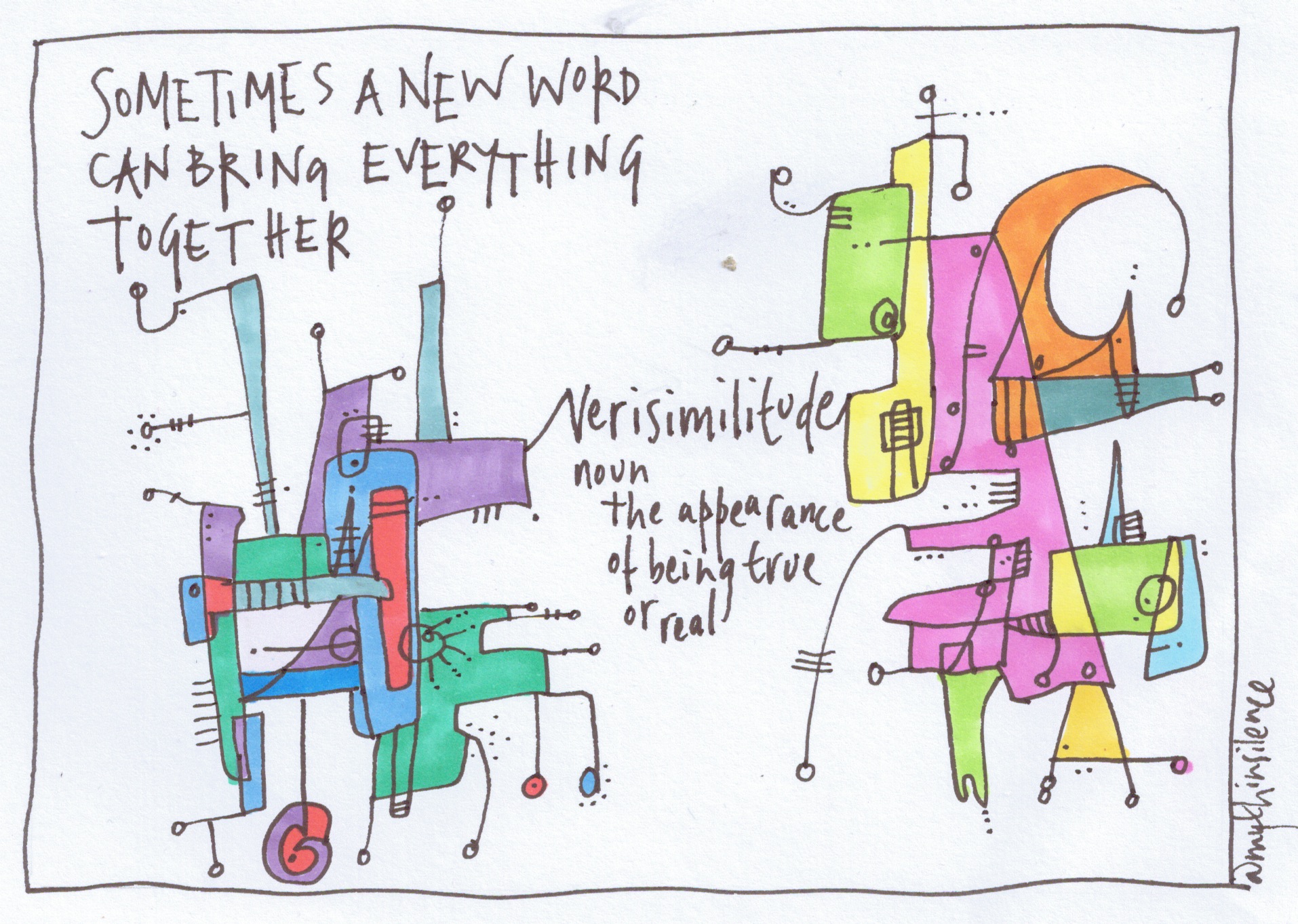
where’s the library?

7 be a library

It isn’t where it used to be.

The library used to be found in monasteries, and then in aristocratic homes and universities.

If you wanted to read what these books contained then you needed to be a member of these exclusive communities.

Later, the public library democratised access for many.*

Libraries now contain computer terminals, recognising there’s far more information and knowledge available than can be housed on the shelves.

The computer provides a tipping point in a revolution which has been gaining momentum for centuries.

It isn’t in the technology, but in what the technology has been making us aware of and available to us.

We’re realising every Human is an amazing library, able to connect with books, experiences, people, and more, towards creating some wisdom** in the world through our individual ways of crafting ideas, information, and knowledge.

Each person becomes a librarian or curator permissioning others to do something awesome with who they are and what they can lay their hands on.

‘ordinary people like you and me can launch each other.  In fact, I wonder if we can launch people better … because we’re ordinary’^

What do you know about yourself?  Your values and skills and experience and dreams and love?  Whatever the list you come up with there’s more.

How can you make these available as a library to others.

If you’re in Edinburgh on Sunday morning, it would be great to have you share in an experiment of “librariness.”

The library is everywhere, beginning in you.

Be the library.

(*Check out The Library Book for the importance of the public library for many people.
(**Knowledge in action through courage and generosity?  How would you describe wisdom?)
(^From Bob Goff’s Love Does.)

beyond average

6 did you know

Degrees use to be a way to get ahead of average.

Employers now want degrees and more: another kind of average has been created.

The solution to the problem of average lies within us.

‘I must know that I am, at least in part, the very thing I am seeking.’*

You are not who and what you see yourself to be in this moment.

Even if you sense you are more, and point to a cornucopia of values and skills and dreams, this is not enough.

So you go deeper, to how these things feel – how you experience their energy.  Now you’re becoming present to the source of what awaits discovery.  It’s a place of generation for your art through your passions and skills, and when you find this you know there can be no average for you.

Or for anyone else.

Suggestions of who’s average at this level is a nonsense.

(From Richard Rohr’s Eager to Love.)


reading and riting

5 being a reader

I was almost 40 when I started too read.

Like so many others, after my schooldays I maybe only picked up and read a few books each year – it felt the right thing to do.  There was no love in it.  It had been something I had to do in order to get the marks or pass a test.

Around sixteen years ago, something happened.

You might say, I fell in love with reading.

Someone presented a bigger picture of the world to me and of my life within it, and I was hungry to see how I could get there.  Reading provided me with a means to make the journey, a journey I’m still on.

Then there’s writing:

‘Writing is organised, permanent talking, it is the brave way to express an idea.’*

This may be one for the introverts, but I’m finding, writing is where I can talk.

I’ve never been someone who’s enjoyed standing up and making a speech;** I much prefer a conversation: I say something, someone else says something, I respond (I love conversations with purpose).

My attempts at writing is driven by a passion: to see people living their ever-growing potential, towards making the world a better place, even if this is one person’s world.

We need dreaming to be added to reading and riting^ to help us move from the requirements for competence and rote obedience, towards imagining a different life and a different world.  Reading an riting become a means to turning us around, helping us to see there is always more, and to ask the all-important questions.^^

(*And to work upon an idea.  From Seth Godin’s Stop Stealing Dreams in Whatcha Gonna Do With That Duck?)
(**I admire and try to learn from those who do; check out How to Deliver a TED Talk by Jeremey Donovan.)
(The third “r” is rithmetic, which has always been a mystery to me, but mathematicians with imagination are amazing people who change the world.)
(^^Three “motions” offered by Otto Scharmer for the movement from downloading to presencing.  He imagines a facing into a cave, then turning around to see out of the cave there’s a bigger world to explore.)
(Cartoon: The quote from Val McDermid comes from The Library Book.)


dreamworks

4 not this kind of dream

I call my work dreamwhispering.

This may sound ethereal and unreal, but it’s the opposite.

It’s grittily real.

It can be too real.

It’s about dreams which can be developed and delivered – with ‘stepwise progress’, as Seth Godin puts it.*

These are achievable dreams because they’re made up of things which matter to you, which you have developed skills towards crating.  Step by step, you move towards them.

The other kind of dream, requires a mighty leap because whilst you may like the idea of it, you haven’t developed skills in this direction or taken any steps and are likely to be waiting for something to happen.

These are safe dreams.

Because they are unlikely to happen, you can hide in them.

The first kind are the scary ones, because if you keep moving forward step-by-step, they’re possible.

We can honestly say our dreams lie within us.

Of course, if the dream is within us, then we – not someone else or some organisation – must do something about it.

Whether you see this as good news or bad news will decide whether you now do something.

(*From Stop Stealing Dreams in Whatcha Gonna Do With That Duck?)

potential or achievement

3the cycle of life

Which would you choose?

When it comes to others?

When it is you?

Many are hired for achievement: What are your qualifications?  What have you done?

It makes sense, doesn’t it.  A proven track record.  How many people have been described as having great potential, only for this not to be realised?

Then again, how many have achieved something special, only to get stuck and find themselves unable to go further, or repeat the success?

Of course, potential and achievement are not mutually exclusive.

The important question is, how can potential be turned into achievement, and how can achievement be turned into more potential?

It’s about perseverance.

Seth Godin highlights how, ‘Persistence in the face of a sceptical authority figure is a powerful ability.’*

The engine-house for persistence or perseverance is integrity (becoming a more integrated person isn’t just about ourselves, but also includes others and the world we live in) and wholeness (realising just how much to begin with or call upon right now); these drive us so powerfully because our integrity is never perfect and our wholeness is never complete, we’re always pushing on for more.**

Potential needs to be realised in achievement, and, achievement needs to produce greater potential, so there personal growth consequences.

Neither potential nor achievement can be copied or formatted:

‘I have done what was mine to do, now you must do yours.’^

(*From Godin’s thesis on education Stop Stealing Dreams (this link will take you to a free download), also included in Whatcha Gonna Do With That Duck?)
(**Carol Dweck covers important elements of this in her exploration of fixed and growth mindsets, in Mindset.)
(^Saint Francis, quoted by Richard Rohr in Eager to Love.)


hacking and beauty and truth and listening

2 what do you hear

The industrialised system for schooling, which develops into the industrialised system of work, is not too interested in the slow starter.

The antidote is to become a hacker – to passionately pursue something until it changes our way of thinking, especially when it comes to boundaries, especially boundaries between the seen and the unseen.

We each have the opportunity to bring something beautiful into the world, but it doesn’t always comes straight away.  My friend Leah Robb, when speaking of art, offers this:

‘Beautiful art is not the goal.  Truth is, and not all truth is beautiful.  Truth can hurt.  Truth can rip at your heart, and art must have the ability to do the same.’

Art here is the hard work we undertake towards the beautiful.  I don’t want to leave truth as I find it but to see if it can be transformed.

I happened to read these words at the same time, spoken by Atlas in Jeanette Winterson’s delighting retelling of the Greek myth.  Atlas has taken the weight of the world upon his shoulders, at first crouching “petrified and motionless,” then:

‘At last I began to hear something.  I found that where the world was close to my ears, I could hear everything.  A girl with a limp takes the pails over her shoulders.  I know she limps by the irregular clank of the buckets. … I can hear the world beginning.  Time plays itself back for me.  I can hear the ferns uncurling from their tight rest.  I can hear pools bubbling with life.  I realise I am carrying not only this world, but all possible worlds. … I am carrying the world’s mistakes and its glories.’*

Wherever we are, we can listen; we can hear the truth and respond.  Which brings us back to our hacking: following what we are so passionate about, in the pursuit of which our thinking changes and we can imagine and work for things others cannot.

(From Jeanette Winterson’s Weight.)

chosen

1 if you are reading this

Dedicated to all those waiting for someone or some organisation to say, “You’re the one we want.”

The most important choosing has already happened.

We’re here: the universe has made this possible: now what are we going to do?

Rather than waiting for someone to choose us we get to choose ourselves.

Then we get to be choosers of others.

We can choose to be curious about and enjoy that thing we do, and questioning how we might use these.

We can choose not to do things too – this is also important when it helps us identify what we do want to choose – as Steve Jobs witnesses:

“You have to pick carefully.  I’m
actually as proud of the things we
haven’t done as the things I have
done.  Innovation is saying no
to a 1,000 things.”*

Being chosen is about consciousness: being more present to already being chosen.

(*Quoted by Nassim Taleb in Antifragile.)

you’ve gotta love it

31 all for one

We are all lost, trying to be found.

When Eckhart Tolle suggests the memories we think define us ‘are ultimately no more than thoughts held together precariously by the fact that they are all invested with a sense of self,’ he reminds me of Bruce Hood‘s assertion: self is an illusion.

I take a pragmatic view.  Human consciousness requires ways and means for expression.: if this is what is required for me to be present to others, the world, and to my future Self, then it’s fine with me.

What Tolle’s exploring, when he makes this remark, is how we mistake a sense of self through identifying with objects and roles, which are not who we are, raising the egoistic monsters of pride, greed, and foolishness.*

When we’re forever trying to assert our sense of self, through positions and power and possessions, we have little sense of being who we are.

In these ways we are lost, trying to be found.

This might sound like extravagant and impractical philosophy in a real world of bills, shopping, and the latest apps for our smart phones, yet if we step back and look on what life so often is, what we see can be an odd, even disturbing view: “You mean this is the sum total of ten thousand years of Human journeying, and then I die?”

‘Wonder is noticing there is a
world beyond our patterns
of downloading.’**

What does wonder lead us to?  Where do we find ourselves through curiosity and inquiry?

We find treasures amongst the disposable.  When people are asked what provides them with a sense of happiness, it’s likely, loving relationships are close to the top of their lists.

When e open our minds to more than the daily download,^ we give ourselves the chance to open our hearts more, and then we can love more, and love helps us make the journey.

(*The phrase in italics is mine, not Tolle’s.)
(**From Otto Scharmer’s Theory U.)
(^Scharmer’s term for what we unquestioningly feed ourselves with each day.)

believing before seeing

30 flaneurs and flaneuse

The world does not know what will happen if people live out their creative potential for the sake of others.

I wrote this sentence down six years ago.

It’s a wild journey I believe in more now than then.

What’s happened?

I’ve met hundreds of amazing people – perhaps they didn’t see this themselves.  I’ve read many dozens of books from which I have taken ideas – more than I can count – to play with and create things from. Some have flown, others have failed.

Every time I’ve learnt something.

It begins with seeing we are more than we think we are: ourselves and one another.  Maybe, because you are the age you are, with all your experiences, you’ve been beguiled into thinking this is you.  Full-stop.

‘You don’t know what it is.  You
have only covered up the
mystery with a label.’*

A sceptical empiricist understands this.**  We only know in part.  If we believe we know something completely when we have been able to label it we are making the error of believing WYSIATI.^  Whilst life requires the best decisions to be made with what we know at the time (there are conclusions and deadlines to be made), we can see and understand there is always more to discover which may lead to better conclusions and decisions.

Such a way of seeing and understanding can feel like or worse, but what keeping our mmd and heart open allows for is to believe before we see.

We do this more than we know.

Tom Asacker refers to some interesting baseball research which shows the speed of the pitched ball is  faster than the speed at which the batter sees.  It turns out the batter believes he can see the ball, and then he does … thwack:

“They’ve discovered that breakthrough
achievement is about belief.  
Conviction, then action.  Magic,
then logic.  Heart, then head.  
They know that seeing isn’t
believing.  Believing is seeing.’^^

We really don’t know what will happen if people live out their potential.  We just can’t see it right now.  We can believe it.

It’s how we move forward to realise what is invisible to us at the moment.

It all begins with believing in our own potential, then we will see it.⁺Whatever the label or set of labels you’re carrying, these are not you.

(*From Eckhart Tolle’s A New Earth.)
(**This is Nassim Taleb‘s term for someone who tries to keep their mind open to more possibilities, whilst understanding life will require they make decisions on what they know.)
(^WYSIATI – a way of skimming life, “downloading” what we already know.)
(^^From Tom Asacker’s The Business of Belief.)
(⁺I work with people of all ages and backgrounds and every time we identify amazing things in their lives to be creative and generous with – things which give them enjoyment.  The question always is, will they believe this?)
(Cartoon: my French pal Charlotte has clarified my purposeful companions whom I have named flâneurs are all male: flâneuse is the female.  Merci beaucoup, Charlotte.)


more beauty

29 do you know 2

Last night, I was part of a group writing out their values for a better university.

Someone offered beauty.

What a great value: when we later got to prioritising all the values, beauty was certainly in my top six.

Everyone ought to have the opportunity to be beautiful in how the choose to live their lives, and, to be able to create the beautiful for others.

Where are the most liberating and creative places for you?*

The world is many times ugly.  We know this only too well.**

Beauty, then, is a choice Humans make.

In between beauty and ugly there’s a lot of “static”: neither-one-nor-the-other-stuff.

Life will have a lot of this which we live with; what we need to make sure is we introduce beauty (which does go on trees but can also be made), and make sure we don’t add to the ugly.

One source suggests the beautiful life is hospitality, goodness, self-control, discipline, and encouragement.  Another suggests it’s about people who make extraordinary choices, see the bigger system, they are organisationally, relationally, emotionally, and intellectually intelligent.^

I don’t offer these in a prescriptive way, only to ask the question:

What are the marks of the beautiful for you?

The lists have in common internal and external qualities for beauty.

When it comes to the internal, Otto Scharmer suggests: ‘The way we pay attention – the place from which we operate – is the blind spot on all levels of the society.’

The exploration of the internal source or centre of our lives should hold no fear for us, as Eckhart Tolle points out, ‘You do not become good by trying to be good, but by finding the goodness that is already within you.’^^

Some believe beauty is scarce and they become gatekeepers guard the scarcity; yet what we find when people are encouraged towards beauty is an abundance.

More beauty, please.

(*I think I found myself in one this morning, when I was visiting the Grassmarket Community Project in Edinburgh.)
(**I think of Annie Dillard’s descriptions of so many maimed and marked animals in her evocative Pilgrim at Tinker Creek, there are the natural tsunamis and ebola, and Human Ugly in he form of ISIS and the Syrian authorities, to name two from far too many forms.
(^The first list comes from a Christian pastoral letter from Paul to Titus, the second from Peter Senge in The Necessary Revolution.)
(^^From Eckhart Tolle’s A New Earth, emphasis mine.)