not enough or enough?

27 enough or

The products of two mindsets.

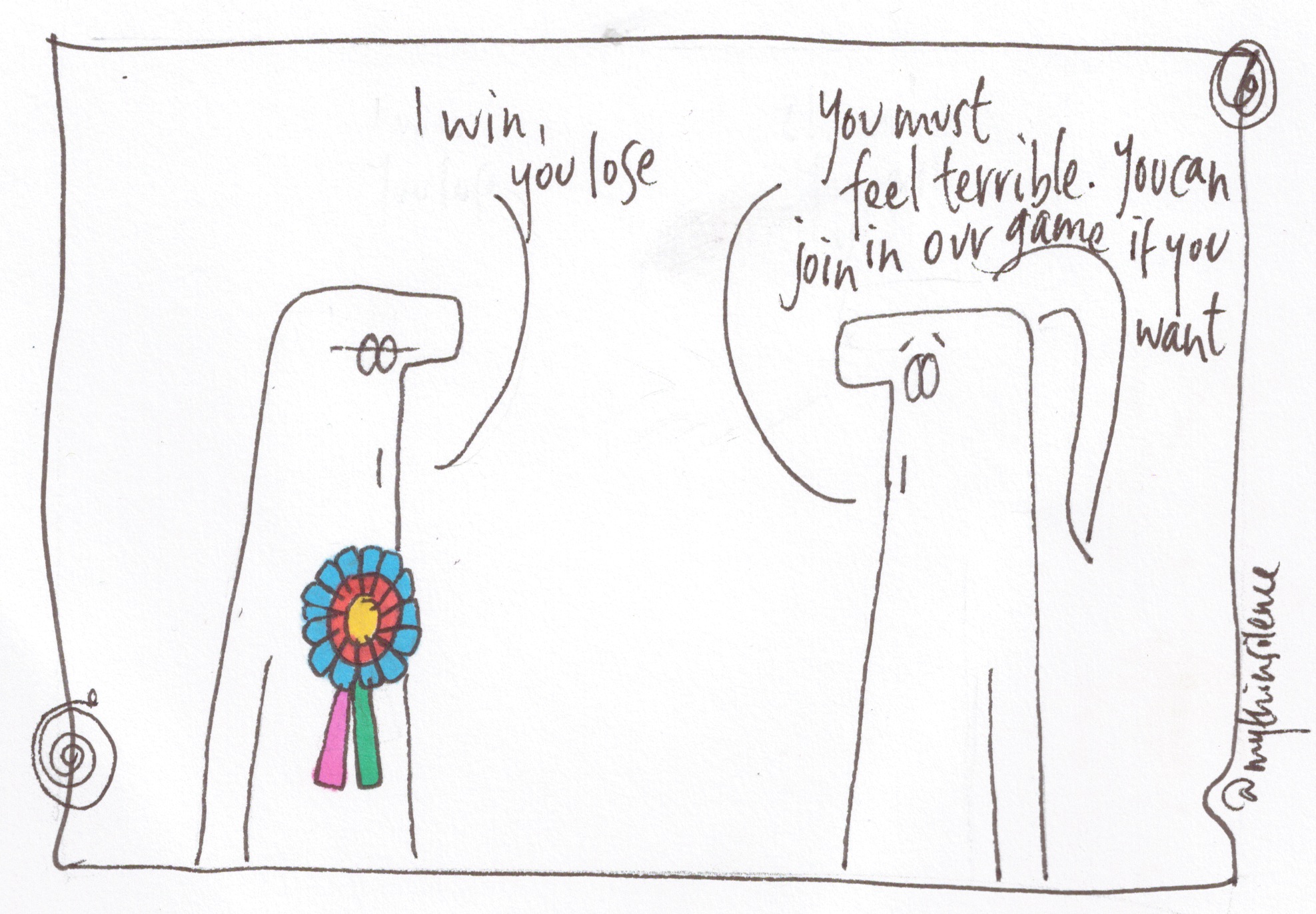
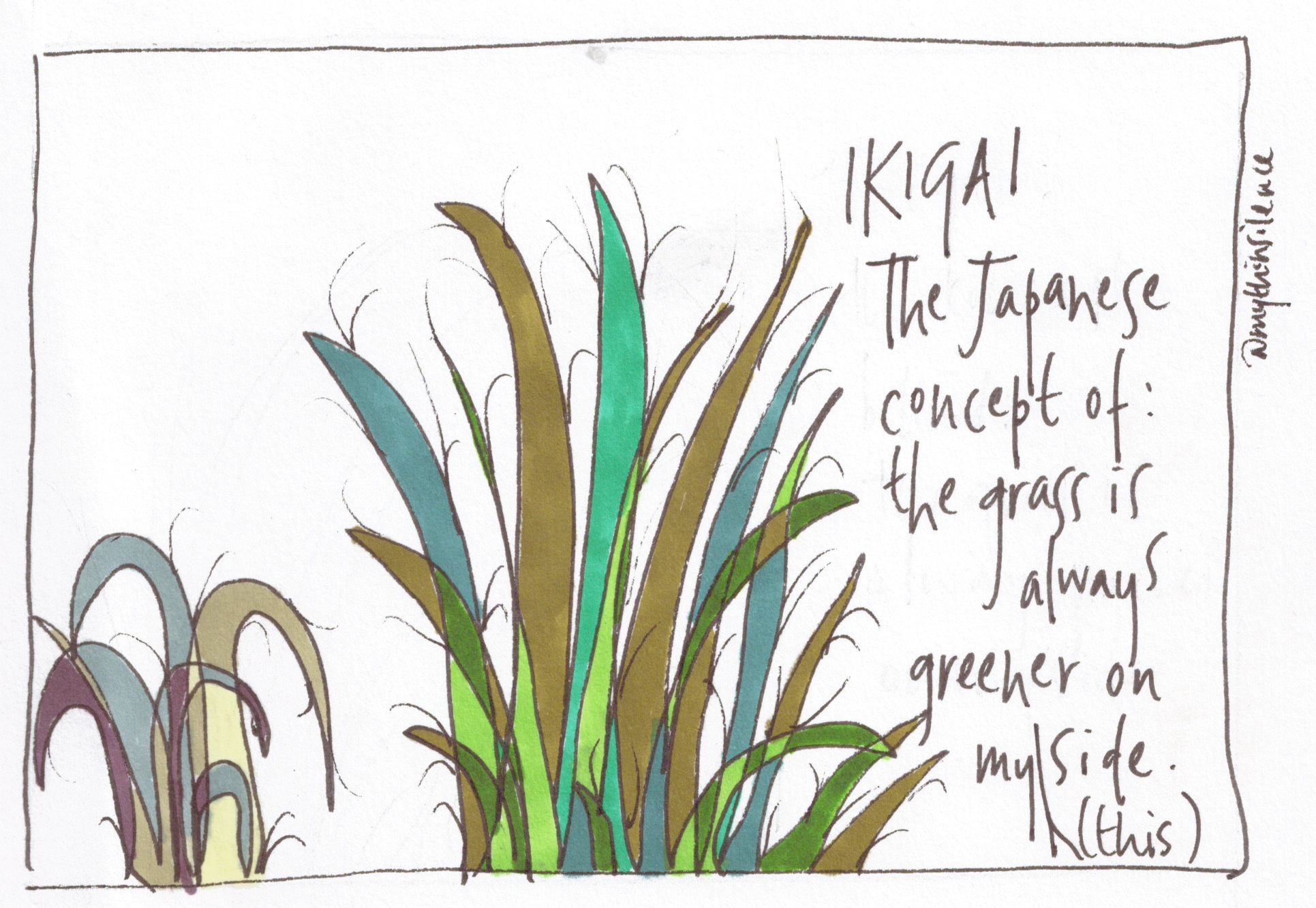
Not enough comes from a scarcity-mindset.

Enough comes from an abundance mindset.

A scarcity-mindset usually wins, though, and is the product of wars, terrorism, tragedies, disasters, injustices, crime, poverty, and much more.

Brené Brown suggests scarcity environments contain shame, comparison, and disengagement, with the casualties being our willingness to be vulnerable and engaging with the world from a place of worthiness.*

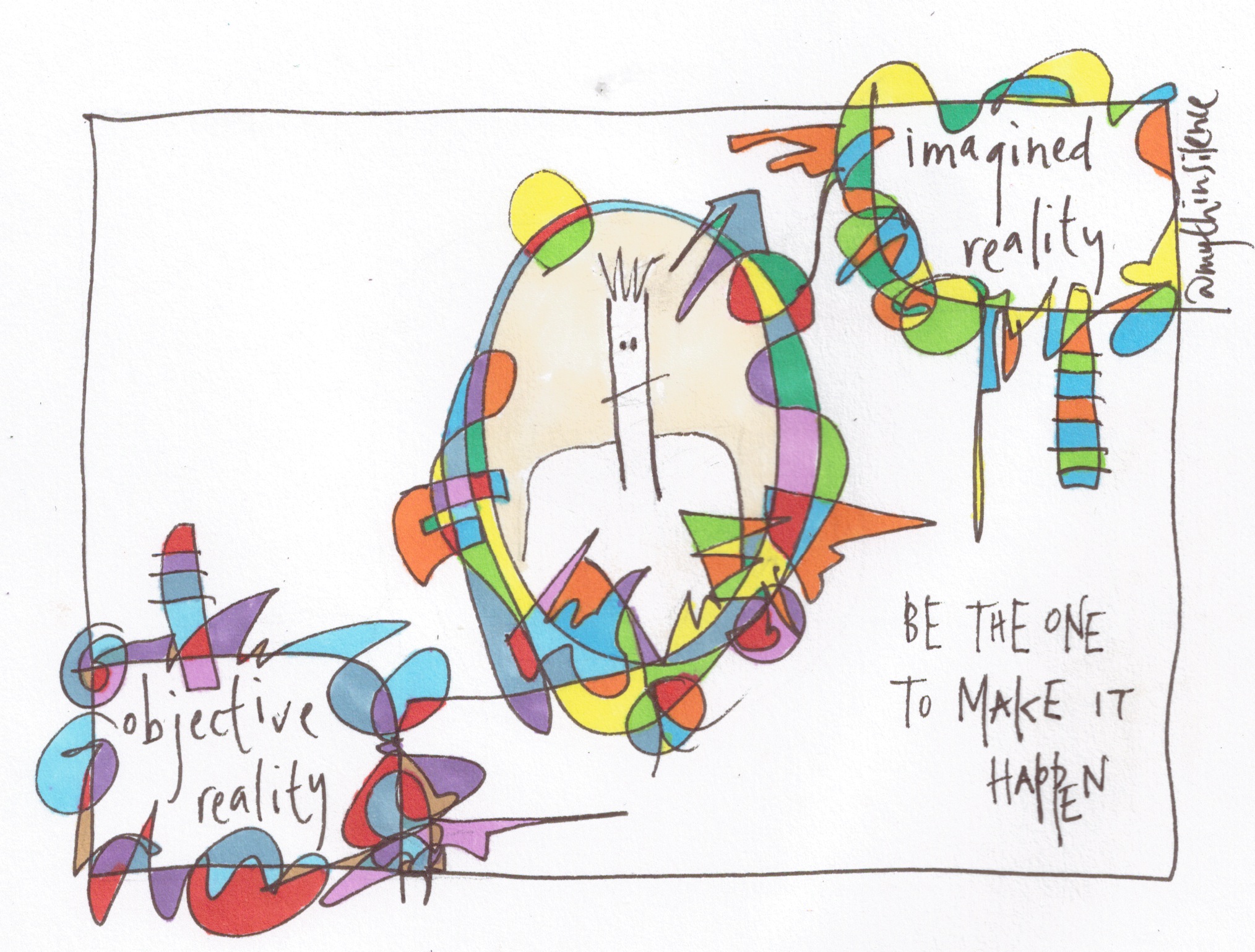
Mindsets are ways of seeing reality; they are not reality.

Arthur Schopenhauer offers,

‘The task is not so much to see what no one has yet seen, but to think what nobody has thought about that which everybody sees.’**

Erwin McManus adds, ‘When the soul is sick, one of the symptoms in blindness.’^

You may have noticed, I often suggest humility, gratitude, and faithfulness as ways of being present to an emerging future, enabling us to move forward.

Humility because we clearly see who we are and sense our worth.
Gratitude because we see what we have and understand how to engage with this.
Faithfulness as many imaginative and creative ways of putting humility and gratitude into practice.

The best question might well be, What Do You Want To See?

(*From Brené Brown’s Daring Greatly.)
(**Quoted by Mikael Krogerus and Roman Tschäppler in The Decision Book.)
(^From Erwin McManus’s Soul Cravings.)

why life is confusing?

26 out of order

‘I usually congratulate people when they tell me, “I don’t know who I am anymore.”‘*

The usual roles into which people fit themselves, or are fitted, are disappearing.

26 comes the chaos

Scarcity is being seen for what it is: a myth.  We’re not quite sure how to handle this, hence the confusion, but we’re increasingly seeing opportunities to produce our art.

26 and then out

I’m not saying we’re becoming invulnerable.

Quite the opposite.

Whatever we believe in or do in life, we die: our end is inevitable.  Embracing this truth and imagining how it is possible to live differently, I paradoxically find “when I am weak, then I am strong.”

26 a future order

As we begin to see how we live in a world of abundance rather than scarcity,  abundance often comes to us in random, even chaotic, ways: there’s hard learning and work to be done to capture and experience it, though Nassim Taleb suggests:

‘Everything likes or hates volatility up to a point.  Everything. … The best way to verify that you are alive is by checking you like variations.’**

Our ability to positively adapt to randomness over our lifetime – to develop complexipacity^ – opens the possibility of an abundant life which moves us out of our confusion and shapes us as generators and contributors.

(*Eckhart Tolle in A New Earth.)
(**Nassim Taleb’s Antifragile.)
(^The capacity to deal with complexity.)


outing the ego

25 we overcome

She wanted to be free,  to be able to live the life she felt was calling to her.

Each time she tried to move toward this, she found she compared herself to others, and something got in the way.

Sometimes she felt better than others; other times she felt not as good at all.

Eckhart Tolle writes, ‘whenever you feel superior or inferior to anyone, that’s the ego in you.’*

The ego feeds on important cravings or needs each of us finds within us as a developed species: autonomy and mastery and significance.  All of these can be really good, rather than bad:

Autonomy to live as we believe we must.
Mastery of skills through which we can express ourselves through and contribute to others with.
Significance in living for some purpose greater than ourselves.

Sometime our hero struggles with pride, greed, and foolishness in her life; at other time the struggles are with unworthiness, asceticism, and cautiousness.

The ego plays games without us realising, but when we identify and embrace who we are without comparison, satisfied and giving,we free ourselves from the gravitational pull of the “more-than” and “less-than” pull of the ego and we can fly ego-free towards the future working in a complementary rather than comparative way with others.

‘The revolutionary force in this century is the awakening of a deep generative human capacity – the I-in-Now.’**

There’s quite an experiment to be lived out.

(*From Eckhart Tolle’s A New Earth.)
(**From Otto Scharmer’s Theory U.)

just a little beauty

24 add beauty

How many people are coming?

How big will it be?

How much money will be made?

The contributor of beauty knows, whilst these sometimes are important questions, they struggle to measure just a little more beauty being brought into being.

She finds herself walking in the small way, which enables her to see and honour the little-beautiful things people are often making and offering.

She is increasingly grateful for the hundreds of little-beautifuls she finds around her every day: the things people cannot not do.

They all add up to something amazing.  Being grateful for them and connecting them up in an idea or an event or a relationship, allows something amazing to happen.

24 add beauty colour 2

To bring a little more beauty into the world can be scary, but I remember a conversation with my friend Dan last year: he said, we have to keep doing the scary stuff, else we’ll continue to do the same stuff and it won’t be very good.

Beauty happens when we allow our past and emerging future to meet.  Otto Scharmer names these: social time sculptures.  One of these is taking place on Friday – something the guys I’m working with find scary, but we cannot not do it.  And whilst there’ll be those questions about how many, how much, how big, the important one for us will be, have produced a little more beauty?*

‘I have found that the most difficult and most rewarding challenge of my work is how to be both a mapmaker and traveller.’**

(*If you’re in Edinburgh on Friday, please feel yourself invited to make a little more beauty.)
(**From Brené Brown’s Daring Greatly.)
(Cartoon: You’re welcome to print off and colour in the cartoon today; I’ll upload my completed version within the blog when completed.)

exploring vulnerability

23 where the softness

What if I say this?

What if I go there?

What if I do this?

What if i befriend this person?

There’s vulnerability in all of these.

We have to let our guard down – like the Starship Enterprise has to drop shields if someone is to beam aboard.  It then becomes vulnerable, but there’s no other way.

I read Richard Rohr this morning, exhorting me to embrace the negative, to avoid a dualistic view of life, including facing my shadow side.

So, every day, I face the monsters within; if I miss the subtlety of their constant hunger, I’ll end up feeding them – with some pride or greed or foolishness – when I ought to be battling them.  I cannot wait until the battle is over.  Each day you meet me and my monsters.

Brené Brown adds more to this for me when she describes how, for wholehearted people, ‘Vulnerability is the core, the heart, the centre, of meaningful experiences.’

‘Those who feel loveable, who love, and who experience belonging simply believe they are worthy of love and belonging.  They don’t have better or easier lives, they don’t have fewer struggles with addiction or depression, and they haven’t survived fewer traumas or bankruptcies or divorces, but in the midst of all of these struggles, they have developed practices that enable them to hold on to the belief that they are worth of love, belonging, and even joy.’**

I was reminded of when I shared with a group of people, some of the struggles I’ve gone through over a number of years, and how these have defined me.  Their response was to criticise me.

Being vulnerable is risky and it doesn’t always work.  Do I regret sharing the things I did?  It was unpleasant for a number of months, but, no.  The things I shared define me, are part of me, there can be no dualism.

Most importantly, I find there are more possibilities for creativity when I explore through vulnerability.

‘Vulnerable is the only way we can feel when we truly share the art we’ve made.  When we share it, when we connect, we have shifted all the power and made ourselves naked in front of the person we’ve given the gift of our art to.  We have no excuses, no manual to point to, no standard operating procedure to protect us.  And that is part of our gift.’**

(*From Brené Brown’s Daring Greatly.)
(**From Seth Godin’s excellent V is for Vulnerable.)

’cause i’ve gotta have faith

22 until he has

As George Michael would say.

We all have faith; it’s more than a religious word and concept.

Faith is how we sense, open, and begin to form the future in a universe more random and beautifully chaotic than Modernism ever allowed.

Faith makes it possible for us to make the vulnerable journey, because the future is about what cannot be seen, often because it doesn’t exist, yet.

Faith is not an idea or concept, it’s movement.  Nassim Taleb is right to say, ‘A prophet is not someone who first had an idea; he is the one to first believe in it – and take it to its conclusion’ – to “put skin on it.”*

Faith makes it possible for imperfect and incomplete people to move with deep grace when others believe themselves unable.

The proud person never receives enough recognition, the greedy person never has enough resources to move very far beyond their present world, but, faith-people have velocity provided by a recognition of who they are in relation to others, their world, and their future self.

Faith is dynamic stuff and you have enough, right now.  What will you make?

(*From Nassim Taleb’s Antifragile.)

the third imaginarium

21 will she?

A new word for me: Richard Rohr describes the imaginarium as ‘the unconscious container inside of which each group does its thinking for many people’.*

To borrow and develop Rohr’s concept: the third imaginarium lies between the first and the second.  It is imaginative thinking in the liminality which lies between two or more alternatives.

Thomas Kuhn wrote about scientific breakthroughs coming from young people who’d spent time learning the domain and connecting with the field who didn’t know it couldn’t be done.**  Rohr offers a sweet little phrase for this: we ‘must learn the rules so they will know how to break them properly’.*

One resonse to an inherited view or system, which we believe is outdated or dysfunctional, is acquiescence, a second is to resist or rebel.  A third way, though, chooses neither, knowing the tackling of something head-on rarely works.  (I confess I’ve learnt this the hard way.)

Whatever the imaginative new view or idea, it won’t be welcomed with open arms – it is neither proven nor disproven – but, then, if it is possible to establish it somehow and somewhere, something new can develop, be tested, and establish itself; the old view will then crumble and dissolve.

Those who inhabit the third imaginarium are difficult to dissuade or buy out because they value creativity over power, imagination over possessions, and concern for others over concern for self.  They have a panoramic worldview bigger and more colourful than the alternatives.

I do not have this but I seek it.

I often refer to Nassim Taleb’s writing about the alternatives normally seen when it comes to encountering stress: those of fragility and robustness.^  His proposition is robustness is not the opposite of fragilility, rather antifragile is: antifragility is the ability to grow in response to stressors – up to a point.  In the context of the idea in this post, fragility is acquiescence to what is, whilst robustness is to maintain what is.  I’d thought of antifragile lying beyond robustness, but I wonder whether it lies between what is fragile and what is robust: a third way of imagining.

Here’s some advice from Michael Heppell for becoming people of the third imaginarium:

‘Read, look into other areas, use different learning mediums, ask better questions, reflect, be open to ideas, be surrounded by learners, and prioritise learning.’^^

(*From Richard Rohr’s Eager to Love.)
(**Thomas Kuhn’s significant work respected more than four decades later is The Structure of Scientific Revolutions.)
(^Nassim Taleb’s Antifragile.)
(^^From Michael Heppell’s The Edge.)

hypotheses

securedownload

We do not know what Humans are fully capable of.

Technology and genetics and pharmacology promise (or threaten) to open up new ways of living.

Life throws out an invitation or challenge to see how far we can take it.

We adapt to our environments, or, is it, we shape our environments to suit us best?  The space, the people in our lives, what we, with thousands of things in-between.  When we step out of these we can feel lost, the proverbial fish out of water.  We prefer certain things because we feel competent, in control, and relaxed.  Why would we ever want to step outside of this?

In past posts I’ve described the infinite game, which includes as many as possible, prolonging and open-ended  game for as long as possible, and when the rules threaten these two dynamics, infinite players change the rules.

In contrast, the finite game includes a few and excludes the many, is played for a certain time towards a specific goal, and sticks to the rules.  (The infinite player knows they must sometimes play finite games, but the finite player can mistakenly think there is only the finite game.)

The infinite game provides a daily invitation, to which we must respond.  Those who say “Yes” are, perhaps, firstfruit-people of a new kind (kinds) of Human.*

We’ll only know if we take hold of the invitation with all our heart, soul, mind, and strength.

We are the hypotheses who’ll prove or disprove what we are imagining it possible to become.

(*History will remind us, there is always a push-back to Human advances and development; Otto Scharmer points to how people can react by closing themselves to (blinding) possibilities, de-sensing themselves, and absenting themselves from the possibilities.)

vulnerable

19 adventures

I wish it would be otherwise, but I’m realising the greatest gains come through vulnerability.

I’d rather fail trying to make a difference in someone’s world, than succeed at something which doesn’t add beauty or goodness.*

In 1910 Theodore Roosevelt spoke these words:

‘It is not the critic who counts; not the man who points out how the strong man stumbles, or where the doer of deeds could have done them better.  The credit belongs to the man who is actually in the arena … who strives valiantly, who errs, who comes up short again and again, because there’s no effort without error and shortcoming; but … who spends himself in a worthy cause; who at the best knows in the end the triumph of high achievement, and who at worst, if he fails, at least fails by daring greatly.’**

This is different to the world’s wisdom, which struggles to understand how success and failure not only can live in tension, but need to be present for the transformative and the transcendent to happen.

I’m half alive, half-Human if I’m not vulnerable: vulnerability is about being engaged in what we might describe as life-in-all-its fullness.^

Vulnerables see risks differently, knowing they are the only way to move forward.

Nassim Taleb puts this well when he says, ‘A halfman is not someone who does not have an opinion, just someone who does not take risks for it.^^

We’ll risk to connect with others, risk to connect with the world we must steward, and we’ll risk to connect with our future Self.⁺

(*My next attempt is on the 28th November when a group of people have identified people to support, hired a space, brought in musicians, crafted things to make a difference for others, and brought together stories, put out the invitations, and now must wait to see if people come.  If you’re in town, you’re welcome to come.)
(**Quoted in Brene Brown’s Daring Greatly.)
(^Equals life including the positive
and the negative.  It’s interesting how even people of faith are conceiving of a vulnerable god, who, being unable to do all things, moves forward to engage through the positive and negative.)
(^^From Nassim Taleb’s Antifragile.)
(
⁺When I’m dreamwhispering, I’m mentoring from the future, from things I haven’t done yet, except how to explore the future.)

paradoxical

i share

Each of us is, most of the time

We walk the earth but dream of travelling to the stars.

We eat and shelter and reproduce, yet we create things of great beauty which have no value as tools or food.

We are on a journey from the little self to the big Self.*

We are not what we crave, we are the one watching the self who craves.

We seek to connect with others in order to discover and to be more our self.

‘I share, therefore I am.’**

When we cannot connect with another because of something we do not like about them, the truth is often this thing we do not like is already in us.

We are becoming our future self: connected and focused, crossing thresholds which demand much of us.

Without any evidence, we open our minds, believing we are more than we are in the moment.

We dive deeply into the worlds of others, which are so unfamiliar to us.

Through costly and demanding connection life, we come to see most clearly what our contribution MUST be, and then let go of everything else, including position and possessions so we might live the adventure.

The old and the new exist in us at the same time, of course; we are always paradoxes moving toward the future.

(*The little self is the ego, the self which seeks expression in positions and possessions, but in doing so, gives away freedom.)
(**Gary Vaynerchuk on social media, in Jab, Jab, Jab, Right Hook.)