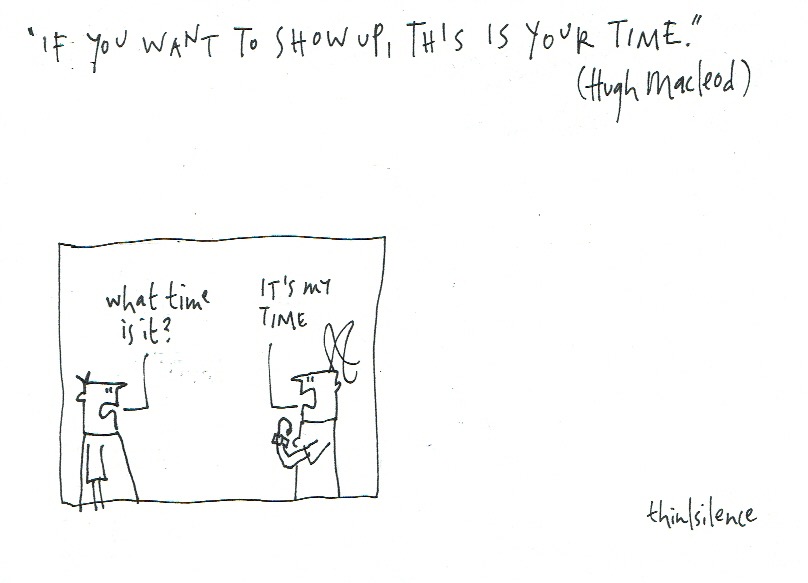
it’s your turn

I am grateful to James Carse who provided me with the language and imagery of finite and infinite games.*

The prime game in life is the infinite one, identified by its including of as many as possible for as long as possible, and when the rules threaten either of these open goals, they’re changed.

The finite game is secondary, marked by excluding the many, being time-sensitive, and always played by the rules.

Though our lives include both kinds of game we lean more towards one than the other.

The infinite player knows it’s important to stay connected with the larger game which is about one’s sense of being, that everyone is unique and important, it’s important to imagine and dream just for the sake of it, about life becoming what we create in our narratives, and, how there are many ways to express these.

The finite player makes things happen, consolidates, stabilises, makes sure we can repeat important things tomorrow, makes sure people are fed and housed and healed.

The infinite player must know the value of the finite game – how dreams must produce action and therefore produce finite games.

The finite player must understand that there’s something more important than simply getting the job done (see Abraham Maslow’s hierarchy of needs), therefore ought to stimulate the expansion of the infinite game.

The future asks that we recognise both and do not find ourselves trapped in an extreme infinite or finite bubble.

Seth Godin offers these thoughts which help us see how to balance the infinite and finite games in this way will require courage, generosity, and wisdom:

‘[Y]ou have to create work that might not work.  That you have to lean out of the boat and invest in making something that’s remarkable.  That you have to be generous when you feel like being selfish.’**

The context for Godin’s word is encouragement not to wait to be discovered.  Hugh Macleod underlines the fact there’s never been a better time in history than now, so:

‘If you want to show up, this is the time.’^

Reading on, Philip Newell helps me to connect compassion with the games we play through the life and words of Burmese democratist Aung San Suu Kyi who describes the compassionate way as including:

“The courage to see.  The courage to feel.  And the courage to act.”^^

We know the most extreme finite games not only ignore the suffering of others but can also create it.  Here the courage of seeing opens our eyes and thinking to what’s really happening, moving us from the ego to the eco and begins with slowing down our seeing:

‘We find our true centre not within the limited confines of our own individuality, family, our nationhood but within the connections between us.’*^

This ability to play the infinite game lies within each of us.  We only need draw out our way of participating and contributing.  Here, slow seeing helps:

‘In the neglected craves and corners of your evaded solitude, you will find the treasure you have always sought elsewhere.’^*

With what you discover there, it is your turn in the infinite game.

(*See James Carse’s Finite and Infinite Games.)
(**From Seth Godin’s blog On being discovered.)
(^From gaping void’s blog Opportunity cost.)
(^^Aung San Suu Kyi, quoted in Philip Newell’s The Rebirthing of God.)
(*^From Philip Newell’s The Rebirthing of God.)
(^*From John O’Donohue’s Anam Cara.)
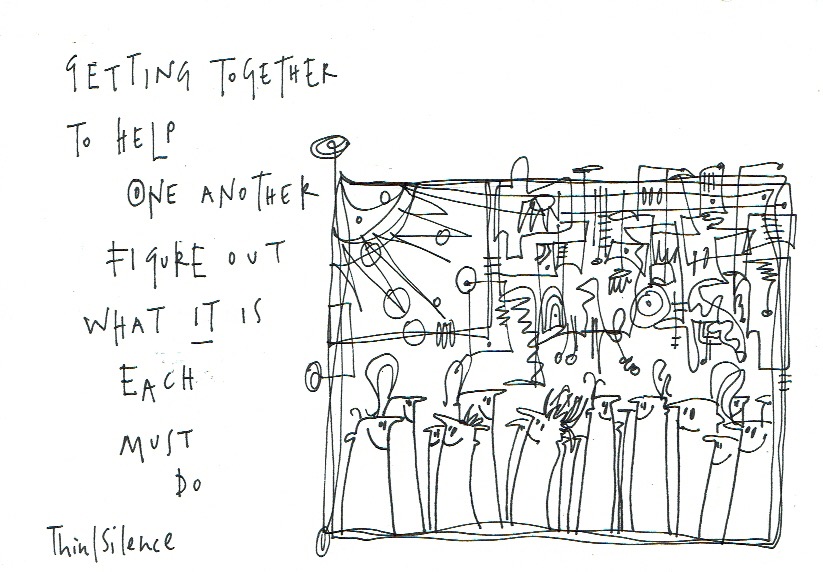
 

when spaces are living questions

‘[W]hat do you want to say? Why does it need to be said?  What if you cold say it in a way that has never before been done?  How might you do that?'”

Warren Berger offers some great “start from” questions for identifying what it is we feel we must do in our lives.

People are amazing.  We are not programmed but incredibly plastic, able to interact with our environments imaginatively and in ways that become deeply satisfying to us, not only receiving but contributing too.

It all means today can be very different to yesterday.  It means the hope we once had to do something meaningful has not gone forever.

I’m not saying that yesterday found us floundering when it came to identifying our thing but today we know exactly what it is.  Bat what  if there were spaces for exploring just what we are capable of and to be helped towards living this?  Our tribe of possibility?

(*From Warren Berger’s A More Beautiful Question.)

it’s a problem i know nothing about

“The night is large and full of wonders.”*

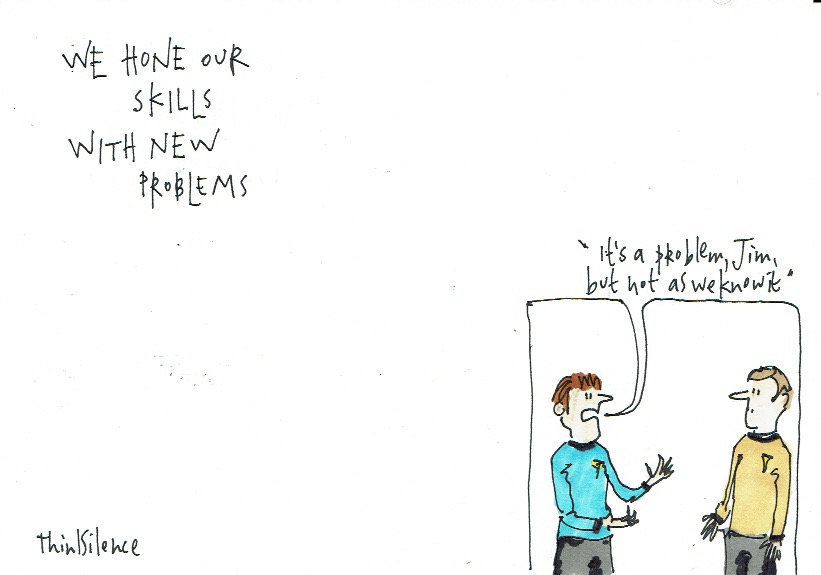
Richard Sennett exhorts us to go problem-finding as well problem-solving because we hone our skills through tackling different problems, not just the same ones over and again.**

This emphasis on the development of skills is a key one because, in our unpredictable world, there’ll always be new problems,

(*Lord Dunsany, quoted in the Northumbria Community‘s Morning Prayer.)
(**See Richard Sennett’s The Craftsman.)

the memory of having

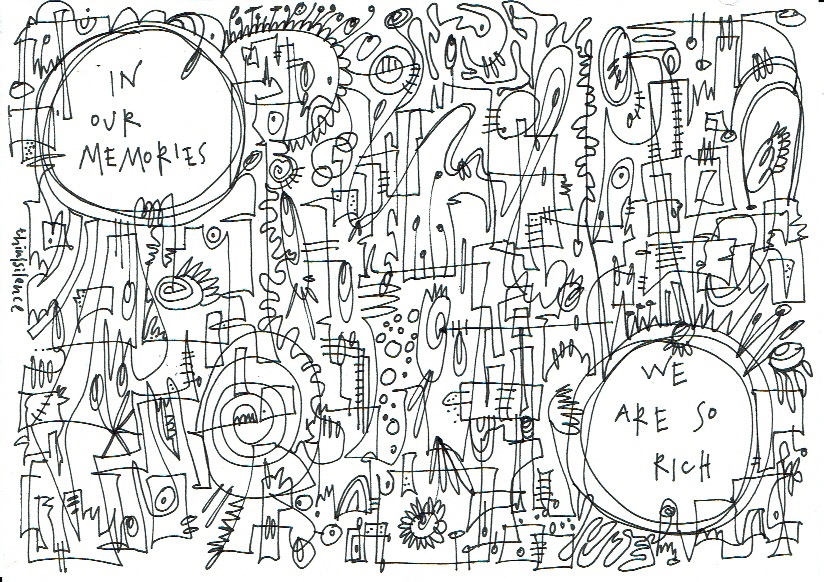
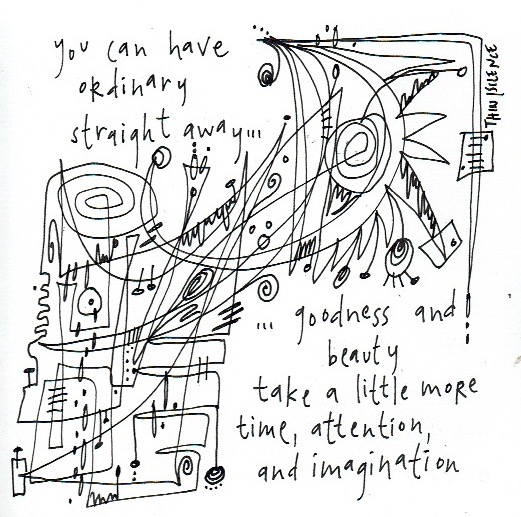
There’s the richness of sun and rain, of air and birds, of soil and plants that cannot be bought and possessed or owned but is always ours in memory.

There’s a kind of memory forged in being, making having available long after the moment or the event has passed.  From this last week, I have memories of a beach, a city, a wedding, sitting in a cafe, a Tattoo.  I possess none of these but I have them all.

‘Let’s keep the beauty and sorrow in front of us now, in memories, silences, poetry.’*

I write these things down.  In a year I’ll read about them once again.  In my memory I will have them again and be rich.

(*From Anne Lamott’s Hallelujah Anyway.)

deeper curiosity

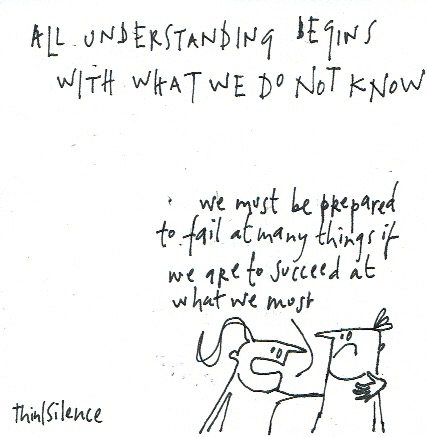
Curiosity is an admittance that we don’t know things.

We don’t like admitting our ignorance but we’re good company.  Albert Einstein confessed:

“I have no special talents.  I am only passionately curious.”*

Bernadette Jiwa, who is quoting Einstein goes on to identify three kinds of curiosity: diversive, empathetic, and epistemic.**

These are deepening curiosities and all can be developed.

Be curious about more.

Be curious about how others see things.

Be curious about what that might look like if you do something with it.

(*Albert Einstein, quoted in Bernadette Jiwa’s Hunch.)
(**These captured my curiosity because of how they mirror Theory U.)

walk a mile in my shoes

Bernadette Jiwa writes about how a hunch for an entrepreneur is a combination of curiosity, empathy, and imagination.

The important thing to notice is that each of these can be grown … though never in a hurry.

“Everything around you that you call life was made up by people who were no smarter than you.”*

(*Steve Jobs, quoted in Bernadette Jiwa’s Hunch.)


interactions and distractions

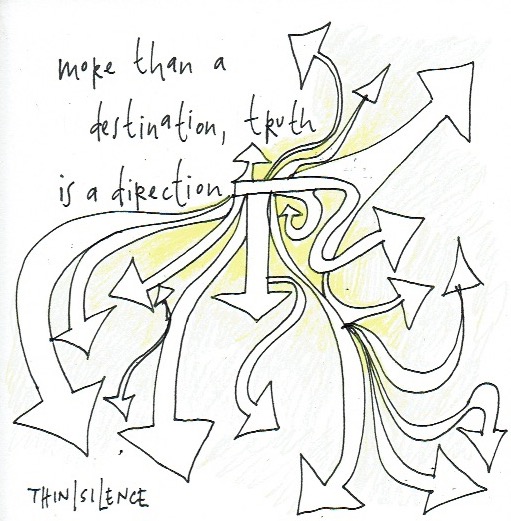
I don’t mean truth is what we make it.

Nor that there aren’t truths that affect everyone and everything.

I do think there’s a lot more truth to discover yet.

And a lot more truth to create together.

We are made for truth.

We just give up on it too soon, distracted by easier things.

Here are a couple of thoughts I read this mornin – encouragement to keep exploring truth:

‘Ignore distractions – and distractors.*

‘Every time I see a toddler in a [buggy] with an internet device in hand, I shudder.’**

And here’s a little more from someone who living a hundred years ago:

‘And the point is to live everything.  Live the questions now.’^

(*From gapingvoid’s blog: Make yourself irreplaceable.)
(**From Sth Godin’s blog: Seeing and believing.)
(^Rainer Maria Rilke, quoted in the Northumbria Community‘s Morning Prayer.)

we are the seasons

At the close of his book Dance for Two, Alan Lightman writes:

‘The earth wobbled imperceptibly on its axis, as bits of cosmic debris randomly bombarded it from space.  One such piece of debris, billions of years in the past, had struck with unusual force and cocked the planet over, producing a tilt of twenty three degrees, producing uneven heating as the earth orbited the sun, producing the seasons.”*

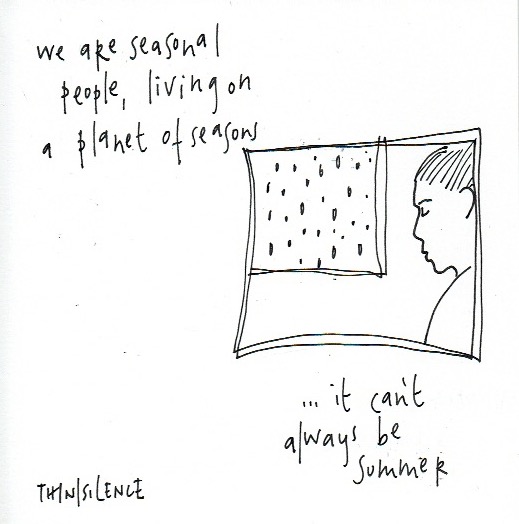
We are seasonal people, the product of our world.  Sometimes it’s summer, other times winter – this is our story.  And through the seasons we produce our stories.  Anne Lamott’s honesty more than reminds me of the reality of our seasonality.  She writes:

‘We’d prefer routine, predictability, to never be ashamed or afraid, let alone aghast. […] In lovely closed systems, timers are set: tick, tick, tick.’**

Though life becomes longer it also becomes emptier.

(*From Alan Lightman’s Dance for Two.)
(**From Anne Lamott’s Hallelujah Anyway.)

opportunities and ideas

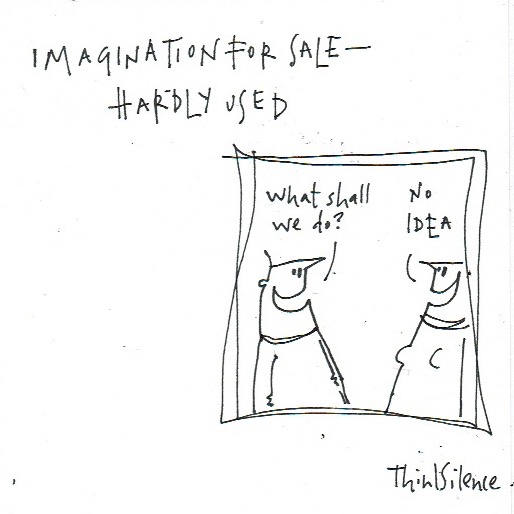
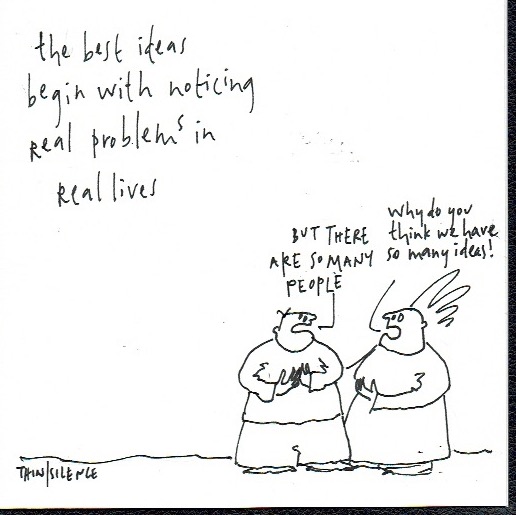
We’re always having ideas.

Our capacity to turn ideas into reality is now creating a glut of products.  What Bernadette refers to as ‘solutions in search of problems.’*

There are also those ideas that respond to ‘problems begging for a solution.’*

As i said, we’re always having ideas.

(*From Bernadette Jiwa’s Hunch.)