new time

‘The mind is never beyond redemption, for no environment can extinguish neorogenesis. […] neorogensis is cellular evidence that we evolved to never stop evolving.’*

‘Even though I’m beyond seventy now, new relationships still astound nee: I’ll meet a new person, and if I can interface with them honestly, trust them, allow them, refuse to categorise or too quickly label them – it will invariably open up inside me new realms of my being that I didn’t know existed until I was in relationship with them.’**

Instead of judging each other, how might it be possible to help one another thrive?

People may choose not to live their lives meaningfully in the same way as you or I define meaningful but at least they could know what humans are capable of – possibilities that are still growing and opening as we push back the borders of our unknowing.  Then it’s their choice.

Has everyone been given the same information about their amazing capacity to develop and thrive?  By their parents, their teachers, their friends, their co-workers and employers, their politicians, by their loving others?  Just to be able to know is to be given a better choice.
When we judge quickly – in seconds and minutes – the possibility of choice for another is diminished.  When we judge slowly – over years and decades and even a lifetime – then the possibility of choice is increased.

In his book Helping, Edgar Schein claims we’re sending out “testing signals” all the time, checking on whether these people we are meeting can be trusted, will they help us, what do they think of us?  When we miss these signals we can unknowingly close down possibilities of new realms of being – a little less information for people to make up their minds and hearts by, less information building up over time.
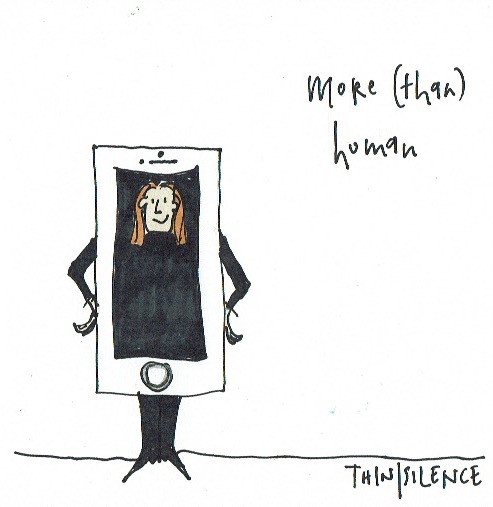
Obversely, when we remain open to one another when we try not to judge, allowing people to enter a new time of possibility.

(*From Jonah Lehrer’s Proust was a Neuroscientist.)
(**From Richard Rohr’s The Divine Dance.)

pax

The Romans forced their peace upon others; they added bread and circus as sweeteners.

Peace comes from within and can only infuse other lives.  It’s harder than we think.   Many of us struggle to be at peace with ourselves, there’s always something we want, something we want to change – so we add our sweeteners.

In Hallelujah Anyway, Anne Lamott imagines herself searching for “that elusive thing” at different stages of her life: getting away from parents, some meaningful work, finding someone special, having  children, getting rid of the children:

‘Most of us try to live in some variation of the Serenity Prayer, in acceptance, courage, and wisdom, but our minds and bodies do not always cooperate.’*

We get caught up on the sweeteners rather than the peace which is to be found in the incomplete and imperfect person we are and being able to give to others out of our brokenness far more than we can imagine.

In Alan Lightman’s fable about creation, the creator Nephew meets the antagonist Belhor who speaks about the little lives on the little planets only existing for their amusement; Nephew retorts:

‘”But surely it has significance for them,” I said.  “Each one of them tries so desperately to find meaning.  In a way, it doesn’t matter what particular meaning each of them finds.  As long as each of the creatures finds something to give a coherence and harmony to the jumble of existence.  Perhaps it might be as simple as a discovery of their own capacities, and a thriving in that discovery.  And even if they are mortal, they are part of things.  They are part of things larger than their universe, whether they know it or not.  Wouldn’t you agree?”**

(*From Anne Lamott’s Hallelujah Anyway.)
(**From Alan Lightman’s Mr g.)

phantasmagorical

Stories, fables, myths, and fantasies – words often used to denote what we do not consider to be real or factual.  A closer look suggests they’re our way for exploring the reality we find ourselves in.

Ursula Le Guin asked her mother the meaning of fantasy. She was told that originally fantasy, or phantasy, derives from the Greek phantasia, meaning, to make visible.  Later, she explains, it came to mean the opposite, a hiding from the real:

‘So the word fantasy remains ambiguous, standing between the false, the foolish, the shallows of the mind, and the mind’s deep, true connection with the real.’*

Le Guin suggests fantasy “displaces” us, moving us into an unfamiliar world, and I wonder whether the rediscovering of story, myth, fable, and fantasy can help us make the moves we need to in a world that is becoming increasingly confusing and concerning – that is, anxious, depressed, bullying, reactive.  (Le Guin reminds her listeners and readers that J. R. Tolkien’s The Lord of the Rings was written in a ten year period from 1937-47.)

These works of our imagination allow us to ask questions of “the way things are” and also to posit possibilities that are more hopeful for both individuals and the communities:

‘They help us to bring our imagination to bear on the world before us, enabling us to form a judgement on what world we live in and where we might be going in it, what we can celebrate, what we must fear.’*

These expressions and articulations of our imagination – including art and poetry – are critical for testing what is (check out Seth Godin’s insightful post on how what is essential becomes surrounded by what is inessential but we give all of it the same value); Richard Rohr here connecting our human maturity with our ability to see:

‘Spiritual maturity is largely a growth in seeing, and full seeing seems to take most of our lifetime, with a huge leap in the final years.’**

Of course, it isn’t always so.  The possibility of seeing more can elude us as we grow older, this difference expressed here in the distinction between the beginner’s mind versus the expert’s mind:

“In the beginner’s mind there are many possibilities but in the expert’s there are few.”^

This seeing of something more beyond what we can measure is also articulated by Roz and Ben Zander in their hopeful The Art of Possibility:

‘[A] universe of possibility stretches beyond the world of measurement to include all worlds: infinite, generative, and abundant.’^^

We are, of course, speaking of the future.  The future cannot be measured as it hasn’t happened – and there’s no such things a the futures – but it can be told in stories with lots of pictures (please).

What fantastic things dare we imagine?

(*From Ursula Le Guin’s Words Are My Matter.)
(**From Richard Rohr’s Falling Upward.)
(^Shunryu Suzuki, quoted in Warren Berger’s A More Beautiful Question.)
(^^From Rosalind and Benjamin Zander’s The Art of Possibility.)

where we came from and where we are going

We get to play with what lies in-between.

‘As we go about our daily business on this small planet, we have little feeling for the bond between us and those distant points of light.  Excepting hydrogen and helium, all the atoms in us and our biosphere were bred somewhere in space, in the nuclear reactions of some now defunct star.’*

Alan Lightman describes how the 6th December 1979 turned out for a number of people in Palo Alto, including theoretical physicist and cosmologist Alan Guth.  At the end of the day:

‘Sometime between eleven and twelve o’clock, sitting at his study desk with only pen and paper, Guth discovered mathematical evidence that, contrary to previous theories, the infant universe ten billion years ago underwent a fantastically rapid expansion, just after which  matter that was to form atoms and galaxies and people came into being.’*

It may have taken ten billion years but now we have a chance to do something that brings meaning to this phenomenon.  We may not have found this.  Perhaps we’re happy enough.  Or, we’re possibly thinking it’s time to move in the direction of something we’ve been thinking about but never acted upon.

Hugh Macleod doodles with some words that feel apposite for such a moment:

‘No one can predict the future.  That doesn’t mean yo can’t feel it. […] We know what we would like to happen**

I then came across this from Chris Guillebeau on what is a quest:

‘A hero sets off in search of something elusive that has the power to change both their life and their world.’^

Before reading Guillebeau’s words, I’d been pondering the story of forty three year old Adam, told by Sherry Turkle.  In his day job Adam supplies technical support for an insurance company and during the weekend cares for an elderly man; Adam is also an aspiring singer songwriter and plays online games:

‘The game of Quake […] makes Adam feel better about who he is in the game than who he is outside it. […] Beyond mastery, games offer the opportunity to perform roles he finds ennobling.  Adam wants to be a generous person, but power is a prerequisite for benevolence.  In life Adam feels he has none.  In games he has a great deal.’^^

The word that catches my attention here is “feels.”  The games of Quake and Civilisation in some ways have shown Adam who he is and what he can do.  The question is, how can he move from imagining to actioning, something the games are a substitute for.

At the end of a dreamwhispering journey I provide questions borrowed from Theory U, the last of nineteen offered in order to frame our story:

What are the next steps over the next three days.

I’ve just been sent someone’s response to this, their next steps – another hero in search of something elusive that has the power to change their life and the world.

This will be different for each of us.   For Alan Guth, it’s was the mathematical evidence for telling the story of the universe.  For me it’s dreamwhispering with people.   How would you articulate yours?  This ‘waking up inside your life, right now, in the present moment’*^

Two final thoughts on this.  One from Richard Rohr and the other from Dan Ariely – who appear to be talking about the same thing:

‘Wisdom happily lives with mystery, doubt, and “unknowing,” and in such living, ironically resolves that very mystery to some degree.  I have never figured out why unknowing becomes another kind of knowing, but it surely seems to be.’^*

‘The lesson here is that a little sweat equity pays us back in meaning – and that is a high return.’⁺

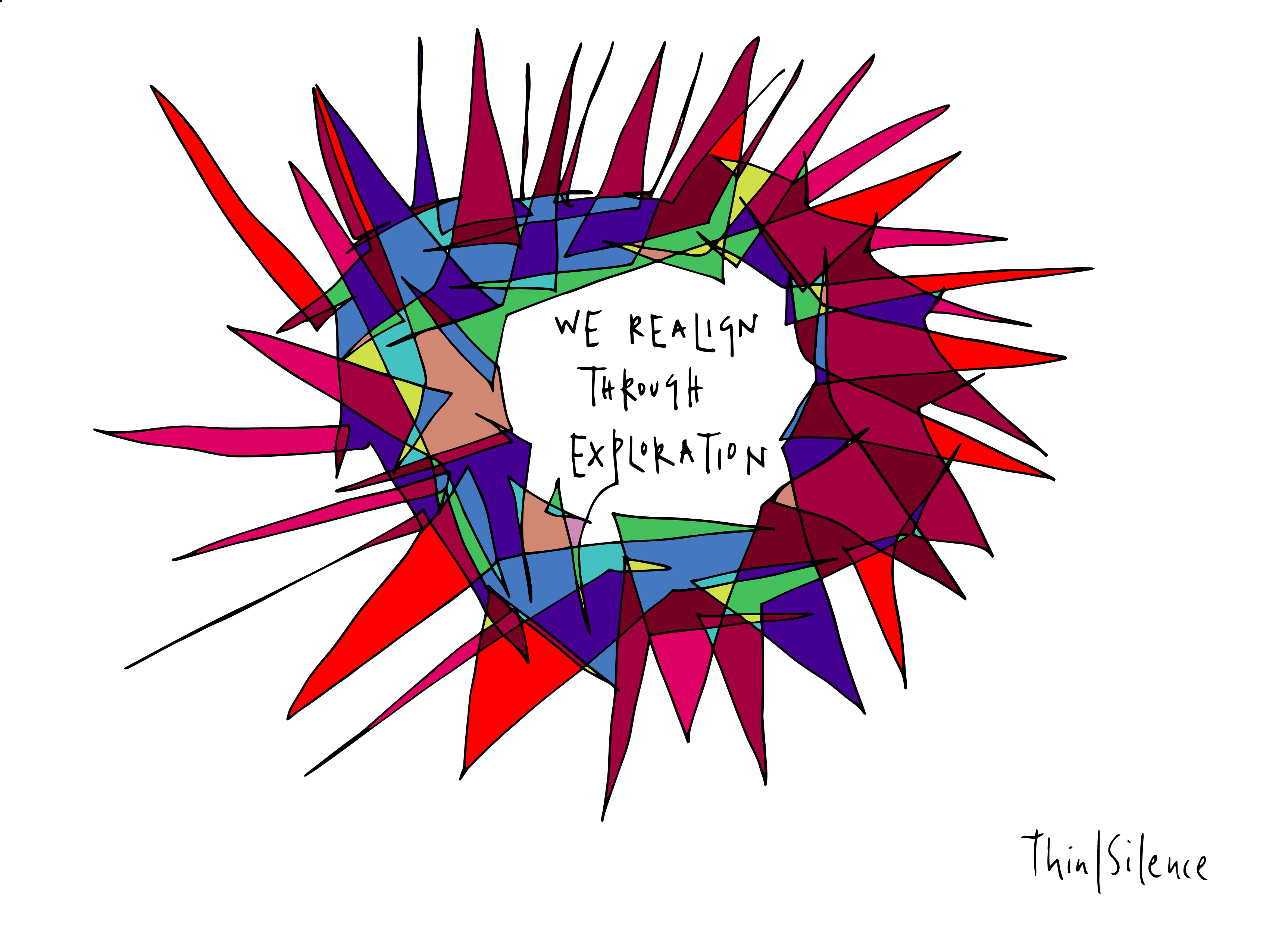
We can feel the future and, when we move towards it, something shifts, we see more, and things happen.

(*From Alan Lightman’s Dance for Two.)
(**From gapingvoid’s The reality of conspiracy theories.)
(^From Chris Guillebeau’s The Happiness of Pursuit.)
(^^From Sherry Turkle’s Alone Together.)
(*^From Richard Rohr’s The Divine Dance.)
(⁺From Dan Ariely’s Payoff.)

meaning?

“Listen to your life.  See it for the fathomless mystery it is.  In the boredom and pain of it, no less than in the excitement and gladness […].”*

In his book The Artisan Soul Erwin McManus argues that we are all artists, our challenge being ‘to be an interpreter of human possibility.’**

At the heart each person’s art there is the thing they notice more than anything else.

What do I notice?  What do you give your attention to?

To speak of human possibility is to be open to more but we find this hard to be open to more.  Dan Ariely points out how open to more is hard because ‘we fall in love with what we already have;’ ‘we focus on what we may lose;’ and, we think others see the world as we do’ – that is, we think our stuff is the most wonderful stuff in the world, only to be shocked to discover no one wants what we’ve created.^

Iris Murdoch suggests something else is happening when we give our attention to something more:

‘I have used the word ‘attention’, which I borrow from Simone Weil, to express the idea of a just and loving gaze directed upon an individual reality.  I believe this to be the characteristic and proper mark of the active moral agent.

[…]

There is no point in talking about ‘moral seeing’ since there is nothing morally to see.  There is no moral vision.’**

Our attention, or noticing more, leads to the development of morality in what is an amoral universe.  I find this notion picked up in Maria Popova’s blog: Existential Therapy From the Universe, quoting writer and film-maker Susan Sontag‘s words:

“To be a moral human being is to pay, be obliged to pay, certain kinds of attention.”^^

This causes me to bring to mind the question Brené Brown finds herself researching with more than a small amount of personal interest:

‘Do you think that, in general, people are doing the best they can?’^*

Opening Brown’s book Rising Strong at the next page I’m die to read, I find this:

‘We don’t compare when we’re feeling good about ourselves; we look for what’s good in others.  When we practice self-compassion, we are compassionate towards others.  Self-righteoousness is just the armour of self-loathing.’^*

I wonder, Is there a correlation to our doing our best and the degree to which we are noticing? 

Noticing Brown’s mention of compassion takes me to Karen Armstrong’s book on compassion and to these words about the Buddha:

‘He had understood that while spite, hatred, envy ingratitude shrink our horizons and limit our creativity, the benevolent emotions had a quite different effect: gratitude, compassion and altruism broaden our perspectives and break down the barricades we erect between ourselves and others in a vain attempt to protect the frightened, greedy, insecure ego.’⁺

Each of us pays attention to something different.  My work is like coaching and mentoring but is different.  Around what we notice, we create our art, the contribution of our lives, not for our own bliss, we discover, but for the bliss of others.

Popova writes:

‘Where poets and scientists converge is the idea that while the universe itself isn’t imbued with meaning, it is in  this self-conscious act of paying attention  that meaning arises.’º

As our opening words from Fredrick Buechner remind us, this may demand nothing more from us then paying attention in the everyday, something captured well by Alan Lightman‘s character Nephew (the creator) in his fable about creation.  Nephew notices a chance meeting in a city of eight million people on the smallest planet of twelve orbiting an ordinary star:

‘I spotted two men passing each other on a crowded walkway.  Complete strangers.  In the eight million beings living in the city, these two had never met before, never chanced to find themselves in the same place at the same time.  A common enough occurrence in a city of millions.  And as these two strangers moved past, they greeted each other, just a simple greeting.  A remark about the sun in the sky.  One of them said something else to the other, they exchanged smiles, and the the moment was gone.  What an extraordinary event!  Two men who had never seen each other before and would not likely see each other again.  But their sincerity and sweetness, their sharing an instant in a fleeting life.  It was almost as if a secret had passed between them.  Was this some kind of love?  I wanted to follow them, to touch them, to tell them of my happiness.  I wanted to whisper to them: “This is it this is it.”‘ºº

What have we noticed today?

Was this some kind of love?

(*Frederick Buechner, quoted in the Northumbria Community‘s Morning Prayer.)
(**From Erwin McManus’ The Artisan Soul.)
(^From Dan Ariely’s Predictably Irrational.)
(^^From Iris Murdoch’s The Sovereignty of Good.)
(*^Susan Sontag, quoted in Maria Popova’s Brain Pickings: Existential Therapy from the Universe.)
(^*From Brené Brown’s Rising Strong.)
(From Karen Armstrong’s Twelve Steps to a Compassionate Life.)
(ºFrom Maria Popova’s Brain Pickings: Existential Therapy from the Universe.)
(ººFrom Alan Lightman’s Mr g.)

beyond teams

On the one hand, Edgar Schein provides us with the possibility of meaningful places of work in which we help bring the very best out of one another:

‘We do not typically think of an effective team as being a group of people who really know how to help each other in the performance of a task, yet that is what good teamwork is – successful reciprocal help.’*

On the other hand, Dan Ariely notices how, at a very early age, we value what we do above what others do.  Then we struggle to understand why others don’t value what we value in the same way:

‘[B]y a very young age, we already care about our ideas and are attached to them.’**

We experience these things as vying with each other but they needn’t.

We can only develop our work so far by ourselves.  Without others, it can become boxed or reduced too soon, whilst with the help and influence and inspiration of others – sometimes directly, sometimes indirectly – greater possibilities open up because ideas and practices are migrating across domains and fields.

What if our places of work could be the best spaces of all for bringing the art we want to bring whilst helping others to bring the best they can bring?

I believe it’s possible to love what others love and value what others do as well as what we do.  What’s happening here is what we value most of all is taking a journey towards another, and what another values is making a journey across borders towards us.

Even more, we not only grow our skills and talents but also our characters; we’re exploring something of what it is to be human.

(*From Edgar Schein’s Helping.)
(**From Dan Ariely’s Payoff.)

tiny triumphs

Seth Godin writes about one year old Leo’s attempts to walk and, pondering his stumbling, concludes:

‘In fact, it’s the way I learned how to do just about everything important.  By doing it.’*

I then came upon these words from Albert Einstein about important things:

“The ideals that we have lighted my way, and time after time have given me new courage to face life cheerfully have been Kindness, Beauty, and Truth.”**

These are the kinds of thing we can never say, Done itGot the hang of it..  There’s no finite or exhaustive list for these, but each of us can stumble into greater kindness, beauty, and truth.

(*From Seth Godin’s A professional stumbler.)
(**From Maria Popova’s Brain Pickings: Albert Einstein on the Interconnectedness of Our Fates and Our mightiest Counterforce Against Injustice.)

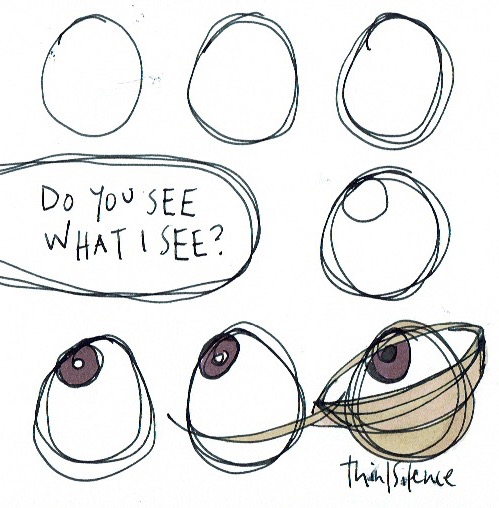
now what do you see?

I don’t see it.

Thank you for sharing what you have noticed with me.

(Thank you, Dan, sharing the things you’ve been seeing.)

To notice what others do not see is to stand in a new land.

Bernadette Jiwa dedicates her latest book Hunch to Seth Godin, ‘who taught me the importance of noticing.’*

Seth Godin has helped a lot of people to see differently, check out his blog from the last day or so.  It’s not about looking for new things but noticing what others don’t see even though they’re looking at the same things.  There is a direct link between seeing differently and dong what others cannot; to be:

‘The only person on earth who could do what you just did.’**

What we notice becomes fuel for the imagination, as Maria Popova writes here:

‘But alongside this necessary fidelity to reality is also the supreme function of the artist’s imagination — the ability to transcend what is and to envision a different, better version of what could be.’**

This is one degree of many thin silences: to stand in a place of seeing and noticing towards contributing some richness, some joy, some wonder.

Popova has been exploring the place in which the pressure of reality meets the power of imagination, this through the writings of Wallace Stevens.  When we notice more and bring our imagination to bear upon it then something more phenomenal happens.  Wallace Stevens describes it so:

“The imagination gives to everything that is touches a peculiarity, and it seems to me that the peculiarity of the imagination is nobility, of which there are many degrees. […] I mean that nobility which is our spiritual height and depth … But there it is.’^^

None of this is about having some grand idea of ourselves or that we deserve more than others when it comes to being heard or believed or followed.  We enter into the silence of a new perspective through humility (true sense of Self) and gratitude (having more than enough) and faithfulness (finding the habits and means of putting things into practice).

Reality isn’t as invulnerable as it appears to be.  Noticing and imagination provide us with a possibility for telling a better story.

(*From Bernadette Jiwa’s Hunch.)
(**From Seth Godin’s Whatcha Gonna Do With That Duck?)
(^From Maria Popova’s Brain Pickings: Wallace Stevens on Reality, Creativity, and Our Greatest Self-Protection from the Pressure of the News.)
(^^Wallac Stevens, quoted in Maria Popova’s Brain Pickings: Wallace Stevens on Reality, Creativity, and Our Greatest Self-Protection from the Pressure of the News.)


one thing leads to another

For now, this is the thing.

“If people would but do what they have to do, they would always find themselves ready for what came next.”*

In his book The Little Book of Hygge Meik Wiking says of his work, ‘I study happiness.  Each day I try to answer one question: why are some people happier than others?’**  Wiking has been connecting gratitude and meaning, noticing how these produce happiness.

‘More than anything, savouring is about gratitude. […] It is about keeping in mind that you live right now, allowing yourself to focus on the moment and appreciate the life you lead, to focus on all that you do have, and not what you don’t.  Clichés?  Totally.’**

Gratitude is about noticing what is, getting close up and immersing ourselves in the moment.  Hugh Macleod writes about being like water, taking the shape of whatever changes come:

‘Making yourself the flexible aspect doesn’t mean you’re giving up – it means you’re leaning in.’^

I’ve been contemplating Wallace Stevens’ thoughts on how the artist brings their imagination to the face the “pressure of reality.”  He says this of adaptation:

[The artist] must be able to abstract himself and also to abstract reality, which he does by placing it in his imagination… It imperative for him to make a choice, to come to a decision regarding the imagination and reality; and he will find that it is not a choice of one over the other and not a decision that divides them, but something subtler, a recognition that here, too, as between these poles, the universal interdependence exists, and hence his choice and his decision must be that they are equal and inseparable.^^

This artist – and we are all artists in some way or other – doesn’t hide from the pressure of reality but seeks to be present to it in such a way as to imagine a new possibility.  There is gratefulness here, too.  Erwin McManus proffers:

‘No truth, no matter how profound, will find its way into a heart that is absent of gratitude.’*^

Gratitude provides us with a sound, leak-free container in which to receive and hold on to more of this moment, making it possible to move into the new moment in a more complete way.

Erich Fromm reminds us, though,  none of us are completely “leak-free,” we’re all broken:

‘There is nothing in the patient that is not in me.’^*

We heal a little more as become present to the moment through all we are and have, making it possible to be present to the next moment as more and with more.

(*George MacDonald, quoted in the Northumbria Community’s Morning Prayer.)
(**From Meik Wiking’s The Little Book of Hygge.)
(^From gapingvoid’s blog: Fluid is the New Flexible.)
(^^From Maria Popova’s Brain Pickings: Wallace Stevens on Reality, Creativity, and Our Greatest Self-Protection from the Pressure of the News.)
(*^From Erwin McManus’ Uprising.)
(^*From Erich Fromm’s The Art of Listening.)

this i can do

‘If you need a good idea, and you need it now, sit down with a pen and paper and make it happen.’*

This isn’t the way imagination and creativity is popularly thought of.  Surely, we say, it’s impossible to conjure up inspiration whenever we want to.  Hugh Macleod, whose words these are, continues:

‘Creativity is the practice of keeping an open mind – and the thing about maintaining a practice is, well, you need to keep practising.’*

Imagination is an ability we can develop with practice but there’s more to it than meets the eye.

I happened to follow these words with thoughts from Wallace Stevens on the pressure of reality and the power of imagination.  For Stevens reality and imagination are equally important, they are poles of possibility.  Imagination then is not some way of hiding from reality but a way of resisting it, towards bringing something new into being.  Stevens is writing in the critical times following the Second World War but also contemplates the more everyday pressures:

“The pressure of reality may, of course, be less than the general pressure that I have described.  It exists for individuals according to the circumstances of their lives or according to the characteristics of their minds.  To sum it up, the pressure of reality is, I think, the determining factor in the artistic character of an era and, as well, the determining factor in the artistic character of an individual.  The resistance to this pressure or its evasion in the case of individuals of extraordinary imagination cancels the pressure so far as those individuals are concerned.”**

When we’re sitting over the blank piece of paper we’re facing the pressure of reality.  And when we allow our imagination to hover over the paper we are resisting.  Indeed, we need something to resist, the last thing we want is easy, as Ryan Holliday reminds us when he writes about what the obstacle provides us with:

‘The path of least resistance is a poor teacher.’^

Happening then to read Rebecca Solnit’s Wanderlust, I find Søren Kierkgaard saying something that connects with this:

“Strangely enough, my imagination works best when I am sitting alone in a large assemblage, when the tumult and noise require a substratum of will if the imagination is to hold on to its object, without this environment it bleeds to death in the exhausting embrace of an indefinite idea.'”^^

Kierkegaard is identifying his need to feel some pressure of reality for his imagination to work towards an idea taking shape.

For a moment there’s a piece of paper and we’re holding the pen.  In the moment of silence we feel the resistance but then something emerges.

Everything we are and have comes into our imagining.  There is the Self we know, the talents we possess, the knowledge we have gathered, the passion we possess.  When these begin to flow then the paper yields to the many things we want to write and draw upon it.  (I’ve intimated how these thoughts followed on from one to another simply in the things I happened to read this morning; funny thing, that.)

We must trust the flow, towards some new thing:

‘”Flow” is the way people describe their state of mind webern consciousness is harmoniously ordered, and they want to pursue whatever they are doing for its own sake.’*^

I have hinted that

(*From gapingvoid’s Chase Down Your Dreams.)
(**Wallace Stevens, quoted in Maria Popova’s Brain Pickings: Wallace Stevens on Reality, Creativity, and Our Greatest Self-Protection from the Pressure of the News.)
(^From Ryan Holliday’s The Obstacle is the Way.)
(^^Søren Kierkegaard, quoted in Rebecca Solnit’s Wanderlust.)
(*^From Mihaly Csikszentmihalyi’s Flow.)