A measured life

“I would like to go around and have each one of us, one at a time, and without questions or interruptions, tell us how you individually would like to be measured and what he concept of measurement means to you.”*
(Ed Schein)

Listening for passion and commitment is the practice of the silent conductor when the players are sitting in the orchestra, in the managementment team, or on the nursery floor.**
(Roz and Ben Zander)

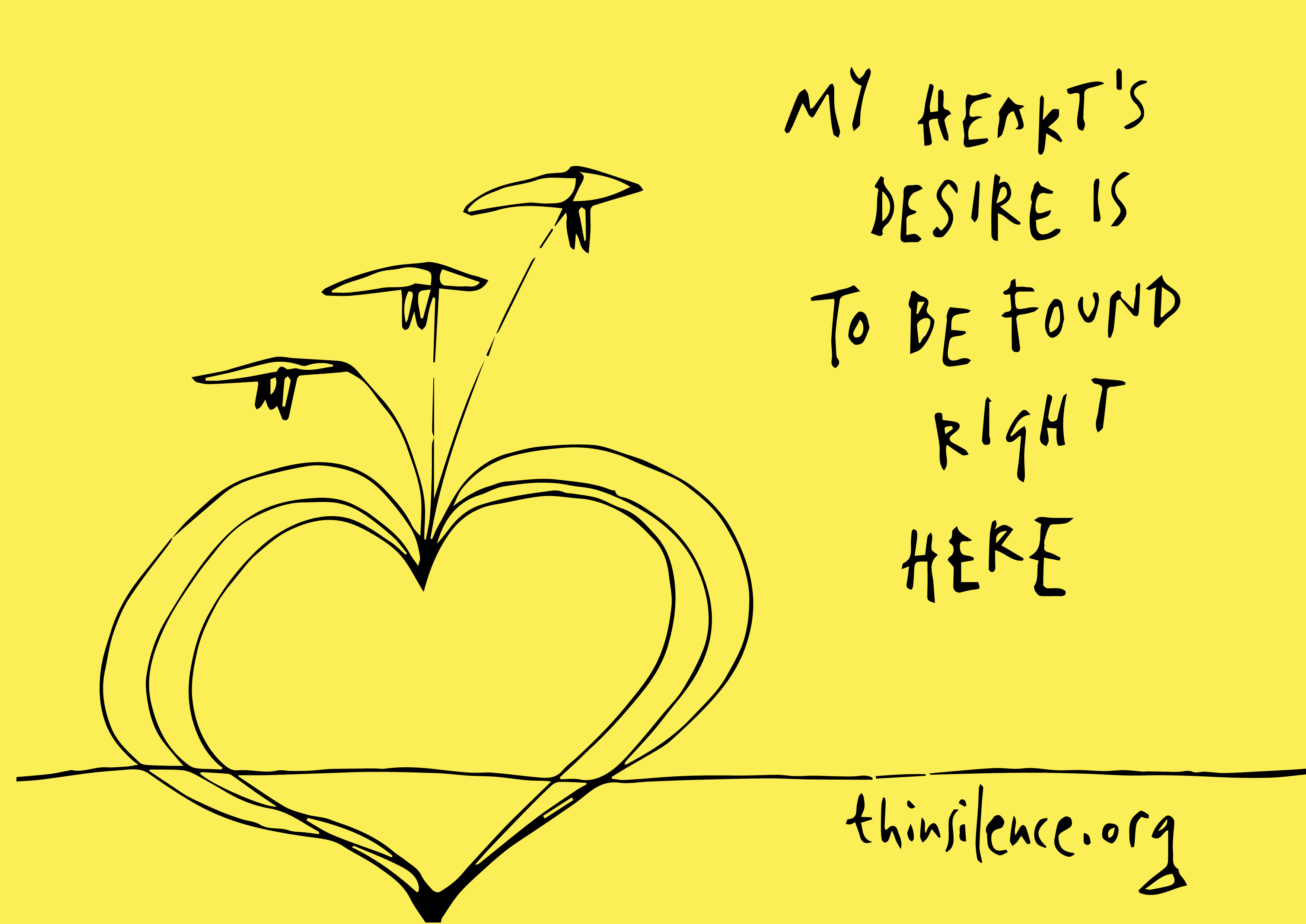
We say, there’s no place like home.

To be at home where we are and with what we do is to be valued above all else.  To be at home in our own bodies, our own lives, is what we ultimately seek to be measured by.

In his blessing To Learn From Animal Being, John O’Donohue reflects on how other species live in our world and how this can be harder for us:

‘Stranded between time
Gone and time emerging,
We manage seldom
To be where we are:
Whereas they are always
Looking out from
The here and now.’^

Human consciousness leads us to many different things; we cannot tell each other what this must be, only help each other find it.

‘If [the teacher] is indeed wise he does not bid you enter the house of his wisdom, but rather leads you to the threshold of your own mind.’^^

So we each must find who we are and what it is we must do, and that to be our measurement.  To know this measurement is to find the one universal measurement of love:

‘Love is not something you do; love is someone you are.’*^

I close with more of O’Donohue’s blessing for each of us.

‘May we learn to walk
Upon the earth
With all their confidence
And clear-eyed Stillness
So that our minds
might be baptised
In the name of the wind
And the light and the rain.’^

(*From Edgar Schein’s Humble Consulting.)
(**From Rosamund and Benjamin Zander’s The Art of Possibility.)
(^From John O’Donohue’s To Bless the Space Between Us: To Learn From Animal Being.)
(^^From Khalil Gibran’s The Prophet.)
(*^From Richard Rohr’s The Divine Dance.)

You have what it takes (and I never knew)

And our goal is nothing less than a complete description of the universe we live in.*
(Stephen Hawking)

Talking to people I’ve never met before is my adventure.  It’s my joy, my rebellion, my liberation.  It’s how I live.  Here’s why.  When you talk with strangers, you make beautiful and surprising interruptions in the expected narrative of your daily life.  You shift perspective.  You form momentary meaningful connections.  You find questions whose answers you thought you knew.  You reject the ideas that make us so suspicious of each other.**
(Kio Stark)

Everyone knows something we don’t know.

Perhaps they don’t even know this about themselves; perhaps only in sharing what they know with another will they discover what they have to bring.

We miss out on the wonder of discovering what one another knows, often because we measure it wrongly:

‘”Offer me something I’m passionate about and I’ll show up with all my energy, effort and care.”  That’s a great way to hide.  Because nothing is good enough to earn your passion before you do it.’^

Or before we hear it.  Allowing ourselves the time and space to listen to the stories of others leads us towards change:

“Narratives that cause us to pay attention and also involve us emotionally are the stories that move us to action.’^^

It’s only in being attentive to another’s story that we know what they have to bring.  It is only in hearing our own story, which may emerge in the telling to someone else, that we find we have something to offer:

‘There’s something you haven’t said, something you haven’t done, some light that needs to be switched on, and it needs to be taken care of.  Now.’*^

Erich Fromm caught my eye when he wrote:

‘Equality today means “sameness” rather than “oneness.”^*

I’m connecting this with Seth Godin’s observation, above.  We want people to be the same as us rather than to discover a dynamic oneness in which each bring their unique knowledge, imagination and ingenuity.

(*From Stephen Hawking’s A Brief History of Time.)
(**From Kio Stark’s When Strangers Meet.)
(^From Seth Godin’s blog: Work before passion.)
(^^Paul Zak, quoted in The Story of Telling: The 5 C’s of Story Structure.)
(*^From gapingvoid’s blog: How to be creative.)
(^*From Erich Fromm’s The Art of Loving.)

Recreating the creation


Listen to your life.
See it for the fathomless mystery that it is.
In the boredom and pain of it
no less than in the excitement and gladness:
touch, taste, smell your way to the holy and hidden heart of it
because in the last analysis all moments are key moments,
and life itself is grace.*
(Frederick Buechner)

“Mandala” is the Sanskrit word for “circle,” but a circle that is coordinated or symbolically designed so that it has the meaning of cosmic order.  When composing mandalas, you are trying to coordinate your personal circle with the universal circle. […] Making a manual is a discipline for pulling all those scattered aspects of your life together, for finding a centre  and ordering yourself to it.  You try to coordinate your circle with the universal circle.**
(Joseph Campbell)

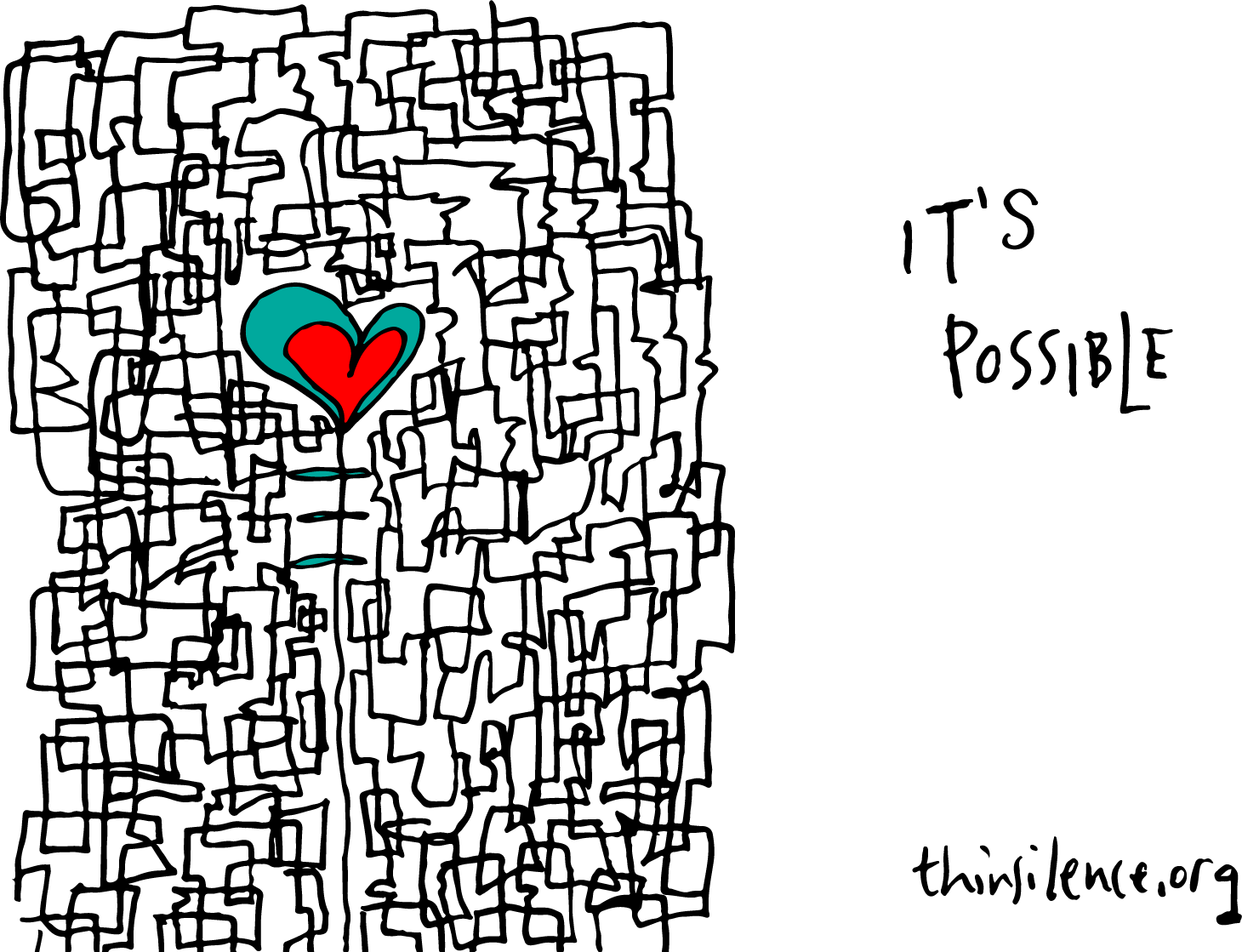
We live in a time of flux, having moved away from ancient paths that have guided our ancestor’s lives and only beginning to find new ones.  Add to this the speed and complexity of change that previous generations could not have imagined and we can be left feeling disconnected from ourselves, others, the world and something larger.

I don’t see these paths, what have been traditionally labeled spiritual disciplines, as linear but as patterns.  Some words from Ed Schein on an industrial accident ring true for our personal lives:

‘The problem is that in a [linear] search for a root cause, the organisation is likely to overlook that the situation just before the accident was a complex, messy one and there generally is no root cause, only an unfortunate combination of circumstances.’^

With such complexity and randomness at play, we require patterns of thinking, feeling and doing that allow us to be more than a force to meet these – as Frederick Buechner intimates in our opening words for today.  Patterns provide us with adaptive advantage.

We need to understand how those who have gone before us were not expressing something we don’t need now, but, in their own ways expressing something we all need as humans – perhaps more so than ever.  Bruce Chatwin shares about the the Aboriginal Australians’ ancient longlines:

‘[Arkady Volchok] went on to explain how each totemic ancestor, while travelling through the country, was thought to have scattered a trail of words and musical notes along the line of his his footprints, and how these Dreaming-tracks lay over the land as “ways” of communication between the most far-flung tribes. “A song,” he said, was both map and direction-finder.  Providing you knew the song, you could always find your way across country.’^^

Country … life … times … complexity.  There are ways of finding our way.  Those who have gone before have left us clues to help us.  Chatwin continues:

‘Aboriginals could not believe the country existed until they could see and sing it – just as in the Dreamtime, the country had not existed until the Ancestors sang it.’^^

Which feels like connecting with the universal circle, something each generation must be creative in doing, and which is helpful for every person up to a point, but when complemented by an individual’s personal “recreating the creation,” this becomes even more powerful.

(*Frederick Buechner, quoted in the Northumbria Community‘s Morning Prayer.)
(**From Jospeh Campbell and Bill Moyers’ The Power of Myth.)
(^From Edgar Schein’s Humble Consulting.)
(^^Arkady Volchok, quoted in Bruce Chatwin’s The Songlines.)

This is what I see and this is what I see

Nobody can predict the future.  That doesn’t mean you can’t feel it.*
(Hugh Macleod)

But when looking at the [humming] bird, suspended in space, I don’t think numbers or gravity.  I just watch and am amazed.’**
(Alan Lightman)

Alan Lightman the scientist has iterated the various numbers relating to how fast a humming bird’s wings move, how fast their heart must beat, but when he observes this tiny creature, he sees something else – something wonderful, amazing.

It is important to notice more but hidden within this information there are also signals.

Those who notice the signals becomes guides to us.  When we attune to the signals, we become guides to others.

(*From gaping void’s blog: How to stay calm in the face of uncertainty.)
(**From Alan Lightman’s Searching For Stars on an Island in Maine.)

Who’s not here?

“Who’s not here?” might be the most important unasked question.*
(Seth Godin)

Every day, we have access to vast amounts of information that we unconsciously collect. […] If we train ourselves to become more observant, if we pay attention – to our surroundings, to other people, to what’s happening that shouldn’t be, or what’s not happening that should be – our most mundane experiences can fuel our boldest and most brilliant ideas.**
(Bernadette Jiwa)

Some of the most important life-changing and planet-changing meetings of people have never occurred.  Right now, there are people who have contributions to make with others that will never emerge because they will not meet each other.

Of course, there are millions upon millions of such possible encounters waiting to happen, or not.  Life seems to be most dynamic in these accidental encounters.  One of the good things about the internet is that it makes more of them possible.

Church is now possible everywhere.

(*From Seth Godin’s blog: Who’s in the room?)
(**From Bernadette Jiwa’s Hunch.)

Never say never

The goal isn’t just to deliver the information – it’s to capture the imagination.*
(Bernadette Jiwa)

The people who keep going when something threatens to stop them are those who have bigger stories to connect to beyond the information of their present predicament, enabling them to bring their imagination to bear on the resent reality.

These stories are not fixed but unfolding, they not only involve flourishing for one’s self but for others too.  In this, they’re infinite in nature, including others for as long as possible, and, when the rules become recalcitrant, finding better ones.

(*From The Story of Telling: What the Best Communicators Do.)

It’s tempting

Thank you for allowing me to be a human being.*
(St Clare of Assisi)

One cannot know the rivers till one has seen them at their sources; but this journey to the sources must not be taken lightly.**
(Nan Shepherd)

Nan Shepherd was describing actual rivers in the Cairngorms but I snatch her words for human lives, how we must go to the sources of our lives to understand them, to be the people we can be and want to be.

These journeys are hard; there are many temptations to face on the way.

Temptations not to begin to look more closely, or to give up when it becomes demanding, to switch the journey for an easier one, to end up thinking too much of ourselves, or too little.

To make these journeys, though, is what it is to be human.

(*St Clare of Assisi, quoted in Richard Rohr’s The Divine Dance.)
(**From Nan Shepherd’s The Living Mountain.)

Help me to see (people who see in the dark)

At least it feels like this.  People who seem to be seeing clearly in what appears as darkness to us.

In our universe, humans are only able to use around 5% of existing light without technology.

It’s a reminder for me that in the human family, we need each other to be able to see more than 5% of what there is to see.

What this also means is that we can see what others can’t.

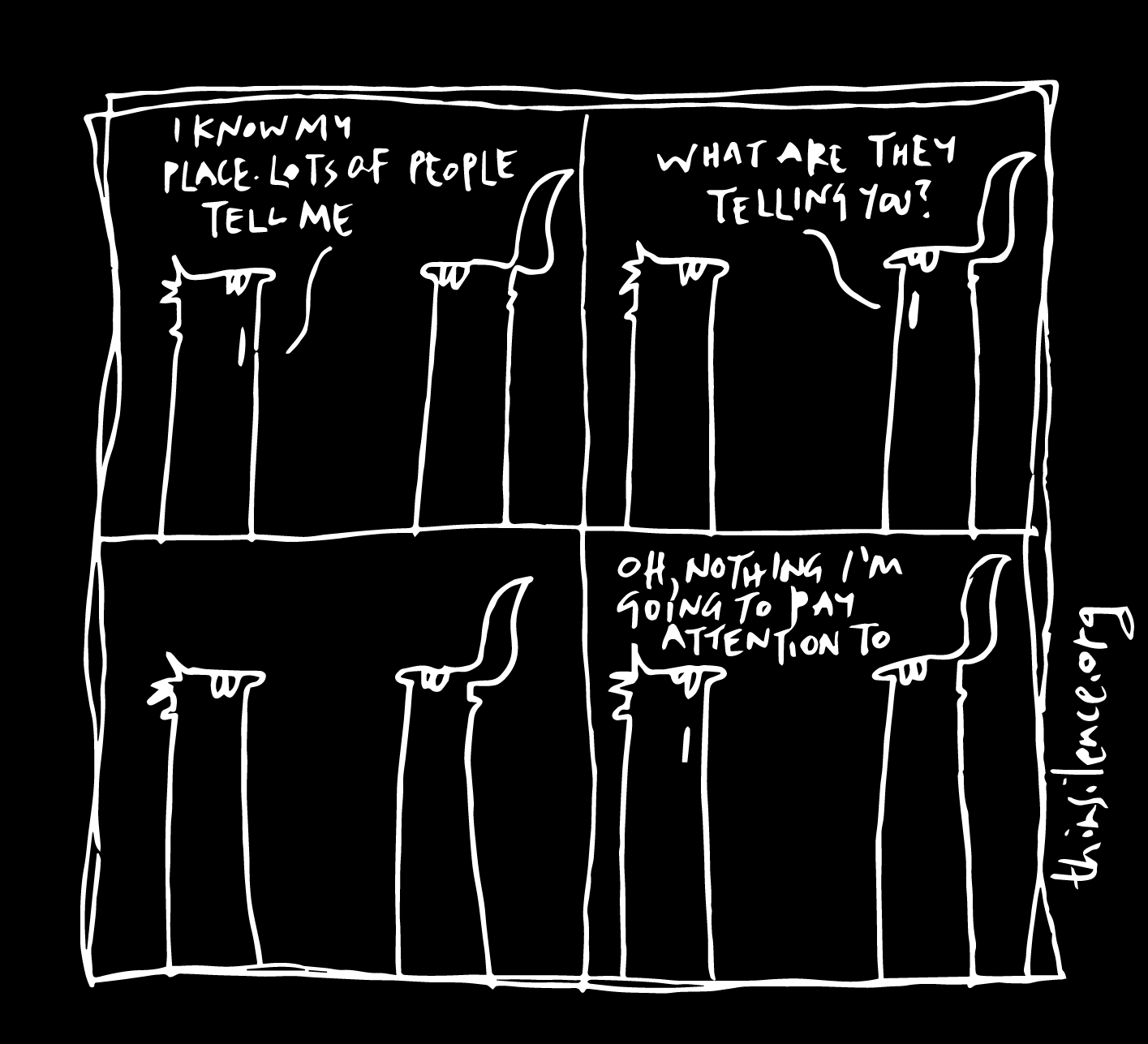
Though this can can feel so mundane and ordinary that we underestimate how powerful our seeing is, thinking everyone must be able to see what we see.

Perhaps they can’t.

Perhaps the thing to do is to hone what you can see with what others see.  Those who do this chose a powerful way:

‘They see with their mind’s eye a different future.’*

( *From Seth Godin’s blog: Make an impossible dream a future reality.)


Energy for what?

We sell ourselves short when we argue that there’s something magical about creative work, something that can only happen if we’re born to do it.*
(Seth Godin)

Energy produces talent.  Energy to keep going, wrapping hours of practice around some passionate curiosity.  There’s nothing magical about it, but it can be the closest thing to alchemy you can know, the thing that will only exist if you make it so.

There’ll always be energy to do this, if you want it.

(*From Seth Godin’s blog: Born to paint?)