Which comes first: interested or interesting?

Interest is an all-pervading attitude and form of relatedness to the world, and one might define it in a very broad sense as the interest of the living person in all that is alive and grows. Even when this sphere of interest in one person seems to be small, if the interest is genuine, there will be no difficulty in arousing his interest in other fields, simply because he is an interested person.*
(Erich Fromm)

Some interesting things about interesting:

An interesting path provides us with autonomy, mastery and a purpose greater than ourselves.

Interest is both an attitude and skill we can work on.

It grows and grows beyond its original borders.

This means that we don’t have to wait to find a particularly interesting path, but can take our interest into any path.

Interested people make for interesting people; they have things we want to hear and see.

*From Erich Fromm’s The Revolution of Hope.

Activeness and creativity

“Interest” comes from the Latin interest, that is “to be in-between.” If I am interested, I must transcend my ego, be open to the world,,,, and jump into it: interest is based on activeness.*
(Erich Fromm)

Most children think they’re highly creative, most adults think they’re not. This is a bigger issue than it may seem. […] A culture of creativity has to involve everybody, not just a select few.**
(Ken Robinson)

Interest and creativity and activeness walk together.^

Interest in concern for the other, creativity contributing fulfilment, and activeness ensuring we turn up and take our turn.

To move to give rather than wait to receive.

It’s not about where you come on a list of creativity, but about exploring the creativity that looks like you.

*From Erich Fromm’s The Revolution of Hope;
**From Ken Robinson’s Out of Our Minds;
^Activeness is Erich Fromm’s word for the opposite to passiveness.

Bring some truth and don’t forget the beauty

I think that one may contribute (ever so slightly) to the beauty of things by making one’s own life and environment beautiful, so far as one’s power reaches. This includes moral beauty, one of the qualities of humanity, though it seems not to appear elsewhere in the universe.*
(Robinson Jeffers)

Graciousness is a quality of mind that do not separate truth and beauty.**
(John O’Donohue)

I’ve heard this said a few times, though admittedly not to me:

Don’t just stand around looking beautiful, make yourself useful.

As if the two things are unconnected.

John O’Donohue proffers:

If we were to describe our life strictly in terms its factual truth, most of its interesting, complex and surprising dimensions would remain unmentioned.**

We each have the capability to make the world better with both truth and beauty.

One of the ways we can draw this out is to understand and develop our lives as stories.

Robert McKee may have written the following words to storywriters, but we are all storywriters:

Life on its own, without art to shape it, leaves you in confusion and chaos, but well-told stories have the power to harmonise what you know with what you feel. Story is a vehicle that carries us on our search for reality, our best effort to make sense out of the anarchy of existence.

It’s why the end of a dreamwhispering journey is not a list of personal facts, but a story.

*Robinson Jeffers, quoted in Maria Popova’s Brain Pickings: Robinson Jeffers on Moral Beauty, the Interconnectedness of the Universe, and the Key to Peace of Mind;
**From John O’Donohue’s Divine Beauty;
^From Robert McKee‘s newsletter: The Power of Story.

Having and being

In this game, we only get one choice. Once we are born we are players. The only choice we get is if we want to play with a finite mindset or an infinite mindset. […] And like all infinite games, the goal is not to win, it it to perpetuate the game.*
(Simon Sinek)

As I was reading this morning, I came across two sources writing about having.

Here is what they were writing, first of all from Paul Gilbert and then from Erich Fromm:

The drive for efficiency is actually making our live uninhabitable. So the business model of life will create have and have-nots and have-lots and will keep anxiety high as we try to maintain a “competitive edge.”**

The ego, static and unmoved, related to the world in terms of having objects, while the self is related to the world in the process of participation. […] He can devote his life to hoarding or to producing, to loving or hating, to being or having, etc.^

Such alignments are always interesting to explore:

“Interest” comes from the Latin interest, that is, “to be in-between.” I am interested I must transcend my ego, be open to the world and jump into it: interest is based on activeness.^

Interesting because these also align with what Simon Sinek is trying to encourage us to see life as being, namely an infinite game and, therefore, to choose the right mindset.

The finite mindset wants to win, to have, yet we have so much more than we know:

It is incredible how blindness and habit have dulled our minds. We live in the midst of abundance and feel like paupers. Our lonely emptiness seems to be the result of our desire to turn everything into product.^^

We receive not in order to keep to ourselves but to pass on to others.

We might, then, understand Fromm’s participation to be really about being held within something rather than trying to hold that something within us.

There are so many universes to be explored.

*From Simon Sinek’s The Infinite Game;
**From Paul Gilbert’s The Compassionate Mind;
^From Erich Fromm’s The Revolution of Hope;
From John O’Donohue’s Divine Beauty.

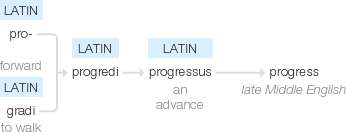
Are we making progress?

Origin

Establishing your identity as someone who is not static, open to change and eager for better makes it far easier to engage in a world where some would prefer us to do precisely the opposite.*
(Seth Godin)

Of all human abilities, open to the other must be one of the greatest of all?

Compassion allows the other inside of us:

All knowledge of another person is real knowledge only if it is based on my experiencing within myself that which he experiences. If this is not the case and the person remains an object, I may know a lot about him but I do not know him.**

John O’Donohue understands this to be an awakening:

To know a thing is to awaken to its depth, complexity and presence.^

If I stay still for too long, I will eventually fall asleep. I need to keep moving; O’Donohue continues:

We turn the mystery and strangeness of the world into our private territory. We make a home out of our world. Life becomes predictable and we function automatically within our frames: routes to work, colleagues, friends, patterns of thinking and feeling, the faces of family, etc.^

I need to move from here to there.

Thich Nhat Hanh offers four mantras to enable this journey into the life of another, or their life into ours:

I am here for you.
I know you are there, and I am so happy.
I know you are suffering. That is why I am here for you.
I am suffering, please help.^^

*From Seth Godin’s blog: Identity is often used against us;
**From Erich Fromm’s The Revolution of Hope;
^From John O’Donohue’s Divine Beauty;
^^Thich Nhat Hanh, quoted in Maria Popova’s Brain Pickings: The Four Buddhist Mantras for Turning Fear Into Love.

Here to learn

Because there is no predefined finish, you cannot think in terms of ‘how many miles do I have left before this thing is all over’, so in fact, I found it very easy mentally. I just had to think about the next loop. The next loop, always the next loop, it’s very easy thinking. You’re never overwhelmed by what you have left to run, because you simply don’t know what you have left to run.*
(Austin Kleon)

We notice.

We are curious.

We investigate.

We learn.

We repeat

*From Austin Kleon’s Keep Going.)

Mission difficult, not impossible

Intentional change is emotionally rigorous – it doesn’t exactly feel good and can even be shockingly painful. If you’re unwilling to put yourself through emotional experiences, shift your perspectives, and make purposeful changes to your behaviour and environment, then don’t expect huge changes (at least in the sort run).*
(Ben Hardy)

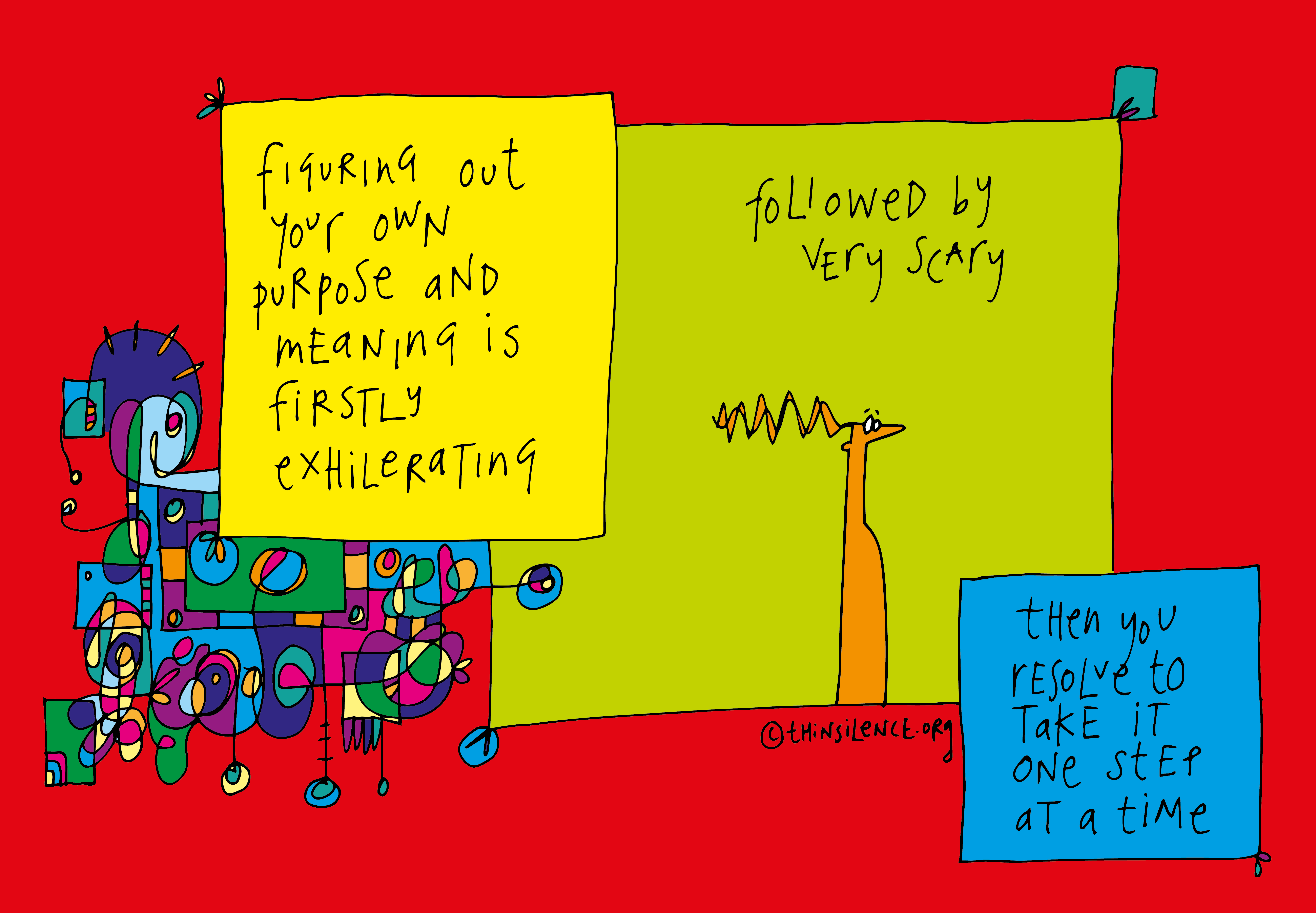
First of all there’s the idea and excitement.

This is followed by the realisation that this isn’t going to be easy.

So we need to figure out a plan to make the idea reality.

It’s not impossible.

It’s just difficult.

But then the worthwhile things in life always are.

*From Benjamin Hardy’s Personality Isn’t Permanent.

Into the wild places

Walt Disney’s childhood would become a hard place as his father’s attempts to make a living failed.

He would find refuge in drawing and grew a determination to use his art and imagination to fuel a cause.

He would make it possible for others to escape the pressures of their circumstances.

When his brother Roy convinced Walt to take their company public, he increasingly felt his original purpose was being lost as the culture of the company changed and animation was being lost to live-action movies.

So he left and started over.

But his new stories wouldn’t be movies but a never-ending one captured in a theme park:

Disneyland will never be finished. It’s something we can keep developing and adding to. […] I’ve always wanted to work on something alive, something that keeps growing.*

Simon Sinek refers to this as existential flexibility.

Existential because it’s uncertain and unknown, beyond present knowledge and experience:

Existential flexibility is the capacity to initiate an extreme disruption to a business model or strategic course in order to more effectively advance a just cause.**

Whilst Sinek is thinking of business, I’m thinking of a person’s personal story.

When we feel ourselves to be moving along a trajectory towards an uninspiring future, we need to create an extreme disruption.

Take a different look at things. Head south instead of east.

Reconnect with values. Assess talents. Listen to the whispers from our lives.

Create a new story.

*Walt Disney, quoted in Simon Sinek’s The Infinite Game;
**From Simon Sinek’s The Infinite Game.

What shall we play?

In nature, we never repeat the same motion; in captivity (office, gym, commute, sports) life is just repetitive – stress injury. No randomness.*
(Nassim Taleb)

I’ll frame this weakness [of modern times being ill-equipped to cooperate] in away which may seem initially odd: Modern society is ‘de-skilling’ people in practising cooperation. […] We are losing the sills of cooperation needed to make a complex society.**
(Richard Sennett)

I could play your game.

Or you could play mine.

Or we could create a new game together.

Just a thought.

A great thought is a sense-spirit object. It takes on a life of its own.^

*From Nassim Taleb’s The Bed of Procrustes;
**From Richard Sennett’s Together;
^From John O’Donohue’s Divine Beauty.

One beautiful idea

Often, without knowing it, we are waiting for a new idea to come and cut us free from our entanglement. When the idea is true and the space is ready for it, the idea overtakes everything*
(John O’Donohue)

Secret #2 is more important: Generosity.  It is much easier and more effective to come up with good ideas for someone else, much easier to bring a posture of insight and care on behalf of someone else.**
(Seth Godin)

We will have many good ideas in our lifetimes, some may be outstanding, others may not be be for us but for someone else.

Most of all, we hope that one will be transcendent, defining who we can be and what we can do.

It will most likely be something that benefits others, as Seth Godin puts his finger on, above.

John O’Donohue offers five transcendentals that make it possible for a thought to appear as something tangible in our world, claiming:

If the One, the True, Being, the Good and the Beautiful were to vanish, the thought in the mind would have not pathway out to the world.*

Here are five means of identifying that one transcending idea that we most want to give expression to whilst we draw breath, and also keeping us on track:

Being is the deepest reality, the substance of our world and all the things in it; the opposite would be Nothingness, the things that are not.*

Does my idea connect with the reality of how things are in the world: my deepest joy with the world’s greatest need, the power of imagination setting the pressure of reality, as Wallace Stevens puts it?

The One claims that all things are somehow bound together in an all embracing unity: despite all the differences in us, around us and within us, everything ultimately holds together as one; chaos does not have the final world.*

Is it inclusive, embracing and speaking to others, the world and to ourselves?

The Truth claims that reality is true and our experience is real and our actions endeavour to come into alignment with the truth.*

In our openness of mind and discovery of more truth, is our idea threatened or able to flourish?

The Good suggests that in practising goodness we participate in the soul of the world.*

Are we bringing more goodness into a world that holds the good to be one of the most wonderful things we can do for one another?

Beauty brings warmth, elegance and grandeur. Something in our should longs deeply for that graciousness and delight.*

More than being grey and functional, does the idea hold Being, the One, the Truth and Goodness in a way that is also Beautiful, awakening depth, complexity and presence?

*From John O’Donohue’s Divine Beauty;
**From Seth Godin’s blog: The two simple secrets to good ideas.