Just playing at being different

‘[W]here a connoisseur sees the differences, a novice sees the similarities.  Where a connoisseur can discern subtle shades of distinction based on nuance asymmetries, a novice lacks the necessary filters to canvas, to organise, to sift an assortment in a meaningful way.  Where a connoisseur can navigate a category with effortless intuition, a novice will struggle to find beginning, middle, or end.’*
(Youngme Moon)

The guide is one who has gone before.  Many times under varying conditions.  They have walked the path in foul weather and fine.  They’ve had to face the asymmetry of challenge whether ready or not.  Donald Miller does not underestimate the value of the hero when he writes about the guide:

‘The strongest character in the story isn’t the hero, it’s the guide.  Yoda.’**

We cannot be Yoda.  Only Yoda can be Yoda.  We can, though, be a guide who looks like us – a good guide knows this.  Ursula Le Guin found herself writing her novels as a man:

‘Do I know how to write in my own skin, my own clothes?  Well no, I didn’t know how.  It took me a while to learn.  And it was other women who taught me.’^

What Youngme Moon describes in today’s opening quote is described by Richard Sennett in Erin O’Connor’s story of learning how to blow a Barolo goblet.  In this context, she is an apprentice glass-blower with someone mentoring and coaching her – apprentice is another term we might use for the hero.  What O’Connor is learning is the coordination of hand, eye and brain, being totally absorbed in what is being produced:

‘We are now absorbed in something, no longer self-aware, even of our bodily self.  We have become the thing on which we are working.’^^

The journey from apprentice to mentor takes tens of thousands of hours of sheer hard graft that puts off so many others and leaves us to be different:

‘When you commit you deepen presence.  Though your choice narrows the range of possibilities now open to you, it increases the intensity of chosen possibilities.

[…]

You are the only one who can decide this and take up the lifetime of work it demands.’*^

The true guide is never bored – knowing they will never be complete, that anything could happen ahead, that they can initiate many things they must be alert to:

‘We are alert rather than bored because we have developed the skill of anticipation.’^^

Play is important for learning.  It is our willingness to be wrong over and over and over again but always willing to the possibility of being right the next time.  Play makes it possible to move beyond what we know.

Writing around a hundred years ago, Johan Huizinga noted how humans take game playing further than other species.  We are not the only game playing species, we are the species which knows it is playing:

‘Animals play, so they must be more than merely mechanical things.  We play and know that we play, so we must be more than merely rational beings, for play is irrational.’^*

To open our minds, hearts and wills requires that we play.

Answering the questions Who am I? and What is my contribution? will involve necessary playfulness.  Our play is our way to being different to one another – and something quite exceptional and remarkable takes place.

‘But extraordinary contribution is rare.  It’s when we surprise the system, and perhaps ourselves, by showing up with something unexpected, far beyond the common standard. […] Extraordinary contribution changes not just the recipient, but the giver as well.’⁺

By the way, it’s your turn to play.

(*From Youngme Moon’s Different.)
(**From Donald Miller’s Scary Close.)
(^From Ursula Le Guin’s Words Are My Matter.)
(^^From Richard Sennett’s The Craftsman.)
(*^From John O’Donohue’s Eternal Echoes.)
(^*From Johan Huizinga’s Homo Ludens.)
(⁺From Seth Godin’s blog: What is extraordinary contribution worth?)

Viva la différence

‘They look hard to identify the good amid the bad, and when they find it, they shine a light on it, they celebrate it, they encourage us to learn from it.’
(Youngme Moon)

“Progress is never permanent, will always be threatened, must be redoubled, restated and reimagined if it is to survive.’**
(Zadie Smith)

A beautiful crescent moon greeted me this morning.  A beautiful creamy yellow against the navy of the before-dawn sky.  It seemed to say to me, the light will not be overcome.

When someone notices the thing that makes them different to others, when they hone and develop this, they become more than different.  They become a difference:

“I think we need to be training people on how to change the world.”^

Between being different and making a difference there is work to be done.  Because we’re moving into new space and new activity we are not in control of this, we are incompetent again, and we don’t like to be seen as incompetent:

‘my simple definition of suffering: whenever you are not in control‘.^^

The place in the middle, between our present self and our future Self, is where we come to terms with our good, bad and ugly, making it all valuable to us, as Brené Brown helps us to see:

‘The irony is that we attempt to disown our difficult stories to appear ore whole or more acceptable, but our wholeness – even our wholeheartedness – actually depends on the integration of all our experiences, including the falls.’*^

It is where we find ourselves most alive, living our best.

You now have a whole week of exploration in front of you: seven days to do something different.

Notice something you see, hear, or know that those around you do not.  Name it, learn something more about it, play with it.

(*From Youngme Moon’s Different.)
(**Zadie Smith, quoted in Maria Popova’s Brain Pickings: Zadie Smith on Optimism and Despair.)
(^Larry Page, quoted in Peter Diamandis and Steven Kotler’s Bold.)
(^^From Richard Rohr’s The Naked Now.)
(*^From Brené Brown’s Rising Strong.)

Let your yes be yes and your no be no*

‘You might not need more exposure to the new.  Instead, it might pay to re-see what’s already around you.’**
(Seth Godin)

‘Deep down you desire the freedom to live the life you would love.’^
(John O’Donohue)

To be able to say yes or no is to have choice.

We have more choice than we know, we need to notice just how much we have.  The universe has provided each of us with great opportunity and possibility, as Alan Lightman posits:

‘In science, no knowledge about the physical universe is off-limits or our of bounds.’^^

What Alan Lightman writes about the physical universe is true of the universe each of our lives comprises – after all, we’re a product of this physical universe.  So often, though, we stop short of fully exploring, of finding the choice that lie within us and make it possible to say yes and no.  Admittedly, as Donal Miller suggests here, it’s not easy and can take a lifetime:

‘All the hero has to do to make the story great is struggle with doubt, face their demons, and muster enough strength to destroy the Death Star.’*^

We want choice fast and when it doesn’t come speedily, we believe we don’t have as much as others.  Choice comes slowly, though, through discipline and intent, through failing and learning, through trying again and trying smarter.

This can be hard to take on in a world of technology that promises more faster – after all, the technology’s promise to deliver this is often the reason it is developed.  Sherry Turkle writes about how we are getting caught up in our technology and swept along with its speed.  If you want to see if this is true for you, check out by turning your phone, iPad and computer off just for a day.

It’s hard for most of us, it’s even impossible for some of us.  We imagine we can separate ourselves from our technology but it is becoming more and more difficult:

‘These formulations all depend on an “I” imagined as separate from the technology, a self that is able to put the technology aside so that it can function independently of its demands.’^*

Here are some things to try out towards increasing choice.  Try introducing slow time amongst all you have to do – see possibilities for slowness in the spaces between everything that has to be done on your “to do” list.  Turn a slow gaze upon yourself and take the time to notice what energises you positively and what de-energises you.  Begin to make more of the energising stuff happen and explore ways of managing the de-energising things.   That is, say yes to the energising and no to the things that get in the way.

(*From The Pioneers song Let your yeah be yeah and your no be no now.)
(**From Seth Godin’s blog: What do you see?)
(^From John O’Donohue’s Eternal Echoes.)
(^^From Alan Lightman’s The Accidental Universe.)
(*^From Donald Miller’s Scary Close.)
(^*From Sherry Turkle’s Alone Together.)

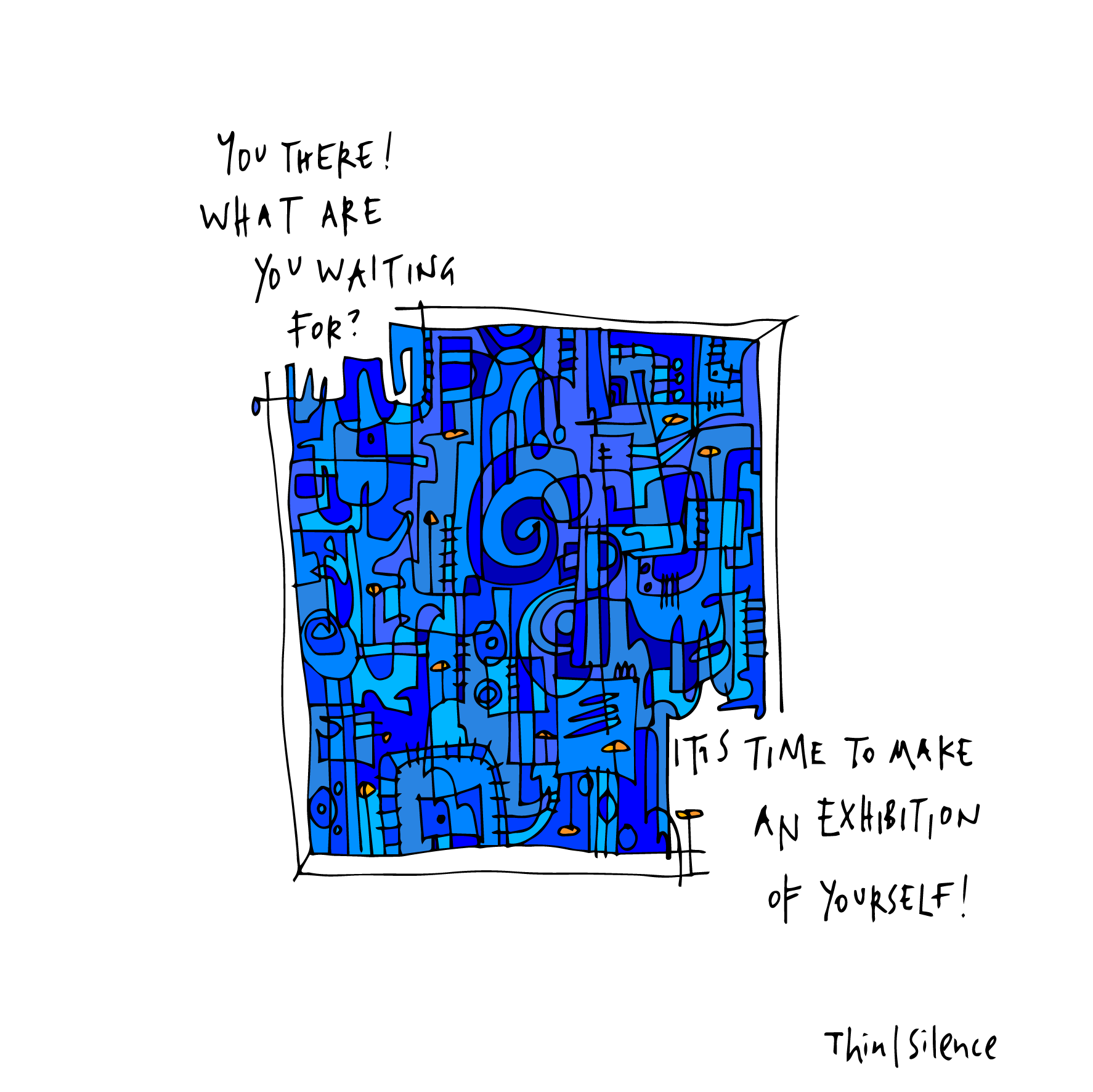
The exhibitionist


‘Busyness is not a virtue.  Our value is measured by the outcomes we deliver.’*
(Sean Heritage)

‘To be somebody or to do something.  In life, there is often a roll call.  That is when you will have to make a decision.  To be or to do.  Which will you choose.’**
(John Boyd)

I think we all need to be someone and do something.  To be is an inside thing.  To do is an outside thing.  I get what John Boyd is saying hear: things go wrong when we make an inside thing an outside thing.

Sooner or later, the artist needs to exhibit her work before others, the poet looks towards having a “reading” of his poetry and, one day, the craftsperson must set out their stall.  Here, an exhibitionist is someone who makes their art or artisanship available to others – this is how we make an exhibition of ourselves.

I know an artist who worked on a theme for a third of a year; by the time it came to exhibiting her work, she’d invited more than thirty other people to exhibit their art.  I love this expression of everyone bringing their own work and making a larger whole.  Another way this can happen is everyone bringing their artistry into the syncretising bowl of teamwork.

In the 18th Century, Denis Diderot and colleagues set out to create the first Encycopedia.  Their aim was to celebrate everyone’s skills and artistry:

‘In the Encyclopedia, Diderot and his colleagues celebrated the vitality rather than dwelled on the suffering of those deemed socially inferior.  Vigour was the point: the encyclopédistes wanted ordinary workers to be admired, not pitied.’^

How we need this to happen again.

Towards this, not only do we need a recognition of everyone’s skills, whether these are more subtle or not, we also require more playfulness for developing skills and artistry further and further (I’d include wandering and doodling with playfulness):

‘We have our own playground!  Our Makerspace is where you can develop, prototype and test your brilliant ideas.’*

I’ve been including thoughts from Sean Heritage’s handbook for the US Navy, a surprising source for turning rules around from being things not to do, into the things team members must do, including:

‘Take time off to do something that inspires, excites and energises you.’*

And how about this further encouragement in describing the course on Leadership Agility:

‘Rolling on the floor, being silly, and laughing until you cry is encouraged.’*

I wonder whether the culture or context that is unable to include playfulness or have fun is one of the most dangerous of all.

All for this is towards doing something, to make an exhibition of yourself.

So, what are you doing when you are an exhibitionist?

(*From Sean Heritage’s Navy Cyber Defense Operations Command.)
(**John Boyd, quoted in Sean Heritage’s Navy Cyber Defense Operations Command.)
(^From Richard Sennett’s The Craftsman.)

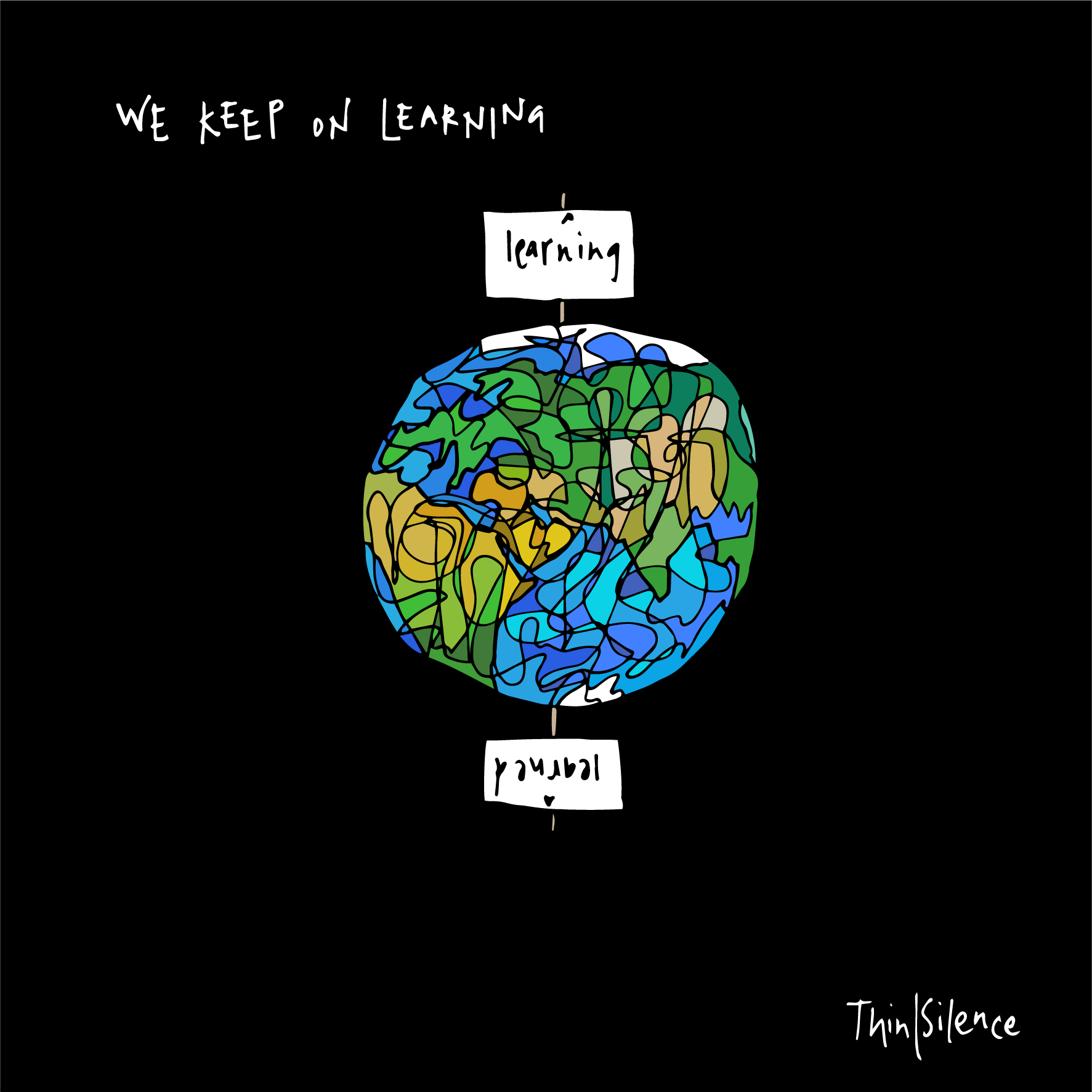
Learning or learned

‘When a bureaucrat or authority figure refuses to explain ‘why’, he is showing fear (because he’s not sure why) and contempt (because he doesn’t have to care).’*
(Seth Godin)

‘These are the sensory impulse and the formal impulse, both of which aim at truth, and neither of which gets there without the other.’**
(Harriet Harris)

Some believe they have learned all they will ever need to learn.  What they know will suffice for the rest of their lives.

Others are learning butterflies – moving from one new things to the next, never stopping lot embed their discoveries into their lives.

It’s not about being learning or learned; it’s about learning and learned.  The riches life is found between the two.

(*From Seth Godin’s blog: The respect of “why.”)
(**From Harriet Harris’ The Epistemology of Feminist Theology.)

Personal best

image

The only way to personally grow, to hit your personal bests in whatever field you enjoy, is to be yourself.

You can’t be someone else, but you know yourself and can push yourself further … and further again.

That’s it.  Have fun.

From the rising of the sun …

“Storytelling is a tool for knowing who we are and what we want, too. If we never find our experience described in poetry or stories, we assume that our experience is insignificant.” (Ursula Le Guin)*

‘Rejoice with those who rejoice; weep with those who weep.’ (Paul of Tarsus)**

We are all artists able to help one another find our stories through making sense of the highs and lows of our days.  As James Baldwin proffers:

“an artist is a sort of emotional or spiritual historian [whose] role is to make you realise the doom and glory of knowing who you are and what you are”.^

There’s nothing better in life than to be able to do this.

(*Ursula Le Guin, quoted in Maria Popova’s Brain Pickings.)

(**Romans 12:15)

(^James Baldwin, quoted in Maria Popova’s Brain Pickings.)


Beyond the beyond the beyond …

“The daily routine of most adults is so heavy and artificial that we are closed off to much of the world. We have to do this in order to get our work done. I think one purpose of art is to get us out of those routines. When we hear music or poetry or stories, the world opens up again.”*
(Ursula Le Guin)

‘She worries that she does not have time to take her time on the things that matter. […] And it is hard to maintain a sense of what matters in the din of constant communication.’**

We’ve realised the ability of creating more stuff to cover up what we know is most important to us.  Most of us would list things like relationships, meaning and purpose, and having a soul amongst those things most important.

Reading, writing, art, walking, conversation – these are some ways we can dig down through the layers life has become for us:

‘In fact, Thoreau insists he isn’t a walker but a saunterer, a word derived from saint-terry or holy land, so that a saunterer is lis literally a religious pilgrim.’^

Whatever you’re up to today, it’s likely there’s something really important covered up within it or by it.  What is that?

(*Ursula Le Guin, quoted in Maria Popova’s Brain Pickings: Ursula K. Le Guin on Art, Storytelling, and the Power of language to Transform and Redeem.)
(**From Sherry Turkle’s 
Alone Together.)
^From Geoff Nicholson’s The Lost Art of Walking.)

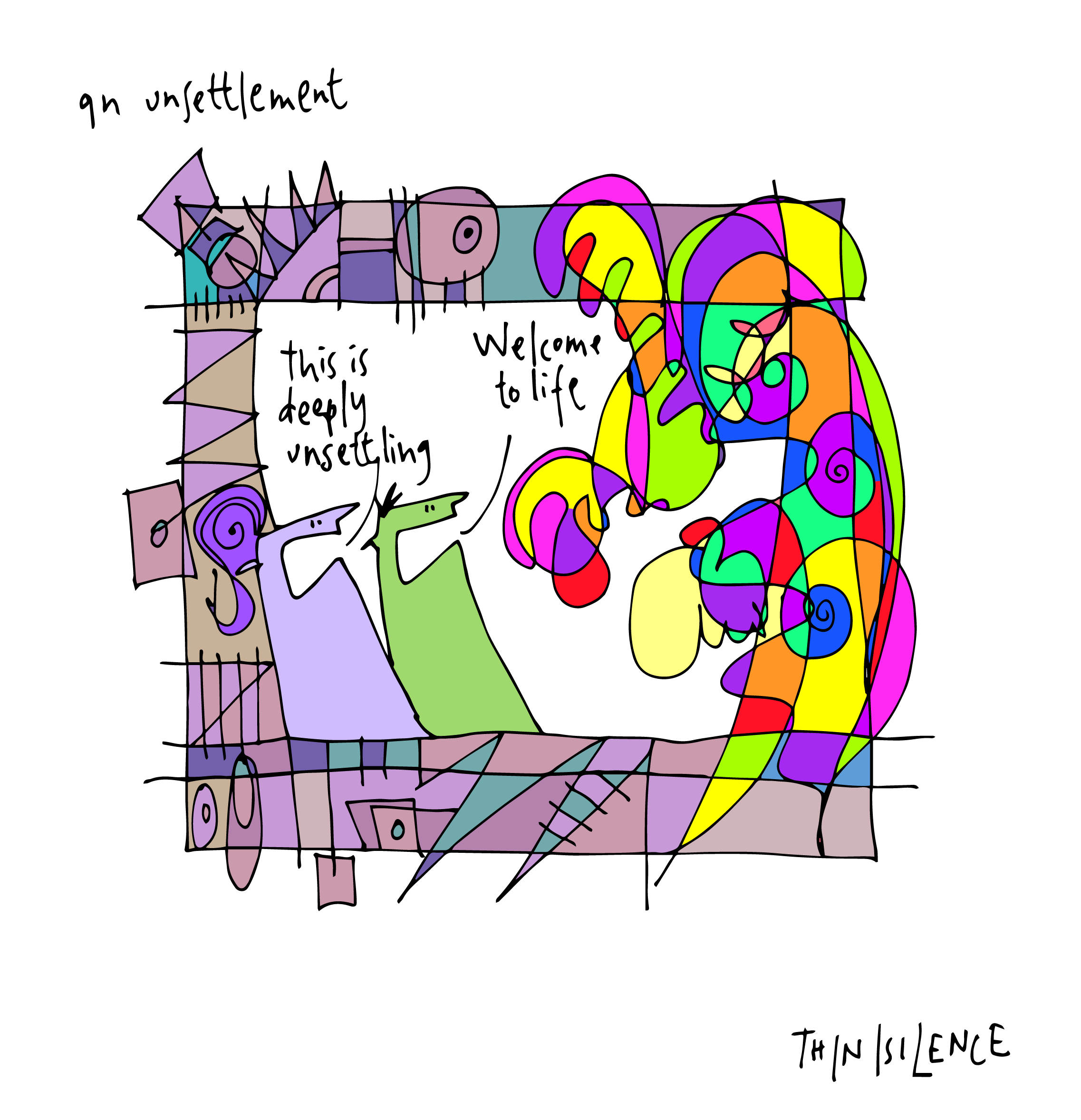
This is deeply unsettling

“People wish to be settled; only as far as they are unsettled is there any hope for them.”*
(Ralph Waldo Emerson)

‘Creating the future does not begin with a plan, it begins with a dream.  And when someone actions a dream, it begins with a spark.’**
(Alex McManus)

Yuval Noah Harari writes about how we have settled into something dangerous both for us as humans and for our planet.  Harari charts how the industrial revolution made it possible to produce more after cheaper, which has left us with a problem.  Who will buy everything that’s being produced?  We’ve taken on board the naturalness of consumerism and believe frugality to be unnatural as a solution:

‘Our green and blue planet is becoming a concrete and plastic shopping centre.’^

If were possible to weigh all seven billion humans we would top the scales at 300 million tons.  If we were able to weigh all the animals needed to feed this population they would weigh in at an incredible 700 million tons.  Compared with this, the combined weight of all existing larger wild animals would come to only 100 million tons.  A 10:1 ratio to our species and its needs.  The planet is becoming more and more human, and as we see, that isn’t necessarily good.

Hope is often found when we we begin to join the inside and outside of life, creating a field of what wants to be.  As William James articulated this unsettlement:

“It was deep calling unto deep – the deep that my own struggle had opened up within being answered by the unfathomable deep without.”^^

Settlement is endangering our planet and, with it, our existence.  Time to be unsettled by imagination. All are welcome to bring theirs:

‘Hardly anything does this for us more powerfully than art — it unsettles us awake, disrupts our deadening routines, enlarges our reservoir of hope by enlarging our perspective, our grasp of truth, our capacity for beauty.’*^

(*Ralph Waldo Emerson, quoted in Maria Popova’s Brain Pickings: Ursula K. Le Guin on Art, Storytelling, and the Power of language to Transform and Redeem.)
(**From Alex McManus’ Makers of Fire – eBook version.)
(^From Yuval Noah Harari’s Sapiens.)
(^^William James, quoted in Alan Lightman’s The Accidental Universe.)
(*^From Maria Popova’s Brain Pickings: Ursula K. Le Guin on Art, Storytelling, and the Power of language to Transform and Redeem.)

A solid position of self

We each carry a story within.

Wherever we are, whatever we are doing, whoever we are with.

We encounter or avoid, we connect or disconnect through this story – whether we carry it consciously or unconsciously.

The story is not fixed, though.  Three ways in which we can significantly alter it are through developing our character, being open to diversity and identifying a purpose greater than ourselves with which to wrestle and overcome.

The best stories have deep character, are diverse and varied, and involve conflict – there is something to overcome.

All three together make for a story that makes fire and brings change.