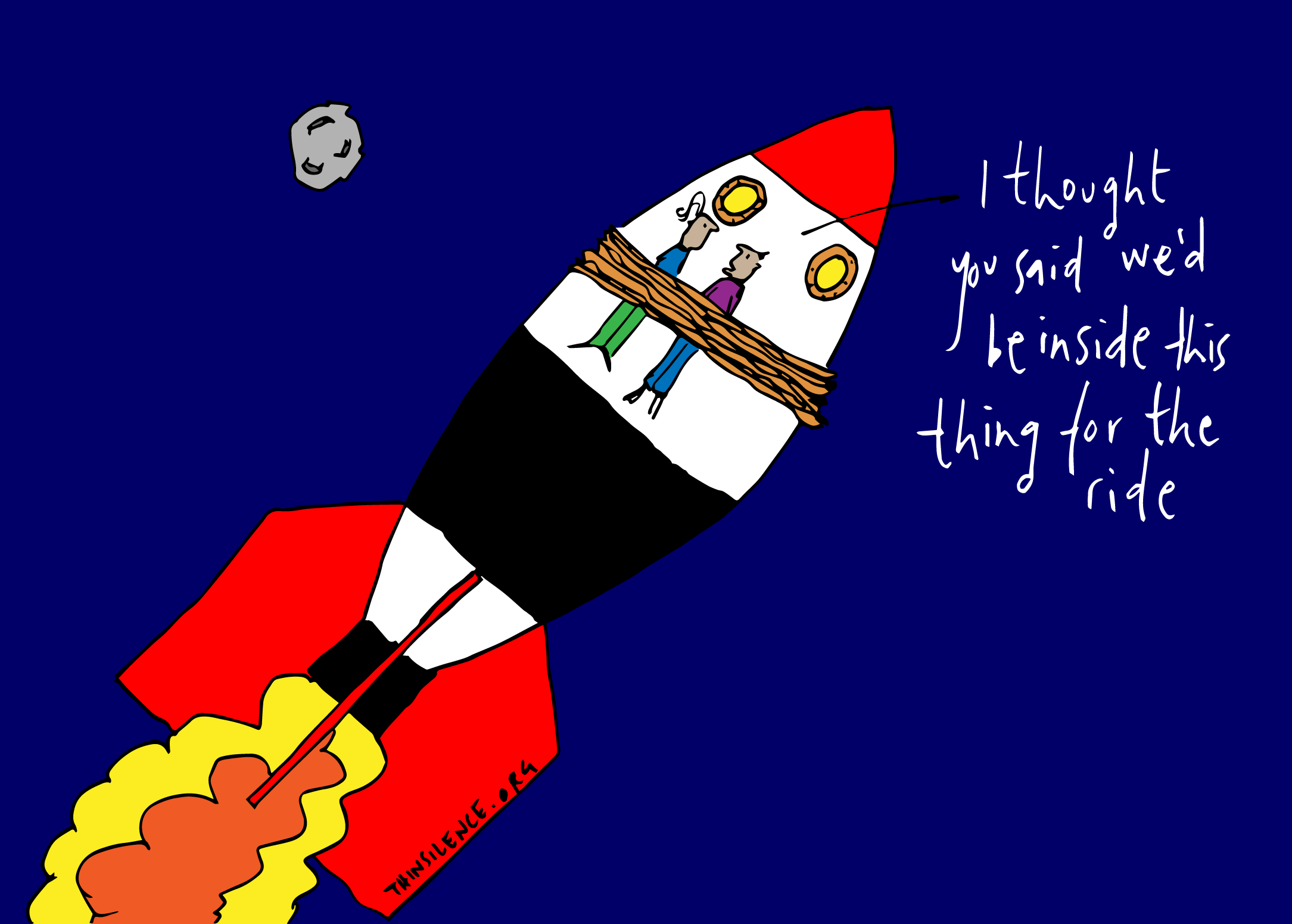
Tethered

But email, in my view, also contributes to the haste, he thoughtlessness, and the artificial urgency that increasingly characterise the world. […] We are suffocating ourselves.  We are undercutting out contemplative powers.  We could even be, ironically, impeding progress. […] Modern technology is racing forward with little examination or control.*
(Alan Lightman)

You might not need more exposure to the new.  Instead you might pay to see what’s already around you.**
(Seth Godin)

Anxiety is on the up, the dis-ease, some say, that will characterise the 21st century.

Once upon a time, people would worry about sowing their crops and whether someone – some bandit or invading army – would come along and take the crop for themselves.  Peace was to be able to enjoy the fruit of their own labours, to sit beneath their vines and fig trees.

Most of us in the West today don’t have to worry about such things and yet our anxieties remains and, we’re told, are increasing.

Rebecca Solnit writes about how the Industrial Revolution broke up families as it institutionalised and fragmented labour, and even our leisure activities can be industrial:

‘the gym is now doing the same thing, often in the same place, for leisure.’^

We have industrial spaces for getting fitter faster and further with machines that take us beyond who we presently physically are, away from the sunshine, fresh air, natural surroundings with all its diversity that we used to think of as being good for us:

‘Build of your imaginings a bower in the wilderness ere you build a house within the city walls. […] Have you beauty, that leads the heart from things fashioned of wood and stone to the holy mountain?  Tell me, have you these in your houses?’^^

Solnit’s observations help us to see that was has been happening to us has been happening for some time.

It’s not something we’ve recently invented with our latest technologies: social media and communications that make it possible to be tethered everywhere and at all times,  bending the human body and lifestyle to suit it rather than the other way around – yet possibly most dangerous because of its incredible speed and growth.

We’ve lost much more than the outside world, though.  We’ve also lost the inside world with the kinds of disciples, rituals, patterns and habits that allowed us to know both ourselves and what we can do and to feel as though we can develop these.

We feel rushed along by the technology – what Alan Lightman points to in his remark about our inability to examine or control – so we say we have no time for these things that may allow us to connect what is disconnected in our lives.  Technology is insidious; it is so much a part of our lives that it is hard to know where it begins and ends when it comes to being invisible and controlling our lives

Slow habits and practices allow us to develop an important counterweight so we may become who and what we are at our best: contemplating creatures:

‘Deep down you desire the freedom to live the life you would love.’*^

At the moment, I’m working on an idea that might be the beginning of the counterweight we need to bring to the digital life.  If you would like to know more about this in the form of an online course – one way technology can be brilliant – then drop me a line at geoffrey@geoffreybaines.com.

(*From Alan Lightman’s Dance for Two.)
(**From Seth Godin’s blog: What do you see?)
(^From Rebecca Solnit’s Wanderlust.)
(^^From Khalil Gibran’s The Prophet.)
(*^From John O’Donohue’s Eternal Echoes.)
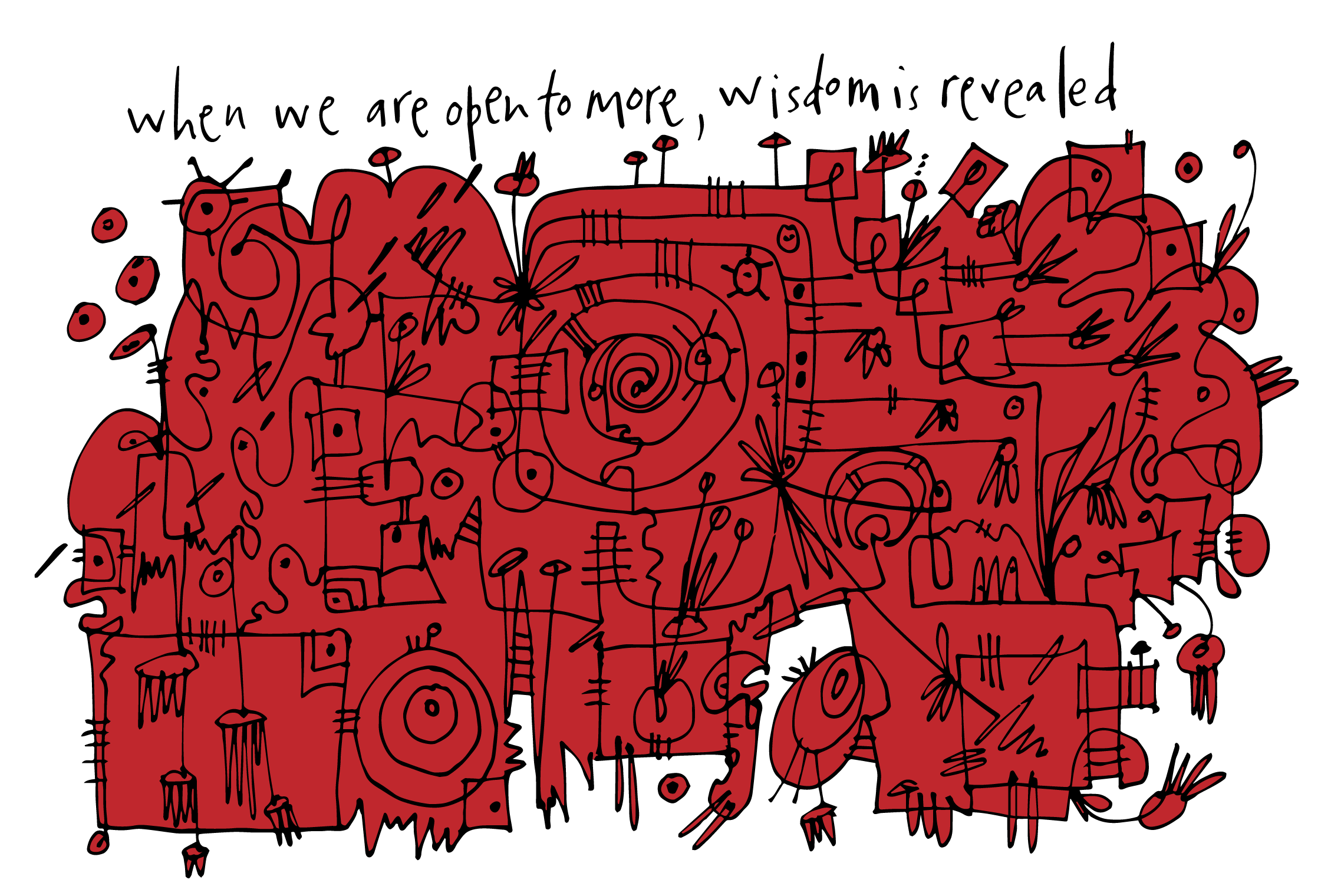
 

Big gods and small stages

Big truth must be presented on small stages for humans to get it.*
(Richard Rohr)

The “gods” know nothing,
they understand nothing.
They walk about in darkness;
all the foundations for the earth are
shaken.**
(Psalm 82:5)

Though we perhaps do not think of ourselves as gods yet we can act as though we are … when we see how far we have come, when we take stock of all that we have, when we compare ourselves with others.

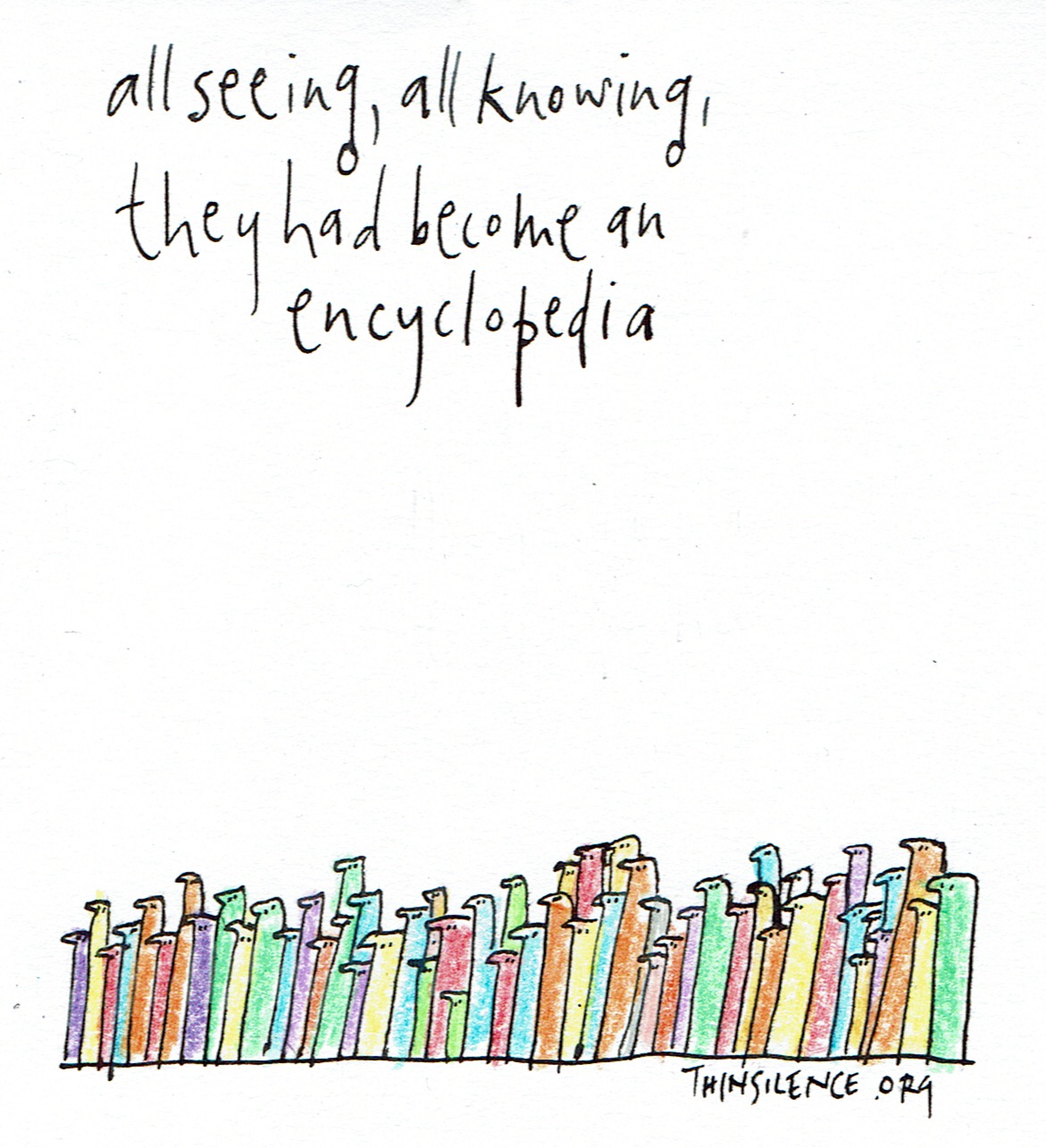
Denis Diderot and his companions wanted to record the dignity and worth of people of all rank and skill:

‘In the Encyclopedia, Diderot and his colleagues celebrated the vitality rather than dwelled on the suffering of those deemed socially inferior.  Vigour was the point: the encyclopedistes wanted ordinary workers to be admired, not pitied.’^

In so doing, they were perhaps opening themselves to becoming more human, to join passions in some encyclopaedic way is to become compassionate:

‘A great being stays with what she loves; she’s patient, she forgives, and she allows what she loves to develop.  She overlooks its mistakes, and in this sense she suffers for and with reality.  This is the deepest meaning of passion: patior is the Latin verb meaning to suffer or to undergo reality as opposed to controlling it.’*

Which sounds more godlike.

(*From Richard Rohr’s The Divine Dance.)
(**From Psalm 82.)
(^From Richard Sennett’s The Craftsman.)

Where does wisdom come from?

It should be obvious that those who live enlightenment lives have demonstrated a unique ability to learn from everyone and everything around them.*
(Erwin McManus)

There are the sensory impulse and the formal impulse, both of which aim at truth, and neither of which get there without the other.**
(Friedrich Schiller)

The phrase “to pay attention” is an interesting one.  To be attentive costs us not only in time but especially in energy; it’s why it is so hard to give.  And yet, attention or openness is critical for the attainment of wisdom.

So is knowing, the accumulation of information about people and the world and things.

Between our dynamic openness to the new and our static body of knowledge lies wisdom as graceful expression: openness increasing knowledge, knowledge demanding openness.

Wisdom cannot exist when one or other is absent.

(*From Erwin McManus’ Uprising.)
(**Friedrich Schiller, quoted in Harriet Harris’ The Epistemology of Feminist Theology.)


Heavy energy

One cannot live in the pure present: it would consume us if care were not taken that is overcome quickly and thoroughly.  But in the past one can live; in fact, only there can a life be arranged.  One only has to fill every moment with experiencing and using, and it ceases to burn.  And in all the seriousness of truth, listen: without It a human being cannot live.  But whoever lives only with that is not human.*
(Martin Buber)

When we only live in the present, without reflecting on the past or imagining the future, we never fully discover our heavy energy.

Heavy energy is more than the sum of our atoms and molecules, it cannot be measured in pounds or kilos of joules but is found where our deepest joy meets the world’s greatest need.

This will mean something different for each person, that’s the wonder of this life:

‘You work that you may keep pace with the earth and the should of the earth
[…]
I say to you that when you work you fulfilled a part of earth’s furthest dream, assigned to you when that dream was born […].’**

(*From Martin Buber’s I and Thou.)
(**From Khalil Gibran’s The Prophet.)


By our openness

You may ask, “Who actually is doing the changing?”  And the answer is the relationship.  Because in the arena of possibility, every thing occurs in that context.*
(Roz and Ben Zander)

Building a relationship is a process that begins in the initial contact that the helper has with the client.**
(Ed Schein)

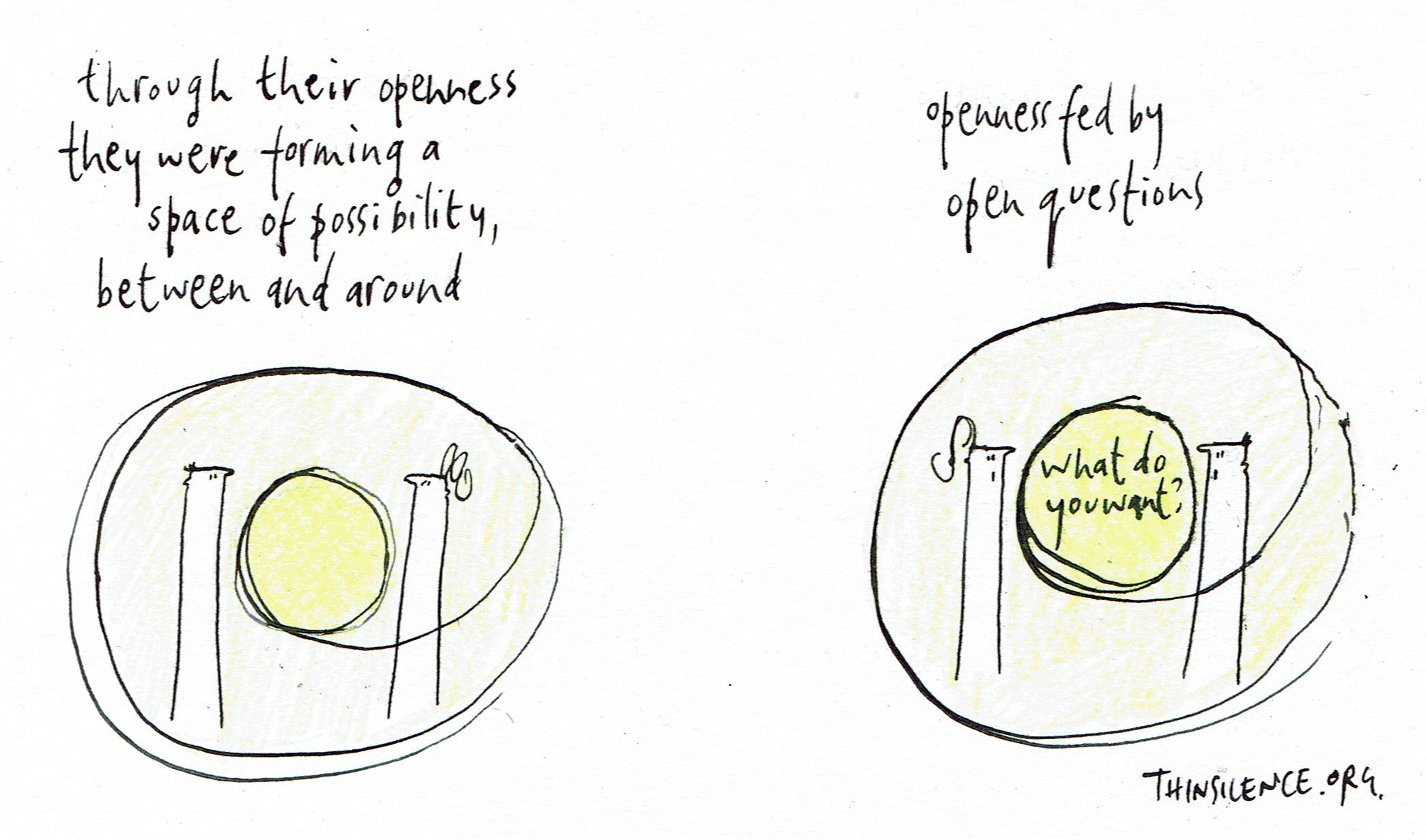
If we desire to create spaces of possibility with others asking open questions can be the best place to begin: “What do you want?”

Knowing ourselves allows us the confidence to be open in such a way as this, without agenda – agendas being one of the killers of spaces of possibility:

‘A positive attitude makes it easier to trust people, makes it easier to find collaborators,  makes it easier to say “Let’s give this a go and see what happens.”‘^

Ed Schein reminds me how important commitment, curiosity and caring** are to helping others – and when you think about it, just about everything that happens between humans is helping, whether we do this at what Schein identifies as level one – contractual, professional, level two – more personal because this person matters, or level three – more intimately for those who are closest to us.

Our openness of mind and heart helps us to more fully see one another and what each brings:

‘Naming oneself and others as a contribution produces a shift away from self-concern and engages its in a relationship with others that us an arena formalising a difference.’*

(*From Rosamund and Benjamin Zander’s The Art of Possibility.)
(**From Edgar Schein’s Humble Consulting.)
(^From gapingvoid’s blog: Let’s give this a go and see what happens.)

Meaning first, happiness second

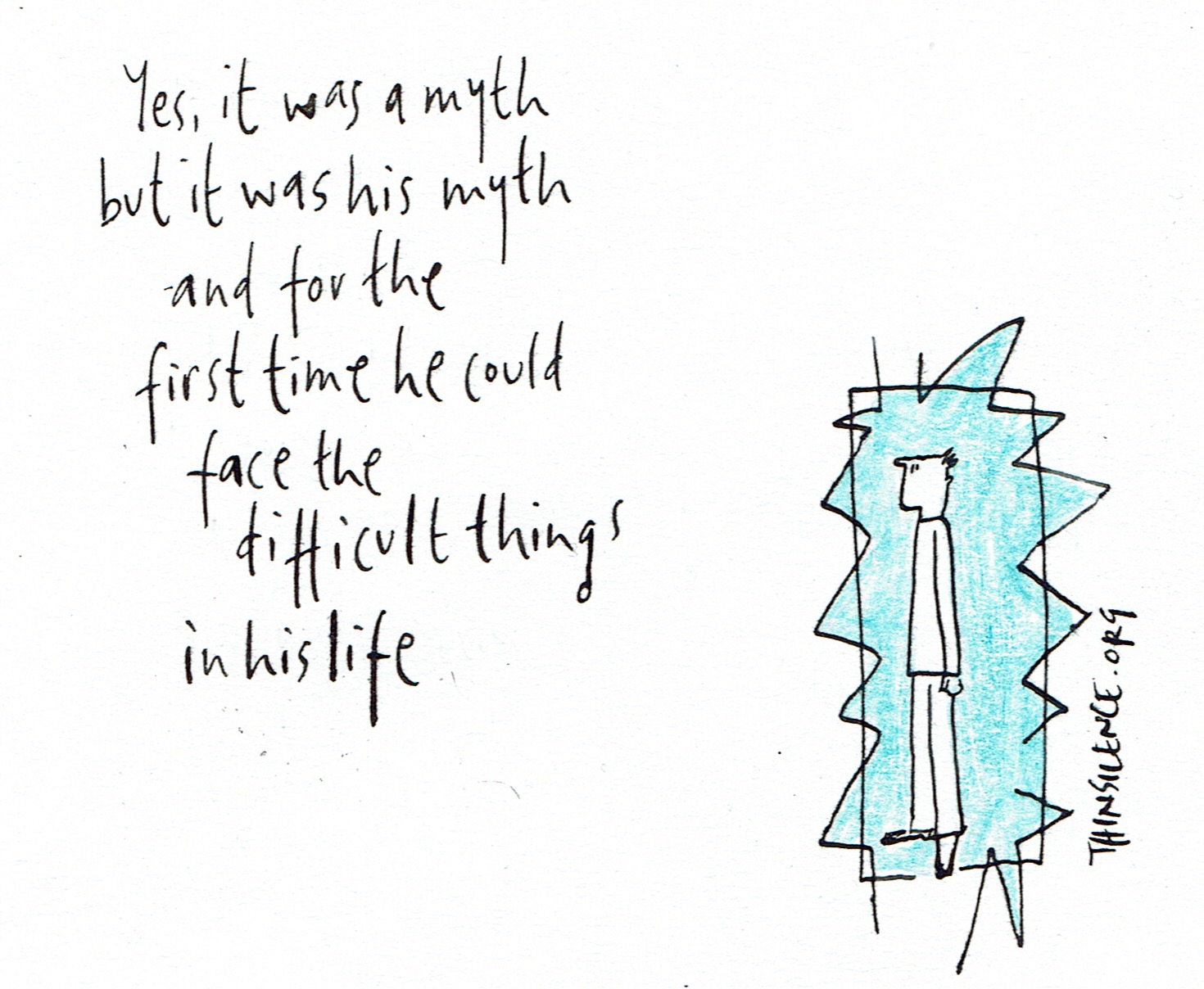
A life story is a “personal myth” about who you are deep down – where we come from, how we got this way, and what it all means.  Our life stories are who we are,  They are our identity  A life story, however, is not a strategic account.  A life story is a carefully shaped narrative that is replete with strategic forgetting and skilfully it opens meaning.*
(Jonathan Gottschall)

As long as we don’t forget or hide away the difficult bits.

The difficult bits of our stories are where we learn and grow most of all, and, so, we may argue, where we are most alive.

Jonathan Gottschall’s use of the word myth for our personal stories is a helpful one.

A myth is something generally true but not specifically true.

A myth helps us wrestle with some of the bigger themes of life, of our lives.

It is why we can hold on to some of the more painful experiences of life, how we can re-tell these in our own words … generously, rather than allowing them to be told by others, why we can pursue meaning and find our happiness – bliss as one of the great mythologists Joseph Campbell names it.  Bliss not as happiness but as meaning producing happiness along the way.

Why not have a go at capturing your story in some daily pages?

(*From Jonathan Gottschall’s The Storytelling Animal.)

Now what?

People wish to be settled; only as far as they are unsettled is there any hope for them.*
(Ralph Waldo Emerson)

The Self wishes to create to evolve.  The ego likes things just the way they are.**
(Eckart Tolle)

Unsettling doesn’t have to be abrasive or dynamic in some popular sense; see this from Ed Schein:

‘I humbled myself to their needs, allowed myself to get curious, wanted to help them, and found an effective adaptive move unconsciously.’^

This is an unsettling approach with the “effective adaptive move” emerging being the interesting part of what can happen if we are open to the other.  Joseph Jaworski wrote out of his own experience:

‘My sense of identity had shifted, and I was beginning to lose myself as part of the unfolding generative order.’^^

Around a century earlier, Khalil Gibran had written these words about children:

‘Your children are not your children.
They are the sons and daughters of Life’s longing.
[…]
You may strive to be like then, but strive not to make
them like you.’*^

Perhaps this is one of the most open forms of openness, to learn from the young?  To be open to what is wanting to emerge through others:

‘The child and the artist are pilgrims of discovery.’^*

(*Ralph Waldo Emerson, quoted in Maria Popova’s Brain Pickings: Ursula K. Le Guin on Art, Storytelling and the Power of Language to Transform and Redeem.)
(**From Eckhart Tolle’s A New Earth.)
(^From Edgar Schein’s Humble Consulting.)
(^^From Joseph Jaworski’s Source.)
(*^From Khalil Gibran’s The Prophet.)
(^*From John O’Donohue’s Eternal Echoes.)
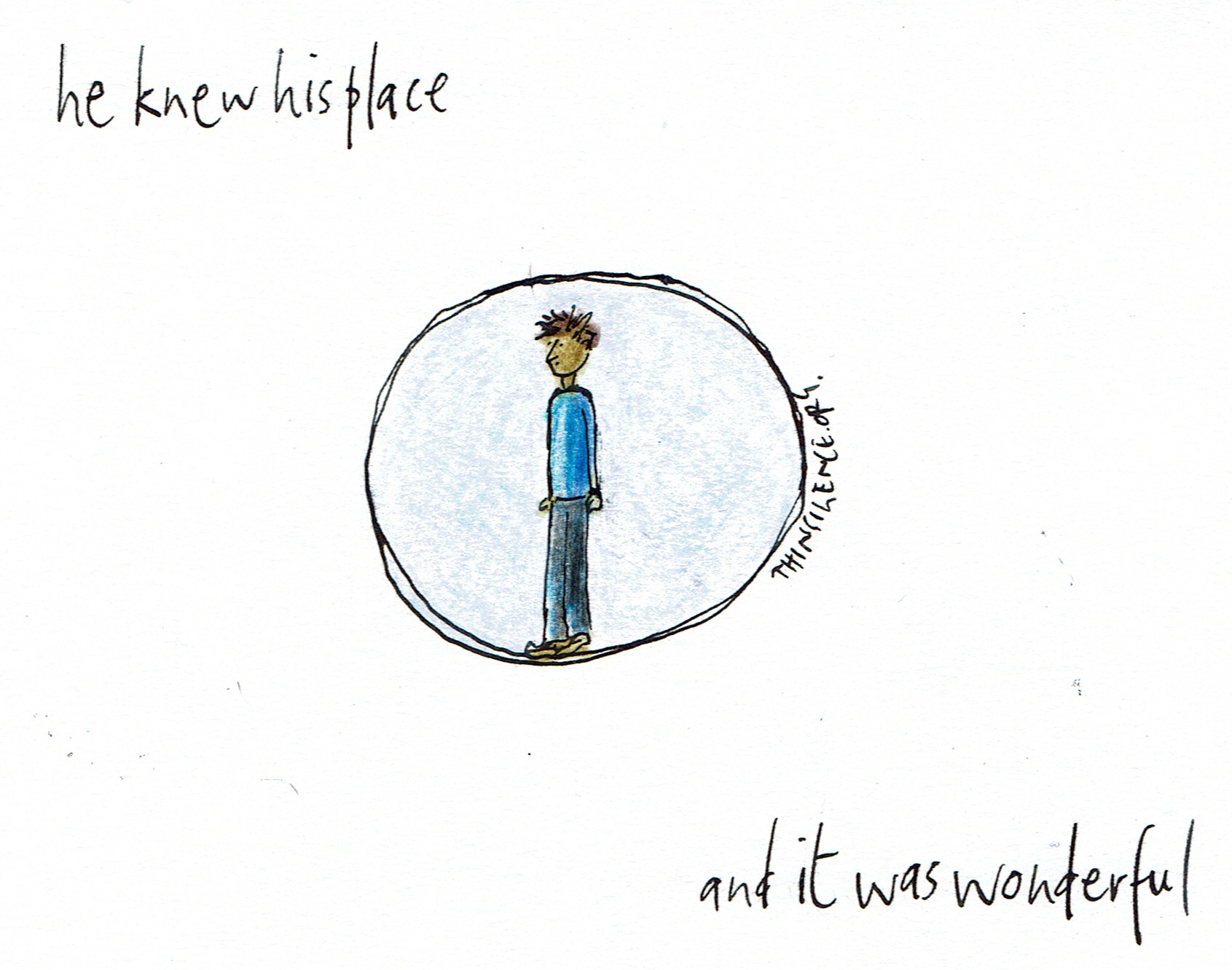
 

The nudge

Each person has a story they want to live, a difference they want to make, somewhere, somehow, for someone.

As a storytelling course made clear, the best stories have character, contrast and conflict.

We become.

We hope for something different.

We struggle to bring this about.

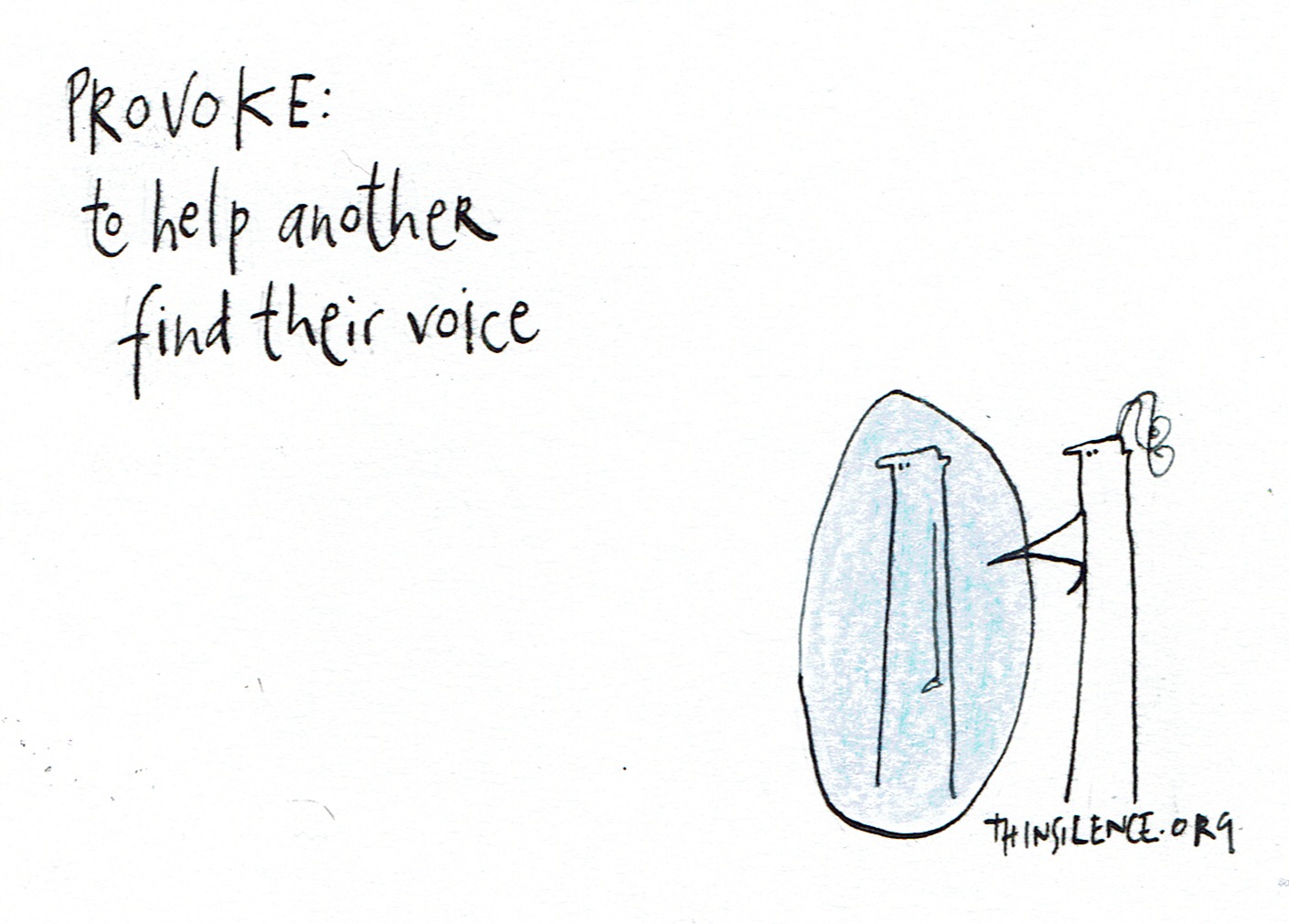
Sometimes we just need the nudge to move into this.

Today, do you need the nudge, or are you the nudger?

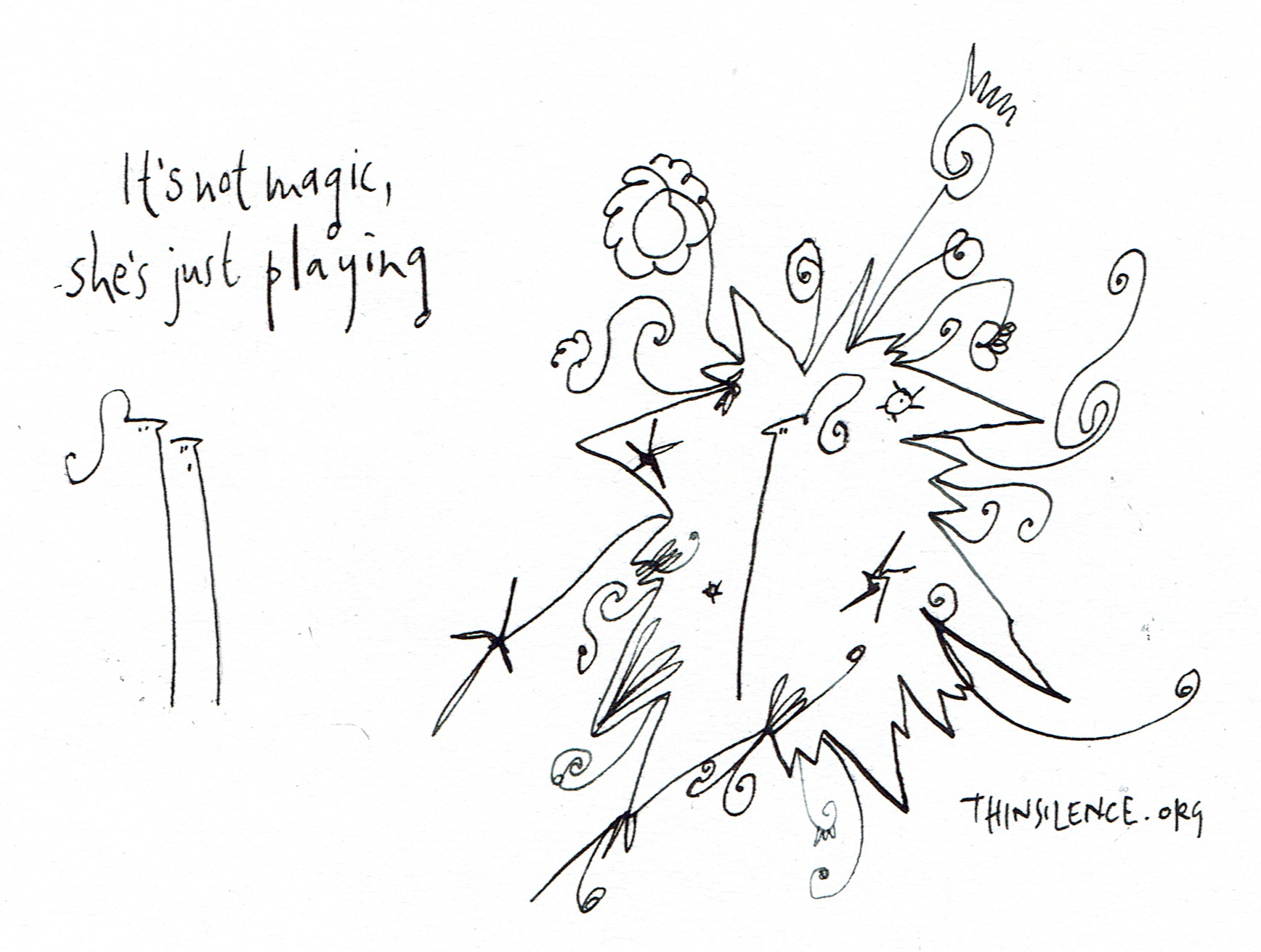
Playing isn’t magic, it just looks like it

We are the miracle, we human beings. […] It’s wondrous and amazing how such complex, aware, creative, caring creatures could have arisen in accordance with these laws [of the universe].*
(Sean Carroll)

In real life, true empathy drills down into unhappiness.**
(Hugh Macleod)

We have an amazing beginning, so full of promise.

These bodies, these brains and, often, a whole load of years to do something with them.

To play.

It may look magical and playfulness may sound great.  They’re full of imagination and creativity.  They’re also about hard work and help and love:

‘Civilisation, in a sense, always played according to certain rules, and true civilisation will always demand fair play.  Fair play is nothing less than good faith expressed in play terms.’^

(*Sean Carroll, quoted in Maria Popova’s Brain Pickings: Existential Therapy from the Universe.)
(**From gapingvoid’s blog: The extra mile.)
(^From Johan Huizinga’s Homo Ludens.)

Worthy worthy worthy

Have pity on those who are fearful of taking up a pen, or a paintbrush, or an instrument, or a tool because they are afraid that someone has already done so better than they could, and who feel themselves to be unworthy to enter the wonderful mission of art.*
(“Petrus”)

The acknowledgment of abundance all around you awakens the dormant abundance within.**
(Eckhart Tolle)

Some wonder why they haven’t been invited; others wonder why they were.

For some, it is important that many haven’t been invited.

For others, it is difficult to get their heads around why what they do should be considered important.

That which is important to us, that we have developed and honed, that we have mastery of and bring to others is the art of our living.  Whatever this is, it can be developed, a noticing of our own worthiness, and noticing this opens up more:

‘The good craftsman uses solutions to uncover new territory: problem-solving and problem-finding are infinitely related in his or her mind.’

(*The character Petrus in Paulo Coelho’s The Pilgrimage.)
(**From Eckhart Tolle’s A New Earth.)
(^From Richard Sennett’s The Craftsman.)