This is what I see and this is what I see

Nobody can predict the future.  That doesn’t mean you can’t feel it.*
(Hugh Macleod)

But when looking at the [humming] bird, suspended in space, I don’t think numbers or gravity.  I just watch and am amazed.’**
(Alan Lightman)

Alan Lightman the scientist has iterated the various numbers relating to how fast a humming bird’s wings move, how fast their heart must beat, but when he observes this tiny creature, he sees something else – something wonderful, amazing.

It is important to notice more but hidden within this information there are also signals.

Those who notice the signals becomes guides to us.  When we attune to the signals, we become guides to others.

(*From gaping void’s blog: How to stay calm in the face of uncertainty.)
(**From Alan Lightman’s Searching For Stars on an Island in Maine.)
Who’s not here?

“Who’s not here?” might be the most important unasked question.*
(Seth Godin)

Every day, we have access to vast amounts of information that we unconsciously collect. […] If we train ourselves to become more observant, if we pay attention – to our surroundings, to other people, to what’s happening that shouldn’t be, or what’s not happening that should be – our most mundane experiences can fuel our boldest and most brilliant ideas.**
(Bernadette Jiwa)

Some of the most important life-changing and planet-changing meetings of people have never occurred.  Right now, there are people who have contributions to make with others that will never emerge because they will not meet each other.

Of course, there are millions upon millions of such possible encounters waiting to happen, or not.  Life seems to be most dynamic in these accidental encounters.  One of the good things about the internet is that it makes more of them possible.

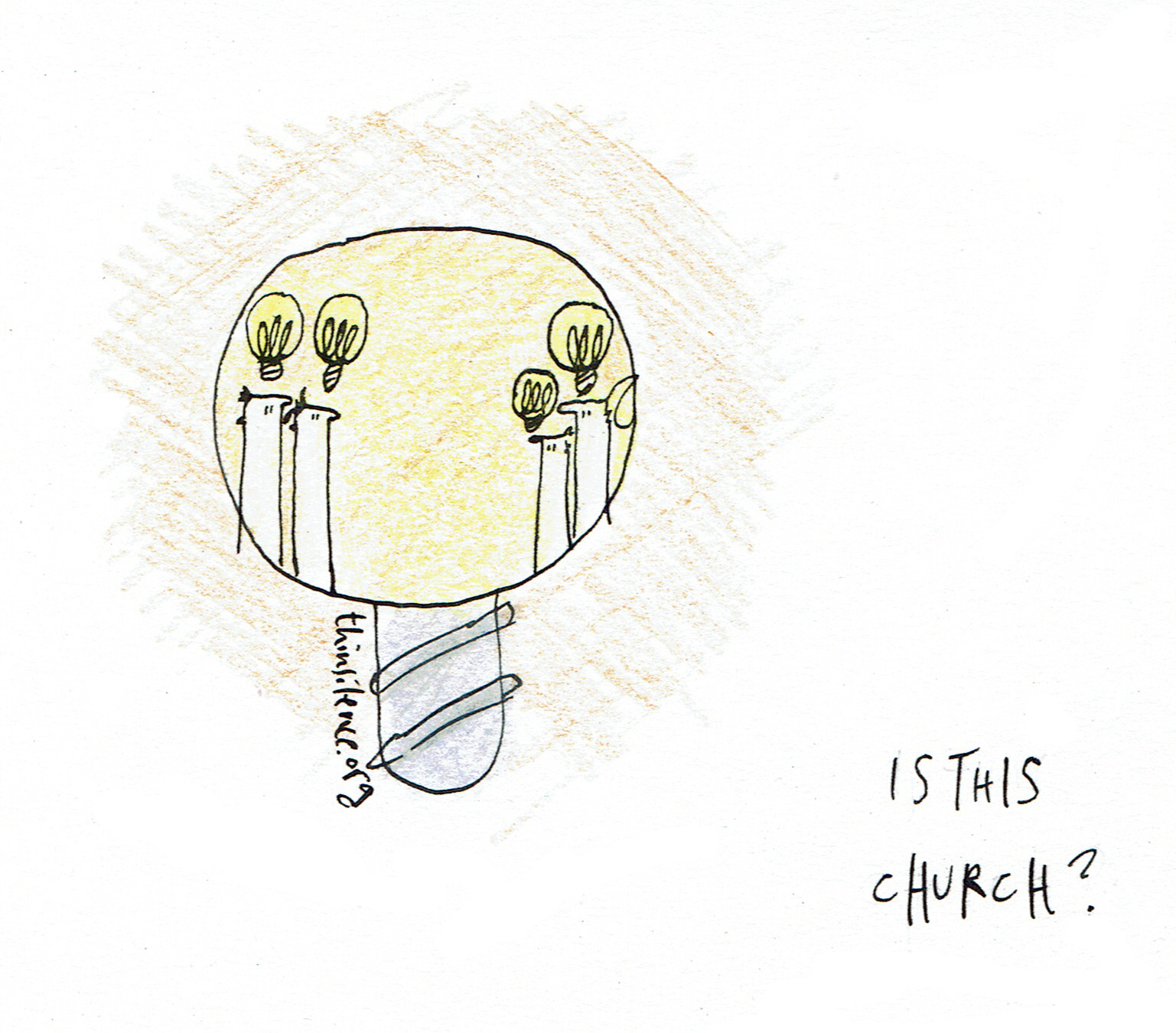
Church is now possible everywhere.

(*From Seth Godin’s blog: Who’s in the room?)
(**From Bernadette Jiwa’s Hunch.)

Never say never

The goal isn’t just to deliver the information – it’s to capture the imagination.*
(Bernadette Jiwa)

The people who keep going when something threatens to stop them are those who have bigger stories to connect to beyond the information of their present predicament, enabling them to bring their imagination to bear on the resent reality.

These stories are not fixed but unfolding, they not only involve flourishing for one’s self but for others too.  In this, they’re infinite in nature, including others for as long as possible, and, when the rules become recalcitrant, finding better ones.

(*From The Story of Telling: What the Best Communicators Do.)

It’s tempting

Thank you for allowing me to be a human being.*
(St Clare of Assisi)

One cannot know the rivers till one has seen them at their sources; but this journey to the sources must not be taken lightly.**
(Nan Shepherd)

Nan Shepherd was describing actual rivers in the Cairngorms but I snatch her words for human lives, how we must go to the sources of our lives to understand them, to be the people we can be and want to be.

These journeys are hard; there are many temptations to face on the way.

Temptations not to begin to look more closely, or to give up when it becomes demanding, to switch the journey for an easier one, to end up thinking too much of ourselves, or too little.

To make these journeys, though, is what it is to be human.

(*St Clare of Assisi, quoted in Richard Rohr’s The Divine Dance.)
(**From Nan Shepherd’s The Living Mountain.)

Help me to see (people who see in the dark)

At least it feels like this.  People who seem to be seeing clearly in what appears as darkness to us.

In our universe, humans are only able to use around 5% of existing light without technology.

It’s a reminder for me that in the human family, we need each other to be able to see more than 5% of what there is to see.

What this also means is that we can see what others can’t.

Though this can can feel so mundane and ordinary that we underestimate how powerful our seeing is, thinking everyone must be able to see what we see.

Perhaps they can’t.

Perhaps the thing to do is to hone what you can see with what others see.  Those who do this chose a powerful way:

‘They see with their mind’s eye a different future.’*

( *From Seth Godin’s blog: Make an impossible dream a future reality.)


Energy for what?

We sell ourselves short when we argue that there’s something magical about creative work, something that can only happen if we’re born to do it.*
(Seth Godin)

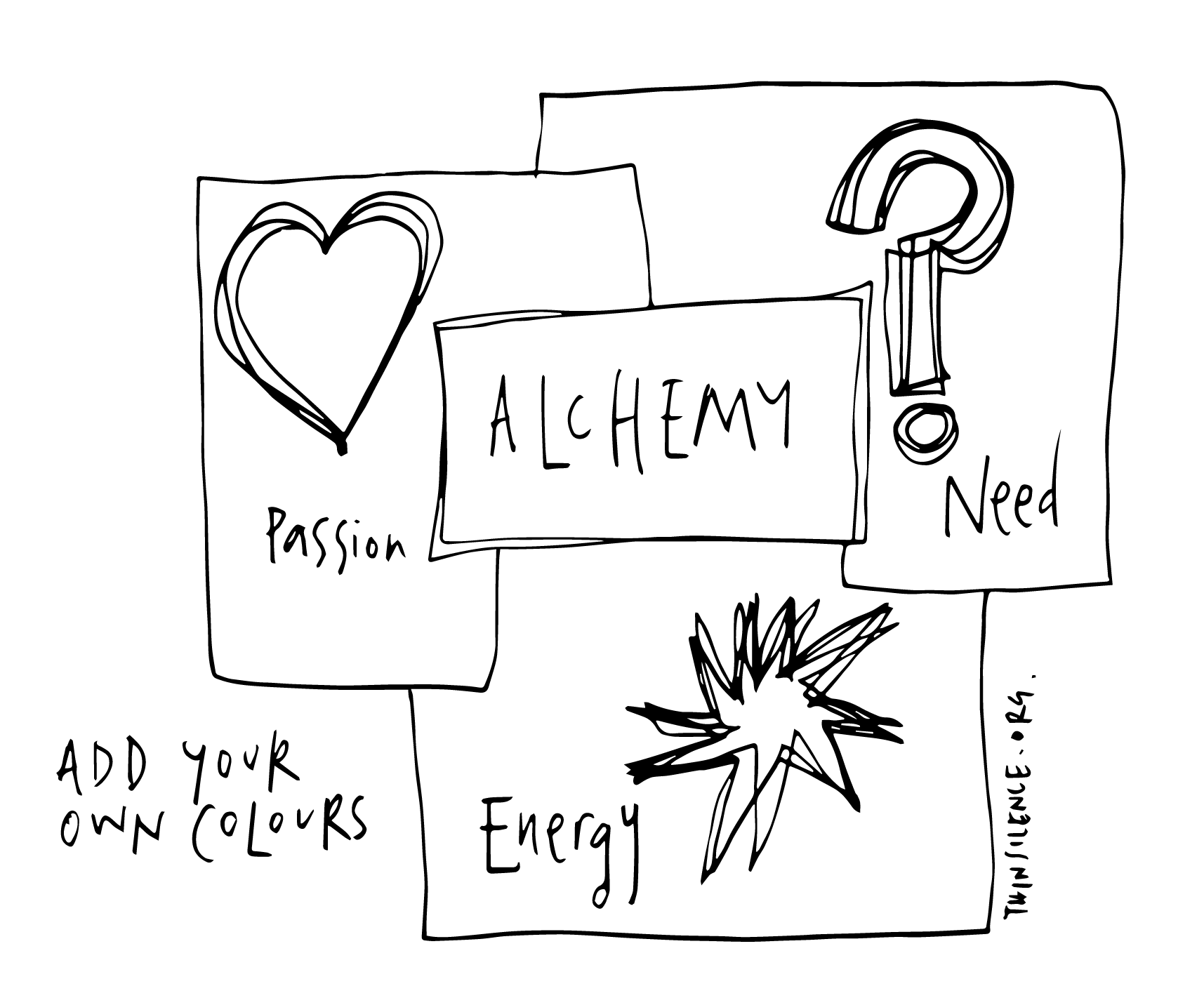
Energy produces talent.  Energy to keep going, wrapping hours of practice around some passionate curiosity.  There’s nothing magical about it, but it can be the closest thing to alchemy you can know, the thing that will only exist if you make it so.

There’ll always be energy to do this, if you want it.

(*From Seth Godin’s blog: Born to paint?)

Wholeheartedness is not a title

It’s the work we quietly get on with when no one is watching that makes people care to connect.  Visibility alone won’t get us to where we want to go.*
(Bernadette Jiwa)

Titles […] point backward in time.  They have their origin in an unrepeatable past.  Titles are theatrical.  Each title has a ceremonial form of behaviour.**
(James Carse)

The wholehearted way is one we walk when no-one else is looking, doing hat matters most because we are denying ourselves if we err.

In these days of social media where someone can be “followed” by millions, we can be tempted to think that numbers equate to meaning.  What we need more than anything else, though, is for you to keep working at your wholeheartedness, at what will make a real difference in the world, that opens the future:

‘The only essential is this: the gift must always move.’^

(*From The Story of Telling: Building a Following.)
(**From James Carse’s Finite and Infinite Games.)
(^From Lewis Hyde’s The Gift.)

A shock to the system

But extraordinary contribution is rare.  It’s when we surprise the system, and perhaps ourselves, by showing up with something unexpected, fart beyond the common standard. […] Extraordinary contribution changes no just the recipient but the giver as well.*
(Seth Godin)

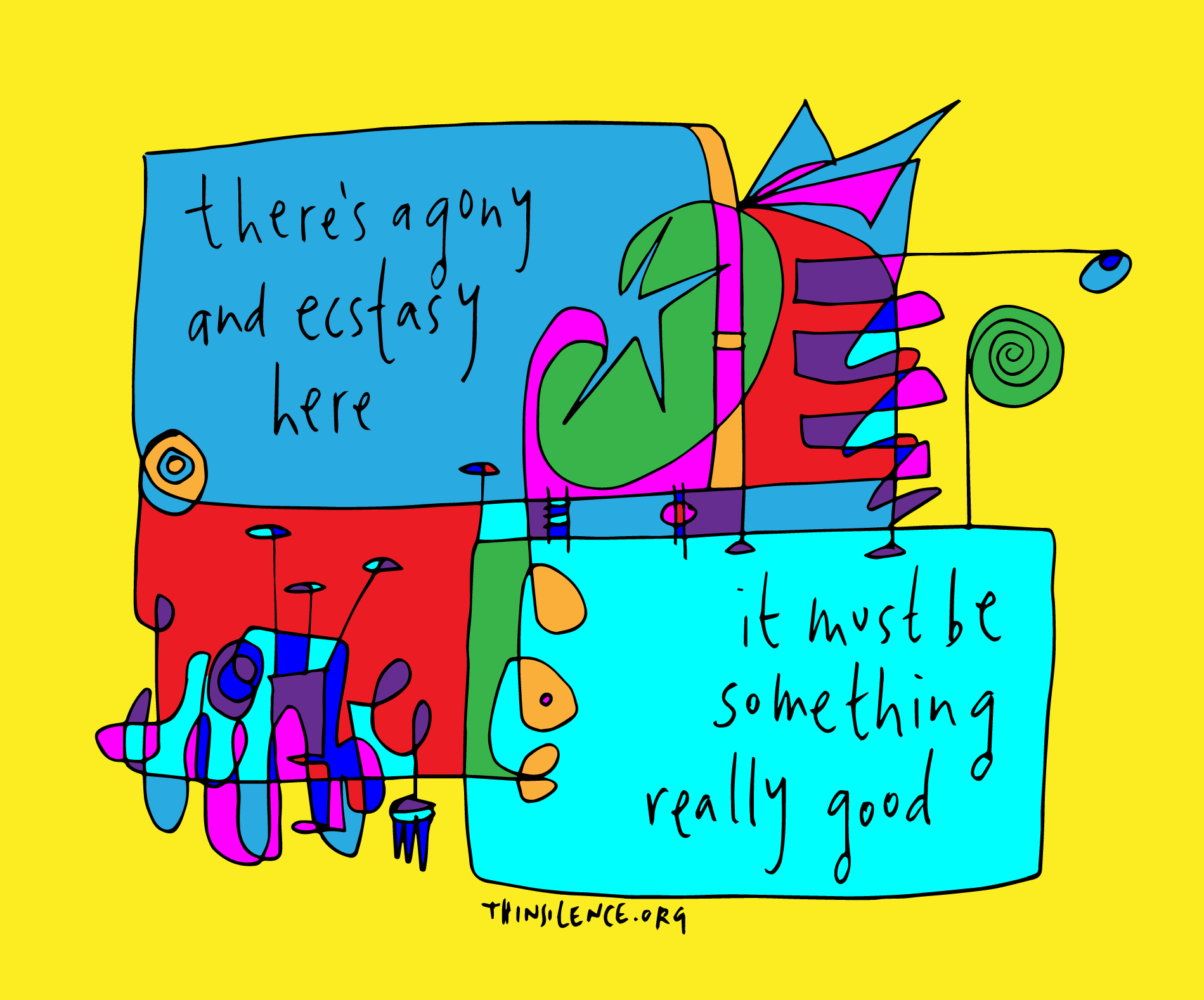
Pain and joy, belief and unbelief, agony and ecstasy go together.

When something really good comes along, it is likely that it not only changes things for those who are open to it but has already radically altered the person bringing it.

It’s what makes life life.

(*From Seth Godin’s blog: What is extraordinary contribution worth?)

Personalisation

Personalisation is telling one another a bit of our story of who we really are, where we have come from, and where we are going. […] Personalisation is a process that can only occur in degrees, and it can become dangerous.*
(Ed Schein)

In a world where data is king, it’s more important than ever to remember that what we measure becomes the thing we’re compelled to act on.**
(Bernadette Jiwa)

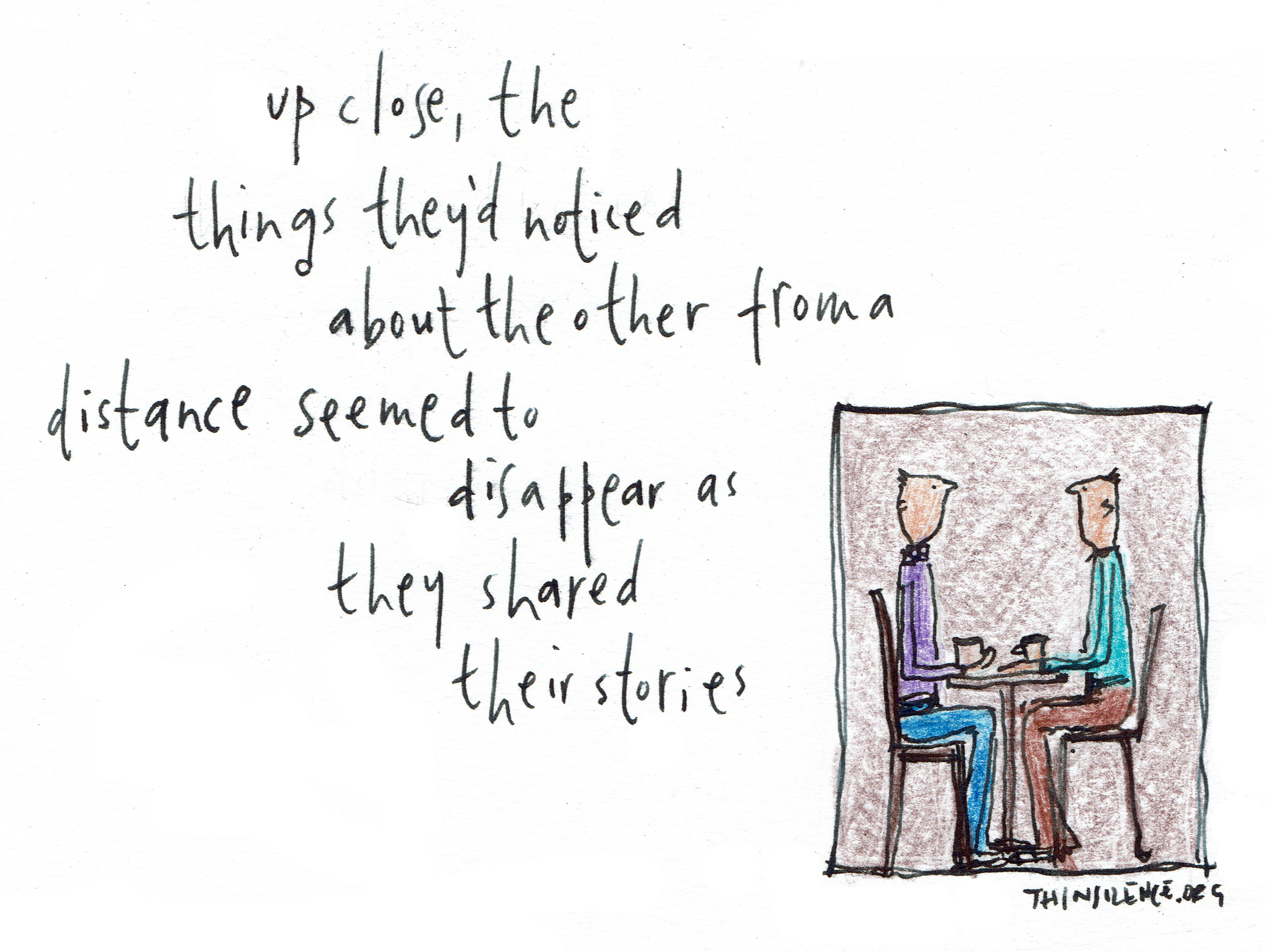
We see many things up close in each other that we could not see from a distance.  It’s like noise and signals.  There’s a lot of noise but the noise is unimportant,.  The signals, though, are what our lives really are, the stories of who we are, how we got here, where we hope to go.  We take the risk of being known and knowing because no-one is perfect and at the same time are pretty amazing.

(*From Edgar Schein’s Humble Consulting.)
(**From The Story of Telling: We Value What We Measure.)