It struck me that the only voice that spoke about the future as the result of a creative act was the one person whose view of reality was not shaped by [a] fixed view of the future.* Erwin McManus
Only the person who has faith in himself is able to be faithful to others, because only he can be sure that he will be the same at a future times as he is today, and, therefore, that he will feel and act as he now expects to.* Erich Fromm
What if your life is like a story and you and I are in the theatre of our own minds, looking out the cameras of our eyes, and the story unfolding feels either meaningful or meaningless based on what we decide to make happen in it? … meaning is only experienced in motion** Donald Miller
Faithfulness is about putting who we are and what we have into action.
It requires that we be faithful to ourselves, To notice what fascinates and intrigues us most, And to our desires and passions. If we cannot find things to be faithful to in ourselves, How can we be faithful as we need to be for others?
There is stuff that each of us does that gives us energy – A lot of energy to do more stuff – It is critical we notice what this is; There is other stuff we each do that sucks energy out of us faster than Buddy the Elf can empty a bottle of coke – It may be even more critical that we notice this.
Here’s a simple thing to do that I’ve shared before: Keep two lists – A “loved it” list and a “loathed it” list. When you notice you are highly energised, Make a note right then of what it is:^ Likewise, when you are being greatly de-energised by something you are doing, Make a note of what it is.
You have to be faithful to what is on the loved it list and DO more of these; You have to be faithless to what’s on your loathed it list, But if you can’t avoid these things, Manage them with the contents on your loved it list.
*Erich Fromm’s The Art of Loving; **Donald Miller’s Hero On a Mission (emphasis mine); ^The things to make a note of are: What are you doing?, why are you doing it?, who are you doing it with or for?, and, when are you doing it?
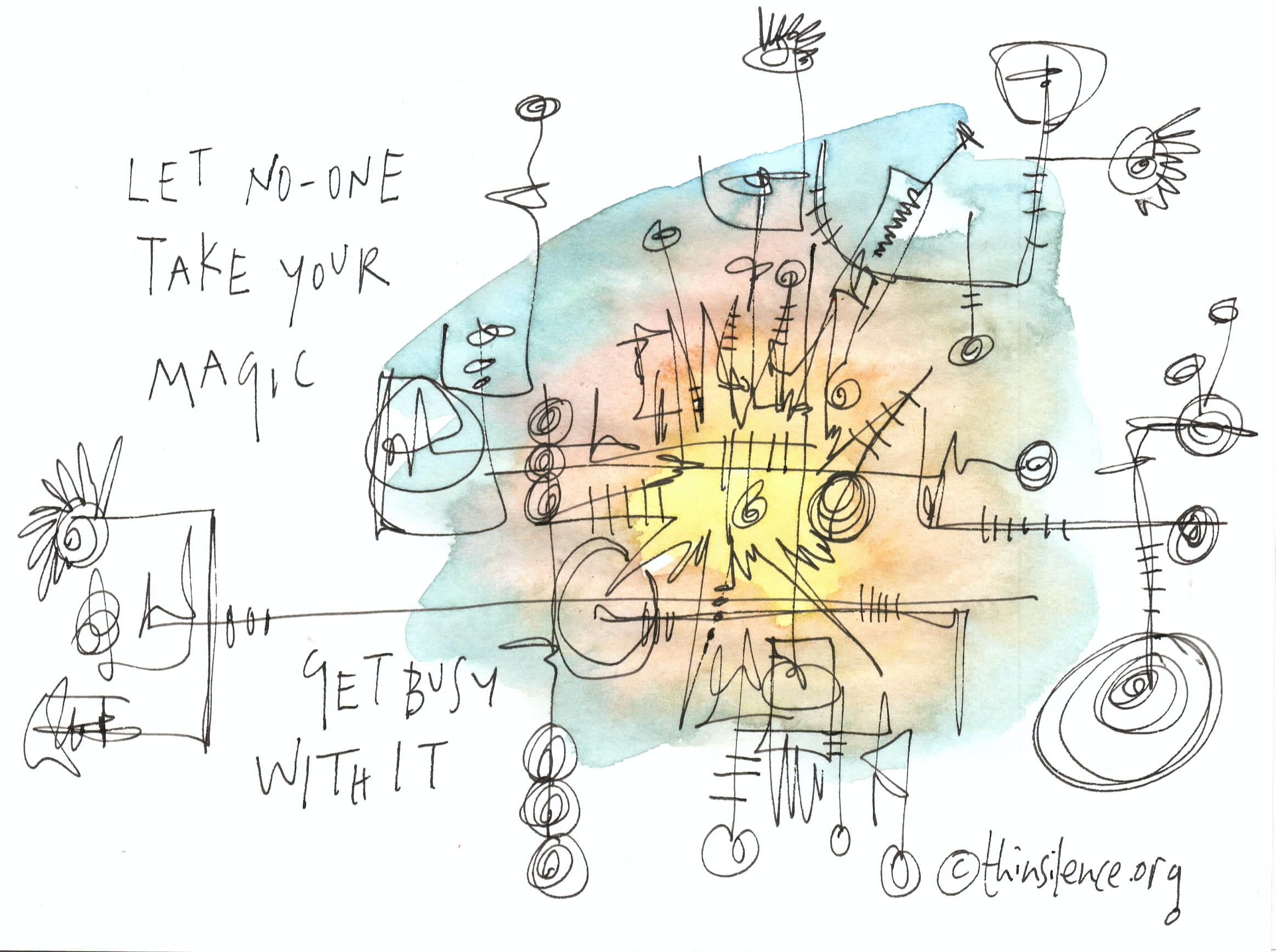
Most of the time, the phrase is, “it’s time to get back to work.” This means it’s time to stop being creative, stop dancing with possibility, stop acquiring new insights and inspiration – and go back to the measurable grind instead. Maybe we’d be better off saying, “I need to get back to making magic.” Because that’s what we’d actually like to be getting paid to create.** Seth Godin
As much as we love Harry Potter, We now this saga’s magic isn’t to be found in the spells and incantations of witches and wizards, But in the love of family and friends, The courage to keep going against overwhelming odds, In spite of all our limitations, And, yes, Facing our own death, The ultimate limitation.
There’s a kind of alchemy that occurs when we are prepared to live within our story, As Donald Miller encourages here:
The heroic transformation begins when the hero takes responsibility for their life and for their story. The hero becomes the hero only when they decide to accept the facts of their life and respond with courage.^
Again, this time from Lewis Hyde, A suggestion that something magical is possible through our lives:
because world and body are meant to pattern one another, when [the trickster] reimagines his body he imagines the world^^.
Magic is possible where we are when we are who we are; Here is Joseph Campbell touching upon this:
To claim the land. To turn the land where they lived into a place of spiritual relevance. […] One should find the symbol in the landscape itself of the energies of the life there. The is what all traditions do. They sanctify their own landscape.⁺
We may want someone else’s story, But really, The very best place to begin is within our own story; The facts of life are not how we were made, But where we are right now, However difficult a place this might be:
Being able to perform becomes the critical issue: Competence is the best defence against the helplessness of trauma.*^
Magic is moving our lives toward the future, Transforming our stories. Yes, there will be a lot of sweat and tears, Failing and persevering, But amongst these, there’ll be moments that can only be described as magical.
For our purposes today, The opposite of magic is tragic, Not allowing ourselves and others to believe there will be moments of wonder and amazement that are the result of their imagination and creativity.
For me to be a saint means to be myself. Therefore the problem of sanctity and salvation is a problem of finding out who I am and of discovering my true self.^*
A good story isn’t just about the hero. It’s about the people the hero loves, the people dependent on the hero, the victim the hero is going to rescue. Stories may be told through the lens of the hero, but they are always about what is happening to a community of people.* Donald Miller
May he be like rain that falls on the mown grass, like showers that water the earth. In his days may righteousness flourish and peace abound, until the moon is no more.**
Coinciding with the funeral service of Queen Elizabeth taking place today has been my reading of Donald Miller’s suggestion that we prepare our own eulogies – To help us connect daily with what is most important to us.
In a good story, Miller writes, There has to be a ticking clock; Something has to happen to someone by a certain time.
Death is our ticking clock. Not something to be feared, but our servant towards living a meaningful life, Even life-in-all-its-fullness.
Over the past days I have listened to many poignant eulogies to the Queen, Some no longer than a sentence, Each very special. Admittedly, after leading many funeral services over forty years, I can find myself wondering who may come to mine, And what will they say. I’m not being morbid, Rather I am trying to be more focused about how to live the remainder of my days.
However much longer we have, Using our eulogy at the beginning of each day In some way, shape or form, Will keep us connected to what we want our lives to be filled with, Which, as Miller suggests, Will include others whose lives we want to fill with good things, too.
*Donald Miller’s Hero On a Mission; **Psalm 72:6-7 – a psalm for the king.
Our possibilities are not limitless, but they are at least infinitely above our present possibilities of imagination.* Frank Laubach
Each life is a mystery that is never finally available to the mind’s light or questions. That we are here is a huge affirmation; somehow life needed us and wanted us to be. To sense and trust this primeval acceptance can open a vast spring of trust within the heart. It can free us into a natural courage which casts out fear and opens up our lives to become voyages of discovery, creativity and compassion.** John O’Donohue
It is said that tomorrow never comes, And yet there is a way in which it can be transformed into today.
Yesterday may not have been all that we wanted it to be, But now it’s gone and we have this opportunity to start over.
The way to tomorrow is not some plan or a map to be followed: It is people with whom we connect, including yourself. Connect to yourself and your hope, Join with with those who will help you – The main characteristic of a guide is that they help the hero win^ – Also relate to the reality of your world, And, If you have a god, Be in relationship, too.
Begin writing out and about these things every day, And your way, or path, will emerge. Then, later in the day, Find ways of exploring, experimenting, Asking your questions of the way:
Begin. With the humility of someone who’s not sure, and the excitement of someone who knows that it’s possible.^^
The best stories and novels lead the reader not to an explanation, but to a place of wonder.* Peter Turchi
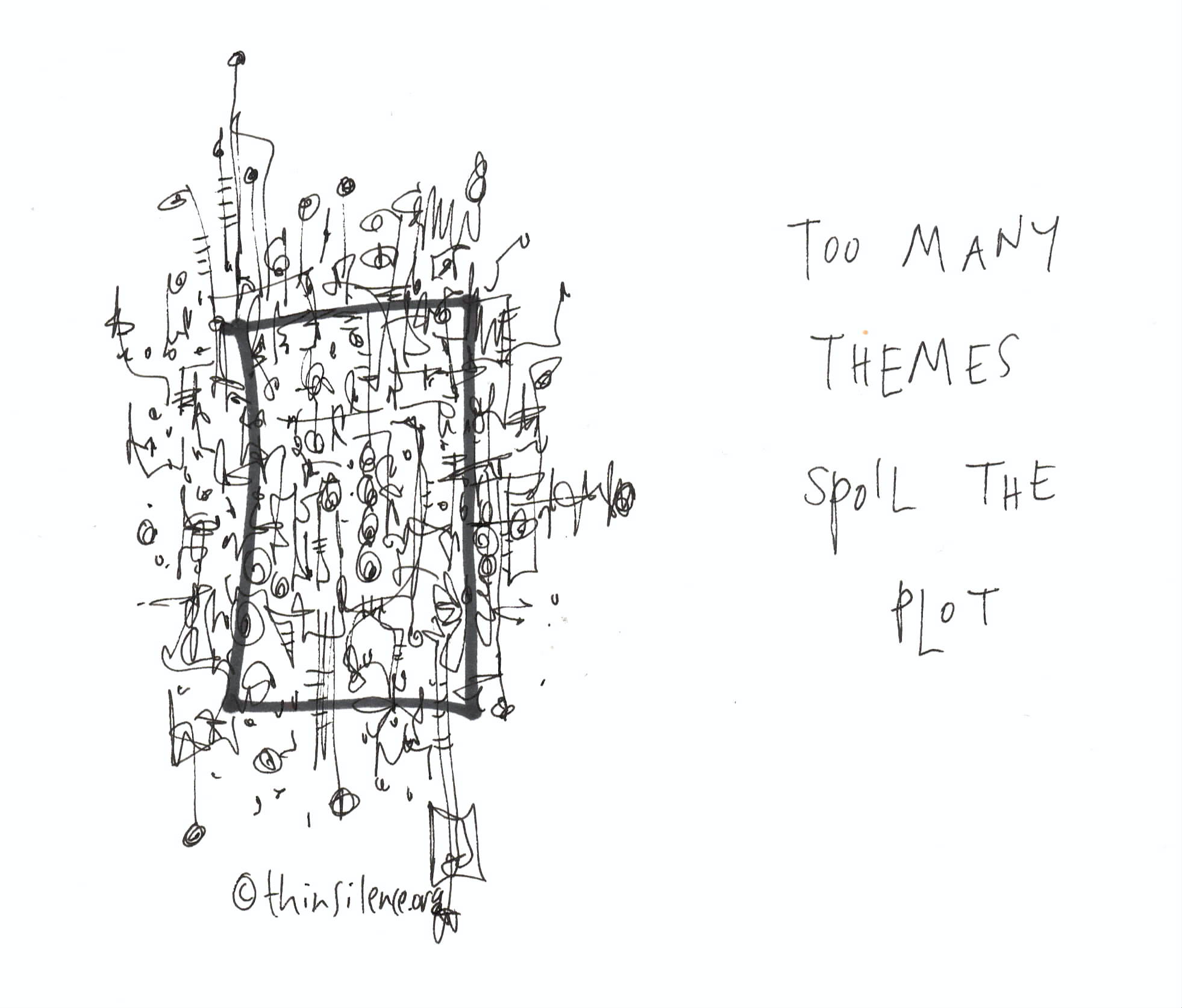
Here’s another rule about stories that will help each of us live a more meaningful life: try not to want too many things.** Donald Miller
Too little content or too much and we’ll soon lose interest in the book we’re reading or the movie we’re watching.
This is a observation benefits us when it comes to shaping our personal stories; Too few or too many themes and we’ll begin to lose interest: We’ll probably have the appearance of being on autopilot.
As I’ve been thinking about a new project to work on, I’ve needed to be clear about the number of themes to pursue, To be clear whether this new thing fits with or gets in the way of the bigger plot.
Why not take a moment to name your major themes? I realise mine are reading, journaling, blogging, doodling and dreamwhispering: They interlink and my new project fits with them, and so will keep me interested.
Our deepest calling is to grow into our authentic selfhood, whether or not it conforms to some of who we ought to be.* Parker Palmer
The more learning older adults take on, the faster they seem to learn – the more they become like younger adults.** Tom Vanderbilt
Would you like to be young again?
Why not learn something new … And then keep learning.
Okay, It won’t reverse the ageing process that involves getting slower, with aches and baldness thrown in, It won’t reverse the decline in fluid intelligence and the need to make the leap into crystallising intelligence,^ But to see in fresh ways and understand new truths, And to be able to give these things to others with joy to the people we meet on our journey, Is to feel born again.
very happy people know a secret: a human being has a ridiculous amount of personal agency* Donald Miller
Which came first? Language or meaning?** Lynda Barry
As story-telling creatures, It’s critical to notice if we’re playing the victim or being the agent.
If our life isn’t what we want it to be, And yet we stick where we are, It’s likely we’re playing the victim in some way or other. Even to turn our curiosity towards the things that disappoint or stress or worse, Is to begin to act more like an agent.
For certain, To utilise our agency is hard because, Well, we have to do something we’re not used to doing or maybe have never done before; But to remain a victim is harder.
When travelling south from Scotland to visit our family in England, One route takes us past a small sign marking the source of the River Tweed. Looking across the moorland, There’s nothing to be seen, But a little searching would discover a trickle of water that, As it flows towards the sea at Berwick-upon-Tweed, Is slowly swollen by the contributions of many water sources, Until the Tweed must be spanned by some considerable bridges.
I mention all of this because to move from victim to agent, We begin with small steps. If you are curious about this then you have already begun.
To uncover what you have, To notice what you can give, And to identify the smallest ways of giving expression to these, Will not only identify your meaning in life – Life is about making meaning and our stories encapsulate what we create – But also swell your agency and carry you away from being the victim. (If I can help, let me know.)
The word for this is transformation:
What is the essence of heroic energy? A hero wants meting in life and is willing to accept challenges in order to transform into the person capable of getting what they want.*







You must be logged in to post a comment.