You step into a kind of magic circle when you start writing, and you step into a magic circle when you start reading. When I step into the portal, I am not sure what’s going to happen. That’s why I keep coming back. I step into the portal, and, no matter how tiny the distance I travel, when I return, I’m changed, even just a little bit. You step into the portal to discover what you didn’t know you were looking for.* Austin Kleon
My hope is to bring some new words into the life of another, In return, I hope for some new words that will leave me changed. These are gift-words; You will have yours to share and I will have mine, And when we bring them together, something quite exquisite may occur. When it comes to capturing what has been discovered, I ask the dreamwhisperer to use their own words.
Giftly: to generously gift something of your genius to someone
“lightly-dark”: a word to describe the light occurring at the edge of darkness after a cold clear day. Invented by me (aged 11) walking home in a beautiful under-related Lancashire landscape of the countryside, in the evening.* Margaret Cockcroft (aged 96)
Perhaps most awe-inspiring of all, our brain allows us to imagine.** Jonah Paquette
An eleven year old Margaret Cockcroft noticed something in such a deep way that she had to bear witness to it with a new word (and all words are made up words). Quentin Blake’s illustrating work underlines that it needn’t be a word, but could be a picture that bears witness to something he has seen: I like to explore the different possibilities of some relationship or someone’s behaviour. Whether I am inventing a set of situations or working to an existing story, the business s one of imagination. I suppose where no story exists, I am implying that there is one somewhere.^ All of this sets me to wondering whether there is something that you see in such a deep way that you have to bear witness to it in new words or new pictures.
I am touched only if I respond from my own centre – that is, spontaneously, originally. But you do not touch me except from your own centre, out of your own genius. Touching is always reciprocal. You cannot touch me unless I touch you in response. The opposite of touching is moving. You move me by pressing me from without towards a place you have already foreseen and perhaps prepared. It is a staged action that succeeds only if in moving me you remain unmoved yourself.* James Carse
A series of Quentin Blake’s artwork catches my attention. Entitled “Characters in Search of a Story” – Echoes of the work I am about, of finding the story that is in each of us, and so my hope is to co-create spaces in which people may explore their wonderment. To this end, these spaces must be places of “touching, not moving” because it is important that the other person comes alive with the things they love and I reciprocate with the things I love – Ebb and flow It doesn’t always happen in this way but, When it does, Something quite astonishing takes place, A releasing of talent and energy and deep-values. We can only be touched when we are what we are; When we are not what we are then we can only move others. I have read James Carse’s words so many times, hoping to catch and hold on to what he is offers from his own centre, his own genius – And I hope that what I have described is an expression of touching rather than moving. We need more spaces like this for people to flourish.
We are the ones who must answer, must give answers to the constant ‘life questions’. Living itself means nothing other than being questioned; our whole act of being is nothing more than responding to – of being responsible towards – life.* Viktor Frankl
It was Viktor Frankl who revealed that it is life that asks questions of us about meaning. I believe we are each very capable of responding imaginatively and hopefully in kaleidoscopic ways. In a recent conversation I felt I needed to share how the kaleidoscope twists for me: That people are amazing and should have the opportunity to know why, Then releasing this in only the way they can, And to keep releasing more, As Seth Godin encourages: Now all that’s needed is more. More time. More cycles, more bravery, more process. More of you. Much more of you. More idiosyncrasy, more genre, more seeing, more generosity. More learning.** Or as Francine Prose urges: The challenge is to keep doing something different, something harder and scarier in every way than the thing you did before … to do something more difficult each time.^ This kind of more is not about getting more but giving more, And it is hard work being amazing, but it is what life asks of us. We don’t know how much more we have until we use it.
longing becomes not the craving for perfection – for the shimmer of glory, for the myth of closure, for the happily ever after – but a kind of tenderness for imperfection, for the recognition that the place between no more and not yet is the place where the chance-miracle of life lives itself through us, and that is a beautiful place* Maria Popova
Two things: everything depends on the individual human being, regardless of how small a number of like-minded people there are, and everything depends on each person, through action and not mere words, creatively making the meaning of a life a reality in his or her own being.** Viktor Frankl
Robert McKee reflects on writing but provides us with a question for our lives: Here’s a simple test to apply to any story: What is the risk?^ It is what draws us forward, Holding us in the right direction, Sustaining us through fat and lean, Pulling us into action, However small those steps may be. Susan Cain names it “bittersweet”: Longing is momentum in disguise: It’s active, not passive; touched with the creative, the tender, and the divine. We long for something, or someone. We reach for it, move toward it.* This kind of risk – A risk for something rather than anything – Will lead us through dark and light, through pain and delight, through the shortness of our days and the endlessness of meaning, and, yet, Still we must.
Running away from fear is fear, fighting pain is pain, trying to be brave is being scared. If the mind is in pain, the mind is in pain. The thinker has no other form than his thought. There is no escape.* Alan Watts
[Awe] gives and expanded sense of time, which turn lowers our stress, leads us to feel more satisfied with our lives, and prompts us to act more generously and compassionately towards others. … Powerful moments of awe, can help reconnect us to our values, remind us of that truly matters, and put our lived into a great cosmic perspective.** Jonah Paquette
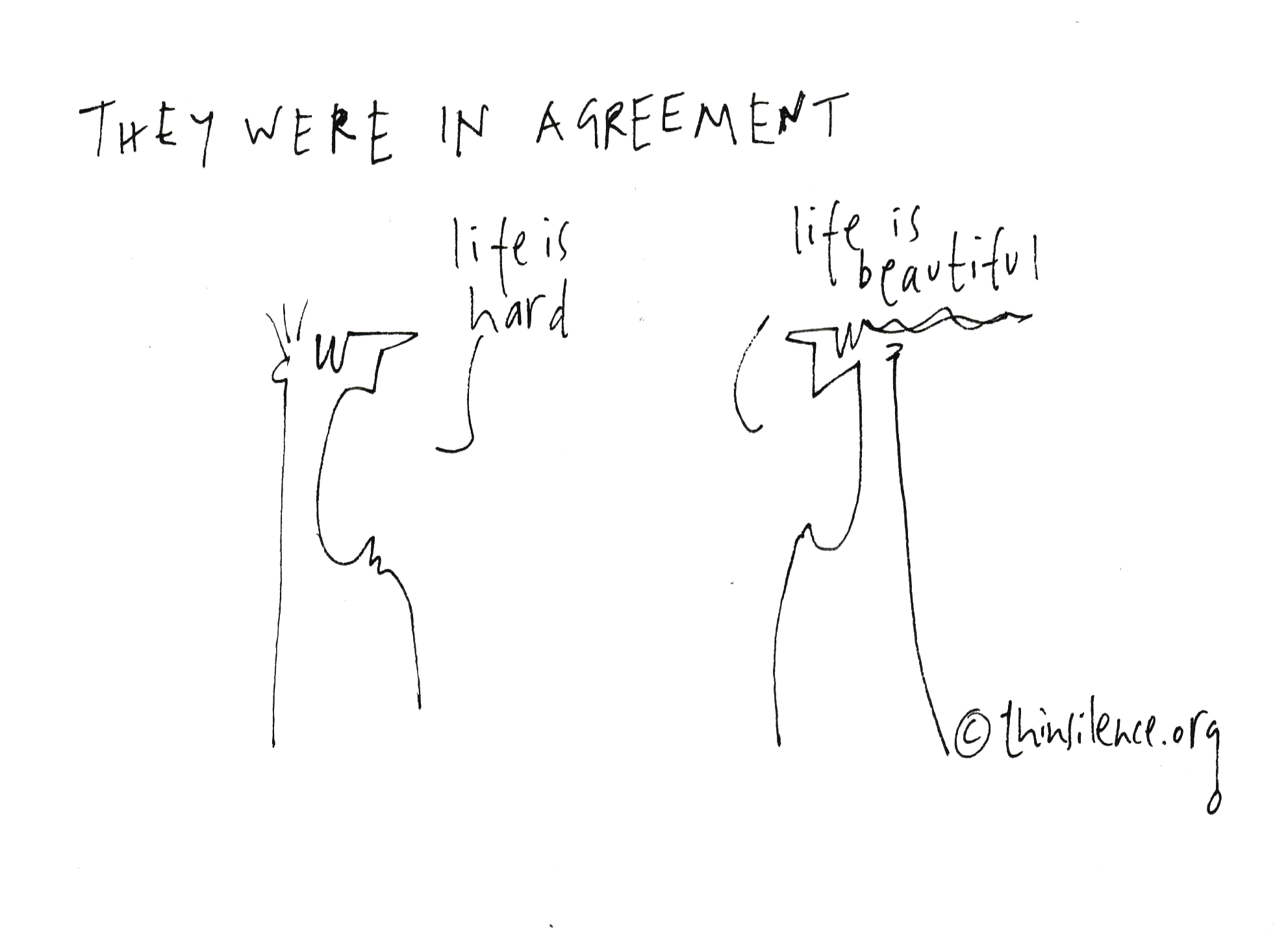
Life is hard,^ But it is also filled with beauty. We make life harder when we separate ourselves from the beauty waiting to break upon our consciousness, Even the joy of a rose or magnolia or foxglove, waiting patiently to catch our eye as we leave our homes in the morning, is now lost to monoblock and fake grass. Robin Wall Kimerer^^ reports that 70% of Potawatomi words are verbs – In contrast to English’s 30% – So that is not a garden, but it is “to be a garden” – Such can be our experience. You and I do not have a life, but we are a life, or, as Viktor Frankl describes this: we are to actualise the content in our own act of being.*^ Returning to Robert Macfarlane’s reporting of “childishness” in four and five year olds engaging with the natural world, it was noted how, paradox was, instead of a tool for collapsing meaning, a means of holding incompatibilities in rich relation^*. I have wondered how some of this might be retained into adulthood as childlikeness, being open to wonder as a way of embracing hardship.
Wonder is the heaviest element on the periodic table. Even a tiny fleck of it stops time.* Diane Ackerman
Curation is the ultimate way of transforming noise into meaning.** Rohit Bhargava
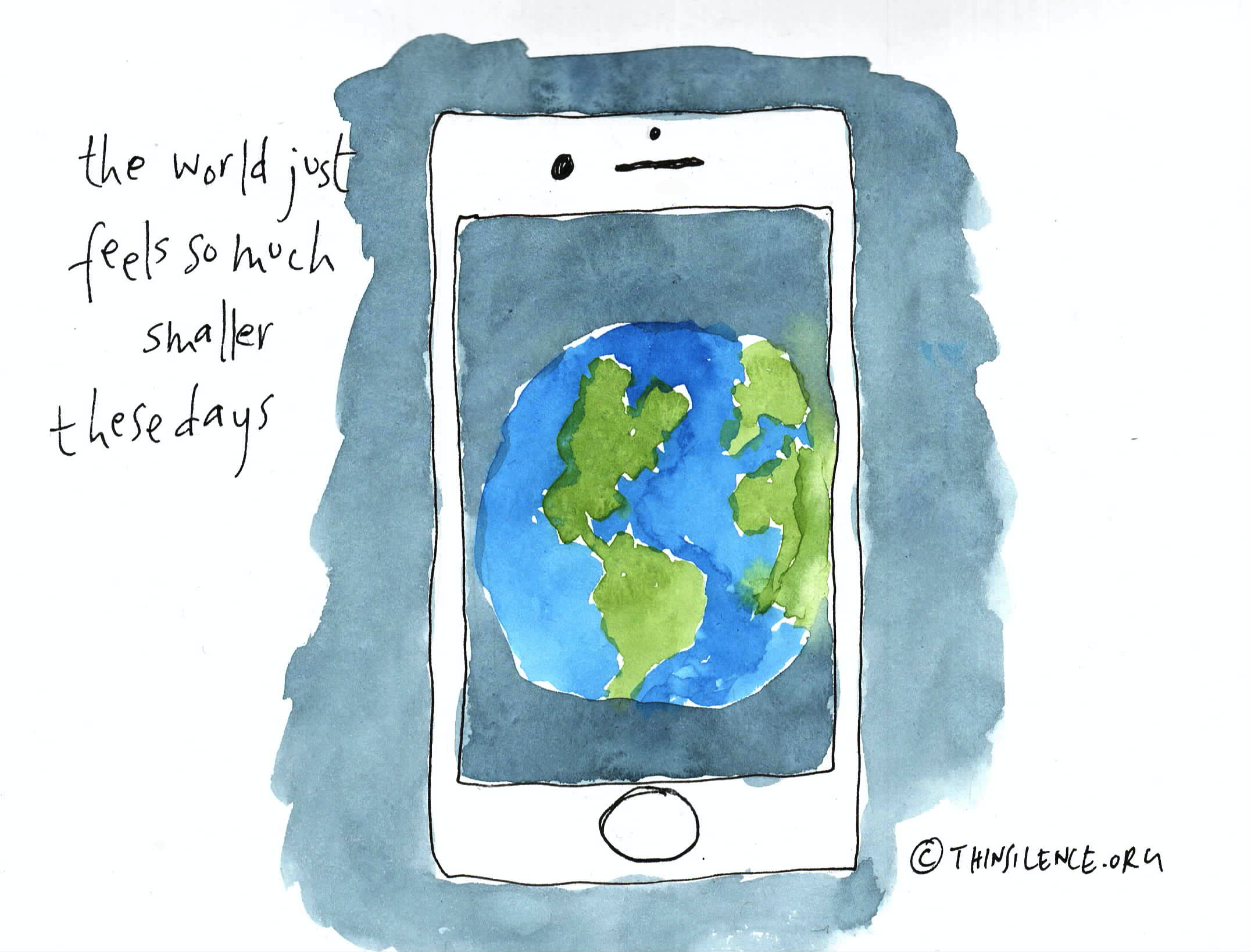
Through awe, we shrink and the world becomes BIGGER. Awe can be tripped by many different things – LARGE and small – from the natural world to human ideas and inventions. Here are three benefits proffered by Jonah Paquette: Among the different ideas that have been proposed, three explanations stand out today: awe strengthens our social bonds, makes us kinder and more generous to others, and fosters a sense of curiosity about our world.* The trouble is, our opportunities for awe are reducing. Robert Marfarlane shares the findings of a report that between 1970 and 2010, the area in which British children were permitted to play unsupervised shrank by 90 per cent. The proportion of children regularly playing in ‘wild’ places fell from one in two to one in ten.^ Perhaps a useful option, Alongside all the fancy New Year resolutions, is to take a slow walk more often – We’ll not know where they lead until we venture out.
As well as opening doors, the children made dens: the doors allowing access and adventures, the dens permitting retreat and shelter.* Robert Macfarlane
Most of us then default to one of a handful of templates and filters for all their experiences; everything gets pulled inside what my little mind already agrees with.** Richard Rohr
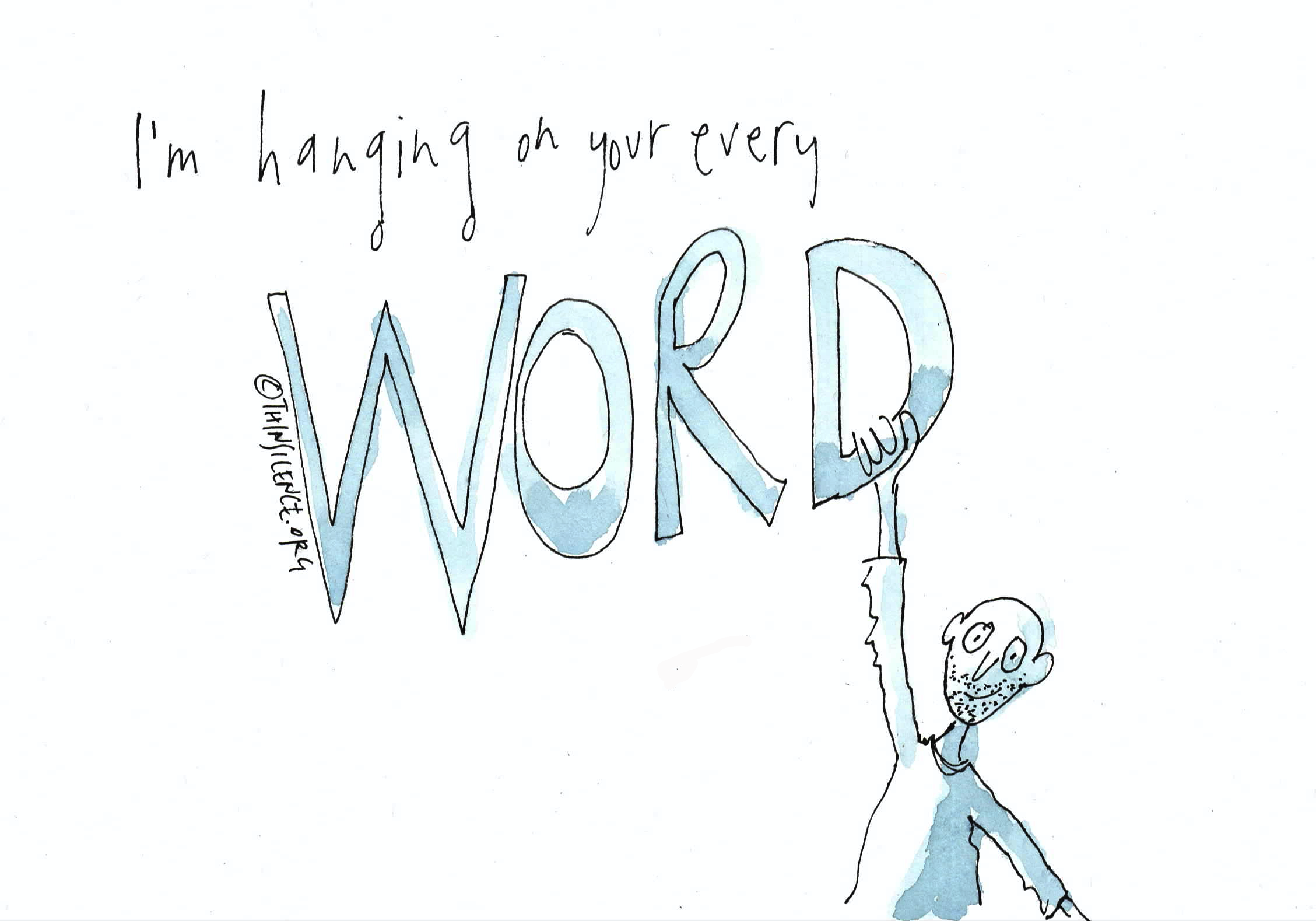
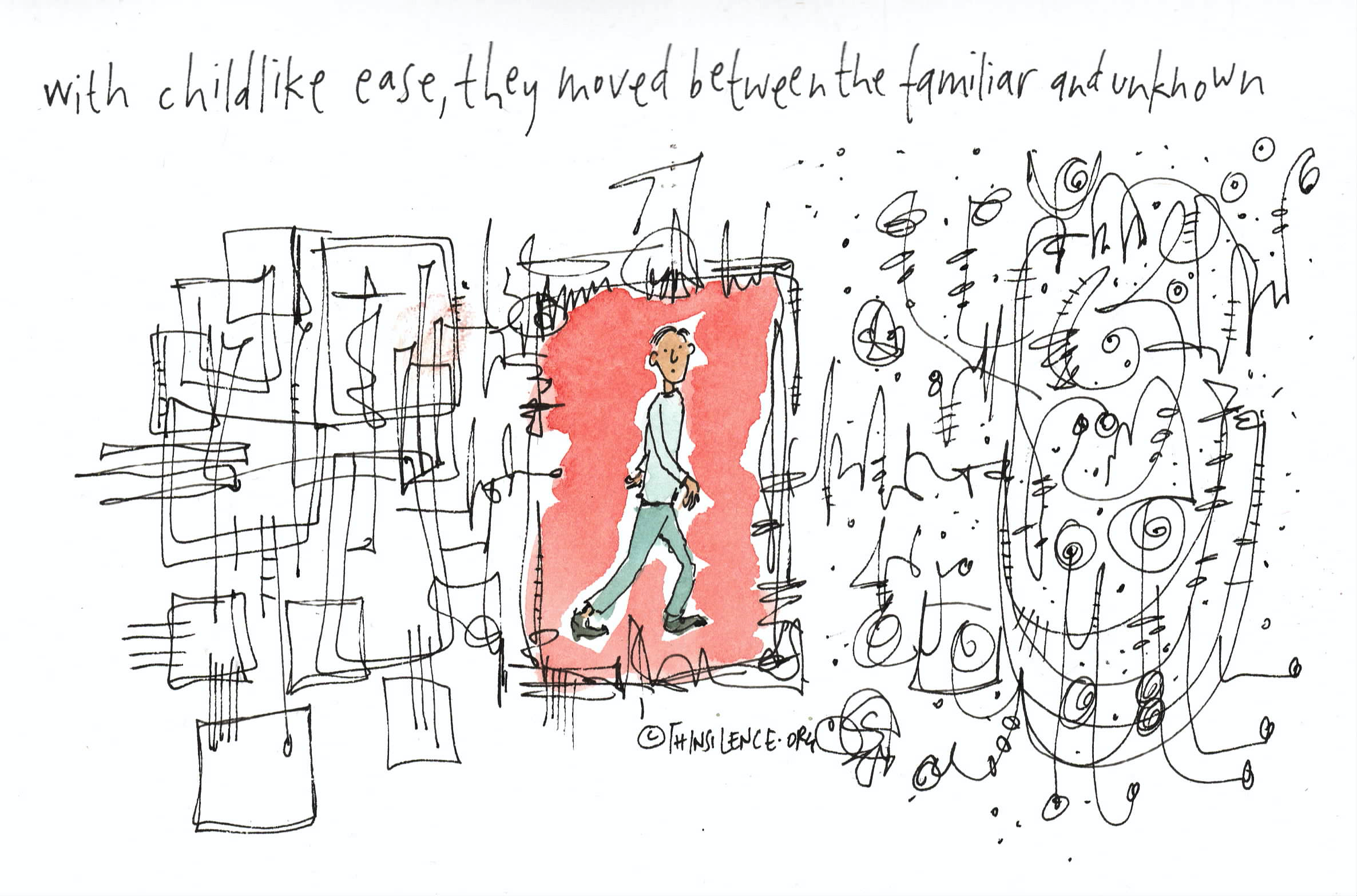
It seems that the older we get the more dens and fewer doors populate our lives; More of the familiar, Less of the unfamiliar. This need not be so – I hold on to the truth that people are amazing, and ought to know why – This is both my joy and my work – So we find our doorways and dens, And begin moving between the two – To leave the known for the wonder: awe truly is all around us, if only we take the time to look,^ And to return into the secret place for reflection because we suspect, the opposite of contemplation is not action – it is reaction^^. So this movement to and fro creates a larger story emerges, A life continues to grow amazingly.
there’s a chance to work on our filters, our habits and our instincts* Seth Godin
with panache: still be scratchy and instinctive, and badly behaved* Quentin Blake
There’s a reason why the people you admire can do what they they do. Whatever their craft may be, They’ve practised it, Not only again and again, But also from different angles and in different media and modalities, Developing new ideas and innovative expressions along the way. The good news is, We can all practise.
won’t you celebrate with me what I have shaped into a kind of life? i had no model. … i made it up here on this bridge between starshine and clay* Lucille Clifton
Grace makes both the giver and the recipient more beautiful.** Erwin McManus
I love Quentin Blake‘s simple drawing style, something he came upon early in his days cartooning for Punch magazine. With a few lines and a little watercolour, He is able to tell a story. It holds an important truth for us, That when we find the lines and add a little colour, We come alive. These lines include our abilities and values and energies, And then we can make our own lines. Whilst there’s nothing special about the 1st January 2023, It can become defining if we want it to: “From this day, And for the following year, I will …” We all have lines and colours; sometimes what we only need to extend to ourselves and to others is a little grace.


 THIN|SILENCE
You must be logged in to post a comment.