Your advantage

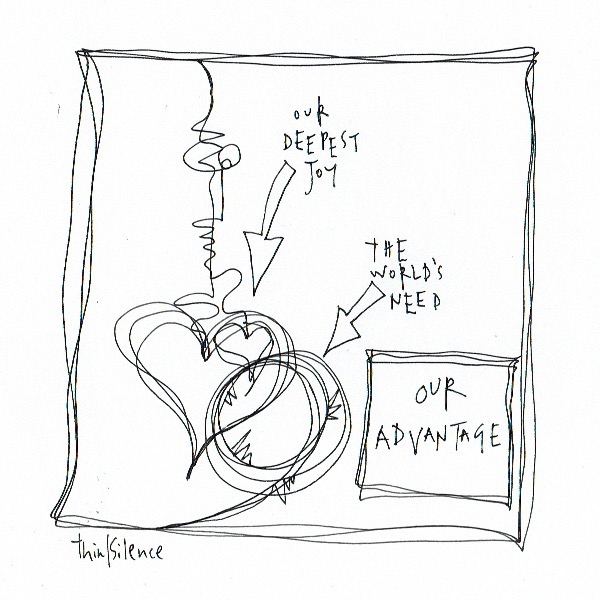
Our advantage is not something that we gain.  It is something we give.

It is found where our deepest joy meets the world’s greatest need.

These are different for every person but something very special happens when we hone our gift in the secret place of personal inquiry and reflection, when we develop it into something artful through great effort and when we make it available to others because we care:

‘Create an imbalance of effort and care.  Show up.  Don’t spam, in any form.’*

(*From Seth Godin’s blog: Effort in the face of near-certain rejection.)

The reducing life (or, the robots are coming)

The goal can’t be quality, not for people anyway.  It needs to be humanity.  The rough edges of caring, of improv and of connection.

If all you can do is meet spec, better be sure you can do that faster and cheaper than an AI can.*
(Seth Godin)

Like the old saying goes, people don’t remember stats, they remember stories.**
(Hugh Macleod)

I don’t know if robots get headaches, or their digital equivalent.  I know I’ve got one today, and it’s getting worse.

Robots and AI are taking on more and more of what we can do and probably without headaches slowing them down.

What are we left with? is a really important question.  It brought me back to the critical 21st Century question:

What does it mean to you to be human?

Maria Popova is asking her own questions:

‘It is, of course, an abiding question, as old as consciousness — we are material creatures that live in a material universe, yet we are capable of experiences that transcend what we can atomize into physical facts: love, joy, the full-being gladness of a Beethoven symphony on a midsummer’s night.’^

I find myself thinking that AI and robots probably not only don’t get headaches but they don’t get to begin with greed, pride and foolishness as humans do.  Yet from these starting points, the overcoming of these things on a daily basis, it often seems to me that we become most human, most imaginative and creative and loving.

Robots will do more and more of our work, life becomes more and more reduced in many ways, and yet there are untouched worlds that we get to explore as humans.

Every day.

(*From Seth Godin’s blog: We can do better than meeting spec.)
(**From gapingvoid’s blog: What’s your story?)
(^From Maria Popova’s Brain Pickings: Alan Lightman on the Longing for Absolutes in a Relative World and What Gives Lasting Meaning to our Lives.)

Today! (new improved recipe)

Great content starts with great stories and great stories start with thoughtfulness and intent.*
(Brian Solis)

There is today and then there is today with a little more added.

Not adding stuff from outside of us but adding from the inside.

This can be the hardest thing of all, to find the energy to make the effort to bring what we are capable of bringing.  How we bring more curiosity or focus or presence or questions or humility or gratitude or randomness … .  There’s an endless list of possibilities right under our noses.

The hardest thing of all but also the most satisfying and transformative.

(*From Brian Solis’ Once Upon a Digital Age.)

In the depths

‘After all, perhaps the greatest of art lies in the perpetual tension between beauty and pain, the love of men and the madness of creation, unbearable solitude and the exhausting crowd, rejection and consent.’*
(Albert Camus)

Imagination and creativity may be at their best when addressing problems and difficulties.  Nancy Kline tells of how her father delivered a speech calling for the equality of African Americans.  He was seventeen, graduating from high school in 1920 in Tennessee:

“I just asked myself, ‘What is the most important challenge facing my generation?’  I knew immediately.

Then I asked myself, ‘And if I weren’t afraid, what would I say about it in the speech?'”**

K. M. Welland writes about how a good story needs conflict, progresses and has some unexpected element.  We are all capable of bringing the unexpected.

(*From Albert Camus’ Create Dangerously.)
(**From Nancy Kline’s More Time to Think.)

Beyond the beyond the beyond

Listen to the silence. […] Silence will speak more to you in a day than the world of voices can teach you in a lifetime.*
(Frances Roberts)

What then is art?  Nothing simple, that is certain.  And it is even harder to find amid the shouts of so many people intent on simplifying everything.**
(Albert Camus)

I cannot lurch straight into the noise, how hide myself in the familiar.  I must find some asymmetry, a place for finding what I do not yet see, what I do not yet feel, what I cannot yet do.  A place to imagine.

Why do we imagine?  Is it because it is where we feel most alive?  Where the promise of some better world yet unimagined is still to be found?  Where simply is discarded for engrossing?

‘The artist constantly lives in such a state of ambiguity, incapable of negating the really and yet eternally bound to question it in its eternally unfinished aspects.’**

(*Frances Roberts, quoted in the Northumbria Community‘s Morning Prayer.)
(**From Albert Camus’ Create Dangerously.)

Nothing changes, everything changes

One thing about the future we cannot say is: This is how it’s going to be.  It hasn’t happened:

‘The future won’t be perfect.  We won’t be perfect. […] The future won’t always work.  We won’t always succeed. […] The future won’t always be fair.  But we can try […] It can be better if we let it.’*

I don’t know about you, but I like the fact that the future is uncertain in this way.  It means that this moment can be uncertain too, that it can be better than I think it might be:

“Live from day to day.  If you do so, you worry less and live more richly.”**

The present is more than simply the result of the past; without this sense of future-what-might-be, the fullness of the present remains unknown to us.

(*From Seth Godin’s blog: What is and what might be.)
(**Anne Morrow Lindbergh, quoted in the Northumbria Community‘s Morning Prayer.)

The elegant way

Life is too short not to do something that matters.*
(Hugh Macleod)

Being elegant means developing your ability to describe a concept in a beautiful, simple way.**
(Rohit Bhargava)

Here it is.  Another day to do something that matters.  What this looks like is up to you.

When we take a closer look at our lives and the needs in the world around us, we can trust one another to find something to do that makes a difference and to do this in an artistic.  Not the kind of art that has been separated from the real world but one that owns every human to be artistic, that everyone can do what they do with a swirl and panache.

This is an elegance on the far side of simplicity.  If I tried to do what you do, I’d make a hash of it.  You make it look simple, you may not even see this for yourself and undervalue what you do.

(*From gapingvoid’s blog: Why people are unhappy.)
(**From Rohit Bhargava’s Non Obvious – 2o15 edition.)

This is as far as I can go

It’s not.

We can go further.  We have the capacity.

I think of Walt Whitman’s ‘child who went forth every day,’ open to the “other” ‘with wonder or pity or love or dread’.*

Reality is all there is if we stop moving.  The imagination explored through moving on changes reality.

We have not arrived.

Poverty, racism, illiteracy, gender-violence, environmental catastrophe, conflict and too much more tell us this.

(*From Walt Whitman’s Leaves of Grass.)

asking-seeking-knocking people

When people come knocking on our door, when they ask their questions, if they’re looking around for something in our “neighbourhood,” what have we got to give?

It’s the person who themselves keep knocking, keeps asking questions, keeps searching and seeking that will have more to give than they realise.  With a lot of stuff around, this deeper way of going about life guarantees that we have something better to give.  We have a problem when we cannot see what it is we have to offer:

‘Scarcity appears when wealth cannot flow.’*

Walt Whitman provides some beautiful words as he brings his Leaves of Grass to a close, writing about a child that took into himself all that he saw:

‘There was a child went forth every day,
And the first object he looked upon and received with wonder
or pity or love or dread, that object he became,
And that object became part of him for the day or a certain part of
the day … or for many years or stretching cycles of years.’**

Plants and creatures and people became part of this child as he goes forth each day.  In this child all of these things are passed on:

‘These become a part of that child who went forth every day, and who
now goes and will always go forth every day,
And these become of him or her that peruses them now.’**

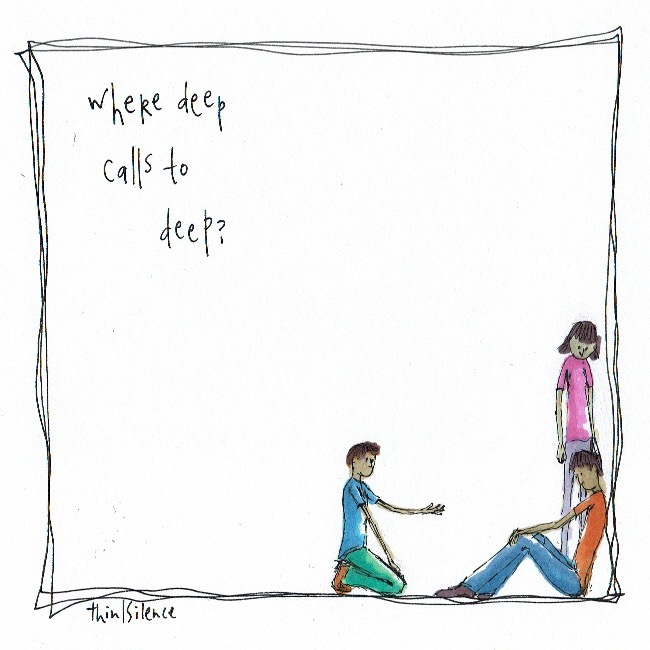
Others have been such worlds for us and we become such worlds for others.  Whitman moves closer to the end of his Leaves of Grass identifying wonder:

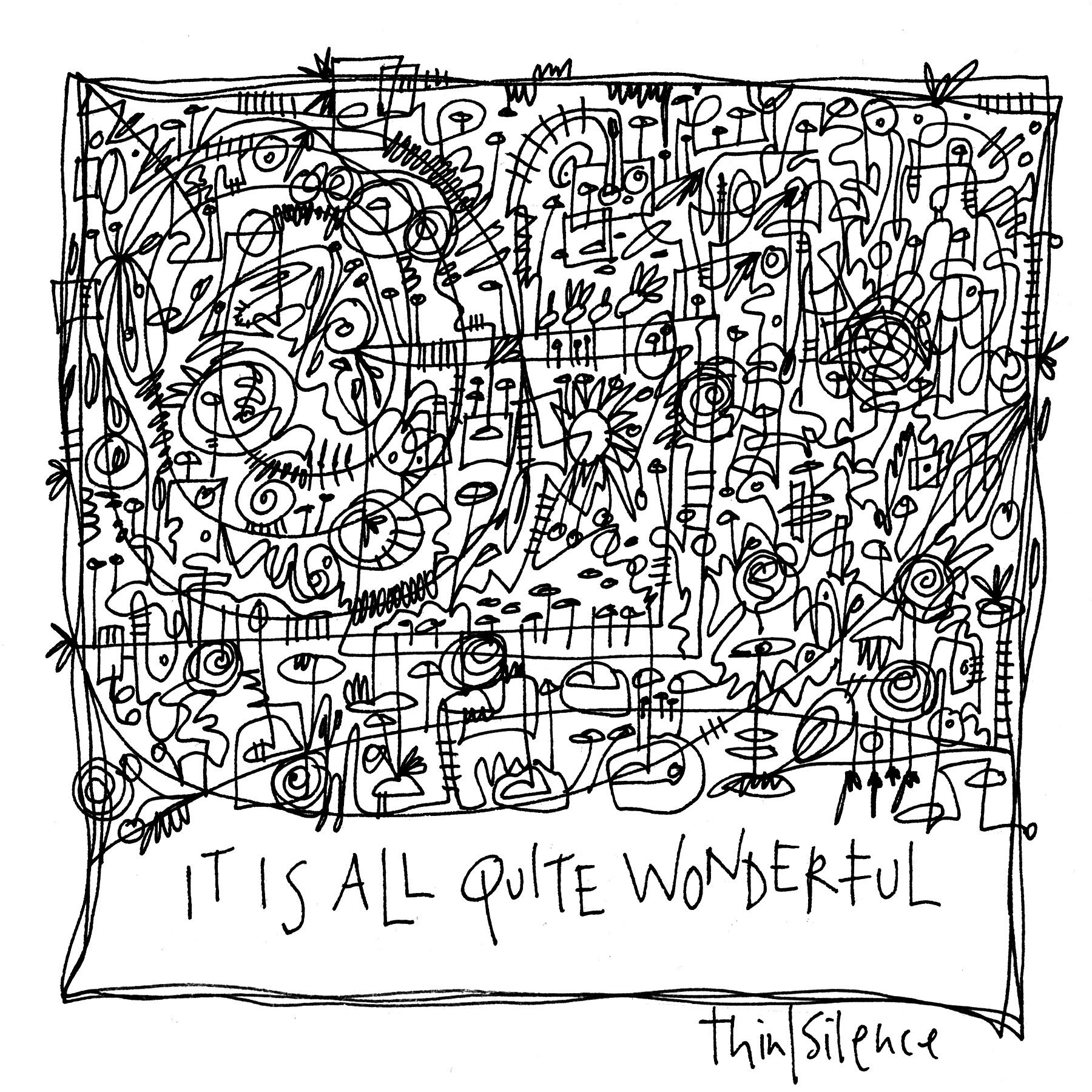
Is it wonderful that I should be immortal? as everyone is immortal.
I know it is wonderful … but my eyesight is equally wonderful …
and how I was conceived in my mother’s womb is equally
wonderful […].’**

He goes on t see how his growing up and who he ids are all wonderful.  And this thing, this thing happening right now as you read this, is wonderful too:

‘And that my should embraces you this hour, and we affect each other
without ever seeing each other, and never perhaps to see each
other, is every bit as wonderful […].’**

And you, you are wonderful, too:

‘Come I should like to hear you tell me what there is in yourself that is not just as wonderful, […].’**

You are more than worth-while to seek out, to knock on the door of, and to ask some things of.

(*From Lewis Hyde’s The Gift.)
(**From Walt Whitman’s Leaves of Grass.)

The narrow way and the broad way

What does work?  Finding something you love and making it your life.*
(Hugh Macleod)

Certainly [Philip Dick] struggled with the market’s demand for low standards and incessant production; but he kept on seeking his own vein, finding it, mining it deeper, till he hit the mother lode with The Man in the High Castle.**
(Ursula Le Guin)

Whip-ma-whop-ma-gate in York points out to me that small streets don’t have to have small names.  Whitnourwhatnourgate, as it was named in Anglo Saxon, means “neither one thing, nor the other.”

This is a broad way.  It’s easy to find, easy to walk along, never too demanding, and never as satisfying as we thought it would be.

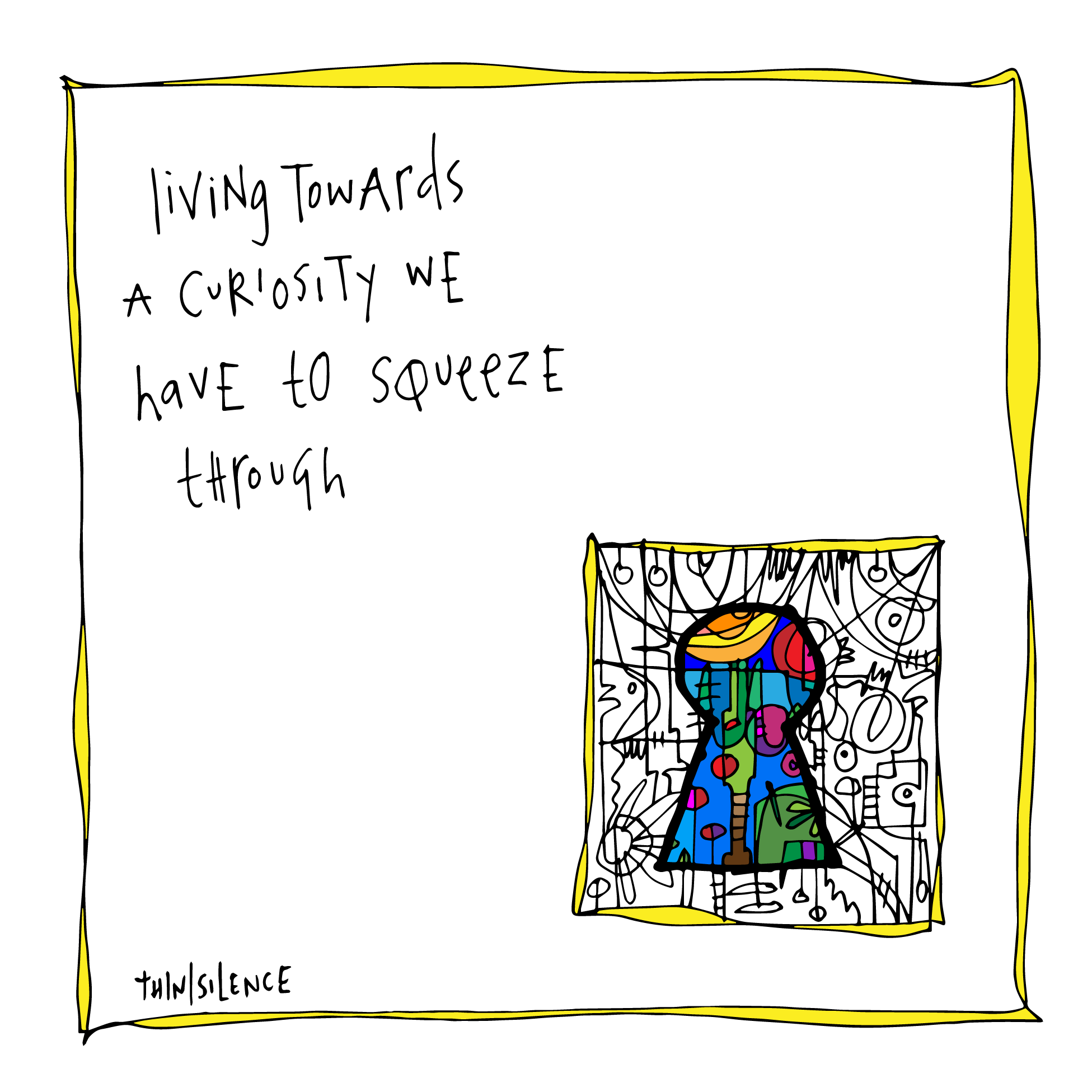
The narrow way doesn’t present itself in such appealing ways.  Its entrance is as small as a curiosity we have to squeeze through, opening slowly into a slightly larger space we are interested in, before it begins to open more and more into a way we can walk into and love.

Then something astonishing happens.  Often when the hard work causes us to question the path we’ve taken.  This narrow way leads into something bigger, richer, deeper.  This narrow way is the best way for knowing who we are and what our contribution is, for knowing others, and for knowing our world and universe.

(*Hugh Macleod from a gapingvoid blog I am unable to trace.)
(**From Ursula Le Guin’s Words Are My Matter.)


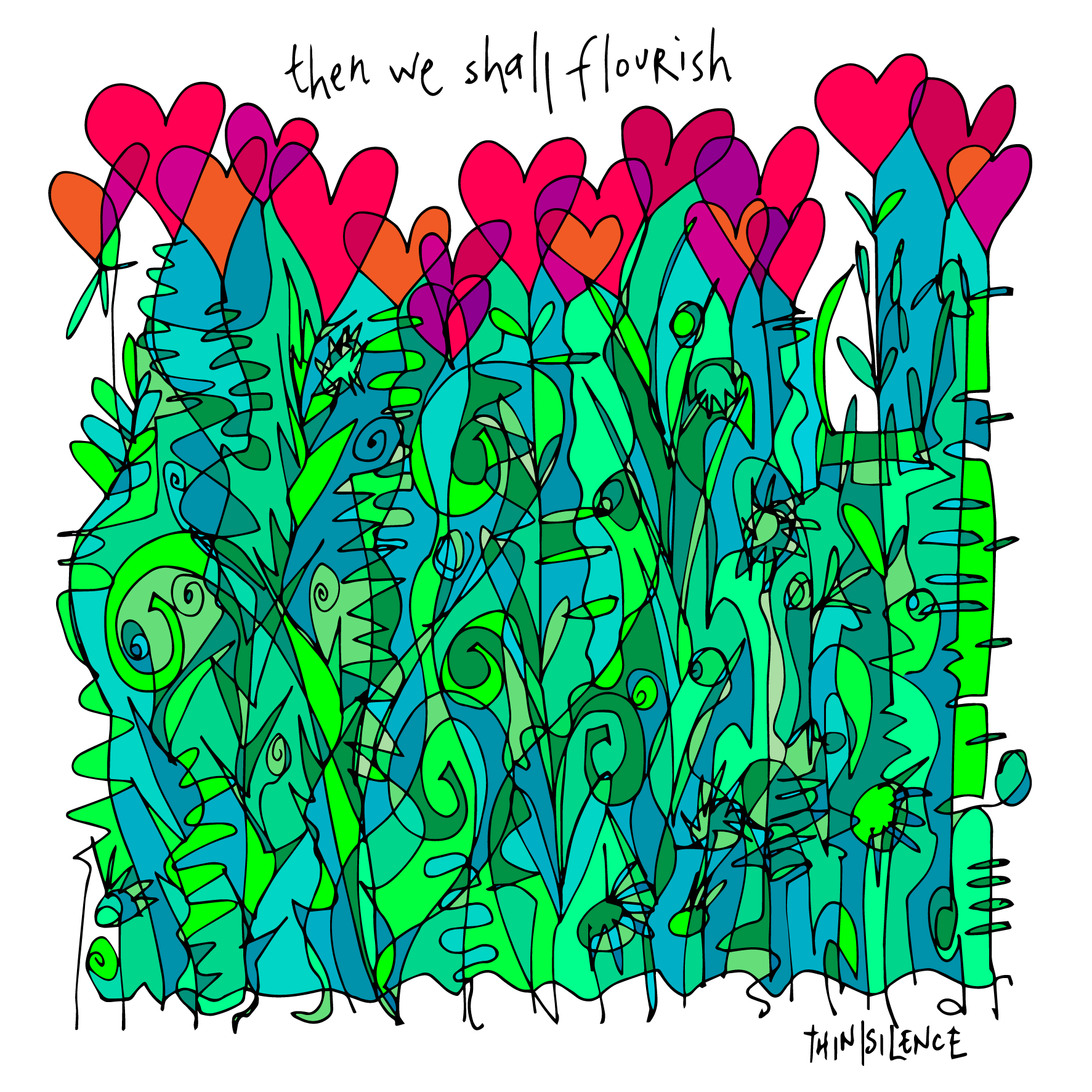
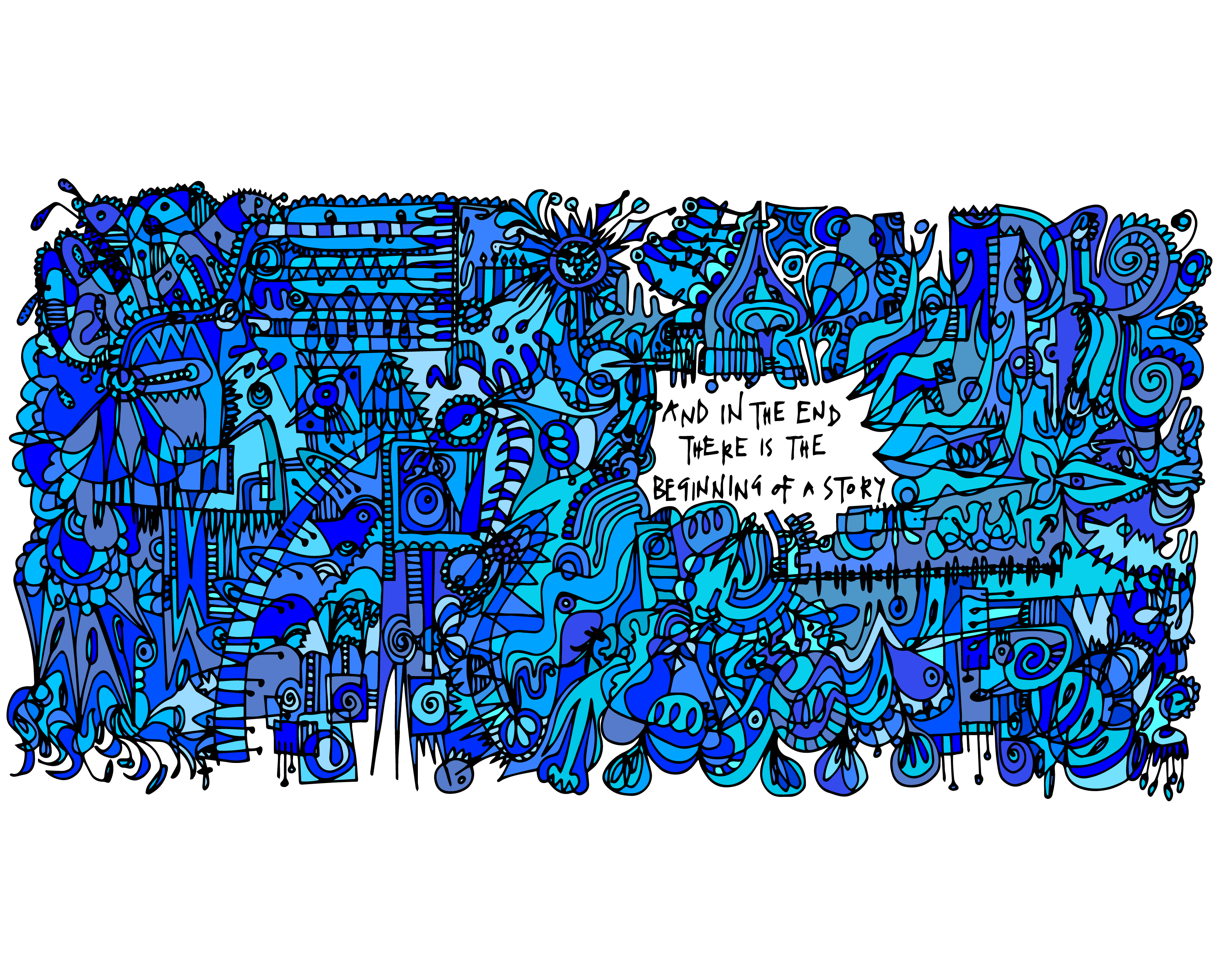
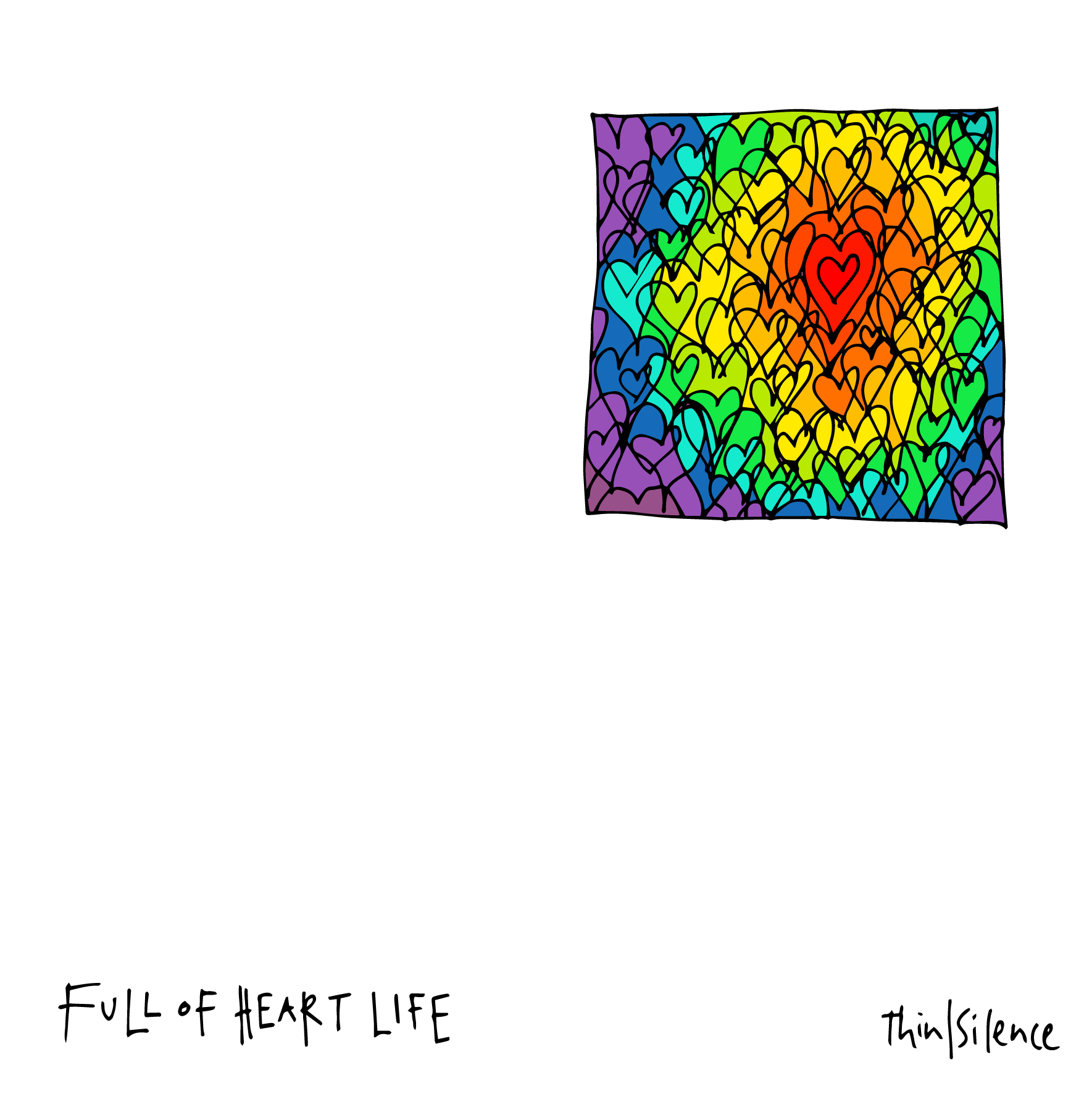
THIN|SILENCE SUPPORTING EDUCAID

Recently, these three Thin|Silence canvases were auctioned in support of EducAid, an educational charity working in Sierra Leone.  I have offered two more canvases to further support EducAid.  A 40×30 inch canvas for £100 chosen from the images in my colouring book Slow Journeys in the Same Direction which will be coloured in.  Or a 24×24 inch canvas selected from my Thin|Silence blog, including these from a series on heartedness.