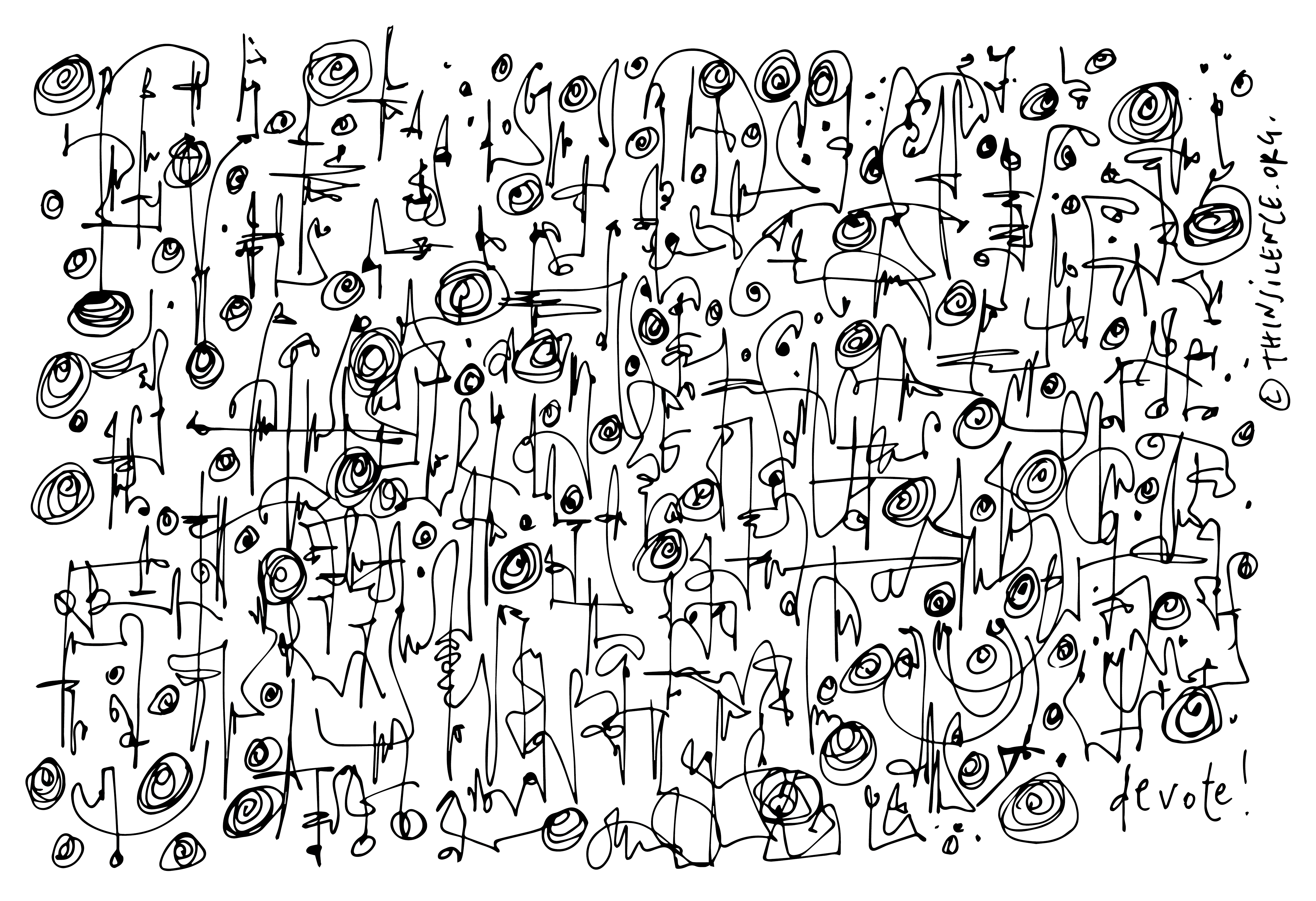
Devoted

To work, play, see, touch, laugh, cry, build, and use it all – even the painful parts, and survive with style: that’s what Corita taught.*
Jan Steward

Consecration is the solemn dedication to a special purpose or service. The word consecration literally means “association with the sacred”. Persons, places, or things can be consecrated, and the term is used in various ways by different groups.**

We all need some devotion and consecration in our lives: the point of giving ourselves to something that is so important to us that we will give everything.

Words like devotion and solemnity allow us to feel the significance of what is beginning, a solemn moment for each of us when we commit and take the first step.

What is it that you have been thinking about and need to begin, but have resisted so far?

Perhaps now is the time to give yourself to this. Write it down, feel the weight of possibility, and the excitement of beginning.

Within our ordinary there is extra-ordinary, the extra being devotion.

*From Corita Kent and Jan Steward’s Learning by Heart: of Corita Kent;
**Wikipedia.
Defence against the dark arts

You were born ready to make art. But you’ve been brainwashed into believing you can’t trust yourself enough to do so.*
Seth Godin

When a challenger really bothers us, it’s because that person believes things about us that aren’t true – but shards of those same beliefs are still inside our own self-concept, hanging out in our blind spots.**
Martha Beck

When we take the path we must, there will be pushbacks along the way: challenges, obstacles, attacks, pitfalls: moreso than any other path.

The best way to improve our defence against the things that come to waylay us, and be able to get on with the things that we must, is our True Self.

When we allow ourselves to be prey or victim to the difficult things, we can find our “painbody” shows up. We wallow in our hurt, in what it affirms about this person or situation, but the painbody belongs to our ego or False Self.^

The challenges, obstacles, attacks and pitfalls end up actually helping us, because they encourage us to reconnect with our truth so we can get moving again.

*From Seth Godin’s The Practice;
**From Martha Beck’s The Way of Integrity;
^From Eckhart Tolle’s A New Earth.

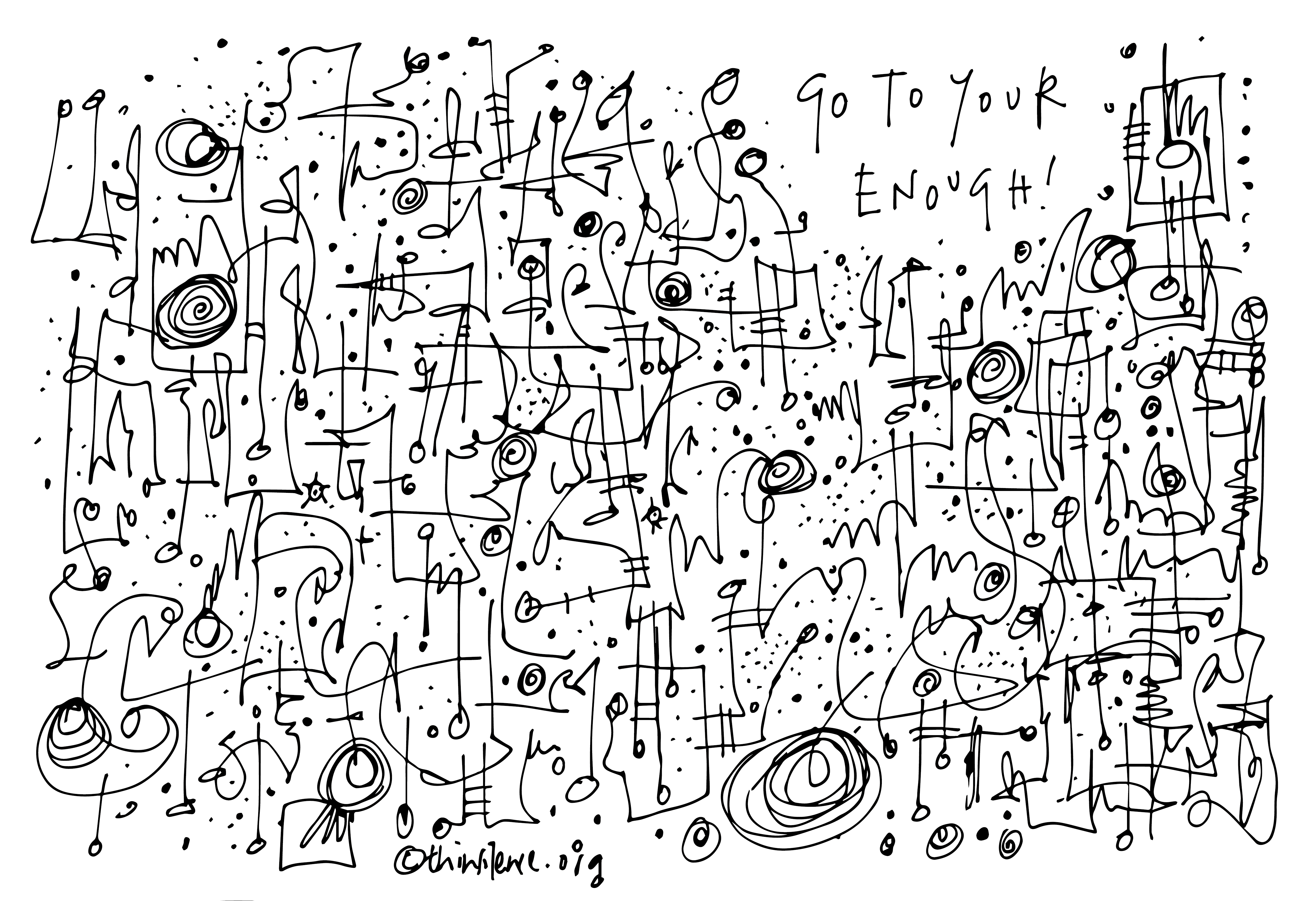
Go to your enough

There is always enough for everyone, if you share it properly, or if it has been shared properly before you got there.  There is enough food, enough love, enough homes, enough time, enough crayon, enough people to be friends to each other.*
Cinderella’s Fairy Godmother

Most of humanity is so enchanted with its False (concocted) Self that it has largely doubted and rejected – or ever known – its True Self.  And so it lives in anxiety and insecurity.  We have to put so much time into creating it that we cannot imagine this False Self not being true – or not being “me.”
Richard Rohr

I really like the word enough

It is such a comforting and promising word: to have a sufficiency.

Of course, if we don’t know how to find our enough then we can’t value it and use it. We may end up in some chase for more.

The irony is, we’ll most likely discover that we have more than enough.

One place to discover enough is by identifying your energies.

Notice when you are really energised by something. Normally this will be just before or just after engaging in some activity or other because while you are engaged you are fully in the flow.

When you have two or three things, look more closely at what you were doing (this will show you your skills), why you were doing it (this will indicate you values), who you were doing it with or for (this will reveal your relationships), and when you were doing it (e.g., starting or finishing, which will show you your priorities).

Enjoy your enough.


*The Fairy Godmother, from Rebecca Solnit’s Cinderella Liberator;
**From Richard Rohr’s Immortal Diamond.

Where I live and what I live for

Which is better? Feeling like you were right the first time or actually being correct now?*
Seth Godin

For some thirty five years I worked at something I thought to be the right fit for me.

I now feel that I wasn’t being entirely honest with myself or with others.

Not that I think the thirty five years were a mistake. They feel more like a place of preparation, like a wilderness.

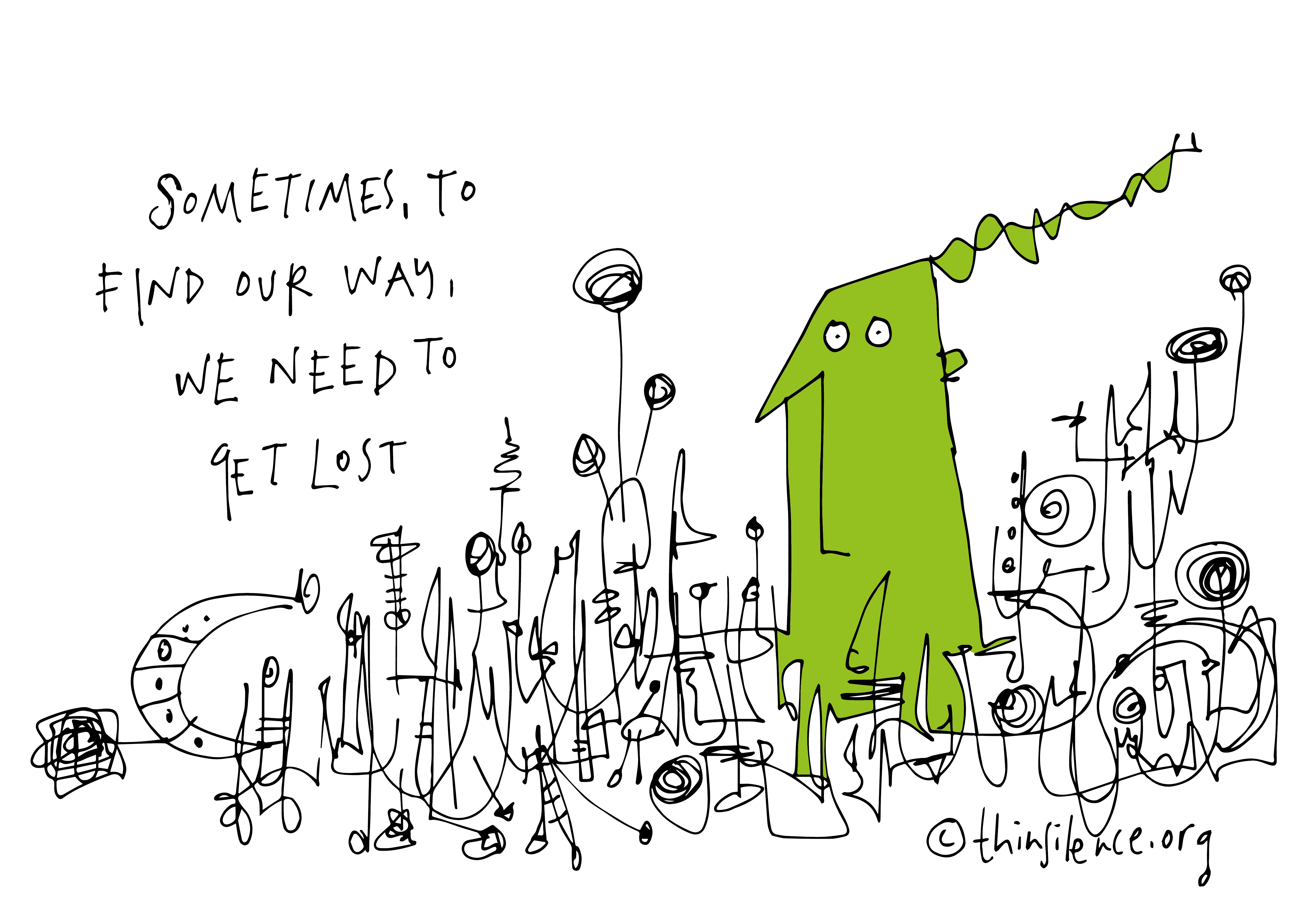
All of this proves to me that it’s never too late to find our way.

The wilderness is still my address in many ways, where others can find me and dance with the questions:

Who is my True Self?
What is my contribution?

*From Seth Godin’s blog: The right answer.

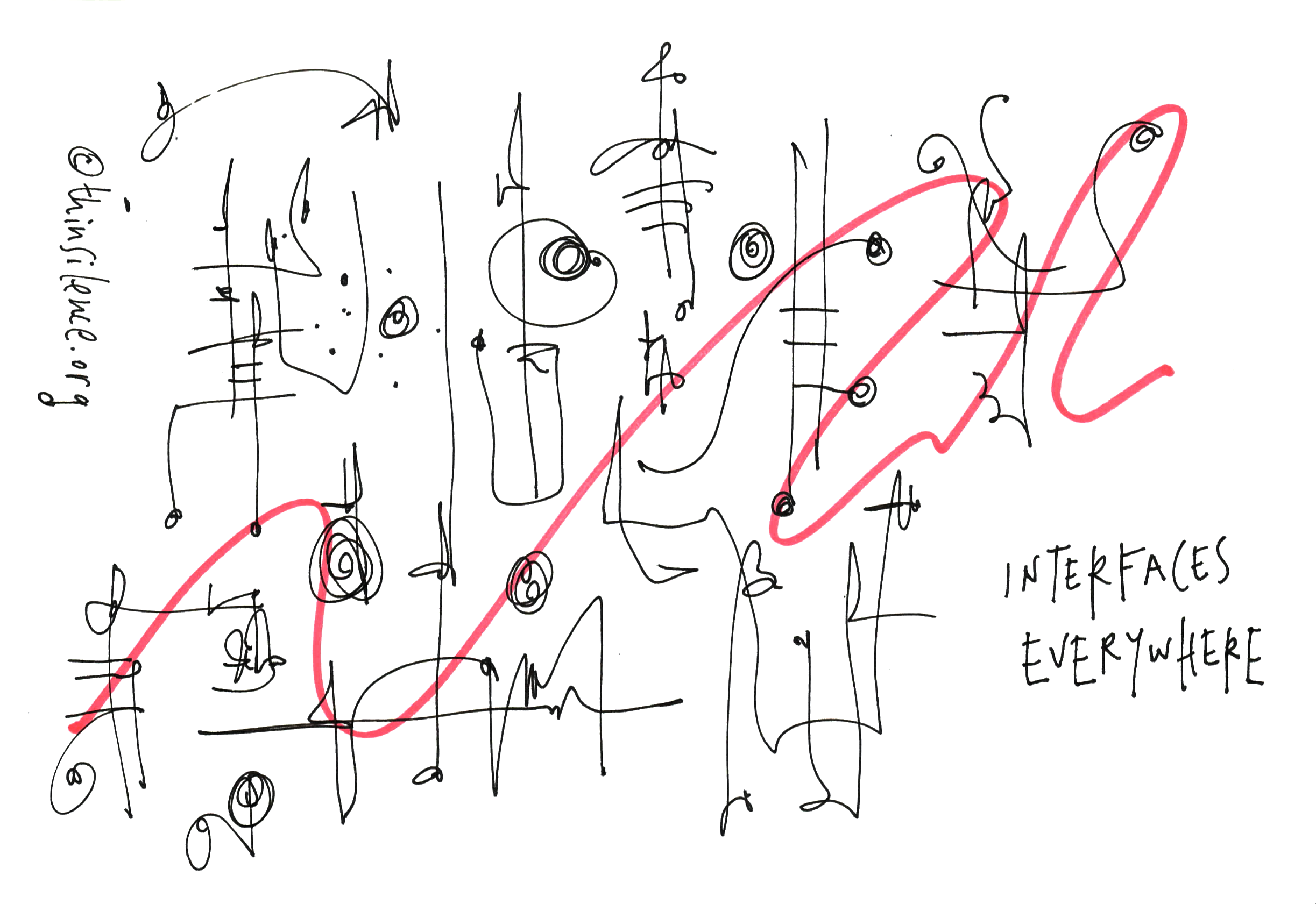
To the interface

Life separates meaning from emotion, art unites them.*
Robert McKee

Everyone acknowledges that great progress is made at the interface, but who is there to defend the interface?**
Arturo Casadevall

Yuval Noah Harari writes about how,

Even if someone is born with a particular talent it will usually remain latent if it is not fostered, honed and exercised. Not all people get the same chance to cultivate and refine their abilities.^

This is one of the world’s greatest tragedies. Please don’t let it be true of you. Indeed, if you do what you must do then there is a higher possibility that others will do what they must do.

It’s why I try to help people find their story for bringing their everyday and their teleological together.

More than this, our story is a place of unfolding as we free ourselves to wander and explore, beyond some expertise or other, to be a discoverer across fields and domains.

This is the interface and I must go to mine and you must go to yours:

From the disparity between the immensity of the possible and the smallness of the human being there springs the moment and the energy of the flâneur.^^

*From Robert McKee‘s newsletter: How to Make Action Emotional;
**Arturo Casadevall, quoted in David Epstein’s Range:
^From Yuval Noah Harari’s Sapiens;
^^From Federico Castigliano’s Flâneur.

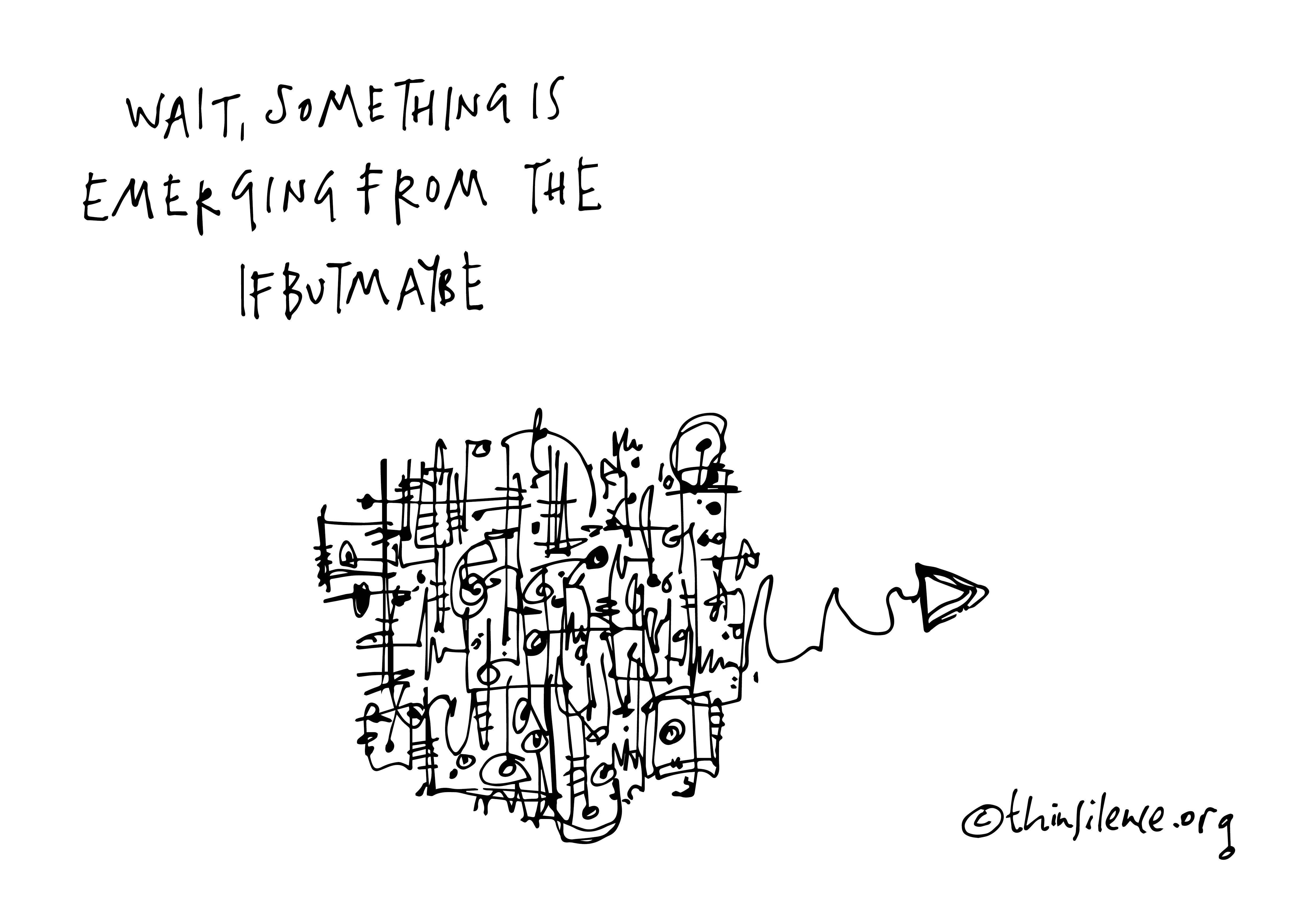
Ifbutmaybe

although it may appear paradoxical, in order to acquire a profound view of things, you must first of all move randomly*
Federico Castigliano

Where is your ifthen? We all have them. … Too often an ifthen is nothing but a stall.**
Seth Godin

We wander through the adjacent stuff of life and we come upon an emerging possibility, but also an ifbutmaybe: if this happens, but I can’t do this, maybe one day.

Behind the ifbutmaybe, almost obscured by it, is commitment.

*From Federico Castigliano’s Flâneur.
**From Seth Godin’s blog: Where is your ifthen?

Drop it

When a firefighter is told to drop his firefighting tools, he is told to forget he is a firefighter.*
Norman Maclean

When you are looking for a vocation, you are looking for a daemon. … You are trying to find that tension or problem that arouses great waves of moral, spiritual, and relational energy.**
David Brooks

Firefighters who couldn’t let go of their tools to save themselves and engineers who couldn’t let go of their data and allowed Challenger to launch are some of the stories told by David Epstein as he considers how it is essential to drop our familiar tools when working in complexity, what he calls wicked problems.

They highlight for us how, if we are to take hold of an adjacent possibility for our lives, we will need to let go of the familiar.

By all means, give yourself the chance to mourn your loss, then move on.

*Norman Maclean, quoted in David Epstein’s Range;
**From David Brooks’ The Second Mountain.

The sound of exploration

Learning stuff was less important than learning about oneself. Exploration is not just a whimsical luxury of education; it is a central benefit.*
David Epstein

Free and alone in the city, the flâneur craves a revelation that might change his life and destiny.**
Federico Castigliano

There are moments in our lives when we sense a desire to be more awake, more alive.

This can be quickly followed by the pull of the necessary and the urgent into a forgetfulness.

When those moments appear, it’s best to throw ourselves into discovering the sound of our exploration.

*From David Epstein’s Range;
**From Federico Castigliano’s Flâneur.

Traipsing through the infinite

Focusing narrowly on many fine details specific to a problem at hand feels like the exact right thing to do, when it is often exactly wrong.*
David Epstein

We reshape ourselves as we write.**
Ross MacDonald

We reshape ourselves as we wander, too.

Thank you to Federico Castigliano for the word traipse: another great word for wandering.

Every morning, I traipse through words and pictures in books and online, both intrigued and inspired by this growing partnership for understanding to activeness. Here’s one such purveyor of words and image, Edward Carey.

This is how I make a book: by hiding from writing by drawing, or the other way around.^^

So, I am out and about, traipsing, wandering, through words and pictures, in what feels to be far more infinite experience. All too soon, I will be called back “inside,” into the finite, into the various activities of the day, but carrying, I hope, some infinite in my heart and mind.

*From David Epstein’s Range;
**Ross MacDonald, quoted in Peter Turchi’s A Muse and a Maze;
^From Federico Castigliano’s Flâneur;
^^Edward Carey, quoted in Austin Kleon’s blog: My interview with writer and artist Edward Carey.

Have a monozukuri day

With only slight exaggeration I would say that we are not; we continually constitute ourselves anew and differently at the intersection of all this influences that reach into the sphere of our being.*
Rainer Maria Rilke

The sense of wonder can also help you to recognise and appreciate the mystery of your own life.**
John O’Donohue

Monozukuri is Japanese for “thing making” – tinkering.

Gunpei Yokoi was a tinkerer. I’ve just been reading about how Nintendo’s designer enabled the card game manufacturer become a leading games producer, not by leading the technology but with lateral thinking and withered technology, that is, using ideas from other areas of life and dated technology.

When the Game Boy was released,^ one of Yokoi’s colleagues glumly told him that a competitor was also launching a handheld device. Yokoi asked whether it had a colour screen and, when confirmed, replied “Then we’re fine.”^^ Yokoi knew that who the Game Boy lacked human imagination would fill in. He was right.

This got me thinking about how we each get to tinker with our lives every day. We are infinite beings, inasmuch as there’s always another way to invent ourselves. It doesn’t matter if we think everyone else has left us behind with some shinier, trendier, teched-up lifestyle. That there’s more past than future means we have a wellspring of “withered technology.” With imagination, we can bring something innovative and generous and satisfying into being.

*From Rainer Maria Rilke’s Letters on Life;
**From John O’Donohue’s Eternal Echoes;
^Yokoi noticed someone playing on his calculator in order to pass the time on a train journey home and wondered if a game could be made small enough for a businessman to play with it on his journey home;
^^Gunpei Yokoi, quoted in David Epstein’s Range.