Sell your art, not your soul

I am leaving my own species and ten thousand years of human history. […] I just need a break.  I want to be absorbed into some place larger and expansive for the human brain.*
(Terry Tempest Williams)

You don’t become completely free by just avoiding to be a slave, you also need to avoid becoming a master.**
(Nassim Taleb)

Each day, we must find the time and space that works for us so that we may enter into what we have to be about with our lives.  Bernadette Jiwa reminds us:

‘Your purpose is not what you do, but why you do it.’^

To sell our soul is to abandon our most creative self, our “den of alchemy.”

(*From Terry Tempest Williams’ The Hour of Land – my prime read for September.)
(**From Nassim Taleb’s The Bed of Procrustes.)
(^From Bernadette Jiwa’s Hunch.)

Inconveniently yours

As in the case of lines, you are likely to stop when you are no longer sure you should go further – at the rear edge of the region of uncertainty.*
(Daniel Kahneman)

I suspect that the mind, like the feet, works at about three miles an hour.**
(Rebecca Solnit)

The heart, too, I suspect.

Slow is inconvenient.

It’s taken me more than twenty years to arrive at what I’m penning today, but if I value what I’m discovering and integrate it into my life and can help others, too, then maybe all that time is worth it.

The better future will be, I believe, the inconvenient one.

(*From Daniel Kahneman’s Thinking, Fast and Slow.)
(**From Rebecca Solnit’s Wanderlust.)

In the morning, I will remember

Creating a monument is a matter of taste and values and the means to get it made.  Once you monumentalise a person, a place, or thing, you run the risk of worship.*
(Terry Tempest Williams)

I have so much to remember.  It comes with modern living.  And it means I forget so much.

I hope that I remember the important things and forget the unimportant.  In a way that’s living, unfolding, vibrant.

The danger of remembering in a fixed or monumental way is that we leave out or forget the most salient and critical elements, even leaving in the ‘half-truths and, in many cases, lies.’*

It’s no way to live.

(*From Terry Tempest Williams’ The Hour of Land.)

Out of the ordinary

Skill builds by moving irregularly, and sometimes by taking detours.*
(Richard Sennett)

The world always seems brighter when you’ve just made something that wasn’t there before.**
(Neil Gaiman)

There are so many things that do not yet exist that will make the world a better place.

Perhaps you and I will be amongst those who bring these many things into being, not by holding firmly to the past but through a respectful but loose grasp of it and an imaginative openness to the future.

If Mitch Joel is correct in describing us as having ‘bumpy, weird, strange, funky and fascinating lives’^ then you have to imagine the wonderful questions that may emerge when we turn towards the future./  As Seth Godin suggests:

‘If you ask someone a question that causes them to think about something unexamined, that challenges them to explore new way of seeing the world or making connections, you’ve already cause a change to happen’.^^

A better future is perhaps more likely to come through irregular and detouring questions:

“If you don’t have that disposition to question, you’re going to fear change.  But if you’re comfortable questioning, experimenting, connecting things – then change is something that becomes an adventure.  And if you can see it as an adventure then you’re off and running.”*^

Bernadette Jiwa sees that we have have an important perspective, if we can set it free:

‘there are things you can say and do that can’t be copied because those things are only true for you’.^*

It’s a special blend of knowing and openness, as Frans Johansson proffers:

‘You have to think you know what you’re doing while still opening yourself up to serendipity.’⁺

I may look like I’m stacking quotations to make some kind of point – they certainly stacked up for me this morning – but they lare really about is asking better questions, being open to possibilities that do not yet exist but we’re all capable of imagining.

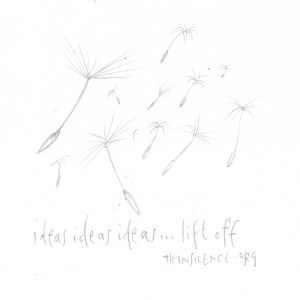
‘Ideas spring up where you do not expect them, like weeds, and are as difficult to control.’**

(*From Richard Sennett’s The Craftsman.)
(**From Neil Gaiman’s Art Matters.)
(^From Mitch Joel’s Ctrl Alt Delete.)
(^^From Seth Godin’s blog: The trick question.)
(*^John Seely Brown, quoted in Warren Berger’s A More Beautiful Question.)
(^*From Bernadette Jiwa’s blog: The Art of Differentiation.)
(⁺From Frans Johansson’s The Click Moment.)

Required learning

Opening yourself up to the world, to new experiences and themes and inputs, will push you to a new place.  And that push?  That’s growing.*
(Hugh Macleod)

Don’t ever think the dead aren’t playing with us.  They use us for their unfinished business, even if it’s something as simple as telling their story.**
(Liam McKone)

We cannot understand what we do not want to understand.  If we judge what is new according to what we already know with the words we already use, then nothing new can squeeze in.

I worked for many years with an organisation that would have said it encouraged seeking, knocking on closed doors and asking questions, yet these very things were a daily struggle for many.

On a personal level, I was ready to move on from learning in 1975 and then in 1978 and again in 1983, but now I’m hungry to keep on learning until the day I die.

That push is our required learning.  Nurturing our curiosity will means we are always hungry, helping us to be open to the other, to struggle to know and to understand and to live more wisely.  Perhaps we’ll be able to say with Mary Oliver:

“When it’s over, I want to say: all my life
I was a bride married to amazement.
I was a bridegroom, taking the world into my arms.

I don’t want to end up simply having visited the world.”^

(*From gapingvoid’s blog: The magic of give and take.)
(**American Civil War reenactor Liam McKone, quoted in Terry Tempest Williams’ The Hour of Land.)
(^Mary Oliver, quoted in Philip Newell’s The Rebirthing of God.)

Guilty pleasures

Wildlife in woodlands appear without notice.  Awakened is what we become in their presence.  Curiosity leads us forward on an unknown path, even if it is a path of well-placed steps made out of pink granite here in Acadia.  For a precious moment we touch and taste life uninterrupted.  Awe sneaks up on us like love.  We surrender to the ecstatic outpouring of life before us.*
(Terry Tempest Williams)

We are becoming aware that the natural world is the womb in which our species is developing.**
(Alex McManus)

Pleasure is unable to stand up by itself.  Pleasure for it’s own sake can become quite nasty and ugly and taking.  But pleasure that derives from making or giving or relationship is quite another thing – something we need and the world in which we find ourselves makes possible:

From 5 September 2017

‘Human creativity suggests a thin fissure in a purely cause-and-effect view of the world.’^

Pleasure also comes from finding.  I love reading through my books in a morning and coming upon the treasures hiding within their pages, and I am also pleased to find wonderful things growing in the spaces between them – ideas and thoughts emerging from simply reading them side by side.

(My main reason for posting some thin|silence every day is not to provide some specific information on a particularsubject, but simply to offer a different place to look upon the things you love.)

We each have some guilty pleasure.  By guilty, I mean how we can feel as if we are taking something that isn’t ours or seeing something that others do not see.

Employers may think employees enjoying themselves are taking from them but the opposite is likely to be the case.  Pleasure allows people to give.  A guilty pleasure is something we enjoy but wonder if there is any value in, yet perhaps it will be thing that changes everything.

Last year I’d been reflecting on the speed of light whilst also reading about curiosity, and I found myself wondering what is the speed of our curiosity.  Where we find our curiosity to be fastest may have nothing to do with our work or contribution right now but may well be the thing that brings us to our greatest meaning whilst on Earth:

Allowing your ignorance, or allowing curiosity to lead you, is often the best guide to what to ask about.’^^

What is your guilty but good pleasure?

(*From Terry Tempest Williams’ The Hour of Land.)
(**From Alex McManus’ Makers of Fire – eBook version.)
(^From Alex McManus’ Makers of Fire.)
(**From Edgar Schein’s Humble Inquiry.)

The pushback

In landscape ecology, an ecotone is defined as “the border area where two patches meet that have a different ecological composition.  Think forest meets the ocean; meadow meets the woods; a desert becomes flush with a river.  These edges create lines of tension.  Call it a mete of creativity where the greatest diversity of species merge.*
(Terry Tempest Williams)

Love thine enemies because they are the instruments of your destiny.**
(Joseph Campbell)

Just when we think we’ve found the thing, what it is we must do in our lives, the direction we must take, the opportunity to be taken, the step out of the mundane, then something goes wrong, the chaos pushes back, hopes are dashed and we are left with our forlornness.

Sometimes, though not always, we may see here things we will not see anywhere else, possibilities beyond those we had previously imagined, the chance to grow and develop even more.  We need a way to process this, to see what it is, and we’ll be moving.

(*From Terry Tempest Williams The Hour of Land.)
(**Joseph Campbell, from Joseph Campbell and Bill Moyers’ The Power of Myth.)

And are we wise yet?

“What’s new?”

That’s a fine approach to staying up to date on a situation or field where you are well-informed.*
(Seth Godin)

It turns out to be very difficult to devise a theory to describe the universe all in one go.  Instead, we break the problem up into bits and invent a number of partial theories.  Each of these partial theories describes and predicts a certain limited class of observations, neglecting the effects of other quantities, or representing them by simple sets of numbers.’**
(Stephen Hawking)

I have learned many things but I am not very wise.

In Theory U, Wisdom 1.0 is someone telling others what they need to think … and do.

Wisdom 2.0 is about others taking the initiative to find things out and use them to their own benefit.

Wisdom 3.0 sees the shortfalls in this and adds the knowledge of others.

Only Wisdom 4.0 sees how we need to not only join up the wisdom of everyone, including those who have gone and those yet to be born, but also of all flora and fauna within an immense and expanding universe.

In such a world and universe, questions become more valuable than answers:

‘Answers cure you, answer help you.  Asking questions make you feel alive.’^

(*From Seth Godin’s blog: A good day for the backlist.)
(**From Stephen Hawking’s A Brief History of Time.)
(^From Albert Espinosa’s The Yellow World.)

Turning up from the future

Silence will speak more to you in a day than the world of voices can teach you in a lifetime.
Find silence.  Find solitude – and having discovered her riches, bind her to your heart.*
(Frances Roberts)

It’s a multiple-use area that still protects the ecosystem, but now it’s largely being leaked by oil companies.  It’s being cut to pieces by energy development and it’s having an impact on the park with new roads and oil pads sprouting up like corn.**
(Valerie Naylor)

One of the problems with being human is that we think everything’s for us.  The future, though, will demand that we be more-than-human.

The silence will help us to see more.

Valerie Naylor is the Superintendent of the Theodore Roosevelt National Park and noticing her time more and more “mitigating the drilling on the boundaries of the park, and that is more than a full-time job.”**

The oil companies are fracking for oil, apparently concerned for now and unable to see the future.  Seth Godin warns us that we must be very careful when working with means and ends:

‘The way we choose to get to where we’re going defines what it’s going to be like when we get there.’^

In the silence, though, we perhaps find the means to become more than human, to listen to our neighbours, whether they be birds, trees or hornets:

‘Each time I look out and see the bends in the river of the Little Missouri, these grasslands, these ships of clouds floating over the prairie, I am possessed by a sense of discovery,  […] this openness, these unending views, the silences, the empyreal sky.  This – dare I use the word? – completes me.’^^

(*Frances Roberts, quoted in the Northumbria Community‘s Morning Prayer.)
(**Valerie Naylor, quoted in Terry Tempest Williams’ The Hour of Land.)
(^From Seth Godin’s blog: The ends and the means.)
(^^From Terry Tempest Williams’ The Hour of Land.)

Present in-between

Some people came into my room and rushed in and rushed out and even when they were there they were not there – they were in the moment ahead or the moment behind. Some people who came in just for a moment were all there, completely in that moment.*
(Anne Morrow Lindbergh)

she wanted to see in between [the tadpole and the frog], like the silence between the musical notes, where the mystery is**
(Anne Lamott)

We often think life is about being present in the big moments but often the thing that makes the difference is being present to the moments in-between.

(*Anne Morrow Lindbergh, quoted in the Northumbria Community‘s Morning Prayer.)
(**From Anne Lamott’s Hallelujah Anyway.)