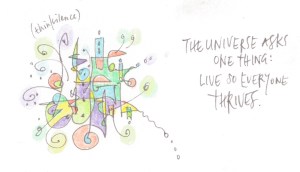
many cities

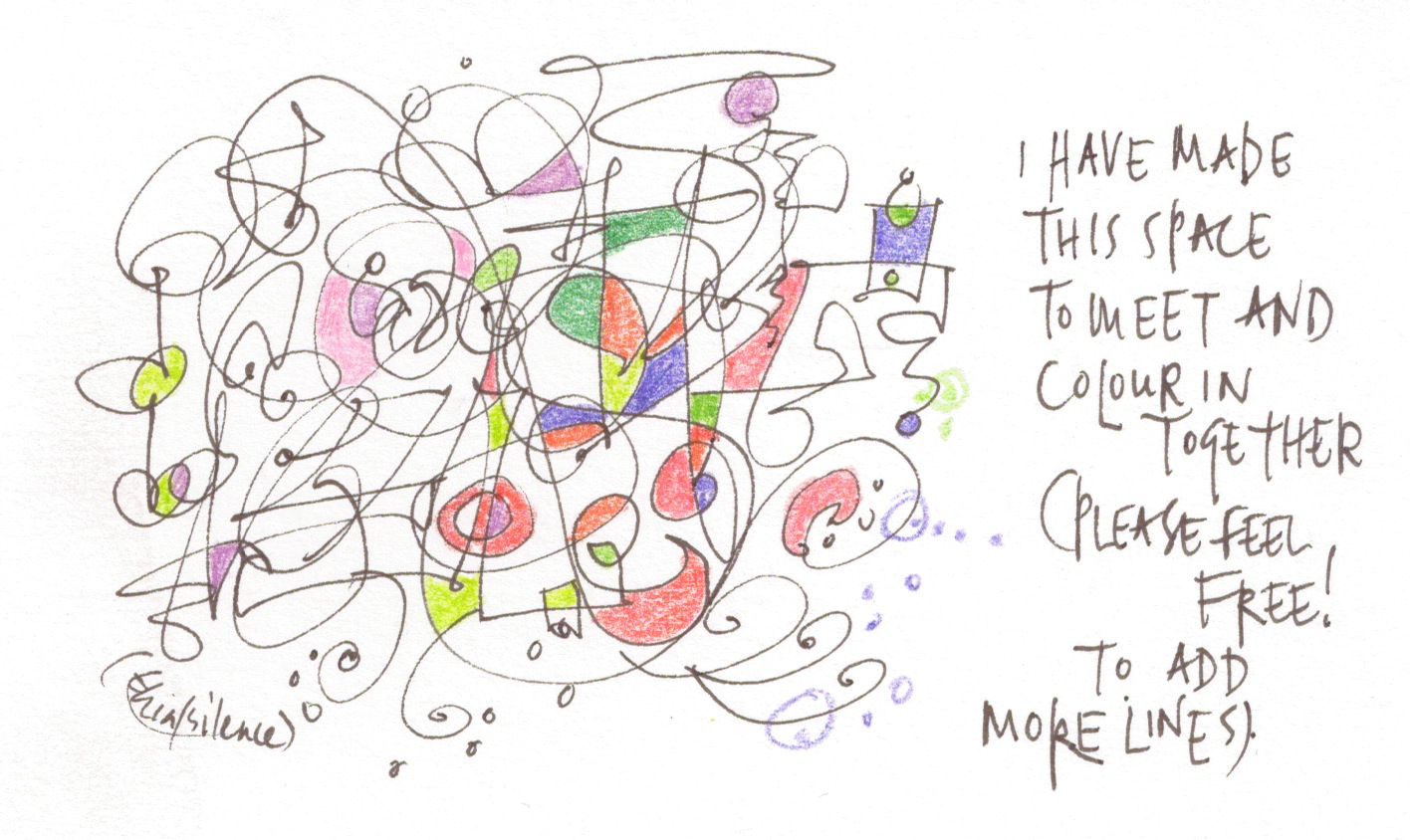
i have made this space ...

Cities are amazing places – as are villages and towns.  Cities call us to be creative, and, the greater the population the more likely this is.

Often, we mishear or misunderstand the invitation these grand artefacts make to us: come and play.  More than buildings and spaces, cities are people – some have even said they are the ultimate Human creation.   I can’t argue with that.

Maybe it’s a hope and maybe it a truth, but I suggest we’re all city-shapers.

We have the opportunity to create spaces in which everyone can thrive.  We can’t make people thrive, but we can craft the spaces for this to happen.

I don’t create people’s dreams, but I can offer a space in which they can dream.

And whatever that thing you do, it somehow makes space for people to thrive in.

‘Figure out what you are meant to contribute to the world
and make sure you contribute it.’ (Quiet, by Susan Cain)

gracefulness

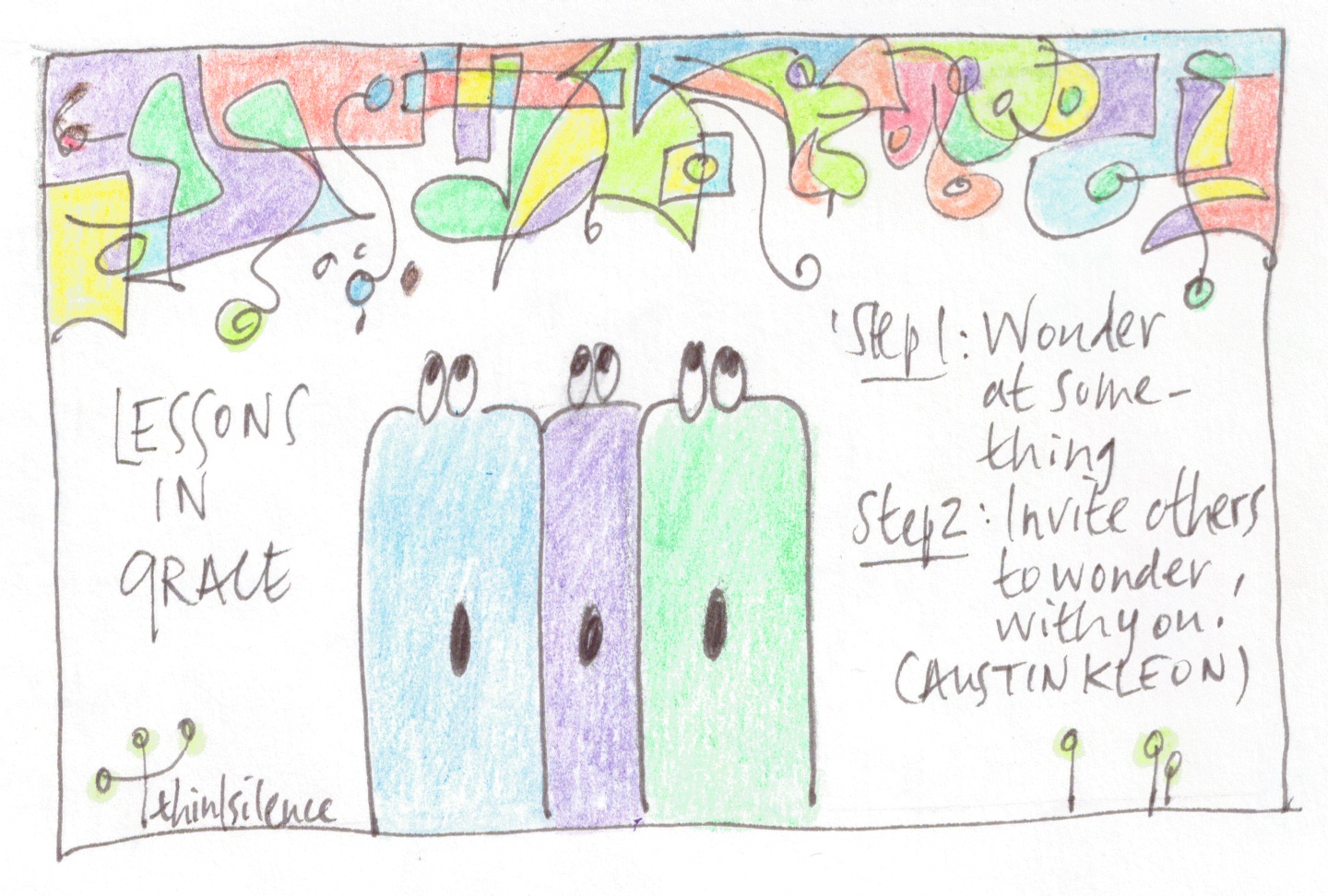
lessons in grace

I’m trying to live with more – as Seth Godin reminds me, I wasn’t born with grace, it’s a choice.

It’s about giving to others the best of who we are and do – we can all think of people who have been graceful to us.

We can also bring to mind people who have not been graceful.

Grace is beautiful and truthful .. and gritty.

We know a world with more grace in it would be better one – which is why its important for us to know it’s a choice.

Yesterday, I found myself rereading some of Godin’s thoughts on grace – on a bus, trundling along, I thought to share these today:

“To be willing to do new things you don’t think you’ll like requires
you to prefer the unknown.   Not just to tolerate it, but to prefer it.

‘One way to achieve that is to set out to experience things you’re
sure you won’t like.

‘To have conversation that are frightening.

‘Becoming generous beyond measure, just to see what happens.

‘And most of all, setting out to fail.  Failing helps you see how far
is too far, failing helps remind you that failing isn’t fatal, and most
of all,failing opens you up to succeeding.’

As Godin says elsewhere: ‘Art  is a personal act of courage – something one human does to create change in another.’

Something Dan Ariely shares about his honesty experiments helps us to see grace more sharply.  Ariely tried out a little test involving the contents of a common fridge, placing a pack of cokes in (all gone within 72 hours) and then a plate of cash (still there after 72 hours).  He then created a measurable experiment to see if people were more willing to take (steal) if it was a step away from cash.*  He found it was the case.

When his Skype account was hacked into and he ended up paying for someone else’s calls, Ariely was sure this person didn’t think they were really stealing – they weren’t stealing money.  His concern is, we’re moving towards a world in which ‘the days of cash are coming to a close,’ meaning people will be increasingly disconnected from cash and, at the same time, have more temptations to face.**

Gracefulness is about giving more than we take in everything we do.  The choice is going to be more important than ever.

(*Three groups.  The first (control) group received cash directly from the person checking their answers (solving 3.2 problems).  The second group could self-check their answers for cash (claiming they’d correctly solved 5.9 problems).  The third group received tokens for their correct answers which they could exchange somewhere else (and claimed they’d correctly solved 9.4 problems).)
(**James McQuivey suggests we’re entering an era of digital disruption: ‘innovators+infrastructure=digital disruption.  Massive digital disruption, at a scale and a pace most are simply not prepared for.’
(Cartoon quote from Austin Kleon’s Steal Like an Artist.)


priming and honesty and art

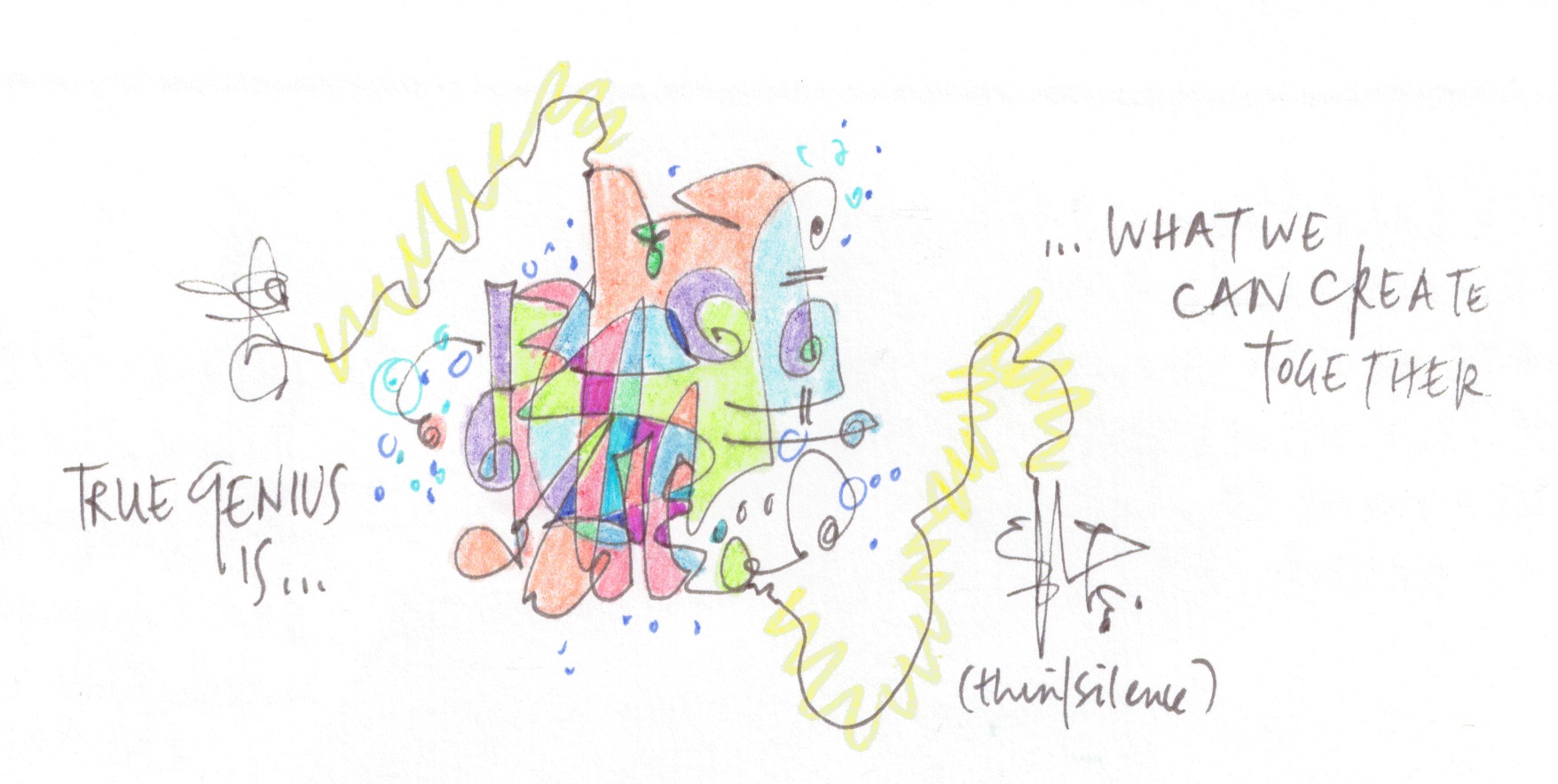
true genius is ...

This is the second of two posts on honesty.

Honesty because everyone benefits – honesty as an outcome and means.

Dan Ariely caught my attention with another of his experiments exploring the hidden things at play behind the choices we make.  This time he was seeing if he could influence people to be honest.  The experiment had three groups tackling twenty problems.*  Two of the groups were primed before they began – one would write out ten books the participants had read in school, the others would write out as many of the ten commandments as they could remember.

The results.

The first group which couldn’t cheat because someone else checked their answers solved an average of 3 problems.  The group asked to write down ten book titles submitted their own results, and claimed an average of 5.5 problems solved – they’d cheated.   The group asked to write out commandments submitted their results and claimed an average of 3 problems solved – no cheating.  Ariely then tried it again with an honour code substituting for the ten commandments – the same results: ‘a moral reminder  eliminated cheating altogether.’

This piqued my interest.  Just yesterday, someone who’s been exploring their Strengths** with me shared how a summary of the things which energise her – held on her smartphone – had kept her on track during what could have been a difficult experience.

Then, what if priming ourselves at the beginning of the day – with the things which are important to us – keeps us true and honest to what we really want to do.***  Or, to put it another way, what if these reminders get us into the rhythm of our life and art so we’re not deflected and will not compromise?

As I mentioned in the first of these posts, my interest in honesty is as something which means everyone benefits, including ourselves – being connected with our story and producing the art we love to make.


(*The first would answer questions and have to hand them in for someone else to check, those who wrote out the books or commandments could check submit their own results and tear up their answer sheet.)
(**Strengths are what occur when passions and skills combine.)
(***Journalling, statements and mantras, images, and even physical exercises – imbuing meaning to each movement with words about our art.)

honesty, and the stories we tell ourselves

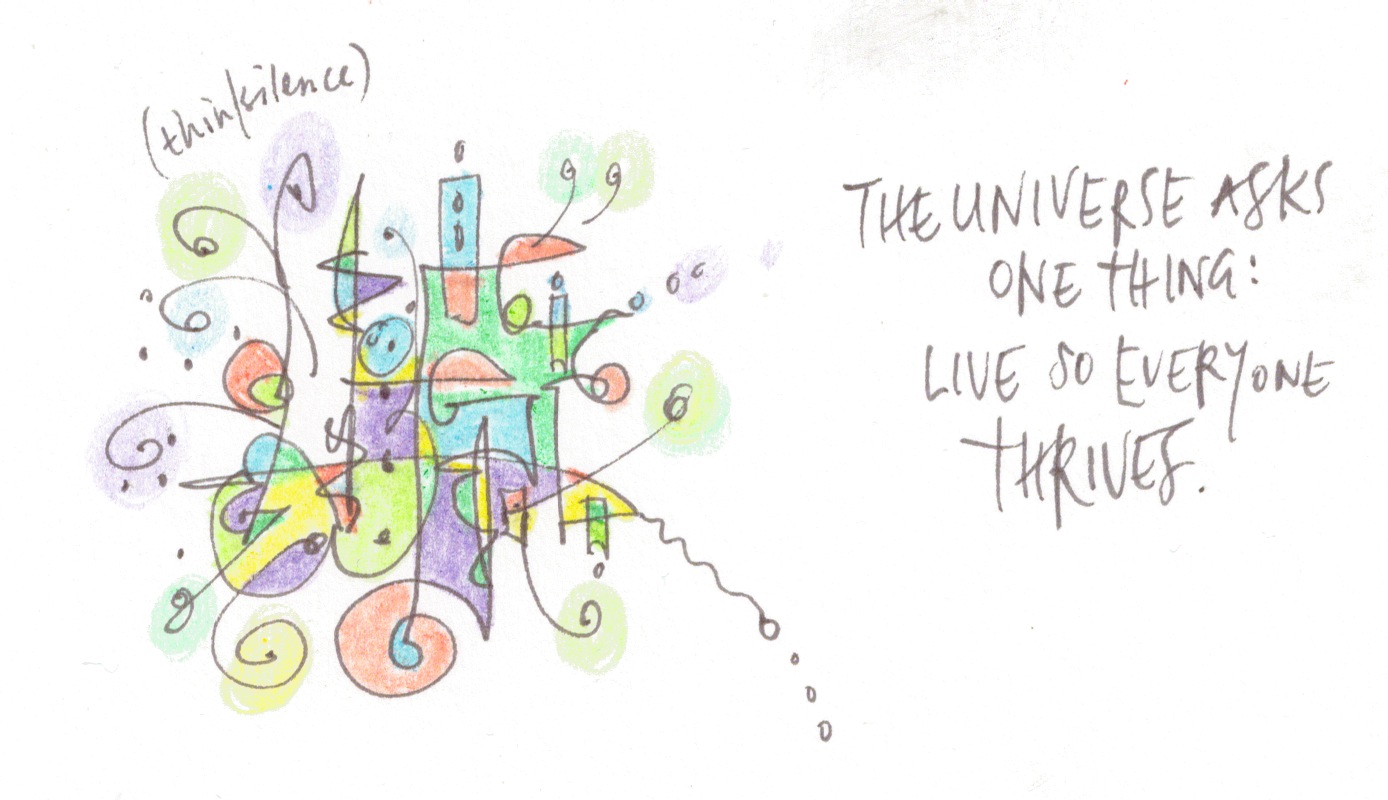
the universe asks one thing ...

If you were to pass a stall today bearing the sign “Free Money,” would you pick up a crisp new £5, £10, or £20?

An experiment run by Dan Ariely would suggest only around 1 in 5 of us would for the largest of notes.  The reason being, we don’t trust the offer, there must be strings attached.

Are we distrustful by nature, or because we have some bad past (direct or indirect) experiences which makes us look the “old gift horse” in the mouth?

If I google list of least trusted people, I get 137 million results.  When I check out who are on some of these lists, there are the usual suspects: politicians, estate agents, bankers, car salespeople, insurance sellers, journalists … .

This is about how honest we think others are, but how honest are we?

One source gives UK card crimes, burglaries and criminal damage at a cost of around £400m, another suggests fraud in the workplace costs £20b.

If we suspect someone is being dishonest, we can find ourselves adjusting our own behaviour so we don’t lose out.*  At the same time, we want to think of ourselves as being good people, so we justify our behaviour by telling ourselves a story – I stayed a little longer at work so I can inflate the expenses a little.

Honesty is something full of nuance and subtlety, a lifeskill honed each day, and none of us get it right all the time, but people love when our stories come through – what we say connects with what we do – and, better still, if there are any surprises, let them be good ones.

Whether we want it or not, dishonesty creates inconsistencies within our life-story – we look at it and think, “Hmm, that doesn’t work” – and a disconnection occurs within us.  Honesty begins with connecting to our story each day – to our values and purpose and ways of expressing these.

The reason I’m exploring this is because dishonesty means we all lose out.*  To love our stories and to live them is the best way to make life better for everyone, including the person tempted to be dishonest.

(*Ariely’s example goes something like this: if four people all have £10 and can put into a pot which doubles, and the pot is then divided back equally, it means each will have £20 after the exercise.  If one person doesn’t put in, meaning there’s £30 in the pot, doubling to £60, then each gets £15, but the dishonest person has £25.  Suspecting something’s not right, next time around, the others determine to put in £2 each, which doubles to a £12 pot, meaning each gets £3 back.  The three end up with £11 each, and the dishonest with £13 – so each falls far short of the £20 possible.)

 

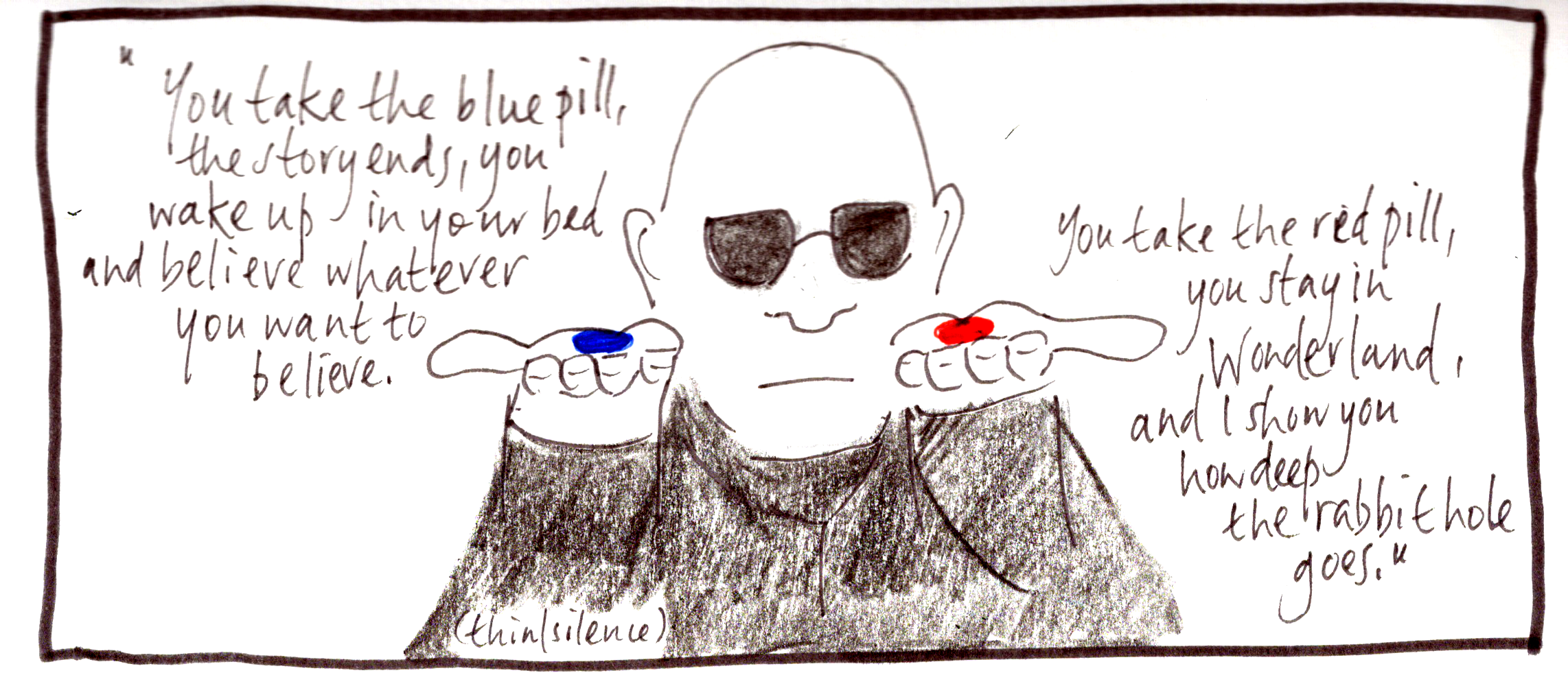
it’s everywhere i go

every day ...

It’s written on the wind.  It’s everywhere I go …

From Love is all around me.

And so are placebos.  (This is my second of two posts on placebos.)

Dan Ariely bemoans the uncovering of Airborne as a placebo when it comes to countering the potential illnesses following flying (the company has had to change it’s advertising): ‘Oh why, why did they do this to me.  Why did they take my wonderful placebo away.’  The placebo had worked for him and he was investigating placebos!

In the Wizard of Oz, the wizard promises a heart, a brain, and courage to the travelling companions of Dorothy.  He’s offering a sugar pill and they swallow it, and discover they have the things they seek all the time.  Charlatan or placebo-wise devotee?

(Interesting again are nocebos, which may even cover the good effects of a real drug – the doctor who tells of all the side effects can lead to a patient experiencing less benefit.)

We all get caught out.  I don’t like car showrooms – stressful places.  Two recent experiences.  I needed to visit a Mercedes garage – a problem with my ten year old Smart car! – and I was seated by the receptionist in a very comfortable waiting area better than many cafes, brought a drink and biscuit, given internet access, then led to a table by my suited service advisor – all very relaxing.  Compare this with the industrial experience of a large chain of garages where sales desks are lined up in functional rows and there’s a coffee machine you can help yourself from.  The first is telling me a story, the second is not.  Is there that much difference between what I may or may not be paying for.  Probably not.  The first is a placebo experience and it worked for me.

It’s okay to create a story for what you do as long as what you are creating and providing and contributing is real.  As Seth Godin* reminds us, it’s not good enough to get just one of these right: the great art which never benefits anyone, or the great story without substance.  When we have the two together, then we’re zooming.**


(*This is a link to an excellent little ebook to stretch thinking on placebos.)
(**Zooming is a phrase from Seth Godin I’ve loved ever since I came across it several years ago; it means taking the amazing stuff you do further.)

placebo and story


Interesting.  Two of the sources I’m reading at the moment are looking at the effects placebos have on us.

Dan Ariely tracks how higher priced drugs and placeboes have a greater perceived effect on people than lower-priced drugs; there are ‘blurry boundary lines between belief and reality.’

Seth Godin is looking at how marketing is really a placebo.  Here’s his short ebook Placebo, which he’s making available free.

This is where story comes in, because it can be argued the story I tell myself about my life is really self-marketing.  How we see things, then, individually and collectively, may not be how things really are.   Yet somehow they work, and work very well.  This is not the same as living a lie – a story lacking integrity – but is about the things we believe and love and value affecting our reality.

All of this is leading me here.  If Dan Ariely is right about what we believe really does affect how we feel, then we hardly know what the Human mind is capable of achieving, we hardly know what we are capable of, and perhaps the key to unlocking more is the story we choose to live.

The power of story is something that’s long been of interest to me for some time now, and it could be that it is the way of releasing Human potential.  And who knows, maybe the technology and genetics and pharmaceuticals may all prove, to some degree, to be placebos for releasing what Humans have always been capable of?


what you must do

the love of power … the power of love

It’s not about what someone else is doing; it’s about what you must do.

This might sound like a contradiction to what I’m saying about a the future being connected, with the mantra of “I in us”.  But such a future will never come to be without each of us taking up our responsibility, the thing each person must do.

We don’t try to dominate everyone around us with our art – “I have these skills and therefore we ought to do it this way.”  We’ve left this way of behaving behind.  What we say is, “I have these skills so how can I serve you/the team/the community?”

The reason we can offer and gift our art, rather than control people through it, is because we’re no longer blind to where we lead and influence from.  We know who we are in relation to our values, to others, the world, and our future Self.  This is our integrity.

Neither is it doing what others tell is to do; we know this corrupts our integrity.  And, we do know something new and more exciting emerges when people bring what they must do to the party.

Steven Pressfield uses the terms, hierarchical and territorial art.

If you choose hierarchical art, you’ll always be trying to please someone as well as powering up over someone.  But territorial art means you know your unique domain and field; there are many qualities* but here are some big ones: you are successful in what you do and it comes with its own feedback, you lose awareness of self and time in the flow of what you are doing, you grow in what you do in proportion to the effort you put in, and it satisfies a need in you (to the extent you could answer Pressfield’s question in the affirmative: “If I were the last person on earth, would I still do it?”).

If the world is to be a better place, then we all need to turn up and do what we must do.  Reality tells us that  because others don’t want to join in, there’ll always be plenty of opportunities to face challenges with creativity.

As I’ve just finished Pressfield’s book, I’ll leave you with a neat comment from him**:

‘Creative work is not a selfish act or a bid for attention on the
part of the actor.  It’s a gift to the world and every being in it.
Don’t cheat us of your contribution.  Give us what you’ve got.’

(*Pressfield names the following (my words): 1) it sustains you; 2) there’s automatic feedback; 3) you can’t partner with others in what you must do; 4) a territory gives back in proportion to the hard work put in; 5) it never gives back unfairly.  Mihaly Csikszentmihalyi offers a similar but more comprehensive list of qualities in his brilliant book Creativity.
(** I made a comment that it promises to be a great book to read – about overcoming the problems which prevent us from doing our art – after reading 20% of Pressfield’s book.  Although I think he mystifies too much stuff about where inspiration come from, at 100%, it’s proven to be a really helpful read.)

from ego to self

the ego hates artists ...

It might sound as if they are the same thing, but they are a journey apart.

Ego’s mantra is “I in me.”  It’s me in my small world.

Self’s mantra is “I in us.”  This is my future self, and the world is much bigger, connected, and giving.

The Ego gives in to Resistance, preferring the familiar, being comfortable with the status quo, and content with the past.  So, it does not want to dream and does not want others to dream either.

The Self calls us from our future, dreams of the artist we can become, then urges us to begin, to keep moving, to fail fast and try again, and above all to love, wrestling Resistance out of the way all the way.

Key to this journey from Ego to Self is imagination, inventing many ways to live and love and produce our art; imagination uses for fuel our knowledge of who we are, our skills, and all our resources.

Without imagination we do not know who we can be.  To Resistance it is the enemy, because imagination threatens to leads us to where Ego does not want to go, to the possibility of failing, to discomfort, and to facing our fears.

Reality for many people how we need others to be imaginative so we can see the possibilities.  When we see them, then we can love them and embrace them.

Maybe your imagination, lived large, will open up the possibilities for others, whether they be many or one.

thirty day free trial

between this and that, some silence

Probably the amount of time you need to get into a daily habit of exploring and identifying the path you must take and the art you must produce.

This post is a more practical one, following a number in which I’ve tried to paint a different picture of the world – one in which you see yourself and others as artists, a world in which people take the things they love to do and do to love to the highest level.  This isn’t daydreaming, the only reason this world doesn’t exist is because we haven’t made it real yet.

So, a free trial.  There are no contracts to sign up, only a promise to yourself to use the next thirty days to identify the things you both love and do not love, the skills you have and do not have, the relationships you value and those you need (and maybe those you need to end).*

Thirty days isn’t a long time but what you’re able to identify through daily practices will begin to change your world.  Don’t try and overdo it; begin with 10-15 minutes a day, and, if 10-15 minutes is all you can find, this is okay – trust the process of reflecting daily).  Everything I include below, I have personally used in some way or other:

  • Obtain a journal to record the journey – as well as the paper kind (lined and artists’ sketch pads), there are online journals, and even blogs – literacy is one of the great Human inventions making it possible for us to develop as a species.  Don’t worry about how to write, just write whatever comes to mind – you’ll get a chance to edit later.
  • Identify the place and time which will best work for you and promise yourself to come to this place daily – it needs to be an attractive place for you.
  • Identify your most important values, world views or faith.  Don’t be satisfied with just a word, provide some details.  What are the things in the world which most irk and upset you?  Again, not just a word but details.
  • Who are the significant people in your life?   The people who build you up?  Who champions you?  Who are the people who collaborate with you?  Who are the companions in your life?  Who opens your mind to new things?  Who connects you to others?  Who energises you?
  • List all the labels you wear – (e.g., Geoffrey, husband, father … dreamwhisperer).
  • We are not our labels, so what are the significant things behind each of these labels?
  • At the same time, begin to keep two lists for fourteen or so days: “I loved it when …” (to record things which really energised you), and “I loathed it when …” (to record things which de-energise you) – recording who you are with, what are you doing, why you are doing it, and when (the beginning of a process, etc.).  You should have two quite long lists of the most energising and de-energising things in your life.
  • Begin to highlight the most outstanding of these – the most energising and the most de-energising.
  • What if you could do more of the things which most energise you, and eliminate or better manage the things which de-energise?  Begin to imagine what these might be – both through abstraction and replication.
  • What are the things which begin to suggest themselves as your art?  (Don’t worry if this isn’t there for you on day 29 or 30, you are closer to it than before and it will appear.)
  • On day 30, write out** the values and beliefs you will live and die for, and what it is you believe you must do because of how your skills and passions come together, and, also the things you have come to see must not do.

Keep watching this space for more; your adventure has just begun.

(*It may be a free trial but nothing that is important comes without cost.)
(** If you want to express it in some other way, go for it.)

a movement against the ordinary

the pursuit of truth and beauty

One of my favourite movies is The Blues Brothers – brothers Jake and Elwood are on a mission from God to save the orphanage they were brought up in.

One of the things I particularly love about this movie is how they get to do the thing they love in order to fulfil their mission – they get their band back together and they play the music they love.

There’s a growing movement of people on a mission.  They understand there’s never been a time like this in Human history for people to flourish through the things they love to make and do.  It could always have been the case, but there have been powers and forces in cultures, societies, and institutions, which have held people captive to the ordinary or even worse, the less-than-ordinary.

Intellectualism (educational streaming of children on one kind of ability) , fundamentalism (rigidity of thought and behaviour), and industrialism (make more faster for less) are three big ones – effecting what we believe we can and cannot do in an affluent, literate, technologically-blessed West.  Our dreams are buried so deep we have to do some serious drilling to find them, but they are there.

Frederick Buechner spoke of our purpose being found where our “deep gladness and the world’s deep hunger meet.”  As the Blues Brothers understood.  This mission is about doing the things we love to do and making a dent in the pain of the universe.

This deep gladness is a way of describing our art.  Artist is simply a word we use to describe Humans when they are about what they love and are skilled in, to the highest possible level they can go.

The movement of people on this mission, to free people from the ordinary, imagine a future in which it’s possible for everyone to flourish in some way or other.  But there is resistance.

There are naysayers who believe it isn’t possible for everyone to bring their dreams alive.

It is really hard to change the way we think about ourselves and about others.

There is no easy way to pursue what our lives want us to do; it will be hard work – mentally, physically, emotionally, spiritually hard.

I don’t know where this will go.  I do know the future does not exist yet, and can be shaped by people who, through foresight, intention, and love, produce and share their art.