time to deliver

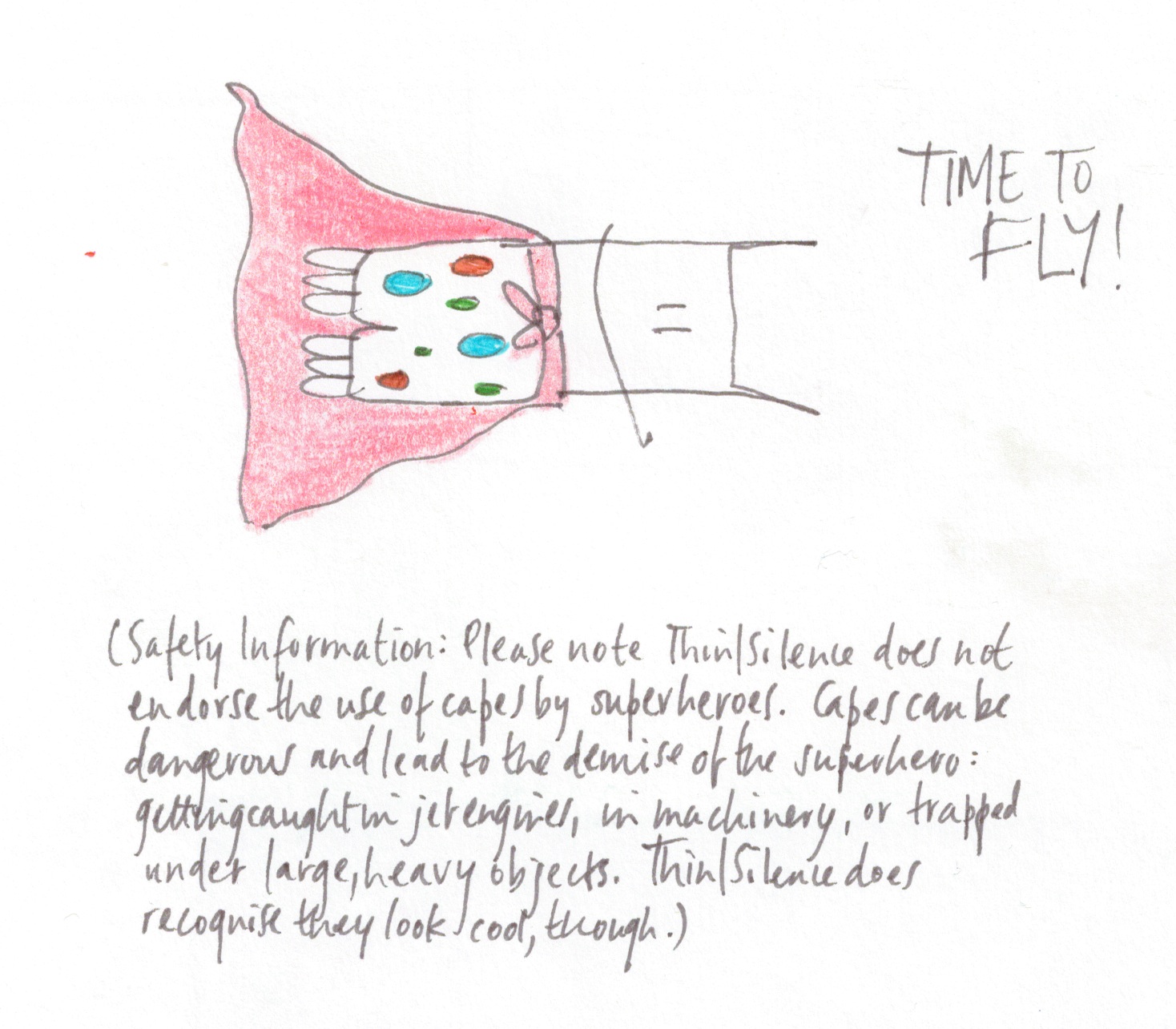
time to fly

Here’s the journey we’ve been on.

We’ve identified the rightness and goodness we want to contribute to the world, we have been developing our art, practicing it and experimenting with it.*

But you’re not sure this is the right time, that the conditions are good enough.  They could better.  You put it off.  Something fades.  (I am speaking to myself first of all.)

The sprinter positions himself on the blocks, leaning forward so that when he takes his arms away he falls forward and has to run or stumble.  It’s all or nothing.  Let go.  Boom.  (Again, I am saying this to myself firstly.)

This is not the dream, not yet.  When we deliver, the realisation of the dream will come into view.

And just as we’re about to hesitate, deciding to wait for the ideal conditions which will never come, Seth Godin whispers to us: ‘real victories come when you have the guts to launch the untestable.’

How did I ever think that something which mattered so much to me would avoid doubts and sleepless nights?

Time to deliver.

(*Befriending people, making cakes as gifts, solving problems, decorating homes with precision, colliding ideas, crafting good brews at the drop-in, designing new code, making the clothing alteration and adding a little more … all of these are examples of our art when they combine talents and passions.)
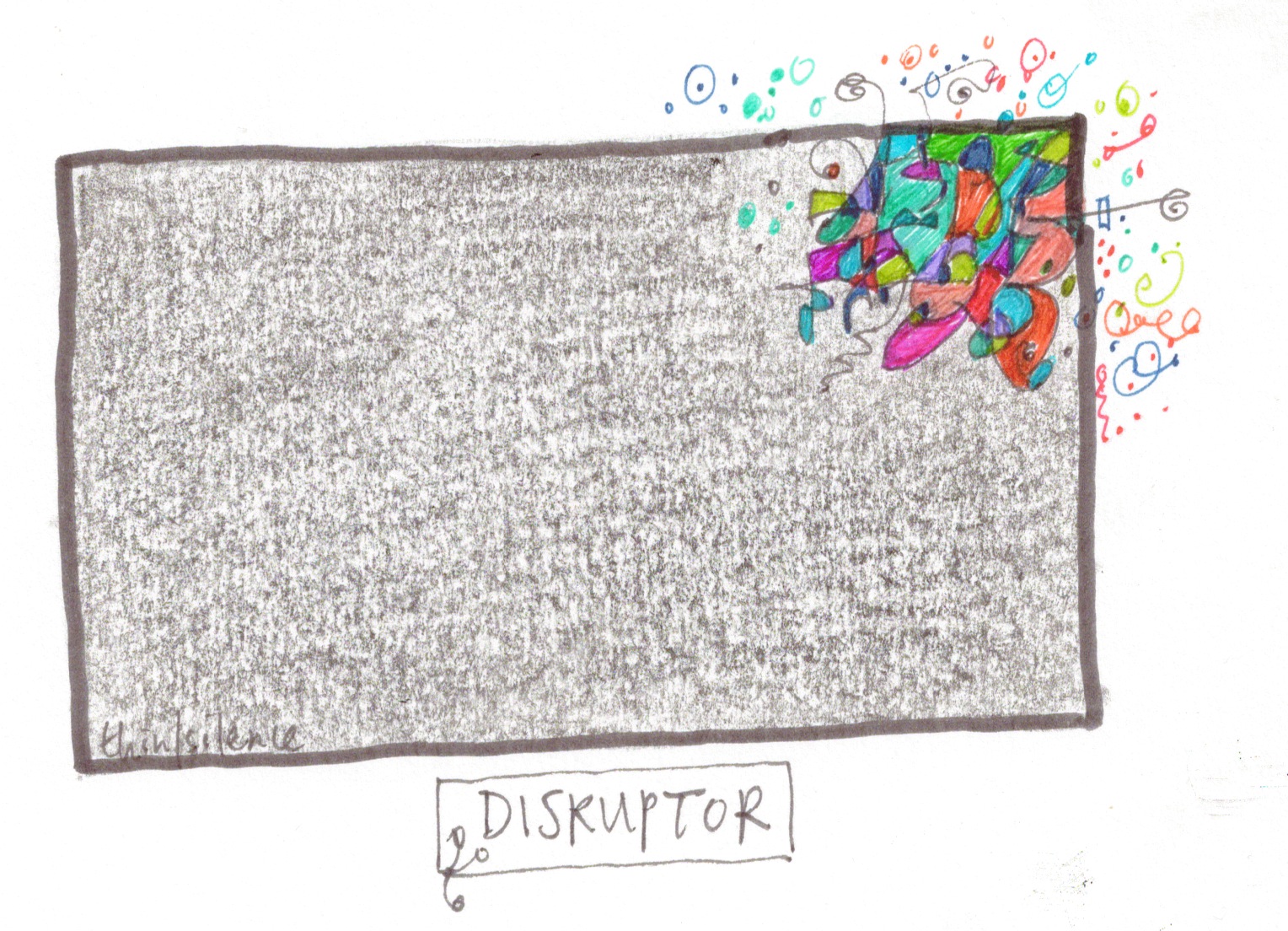
disruptor

disruptor

This is what you are, when you bring your art into the world.*

You offer it as something beautiful and good and right, hardly knowing what reaction you’ll provoke.

You don’t want people to get by a little better; you want them to prosper, to thrive, to flourish.

You provide people with something they don’t even know they want, don’t know exists – until you turn up disruptively.

Some say, you’re overreaching yourself – not settling for the lesser dream so many others do.  The greater dream, the one others give up on, is disruptive.  When you pursue it, you are disruptive.

But your are simply living what Humans are made for or are capable of within the universe – to live with foresight, intention, and love towards a bigger dream.

Corey Ford offers us three marks of the disruptor: she embraces imperfection (not waiting for or expecting perfect – so she does something now); she has a lean-in attitude (turning up with high focus, intent, and energy); and, she connects with the larger world (quickly moving ideas into real-life action, connecting with people where they are).**

(An extra thought: we will disrupt where and when our talents and passions align – otherwise we’ll just be a pain.)

Go.  Disrupt.  Enjoy.


(*Here is an overview of the journey we’re exploring.)
(**The bracketed descriptions are my interpretations of these three marks.)

focus and abstraction and innovation

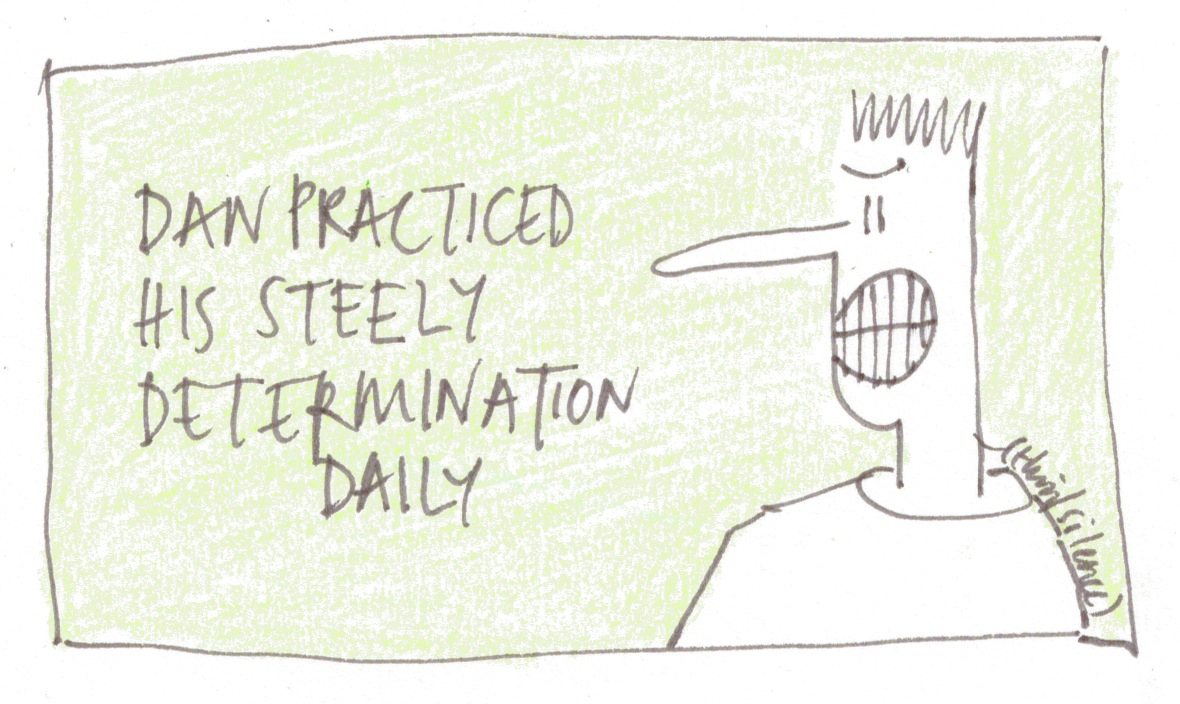
dan practiced his steely ...

Focus, because we don’t want to lose our way now that we’ve got this far.

Abstraction, because we want to make the art we do available to more people and places and purposes.

Innovation, because focus and abstraction makes it possible to continually develop what we do.  Check out the development of Picasso’s art and the thinking behind it (and, for that matter, any influential artist).

Here’s our journey towards the future so far:
We have opened our minds to see more.
We opened our hearts so we can let go of what cannot be for what can be.
We have opened our  wills, actioning the future we dream of.
We have imagined personal possibilities for contributing goodness and rightness in our world.
We know we must be merciful often because we will fail many times as we experiment and prototype.

We have come a long way and it’s important to hold on to the values of our personal visions and art.  I have to do this several times a day.  Some have tried to hold this in mind from minute to minute, abstracting and experimenting their art many times a day.

When we remain focused on what matters we can be highly adaptive.  We are able to keep our eyes on the right things and change or develop or lose or add whatever else is necessary.  What we’re on the lookout for are signs of keeping the ways and means, and losing the values – I could never understand why the Royal Mail was blind to the fact it was really in the communication business rather than the letter and parcel business – it’s never got into delivering email and more.

Abstraction and innovation are most anchored when we are are connected to others, our world, and our future Self, and we have identified our talents and passions, resisting what threatens to make impure and contaminate.


mercy beaucoup

joy is the experience ...

Because we’ll need lots of mercy.

A little bit of a recap: we’re making a journey from opening our minds to what we can and cannot do; opening our hearts and leaving behind the dreams we’ll never fulfil; open our wills in order to make something happen together; then identifying what this precisely must be – our contribution of goodness and rightness into the world.  And, guess what!

We’ll fail.  Lots of times.  You’ll fail.  The people around you will fail.  They’ll need mercy from you and you’ll need to accept mercy from them.

When it comes to our unique goodness and rightness, we won’t craft the finished article in our first attempt.   We’ll experiment, we’ll prototype.  The aim is to try and fail fast, to learn and try again, and through this process, we’ll each create something amazing.  Living mercifully creates the space and encouragement to do this, to try again.

And then there are all the people around you who won’t try to bring anything to the future, and those who are critical of you and your efforts.  Being merciful to them, allowing them to be where they are, sets us free from their expectations and attitudes to keep moving forward ourselves.

Keep going, be merciful lots: you’re going to do something amazing.

go flourish^

image

In the movie Just Like Heaven,* the bookshop assistant Darryl (played by Jon Heder) declares “Righteous” something he sees as good and right – a pretty cool way to use this word.

I’m exploring a number of more unusual words to help us open our minds, open our hearts, and open ou r wills.   From our small worlds (I in me), we’re moving towards a larger world shared with others (I in us).  One in which everyone has the opportunity to flourish – to find their way of creating and crafting through which they bring some goodness and rightness into the world.

Our journey leads us to be present to others, to our world, and to our future Self, but if we are to flourish we need to identify what Otto Scharmer names our crystallising intent – our life-art, the contribution we each must make.  Then we will be satisfied – between creativity and generosity enjoying life.

I just love supporting people to find what it is they must do; this satisfies me**  It will be something different for each of us.

I can only imagine Darryl’s response to each of us identifying our creativity and generosity.  As something right and good in the universe, he would say, “Righteous.”

(^I hope today’s post make sense; I’ve been practicing on an iPad so I can blog whilst on holiday.)

(*You’ll recall that I enjoy cheesey movies.)

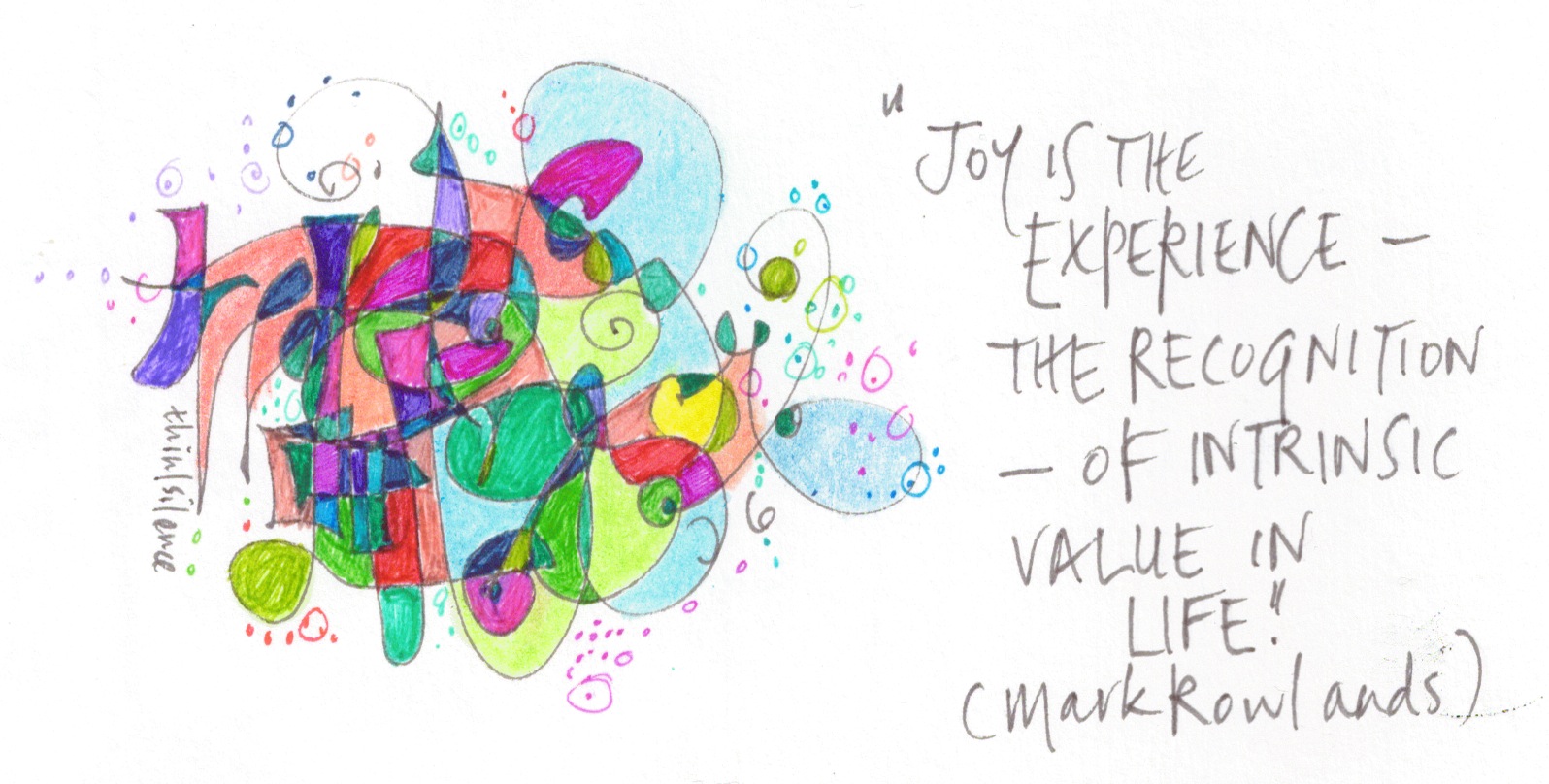
(**Philosopher Mark Rowlands believes just like his running, life has intrinsic rather than instrumental value.  Like a game, we enjoy it for what it is rather than it having some other purpose.  This makes me wonder about identifying our particular creative and generous contribution as being something which has intrinsic value to us and instrumental value to someone else – meaning, when we do what we do, others will be encouraged and enabled to do what they do, and this is why it is satisfying and enjoyable.  Frederick Buechner spoke of finding our life purpose where our deep gladness meets the world’s deep need.)

the meek have it made

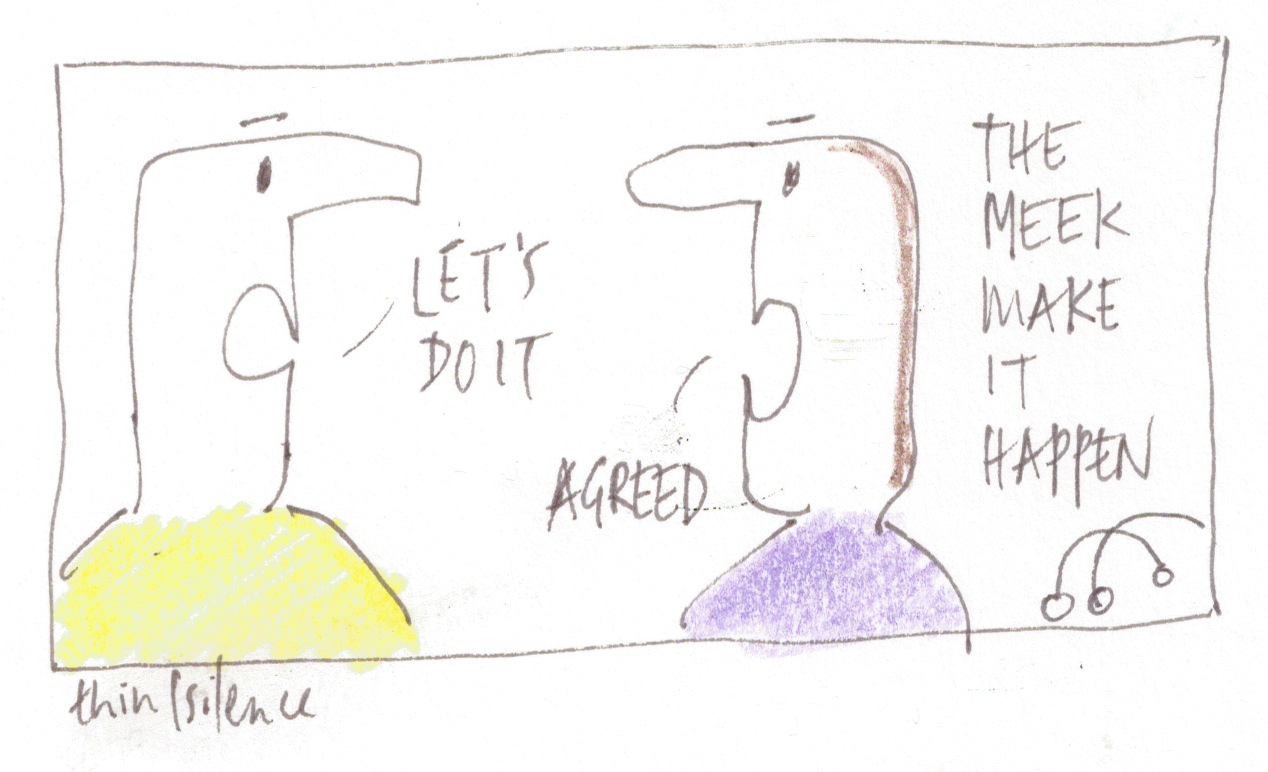
the meek make it happen 1

Sometimes we underestimate a word.  Meek is an old word, but it’s a powerful one.*

Meekness isn’t about faux modesty or being a doormat.

The meek are sharp and ready.  They know their Strengths and Weaknesses, they know what they must do and what they need to avoid.**  They know what they have in way of resources.  And they know that all of these things come together in a centred and focused way through them.

What our poverty makes possible in way of opening our minds, and mourning makes possible in way of opening our hearts, meekness actions through the opening of wills, doing what we MUST do. Meekness enacts our future hopes in the present.

Another word for meekness is presence.

The meek have it all because they are present to life in a fuller and richer way.  It’s not the same as having lots of things, but a way of appreciating what is all around, in people and places and experiences – moments filled with infinity.

As I write this, I know I’ve got a long way to go.  There are the present moments we all experience – but we wonder how to create more. This is the art of meekness – presence expressed in courage and generosity towards others.

Some smirk at meekness, thinking it to be weakness.  All I know is, in the presence of the meek, I feel very small.

(*I like playing with unexpected words because they can offer breakthroughs in our seeing and understanding.)
(**Strengths being those things which energise us and Weaknesses being those which de-energise.)

a time to mourn

future possibilities are all around us ...

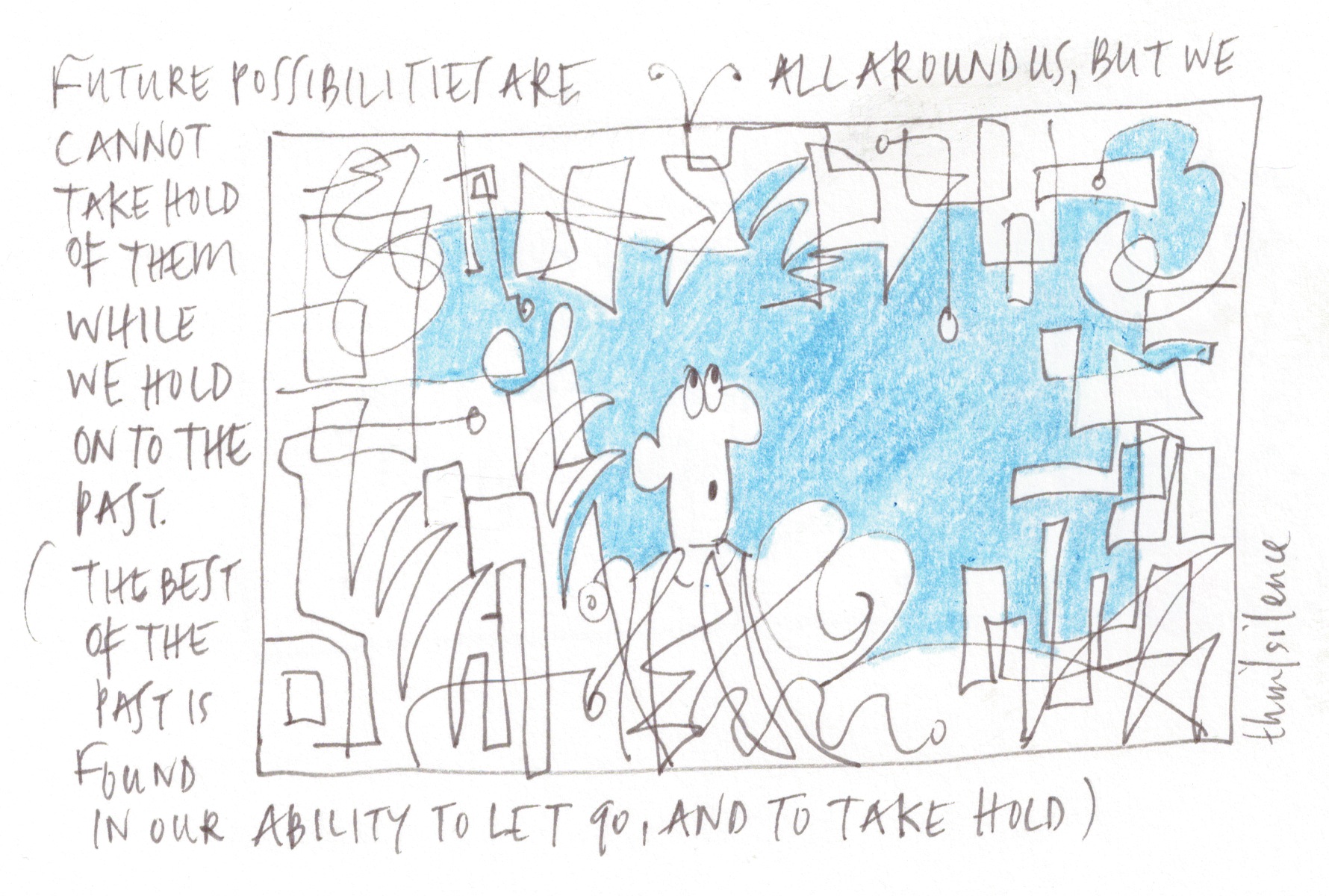
The best time might be now.  Maybe something in your life just isn’t going to happen.  You set your heart on something but it’s not to be.  You keep hoping for something but the door has closed.  You feel some regret like an ache in your soul.  Or something has been taken from you forever.*

To mourn is Human; to mourn makes us more Human.  Not to mourn, holds us to a past we cannot change and away from a future we can.

If being open to the poverty of our lives opens our mind, to mourn opens our heart.

In the movie Elizabethtown, the main character Drew Baylor (played by Orlando Bloom) is given five minutes to mourn for the disaster of a running shoe he designed, so that he might take hold of the rest of his life.**

To mourn is to to be fully open to the truth of the present – the good, the bad, and the ugly.  It is the worst and the best of places.  When we mourn, we do not hide or close up on ourselves.  But when we do, strangely, we come to a place of wholeness and comfort.  We then let go of a past we cannot have over again that we might be free to take hold of a future we can – but have been blind to.


Help people to mourn for who and what they cannot be, so they might take hold and celebrate who and what they can be.

‘Through mourning we can reach a place where the past
remains the past and no longer contaminates the present.’


(*Most of all, I’m thinking of the serious and longed for things we’ve not been able to do with our lives, the opportunities we so hoped for.  I do not trivialise the meaning of mourning.)
(**I love illustrating from cheesy movies.  How on earth could one person be blamed for the failure of a shoe from design to production?   But then, there wouldn’t be any film if it got scrubbed in a meeting of the design team.  The film does have a stonking soundtrack.)

overcoming resistance to openness

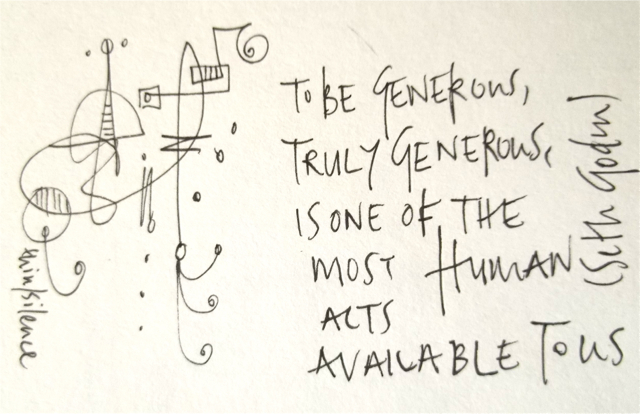
to be generous

Long-running TV dramas create crisis after crisis for their characters.  If these people moving from one ordinary, repeatable day to another there would’t be ugh of an audience, so the writers give them a push to see how they’ll deal with this or that – anything from a relationship breaking up to a train-crash.

The remarkable happens to us,rather than being something we choose of our own volition.

In a movie, the main character is shaken out of her routine by an initiating incident – usually within the first fifteen minutes; she then spends the rest of the film trying to get back to where she was, but in the course of the adventure or challenge, ends up in a better place.*

We are engrossed by these stories, not realising it’s often in our hands to initiate something remarkable.  But how to get there?

Openness to adjacent possibilities** can be hard to find because of the  resistance we encounter when we want to hit the pause button, to in stop and take notice of how our lives are often pushed along relentlessly and unquestioningly.  When we stop and look around, we might be alarmed at just how much we don’t know and haven’t seen, but this admitting our poverty is positive and good.

Resistance fears it because it thinks it’s an end, as if we’ve been found to be wanting, but it’s really a beginning.  When we are open, we are open to more; we’re ready to embark on something remarkable.

One of the things I’m always on the lookout for is how to support people in finding the ways and means of moving towards something they want.  Openness is a starting point.


(*Not all films ends in this way – just like life.)
(**Adjacent possibilities are alternative life-stories we can live given our talents and our passions – life is more like a palate of colours to be mixed than we realise.)

worldviews, mindsets, and attitudes

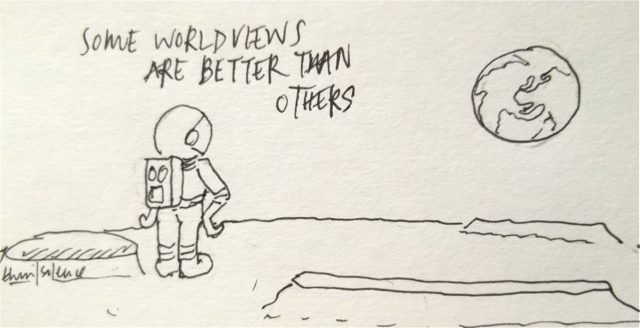
some worldviews are better than others

All are important elements for connecting – to our world, each other, and, our future selves.

There are many world views.  Generally speaking, mine is a positive one; people are capable of amazing creativity and generosity.  I know I’ll be disappointed many times by people who choose not to be as amazing as they can – and most disappointed by myself – but this way of seeing the world keeps me open to exploring possibilities for becoming more Human.

Carol Dweck informs me there are basically two mindsets: fixed and growth.  The person with a fixed mindset believes they are all they can be and they protect this.  The person with a growth mindset can’t tell you exactly what they are capable of yet, they only know how they’ve been surprised again and again at what they’ve been able to do through hard work and passion.

Attitudes are the dispositions which open or close the day-to-day workings of our mindset.  I’ve suggested Humility, Gratitude, and Faithfulness as three basic attitudes to explore for opening up more connections with one another, our world, and our future.

Each is a choice, so not fixed.  Our worldview, mindset, and attitudes open up or close down how creative, enjoyable, and generous our lives will be.

the future is: connected, artistic, a new story

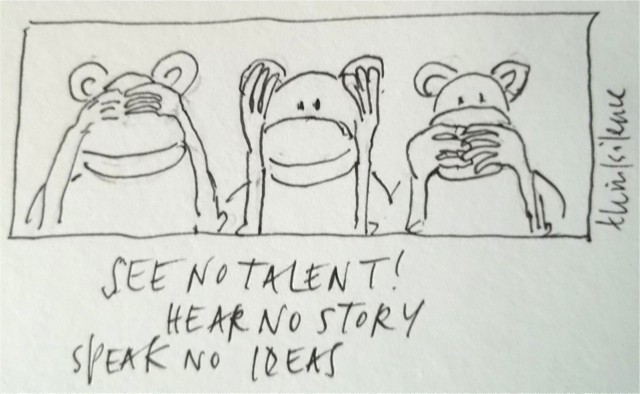
see no talent ...

We each have face down the inhibitors to Human development. (There are more than three but these are three big ones.)

The first holds a worldview of scarcity.

Only some will succeed – those with secret knowledge and privilege (whether it be the factory worker who wouldn’t tell the rest of us how to work the labelling machine so he knew his job was safe, or the inside dealer who’s going to make a killing).  A world of scarcity is a disconnected world, only offering a gloomy future.

The alternative is to bring everything good out into the open and look for way s of sharing.  A world of abundance is a connected world, benefiting more with the ideas we each have.  This ancient inhibitor is gnosticism and it has diminished Human development throughout the ages.

The second inhibitor is also ancient, demanding your conformity in exchange for “bread and circus.”  Governments, factories, and education systems require compliance in return for benefits.

The alternative is to connect with our values, and value  the beauty of our art in a long tail world – in which everyone can find a place for lovingly expressing their individuality in service of the community.  We face down the “smoke and mirror” obstacles which tell us we have no talent, we are not ready (including, where would be find the time?), and how we’ll drop off the edge of the world if we push on.  This enemy is empire, and the Roman’s promises of circus and bread, keeping its vast population subdued, are alive and well in the twenty first century.

The third inhibitor is the lack of a cohesive story.  Stories are increasingly important in a world accelerating in complexity.  Personal stories are vital, but, more crucially are those which enable us to uncover the emerging future together.  For many years now we have been questioning modernity and found it to be wanting in an Oz-like way.

Our questions have been important in deconstructing what is – and a good question will always be worth a thousand average answers – but we must need to begin reconstructing a story which will lead us into the Human future in a better world.  We do this by listening to one another, discerning together what we must do when we answer prime questions such as, What does it mean to be Human?  This inhibitor is postmodernity; it has served us well but cannot lead us into our future.

Which all encourages us to connect more, value our art, and create a new story together.