Plenty of new things under the sun

‘What was will be again,
    what happened will happen again.
There’s nothing new on this earth.
    Year after year it’s the same old thing.
Does someone call out, “Hey, this is new”?
    Don’t get excited—it’s the same old story.’*
(King Solomon)

‘A characteristic of creative people is that they imagine making the impossible possible.  That imagining – dreaming, noodling, audaciously rejecting what is (for the moment) true – is the way to discover what is new or important.’**
(Ed Catmull)

There’s never been a time when we have been more aware and better resourced to explore a life of autonomy, mastery and purpose.  Developing in each of us is something instinctual – the beginning of creativity.   What matters now is for this instinct to be honed into artistry; as Erwin McManus asserts:

‘every human being is both a work of art and an artist at work’.^

Keri Smith writes of this growing awareness when she investigates a mysterious organisation (organism?) named The Wander Society:

‘I believe its members exist to aid us in out quest to discover our own deepest soul life, too help us move to a higher plane of consciousness.’^^

Richard Sennett also caught my eye when connecting the home and art in his example of the goldsmith, perhaps a reconnecting thought for us as we live in a world where home and labour are separated:

‘Goldsmithing is perhaps most revealing in what it tells us about the workshop conceived and s craftsman’s home – as place that united family and labour.’*^

In writing about moving instinct to art, Seth Godin writes:

The world is a lot more complex than our gut is likely to comprehend, at least without training.  Train your gut, get better instincts.’^*

Godin goes on to offer three practices to help in this movement, which are basically:
practise in private at anticipating the future of what you feel;
work more and more in the area of your interest: and,
hone all of this beyond instinct into an art.

You can’t wait until 9 o’clock on Monday morning to begin.  Start now, right where you are, and turn life and home into a studio.

There’s something under the sun waiting to be brought into being by you.

(*Ecclesiastes 1:9-10)
(**From Ed Catmull’s Creativity, Inc..)
(^From Erwin McManus’ The Last Arrow.)
(^^From Keri Smith’s The Wander Society.)
(*^From Richard Sennett’s The Craftsman.)
(^*From Seth Godin’s blog: Better instincts.)


YOU STILL GIVE A GIFT TO SOMEONE THAT WILL CHANGE THEIR 2018

Dreamwhispering is a guided journey of five “conversations” that makes it possible to explore the instinctual life of talents and passions towards living more possibilities.  This is available at the 2017 price of £150 until the 31st December.

Illegally human

When we measure humanity against the vast span of nature – from the largest to the smallest, from the most-developed to the least – the differences between those we think to be the most amazing humans and the least amazing are very small.

Yet, when we make ourselves the centre of the universe, the differences are chasmatic.

We accentuate these differences to the advantage of some and disadvantage of the many.  One of the most amazing human attributes, compassion makes the difference, making the valuing of and collaboration with others possible.  Conscious evolution means we are quite capable of imaginatively extending or expanding compassion.  Karen Armstrong writes:

‘Does the need to create a “competitive edge” endorse and aggravate the “me-first” drive that makes us heartless in other areas of life?  The acquisitive drive of the reptilian brain evolved for scarcity, not plenty.  Do we find it difficult to say “enough”?’*

Instead of leaving others feeling inferior, when we break through the barriers of scarcity into abundance – in employment, food, education, healthcare, commerce, economics – there’s the possibility of encouraging people to explore t their creativity.  Lewis Hyde considers this when thinking of the gift each of our lives contains and contributes:

“True worth […] inheres in the creative spirit, and the objects of the world should move accordingly, not to some other, illusory value.’**

We see this happening belatedly, even posthumously, because we’re constantly pushing our thinking around these things.  Here’s how Vincent van Gogh felt during a lifetime in which he never sold a single painting:

“What I am in the eyes of most people – a nonentity, an eccentric, or an unpleasant person – somebody who has no position in society and will never have; in short the lowest of the low.  All right then – even if they were absolutely true, then I should like to show by my work what such an eccentric, such a nobody, has in his heart.’^

Elle Luna includes these words in her book about internal and external motivations, dis-mything the idea that many people don’t achieve because they’re lazy:

‘To choose Must is to say yes to hard work and constant effort, to say yes to journey without a road map or guarantees, and in so doing, to say yes that what Joseph Campbell called “the experience of being alive, so that our life experience on the purely physical plane will have resonance within our innermost being and reality, so that we actually feel the reality of being alive.”‘

In another place, Joseph Campbell asks:

‘How much of the beauty of our own lives is about the beauty of being alive?  How much of it is conscious and intentional?  That is the big question.’*^

If we exercise the freedom and opportunity that nature has provided us, it can feel positively illegal because it takes us across boundary-lines drawn up by those who are on top.  Rebecca Solnit writes of British walkers challenging the boundaries of ownership drawn by the “haves”:

‘Walking focuses not on the boundary lines of ownership that break the land into pieces but on the paths that function as a kind of circulatory system connecting the whole organism.’^*

Erwin McManus tells of when he was asked to preach to a small church in Cuba, at the end of which, the church pastor said:

“What you just did was completely illegal.”⁺

From different worlds and perspectives, Solnit and McManus are providing a picture for what we’re doing when we encourage people to enter into their creativity – to be illegally human.

(*From Karen Armstrong’s Twelve Steps to a Compassionate Life.)
(**From Lewis Hyde’s The Gift.)
(^Vincent van Gogh, quoted in Elle Luna’s The Crossroads of Should and Must.)
(^^From Elle Luna’s The Crossroads of Should and Must.)
(*^Joseph Campbell, from Joseph Campbell and Bill Moyers’ The Power of Myth.)
(^*From rebecca Solnit’s Wanderlust.)
(⁺From Erwin McManus’ The Last Arrow.)


YOU CAN EXPLORE BEING ILLEGALLY HUMAN THROUGH DREAMWHISPERING

HERE ARE SOME OF THE THINGS PEOPLE HAVE SAID ABOUT THE EXPERIENCE:

“Dreamwhispering is helping me to discover my strengths and the things that I love most in life. It is helping me to transform my work from a list of to-dos to a situation where I can live out the person that I am, be creative and innovative and contribute to the development of the University with the best that I can give of myself. It is also helping me to be more aware of the strengths of my colleagues and to find ways that we can work together to bring out and build on the best in each other.”

“Dreamwhispering has been the only time in my otherwise hectic student lifestyle when I am able to reflect about the direction I am moving in in life. I haven’t yet finished this process, but I’m already making better decisions that are making me much happier. This is such a rare experience […]. I would absolutely recommend dreamwhispering to anyone in my life […].”

GET IN TOUCH TO FIND OUT MORE

Allow me to misinterpret that

‘If you’re merely following [shortcuts], you probably won’t get anywhere interesting.’*
(Seth Godin)

‘As the scholastics used to say: Homo non proprie humanus sed superhumanus est – which means that to be properly human, you must go beyond the merely human.’**
(Eugene Peterson)

I misread the text on a Hugh Macleod doodle:  I thought it read “Never lose the way,” it actually read “Never lose the why” but I liked the mistake.  Our Why? and our Way have a lot in common.  The way changes, disappears, re-appearing – sometimes completely somewhere else.  Our Why?, though, helps us through the invisible or hidden.  What we discover in the new helps us to avoid complacency and narrow-mindedness.  Indeed, it seems we must remain open-minded to have any mind at all.

Mistakes and misinterpretations can be our happy accidents moving us away from shortcuts to the familiar and  “Same again.”

I may ask someone a question about how they live out their talents with energy.  Their response indicates it’s not the right question.  I’ve misinterpreted or misunderstood something they’ve said.  I ask another question.  It’s still not quite right, but the responses have made me think of something different and I try another question.  This time something amazing opens up.  Richard Sennett’s words then make a load of sense:

‘A “flamboyant” worker, exuberant and excited, is willing to risk losing control over her or her work: machines break down when they lose control, whereas people make discoveries, stumble on happy accidents.’^

Paulo Coelho also exhorts us to move in this direction:

‘Seek out people who aren’t afraid of making mistakes and who, therefore, do make mistakes […] they are precisely the kind of people who change the world.’^^

We’re looking for Seth Godin’s detours, journeys where unexpected moments happen:

‘This “moment-spotting” habit can be unnatural.  In organisations, for examples, we are consumed by goals. […] The goal is the thing.

But for an individual human being, moments are the thing.’*^

(*From Seth Godin’s blog: Actual shortcuts often appear to be detours.)
(**From Eugene Peterson’s Run With the Horses.)
(^From Richard Sennett’s The Craftsman.)
(^^From Paulo Coelho’s Aleph.)
(*^From Chip and Dan Heath’s The Power of Moments.)


THIN|SILENCE ON YOUR WALLS?

What do you want to most remind your people of?

You can create your own messages of encouragement for your walls.  Get in touch for a quote.

Voices loud and deep

There’s a difference.

A loud voice may have nothing important to say but because its loud, everyone listens.  Sometimes we need people to say something loud – like when the building is on fire – but not very often.

Here’re some words I came upon this morning that got me thinking about deep voices:

“Sink me a well to water all this land: […] release the nether springs.”*

‘A million people can build what you’ve built.  How do you make yourself the one who solves the problem?’**

‘In how many situations are we given the gift of spending time talking about a kind of heartbeat life – music, people, connections, meaning?’^

“Let yourself be silently drawn by the strange pull of who you really love.  it will not lead you astray.”^^

David George Haskell writes of the voice of the Amazonian rainforest.  It doesn’t speak as loudly as our cities but what it does have to say brings us life from the mighty lungs of our planet.  Maria Popova includes these words in her delightful post on the songs of trees:

“Winds sometimes bring pulses of dust from Africa or smog from a city, but mostly the Amazon speaks its own tongue.  With fewer seeds and abundant water vapour, raindrops bloat to exceptional sizes. The rain falls in big syllables, phonemes unlike the clipped rain speech of most other landmasses.

We hear the rain not through silent falling water but in the many translations delivered by objects that the rain encounters.”*^

We have much to learn from this giant silence if we’re to find our own authentic voice.  Ken Mogi writes about depth over loudness, I think, when he proffers:

‘In order to have ikigai [life purpose], you need to go beyond the stereotypes and listen to your inner voice.’^*

Going with the stereotype sometimes means becoming louder and louder if we’re to be noticed and, before we know it, the world is shouting.  We see this in many ways, as Michael Bhaskar identifies here:

‘For the past two hundred and fifty years our technologies have been directed at boosting our productivity.  To producing more.  More goods, more food, more data, more stuff.’⁺

The world is shouting solutions at us but what are the problems?  Perhaps Bhaskar is helping us in this direction when he suggests:

‘In a world of too much, selecting, finding and cutting down is valuable.’*

Edgar Schein points us in the direction of questions over answers and provides us with four kinds of inquiry that help us go deeper rather than louder:

‘The helper can be in the process consultant role and still have choices of how to play that role.  I have found it very helpful to differentiate four fundamentally different kinds of inquiry:

  • pure inquiry
  • diagnostic inquiry
  • confrontational inquiry
  • process-oriented inquiry’⁺⁺

Each of these forms of inquiry takes our voice deeper.

The opposite of a loud voice is not a quiet one, rather, it is a deep voice. In loud spaces, it’s funny how I can hear some people’s voices really easily.  They’re not shouting, there’s simply a quality to the tonality of their voice that means I can hear them.

Don’t raise your voice to me, take it down a little deeper.

(*Andy Raine, quoted in the Northumbria Community‘s Morning Prayer.)
(**From gapingvoid’s blog: The golden rule to unlimited customer devotion.)
(^Aaron Johannes from Drawn Together by Visual Practice.)
(^^Rumi, quoted in Elle Luna’s The Crossroads of Should and Must.)
(*^David George Haskell, quoted in maria Popova’s Brain Pickings:
The Songs of Trees.)
(^*From Ken Mogi’s The Little Book of Ikigai.)
(⁺From Michael Bhaskar’s Curation.)
(⁺⁺From Edgar Schein’s Helping.)


Okay, I confess

“Because life is network, there is no “nature” or “environment,” separate and apart from humans.  We are part of the community of life, composed of relationships with “others,” so the human/nature duality that lives near the heart of many philosophies is, from a biological perspective, illusory.  We are not, in the words of the folk hymn, wayfaring strangers travelling through this world.  Nor are we the estranged creatures of Wordsworth’s lyrical ballads, fallen out of Nature into a “stagnant pool” of artifice where we misshape “the beauteous forms of things.”  Our bodies and minds, our “Science and Art,” are as natural and wild as they ever were.

We cannot step outside life’s songs.  This music made us; it is our nature.”*
(David George Haskell)

“And can any of you by worrying add a single hour to your span of life?   And why do you worry about clothing? Consider the lilies of the field, how they grow; they neither toil nor spin, 29 yet I tell you, even Solomon in all his glory was not clothed like one of these.”**
(Jesus of Nazareth)

A year is a good measure of time, involving seasons, rituals, and celebrations.

A day is also good, marked by food and rest, by dawn and dusk.

Hours are pretty good too, marking when to begin something or complete something.

Moments are important, something we can be “in,” when something comes to us or dawns on us or becomes clear to us – as Peter Diamandis and Steven Kotler describe here:

‘Everyone in the Planetary Team knows the moment.  The moment when we knew our calling was to break boundaries and push humanity to the stars.^

Minutes, however, introduce a dangerous precedent.  Disrupting moments and hours and days and years.  Demanding that we be efficient, avoiding waste – and also satisfaction.  Nothing worthwhile has ever been accomplished in a minute, but may well have been lost to one.  And we better not even mention seconds.  Even the measurement of the speed of light and all of our fractalising of the universe has really been accomplished in moments, hours, days, and years.

Confession is usually used in relation to owning up wrongdoing but we need a different kind of confession – the kind that  finds the time to admit what we do that is beautiful and good.

Mihaly Csikszentmihalyi imagines how people see things differently:

‘Things that most people take for granted puzzle him; and until he figures them out in an original yet perfectly appropriate way, he will not let them be.’^^

In a moment, this can become that.  To others this always remains this, but perhaps not to you.  You’re noticing more, you’re taking the time to notice what it is you must do:

‘All too often, we feel we are not living the fullness of our lives because we are not expressing the fullness of our gifts.’*^

We all have the same amount of time.  This is not measured in seconds and minutes, but in moments of clarity, in hours of opportunity, in days of labour, and in years of development.

(*David George Haskell, quoted in Maria Popova’s Brain Pickings: The Songs of Trees.)
(**Jesus of Nazareth, from the Gospel of Matthew 6:27-29.)
(^From Peter Diamandis and Steven Kotler’s Bold.)
(^^From Mihaly Csikszentmihalyi’s Flow.)
(*^From Elle Luna’s The Crossroads of Should and Must.)


BRING SOME THIN|SILENCE TO YOUR TEAM

Have a day or half-day of Thin|Silence with your team, exploring how to work through talents over roles.  Get in touch for more information


Do you see what I see?*

These words came to mind when I was thinking about how two people can look on the same thing and have quite different reactions and responses.  It turns out they’re from a Christmas song from The Little Drummer Boy.

One person looks at how things are and sees a hopeless situation.  Another looks and sees an opportunity.  One thinks they see the answer – at least the conclusion but the other sees a question..  One is travelling away from something, the other is traveling towards.

The ability to see something for what it is allows what Roy Baumeister might call aacrystalisaztion of discontent”** to take place.  Instead of being like other hopeless situations, it becomes memorable and meaningful.’^

This moment of seeing, which is elevated, insightful, masterly and connecting, doesn’t come from out of the blue but from a lifetime of living in a particular direction.  It’s simply a moment of realignment to our future hope.

Edgar Schein offers an insight for this clarity of seeing:

‘The critical thing is not to stereotype the situation even if it looks like something familiar.’**

What do you see?

(*From The Little Drummer Boy.)
(**Roy Baumeister, quoted in Chip and Dan Heath’s The Power of Moments.)
(^From Chip and Dan Heath’s The Power of Moments.)
(^^From Edgar Schein’s Helping.)

The studio

‘A studio isn’t a factory.  It’s when peers come together to do creative work, to amplify each other and to make change happen.  That can happen in any organisation, but it takes commitment.’*
(Seth Godin)

‘[Good’s] existence is the unmistakable sign that we are spiritual creatures, attracted to excellence and made for the Good.’**
(Iris Murdoch)

In a world of change we’re often out of alignment, though we do not notice.

Realignment requires openness of mind, heart and will.  It’s tricky because our realignment isn’t to some constant but to an unfolding something that doesn’t yet fully exist.  I see Seth Godin’s studio (and Brian Eno’s scenius) as expressions of a group of people seeking to help one another realign.  It’s a positive response to what we lose to an unquestioning approach to technology, here articulated by Sherry TURKLE.

‘What I call realtrechnik suggests that we step back and reassess when we hear triumphalist or apocalyptic narratives about how to live with technology.  Realtechnik is sceptical about linear progress.  It encourages humility, a state of mind in which we are most open to facing problems and reconsidering decisions.’^

Turkle reports how some research among fourteen thousand students reported a ‘dramatic decline in interest in other people:^

‘It is from other people that we learn to bend to each other in conversation.

[…]

Humans need to be surrounded by human touch, faces, and voices.  Humans need to be brought up by humans.’^

Not only humans, though, we also need contact with the natural world – Joseph Campbell reminding us here that we can have a deep respect for all things:

‘You can address anything as a “thou” – the trees, the stones, everything.  You can address anything as a “thou,” and if you do it, you can feel the change in your own psychology.  The ego that sees a “thou” is not the same ego that sees and “it.”‘^^

This would elsewhere be described as a journey from ego to eco.*^

Studios exploring critical thinking, feeling and doing can be places for realignment.  Instead of being seduced by technologies we come to see how they can serve the deepest human and planetary needs.

We don’t have to believe in God to appreciate what Brian McLaren is trying to say here about the incredible world are part of:

‘God’s first language is full-spectrum light, clear water, deep sky, red squirrel, blue whale, grey parrot, green lizard, golden aspen, orange mango, yellow warbler, laughing child, rolling river, siren forest, churning storm, spinning planet.’^*

Tonight sees the final programme in the Blue Planet 2 series.  Amazing exploration narrated by David Attenborough who stand as a planetary prophet for us.

We may learn again to be the laughing child.

(*From Seth Godin’s blog: Rules for working in a studio.)
(**From Iris Murdoch’s The Sovereignty of Good.)
(^From Sherry Turkle’s Alone Together.)
(^^Joseph Campbell from Joseph Campbell and Bill Moyer’s The Power of Myth.)
(*^See Otto Scharmer’s Theory U and Eckhart Tolle’s A New Earth.)
(^*From Brian McLaren’s We Make the Road by Walking.)


HOW WOULD YOU HAVE THESE COLOURED FOR YOUR COMPANY’S WALLS?

Each image can be completed to a high resolution and your colour choice.  Prices will vary depending on the size of canvas required but will always be great value

GET IN TOUCH FOR A QUOTE

Let’s keep talking

“Good ideas have lonely childhoods.”*
(Hugh Macleod)

‘So long as the gift is not withheld, the creative spirit remains a stranger to scarcity.’**
(Lewis Hyde)

If you have an idea, you need to keep talking.  As Hugh Macleod reminds us, this means first of all making sure we have conversations with ourselves, reminding ourselves as to why this idea matters so much.

Iris Murdoch writes:

‘Courage, which seemed at first to be something on its own, a specialised daring of the spirit, is now seen as to be a particular operation of wisdom and love.’^

Our wisdom and love deepens and strengthens around things that matter to us.  As Seth Godin points out:

‘failure frightens people who care less than you do.’*^

Courage isn’t isn’t a lack of fear but a lack of self.  Iris Murdoch writes of where this comes from:

‘Humility is not a peculiar habit of self-effacement, rather like having an inaudible voice it is selfless respect for reality and is one of the most difficult and central of virtues.’^^

I love working on things that allow people to be encouraged in their ideas when it comes to the next step – sharing with someone else.

Let’s keep talking.

(*From gapingvoid’s Good ideas have lonely childhoods.)
(**From Lewis Hyde’s The Gift.)
(^From Iris Murdoch’s The Sovereignty of Good.)
(^^From Seth Godin’s blog: Where would we be without fear?)


ENCOURAGE YOUR PEOPLE

WHY NOT DISPLAY YOUR ETHOS IN IMAGES ON YOUR WALLS.

TODAY’S IMAGE IS AN EXAMPLE.  THE BLACK AND WHITE IMAGE CAN BE TURNED INTO ANY COLOUR SCHEME.  AND YOU CAN TURN YOUR ETHOS INTO SIMILAR MESSAGE BOARDS.

And then we will arrive at good

“You need to be generous to yourself in order to receive the love that surrounds you […] it is at the edge of your soul, but you have been blind to its presence.”*
(John O’Donohue)

‘Modern laziness avoids emotional labour.’**
(Seth Godin)

Maybe we think turning up is enough, completing what is expected us, or maybe ignoring the unnecessary.  The question is, are we also missing the opportunity.

Emotional labour opens possibilities:

“When a great moment knocks on the door of your live, it is often no louder than the beating of your heart, and it is very easy to miss it.”^

Seth Godin describes what he sees as modern laziness:

“This is the laziness of not raising your hand to ask the key question, not caring about those in need or not digging in to ship something that might not work.  Lazy is having an argument instead of a thoughtful conversation.  Lazy is waiting until the last minute.  And lazy is avoiding what we fear.”**

Beyond opening our minds to something different or new there is something more.  To open our minds takes us beyond downloading but when we open our hearts to possibility, we are taking a deeper dive.   Emotional labour involves stepping inside the world of another, being prepared to take a risk and meet them there.   Eugene Peterson sees that in hoping to avoid despair (and perhaps disappointment) we also avoid hope:

‘Hope is a projection of the imagination; so is despair.  Despair all too readily embraces the ills it foresees; hope is an energy and arouses the mind to explore every possibility to combat them.’^^

There is an even deeper dive.

To do something together or for each other, imagining new possibilities and then prototyping perhaps takes us to where Iris Murdoch describes when she claims:

‘Of course Good is sovereign over Love, as it is sovereign over other concepts, because Love can name something bad.’*^

Emotional labour is critical for moving us into what is possible though we hadn’t seen it and here we feel most alive:

‘when the soul is turned towards Good the highest part of the soul is enlivened.’*^

What we seek most of all may be found in what surrounds us but we have never ventured into.

(*John O’Donohue, quoted in the Northumbria Community‘s Morning Prayer.)
(**From Seth Godin’s blog Modern laziness.)
(^Boris Pasternak, quoted in the Northumbria Community’s Morning Prayer.)
(^^From Eugene Peterson’s A Long Obedience in the Same Direction.)
(*^From Iris Murdoch’s The Sovereignty of Good.)


THIN|SILENCE FROM APRIL THAT COULD “COLOUR UP” YOUR WALLS

Each image can be completed to a high resolution and your colour choice.  Prices will vary depending on the size of canvas required but will always be great value

GET IN TOUCH FOR A QUOTE

Disrupting the narrative

“Take me down to the spring of my life, and tell me my nature and my name.”*
(George Appleton)

‘You have to keep finding new and creative things to be grateful for. […]

Which simply means, you have to keep looking – hard.
Or else your brain just switches to autopilot, and all your blessing start turning to dust in your mind.’**

(Hugh Macleod)

What is hard-looking?

Does it have to do with how long I look for?  Do I need special glasses?  Do I have to screw my eyes up?  Or squint?

It’s probably all of these things.

Looking slowly helps.  Through the eyes of others.  Putting ourselves in an unfamiliar place.   Playing the “Yes and” game.   All are ways of seeing harder.

” ‘Yes and’ isn’t a technique.  It’s a way of life.”^

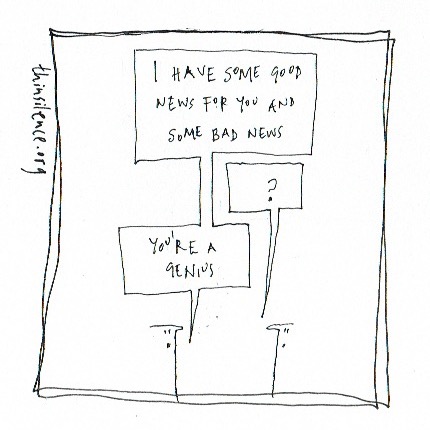
Mihaly Csikszentmihalyi has some good news and some bad news for us.  The good news is that we can regain our curiosity, the bad news is that it doesn’t hold a “charge” for very long:

‘The rebirth of curiosity doesn’t last long, unless we enjoy being curious.’^^

This is why going to spring of my life, as George Appleton puts it, is so important.  Going deep is also found in these words of Richard Rohr which recognise we can’t be everywhere doing everything:

‘The principle here is to go deep in one place and you will meet all places.’*^

There is a reason we notice the things we do.  And when we do, things begin to happen, first within and then without.  As Eckhart Tolle notices:

‘Awareness is the greatest agent of change.’^*

It is the agent of change because we become more an agent of change ourselves.  Erwin McManus connects the courageous life to this.  He points out in his book Uprising the connection between humility and integrity (connection not only to others but our world, too), and the connection between integrity and courage:

‘One person who chooses to live a heroic life disrupts the narrative.’⁺

That’s why, when we look hard there’s a change coming.

(*George Appleton, quoted in the Northumbria Community‘s Morning Prayer.)
(**From gapingvoid’s blog Count your blessings.)
(^Cathy Salit, quoted in Daniel Pink’s To Sell is Human.)
(^^From Mihaly Csikszentmihalyi’s Creativity.)
(*^From Richard Rohr’s Eager to Love.)
(^*From Eckhart Tolle’s A New Earth.)
(⁺From Erwin McManus’ The Last Arrow.)


A DREAMWHISPERING JOURNEY?
Book your dreamwhispering journey before the end of 2017 and guarantee the 2017 price of £150.

You will be able to explore your talents and passions and create the story your life is asking you to be.  

Wrapped around your question will be five conversations focusing on talents and energy and story with feedback between each.  
You determine the rhythm and speed, and can take place in person, Skype (or similar) or phone.