The art of using what’s already there
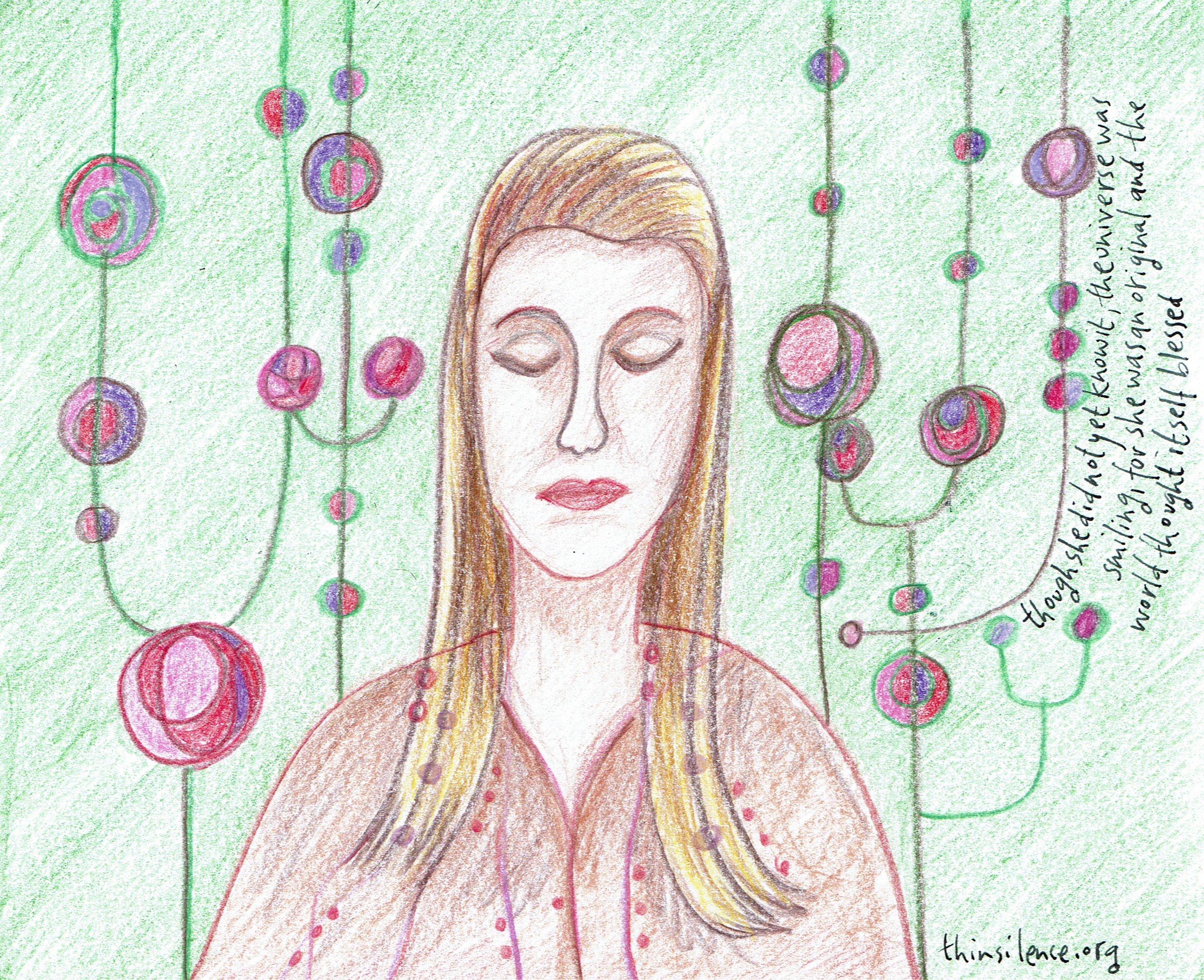
First there was time. Then space and energy. Then matter. And now the possibility of life, of other minds. What would these new minds think? What would they grasp? […] I could they feel the weight of the future, heavy, bristling with possibilities. But I could not see the future.*
(“Mr g”)
You have to keep finding new and creative things to be grateful for […]. You have to keep looking – hard. Or else your brain just switches to autopilot, and all your blessings starting turning to dust in your mind.**
(Hugh Macleod)
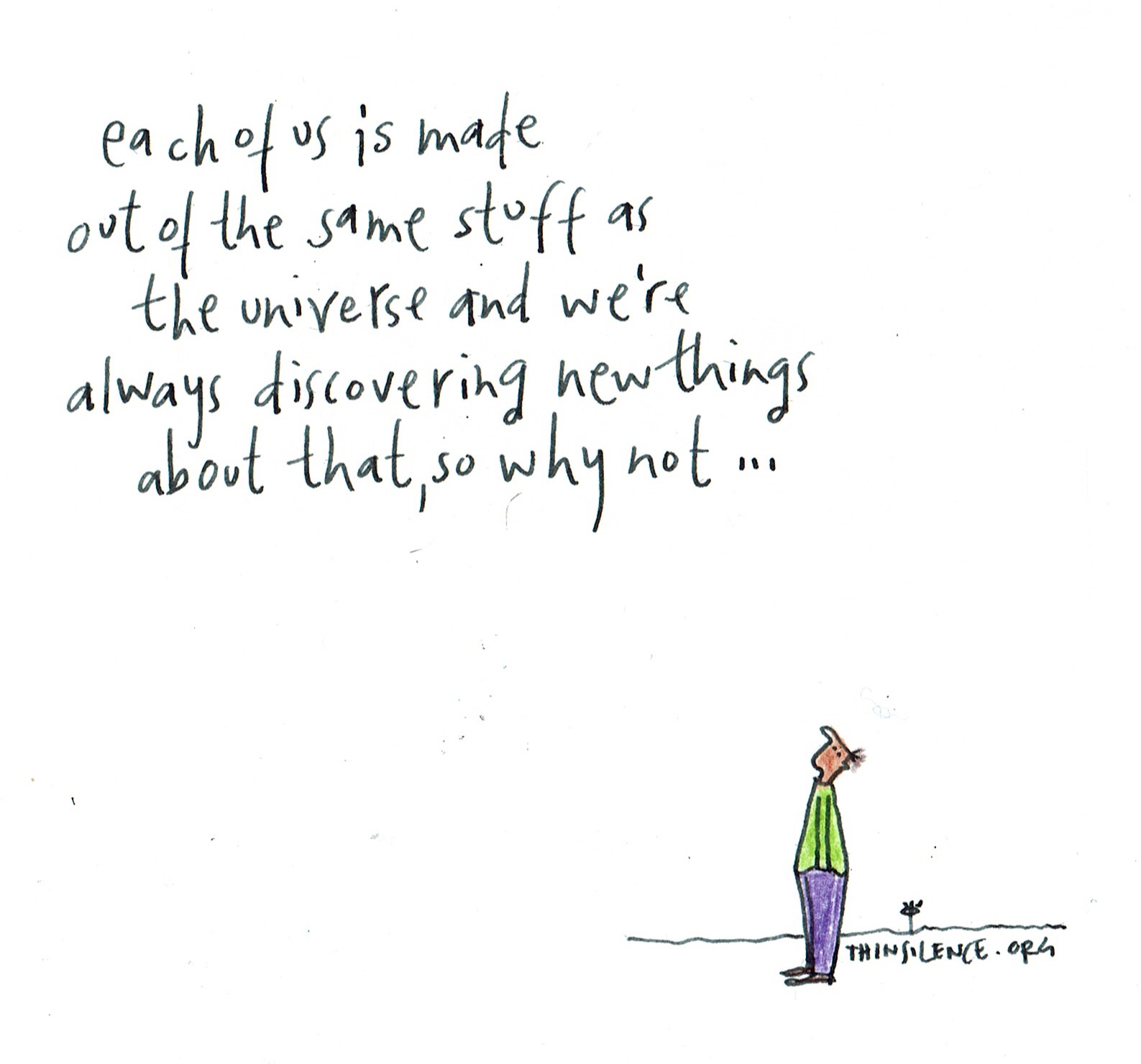
When it comes to the thing we want to do, we don’t have to begin from scratch.
There’s an art to seeing and using what’s already there.
To use the ideas swirling all around us, or the spaces that already exist to meet in, or the abilities we have been developing, or the paths that are already opening up. Up-cycling all of these with the sparking idea we have to pursue.
The world becomes blue to us, blue as in hyperlinked, connecting us to new worlds of possibility.
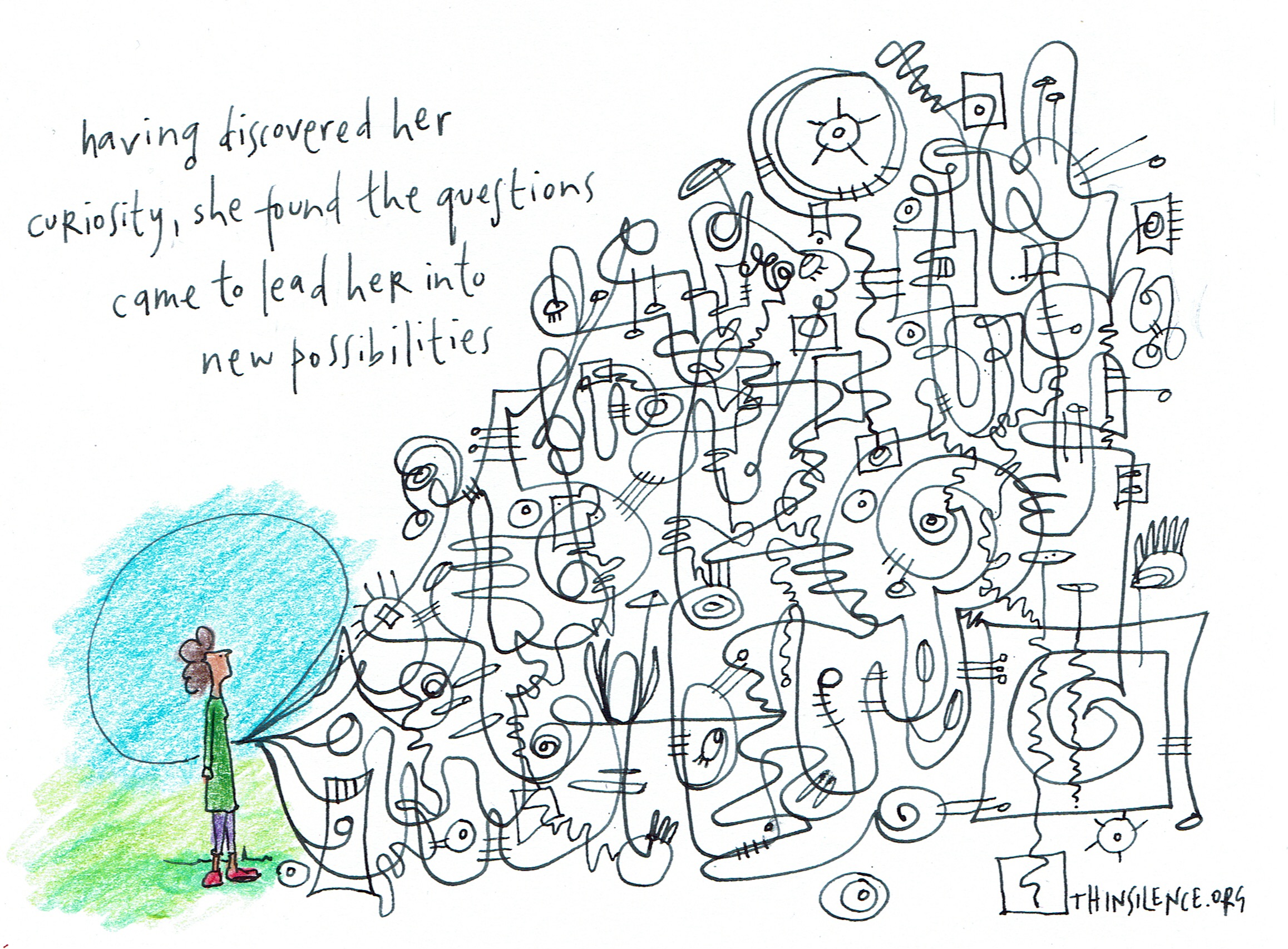
It begins with our attention, not the first look but the second, slower look of curiosity. Richard Sennett describes curiosity as:
‘an experience that suspends resolution and decision, in order to probe’.^
We each have a unique curiosity. Just this last week, I was asking a group of students to begin identifying their curiosities towards being able to ask better, deeper questions of themselves and each other.
These questions will allow more to be seen, to be understood, to resource us.
Mihaly Csikszentmihalyi said of curiosity:
‘The rebirth of curiosity doesn’t last long, unless we enjoy being curious.’^^
Our curiosities are already there. They are there because we enjoy them. We must set them free.
(*From Alan Lightman’s Mr g.)
(**From gaping void’s blog: Count your blessings.)
(^From Richard Sennett’s The Craftsman.)
(^^From Mihaly Csikszentmihalyi’s Creativity.)
An invitation to be misunderstood and disregarded
What’s the smallest change we could make […]?*
(Jeff Rodman)
All you have is what you are and what you give.**
(“Shevek”)
What we have and what we give are the most important things of all.
They are the core question to Otto Scharmer’s transformative process Theory U.
And here they are again in Seth Godin’s blog:
‘When the people we serve present themselves, when they offer us their attention and their trust, we need to work to see two things:
- Who they are. What do they fear, what do they believe, what do they need?
- Who they can become. Which doors can we open, how can we support them, what will they leave behind?’^
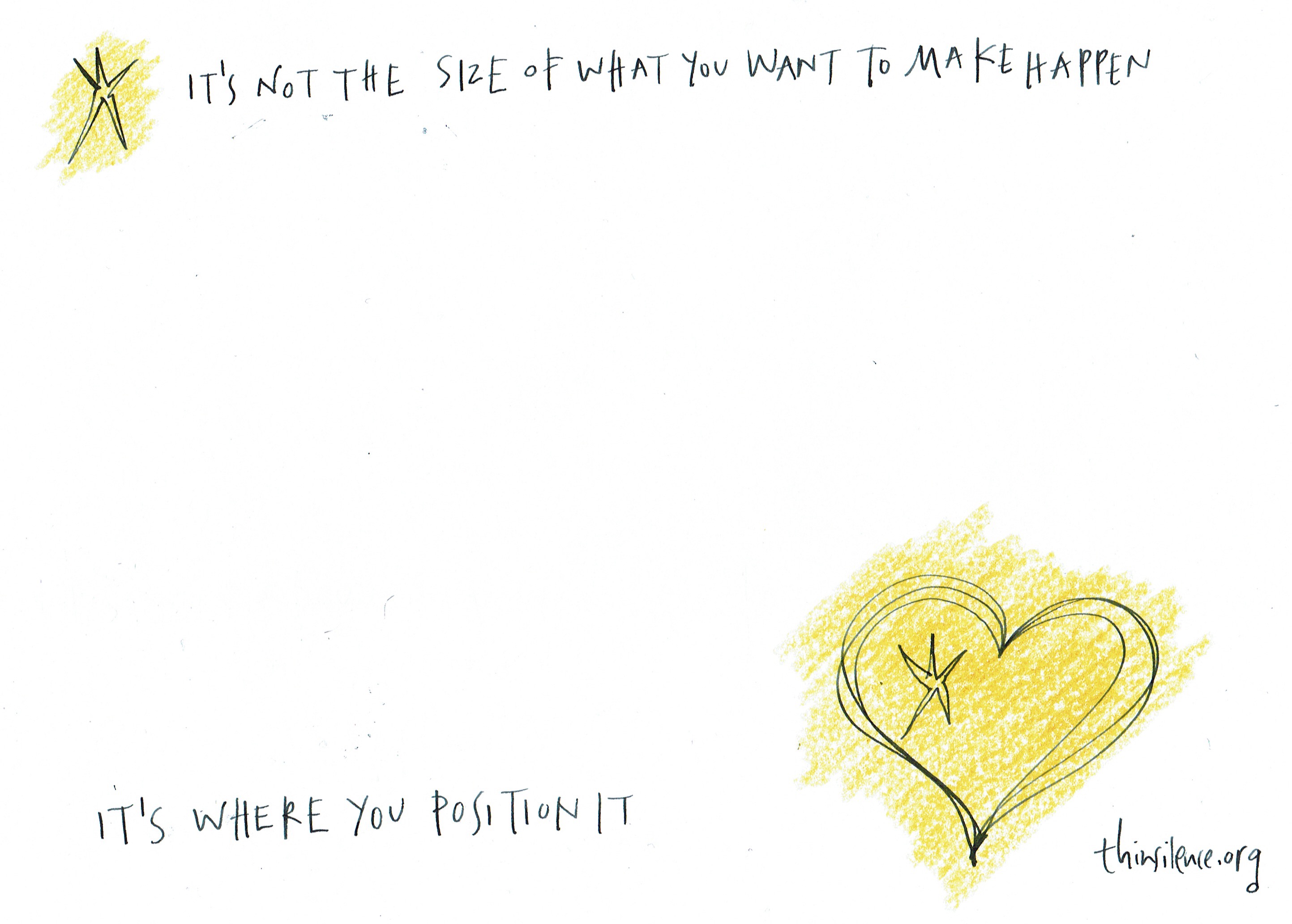
We may believe these don’t add up to much when we look around us at who others seem to be and are doing, but it’s not how big the change we can make but where we are able to place it, like yeast in a batch of dough:
‘The most important change in any transformation journey is the change of heart.’^^
Alex McManus identifies why the strategic positioning of something small in relation to the heart has great effect:
‘By “heart” I mean the place where the emotions meet reason, mobilise the will, and shape identity.’*^
And just to add one more thought, this from Nassim Taleb, emotions help us make decisions rather than using reason to weigh things up:
‘One cannot make a decision without emotion. […] emotions are there to prevent us from temporising. […] Psychologists call them lubricants of reason.’^*
(Polycom’s Jeff Rodman, quoted in gaping void’s Deliberate progression.)
(The character Shevek in Ursula Le Guin’s The Dispossessed, quoted in Maria Popova’s Brain Pickings: Ursula Le Guin on Suffering and Getting to the Other Side of Pain.)
(^From Seth Godin’s blog: Seeing what’s right in front of you.)
(^^From Otto Scharmer’s Leading From the Emerging Future.)
(*^From Alex McManus’ Makers of Fire.)
(^*From Nassim Taleb’s Fooled by Randomness.)
Next?
When you cannot predict the future and emergence is unpredictable, you can’t build training programmes in advance because you don’t know what you’ll need.*
(Jay Cross)
Everything changes once you see how the universe is designed for abundance and not for scarcity. It not only changes the condition of your life but it changes you.**
(Erwin McManus)
Who’s next?
The question comes from the sales assistant who’s unsure of how to invite me forward to the till. I am the only person waiting.
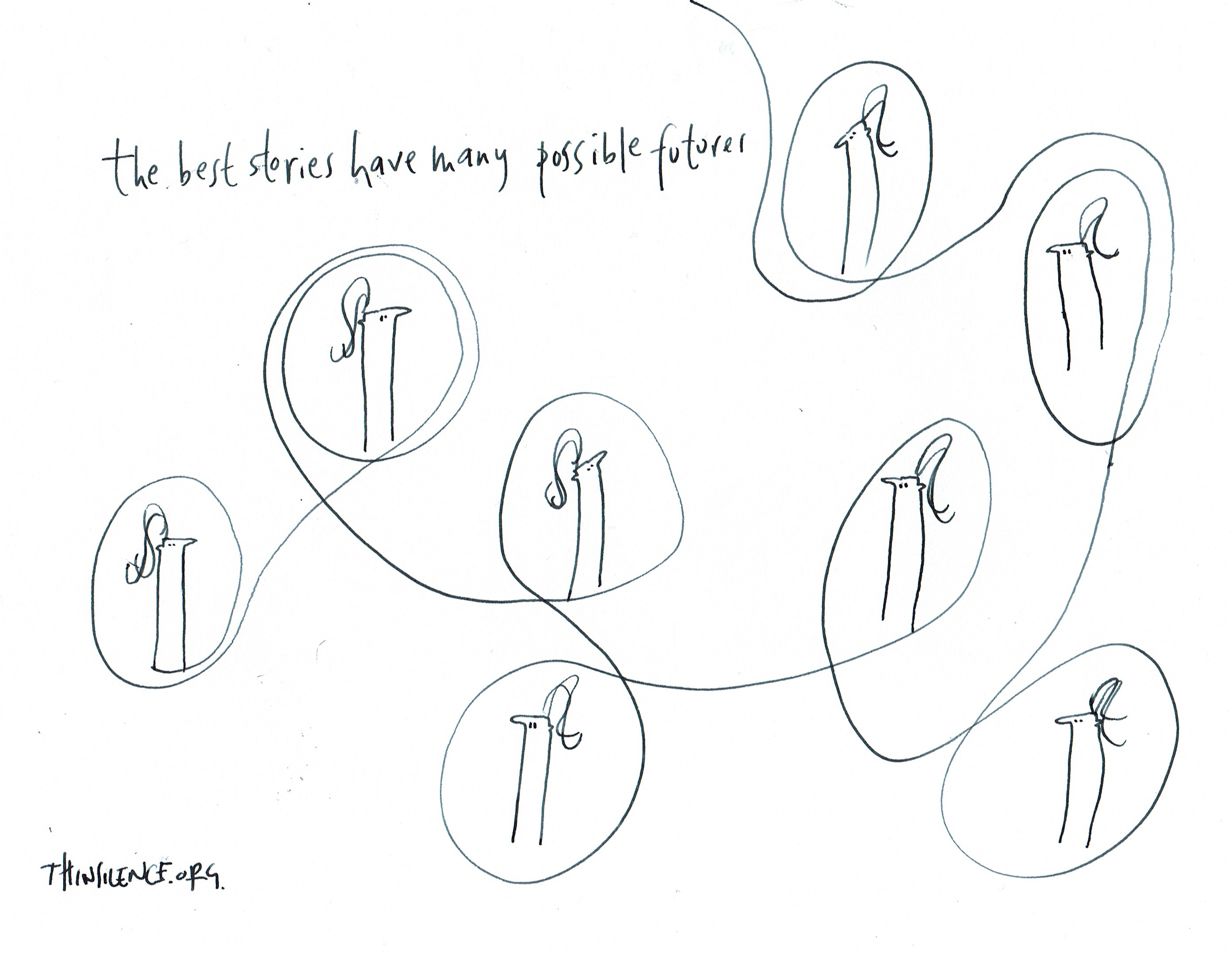
How do we invite the future to step forward, the multiple futures we cannot see?
Our best tools will be the questions that emerge out of the questions we ask ourselves, then one another.
This on a daily basis:
Who am I? What is my contribution?
Then Who are you? and What is your contribution?
Which leads to Who are we? and What is our contribution?
That’s a movement.
(*From Jay Cross’ Informal Learning.)
(**From Erwin McManus’ The Last Arrow.)
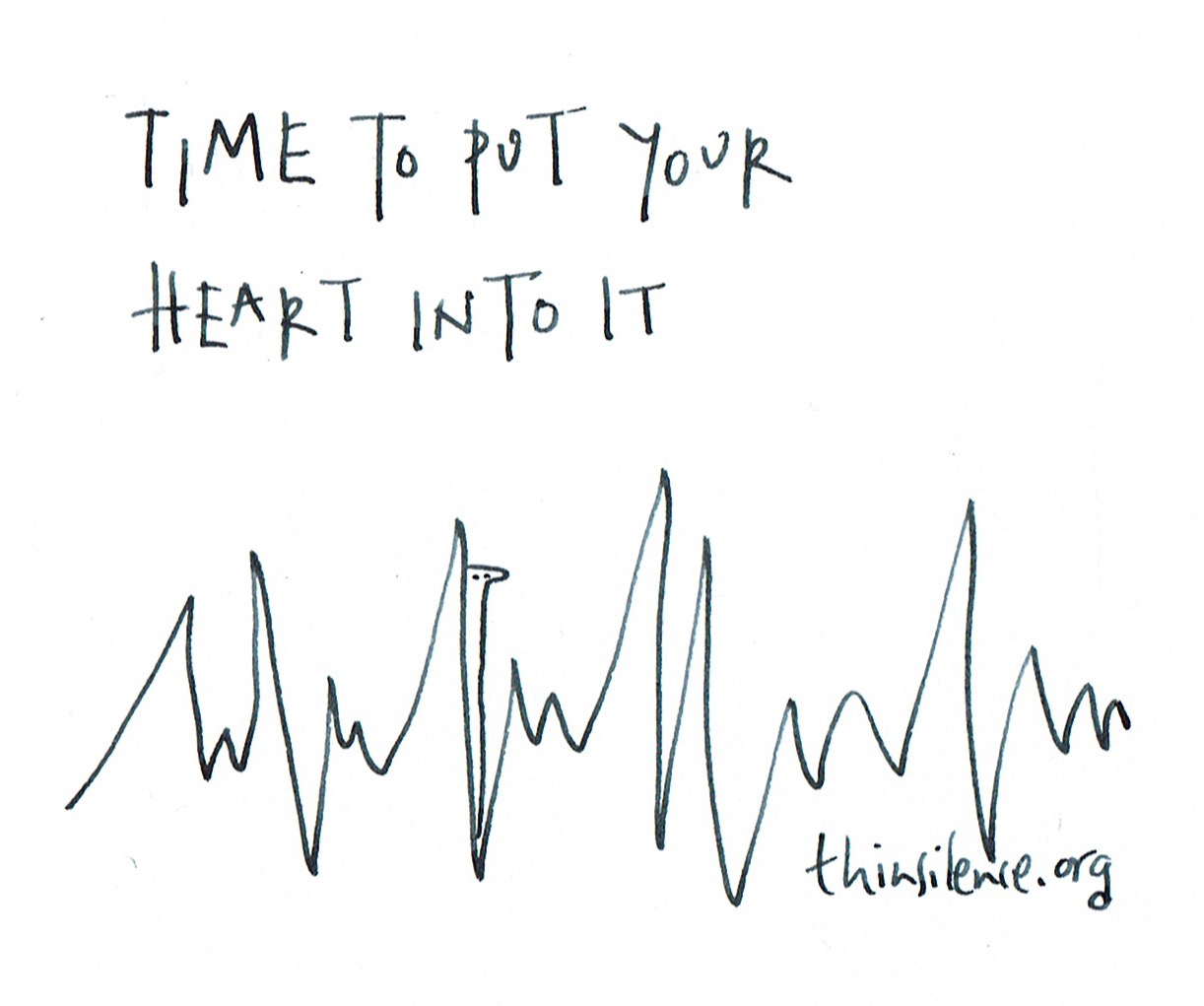
Heart-work
Any life career that you choose in following your bliss should be chosen with that sense – that nobody can frighten me off from this thing. And no matter what, this is the validation of my life and action.*
(Joseph Campbell)
Do the emotional work of working on things that others fear.’**
(Seth Godin)
Bliss is Joseph Campbell’s word for our purpose or calling in life. It is connected with the hero’s journey. The deep search for something in life that matters more than anything else, the obtaining of the boon to be brought back as a contribution into the life of their family or tribe or community.
There comes a point in the difference we want to make in life when our head understanding is not enough. There comes a point when only knowing and feeling it deep down in the core of our being will make it possible to keep going.
So we stay open. Yes, we keep opening our minds but we also open our hearts, to allow ourselves to feel it, turning our attention to the zing, the energy, connecting with our generative core, and open the will and keep producing.
(*Joseph Campbell, from Joseph Campbell and Bill Moyers’ The Power of Myth.)
(**From Seth Godin’s Whatcha Gonna Do With That Duck?)
Back story – forward story
If you choose to, though, you can do your own review. Weekly or monthly, you can sit down with yourself (or, more powerfully, with a small circle of peers) and review how you’re shifting your posture to make more of an impact.*
(Seth Godin)
One’s inner voices become audible. One feels the attraction of one’s most inner Sources. In consequence, one responds more clearly to other lives.**
(Wendell Berry)
Listening to one another’s stories is a reflective practice.
We need to develop ways and means of listening to our own story, sometimes alone, sometimes with others.
I mentioned recently how someone in a reflective circle of this kind had found it unnerving to have a number of people listening non-judgementally, mirroring back to them what they saw and heard and also felt in the story they were listening to.
This is an interesting observation on their part.
They’d found themselves having to look at more in themselves, more deeply.
Criticism can limit what we look at, even when it’s positive as well as negative. Listening without lines of measurement can mean we open up all that lies beyond, though it’s an art to be learned, not a blind anything-goes.
Not only have we need of stories that have been somewhere but also stories that are going somewhere.
(*From Seth Godin’s blog: Your soft skills inventory.)
(**Wendell Berry, quoted in Maria Popova’s Brain Pickings: Wendell Berry on Solitude and Why Pride and Despair Are the Two Great enemies of Creativity.)
Options
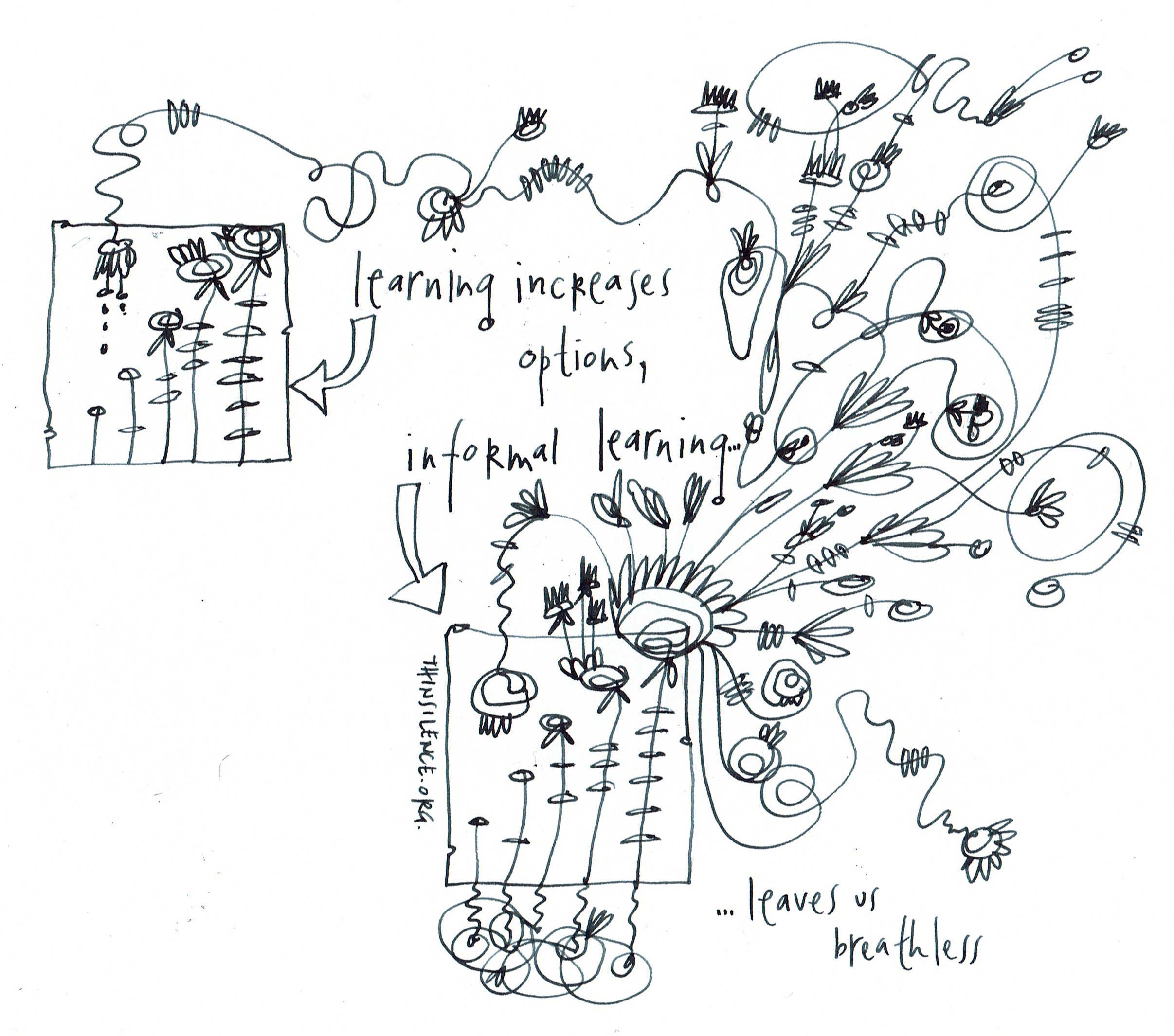
Learning is not compulsory but neither is survival.*
(Edwards Deming)
We are learning creatures.
We can learn our way out of just about anything.
I don’t mean gaining the information and knowledge to be able to tackle our greatest life issues, but beyond these, we find ourselves to be producers of information and knowledge, emerging from our willingness to jump into the playfulness of learning that is available every day and throughout our lives.
The informal learning that happens when we get a few books together, connect to people who fascinate us, use walks for reflecting, identify some things we’d love to do and pull out a journal and a pen. There are lots of ways but these are a few sound starters.
(*Edwards Deming, quoted in Jay Cross’ Informal Learning.)
Everyday redemption
Eventually, you will discover a detached place of self-observation.*
(Richard Rohr)
For the robust, an error is information; for the fragile, an error is an error.**
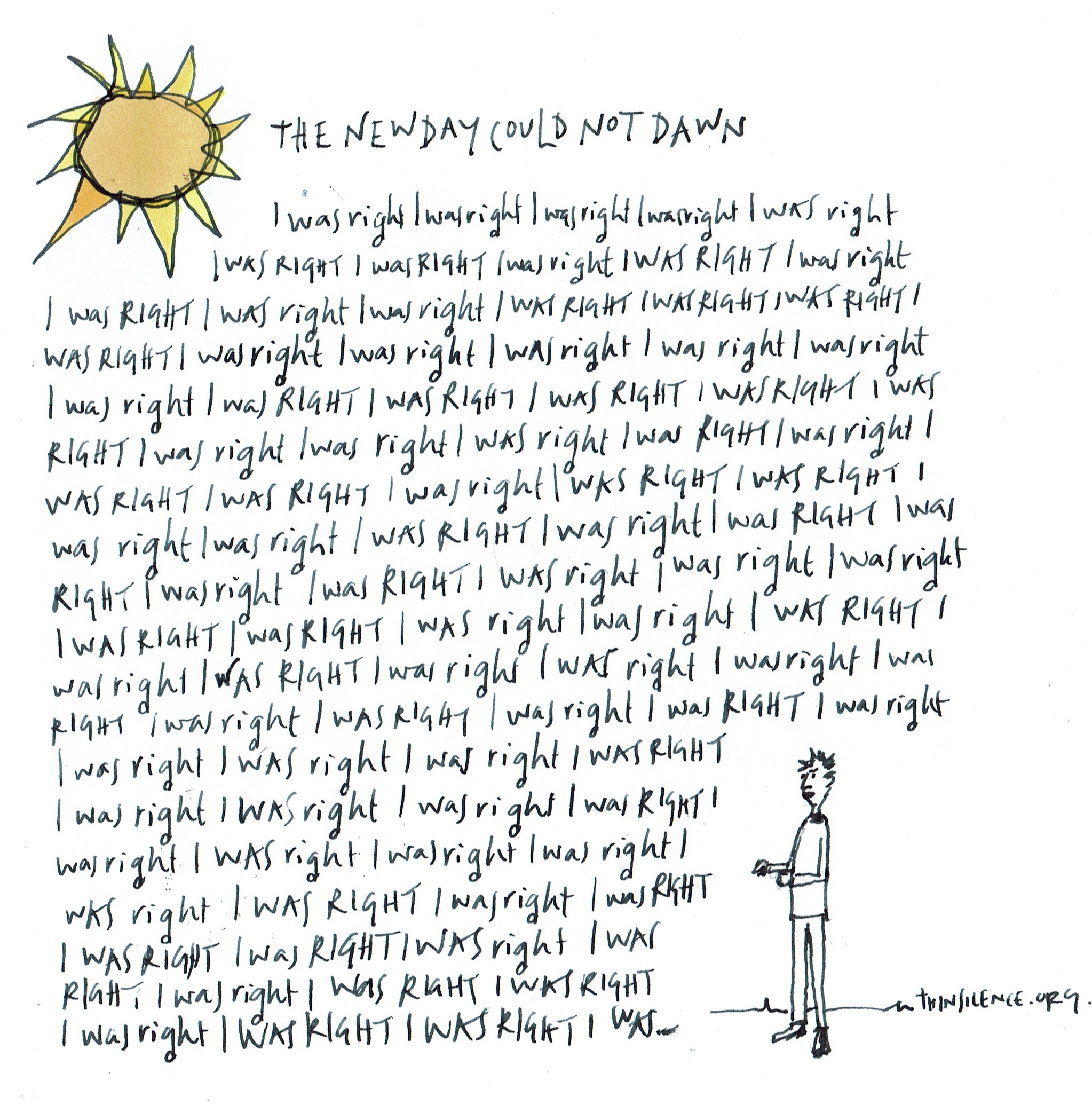
Everyone should have the opportunity to change direction, to admit they were wrong, to make a switch, to begin again.
A new day dawns. The world is new.
It’s a learning disposition but that’s another blog post.
The person who allows themselves the place of self-observation is becoming stronger; they will help bring the dawn to others, too.
(*From Richard Rohr’s The Divine Dance.)
(**From Nassim Taleb’s The Bed of Procrustes.)
The original
The thin life
Awaken to the mystery of being here
and enter the quiet immensity of your own presence.*
(John O’Donohue)
In life, the challenge is not so much to figure out how to play the game; the challenge is to figure out what game we’re playing.**
(Kwame Anthony Apihh)
In a short TV series on the development of children, researchers explore the idea of there being three basic personality types – excitable, calm and timid – how this is set for the rest of our lives.
Of course, his doesn’t say nearly as much as we need it to. We live as swirling, changing worlds within a swirling, changing world. Increasingly, we’re understanding that our environments can change us, even transform us. These become the thin places for our lives. In this way we understand our lives to be thin, not in terms of lightness or shallowness, but open to the more-just-beyond.
This isn’t to say that we’re more likely to be excitable, calm or timid, but being honest about who we are is the place we have to begin when exploring who we can become.
Graham Leicester and Bill Sharpe describe Three Horizons Thinking for transforming education, identifying three voices:
‘The voice of Horizon One is the voice of the manager. […] The voice of Horizon Two is the voice of the entrepreneur. […] The voice of Horizon Three is the voice of the visionary.‘^
These three voices exist in each of us, too.
Horizon One is where we are at the moment; it’s usually not working but it’s all we have. Horizon Three is the future possibility, the things we dream of, where things are most thin. Horizon Two is the transition between these, how we invent ways of moving from here to there.
(*From John O’Donohue’s To Bless the Space Between Us: For Presence.)
(**From Sherry Turkle’s Alone Together.)
(^From Graham Leicester and Bill Sharpe’s Transforming Higher Education.)


You must be logged in to post a comment.