The initiative

The most important change in any transformation journey is the change of heart.*
(Otto Scharmer)

By heart I mean the place where emotions meet reason, mobilise the will, and shape identity.**
(Alex McManus)

Your initiatives are abstractions of what you believe you are are here to gift to others through your life.

They change you from being someone with many opinions on what should and shouldn’t be, to being the one who is changed even as you seek to bring change for others, as Nassim Taleb suggests:

Skin in the game keeps human hubris in check.^

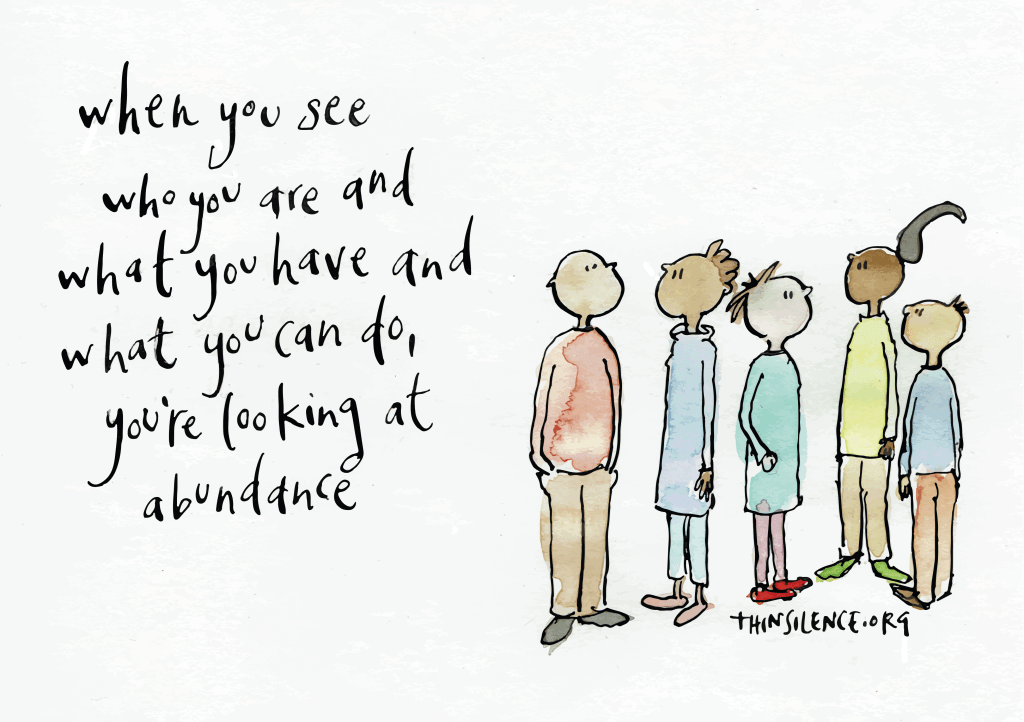
The universe has given every one of us this incredible opportunity to give expression to what matters most to us, and perhaps we’re finally beginning to realise this when we see how everyone has something important to bring without needing to be asked.

Time to begin:

Time + Space + Materials = Work^^.

(*From Otto Scharmer’s Leading from the Emerging Future.)
(**From Alex McManus’ Makers of Fire.)
(^From Nassim Taleb’s Skin in the Game.)
(^^From Austin Kleon’s blog: Time, Space, and Materials.)

Enlighten me

Obsessively specialise. No niche is too small if it’s yours.*
(Seth Godin)

When in doubt, go outside. Especially when it’s inconvenient.**
(Seth Godin)

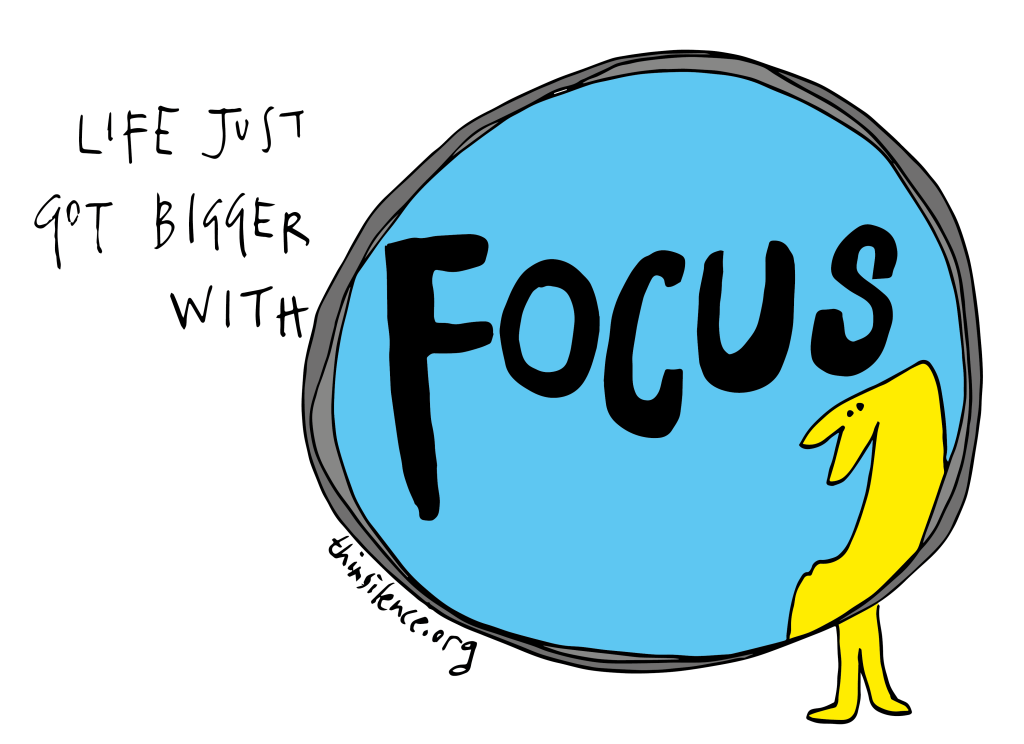
We become light when we are deeply curious about something, becoming unlimited learners and profligate makers.

And if you’re in need of some light to be shed on who you are and what you’re doing, get up, “go outside,” and see how the world is full of people who can shed some light.

(*From Seth Godin’s Whatcha Gonna Do With That Duck?)
(**From Seth Godin’s blog: Go outside.)

Your new story

Life is most enjoyed when we give ourselves away.*
(Erwin McManus)

If we don’t like the story we’re living we can change it.

The best stories, though, will take more time and will not be easy.

We’re almost at the beginning of 2020, a whole year of possibility when it comes to creating a new story

Instead of trying to change your story quickly, why not give yourself an entire year, so that when you come to the 9th December 2020, you’ll be able to look back on a year of astonishing change.

Don’t wait for the 1st January. Use the rest of 2019 to plan how you will go about this.

Here are some things I always find helpful for change.

A daily journal.
A mix of books to read slowly.
Create a “blog tribe” of people who will help you see differently – I’d be thrilled to be a part of your tribe.
Set the goal of identifying your values, talents, and identifying your most enriching and enervating environments.
(Begin to doodle.)

(*From Erwin McManus’ Uprising.)

Feel free

Therefore, to successfully adapt a novel to screen, you must not only seek to turn the mental into the physical, but also be willing to reinvent. Feel free to cut scenes and if necessary, create new ones. Tell the story in filmic rhythms while keeping the spirit of the original, and ignore the risk that critics may say, “But the film’s not like the novel.”*
(Robert McKee)

It is difficult to tell whether our practical philanthropy is disturbed by the strength of our desires than chilled through the rigidity of our principles; disturbed by the egoism of our senses than by that of reason.**
(Friedrich Schiller)

There’s the “textbook” – be it paradigm, worldview, politics, philosophy, religion, script … .

And then there’s reality.

The two are rarely the same.

The beautiful possibility lies between, in the adaptation that is the product of an open mind, open heart and open will, rejecting rote observance in the one direction and anything goes in the other.

And the best paradigms, worldviews, politics, philosophies, religions and scripts, will always encourage us to adapt and produce something beautiful for others first of all, the best of freedoms will always want to produce form that makes good things available to others.

(*From Robert McKee‘s blog: The Problem with Adaptations.)
(**From Friedrich Schiller’s On the Aesthetic Education of Man.)

Opportunity and possibility

First there was time. Then space and energy. Then matter. And now the possibility of life, of other minds. What would these new minds think? What would they grasp? […] Could they feel the weight of the future, heavy, bristling with possibilities. But I could not see the future.*
(Alan Lightman)

You have to keep finding new and creative things to be grateful for […] . You have to keep looking – hard. Or else your brain just switches to autopilot, and all your blessings start turning to dust in your mind.**
(Hugh Macleod)

A few things about opportunities.

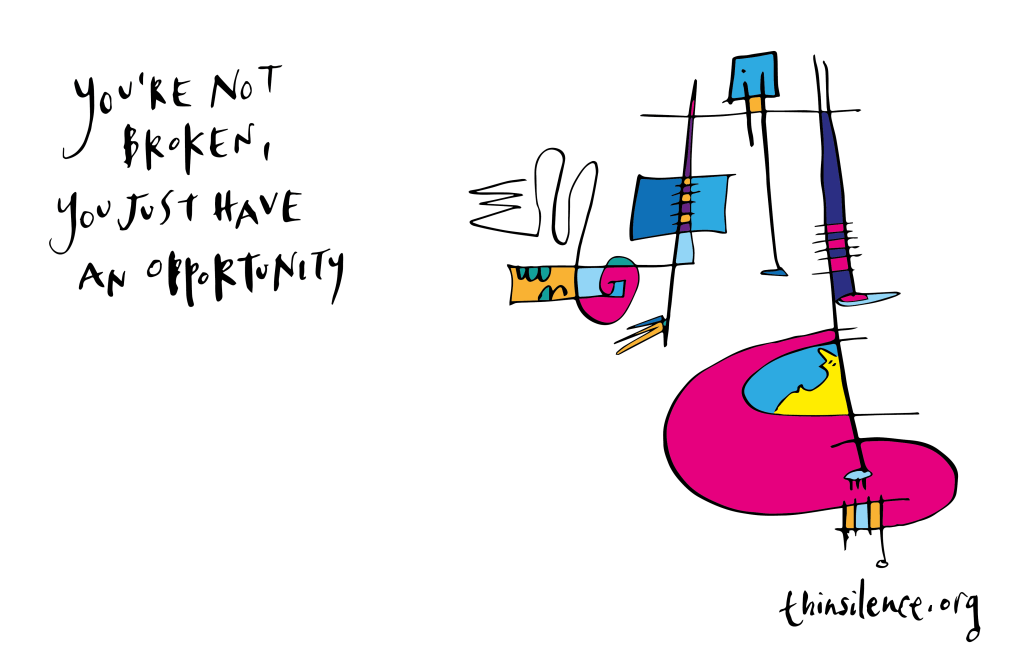
You have already been given the greatest opportunity ever. You are here.

There is no such thing as the perfect opportunity. Don’t wait for it to appear.

You are surrounded by opportunities, even if it is to be pleasant to the person who has been unpleasant to you.

So don’t worry about the size of an opportunity. The smallest can turn out to be quite magical.

The more opportunities you say yes to, the more you will find possibilities opening up.

(*From Alan Lightman’s Mr g.)
(**From gapingvoid’s blog: Count your blessings.)

What kind of attitude do you call that?

Everything can be taken from a man but one thing: the last of the human freedoms – to choose one’s attitude in any given set of circumstances, to choose one’s own way.*
(Viktor Frankl)

the man without form, condemned to laborious effort, can with all his knowledge compel no recognition, move no stone from its allotted place**
(Friedrich Schiller)

Your attitude is critical.

It is the way you bring form to everything in your life, holding the past, being present in the now and imagining the future.

What Viktor Frankl refers to as attitude, Friedrich Schiller calls aesthetics, Otto Scharmer names it as our crystalising intent, Ken Robinson refers to it as our element and Joseph Campbell, our bliss. It’s the framing or forming story we choose for everything we are and do, as well as everything that happens to us:

All you have is what you are and what you give.^

And you have your attitude.

And we need it, for when we each bring our attitude into the world it becomes the space in which others might identify theirs.

(*Viktor Frankl, quoted in Maria Popova’s Brain Pickings: Viktor Frankl on Humour as a Lifeline to Sanity and Survival.)
(**From Friedrich Schiller’s On the Aesthetic Education of Man.)
(^Ursula Le Guin’s character “Shevek,” quoted in Maria Popova’s Brain Pickings: Ursula K. Le Guin on Suffering and Getting to the Other Side of Pain.)

The Shop of Thin|Silence

I thought to mention some illustrating things I’ve been up to this year. The image above comes from Daphne Loads’ Book Rich Pickings which I supplied the illustrations for (front cover by Brigid Collins).

Below you will find some simple illustrations for a University of Oxford board game intended to explore different scenarios of food production and delivery involving difficult climate conditions and also my first ceramic design intended to be given as a gift by the person who commissioned me.

If you would like to find out more about illustrating possibilities, drop me a line at geoffreybaines@gmail.com.

Here’s a link to the some more Thin|Silence items.

The competition trap

The math is compelling. You’re going to lose most of the competitions you enter. […] Which means that you’re going to be seen and measured by how you lose, not how you win. The way to win is usually to fit in all the way, to give the judges precisely what they want, to train just like everyone else, but harder. But the way to lose with style is to create possibility. To be creative. To do generous work that’s worth talking about.*
(Seth Godin

There are two kinds of competition. One makes the world smaller for most of us, the other makes the world bigger for everyone. One works with limitation, the other with infinity.

I latched on to some words relating to competition in what I was reading this morning, this because of a larger conversation I’m involved in that is exploring the place of compassion in institutions such as government, businesses and universities. There’s no getting away from the cultures of competition in any of these.

I find myself playing with ideas as I seek to understand the significance of competition for humans.

The outcome of competition is a title, a trophy, funding, notoriety – that is, property:

What is at stake here for owners is not the amount of property as such, but its ability to draw an audience for whom it will be appropriately emblematic; that is, an audience who will see it as just compensation for the effort and skill used in acquiring it.**

One kind of competition appears to take place within a finite game (a set number of players, a deadline and play by the rules), the other within an infinite game (everyone one welcome to play for as long as possible and if the rules threaten to exclude or end the game, the rules are changed) – one is a world of scarcity, the other a universe of possibility.

Seth Godin’s opening words consider the paradox for those who win actually narrow their possibilities, while those who lose with style increase theirs.

I’m not saying it always works this way, but it’s worth taking a closer look.

These words from Richard Rohr also caught my attention. You don’t need to be religious to appreciate what he’s saying:

I would name salvation as simply the readiness, the capacity, and the willingness to stay in relationship.^

(*From Seth Godin’s blog: Losing with style.)
(**From James Carse’s Finite and Infinite Games.)
(^From Richard Rohr’s The Divine Dance.)

That thing you do – who is it for?

At first glance nothing seems to be more contradictory than the tendencies of these two impulses, the one striving for change, and the other for immutability.*
(Friedrich Schiller)

Our conversations invent us. Through our speech and our silence, we become smaller or larger selves. Through our speech and our silence, we diminish or enhance the other person, and we narrow or expand the possibilities between us.**
(Harriet Lerner)

If we have something to offer, the temptation is to shout louder, to get more glitzy, to gain more attention, but I know that what I do is not for everyone.

Before I seek the attention of others, Seth Godin reminds me to:

Do the emotional work of working on things that others fear.^

Where are you prepared to go and others will not?

When I think about my work, I try hard not to make it a programme or course or process. I call it a journey of conversations for a reason. It’s about living with the risk of not knowing where the next question or idea will come from and yet things happen in the conversation. More story than answers because a quick answer or simple solution will prevent us searching for something more significant – and life seems to be set up for deep significance:

Following your bliss just seems to me to be the clue to believing what might be called the mythologically inspired life.^^

When we’re doing what we must do, it won’t be for everyone. (I know, if I go after everyone, I’ll have to create that course and lose the conversation.)

Here are two thoughts on this I came across this morning. Instead of trying to get everyone’s attention, Seth Godin proffers:

most of us are better off serving the smallest viable audience;*^

and Bernadette Jiwa reflects on why a non-glitzy vegan taco restaurant in her city outlives many that come and go:

it comes down to the fact they know who they’re for.^*

This thing I do – who is it for?

Friedrich Schiller’s opening words help me identify my “audience.” In speaking of the change impulse, it seems to me he is identifying with Mihaly Csikszentmihalyi’s exploring instruction and Christian Schwarz’s dynamic pole. His immutable impulse then accords with Csikszentmihalyi’s conservative instruction and Schwarz’s static pole. All three agree that both are needed for someone to develop their deepest potential.

Schiller ponders the outcomes of firstly giving the powers of the immutable to the change impulse and then transferring power in the other direction:

In the first case he never becomes he himself; in the second he never becomes something other; and so in each case he is neither the one nor the other, and consequently a nonentity.*

My audience, then, comprises those who know there’s something missing in the vital relationship between their being and becoming. They probably don’t use these words but do know there is more to who they are and what they can do, at least, they hope there is. So we work with the questions Who am I? and What is my contribution?

And the best place for this to happen is in the journey of conversations.

(*From Friedrich Schiller’s On the Aesthetic Education of Man.)
(**From Harriet Lerner’s The Dance of Connection.)
(^From Seth Godin’s Whatcha Gonna Do With That Duck?)
(^^From Joseph Campbell’s The Hero’s Journey.)
(*^From Seth Godin’s blog: Attention vs. the chasm.)
(^*From Bernadette Jiwa’s The Story of Telling blog: Exactly Who Do You Serve?)

The measure of success

We become what we measure. We are who we take with us on the journey and who we leave behind.*
(Bernadette Jiwa)

Eternally shackled to one small fragment of the whole, man imagined himself to be a fragment, in his ear the constant and monotonous noise of the wheel that he turned; never capable of developing the harmony of his being, and instead of, asking the humanity in his nature, he simply became the impress of his occupation, his particular knowledge.**
(Friedrich Schiller)

Just because you can’t see it doesn’t mean it isn’t there but it does mean that we won’t be able to measure it.

I’m talking about your talents and abilities that make both function and beauty possible.

In the industrial workplace, we tend not to measure what we cannot see, but in noticing and articulating what lies within every human being – though different in each of us – we identify ways of measuring the success of our lives in a non-industrial way.

(*From Bernadette Jiwa’s The Story of Telling blog: Immeasurable Success.)
(**From Friedrich Schiller’s On the Aesthetic Education of Man.)