The comfort trap

So why didn’t you do it before? Because it’s easier to follow. Because it’s more comfortable to stay where we are. […] Next time, take the lead. Not because you have to, but because you can.*
(Seth Godin)

Imagination is one of humanity’s greatest qualities – without it the world would be a very dull place. Let the words of a book guide your imagination, and the spirit of adventure motivate you to set goals, push yourself, thrive in the face of hardship, and achieve epic feats.**
(Richard Branson)

Deep is an investment in the future …
Shallow is more comfortable than deep …
Hunger is expanded by reading …
Reading widely – and journaling …
Training imaginations and creating possibilities …
Living with the grain of the universe …
And the path with a heart.

(*From Seth Godin’s blog: “But we were comfortable.”)
(**From Richard Branson’s letter to young readers, in Maria Popova and Claudia Bedrick’s A Velocity of Being.)

It’s about us

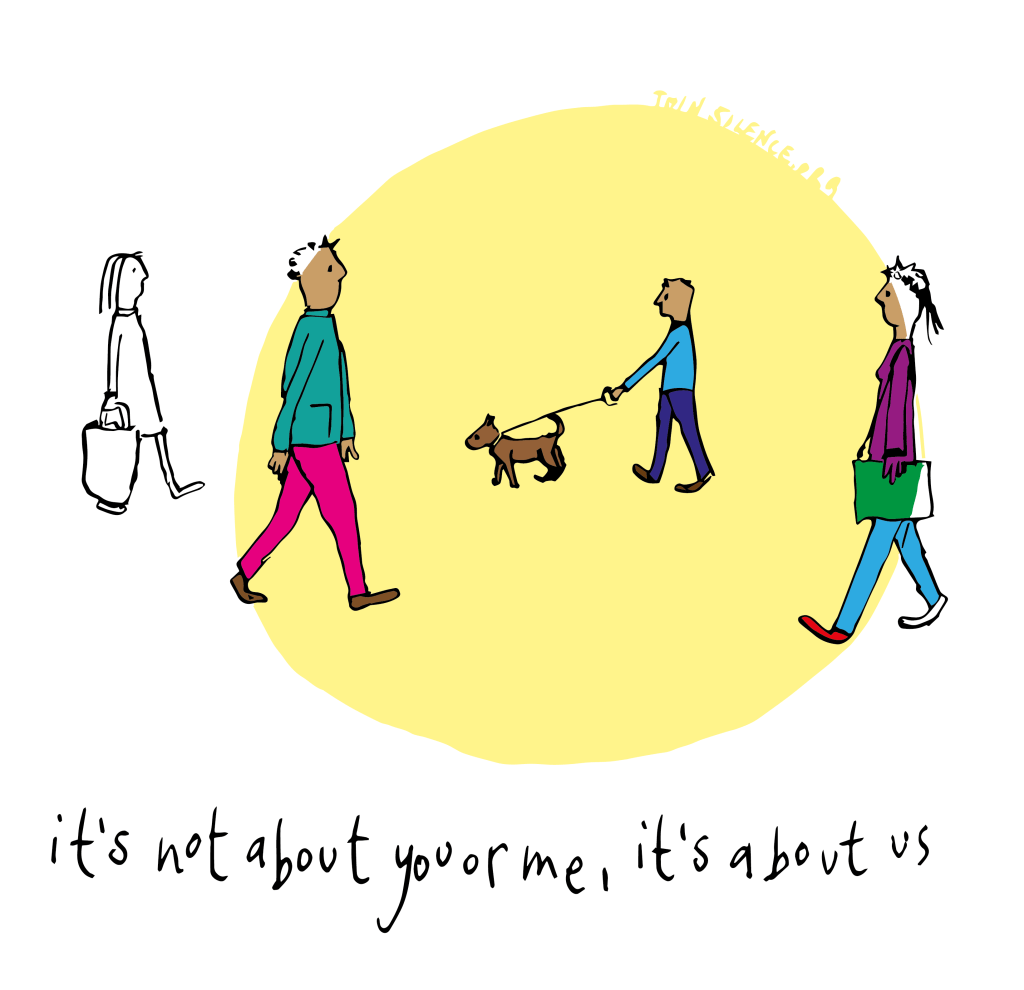
At the same time the echo chamber around us magnifies our story, we also have the solace of knowing that truly, it’s us. Us together. The boat is really, really big and we’re all in it. This is a slog, and there will be another side. It is unevenly distributed, it’s a tragedy and it’s a challenge. But we’re in it together and with care and generosity, we can find perspective, possibility and hope.*
(Seth Godin)

In our eagerness to make an extraordinary impact, we forget it’s in ordinary moments that we leave the world better for our being here.**
(Bernadette Jiwa)

While reading these words, I was reminded of Dave Logan, John King and Haylee Fischer Wright’s book Tribal Leadership.

Basically, the three are identifying five tribes of people with different worldview and mantras (I heavily summarise these).

The first tribe declares “Life sucks.”

The second tribe claims “My life sucks, though yours may be okay.”

The third tribe celebrates “I’m great, though you’re not great.”

The fourth tribe choruses “We’re great, but they’re not great.

The fifth tribe proffers “Life is great and we face many challenges.”

We’re all being invited into the fifth tribe, though Gray, King and Fischer-Wright claim that we cannot skip tribes but have to move through the stages.

(*From Seth Godin’s blog: You’re surrounded.)
(**From Benadette Jiwa’s The Story of Telling: Better For Your Being Here.)

What is that thing you’ve been noticing out of the corner of your eye?

I wonder how long it was that Moses had been catching something glinting in the corner of his eye, ignoring it and getting with looking after his sheep?

How long was it before he decided to wander over and take a closer look?

And how long have you been ignoring the thing that’s been glinting, glimmering, from time to time in the corner of your eye?

It doesn’t have to be anything like a burning-but-not burning-bush, just an idea, or the thought to connect with someone, or a book to read … .

It’s likely not the thing itself – which is probably a portal or hyperlink to something, someone or somewhere else.

An Easter Day “prayer”: Lord, save us from a lack of curiosity!

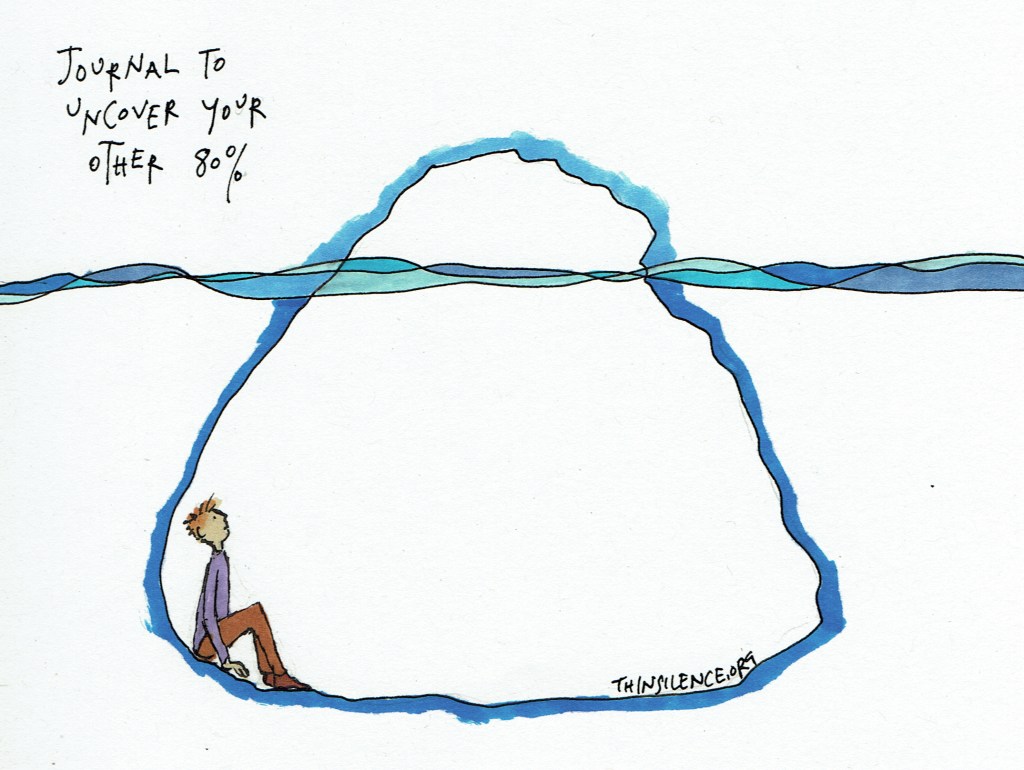
Time to recover the other 80%

The Law of the Vital Few: in many settings, 80 percent of a given effect is due to just 20 percent of the possible causes.*
(Cal Newport)

Books let us be trees, don’t you think. Seeing beyond the span of our own lives, reaching high into the sunlight and deep into the dark fertile soil of imagination.**
(Robin Wall Kimerer)

If we lived entirely in chronos time the maths make absolute sense. We can only pay attention to so much so we focus on what we do really well, especially when it has an 80% effect.

But life is not only chronos time, it is both chronos and kairos time – those deep-time moments that feel as if they are able to contain the whole universe.

When we journal, practising slow writing allows the entirety of our lives to come into view, who we are and what we bring in relation to ourselves, others and all things appear.

(*From Cal Newport’s Deep Work.)
(**From Robin Wall Kimerer‘s letter to you readers in Maria Popova and Claudia Bedrick’s A Velocity of Being.)

The new tools and the big questions

The artist rarely says, “I’d like to do less.” Instead, she wonders how to contribute more, because the very act of creativity is the point of the work.*
(Seth Godin)

Throughout history, skilled labourers have applied sophistication and scepticism to their encounters with new tools and their decisions about whether to adopt them.**
(Cal Newport)

Everything is story.

We can change our stories and our stories can change us:

Reading changed my life. Writing saved it.^

This blogpost is really a story about a consumer and a maker and the part new technology plays.

These are one person trying to make decisions about how to live their life. The big questions of the title are Who am I? and What is my contribution, or work?

In his blog about learning, Seth Godin continues:

It’s way easier to get someone to watch – a YouTube comic, a Netflix show, a movie – than it is to encourage them to do something. But it’s the doing that allows us to become our best selves, and it’s the doing that creates our future.*

There’s a fundamental change we can make to our story when it comes to new technologies which Cal Newport proffers. It is to begin thinking of the these as tools, for that is what they are. When we do this, we’re able to change our position from consuming to making.

Godin points out the pressure of reality we’re facing:

It turns out that learning isn’t in nearly as much demand as it could be. Our culture and our systems don’t push us to learn. They push us to conform and to consume instead.*

When technology controls us, we are de-skilled, but when we see tools instead of technology, we give ourselves opportunities skill ourselves up, to become artists.

Over thirty years ago, Bill Moyers was recording a series of conversations with mythologist Joseph Campbell:

Everything was taken care of because the story was there. Now the old story is not functioning. And we have not yet learned the new.^^

Campbell replies:

The relationship of myths to cosmology and sociology has got to wait for a man to be used to the new world that he is in. The world is different today from what it was fifty years ago.*^

When technology de-skills us, we dull our ability to respond to the two big questions and, so, lose our ability to create, to make, to produce our art.

Our new stories will be critical for how we understand and use the new technologies that are really tools, the difference being whether we serve them or they serve us.^*

(*From Seth Godin’s blog: But what could you learn instead?)
(**From Cal Newport’s Deep Work.)
(^From Judy Blume‘s letter to young readers, in Maria Popova and Claudia Bedrick’s A Velocity of Being.)
(^^Bill Moyers, from Joseph Campbell and Bill Moyers’ The Power of Myth.)
(*^Joseph Campbell, from Joseph Campbell and Bill Moyers’ The Power of Myth.)
(^*At this time of Covid-19 lockdown, I believe we’re seeing many of the positive benefits of these tools as they make it possible for us to keep in contact with loved ones, many to continue to do work and for some businesses to keep going.)

A question of re-skilling for cooperation

For […] material, institutional and cultural reasons, modern times are ill-equipped to meet the challenges posed by the demanding sort of cooperation. I’ll frame this weakness in a way that might seem initially odd: modern society is ‘de-skilling’ people in practising cooperation.*
(Richard Sennett)

A question formed as I listened to the contributions of those I met with for a virtual breakfast conversation about the future. We had been asked to share, from our different perspectives, something of the affects of Covid-19 and, coming from education, service, healthcare, government and businesses, there were many rich responses noting both challenge and possibility.

When identifying a de-skilling in cooperation, Richard Sennett points to an increasing income gap between those at the top and bottom of our societies, the siloing of workers and managements and leadership, the short-term nature of employment, and the homogenising rather than valuing of difference as being to blame for this.

Perhaps in these times, we are seeing a rapid re-skilling in cooperation and collaboration among many in our societies. When there is great need, we see how capable we are to do this.

What we are possibly seeing is the forming of communitas:** groups of people deeply cooperating around a shared goal. What we may also note, if this is what we are seeing, is how this kind of community, may dissipate once the need is met or the crisis is past.

What we have seen is just how complex and interwoven our lives are, with an outbreak of this form of coronovirus in Wuhan spreading so rapidly, making a nonsense of the very things Sennett identifies as de-skilling us.

The complexities will continue beyond the crisis and will require a level of cooperation that is increasingly sustainable amongst the human race.

The question, then, forming for me is:

Will there be a considerable minority of people who are significantly shaped by this experience, who will help us work towards a better future?

I guess we may only begin to answer this on a personal level:

Will I allow myself to be changed by these experiences so that my future will include working with others for a better world?

(*From Richard Sennett’s Together.)
(**From Victor Turner’s The Ritual Process.)

What does it mean to you to be human?

If you want to win the war on attention, don’t try to say “no” to the trivial distractions you find on the information smorgasbord; try to say “yes” to the subject that arouses a terrifying longing, and let the terrifying longing crowd out everything else.*
(David Brooks)

This is the main thing. This is what I care about, it is the person. This is the living vessel: person. This is what matters. This is our universe. This is the task, the joy and the dolour: to be born as a person, to live and love as a person, to dwell in the worlds in a Person. The living spirit, the moving form, the living word, life-death, art-life, corpus, body, being, all, persons.**
(M. C. Richards)

What does it mean to you to be human?

The question was raised by a student I was in conversation with yesterday, a timely reminder for me that it’s one of the most important questions of this century and, most poignantly, for these times.

I was swept before the words of M. C. Richards as one carried upon a mighty tide, thrilled at the possibility of what this adventure of human, of Person, will mean. Richards continues relentlessly, leaving me breathless:

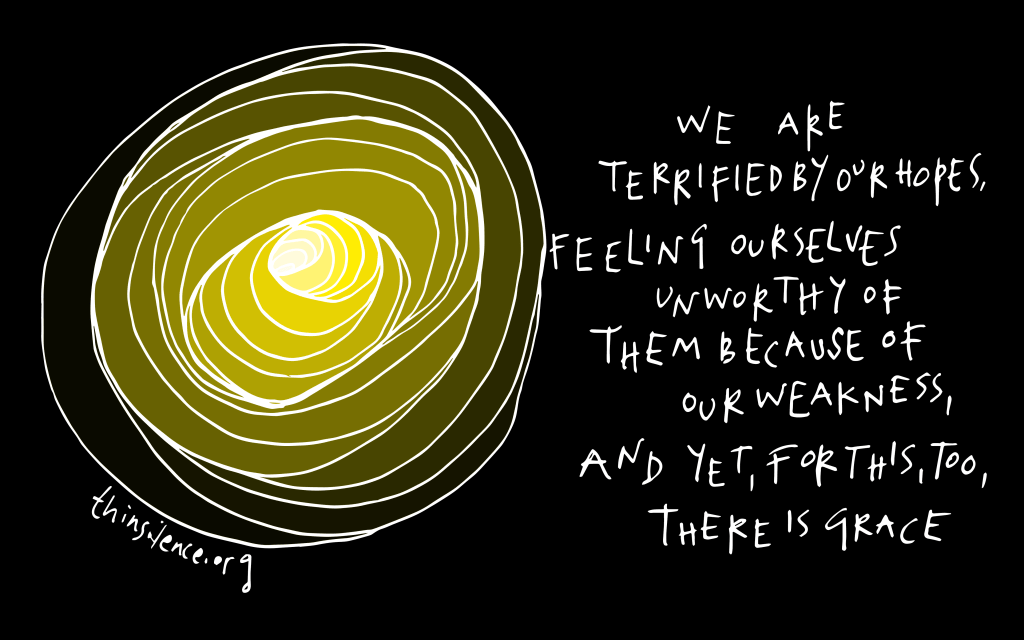
Let no one think that the birth of man is to be felt without terror. The transformations that await us cost everything in the way of courage and sacrifice. Let no one be deluded that a knowledge of the path can substitute for putting one foot in front of the other. […] In my own efforts, I become weak, discouraged, exhausted, angry, frustrated, unhappy, and confused. But someone within me is resolute, and I try again. Within us lives a merciful being who helps us to our feet no matter how many times we fall.**

Here are echoes of David Brooks’ “terrifying longing” but also of the need this future will have for great compassion, towards ourselves and each other as everything we are will be tested.

Kelvy Bird both warns and exhorts us:

But happiness cannot come without sadness, the two equal all the hours.^

Onwards.

(*David Brooks, quoted in Cal Newport’s Deep Work, highlighting Newport’s first discipline for deep work: ‘Focus on the Wildly Important.’)
(**From M. C. Richards’ Centering.)
(^From Kelvy Bird’s Generative Scribing.)

Vérité sans frontières

The management of Liverpool Football Club have just reversed their earlier decision to furlough its background staff during the Covid-19 lockdown, apologising for this great error to the fans and past players who’d caused a ruckus over what they’d seen as being un-Liverpool.

I don’t know whether Seth Godin knew of this story when he wrote about the lifelong fan:

It turns out that the name of the team (and the other fans) are a much more important part of our narrative than we realise. Part of being a fan isn’t insisting that your team win every game – in fact, being a fan is defined as showing up even when you’re losing, even when the leaders are wrong, even when logic dictates that this makes no sense at all. Once you realise that being a fan is an important part of your self-worth, the most generous thing you can do is speak up when management is about to do something stupid. Because when the fans speak up, it’s possible that leadership listens.*

Like the Ship of Theseus, since Liverpool’s founding in 1892, the ground, the players, the managers, the chairmen, the background staff and the fans have changed many times over. Yet there’s a deeper truth that lives on through all of these changes for the fans and past players, a truth that needs to be preserved – though it is also a truth that has needed all of those years to grow and develop.

Everyone wants to stand for something that matters, a timeless truth, and perhaps the person who is to be most pitied is she or he without any truth to hold on to.

I also happened to read Seth Godin’s letter to young readers this morning:

Are the eggs of the purple unicorn edible? […] If they are edible, would you be willing to have a unicorn-egg omelette? Would that be right or fair or even delicious?**

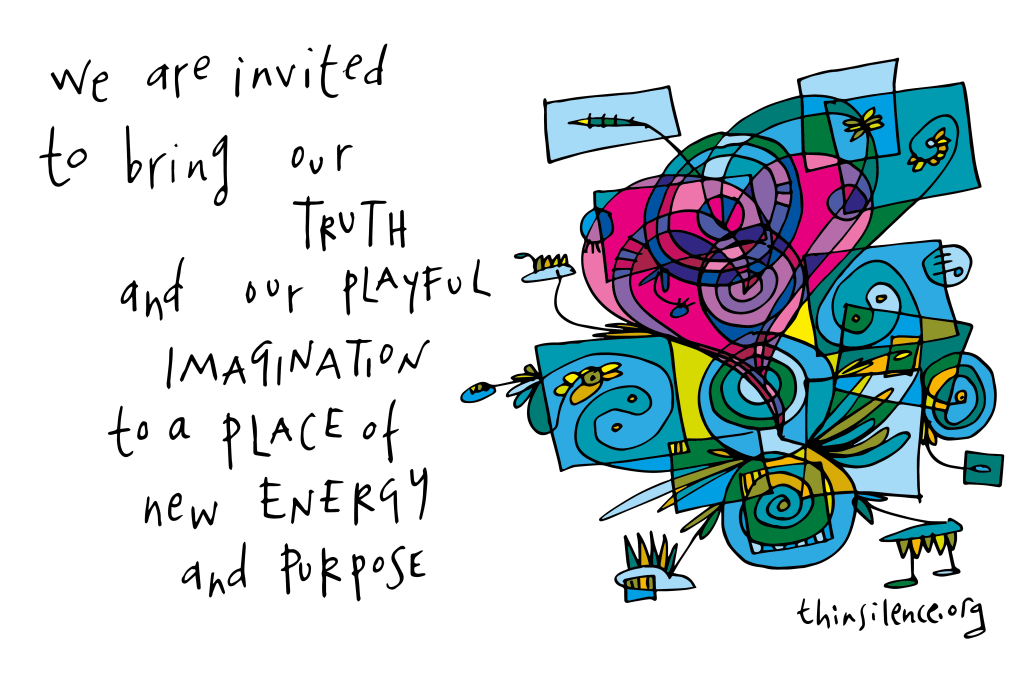
Godin is catching my attention here because because of his highlighting of playful imagination as being so important for life. Although there are no unicorns, never mind purple ones – and do they lay eggs? – we need to employ huge amounts of imagination when it comes to the truths we live our lives by:

The thing about reading is that anything is possible. No special effects, no stunt men, If the writer can write it, it’s real. […] Discovering what’s possible is your job.**

The third element to these things comes from Cal Newport’s “grand gesture – deep action taken to ensure what we are working on gets done.

When we imaginatively play with our important truths through deep work new possibilities will emerge from the focus of purpose and energy, freeing our truth from time and circumstance so that it can grow and develop into the beautiful and practical expressions the world needs.

(*Seth Godin’s blog: The lifelong fan.)
(**From Seth Godin’s letter to young readers in Maria Popova and Claudia Bedrick’s A Velocity of Being.)

Deep-workers all

A potter brings his clay into centre on the potter’s wheel, and then he gives it whatever shape he wishes.*
(M. C. Richards)

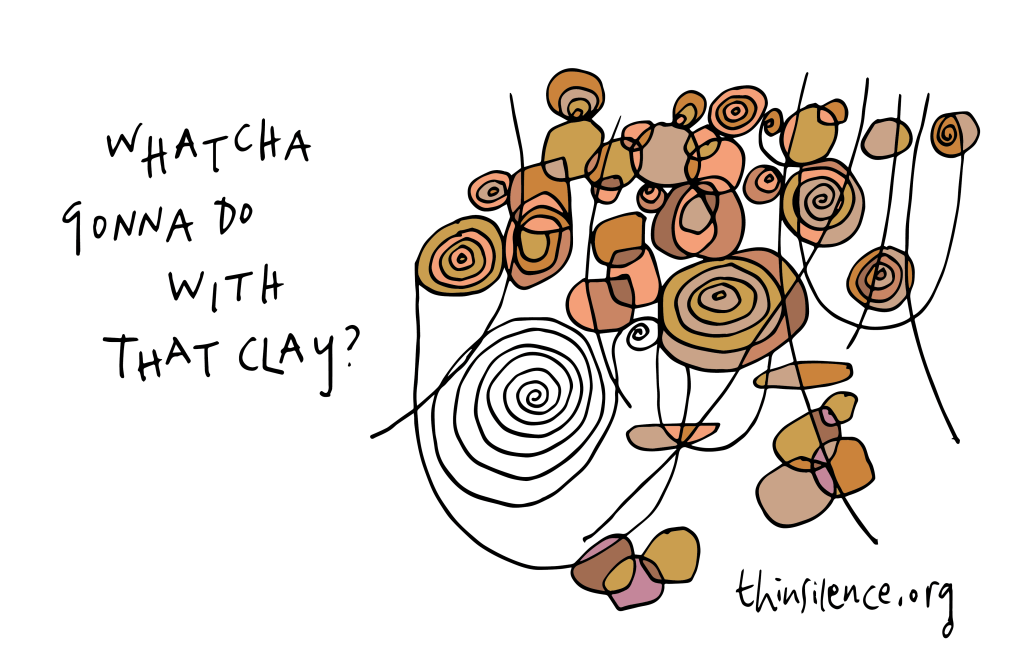
We’ve all been handed a lump of clay to make something out of. It’s called life.

How we shape it is up to us.

We’re all capable of making something very fine and elegant from our clay.

Cal Newport suggests four ways of getting down to the deep work of what we want to do with our life that matters:**

Monastic: Disappearing and isolating to get on with what we want to do over a very long period of time, even a lifetime;
Bimodal: Earning the money we need to live on or feed our work in one mode and disappearing into multiple-days of deep work on what is most important in the other mode;
Rhythmic: Creating a rhythm of habits for the day in order to work on what is important whilst also meeting the other calls on our lives;
Journalistic: Snatching the opportunities to present themselves for deep work, able to enter quickly and be focused.

It feels like a mix of the rhythmic and journalistic that works for me and I’d guess the same for you: the former reinforcing the latter. The important thing is, there’s a way available to all of us to get on with that deep work of sharing the clay into something very fine indeed, before it hardens.

(*From M. C. Richards’ Centering.)
(**From Cal Newport’s Deep Work.)

An artist’s view

It is particularly moving to find the physicist [David] Bohm saying that reality cannot be described statistically – that it lends itself much more to the way of understanding one might have for the arts, of poetry and dance for example, though it is in music that he finds the leading paradigm.*
(M. C. Richards)

Blessed are the meek, for they will inherit the earth. **
(Jesus of Nazerath)

When we have turned the earth into statistics, commodity, and economics, we have destroyed it.

If we are to inherit the earth, we must enter into relationship, allowing nature to provide us with insight and learning and leading.

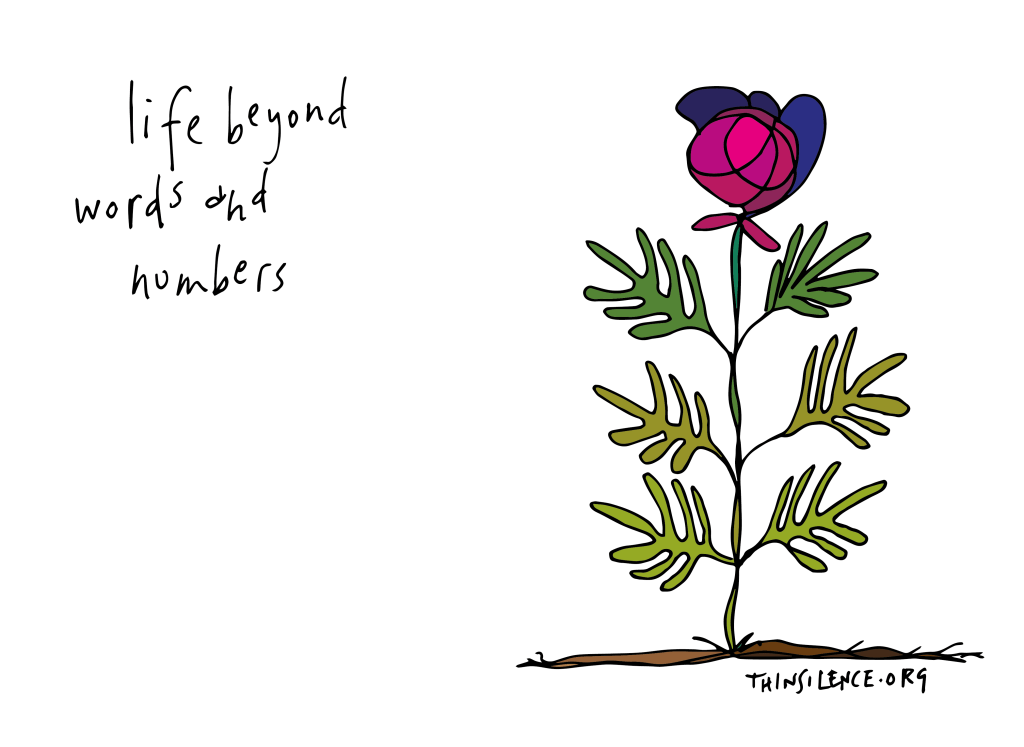
The artist does not see statistics but the truth of something, including and beyond data alone … and we are all artists in some way or another.

Wherever you find yourself taking the given time to move outside your home during this lockdown, let nature speak to you, whether it be a garden, a park, some trees, the sky above or the plants pushing through the pavement.

(*From M. C. Richards’ Centering.)
(**Matthew 5:5)