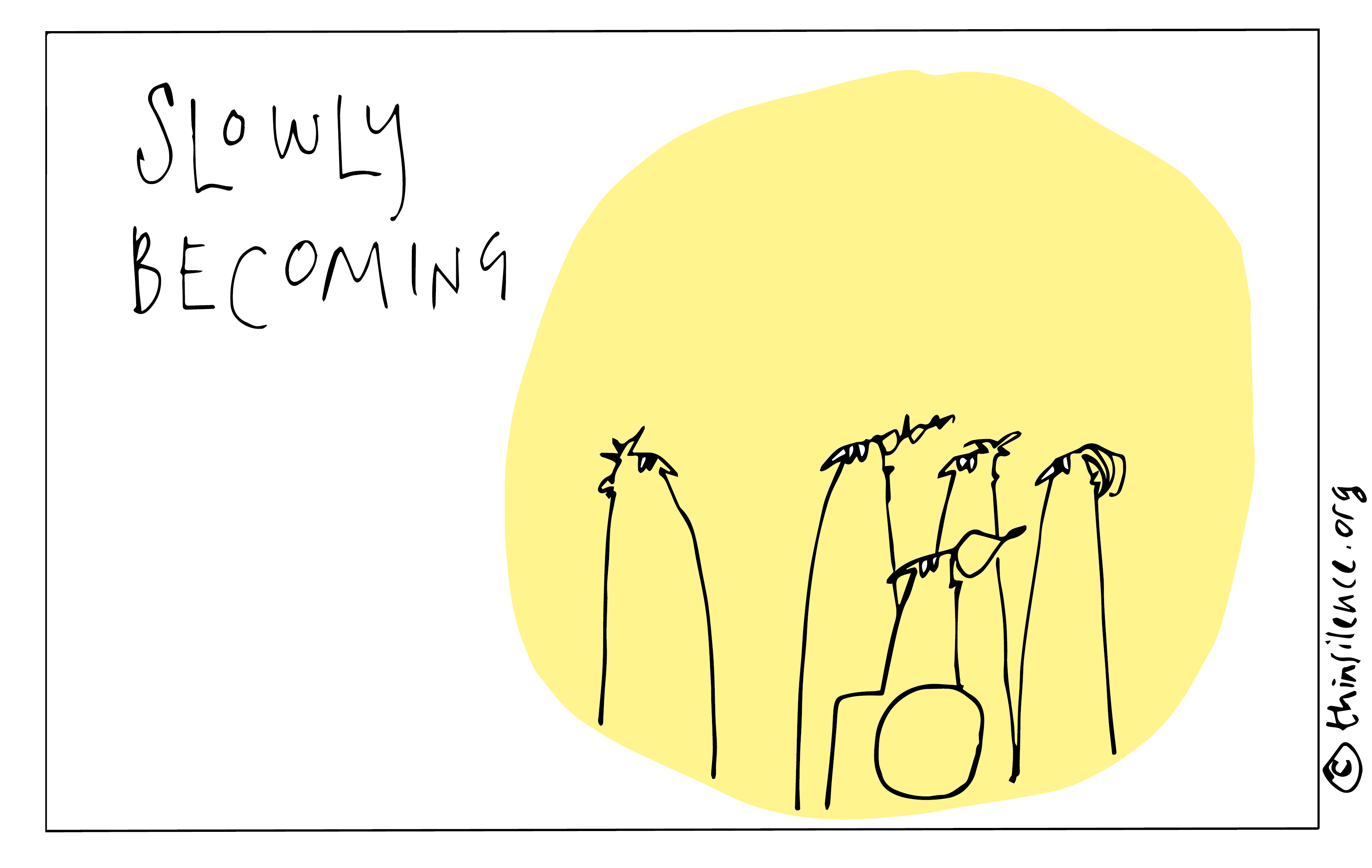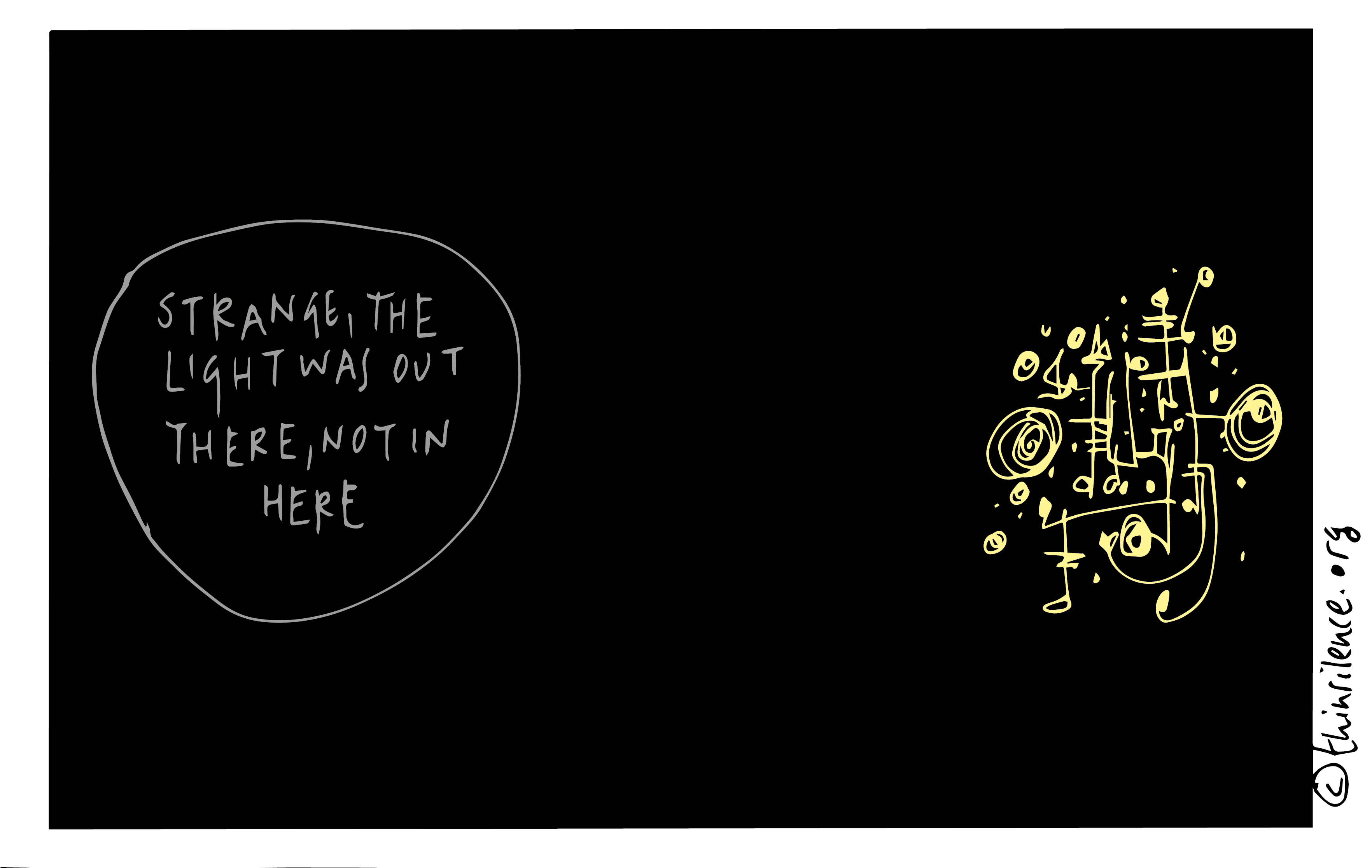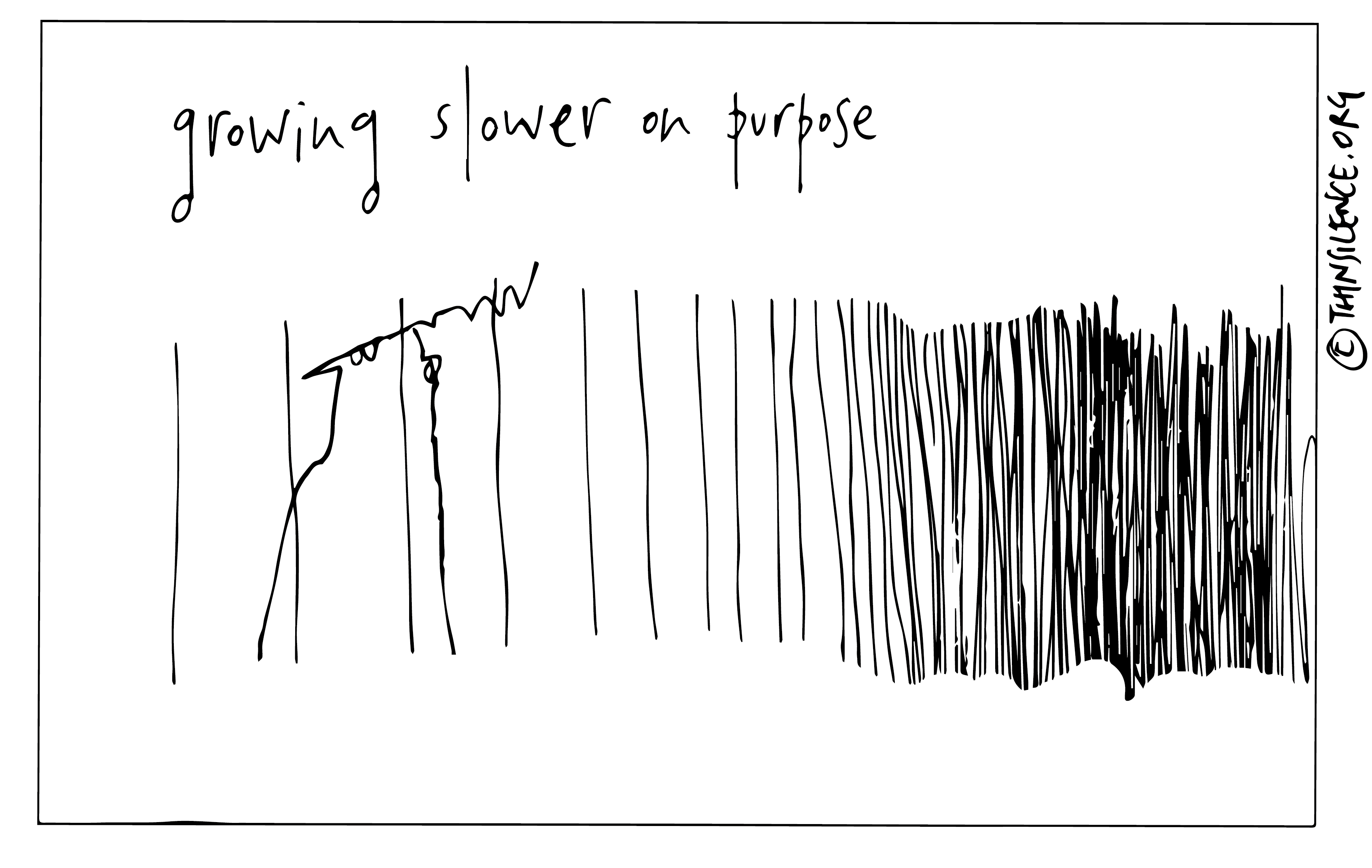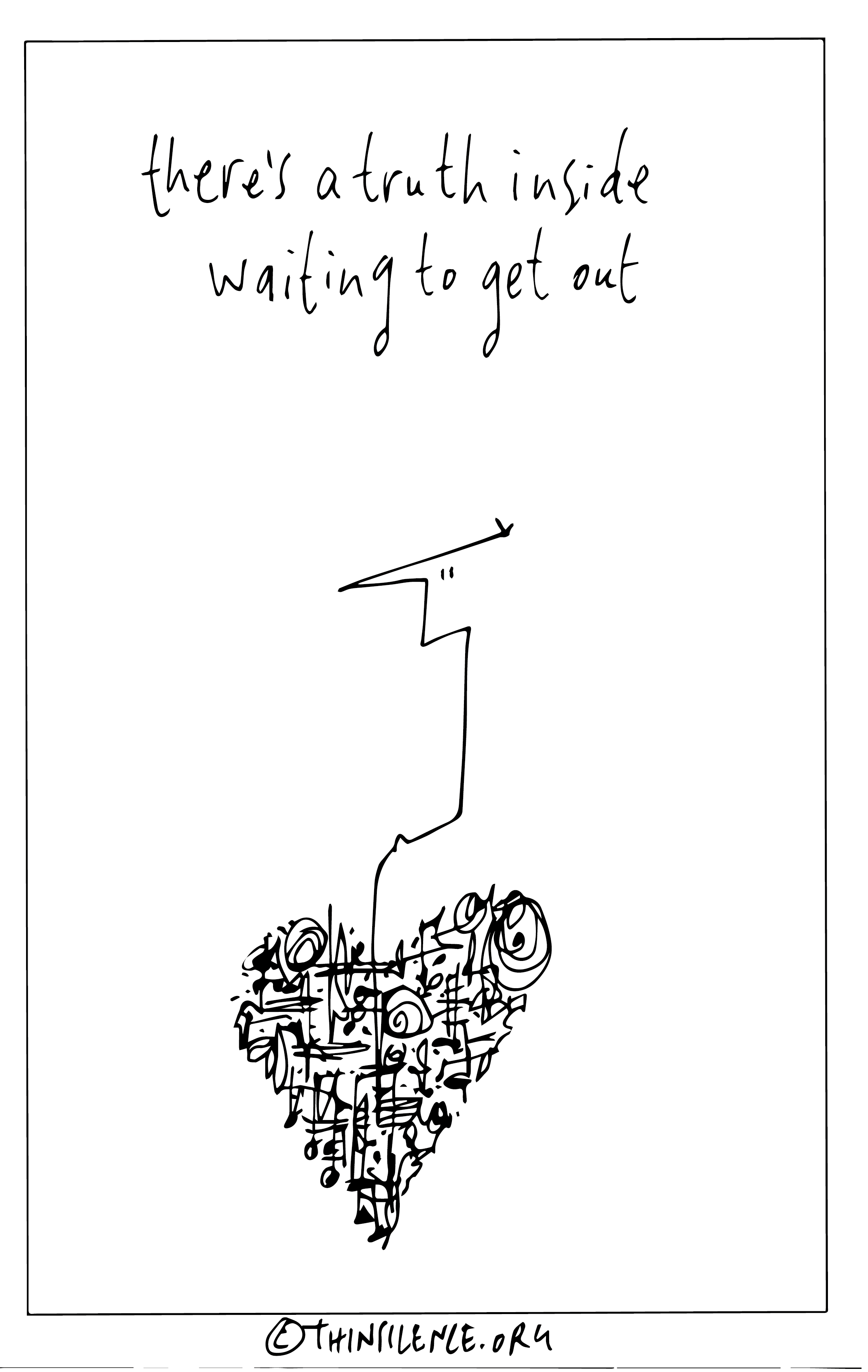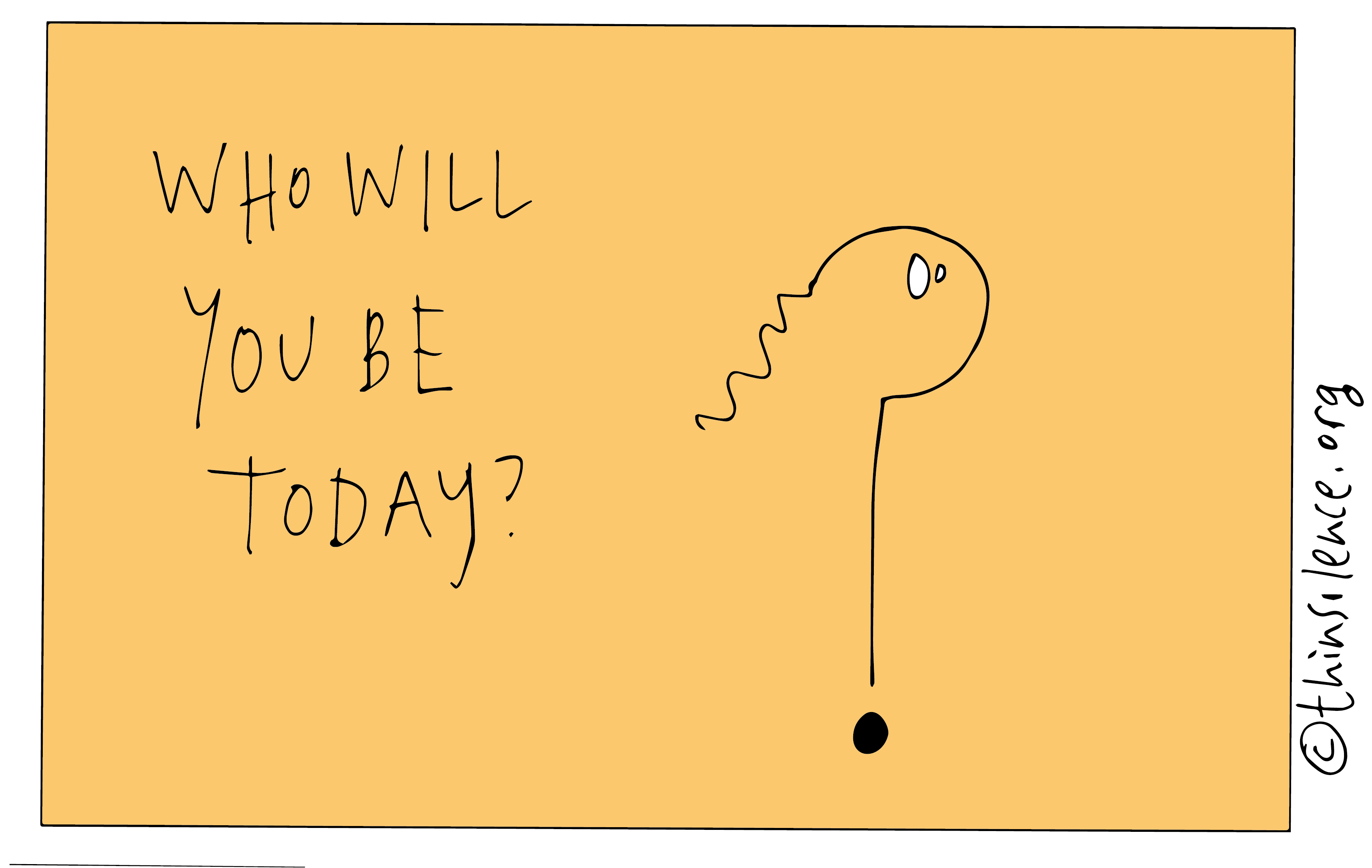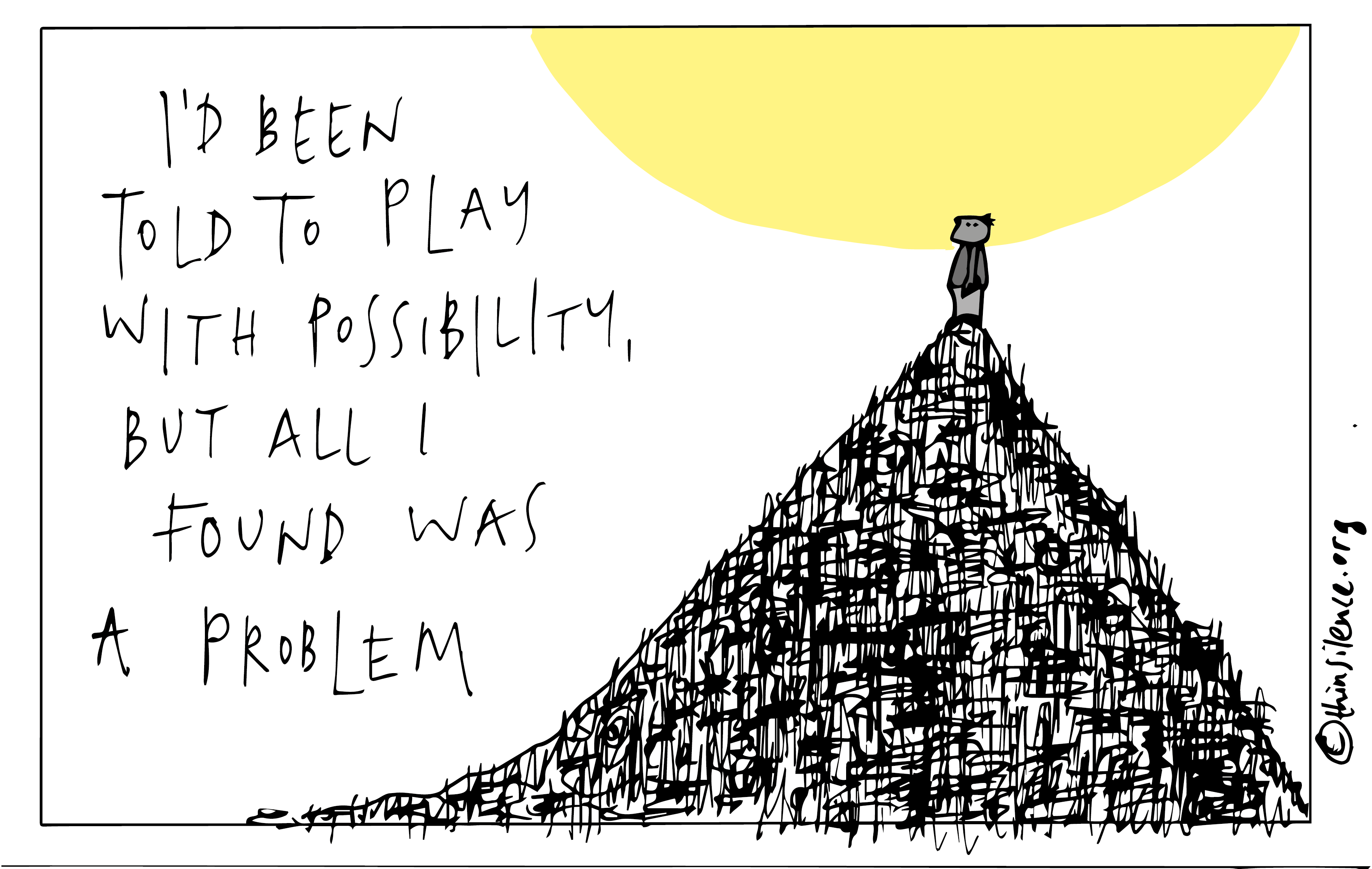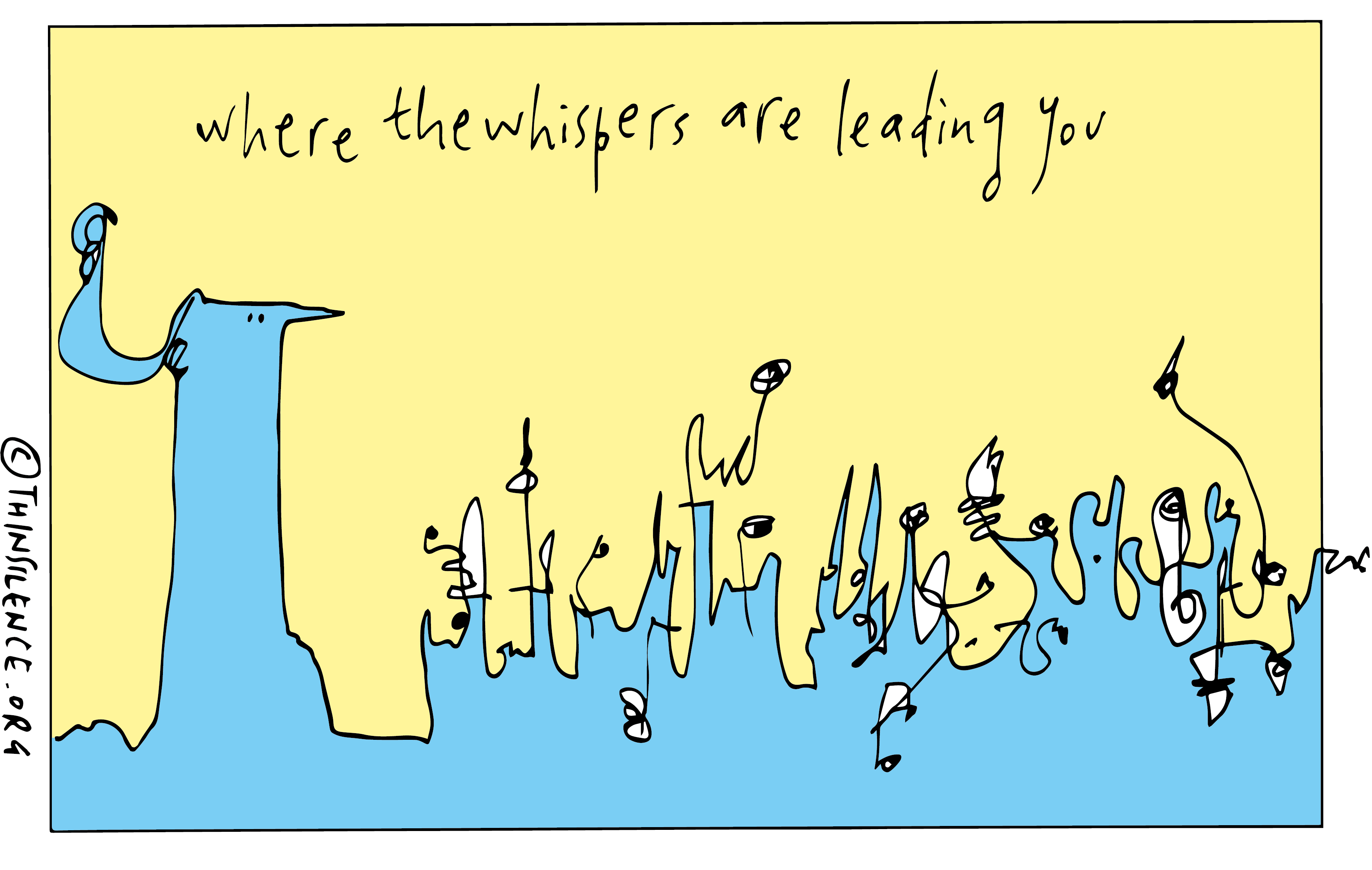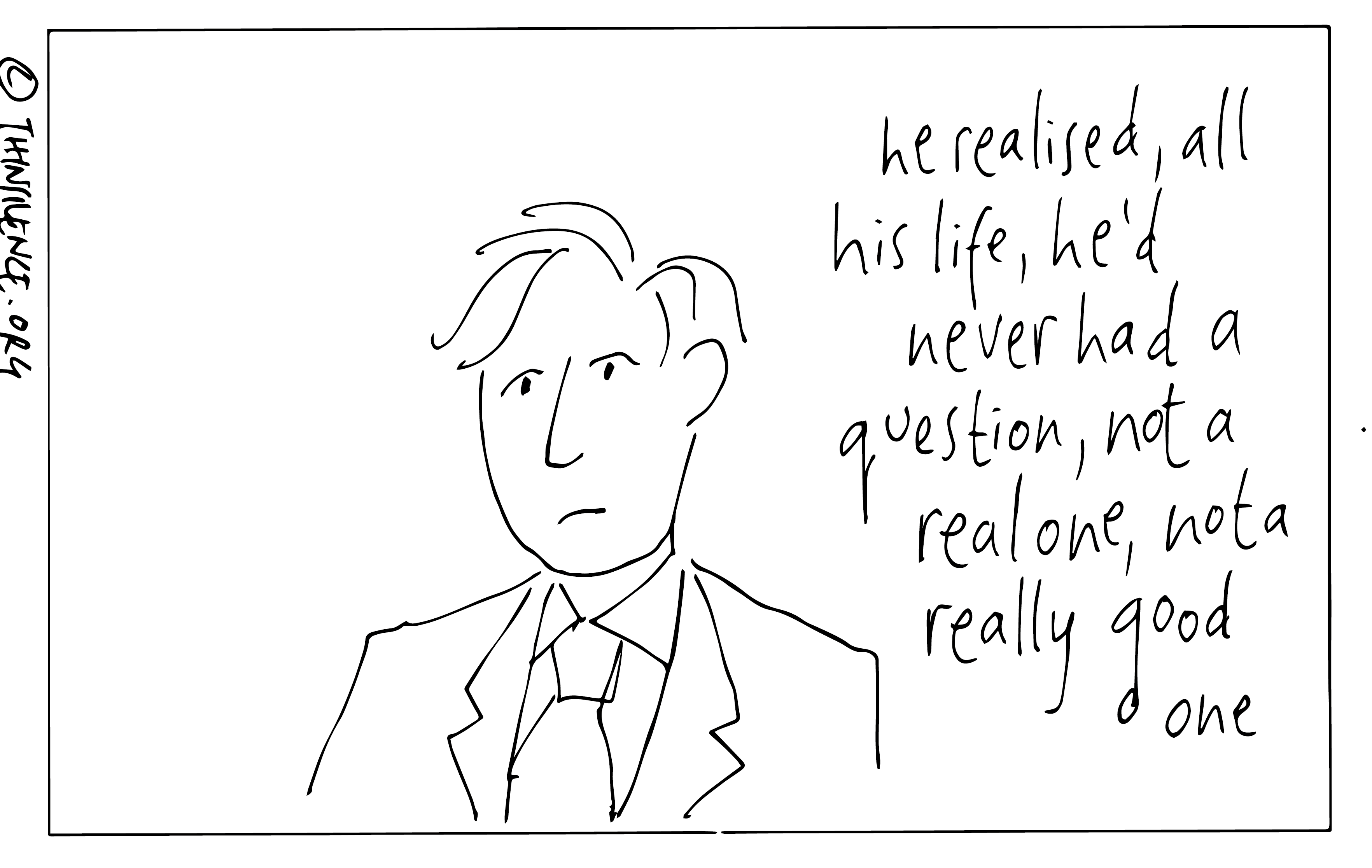
In the beginning (again)

You must become a beginner.*
(Rainer Maria Rilke)

Beginning precedes us, creates us, and constantly takes us to new levels and places and people.**
(John O’Donohue)

Stale? Stuck? Failed? Bored? Arrived? Wronged? Discarded? Disregarded? Unemployed?

You’re made for beginning again:

Perhaps the art of harvesting the secret riches of our lives is best achieved when we place profound trust in the act of beginning. Risk might be our greatest ally. To live a truly creative life, we always need to cast a critical look at where we presently are, attempting always to discern where we have become stagnant and where new beginning might be opening.**

Beginning is the destination of the ever-curious, the always-exploring, the never-ending.

*Rainer Maria Rilke, quoted in Tom Vanderbilt’s Beginners;
**From John O’Donohue’s Benedi
ctus.

A place for silence

In their intense meditation the hidden sound of things approaching reaches them and they listen reverently while in the street outside the people hear nothing at all.*
(Nassim Taleb)

Yesterday, I was able to sit awhile in a walled garden and simply be for a while.

In such moments the things that matter most come to us: the richness and importance of all that fills our lives coming to the surface.

Yet these places of quietness are taken away from us in the modern life promising that we need never be bored or alone, seeing it as strange if we desire either.

It doesn’t have to be for long. Set a timer for 4′ 33″ and simply open your senses, beginning with listening. If you have longer then just be open to thoughts and feelings. Whether something emerges or not doesn’t matter.

may you find your
places of thin silence
to rest without distraction
to be open without rush

*From Nassim Taleb’s Fooled by Randomness.

Bless you

The gift of the world is our first blessing.*
(John O’Donohue)

The function of the artist is the mytholisation of the environment and the world.**
(Joseph Campbell)

Coming to the end of his book about love, Jonah Lehrer writes,

The world is defined by scarcity: there’s never enough of anything.^

What we forget and must remember, though, is that,

Each life is clothed in raiment of spirit that secretly links it to everything else.*

Abundance is discovered in connection, and this discovery leads us into our creative artfulness: we have enough time, security, talent. Indeed, these may come from something deep within us and we’re not sure how it got there:

We are all haunted by something deep inside us, and often a lot of our best work is the result of us trying to come to terms with this.^^

*From John O’Donohue’s Benedictus;
**From Joseph Campbell and Bill Moyers’ The Power of Myth;
^From Jonah Lehrer’s A Book About Love;
^^From gapingvoid’s blog: Spiritual redemption.

Specks in time

Remembering my mortality gives me the needed motivation to make change, hold everything more lightly, and have compassion for my self and other people.*
(Beth Pickens)

Nietzsche said that a man’s worth was determined by how much truth he could tolerate. You are by no means only what you already now. You are also all that which you could know, if only you would. This you should never sacrifice what you could be for what you are.**
(Jordan Peterson)

Here is meaning.

What we know becomes who we are and what we can do.

A life time doesn’t seem enough but it’s all we have:

Our life times are specks in the universe, but they are the longest and only spans of time we will ever now.*

This is a mighty advantage, as Rainer Maria Rilke contemplates:

Hier zu sein is so vies – to be here is immense.^

As specks in the universe, we will never know everything. Neither is there a list of what we must now in order to live meaningfully.

The aim to know more is what matters most of all, by which we each make a path into knowing that will unfold before us.

Perhaps
The truth depends on a walk around the lake.^^

*From Beth Pickens’ Make Your Art No Matter What;
**From Jordan Peterson’s 12 Rules For Life;
^Rainer Maria Rilke, quoted in John O’Donohue’s To Bless the Space Between Us;
^^Wallace Stevens, quoted in Robert Macfarlane’s The Old Ways.

Artful disruption

If you’re blessed with imagination, it’s part of your job to bring better images to the world.*
(Austin Kleon)

Art isn’t only a painting. Art is anything that’s creative, passionate and personal. An artist is someone that uses bravery, insight, creativity and boldness to challenge the status quo. Art is a personal gift that changes the recipient. The medium doesn’t matter. The intent does. Art is a personal act of courage, something that one human does that creates change in another.**
(Seth Godin)

We all have imagination.

We just forget that it needs tending: select, arrange, enhance

When we remember, it can be recovered and expanded.

If we pursue this with purpose, we become artists.

Artists who know what they bring is necessary to prevent each other becoming stuck.

The status quo isn’t how things really are: it’s just what happens without imagination.

*From Austin Kleon’s How to talk to someone with a missing imagination;
**Seth Godin, quoted in Ben Hardy’s article These 20 Pictures Will Teach You More Than Reading 100 Books.

On your own

When you start working everybody is in your studio – the past, your friends, enemies, the art world, and above all, your own ideas – all are there. But as you continue painting, they start leaving, one by one, and you are left completely alone. Then, if you’re lucky, even you leave.*
(John Cage)

Attention is like energy in that without it no work can be done and in doing work it is dissipated. We create ourselves by how we invest this energy.**
(Mihaly Csikszentmihalyi)

A lot of people, ideas and failures have brought us to this place, and now that we’re here, we need to know that we are enough, that we can do this.

And if things go wrong, these can be some of greatest opportunities:

A “flamboyant” worker, exuberant and excited, is willing to risk control over his or her work: machines break down when they lose control, whereas people make discoveries, stumble on happy accidents.^

Our unique alacrity is attention that don’t necessarily know what it will discover.

You can trust you.

*John Cage, quoted in Lewis Hyde’s A Primer for Forgetting;
**From Mihaly Csikszentmihalyi’s Flow;
^From Richard Sennett’s The Craftsman
.

A time to forget and and a time to remember

It’s time to let go. It might be time to sacrifice what you love best, so that you might become who you might become, instead of staying who you are.*
(Jordan Peterson)

When I look at your heavens, the work of your fingers, the moon and the stars that you have established; what are human beings that you are mindful of them, mortals that you care for them? Yet you have made them a little lower than God, and crowned them with glory and honour.**

Oaths, peace and reconciliation, acts of oblivion: Lewis Hyde lists how humans have acted through history in order to forget the things that would otherwise torment them.

We don’t have to be religious to appreciate what the psalmist is grappling with. More than ever, we know both our smallness in the vastness of space and the potential uniqueness of our consciousness.

Together, these make us creatures of wonder rather than celebrities.

We can be terrible rememberers, though, living half-lives both for ourselves and for the good of others, and yet we live in a universe that allows us each day to forget what has been and to explore through remembering what we can be.

We do not wander into this kind of forgetfulness, the existence of oaths, peace and reconciliation and acts of oblivion make it clear how difficult it can be to forget – something we may have to choose each day – but it is not impossible, and a world of remembering waits to open before us.

*From Jordan Peterson’s 12 Rules for Life;
**Psalm 8:3-5
.

Who you are and what you have

The point of curating trends is to see what others don’t and to predict a future that can inspire new thinking.*
(Rohit Bhargava)

Instead of simply clearing the incoming and reacting to what’s knocking on your door, you can invest the time to learn and the effort to practice.**
(Seth Godin)

what I see I can use
what I do not see I cannot

gratitude opens my eyes

*From Rohit Bhargava’s Non Obvious 2019;
**From Seth Godin’s blog: Levelling up isn’t easy.

On a child turning 40

I am fearfully and wonderfully made. … In your book were written all the days that were formed for me, when none of them as yet existed.*

fewer days now
but enough
hopefully
to imagine
to play
to make

destiny schmestiny
keep changing
growing
developing

*Psalm 139: 14, 16.