I am a question-asker and a truth seeker. I do not have much in the way of status in my life, nor security. I have been on a quest, as it were, from the beginning.* M. C. Richards
When people say to me that they are not creative, I assume that they just haven’t learnt what is involved.** Ken Robinson
It’s not not that I didn’t want to be away for almost a week, filling these days with very different content to the usual, but I have missed certain things from my ordinary and everyday,
Here’s the question that formed:
When you have to alter your routine and the contents of your day, what do you miss most of all, and why?
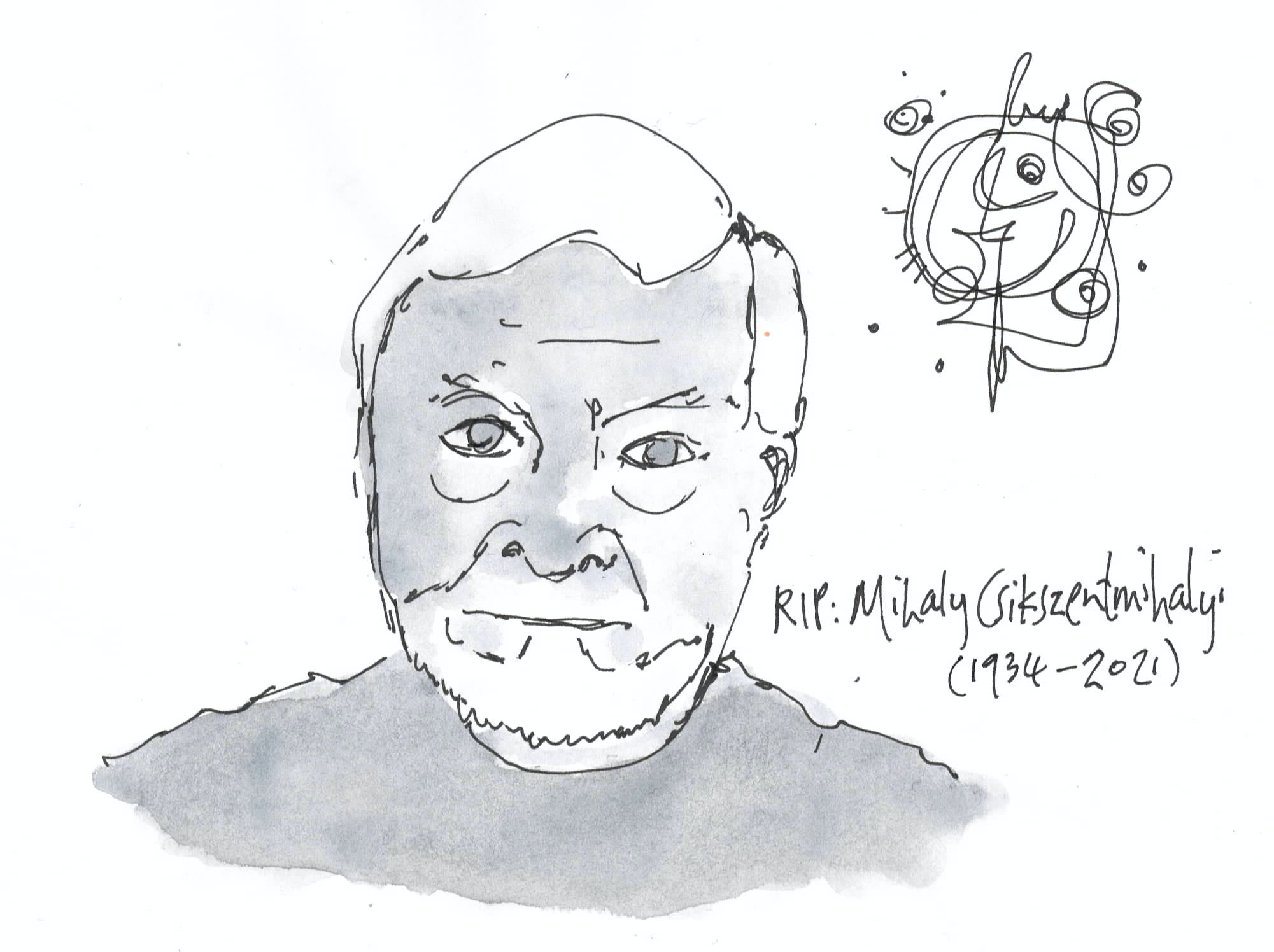
The best moments usually occur when a person’s body or mind is stretched to its limits in voluntary effort to accomplish something difficult and worthwhile.* Mihaly Csikszentmihalyi
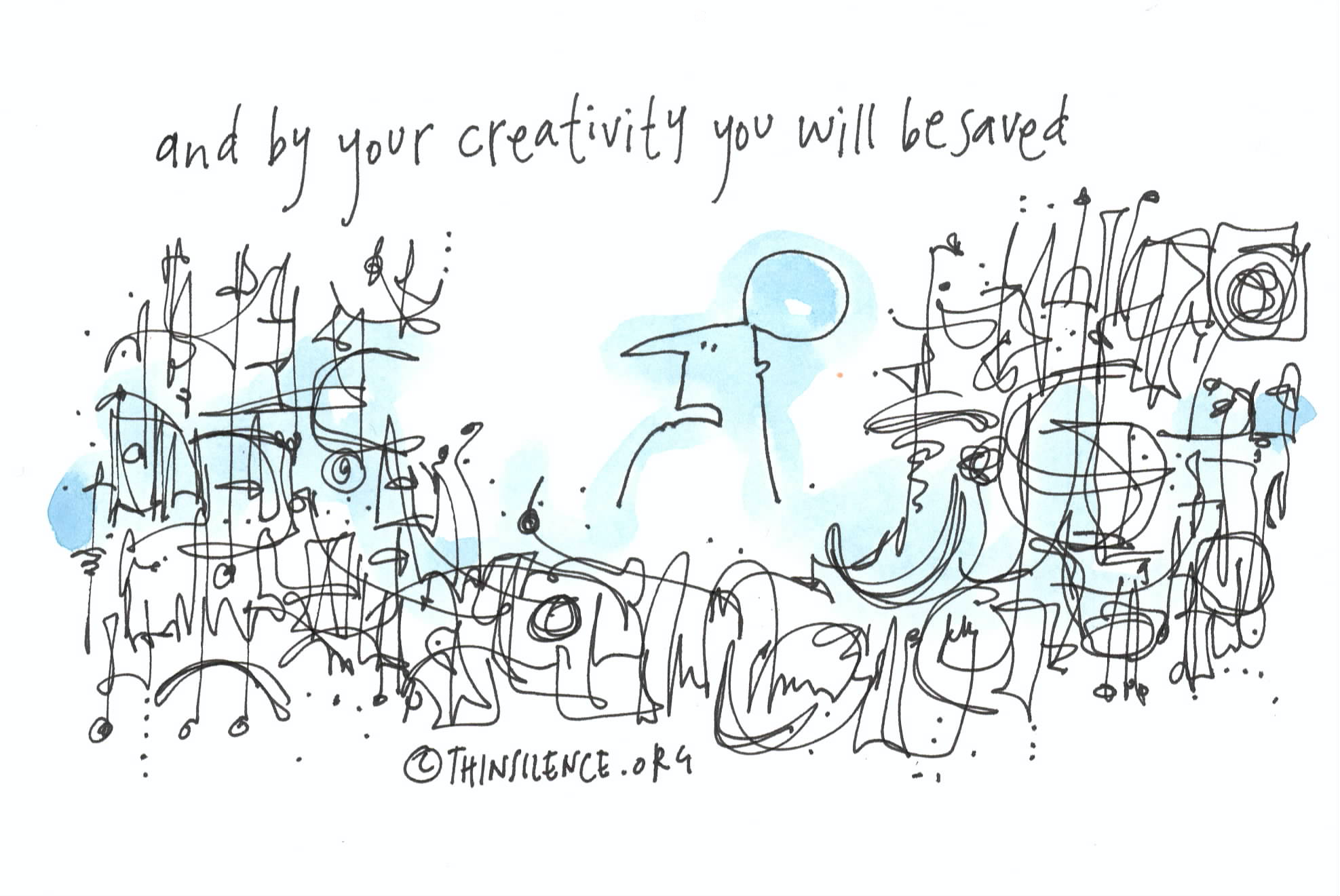
The artist rarely says, “I’d like to do less.” Instead she wonders how to contribute more, because the very act of creativity is the point of the work.* Seth Godin
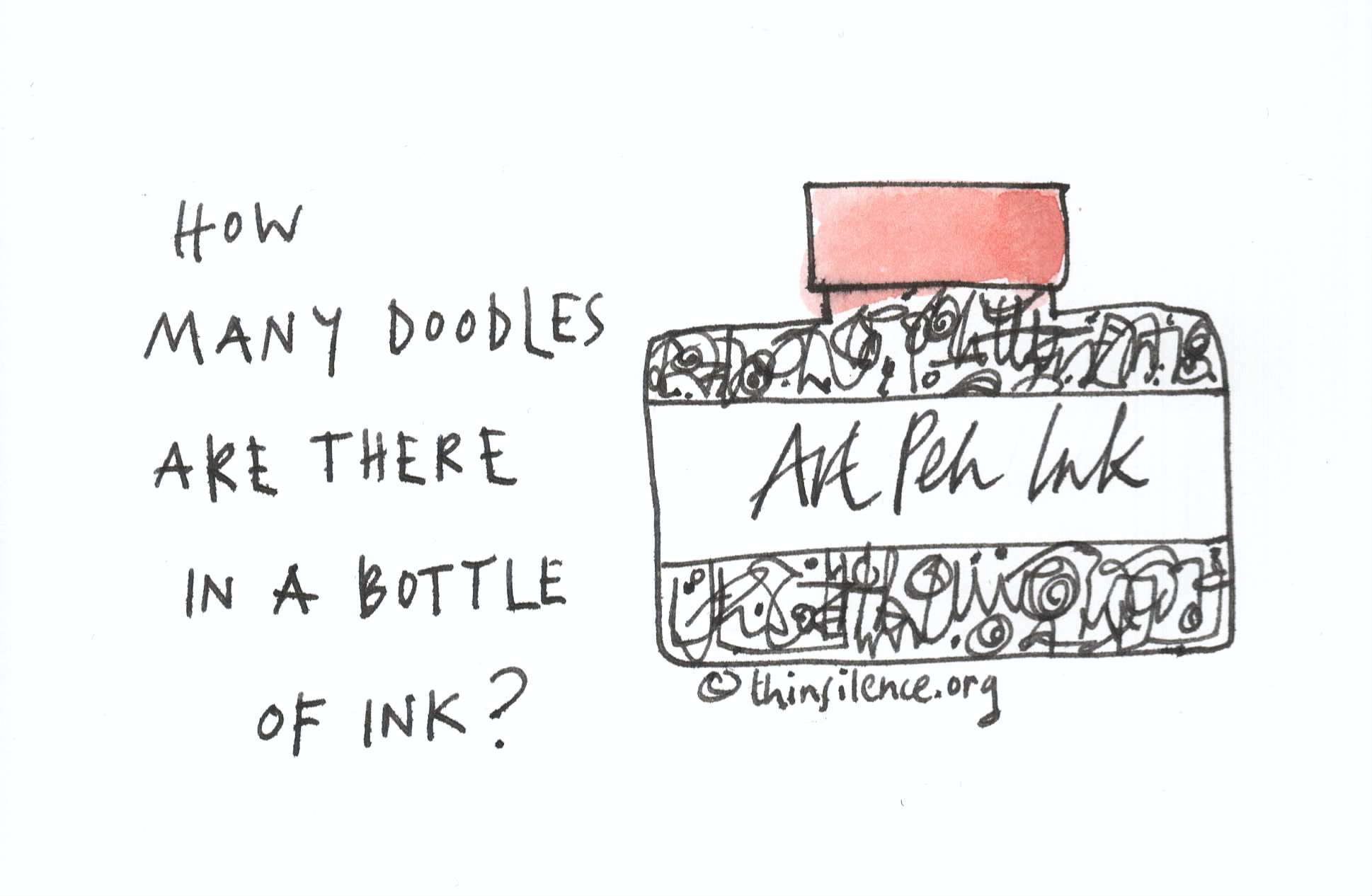
Where you are the bottle of ink and the doodles are the things you must do.
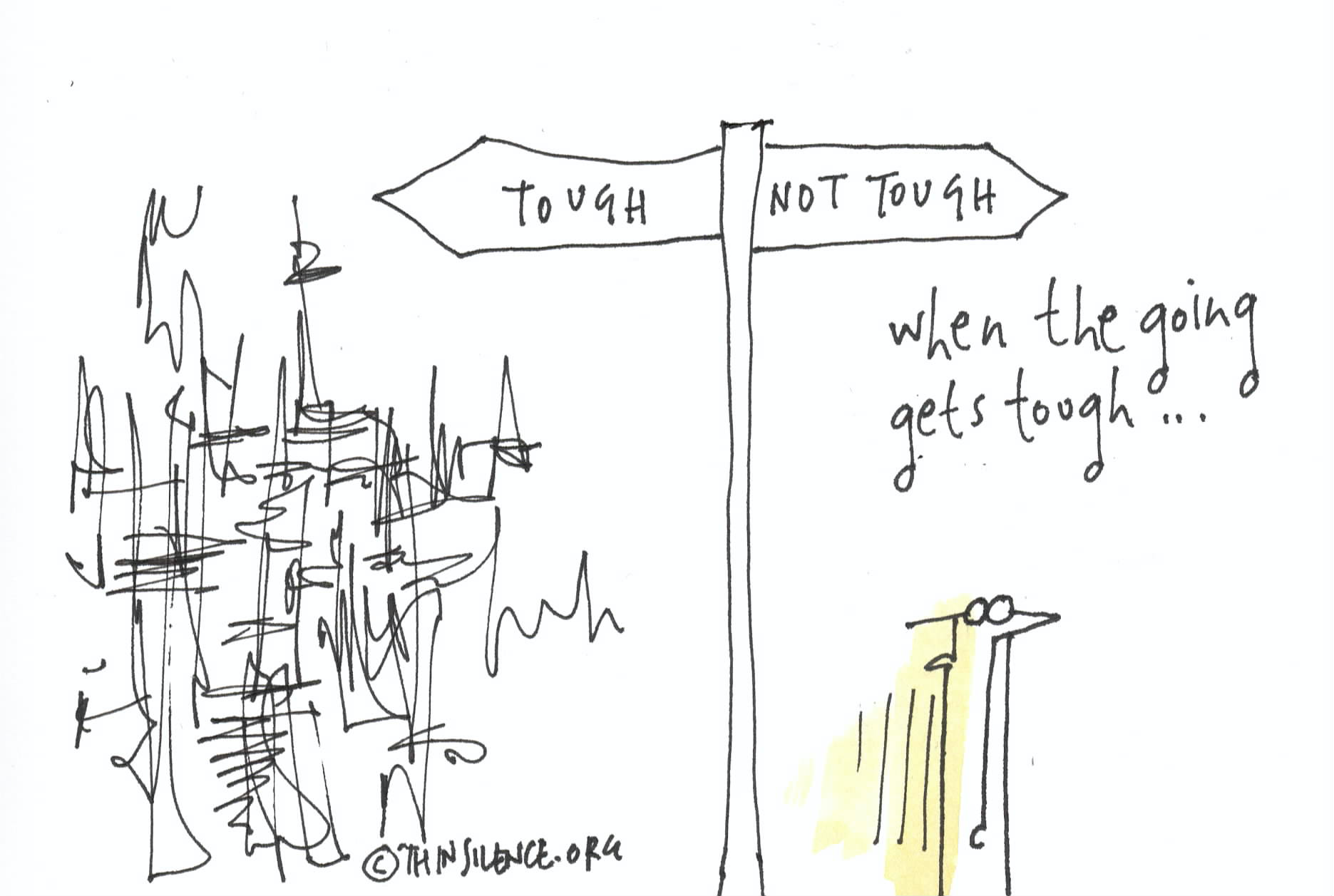
The royal road to self-improvement is … a form of perseverance that, far from being put off by failure, accepts it as essential.* Anna Katharina Schaffner
Intentional change is emotionally rigorous – it doesn’t exactly feel good and can even be shockingly painful. If you’re unwilling to put yourself through emotional experience, shift your perspective, and make purposeful changes to your behaviour and environment, then don’t expect huge changes (at least in the short run).* Ben Hardy
For humility is … the only effective antidote to narcissism, and all its associated evils. It is, in essence, a readiness to admit to shortcomings coupled with a willingness to learn, be that from people, animals, plants, or even machines – whoever masters something we do not. The opportunities are infinite.* Anna Katharina Schaffner
In this game, we only get one choice Once we are born we are players. The only choice we get is if we want to play with a finite mindset or an infinite mindset.** Simon Sinek
We have the one choice at the beginning of each day.
If we decide to play infinitely, this will mean being open to and respecting others.
Humility is the way that not only allows me to see me, but also to see you.
To be fully alive, fully human, and completely awake is to be continually thrown out of the nest.* Pema Chödrön
The royal road to self-improvement is … a form of perseverance that, far from bring put off by failure, accepts it as essential.** Anna Katharina Schaffner
What I am enjoying about Anna Katharina Schaffner’s book on self-improvement is the long view she provides of different themes considered necessary over millennia for our development.
I’ll be mentioning all ten of these soon as I think that each is important for growth.
A number of these have been promulgated as the only important thing to pursue. It’s also noticeable that different times bring different emphases.
In a time when we are struggling with resilience, one of these has popped up in the form of Angela Duckworth’s Grit^ – now on my reading wishlist. Duckworth names grit’s attributes as being purpose beyond ourselves, resilience, learning from failure, having a growth mindset, and valuing success. (Watch this space.)
I list them here as points to reflect upon (perhaps think smaller rather than bigger):
What do you want to bring into the world that will improve the lives of others? Which difficult experiences have you gone through that have made you stronger? Which failures stand out as being pivotal for learning and growth? How do you define your possibility for growth? What are some of the important finishing lines you have crossed?
Some people get lucky and do what they want to do without being tested, for everyone else there’s a demanding path of inner growth.
Passion: Middle English: from Old French, from late Latin passio(n- ) (chiefly a term in Christian theology), from Latin pati ‘suffer’.
The artist rarely says, “I’d like to do less.” Instead she wonders how to contribute more, because the very act of creativity is the point of the work.* Seth Godin
We speak of our passion when describing what it is that moves us and energises us into activeness.
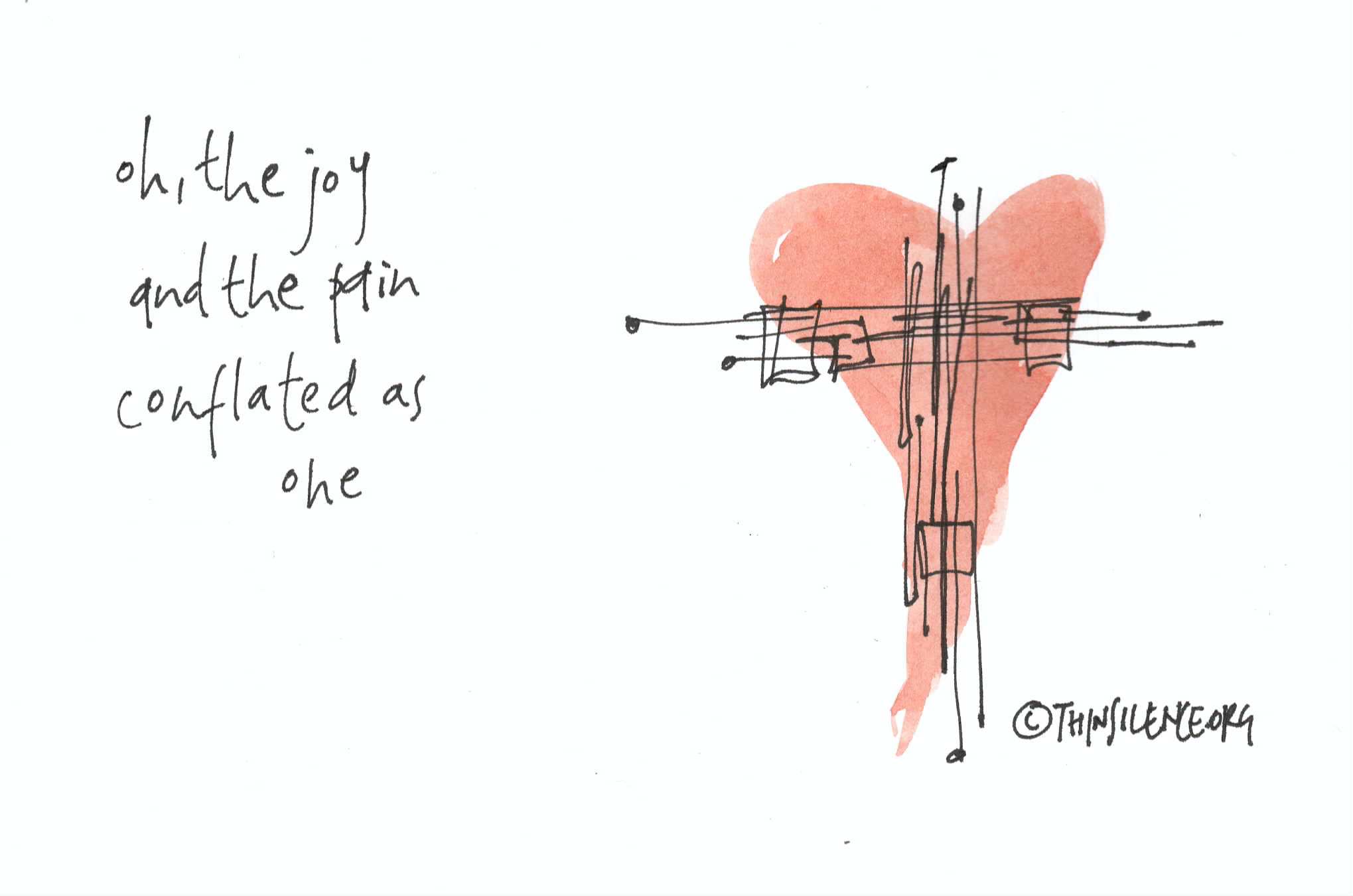
What if the thing that propels us in this modern sense is also the thing of suffering and sacrifice of the original meaning?



You must be logged in to post a comment.