
Through our humility, gratitude and faithfulness there will continue to be nowhere quite like home.

Through our humility, gratitude and faithfulness there will continue to be nowhere quite like home.

Whatever our uninvestigated false beliefs, they cause pain. And we often try to cope with that pain by dong things we don’t want, don’t understand and can’t control. These actions – these errors of innocence – may break every promise we’ve made to ourselves. Yet, bafflingly, we can’t stop. Welcome to the inferno!*
Martha Beck
Unless the Lord builds the house, those who build it labour in vain. Unless the Lord guards the city, the guard keeps watch in vain.**
Beneath the many structures we build over our lives, protecting what lies within from the scrutiny of others and painful self-probing, is the fear we may not be enough.
But we always have been enough and we always will be. We only need find out how. And when we do then we have come to a beginning:
The big question is whether you are going to be able to say a hearty yes to your next adventure.^
*From Martha Beck’s The Way of Integrity;
Psalm 127:1;
^Joseph Campbell, quoted in Brené Brown’s Rising Strong.

We’d probably be better off if we could simply say, “I’m afraid.” … The bravest leaders and contributors aren’t worried about appearing afraid. It allows them to see the world more clearly.*
Seth Godin
Adaptation is how we make the most of this life-in-all-its-fullness we’ve been handed.
Fear is what gets in the way.
We turn away towards our fear rather than away from it, we have begun to adapt: recreation follows.
*From Seth Godin’s blog: Afraid of afraid.
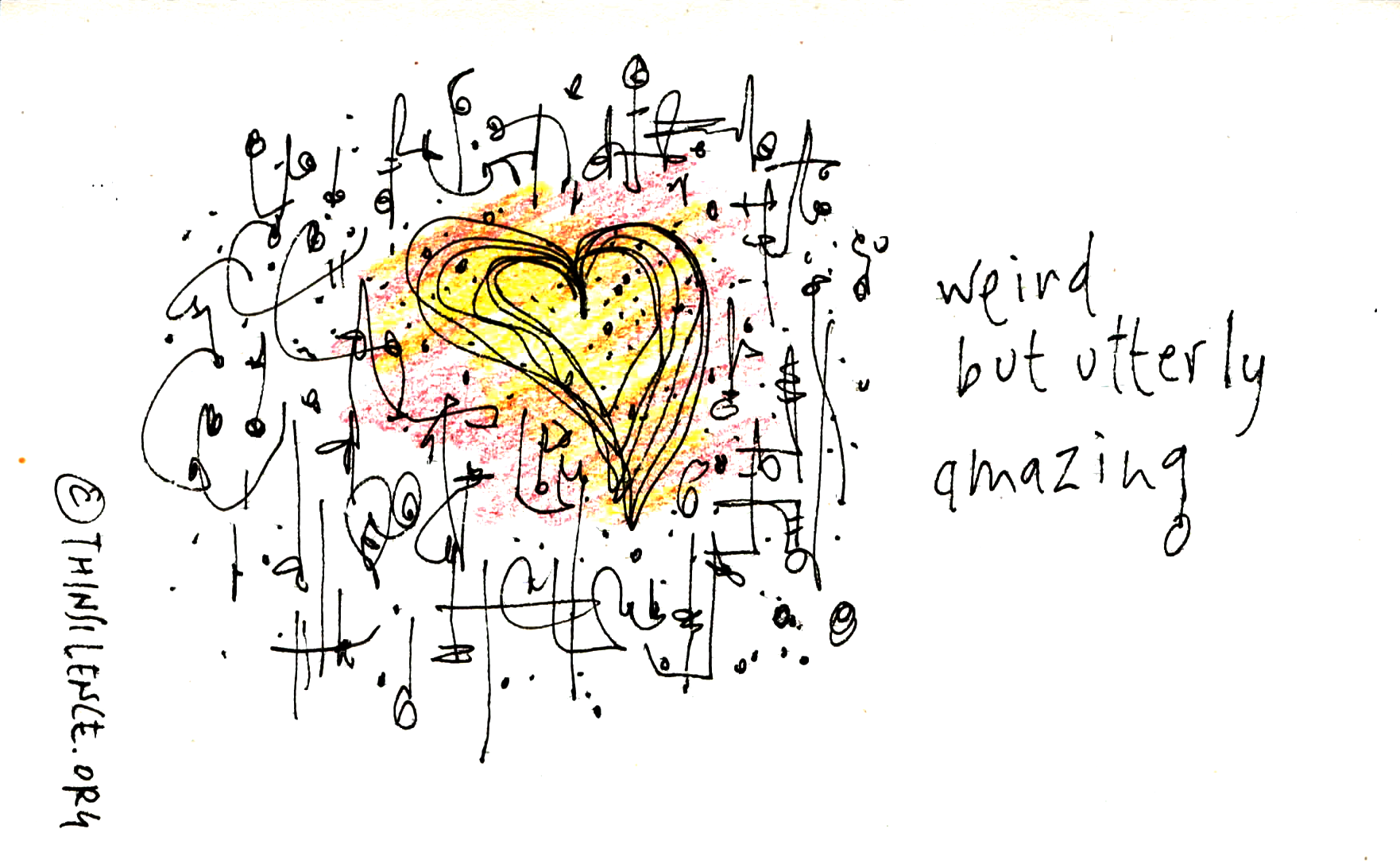
Love is quite extraordinary.
Today, in Cyprus our youngest son Luke marries Aimee.
May their adventures together be filled with love that is high and wide and long and deep.

Why to pull out a notebook and lay some shapes down with a nice black pen. There’s always time for doodling … thankfully.
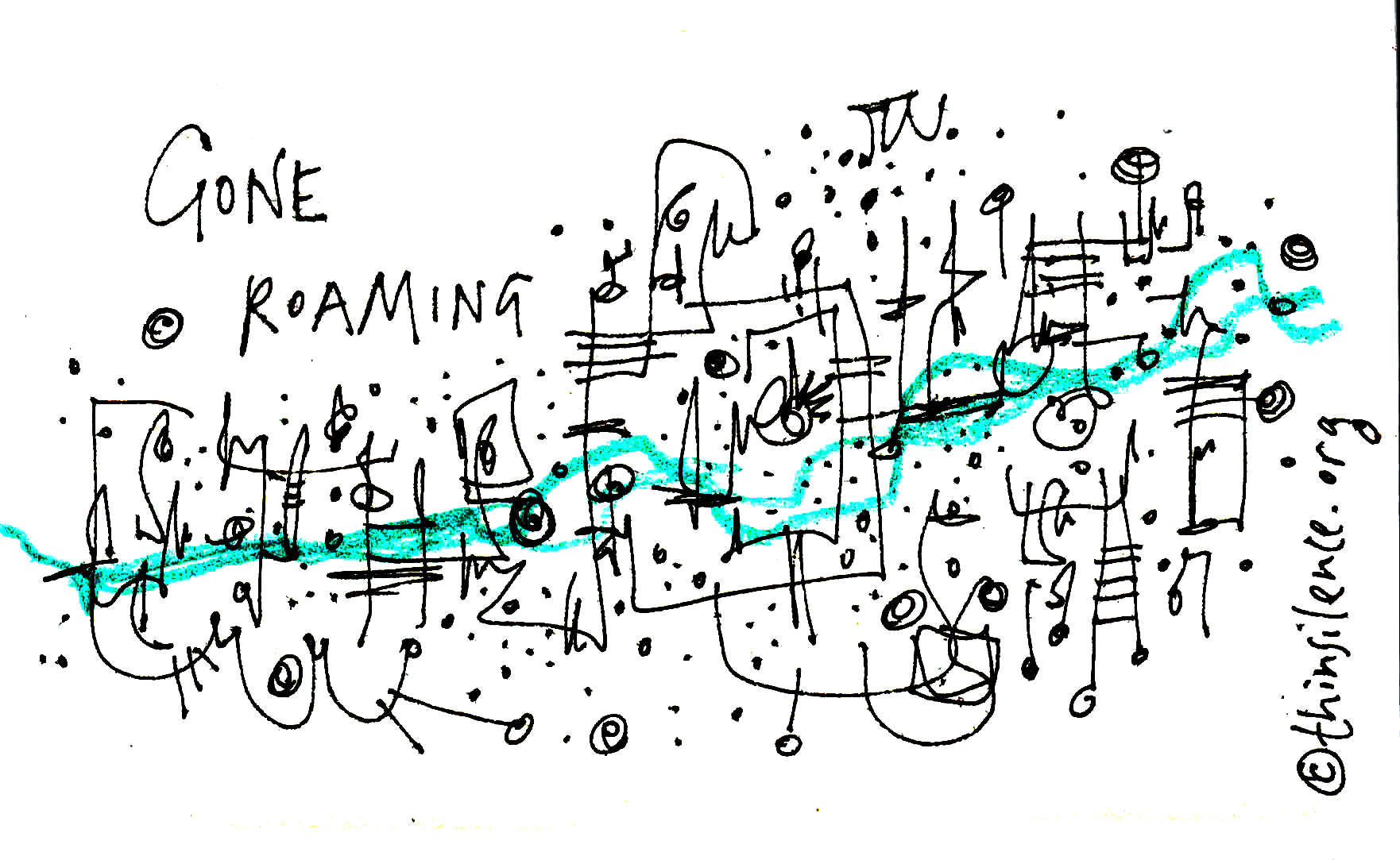
He experienced that tension between roaming and homing even as it was first forming.*
Robert Macfarlane
*From Robert Macfarlane’s The Old Ways, speaking of Edward Thomas.
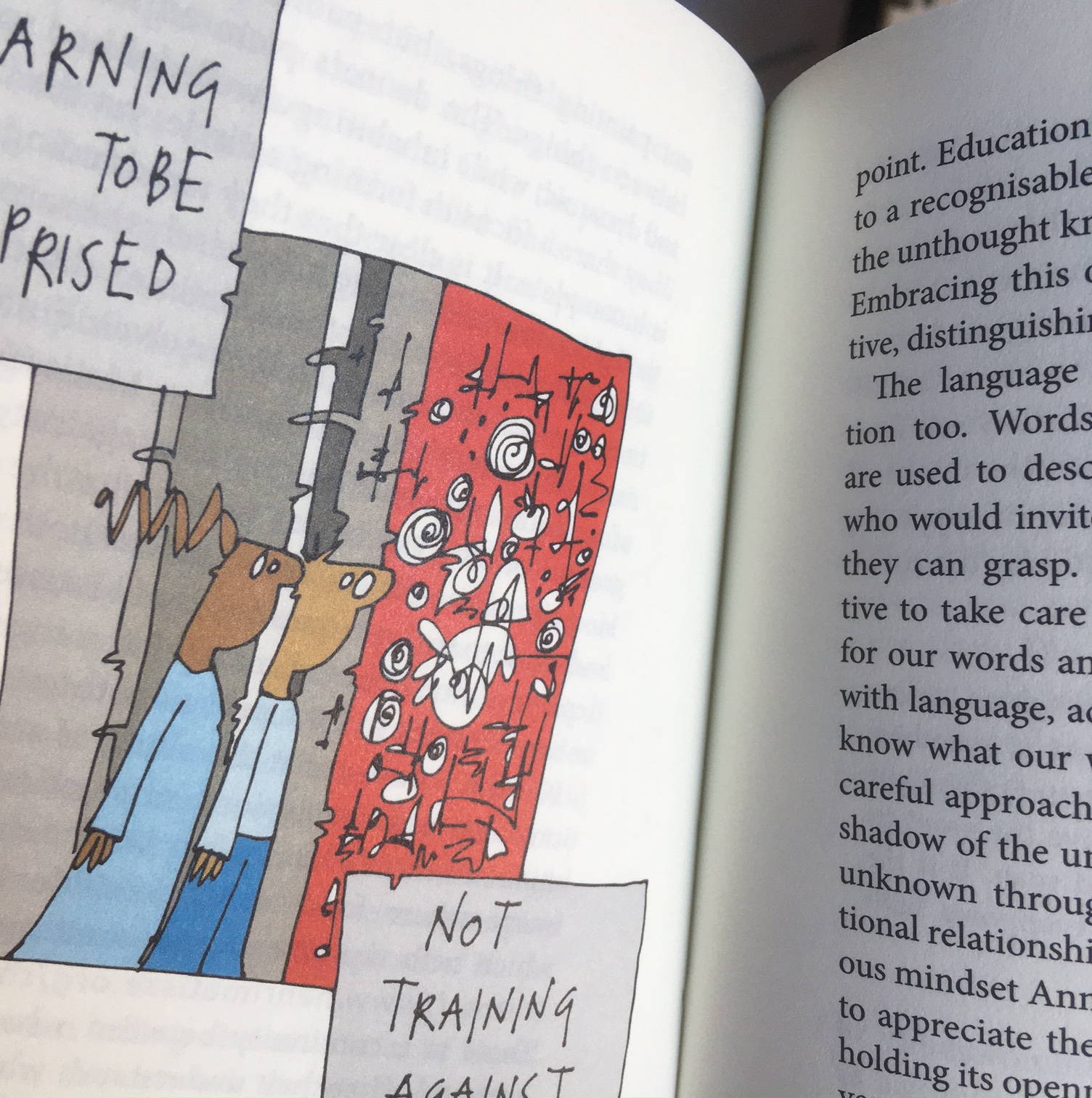
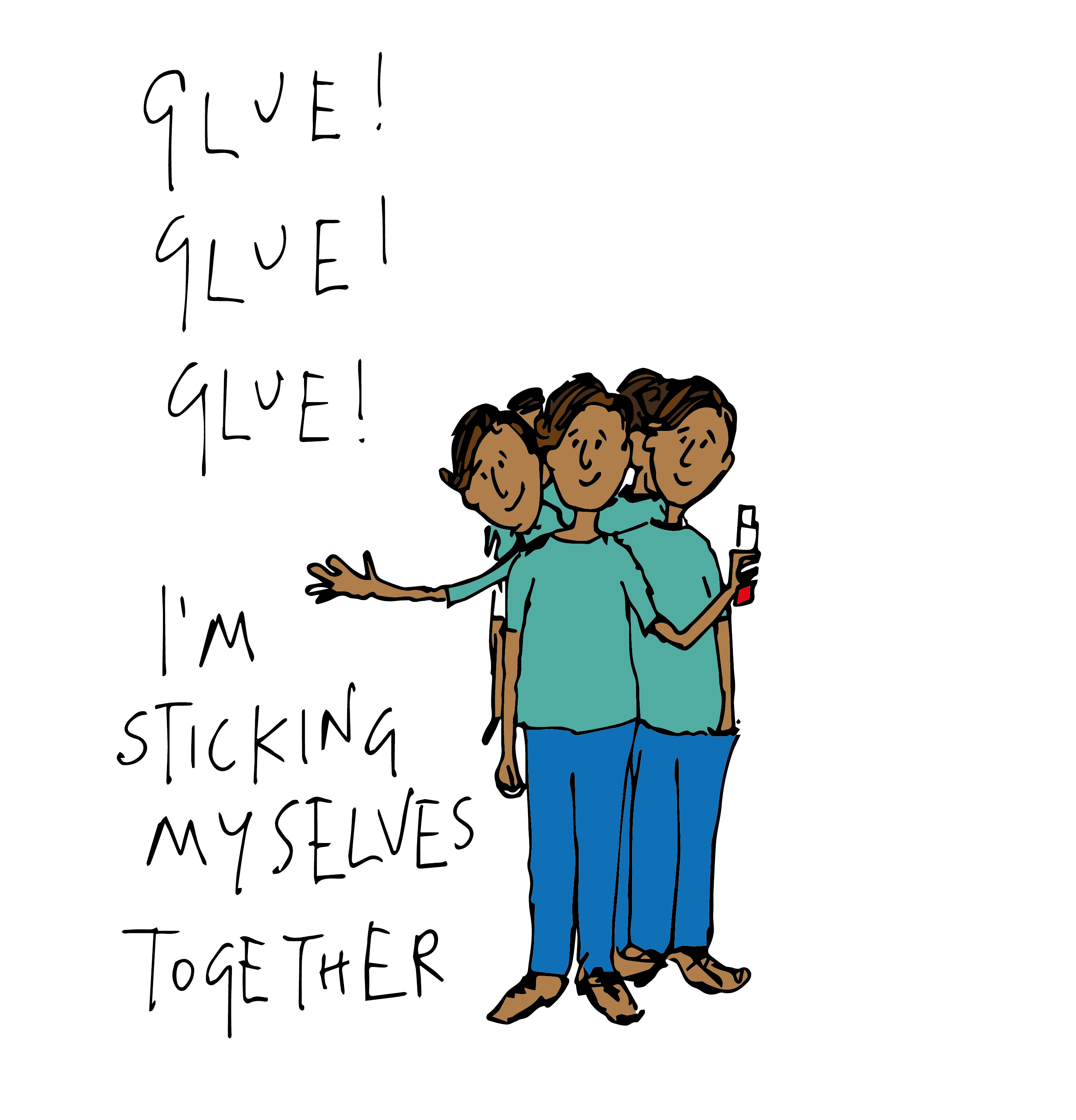
I promised to give a sneaky look at one of the illustrations in Dancing in the Dark, from Annie Pirrie, Nini Fang and Elizabeth O’Brien.
I love how this little book for academics has made space for illustrations: may there be many more to follow.
The book isn’t widely stocked but copies may be obtained from the Golden Hare Bookshop, a smashing little independent in Edinburgh.
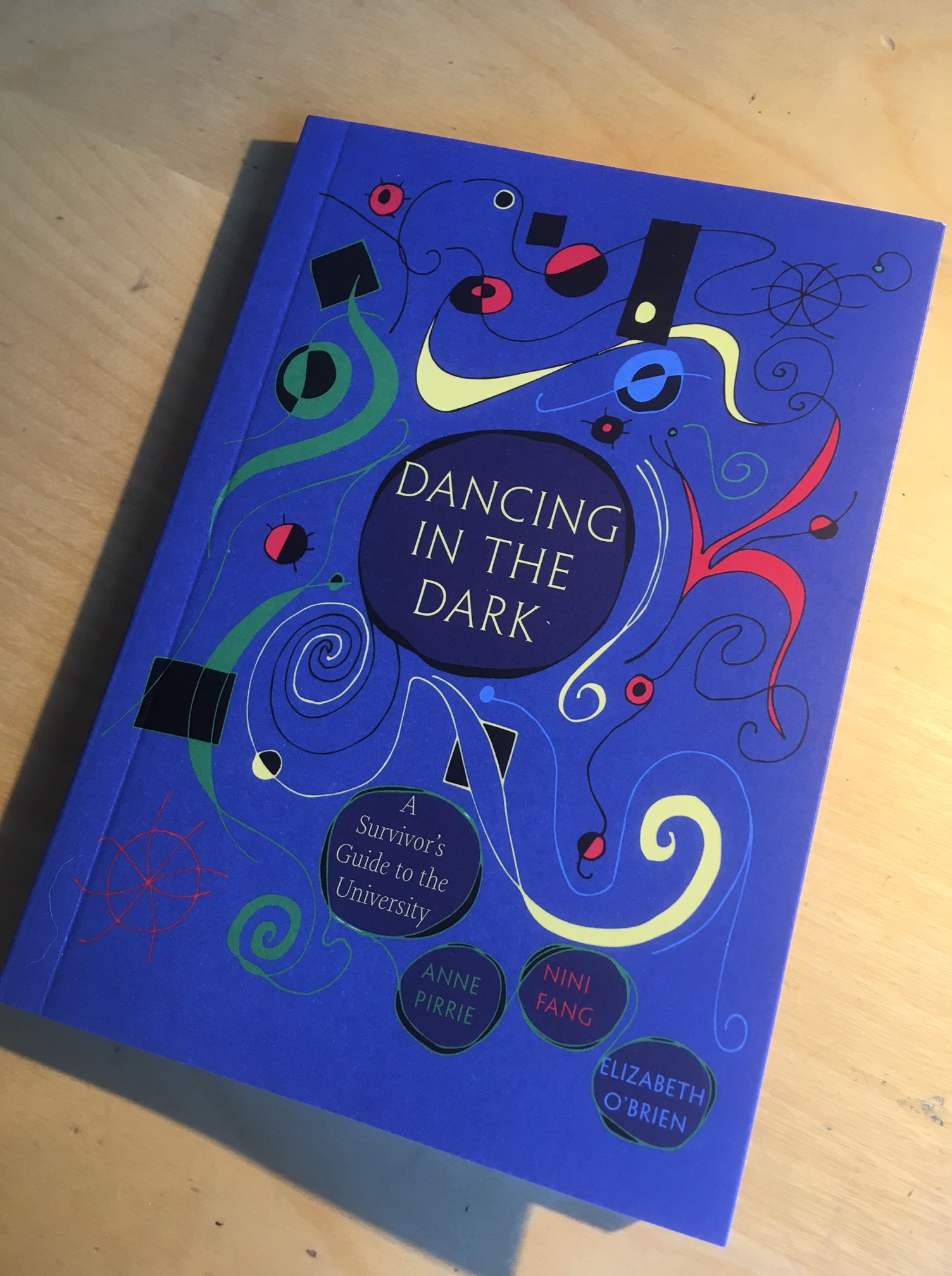

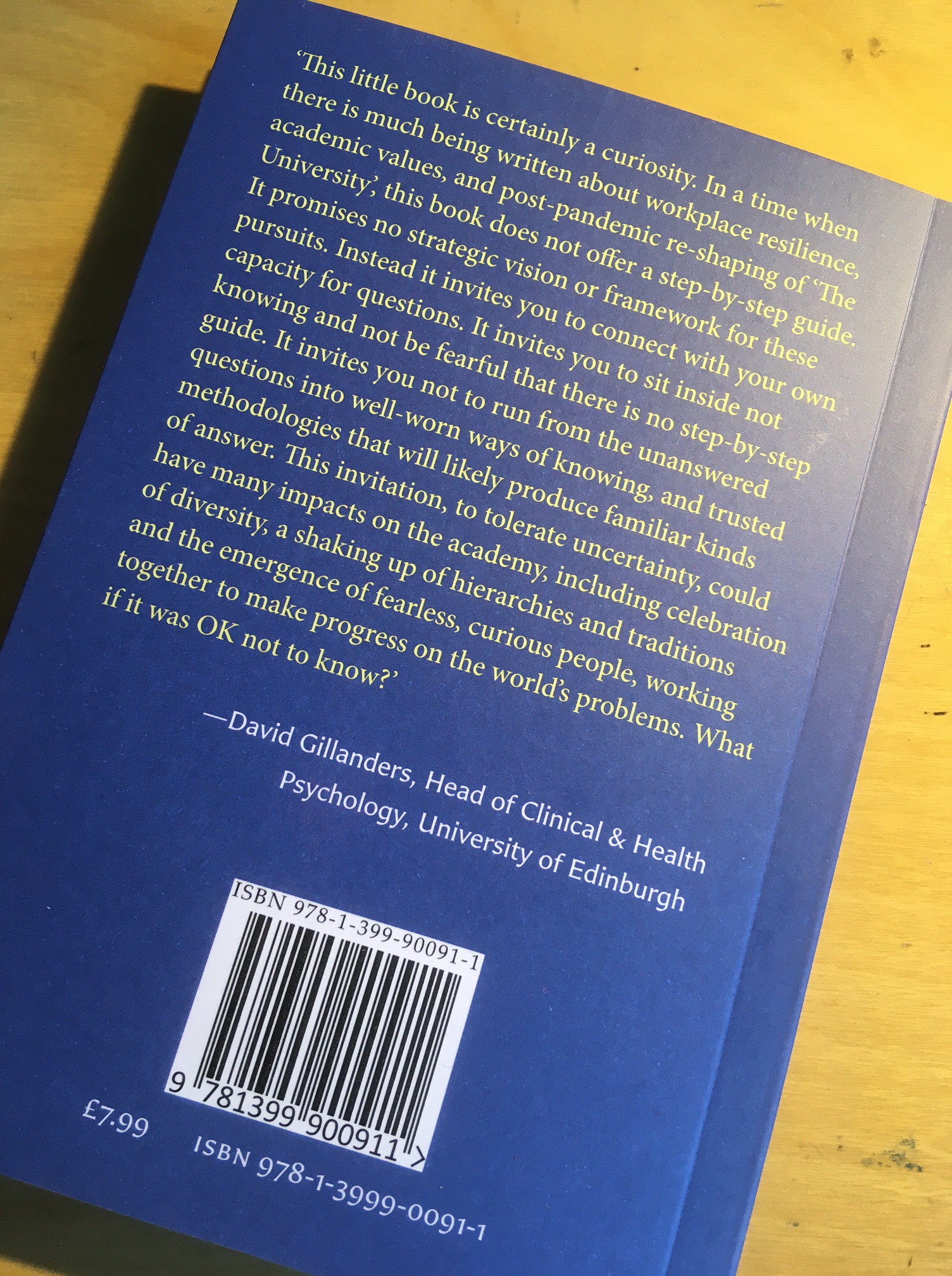
Here’s a little book I recently illustrated and put together the cover for, from Annie Pirrie, Nini Fang and Elizabeth O’Brien.
Dancing in the Dark is meant for slipping in a pocket or bag, exploring how questions are the means of surviving knowingness.
The book isn’t widely stocked but copies may be obtained from the Golden Hare Bookshop, a smashing little independent in Edinburgh.
I’ll offer a sneaky preview of one of my illustrations tomorrow.
These have turned out to be my three great joys.
I didn’t know this ten years ago. They’re the further unfurling of a journey I’ve been on for some time now.
Dawdling, as in wandering, is about observing and appreciating more deeply a place or a thing or a person.
Doodling derives from dawdling, wandering with a line across a piece of paper is about listening, and when I add colour, is about relaxing.
Dreamwhispering is the name I give to listening to what our lives have to say about our values, talents and energies.
When we notice these, we’re able to imagine a different, deeper stories for our lives.
I’ve been bringing the three together in my Chaplaincy blog Slow Journeys in the Same Direction, which provides a thought, a doodle, and some exercises for a deeper journey into knowing ourselves and others.
Lately, I have found myself naming it a journey of mythological proportions as it takes to heart what mythologist Joseph Campbell spoke about how we need two myths for our lives in order to thrive: a personal myth and a social myth. I wrap these as two questions:
Who is my true self?
What is my contribution?
Speaking in 1985, Campbell pointed to the problem of life changing so fast so that the old myths no longer served us, but neither were we able to find the time to create the new ones we need. We are lost in ourselves and lost with others.
Campbell didn’t live to see the change that was about to be unleashed in the shape of the internet, a tool capable of accelerating change exponentially.
We’re now discovering or rediscovering numerous ways of bringing about a balance between our inner and outer worlds, finding a healthier rhythm for living, the way of integrity as Martha Beck names it:
To be in integrity is to be one thing, whole and undivided.*
I offer dawdling, doodling and dreamwhispering as an interruption to the speed and busyness.
We can take a familiar route on foot at half our normal pace and notice what we miss through speed. The same effect will be had when we slow down and take a closer look at our lives. Values begin to appear in greater detail; there’s more to our talents and abilities than we had thought, and we see how they connect with our energies – the ways our lives respond to the things we fill our days with.
Ursula Franklin may be borrowing words for democracy to describe technology, but they also work to describe the contents of our lives:
I intend to look at technology the way [C. B.] Macpherson looked at democracy, as ideas and dreams, as practices and procedures, as hopes and myths.**
We are more than practices and procedures. We not only express roles and responsibilities but also dreams and stories.
Here are some thing you can try: take a slow walk through a familiar place, noting through your senses what you normally miss; take a slow walk through your values with a journal, capturing the things that matter to you most; create a doodle to illustrate this. You’re also welcome to visit Slow Journeys.
*From Martha Beck’s The Way of Integrity;
**From Ursula Franklin’s The Real World of Technology.
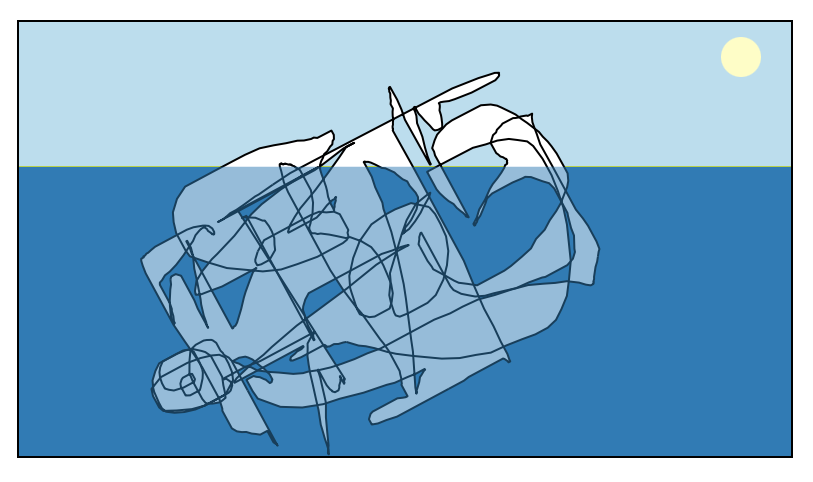
Here’s some fun to have with a doodle.
Check out Iceberger and doodle your iceberg, then watch it settle.
Here’s one of mine.
 THIN|SILENCE
You must be logged in to post a comment.