So your threshold is the point at which you’re going to go into a new and challenging territory that you’ve never been in before, and there’s no turning back.* Robert Dilts
You will never regret offering dignity to others.** Seth Godin
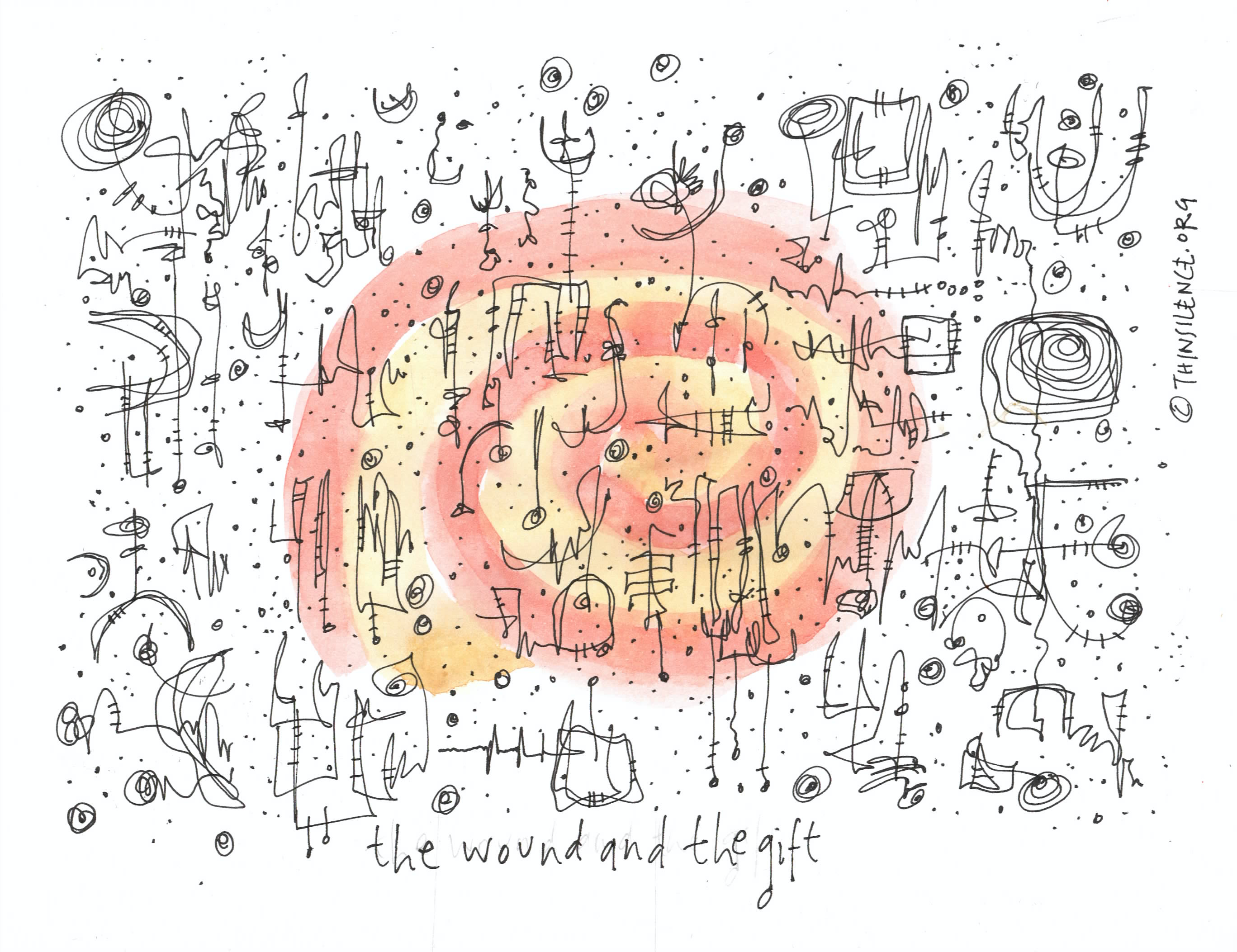
Each carries within a wound and a gift.
The victim only feels the wound, And desires to be rid of it, They wait to be rid of it.
The agent feels both their wound and gift, And in understanding their symbiotic relationship have moved across a threshold into a new world.
Sometimes other’s have been their guides, Sometimes they have found their own way, Sometimes they have become guides to others:
Sponsorship is about holding what’s there in a way that allows other possibilities to emerge … true healing comes from being able to sponsor the wound, sponsor the demon, sponsor the shadow. *
The hypnotic spell says “You have no spirit inside of you. You have no hero’s journey. Your main purpose is to buy refrigerators. Your main purpose in this world it to eat cheeseburgers.* Stephen Gilligan
The cosmos is always both intimate and immense. Its deepest energies are always closer to us than our very breath, and its vastness and interrelatedness are always greater than many of the boundaries we have placed around ourselves as nations, races and religions.** Philip Newell
The women of the village take the newborn baby into the forest, Where together they will create a song of calling that is unique, Not a lullaby but a song of awakening.
When the child does something wrong or becomes ill, The song will be sung to help them return to their truth.
At the end of their life, the song will be sung one more time, And then it will never be sung again.
We may not have had a song crafted for us at our birth, But still, each of us has just such a song of awakening, Much needed when there are so many hypnotic lullabies lulling us into sleepfulness:
We don’t come into this world to sleep. We come to awaken, and awaken again, and to grow and evolve. So the calling is always a calling to grow, to contribute, to bring more of that vitality of life energy into the world or back into the world.*
In what ways have you yet to accept the fact that you are who you are, not the person you think you ought to be?* Oliver Burkeman
It’s not that your personality itself becomes stable but rather that your routine environments and social roles lock you into habitual patterns.** Ben Hardy
To stop short of me being me and you being you would be irresponsible. Though the likelihood is that this is what will happen to some degree.
In a West African culture, a new born baby’s spirit is asked by elders:
Why have you come? What is the gift you have come to bring?^
It is imperative that that we bring into the world that which only we can, Towards this we might take Ben Hardy’s implied advice and shake up our environments: Reading something different, Meeting new people, Attending different events, Beginning something new.
Never mind searching for who you are. Search for the person you aspire to be.* Richard Brault
‘Missing man’ joins search party looking for himself.** BBC News
You may be waiting a long time to be inspired. On the other hand, you can aspire to something right now and go to:
It’s true that how we spend our days is how we end up spending our lives. We can deliberately choose to spend them wisely.^
The missing man hadn’t realised the search party he had joined was looking for him, Until they began calling his name. Then he replied: “I am here.”
Aspire to follow your heart:
Does this path have a heart? If it does, the path is good; if it doesn’t, it is of no use. Both paths lead nowhere; but one has a heart, the other doesn’t. One makes for a joyful journey; as long as you follow it, you are one with it. The other will make you curse your life. One makes you strong; the other weakens you.^^
As soon as we mechanize, measure and perfect something, it becomes far less interesting. … As we get better at industrialism, the variability of imperfection becomes even more fascinating. Imperfect and proud of it.* Seth Godin
If I wait whilst seeking perfection, I could be waiting a long time, But if I begin, in some imperfect way, There opens the possibility of improvement – And for quirkiness. Something sadly lacking in our standardised world.
By not making a clear decision for yourself beforehand, you’ve deferred the decision-making process to some future moment when you’re forced to decide.* Ben Hardy
The call to the creative life is a call to dignity, to a life of vulnerability and adventure and the call to a life that exquisite excitement and indeed ecstasy will often visit.* John O’Donohue
Iron sharpens iron, and one person sharpens the wits of another.**
When it comes to unleashing creativity, whether art or artisanship, location is everything.
Testing and discovering what it is we really want to bring into the world is a place:
Discovering the right medium is often a tidal movement in the creative life of an individual. … Creativity can be inhibited by the wrong medium.^
When things become clearer, we may see possibilities where we are, Or we may need to move:
What we call the beginning is often the end. And to make an end is to make a beginning. The end is where we begin from.^^
Finding the right people to sharpen our creativity is another place, And who knows? We might find another place, Of creating something together that will outlast us:
many of us have a shot at creating experiences and projects whose effects can continue long after we are gone*^.
Here’s somewhere to begin. identify three energising “locations” by keeping track of what you’re doing when you feel great energy in your body. Add the why, who and when to your notes.
Do this for a few weeks and then aggregate the contents of your notes to identify larger areas of activity. Name these and then identify the three that have the most energy for you.
Abstract activities from these to explore and play with.
We see the world not as it is, but as we are.* Steven Covey
we see the world, not as it is, but through a veil of perceptions** Ken Robinson
These two quotes lined up to sound a serious caution.
Add another and the warning deepens:
We thinks we tell stories, but often stories tell us.^
Out from his writing experiences Robert McKee clarifies:
We realise our toughest task in life is self-analysis as we try to fathom our humanity and bring peace to the wars within.^^
John O’Donohue holds out hope for those who enter McKee’s space of self-reflection within a world we only see through our personal paradigms:
The imagination has a deep sense of irony. It is wide awake to the limitation of its own suggestions and showings.*^
It is hard work, to be sure, For the business of keeping as open as we are able for as long as we can takes a lot of energy – Literally. Our brains are burning calories and it is natural to try and conserve energy, So we find shortcuts and build our worldviews. Yet, whilst we may never break free from these stories telling us, We can still alter them at a deeper level.
The writer who is also an artist Austin Kleon offers some direction when he writes:
The diary is the heart of my practice, the place where most of my work is made or at least first conceived.^*
A journal is a great place to be more open, curious, inquiring and imaginative, But to make sure that this becomes more than your little worlds in ink and paper, Invite along some people you don’t know to share from their worlds.
Here are mine from this morning, Including some who have become “journaling friends”: Kassia St Clair, Seth Godin, Bessel van der Kolk, Clarissa Pinkola Estés, Rob Walker, Margareta Magnusson, as well as those I’ve quoted.
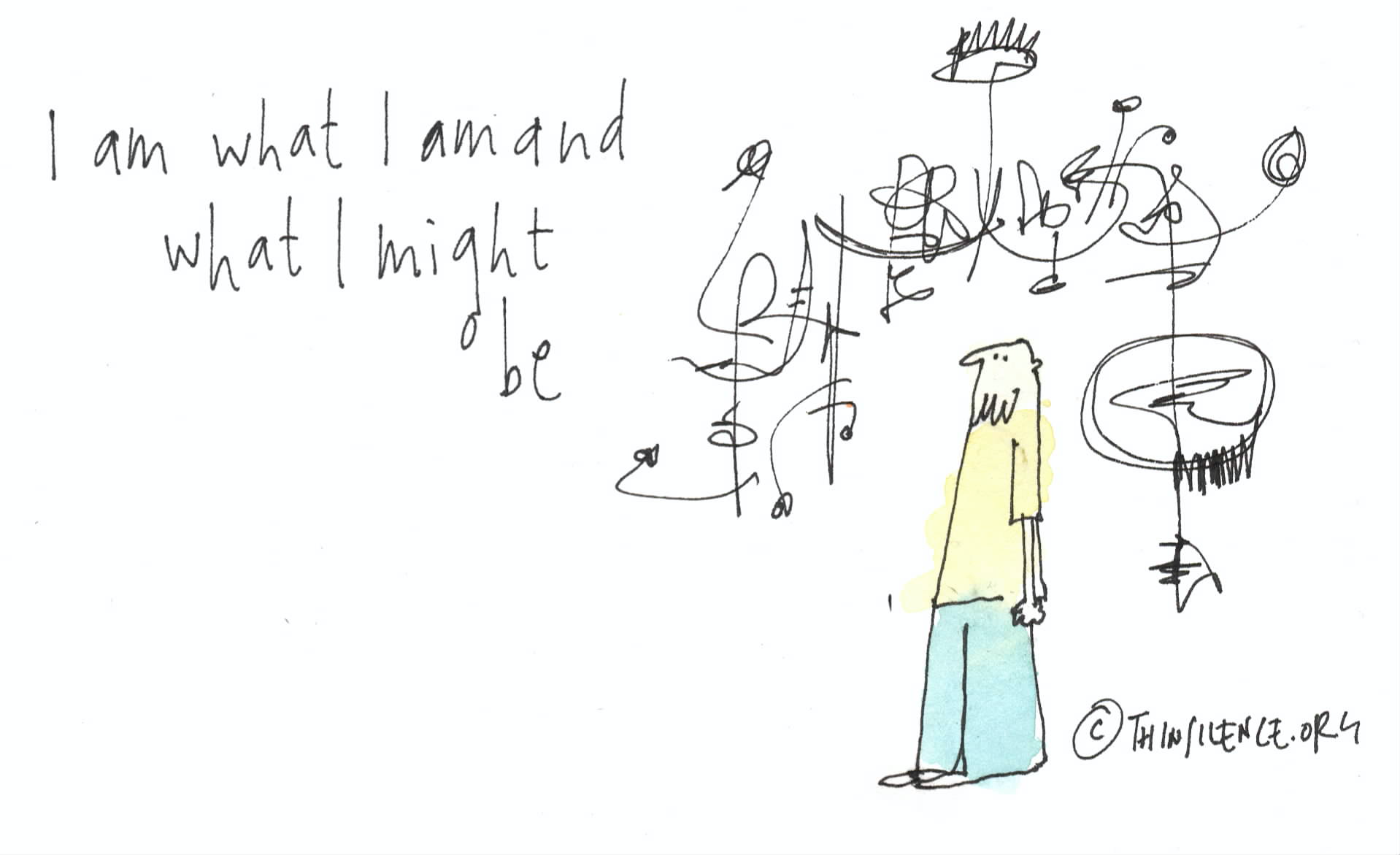
You must have a room, or a certain hour or so a day, where you don’t know what was in the newspapers that morning, you don’t know who your friends are, you don’t know what you owe anybody, you don’t know what anybody owes to you. This is a place where you can simply experience and bring forth what you are and what you might be. This is the place of creative incubation. At first you may find that nothing happens there. But if you have a sacred place and use it, something eventually will happen.* Joseph Campbell
We’re always connected, To work, to the world, to endless streams of stories.
Where is the place or time to disconnect so that we might connect with ourselves in silence and solitude?
A place and a time is best of all, but where this is difficult, one or the other is more than enough. If we find this too difficult or unpleasant a thought we must ask ourselves why.
The place of purpose is an infinite thing, meant to be enjoined playfully, Towards a revivification of imagination, A sensorium of Soul through the fullness of our days:
An aged man is but a paltry thing, A tattered coat upon a stick, unless Soul clap its hands and sing and louder sing For every tatter in its mortal dress.**
It is something urgent, Whether we have our place and time, Or simply a place or a time.
Reconnecting with our purpose – Or passion or calling or vocation or element or bliss – There are many names:
Where is your bliss station? You have to try to find it.^





 THIN|SILENCE
You must be logged in to post a comment.