Options

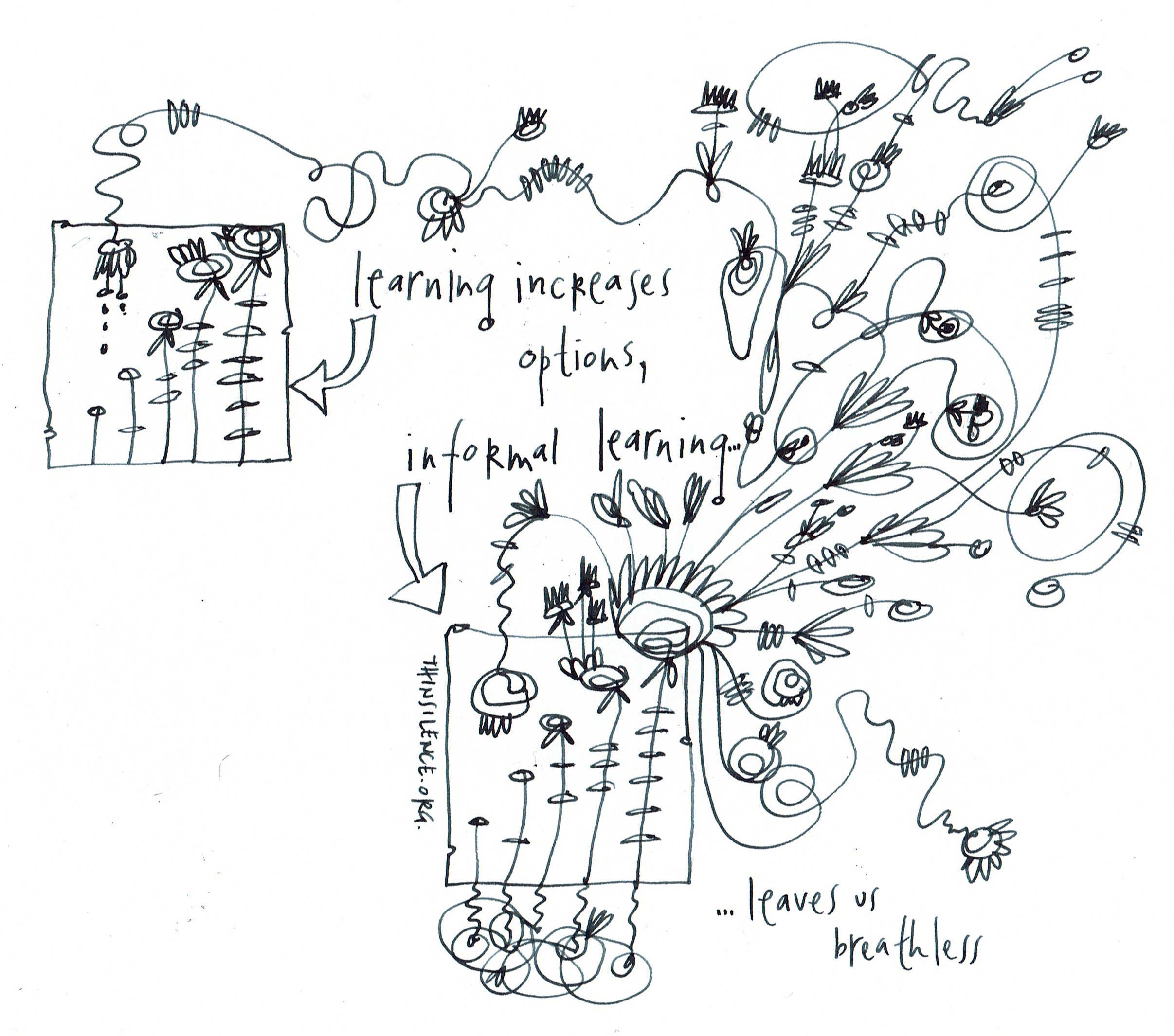
Learning is not compulsory but neither is survival.*
(Edwards Deming)

We are learning creatures.

We can learn our way out of just about anything.

I don’t mean gaining the information and knowledge to be able to tackle our greatest life issues, but beyond these, we find ourselves to be producers of information and knowledge, emerging from our willingness to jump into the playfulness of learning that is available every day and throughout our lives.

The informal learning that happens when we get a few books together, connect to people who fascinate us, use walks for reflecting, identify some things we’d love to do and pull out a journal and a pen.  There are lots of ways but these are a few sound starters.

(*Edwards Deming, quoted in Jay Cross’ Informal Learning.)

Everyday redemption

Eventually, you will discover a detached place of self-observation.*
(Richard Rohr)

For the robust, an error is information; for the fragile, an error is an error.**

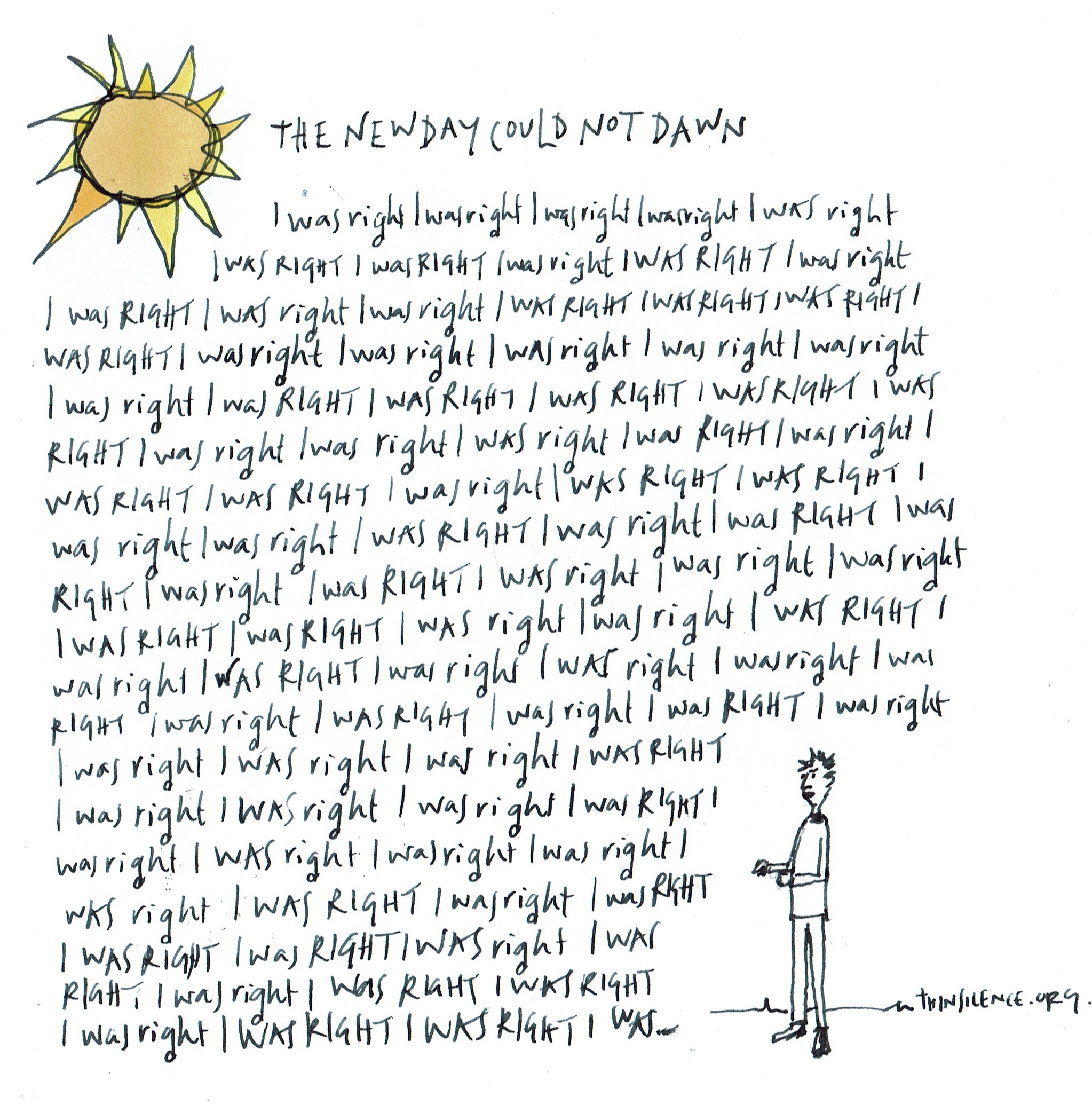
Everyone should have the opportunity to change direction, to admit they were wrong, to make a switch, to begin again.

A new day dawns.  The world is new.

It’s a learning disposition but that’s another blog post.

The person who allows themselves the place of self-observation is becoming stronger; they will help bring the dawn to others, too.

(*From Richard Rohr’s The Divine Dance.)
(**From Nassim Taleb’s The Bed of Procrustes.)

The thin life

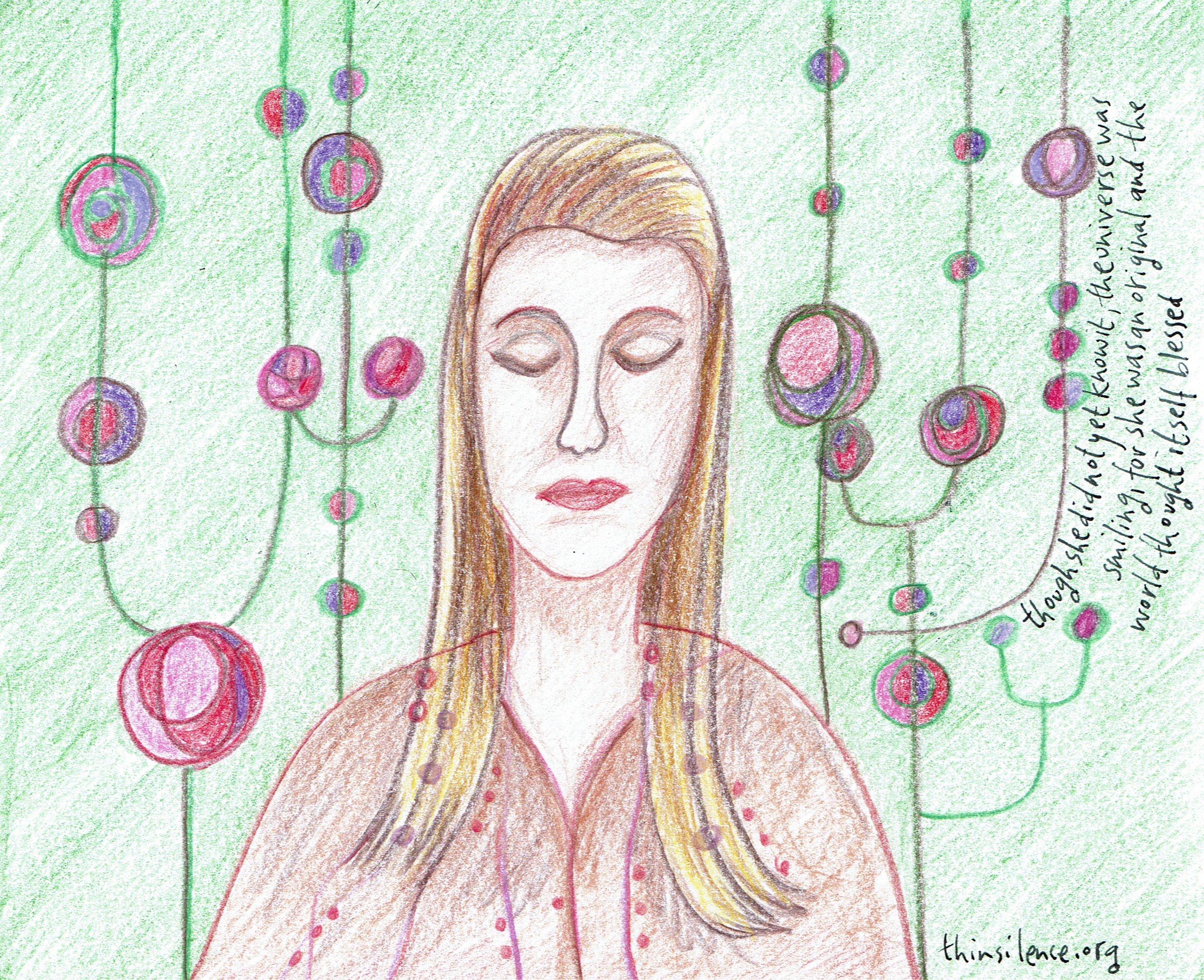
Awaken to the mystery of being here
and enter the quiet immensity of your own presence.*
(John O’Donohue)

In life, the challenge is not so much to figure out how to play the game; the challenge is to figure out what game we’re playing.**
(Kwame Anthony Apihh)

In a short TV series on the development of children, researchers explore the idea of there being three basic personality types – excitable, calm and timid – how this is set for the rest of our lives.

Of course, his doesn’t say nearly as much as we need it to.  We live as swirling, changing worlds within a swirling, changing world.  Increasingly, we’re understanding that our environments can change us, even transform us.  These become the thin places for our lives.  In this way we understand our lives to be thin, not in terms of lightness or shallowness, but open to the more-just-beyond.

This isn’t to say that we’re more likely to be excitable, calm or timid, but being honest about who we are is the place we have to begin when exploring who we can become.

Graham Leicester and Bill Sharpe describe Three Horizons Thinking for transforming education, identifying three voices:

‘The voice of Horizon One is the voice of the manager. […] The voice of Horizon Two is the voice of the entrepreneur. […]  The voice of Horizon Three is the voice of the visionary.‘^

These three voices exist in each of us, too.

Horizon One is where we are at the moment; it’s usually not working but it’s all we have.  Horizon Three is the future possibility, the things we dream of, where things are most thin.  Horizon Two is the transition between these, how we invent ways of moving from here to there.

(*From John O’Donohue’s To Bless the Space Between Us: For Presence.)
(**From Sherry Turkle’s Alone Together.)
(^From Graham Leicester and Bill Sharpe’s Transforming Higher Education.)

This is the day

We don’t have to wait for the day.

This can be the day we make our difference.  At least some expression of it.

So many generations, if they’d been able to imagine a time such as ours with all of its resources, would have longed to see it with all their might.  We, though, are the ones who do see this day and must not miss its significance because it perhaps doesn’t quite look like we think it ought.

These assumptions of what we think the day needs to look like are our barriers and need to be broken through.

Assumptions are false problems.  The real problems often lie beyond them.

A perfect day never comes.  Forget perfect altogether.   If, however, we’re prepared to be messy, to fail and from this to learn and change, things will happen.

I return to the six means of moving from the present to the future I mentioned a couple of days ago.*

I offer them as the means of breaking through your assumptions.

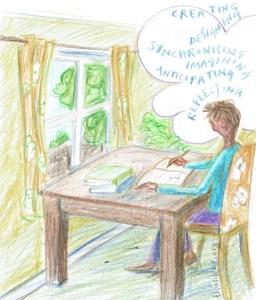
Reflecting allows you to see everything that is at play.

Anticipating is a sensing of what is most important and significant to you in these things.

Imagining brings tomorrow into today with some actual form this might take.

Synchronising ourselves to this possibility commits our heart, soul, mind and strength.

Designing feels like imagining but it is the second creation when imagination is the first – not the final product (forget perfection – it’s overrated), but something that will allow you to see whether it “sails.”

Creating is really about bringing what has been learned and tested and reshaped into the day-to-day.

The great thing is that fostering a daily journaling practice accommodates reflecting to synchronising and to some extent the designing.

Like the sprinter on their blocks, you are in the “set’ position.

Take your hands away and you’re falling forward, and the only way to save yourself is to run with all your might and expertise.

(*I am grateful to my friend and mentor Alex McManus for identifying these.)

Get even, get creative

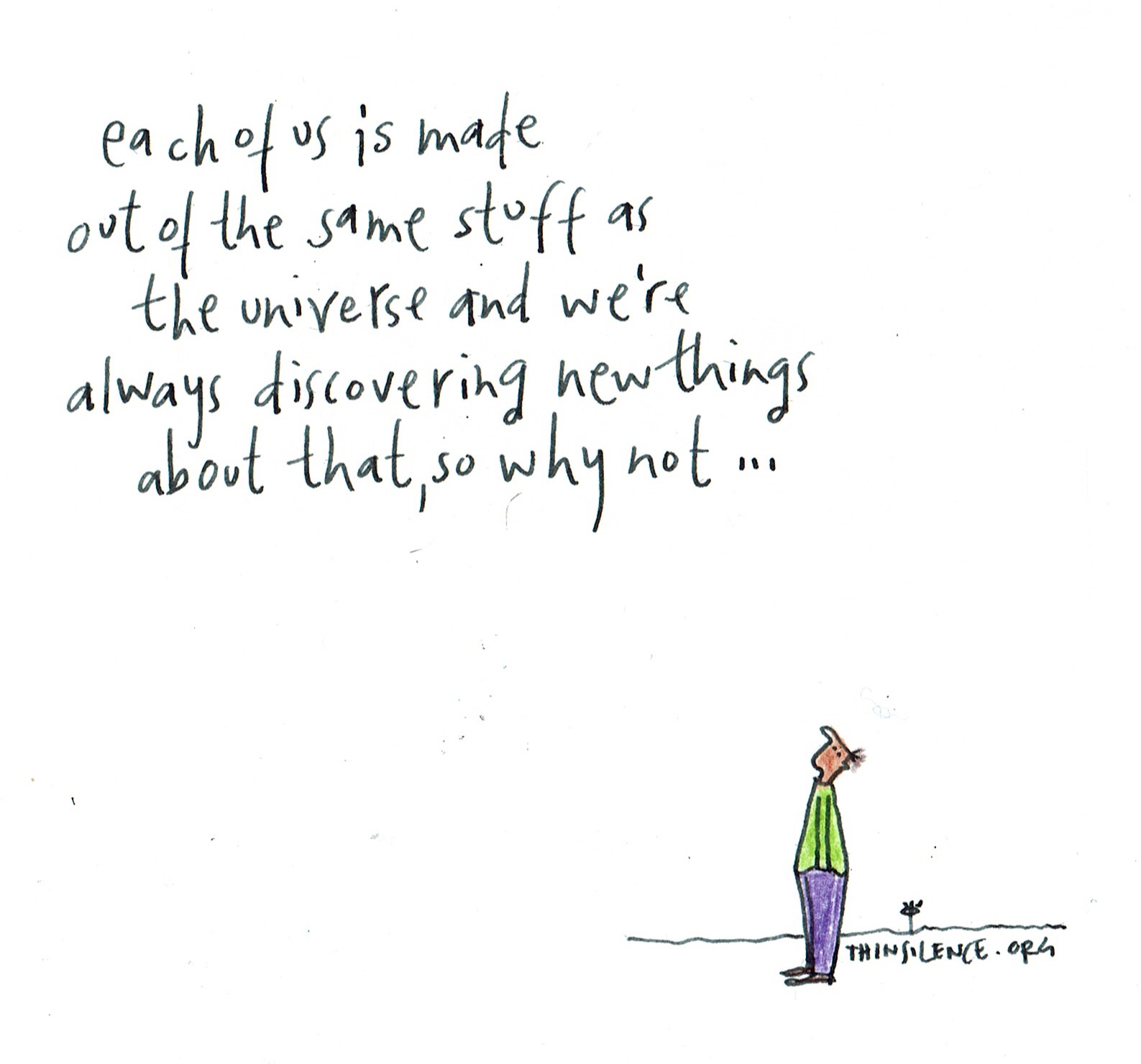
But inequality is not the most important fact about human beings.  Our species’ ability to make things reveals more what we share.*
(Richard Sennett)

I like this thought a lot.

Though some have many things and some have very few, it’s the ability make things that makes is most alike.

My hope for the future is that, in recognising this, we make the kind of spaces available in which people can develop their maker-ship.

In their perceived universe of possibility, Roz and Ben Zander counsel the would-be maker:

‘The first step is to notice where you are holding back and to let go. […] The second step is to participate wholly.’**

When you get creative you can more even than you know.  You need to figure out what’s holding you back and let go of it, then you can take hold of what you want to make most of all in your lifetime in this universe and make it happen.

(*From Richard Sennett’s The Craftsman.)
(**From Rosamund and Benjamin Zander’s The Art of Possibility.)

I can’t do it

In my work helping people to identify their energies and abilities I cannot tell them what they must do.

On the way we uncover their “enriching environments,” the spaces they can make happen in which they are able to flourish.

As much as I can see the excitement of another, I cannot feel it.  Anything that I feel is only my excitement at being able to help them.  I only help them to find theirs.  Here’s how Ben Hardy concludes his book about environments:

‘When you change your environment, you will change.  But it must be your choice.  If someone changes your environment for you, your chances of adapting long-term will be low.’*

In anticipating our futures, taking the time to identify and nurture our most fruitful environments, we find and develop amazing abilities:

We become reflective: able to ponder slowly what is happening in and around us and make better choices as a result.

We are able to anticipate: knowing what wants to happen next, to emerge, to begin.

We are able to imagine what this may look like in our lives and our worlds.

We are capable of synchronising our lives with this possibility to make it happen – it’s then something both inward and outward.

We are led to a better design, to adjust, tweak, often through prototyping, trialing it ourselves.

We are now able to create it, to bring it into being, but never into some final deal – we reflect and anticipate and

I cannot do this for another, but we can do it for ourselves.

(*From Benjamin Hardy’s Willpower Doesn’t Work.)

Parables

Parables are basically stories that tell us there is more to this, to that, to us, to you, to me than meets the eye.

It’s really helpful, then, to see ourselves to be living parables, stories unfolding into more, not only for exploring the nature and contribution of our own lives but to encourage others to explore their own in a pass it forward way.


Who knew?!

My friend Alex McManus believes that we carry 3.5 million years of knowledge in our bodies.

Above everything else, we are learning creatures – and there is so much to learn.

Everything is knowledge or potential knowledge to us, whether natural or made.

Learning is best served slow but, as with so many areas of life today, it is in danger of speed.

The best learning is slow because it not only provides information to be converted into knowledge but when we live what we know then it turns into wisdom:

‘So when we say, “save the earth,” we’re talking about saving ourselves.’*

(*Billy Moyers from Joseph Campbell and Bill Moyers’ The Power of Myth.)


Why longhand will open our futures

What if we saw communicating longhand as an opportunity?*
(Bernadette Jiwa)

My father always told me to practise neat handwriting, because that’s how you show other people that you’re trustworthy.**
(“Dani”)

Poor handwriting may not actually be a sign that we are untrustworthy – otherwise, beware doctors.  A lack of good handwriting in our lives may be a sign of hurriedness … towards who knows what:

‘There’s a Buddhist story about a man galloping by a monk who asks, Where are you going.  Ask my horse, says the man.’^

I always find that things change when I’m writing longhand.  I see more as my fountain pen scrapes across the paper, slowing me down even more.  I’m particularly thinking of journaling but it spills out into communicating with others, too.

Georgia O’Keefe would paint small flowers large:

“A flower is relatively small.  Everyone has many associations with a flower – the idea of flowers.  You put out your hand to touch the flower – lean forward to smell it – maybe touch it with your lips almost without thinking – or give it to someone to please them.  Still – in a way – nobody sees a flower – really – it is so small – we haven’t time – and to see takes time, like to have a friend takes time.  If I could paint the flower exactly as I see it no one would see what I see because I would paint it small like the flower is small.”^^

This feels like the effect of writing longhand.  We see a flower, our world, a theme, an other, ourselves with greater clarity:

“So I said to myself – I’ll paint what I see – what the flower is to me but I’ll paint it big and they will be surprised into taking time to look at it – I will make even busy New-Yorkers take time to see what I see of flowers.”^^

Texts and emails are useful but only up to a point.  They begin to lull us into a sense that we are really capturing thoughts or communicating because of how many we send and how quickly we get a response.  We’re in danger of believing what Erich Fromm saw us being in danger from:

‘The fact is that most of us are half asleep while we believe ourselves to be awake.’*^

O’Keefe noticed her flowers and painted them large.  Which makes me wonder, what do we notice and want others to also see, to benefit from, to be blessed by.

Perhaps a little bit of writing with a pen and paper would help explore this more?

(*From The Story of Telling: The Shorthand Trap.)
(**The character Dani in Albert Espinosa’s If You Tell Me To Come, I’ll Drop Everything, Just Tell Me To Come.)
(^From Rebecca Solnit’s A Field Guide to Getting Lost.)
(^^From Maria Popova’s Brain Pickings: Georgia O’Keefe on the Art of Seeing.)
(*^From Erich Fromm’s The Art of Listening.)